
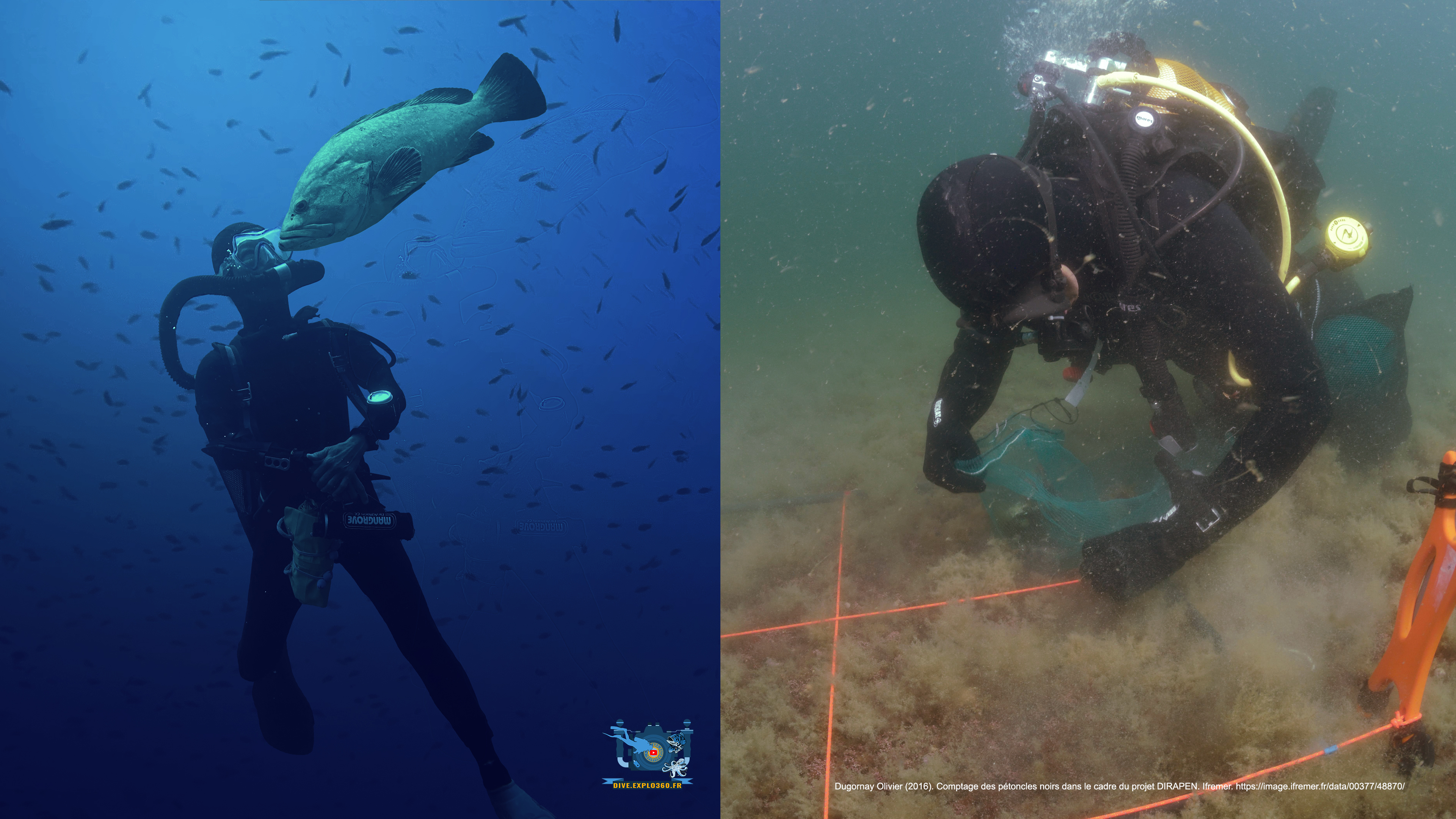
The naturalist diver observes marine life to learn to identify species, understand their behaviour and recognise different habitats. They progress through diving, exchanges with other enthusiasts, guides and, possibly, training.
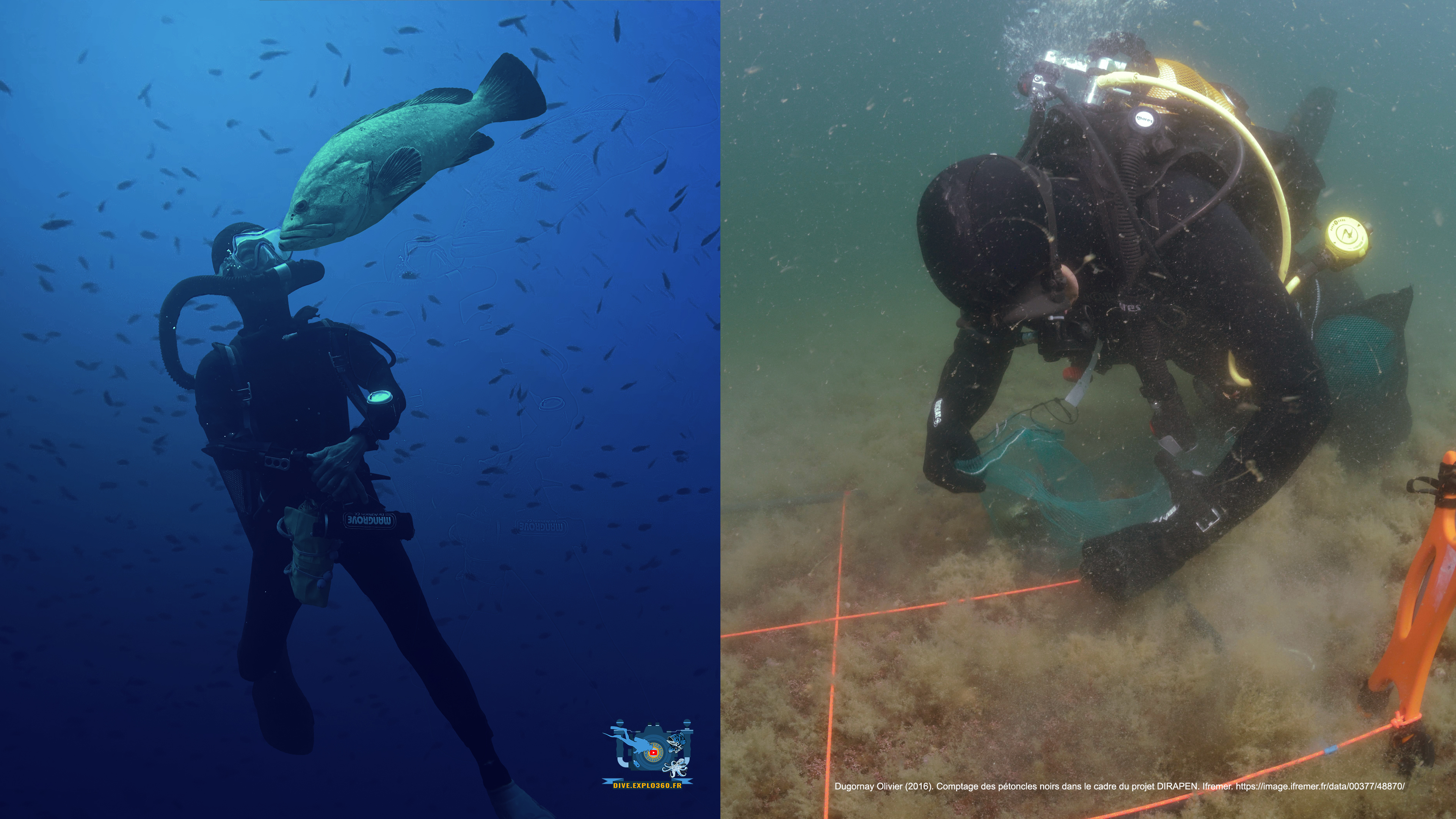
They may record their observations, photograph the species they encounter or take part in citizen science programmes. In this article, the biology diver is presented as following a more scientific approach: organised observations, measurements, sampling or data collection using precise methods. The aim is no longer simply to observe, but also to produce information that can be used to study ecosystems.
The two approaches share one aim: learning more about underwater life through careful observation.
Naturalist diving requires no previous scientific training. It focuses on observation, species identification and a gradual understanding of the environment.
Biology diving follows a more structured approach. The diver may carry out surveys, measurements or observations according to a defined protocol. The data collected can then contribute to scientific work or a conservation programme.
AMIGANSEAU CONTENT
The rest of this article is for subscribers
Log in with your AMIGANSEAU licence to continue reading.
All active AMIGANSEAU licences give access to the full article.Explore the same world