The paradox: bright colours against a dull background
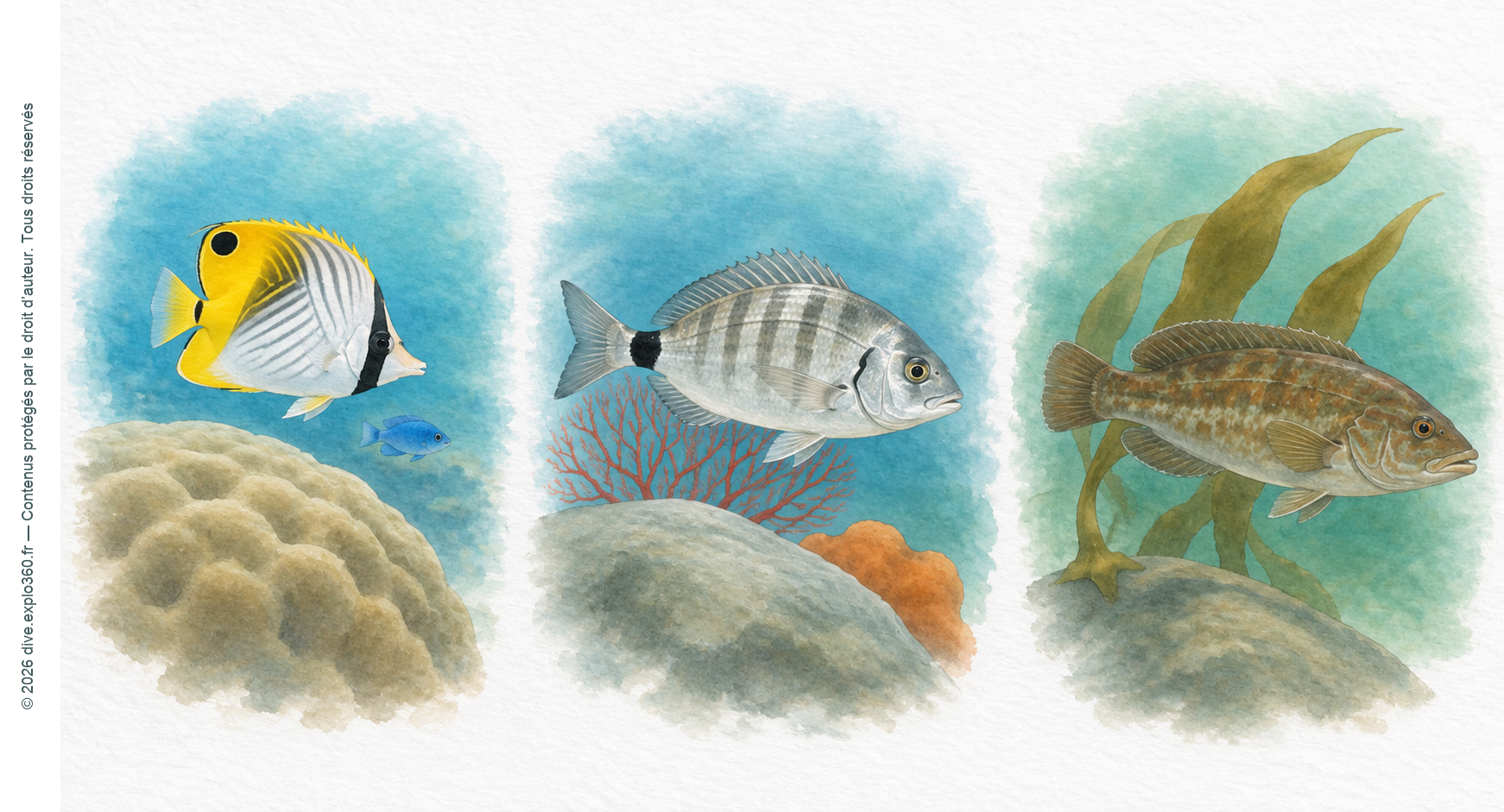
In natural light, many reef-building corals have brown or beige tones. Very colourful fish can therefore contrast with them. Colouration does not have to match the background to be advantageous: a pattern can support recognition or reproduction. The benefit of being recognised must be considered alongside the risk of being detected by a predator.
Recognition and sexual selection
In some reef fish, colours and patterns help individuals recognise members of the same species and may play a role in mate choice or interactions between rivals. When a trait increases the chances of reproduction, sexual selection may favour its transmission over generations, even if it makes the fish more visible to predators. This mechanism helps explain some strongly contrasting colour patterns. However, bright colour alone is not evidence of sexual selection: its function must be established by studying the behaviour and interactions of each species.

Signals in everyday reef life
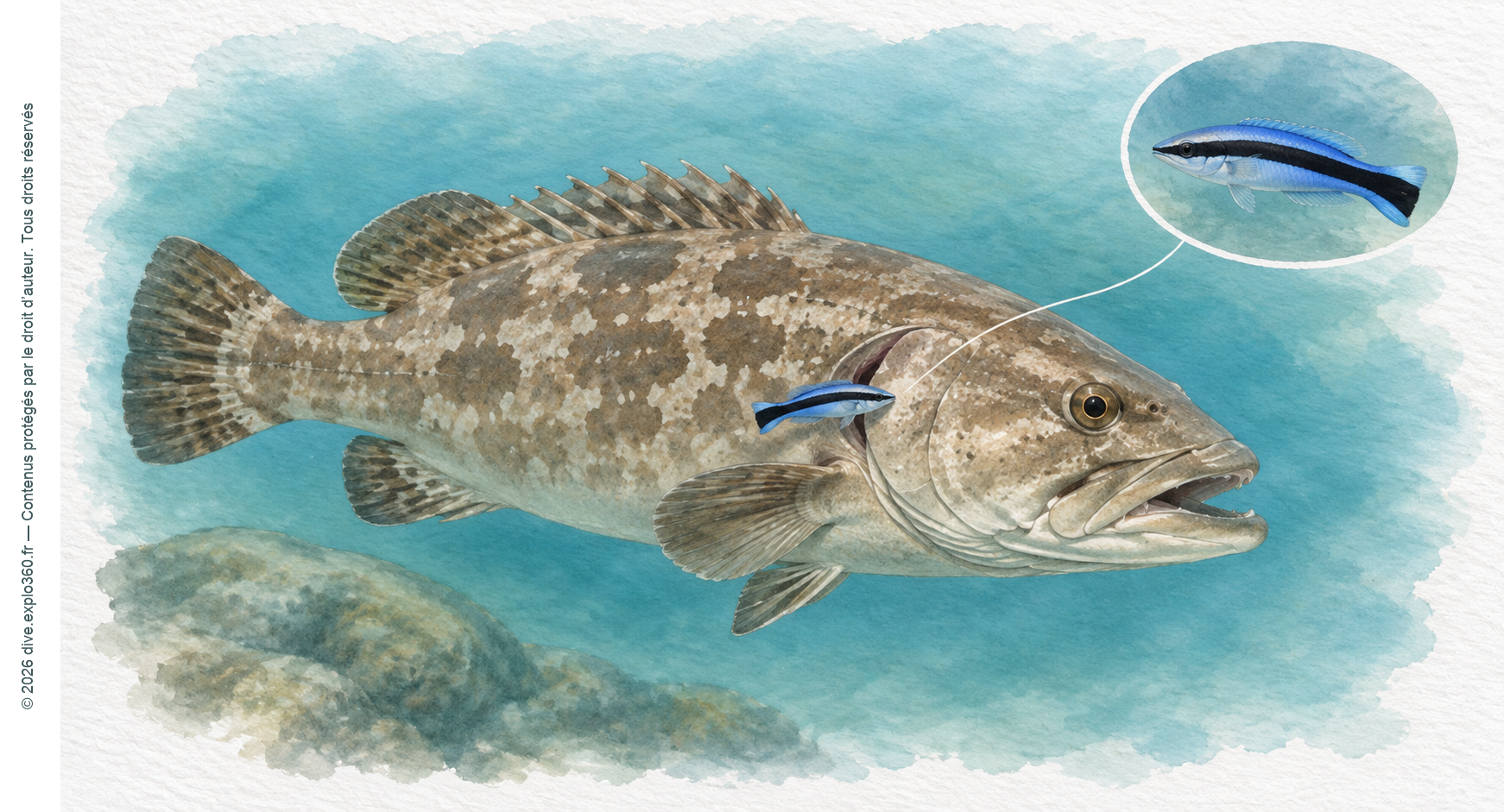
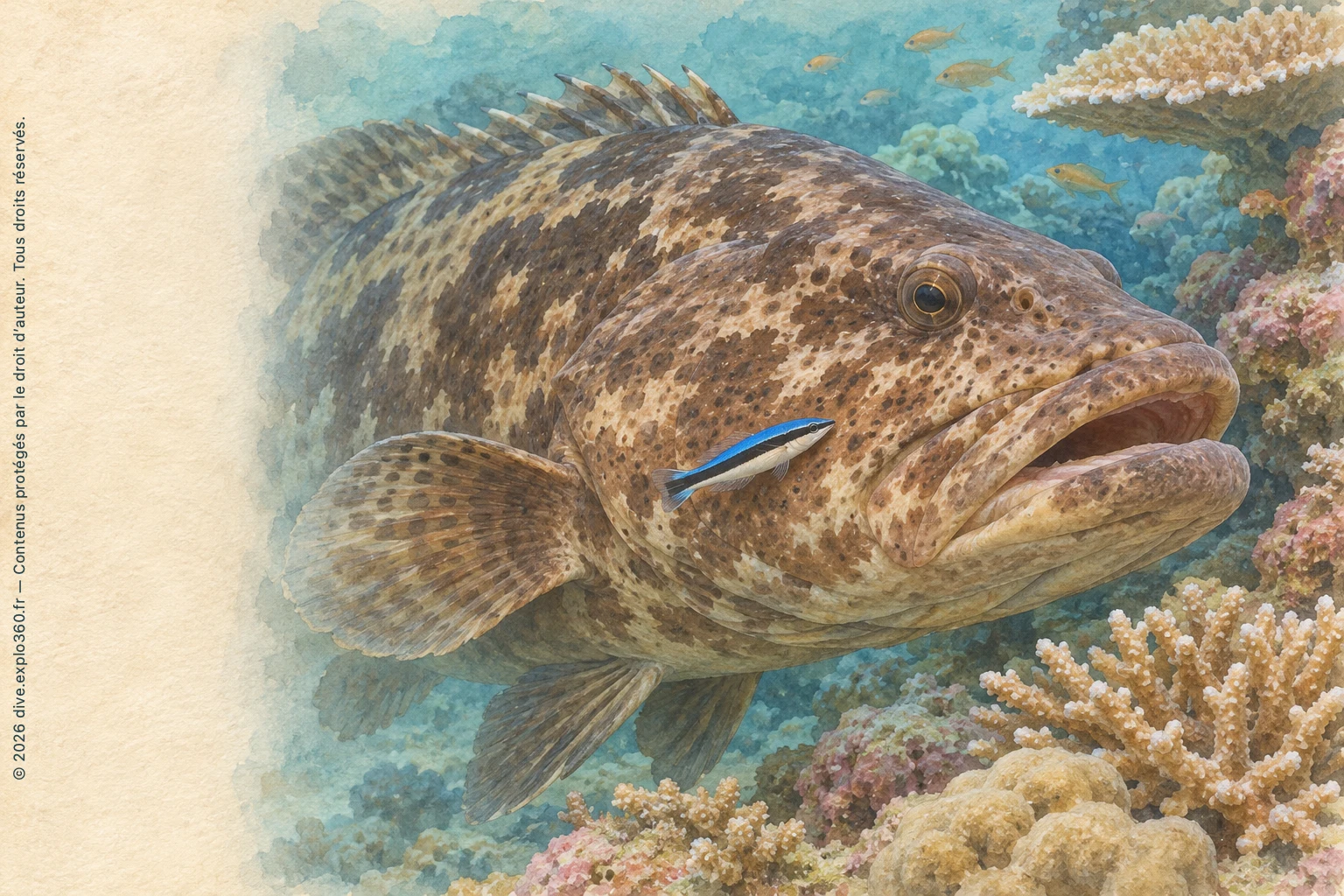
Encounters are not limited to reproduction. Postures and colour changes can accompany territory defence. Cleaning provides an example between species: visitors recognise a cleaner through several cues, including its appearance and movements. Colours acquire their meaning in a particular interaction, not through a universal dictionary of hues.