 Habitat
 Depth
 Group
 Role
 Average size
 Good to know
WHAT DOES IT LOOK LIKE?
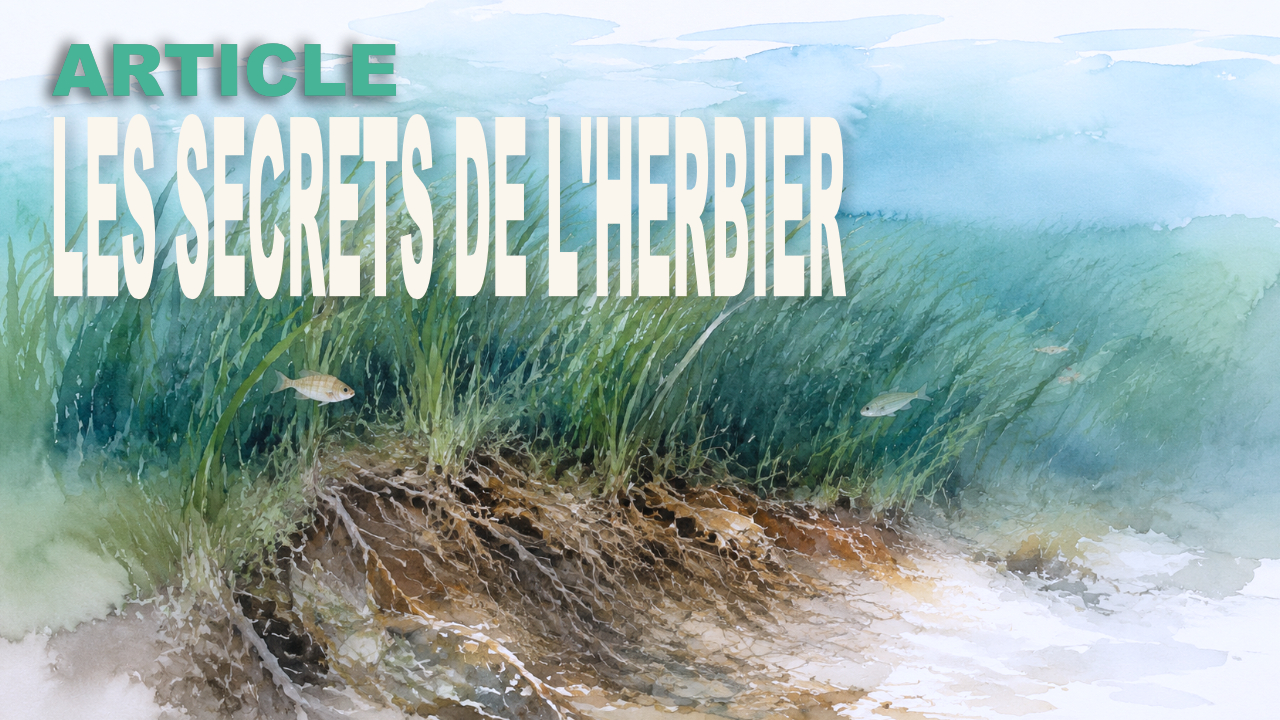
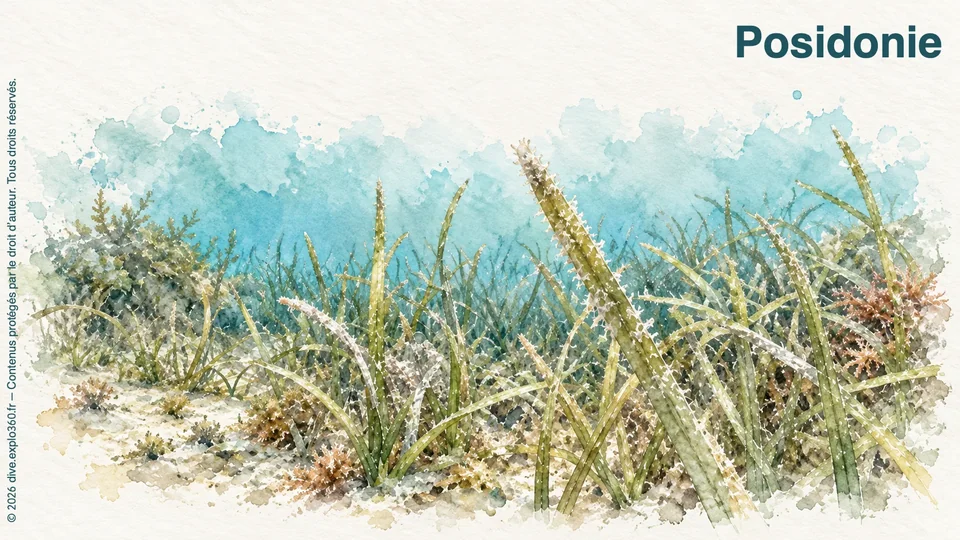
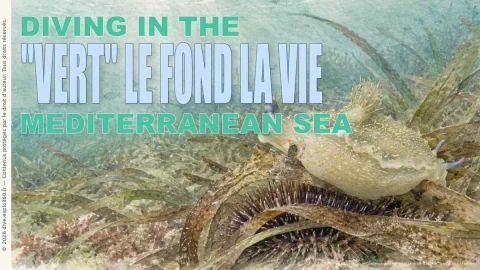
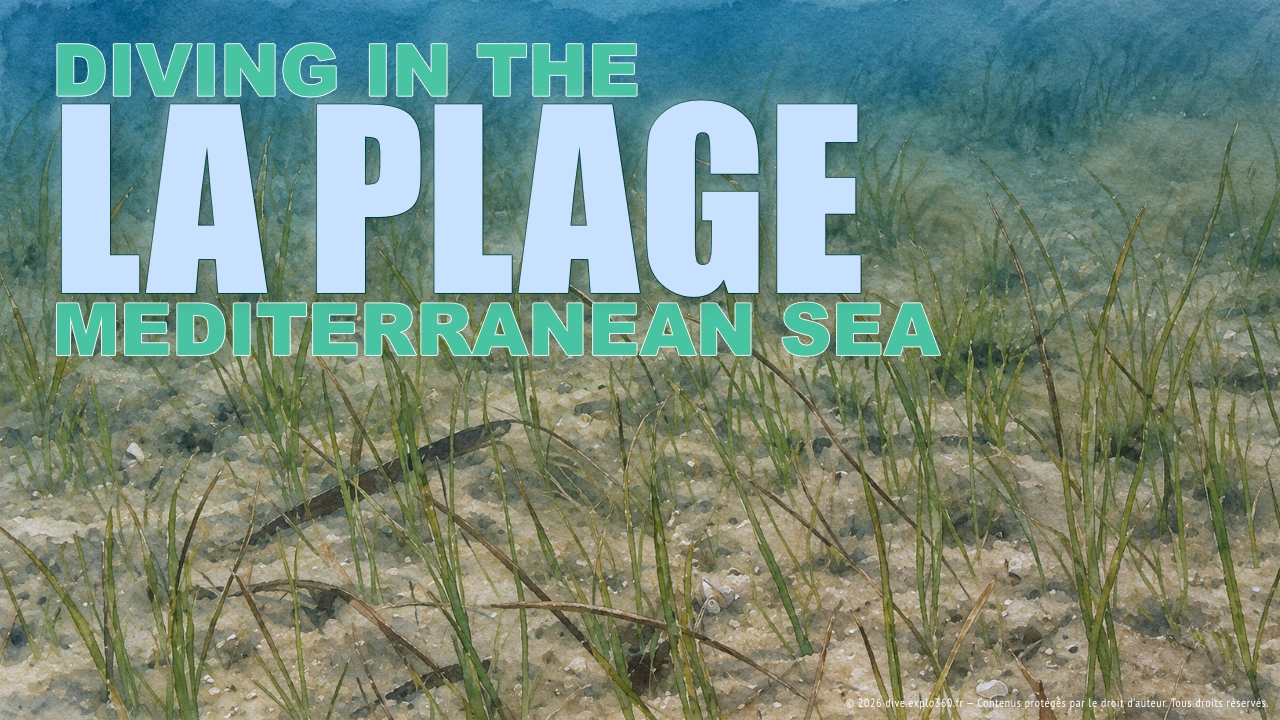
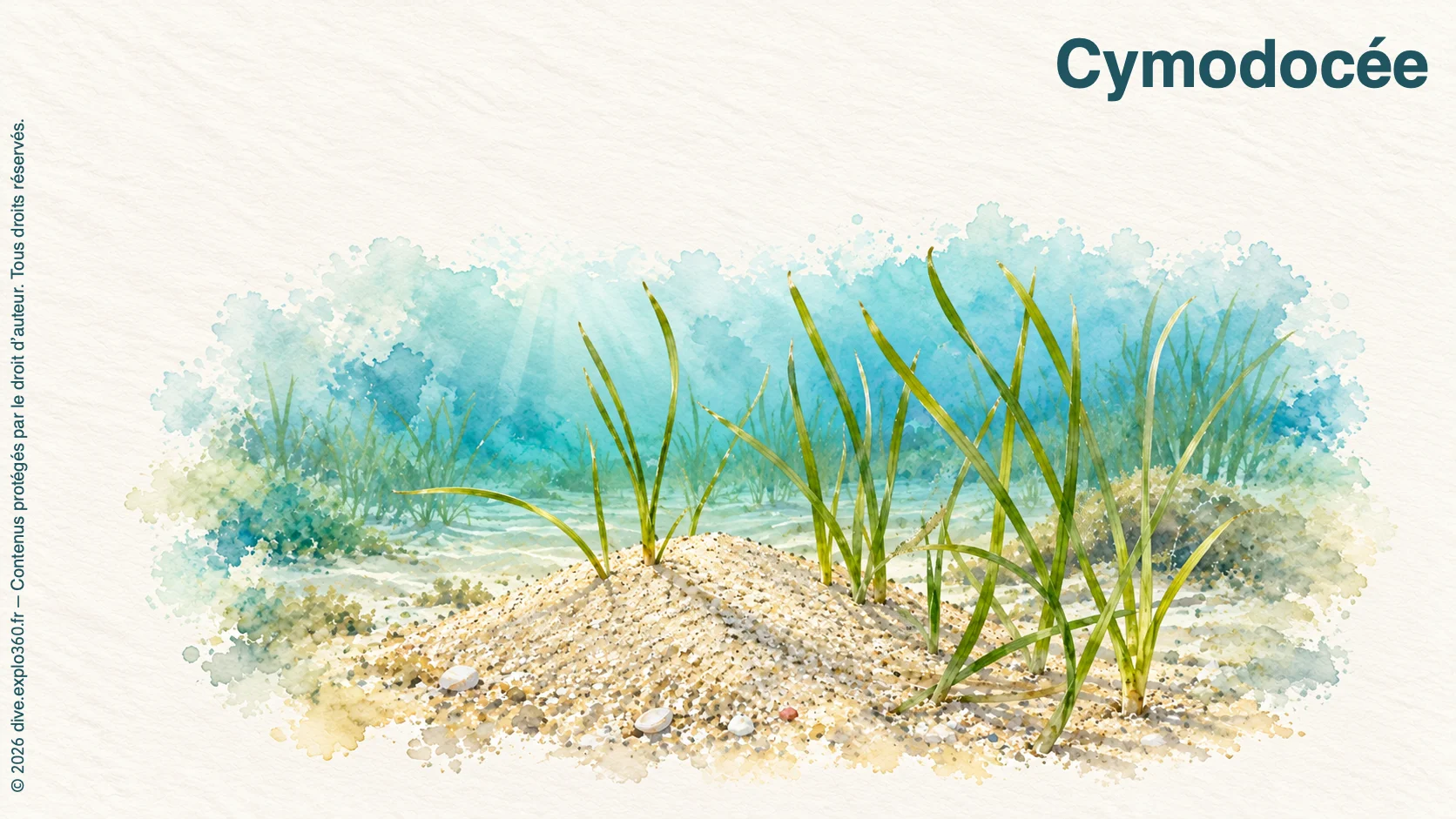
Green ribbons rise in bunches of four to eight leaves from Neptune grass (Posidonia oceanica). At around 1 cm wide and 20 to 100 cm long, they give the plant its meadow-like appearance.
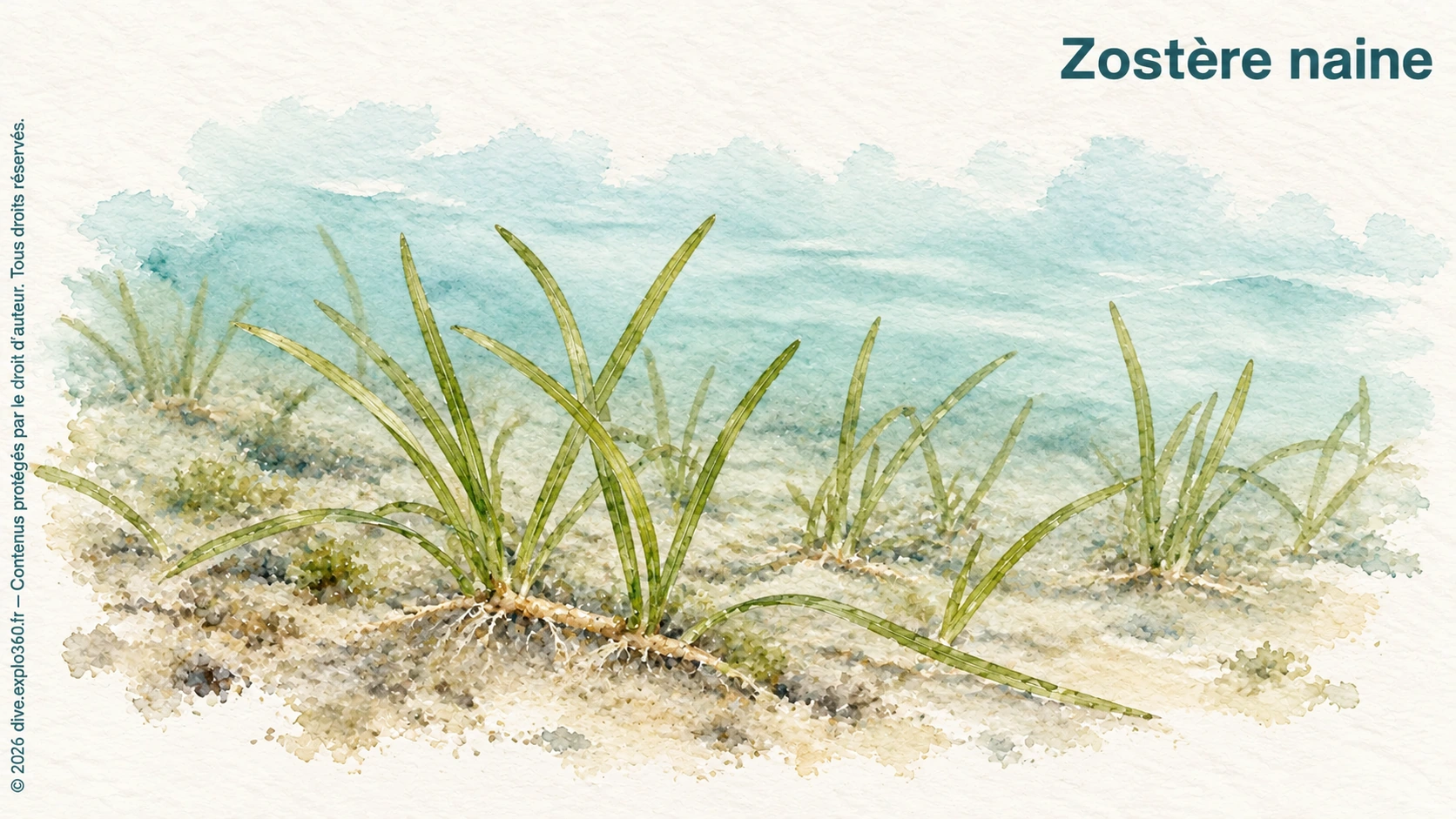
At their base lie rhizomes, the brown stems that run horizontally or grow upwards. Roots, interlaced stems and sediment form the matte, the compact mass supporting the leaves.
WHERE DOES IT LIVE?
It develops in the Mediterranean on sandy or mixed seabeds, from the surface down to several dozen metres, depending on water clarity. It needs light to persist.
WHAT DOES IT EAT?
Neptune grass leaves produce sugars through photosynthesis. Light supplies energy to use dissolved seawater carbon as carbon dioxide or bicarbonate. This process also requires nutrients, especially nitrogen and phosphorus. The plant absorbs them through both its leaves and its roots. Sugars do not all remain in the leaf that made them: they move into rhizomes and are redistributed to growing shoots. The plant also builds reserves. Nutrition therefore combines production in illuminated tissues, nutrient uptake and internal movement of resources.
GO FURTHER WITH AMIGANSEAU
Unlock the full profile
Deepen your knowledge with the exclusive chapters and interactive resources included in an AMIGANSEAU licence.
Subscribing to Dive.Explo360 means supporting a different way to discover marine life.
Our independent platform is entirely self-funded and relies solely on subscriptions. Every licence helps us continue our work, create new content, and share what we know about the marine world with as many people as possible.
Starting at €80 per year, your support makes all the difference.

 Understand the species