


 Habitat
 Depth
 Group
 Role
 Average size
WHAT DOES IT LOOK LIKE?
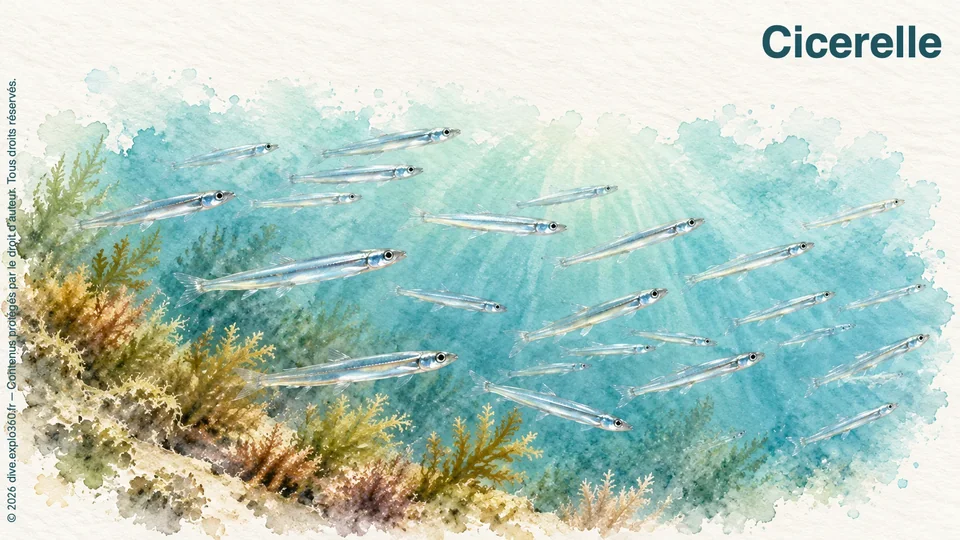
The narrow body first distinguishes the Mediterranean sand eel (Gymnammodytes cicerelus): very elongated and flexible, it ripples while swimming. The sides are silver and the lower jaw projects slightly beyond the upper.
Pelvic fins, those found beneath the front body in many fish, are absent. The slender head continues the outline. Length is commonly about 12.5 cm and may reach nearly 17 cm.
WHERE DOES IT LIVE?
The Mediterranean sand eel lives above sandy seabeds, often in coastal areas.
It spends part of its time buried in sand, quickly taking refuge there when danger threatens.
WHAT DOES IT EAT?
The Mediterranean sand eel feeds on small zooplanktonic animals that it catches while swimming above sandy seabeds. It searches for prey in the water, particularly during the day. Its small mouth allows it to seize these organisms carried by water movements.
GO FURTHER WITH AMIGANSEAU
Unlock the full profile
Deepen your knowledge with the exclusive chapters and interactive resources included in an AMIGANSEAU licence.
- HOW DOES IT REPRODUCE?
- OUR OBSERVATIONS
- ARTICLE
Also included in the full profile
- Advanced navigation between description, ecological context, observations and behaviour
- Interactive food chain to explore the species’ feeding relationships
- Natural history podcast and dive debrief
- Infographic and illustrated summary profile
 Understand the species