Habitat
 Depth
 Group
 Role
 Average size
 Precautions
WHAT DOES IT LOOK LIKE?
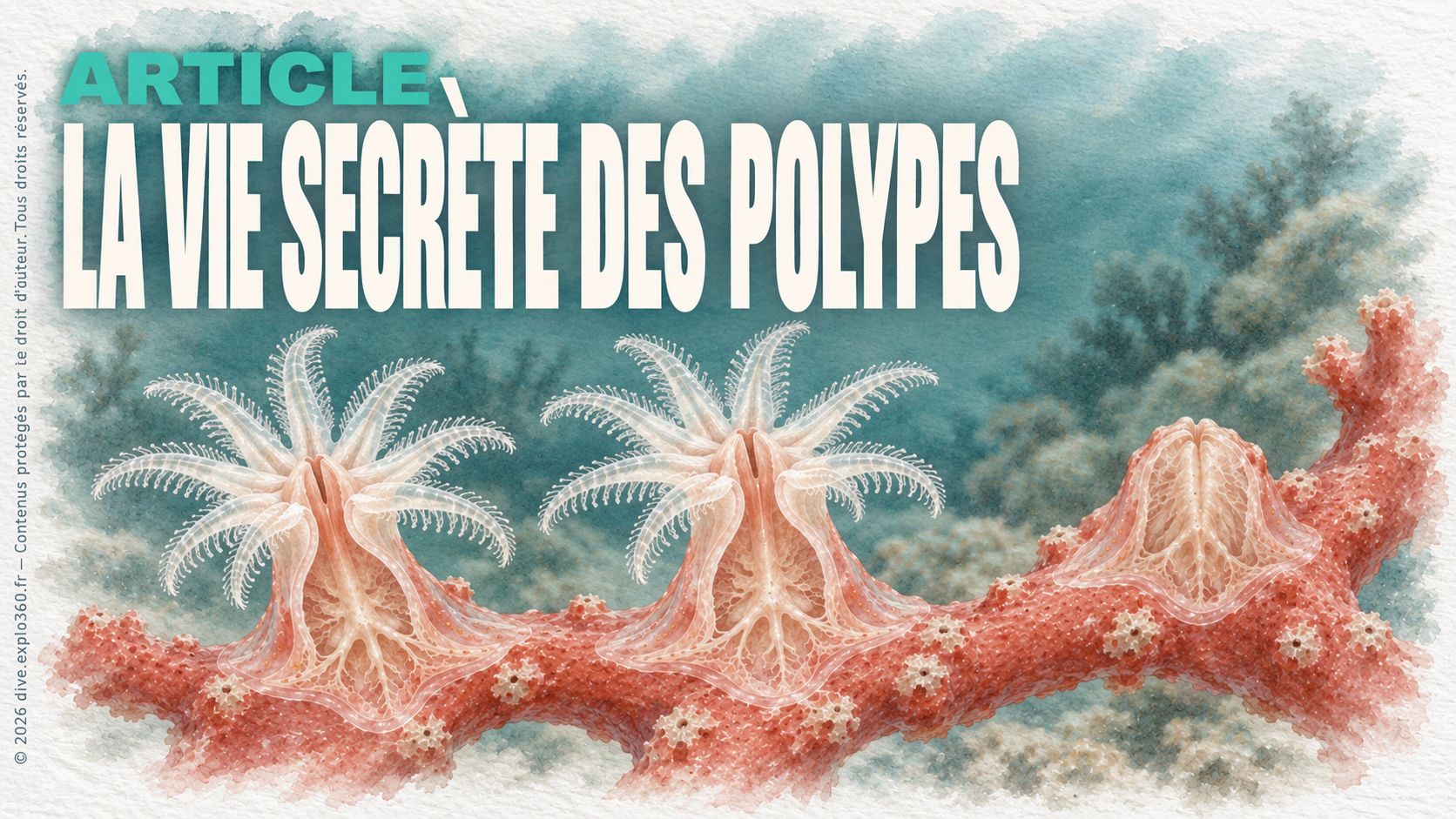
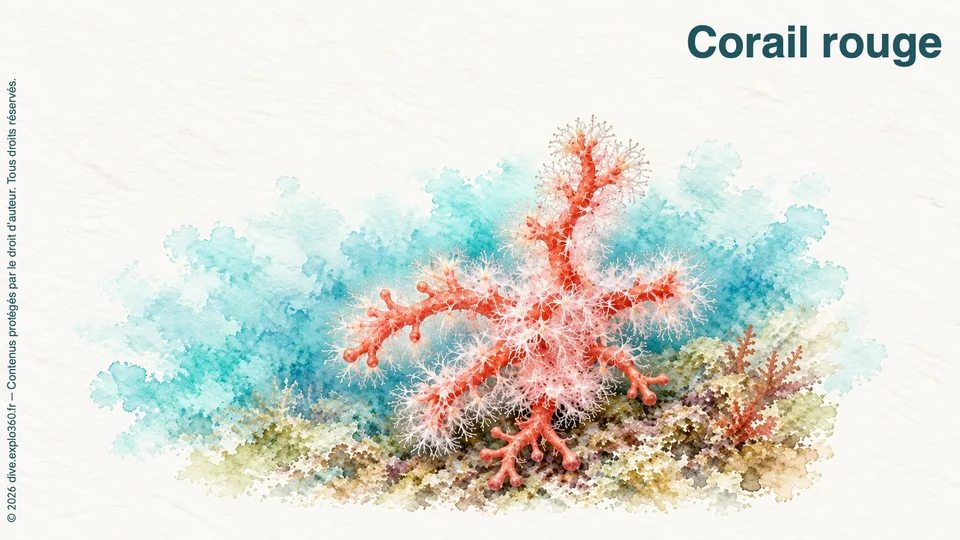
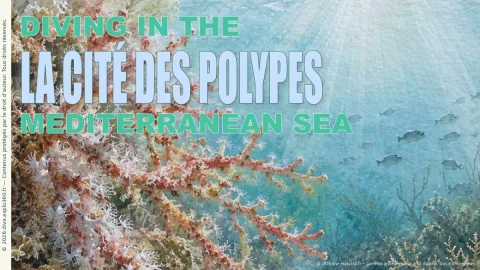
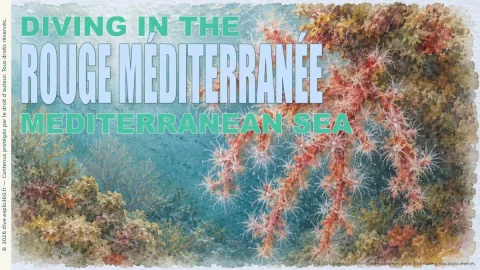
The white polyps of red coral (Corallium rubrum) stand out against its usually red branches. These tiny animals form a colony over a rigid framework shaped like a shrub with irregular branches. The branches can be pinkish and, on rare occasions, white.
When expanded, the polyps open a crown of eight tentacles, fine flexible extensions around the mouth.
WHERE DOES IT LIVE?
Red coral lives attached to rocky surfaces in dimly lit areas. It is mainly found beneath overhangs, in caves and cracks, or on vertical walls.
It occurs from a few metres deep to several hundred metres, but becomes more abundant with depth, where light is weak and conditions more stable.
WHAT DOES IT EAT?
Red coral captures small planktonic organisms and food particles carried by currents. Its polyps extend eight tentacles bearing stinging cells that help capture prey. The tentacles then bring prey to the mouth. Red coral can also absorb some organic substances dissolved in seawater. Unlike sponges, it does not filter water through a network of canals driven by a current it generates itself.
GO FURTHER WITH AMIGANSEAU
Unlock the full profile
Deepen your knowledge with the exclusive chapters and interactive resources included in an AMIGANSEAU licence.
Subscribing to Dive.Explo360 means supporting a different way to discover marine life.
Our independent platform is entirely self-funded and relies solely on subscriptions. Every licence helps us continue our work, create new content, and share what we know about the marine world with as many people as possible.
Starting at €80 per year, your support makes all the difference.

 Understand the species