


 Habitat
 Depth
 Group
 Role
 Average size
 Good to know
WHAT DOES IT LOOK LIKE?
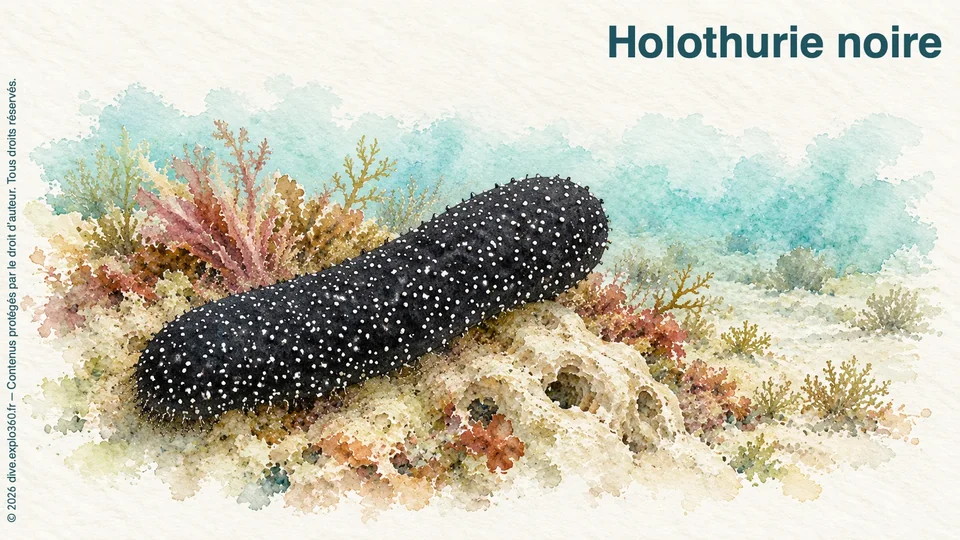
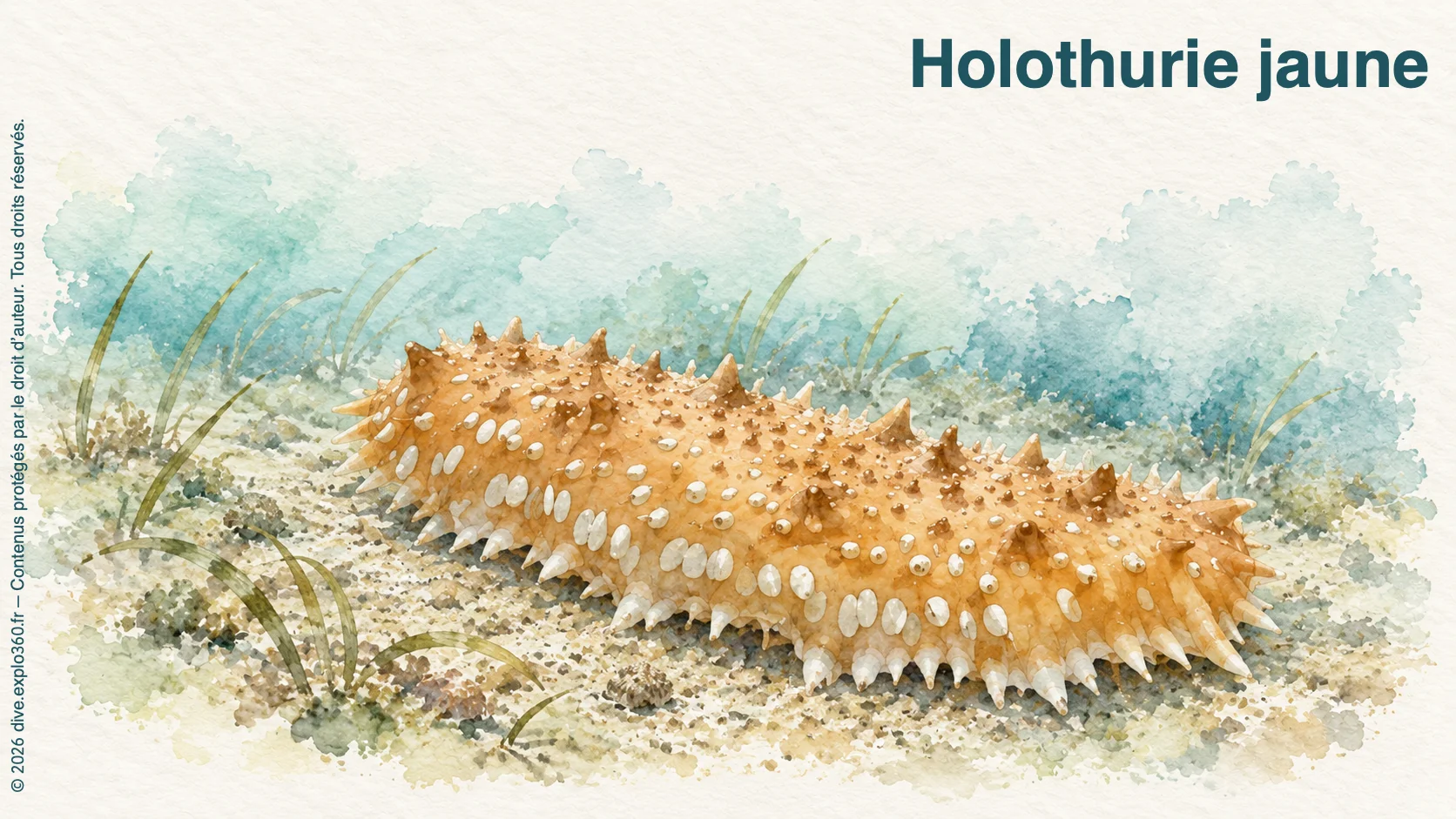
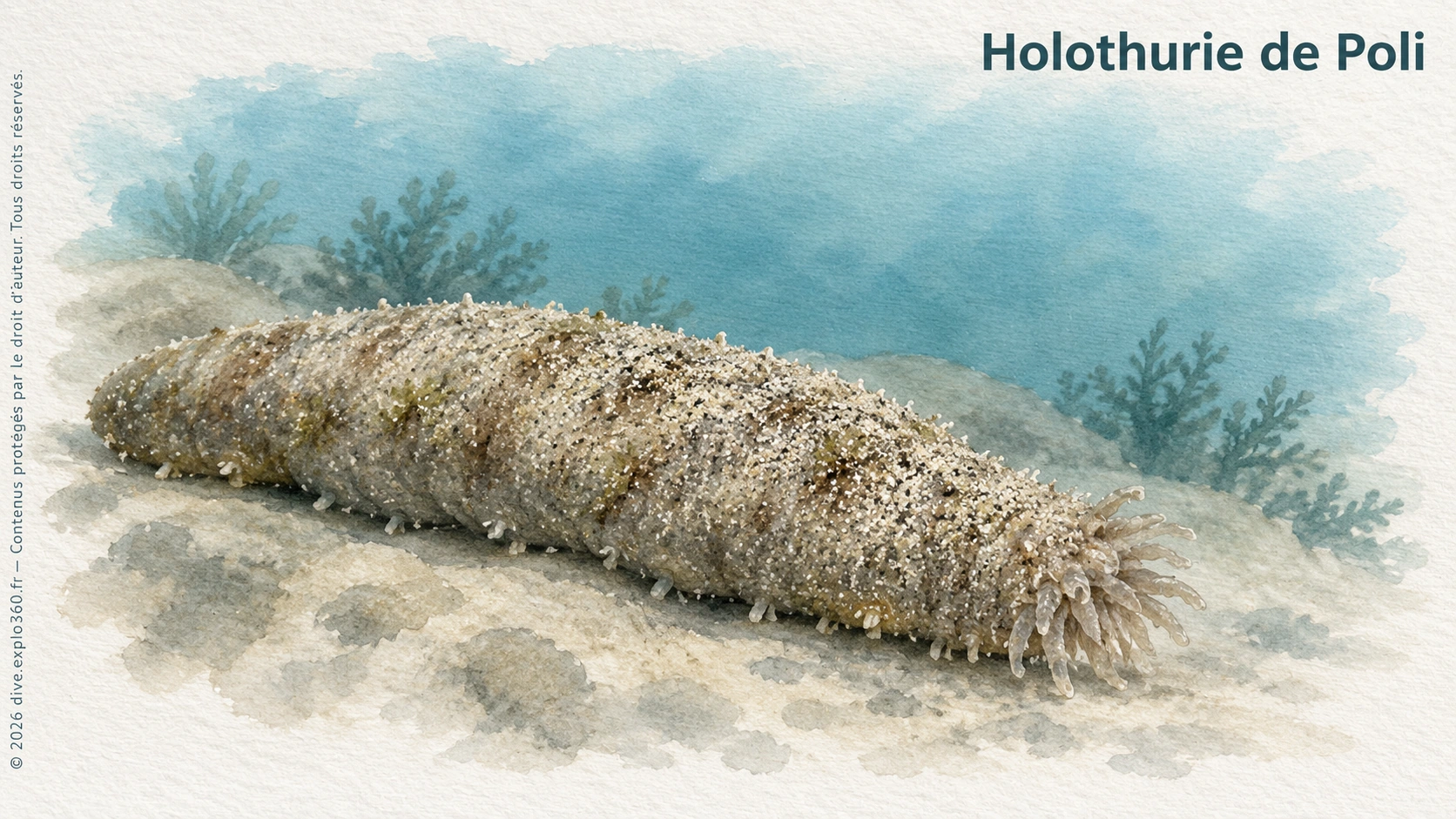
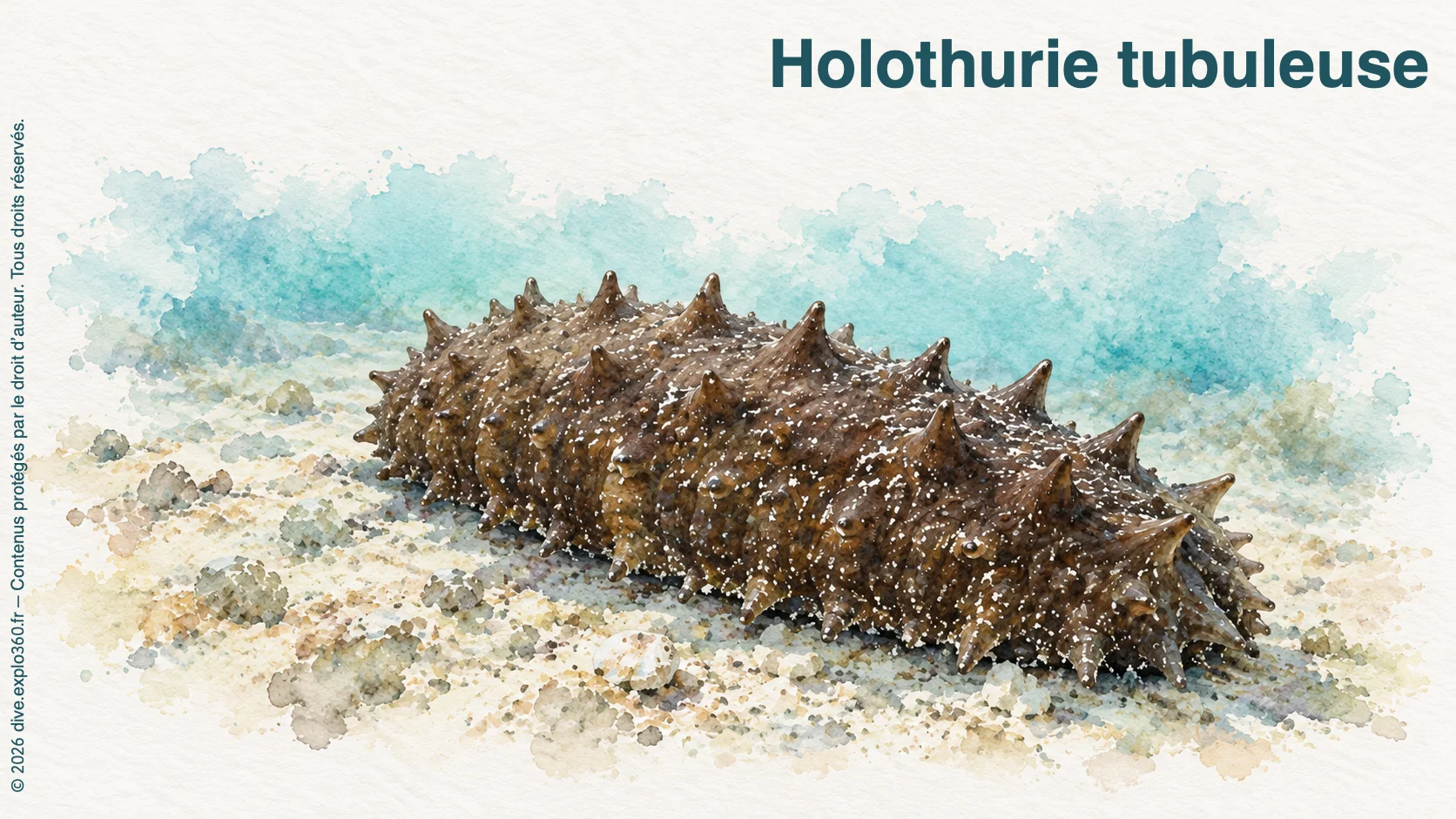
The pale tips of the papillae, the small conical bumps on the back, punctuate the colouring of the black sea cucumber (Holothuria forskali). Their white ends finish in a tiny black dot.
The body is elongated, cylindrical and flexible, paler underneath. It is most often black but may also be brown or yellowish. These variations do not change its sausage-like outline.
WHERE DOES IT LIVE?
It can be observed on various seabeds, including sand, mud, rocks and seagrass meadows. It moves slowly, crawling over the substrate through body contractions, and generally lives resting on the bottom.
WHAT DOES IT EAT?
At the front of the black sea cucumber, little tentacles collect material from the seabed and bring it to the mouth. At the rear, elongated casts appear, sometimes in strings. Between these stages, the gut uses organic matter from the swallowed mixture. Sand grains and other indigestible components are expelled. Collection, ingestion and casting reveal the meal of an animal whose tiny food particles are difficult to distinguish directly.
GO FURTHER WITH AMIGANSEAU
Unlock the full profile
Deepen your knowledge with the exclusive chapters and interactive resources included in an AMIGANSEAU licence.
Subscribing to Dive.Explo360 means supporting a different way to discover marine life.
Our independent platform is entirely self-funded and relies solely on subscriptions. Every licence helps us continue our work, create new content, and share what we know about the marine world with as many people as possible.
Starting at €80 per year, your support makes all the difference.

 Understand the species