


 Habitat
 Depth
 Group
 Role
 Average size
WHAT DOES IT LOOK LIKE?
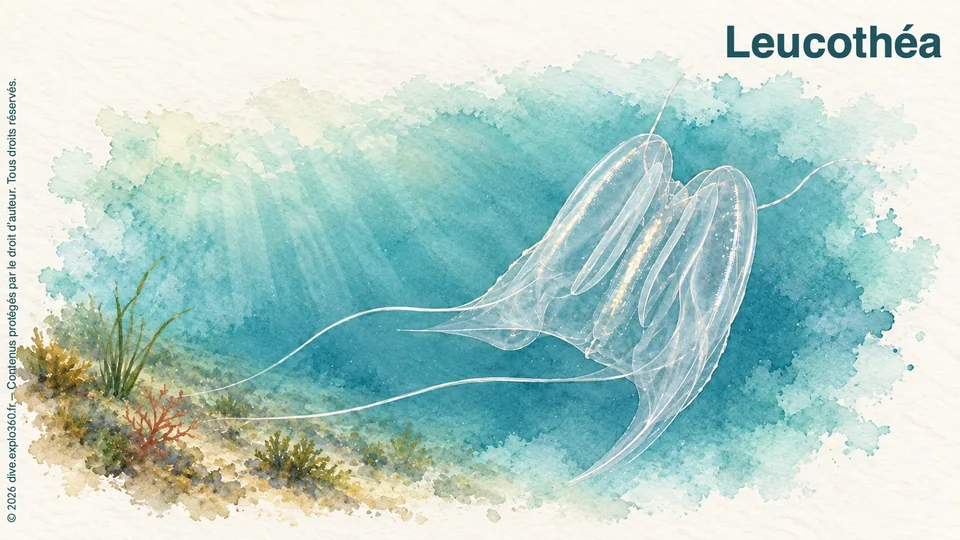
The warty comb jelly (« Leucothea multicornis ») resembles a supple glass-like body with two broad lobes framing the mouth. Numerous transparent papillae dot its surface and become easier to see in backlighting.
Eight comb rows run along the body. Their tiny beating cilia provide propulsion and create iridescent flashes when they catch the light.
WHERE DOES IT LIVE?
It inhabits open water, often in the upper few metres where small planktonic animals are abundant. It drifts with water masses while using its cilia to swim.
The species is recorded from the Mediterranean and several ocean regions. Its occurrence near shore does not make it a bottom-dwelling animal: it remains pelagic.
WHAT DOES IT EAT?
Its two oral lobes provide extensive collecting surfaces for tiny prey, particularly copepods. Tentacles bear adhesive cells, while mucus on the lobes also traps organisms passing nearby.
Water movements around the lobes and tentacles help bring prey into contact with these surfaces. Cilia on the feeding structures then help transport captured food to the mouth.
GO FURTHER WITH AMIGANSEAU
Unlock the full profile
Deepen your knowledge with the exclusive chapters and interactive resources included in an AMIGANSEAU licence.
- HOW DOES IT REPRODUCE?
- OUR OBSERVATIONS
- ARTICLE
Also included in the full profile
- Advanced navigation between description, ecological context, observations and behaviour
- Interactive food chain to explore the species’ feeding relationships
- Infographic and illustrated summary profile


 Understand the species