


 Habitat
 Depth
 Group
 Role
 Average size
WHAT DOES IT LOOK LIKE?
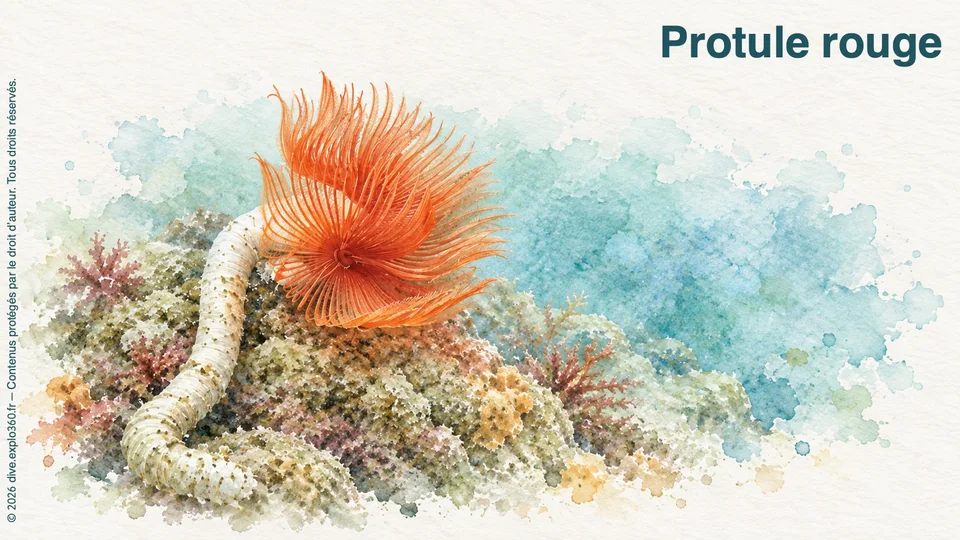
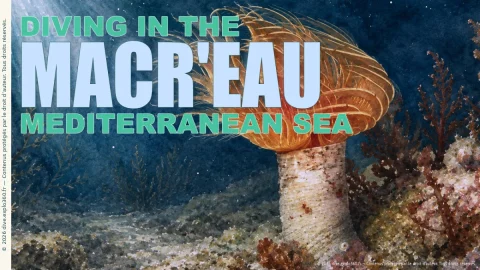
A red to orange crown draws attention to this tubeworm (Protula intestinum). Two groups of fine filaments spread into fans that together form a U.
At their base, a calcareous tube surrounds and hides most of the worm’s body. The opening lacks an operculum, the small lid visible in other tube-dwelling worms.
WHERE DOES IT LIVE?
It is attached to solid supports such as rocks, coralligenous structures or boulders. It occurs from shallow areas to greater depths.
WHAT DOES IT EAT?
Food reaches the red calcareous tubeworm in the water bathing its crown. Organic particles and small plankton organisms are collected and directed towards the mouth. The worm can feed without leaving its tube. Crown expansion is the most visible part of feeding; individual food items are rarely distinguishable at a distance. Its menu is described in broad categories, without a demonstrated preference for a particular microalga or small prey species.
GO FURTHER WITH AMIGANSEAU
Unlock the full profile
Deepen your knowledge with the exclusive chapters and interactive resources included in an AMIGANSEAU licence.
- HOW DOES IT REPRODUCE?
- OUR OBSERVATIONS
- ARTICLE
Also included in the full profile
- Advanced navigation between description, ecological context, observations and behaviour
- Interactive food chain to explore the species’ feeding relationships
- Infographic and illustrated summary profile

 Understand the species