A landscape built by life
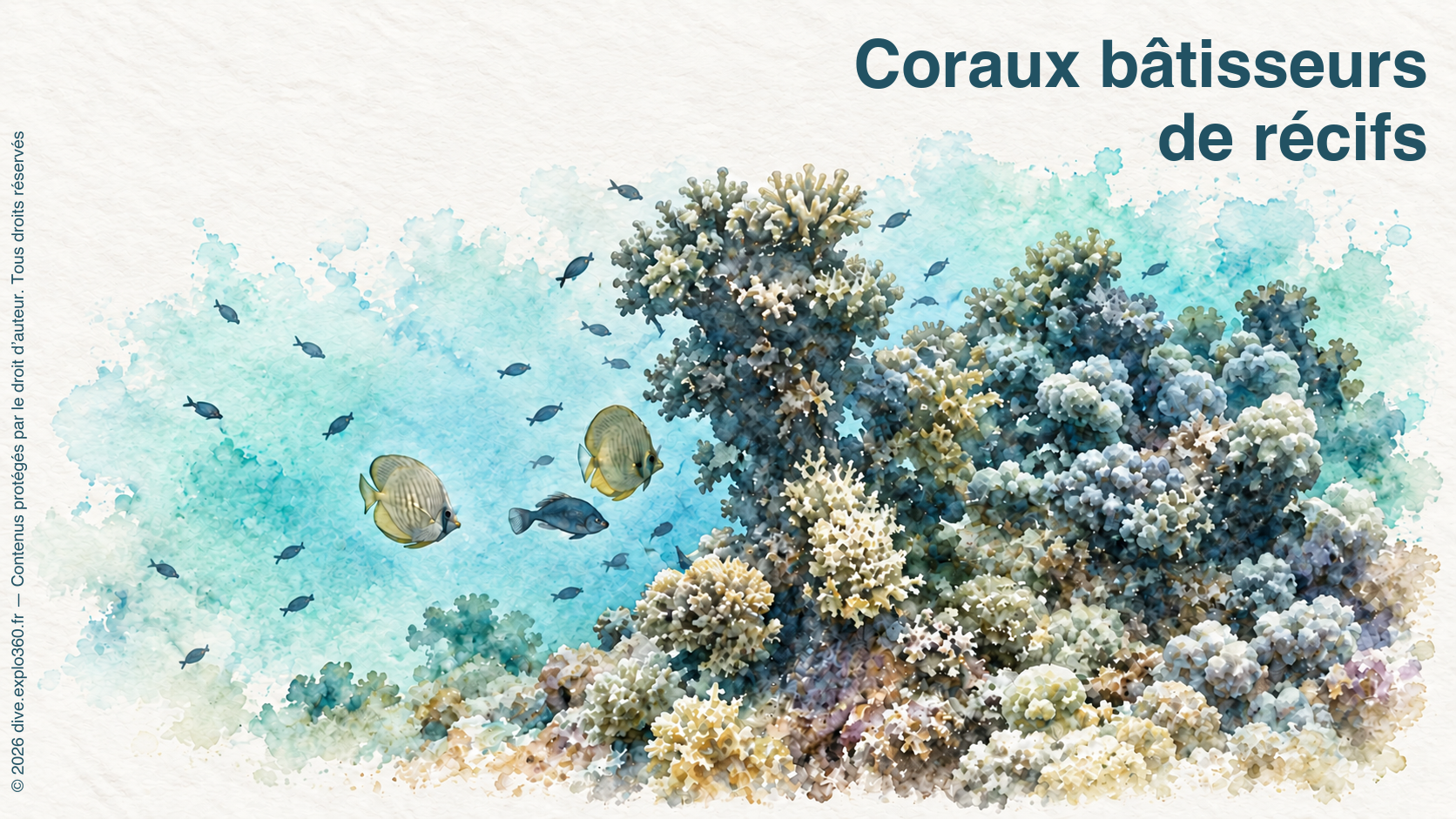
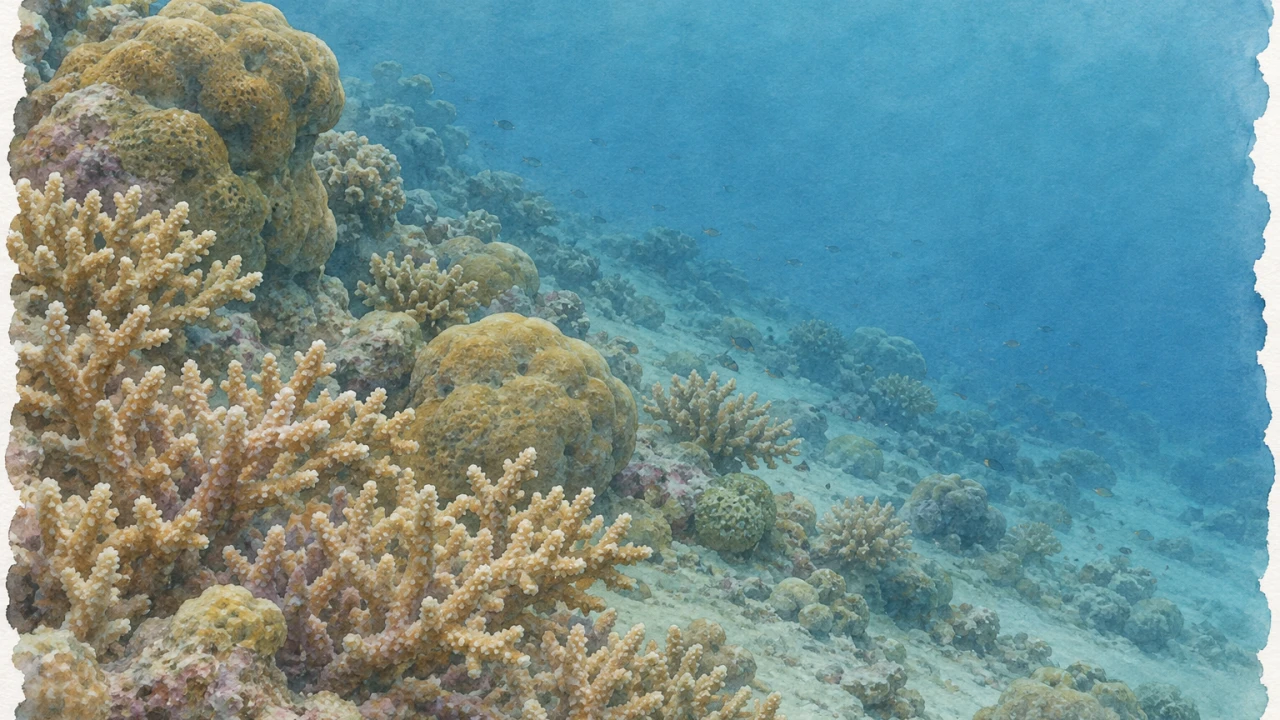
From above, a reef looks like a continuous sweep of ridges, plates and branching colonies. Up close, living coral covers only part of the surface. Beneath it lie older skeletons, with coralline algae binding parts of the framework and currents cutting through the gaps. The reef grows where the material added by living organisms exceeds what erosion and water movement take away.
The secret of the tiny builders
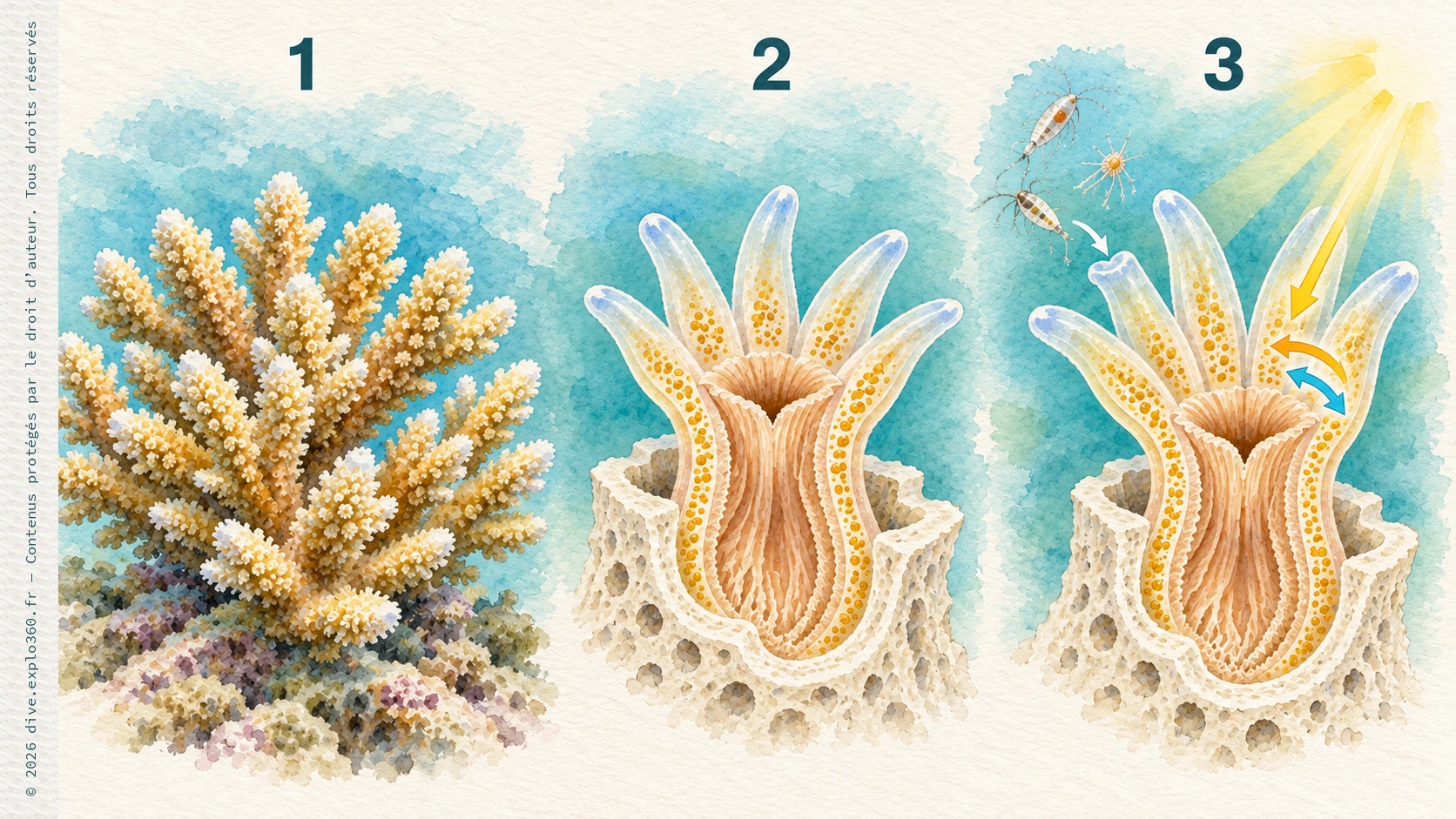
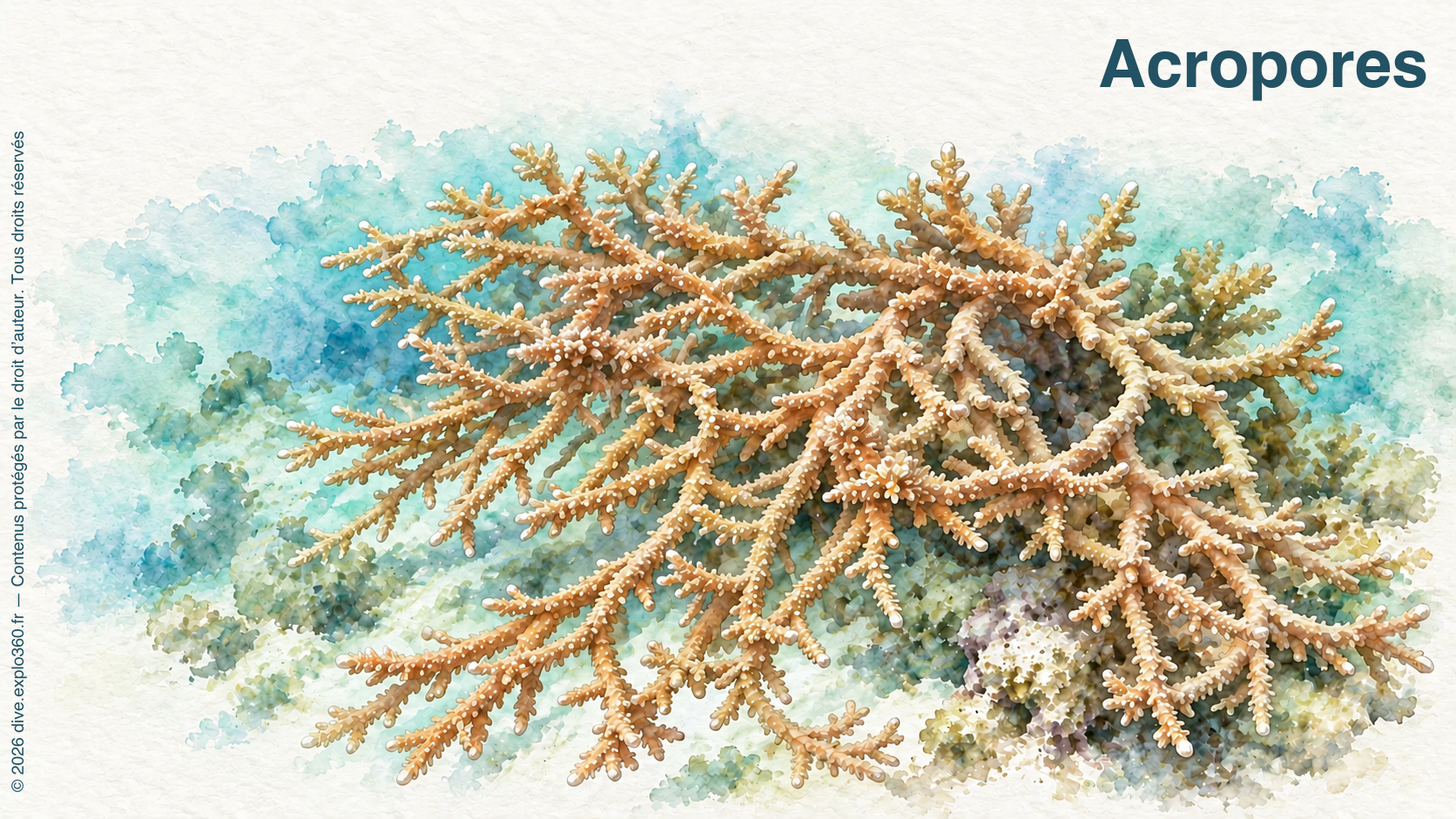
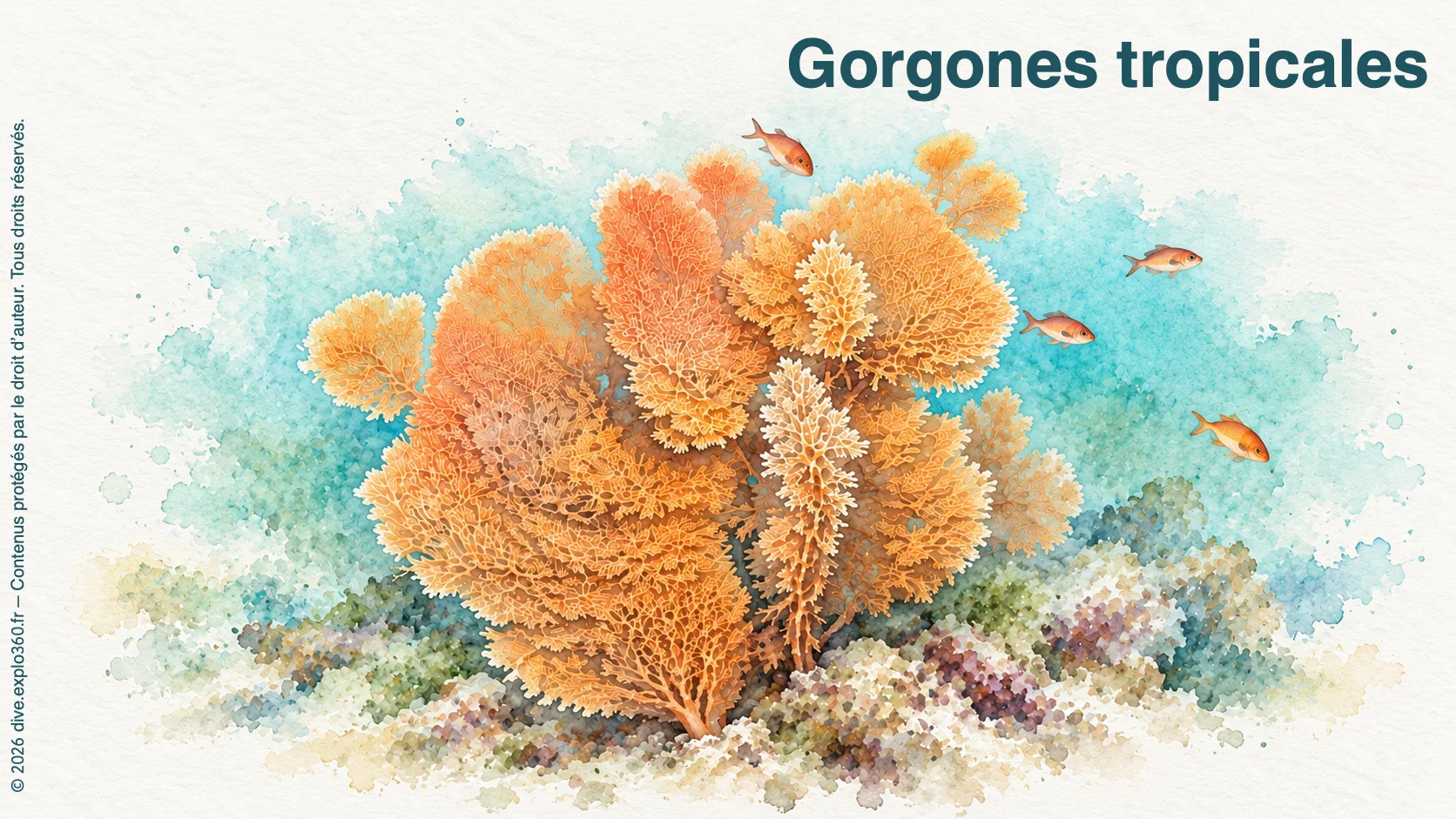
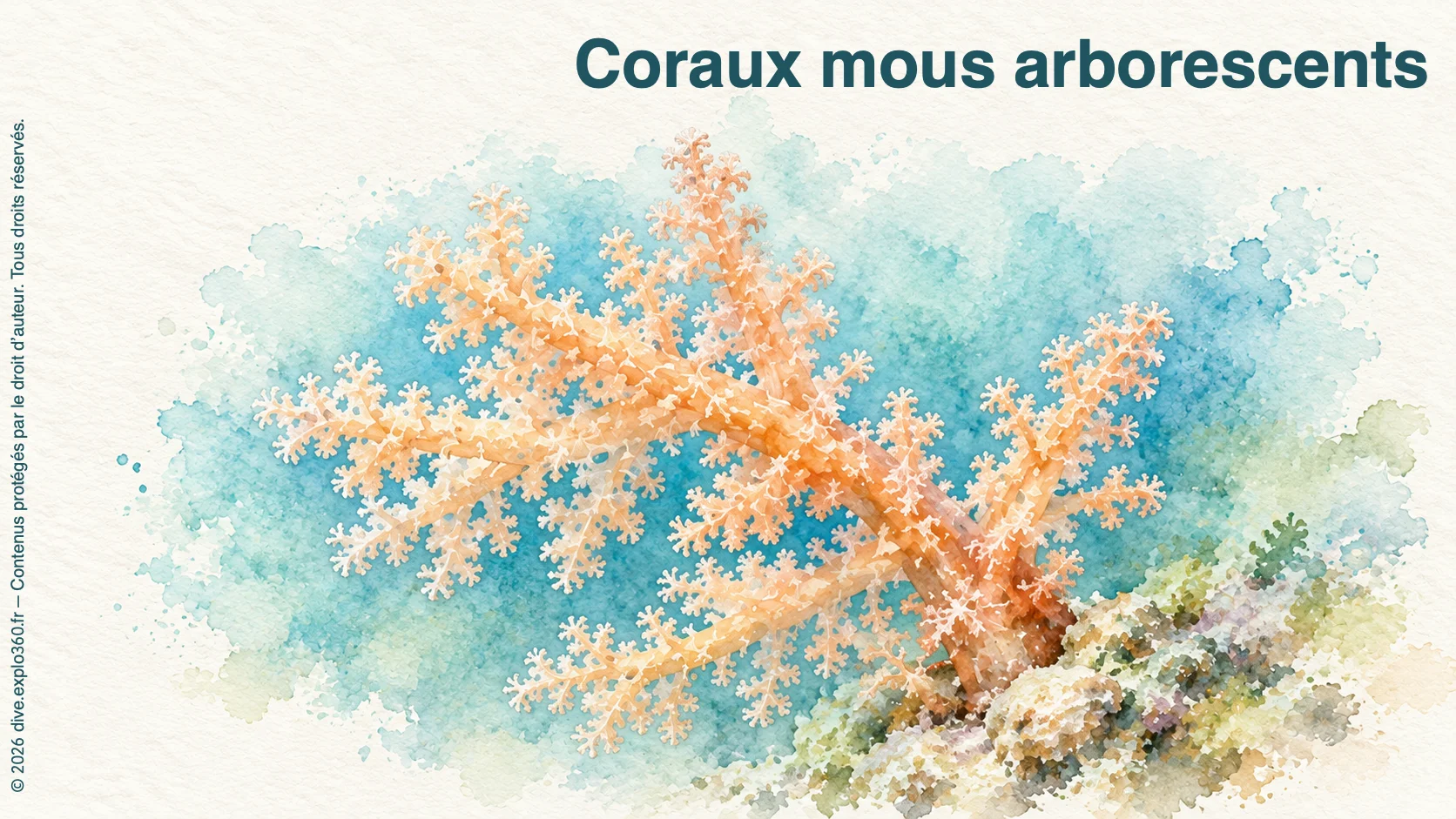
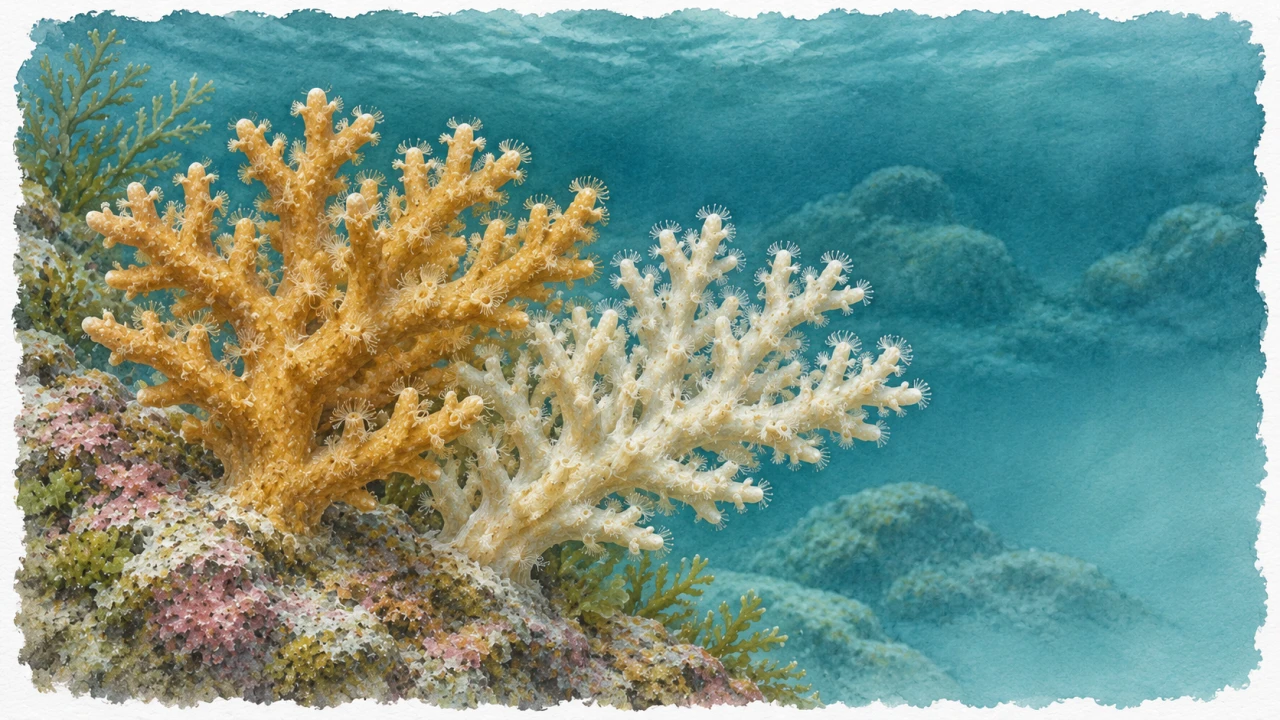
The builders are polyps, small animals whose mouths are ringed with tentacles. In stony corals, neighbouring polyps share living tissue and lay down calcium carbonate. Repeated growth can produce a branching colony, a rounded mound or a broad plate. Soft corals and sea fans can also occupy the reef, with flexible supports or small skeletal elements that generally contribute little to its rigid framework.
A partnership with light
Inside the cells of many tropical reef-building corals live microscopic algae. The coral gives them shelter and supplies carbon dioxide and nutrients. The algae use light to make organic compounds and transfer some to the host, helping fuel growth and calcification. In the same colony, tentacles can pick zooplankton and other particles out of passing water.
Three destinations, one way of looking
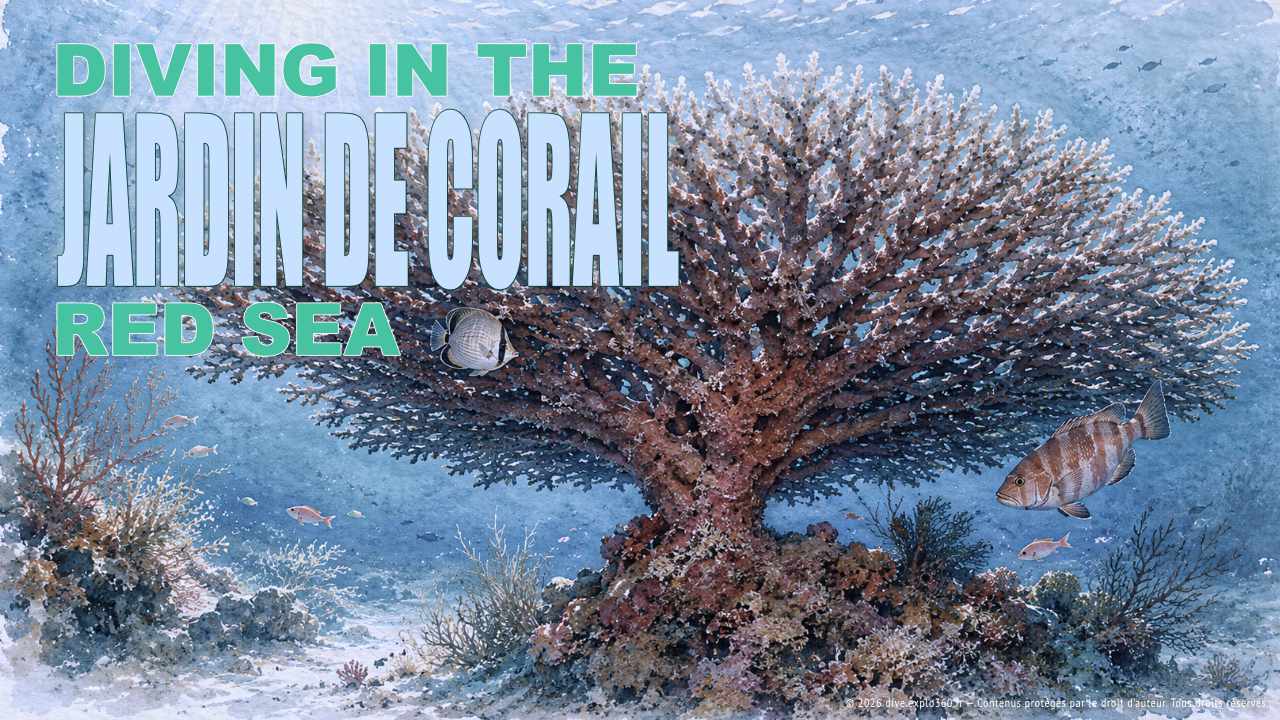
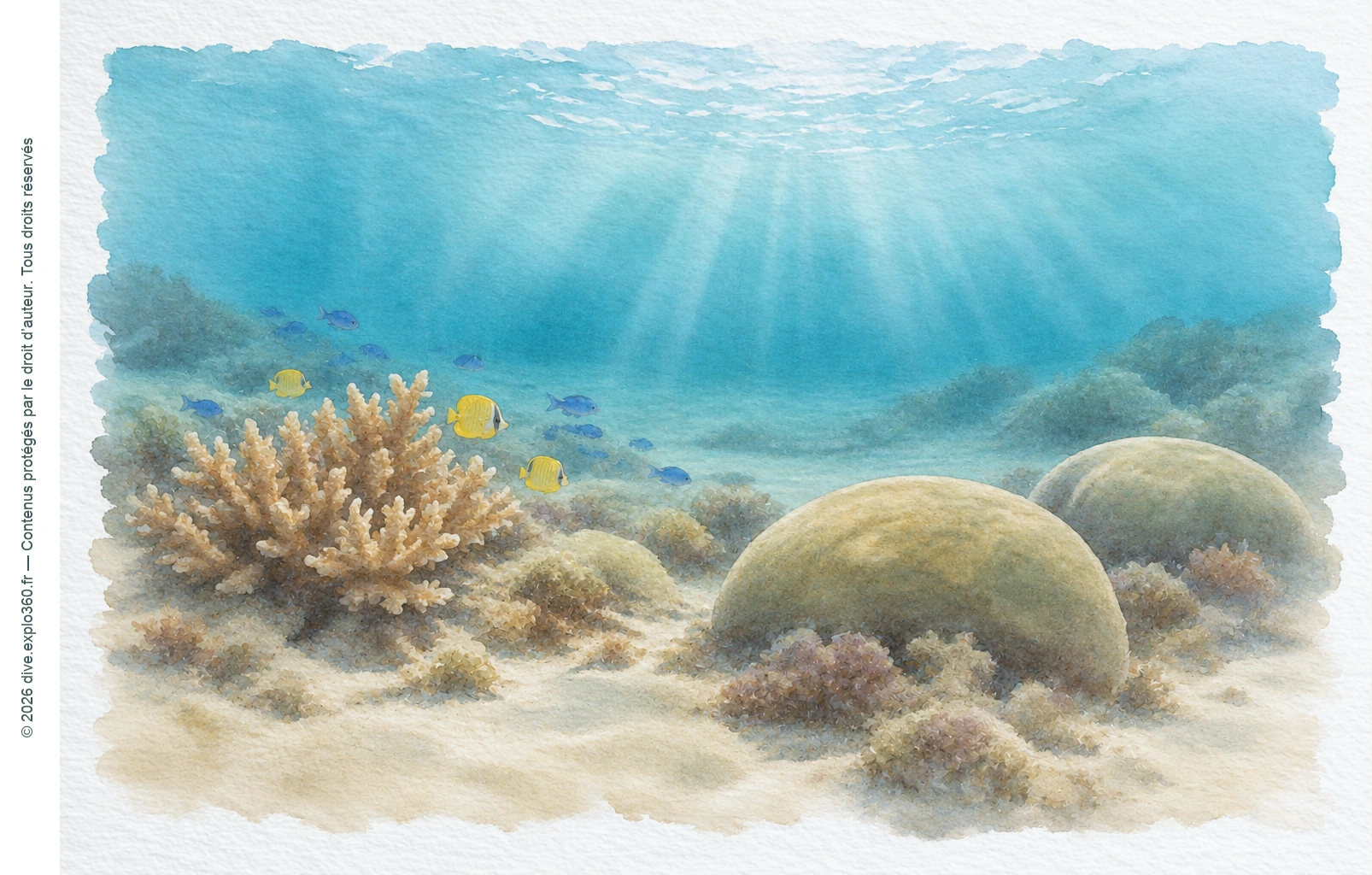
Watch the footage from the Red Sea, the Maldives and Raja Ampat and the same forms recur, from low mounds to flat plates and branching thickets. The species and local conditions vary. A ledge may serve as cover on one reef and as a feeding station on another. Following an animal for a few moments can tell you more about its use of the reef than identifying the shape of the coral beside it.
Shelters at every scale
A shrimp can disappear into a crack that scarcely interrupts the surface. A larger fish may need the shade of an overhang, while others use nearby sand or move into open water to feed. The depth of a hollow and its exposure to light and flow affect who can use it. When branches break or cavities fill with rubble, those shelters can disappear even where living coral remains.
Explore the same world