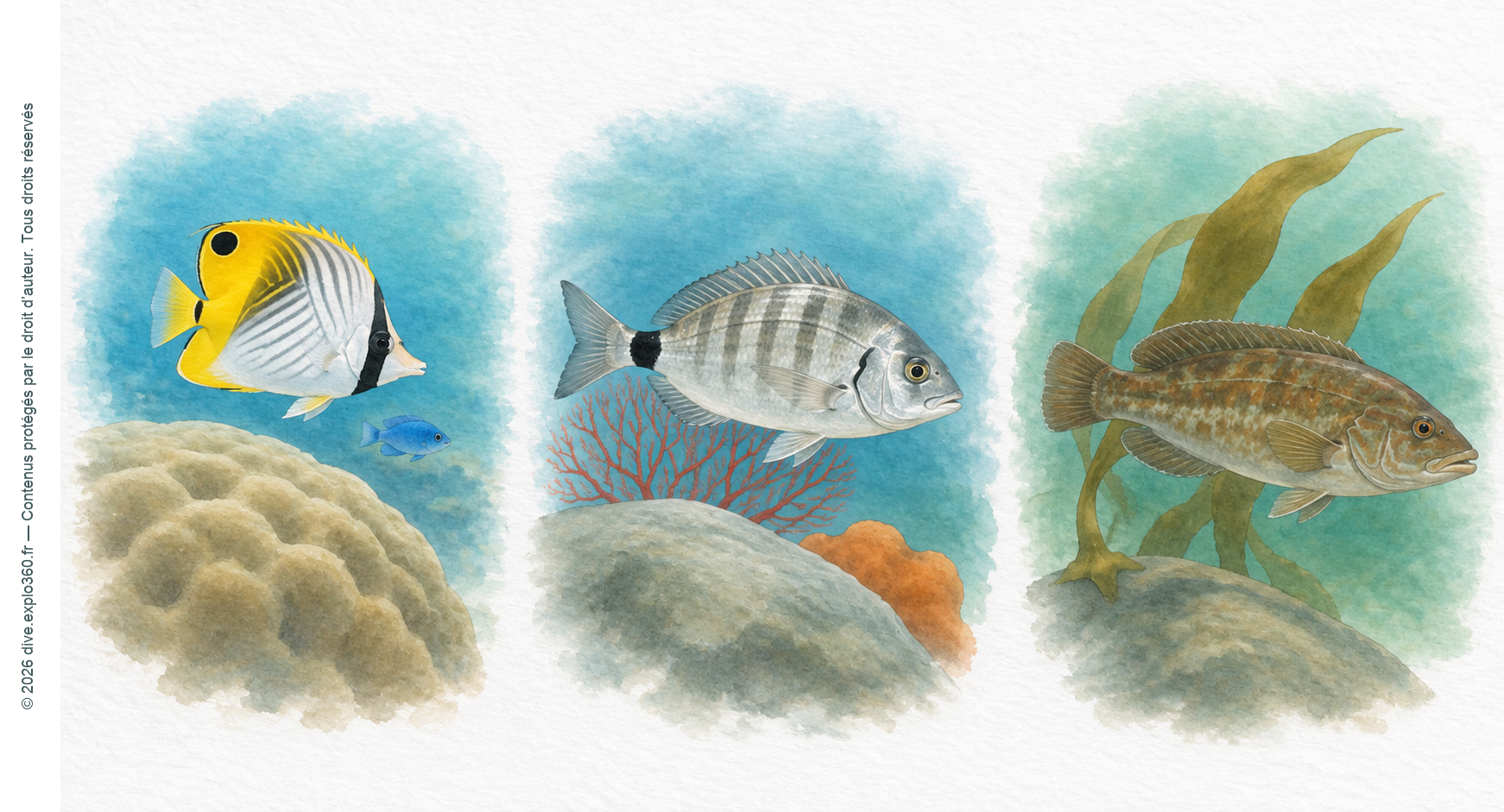
The fish does not have to match the scenery

Imagine a yellow butterflyfish swimming in front of a beige coral. It is easy to see! Yet its colours are not always there to help it hide. In some fish, colours also help them recognise others of their own species. Being colourful can therefore be useful, even if it makes them easy to spot.

Recognising other fish

On tropical reefs, fish have many different colours, stripes and spots. In some species, these patterns help them recognise other fish of the same species. They can also help them find a mate to reproduce. Fish also use movements to communicate with each other.
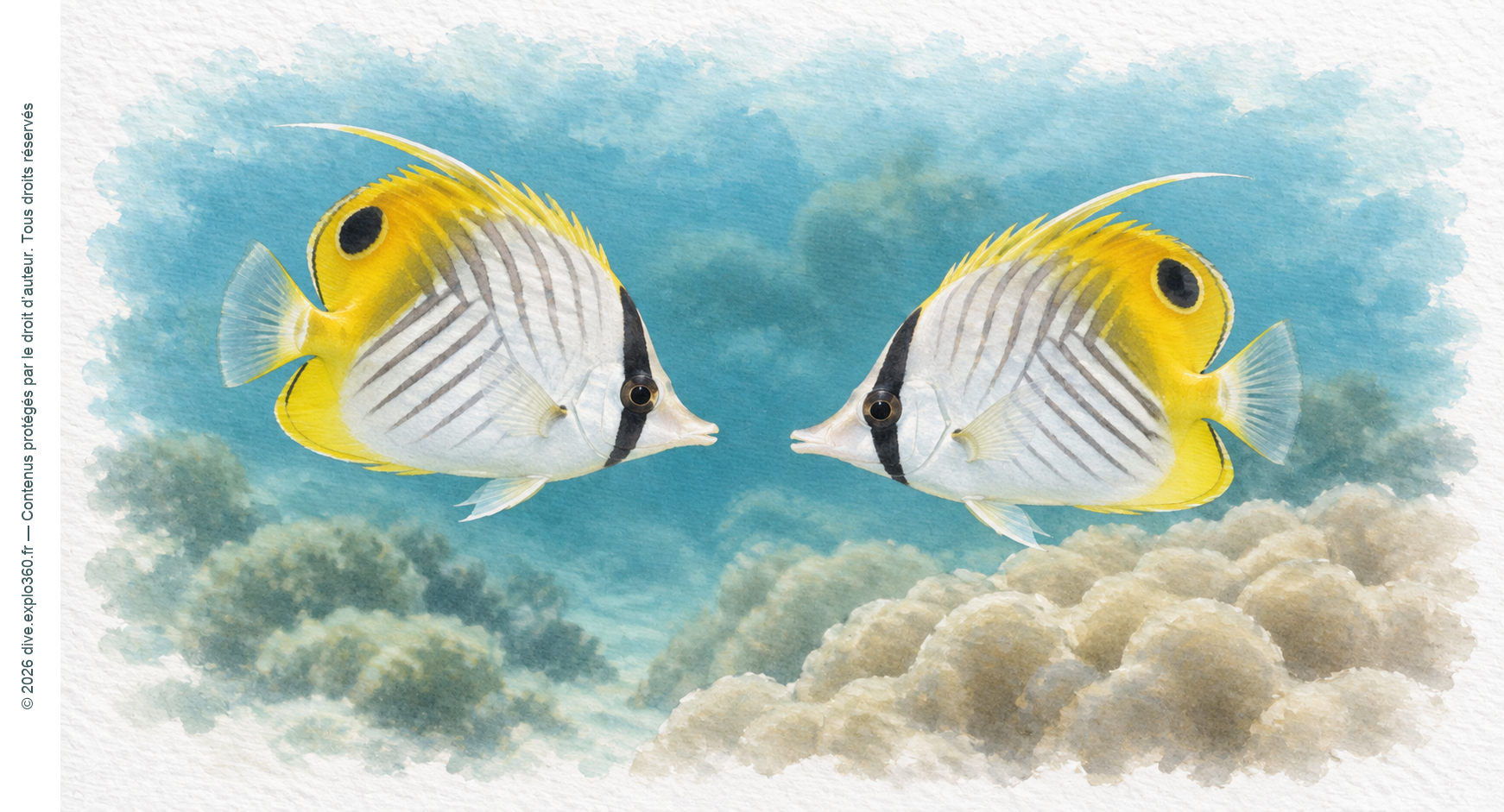
Two butterflyfish facing each other in front of a reef in muted colours.
Two butterflyfish of the same species meet. Their patterns may help them recognise a member of their own species. This scene illustrates an encounter; it does not establish the function of every marking. © dive.explo360.fr — All rights reserved. Reproduction prohibited without permission.

Standing out during an encounter

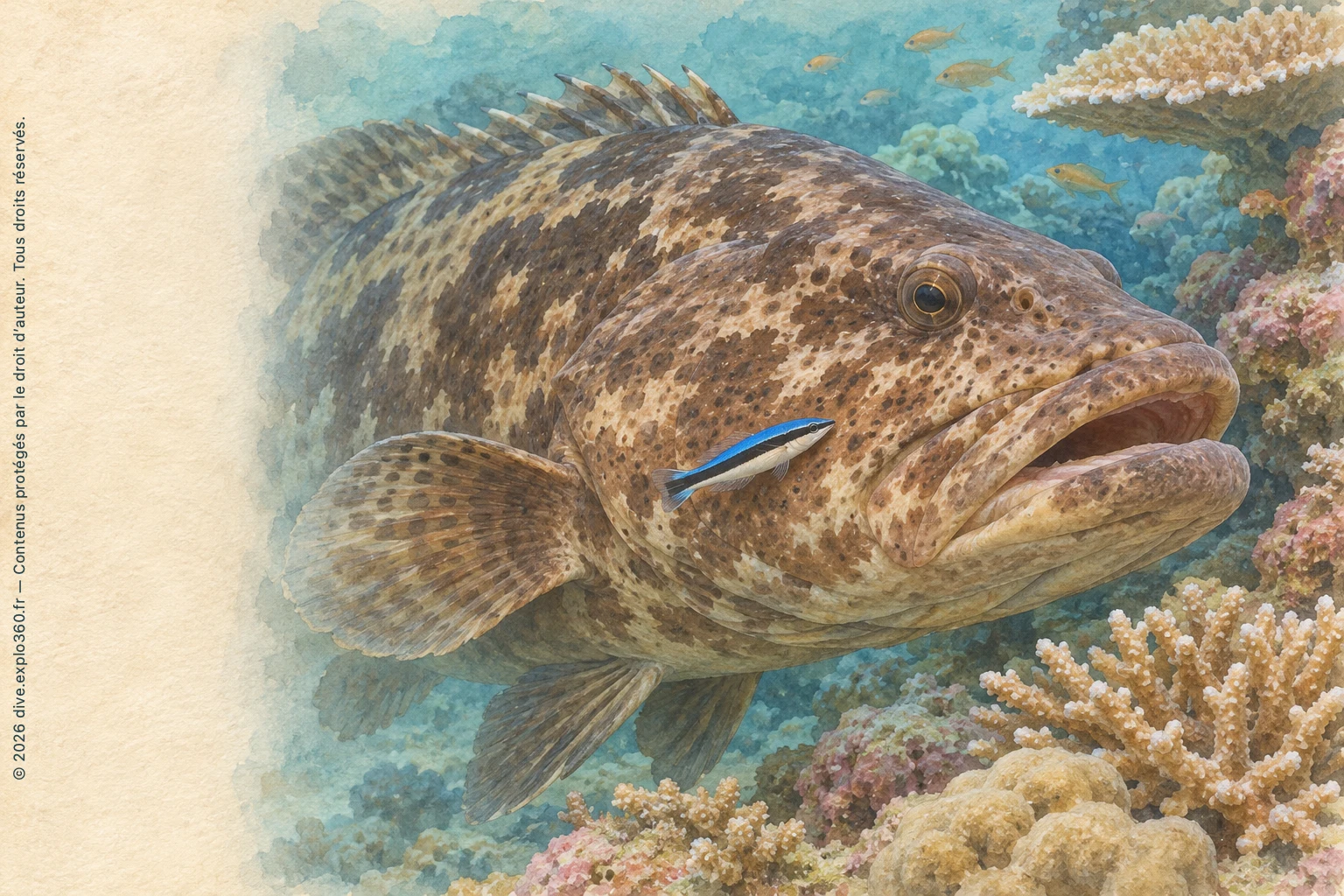
Some fish become more colourful when looking for a mate. Others change their appearance during an encounter with a rival. The small cleaner wrasse is another example: its appearance helps fish visiting for cleaning recognise it.
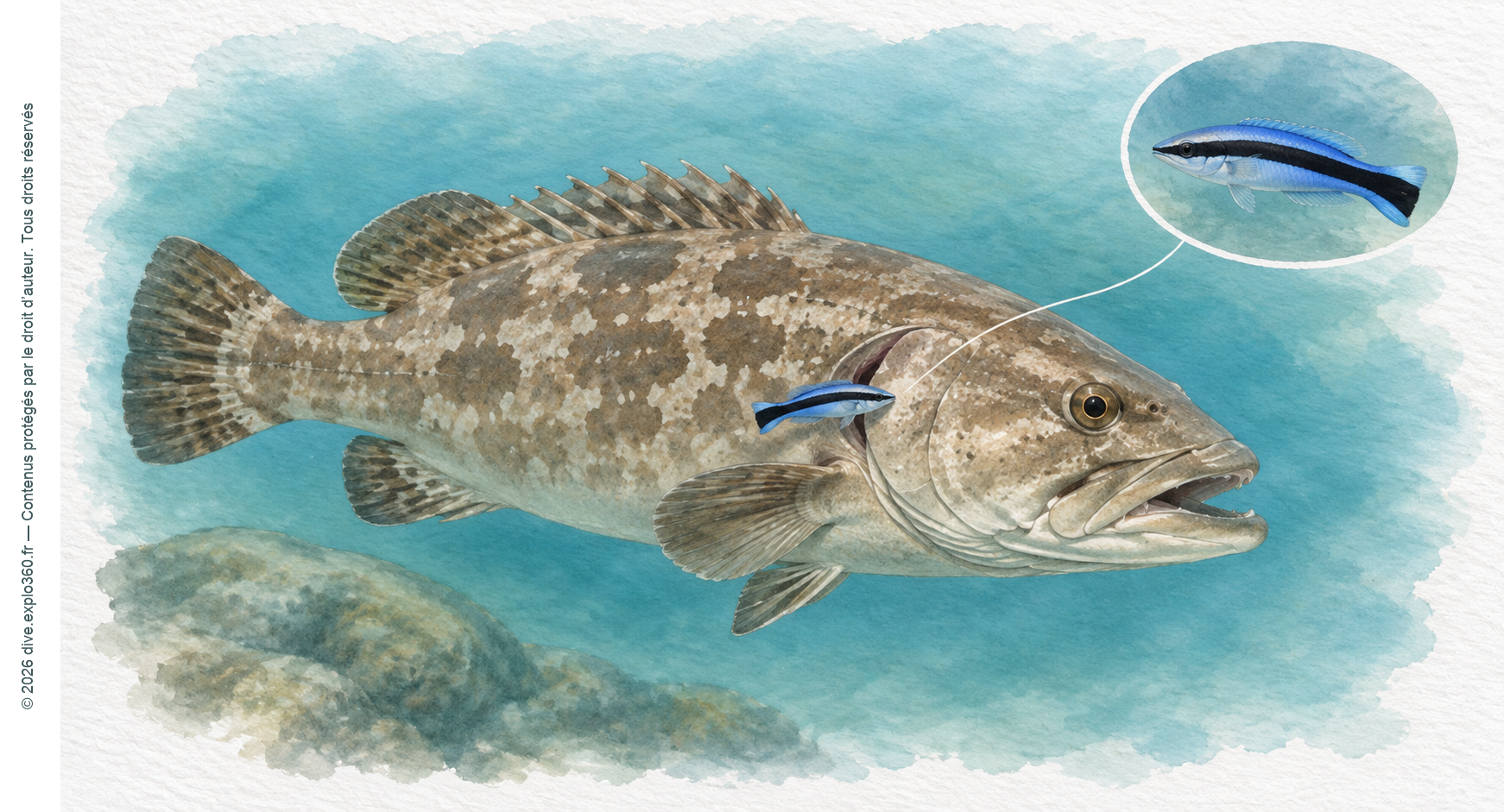

Brown grouper and small blue cleaner wrasse with a black stripe, including a cleaner detail.
A small cleaner wrasse approaches a grouper. Cleaning is an interaction between species: the smaller fish can remove parasites. Its shape and behaviour accompany its colours. © dive.explo360.fr — All rights reserved. Reproduction prohibited without permission.

Continue reading

AMIGANSEAU CONTENT

The rest of this article is for subscribers

Log in with your AMIGANSEAU licence to continue reading.

All active AMIGANSEAU licences give access to the full article.