


Partners and information

Contact us

Verification code
DIVE.EXPLO360.FR
1 / 19

STEP 1

Explore the reef

PrerequisitesNo prior knowledge required
Duration35–50 minutes
PublicAdults

Learning objectives

  • Distinguish a coral, a colony and a reef.
  • Connect organisms with their habitats and ecological functions.
  • Distinguish a filmed observation from a hypothesis about behaviour.
  • Understand possible effects of stress and observe without causing damage.

At first, the reef looks like a landscape. This path invites you to recognise living organisms within it, then understand what connects them. Videos, profiles, an article and reflection panels alternate throughout. Two untimed quizzes check your understanding. The duration is a guide: take time to revisit an observation.
STEP 2

Look first, then name

In the next video, use Clic-MOI to find reef-building corals and the two-band clownfish, both recorded in the segments of Jardin de corail. Before opening a profile, note what you actually see: shape, position and movement. “It is near a shelter” describes a position; “it is defending that shelter” is an interpretation requiring more evidence.

STEP 3

Observe: Jardin de corail, Red Sea

Select the named Clic-MOI sequences and compare an attached organism with a mobile fish. A single video cannot establish the health of an entire reef. Return to the path to move from the landscape to its builders.

STEP 4

From landscape to animal

A coral is neither a plant nor a stone: it is an animal. In colonial corals, many polyps live together. Stony corals deposit a limestone skeleton; accumulated structures, together with other organisms and physical processes, contribute to a reef. The next profile distinguishes the living organism from the structure it produces.

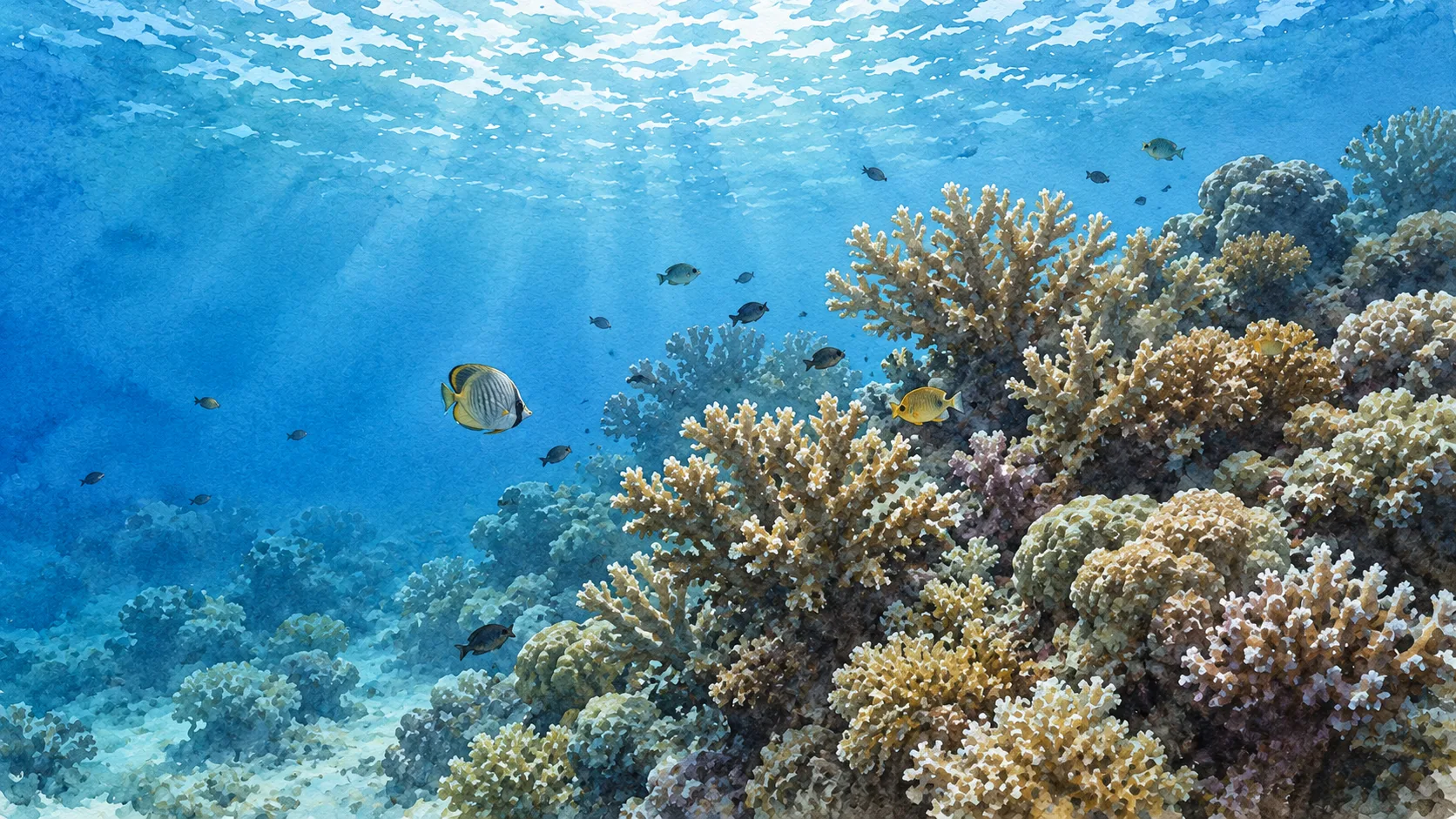
Watercolour illustration of a tropical reef and its fish
Educational illustration of a tropical reef; it does not depict a specific filming site. © dive.explo360.fr — Tous droits réservés. Reproduction interdite sans autorisation.

STEP 5

Recognise reef-building corals

Read the adult profile. Look for what defines the group, then distinguish the polyp, colony and reef. A depth stated in a profile describes documented occurrence; it does not give the filming depth of the video.

STEP 6

A partnership with light

Many shallow tropical corals host microscopic algae within their tissues. Through photosynthesis, these algae supply part of the coral’s nutritional resources. Polyps can also catch small prey with their tentacles. This association is a symbiosis: it does not mean that all corals live in the same way or that light alone feeds them.

🔒

CONTINUE THE LEARNING PATH

Intermediate quiz: your first landmarks

This step and the following steps are reserved for holders of an active AMIGANSEAU licence.

Discover licences
The learning path resumes automatically after you sign in.
🔒

CONTINUE THE LEARNING PATH

Inhabitants: functions that overlap

This step and the following steps are reserved for holders of an active AMIGANSEAU licence.

Discover licences
The learning path resumes automatically after you sign in.
🔒

CONTINUE THE LEARNING PATH

The lined surgeonfish: connect feeding and environment

This step and the following steps are reserved for holders of an active AMIGANSEAU licence.

Discover licences
The learning path resumes automatically after you sign in.
🔒

CONTINUE THE LEARNING PATH

From an individual role to reef processes

This step and the following steps are reserved for holders of an active AMIGANSEAU licence.

Discover licences
The learning path resumes automatically after you sign in.
🔒

CONTINUE THE LEARNING PATH

Change perspective: Bleu lagon, Maldives

This step and the following steps are reserved for holders of an active AMIGANSEAU licence.

Discover licences
The learning path resumes automatically after you sign in.
🔒

CONTINUE THE LEARNING PATH

The magnificent sea anemone: related, but different

This step and the following steps are reserved for holders of an active AMIGANSEAU licence.

Discover licences
The learning path resumes automatically after you sign in.
🔒

CONTINUE THE LEARNING PATH

Connect relationships without inventing a story

This step and the following steps are reserved for holders of an active AMIGANSEAU licence.

Discover licences
The learning path resumes automatically after you sign in.
🔒

CONTINUE THE LEARNING PATH

Go deeper: The secrets of coral reefs

This step and the following steps are reserved for holders of an active AMIGANSEAU licence.

Discover licences
The learning path resumes automatically after you sign in.
🔒

CONTINUE THE LEARNING PATH

Understand stress without jumping to conclusions

This step and the following steps are reserved for holders of an active AMIGANSEAU licence.

Discover licences
The learning path resumes automatically after you sign in.
🔒

CONTINUE THE LEARNING PATH

Observe without causing harm

This step and the following steps are reserved for holders of an active AMIGANSEAU licence.

Discover licences
The learning path resumes automatically after you sign in.
🔒

CONTINUE THE LEARNING PATH

Final quiz: reason from observation

This step and the following steps are reserved for holders of an active AMIGANSEAU licence.

Discover licences
The learning path resumes automatically after you sign in.
🔒

CONTINUE THE LEARNING PATH

Check and continue

This step and the following steps are reserved for holders of an active AMIGANSEAU licence.

Discover licences
The learning path resumes automatically after you sign in.
🔒

CONTINUE THE LEARNING PATH

Conclusion: a reef is a network of relationships

This step and the following steps are reserved for holders of an active AMIGANSEAU licence.

Discover licences
The learning path resumes automatically after you sign in.