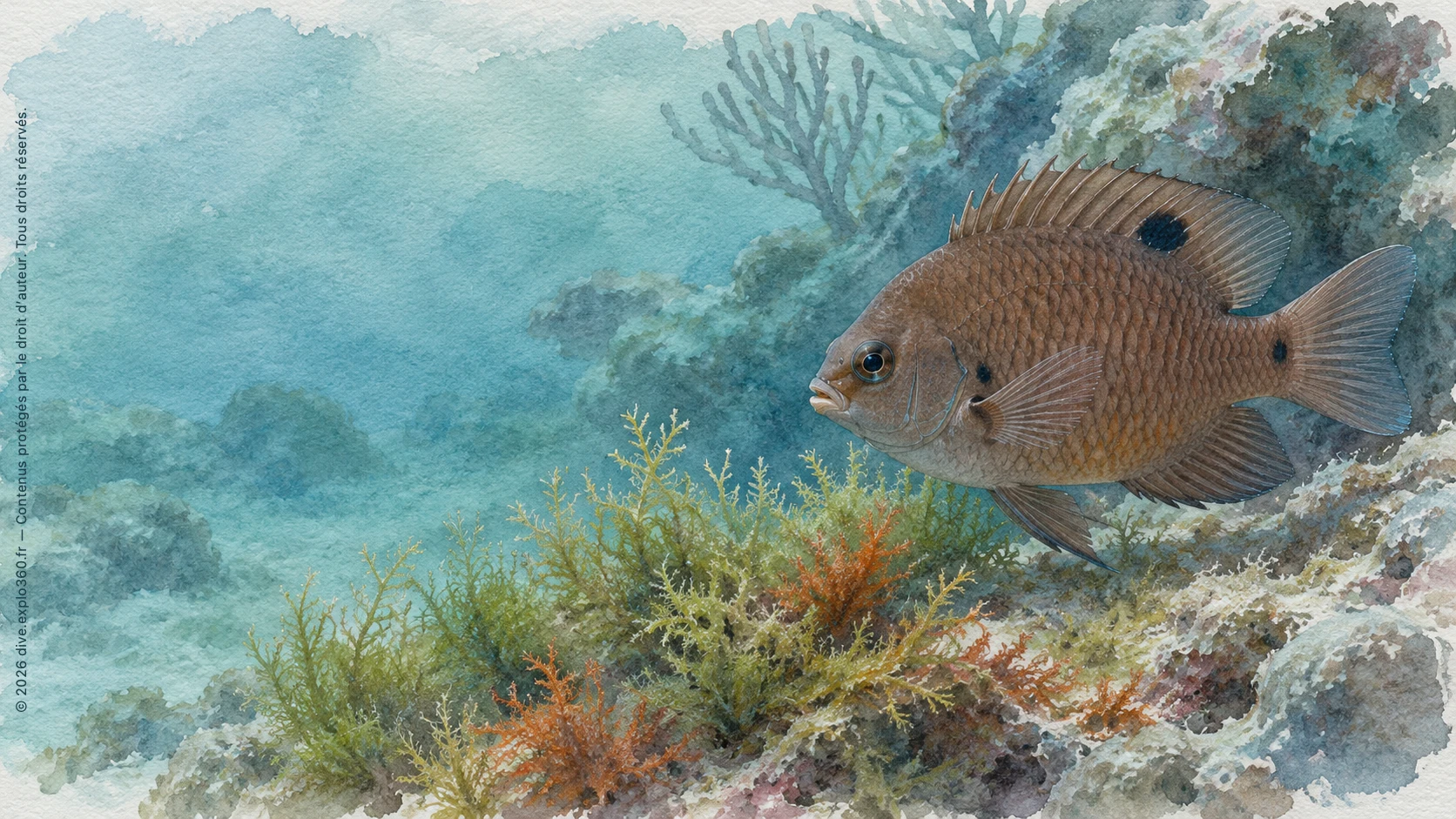
The damselfish and its garden
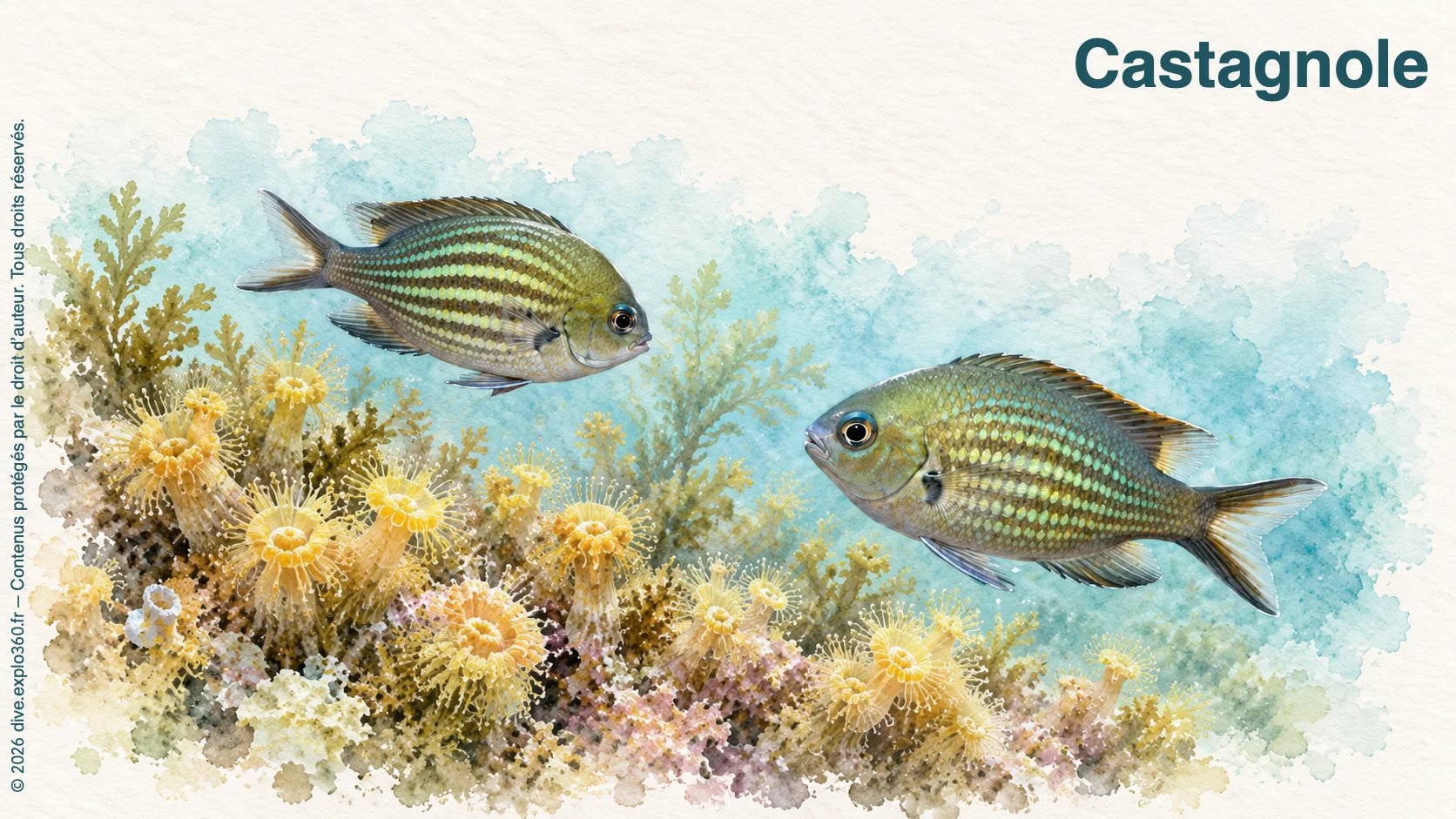
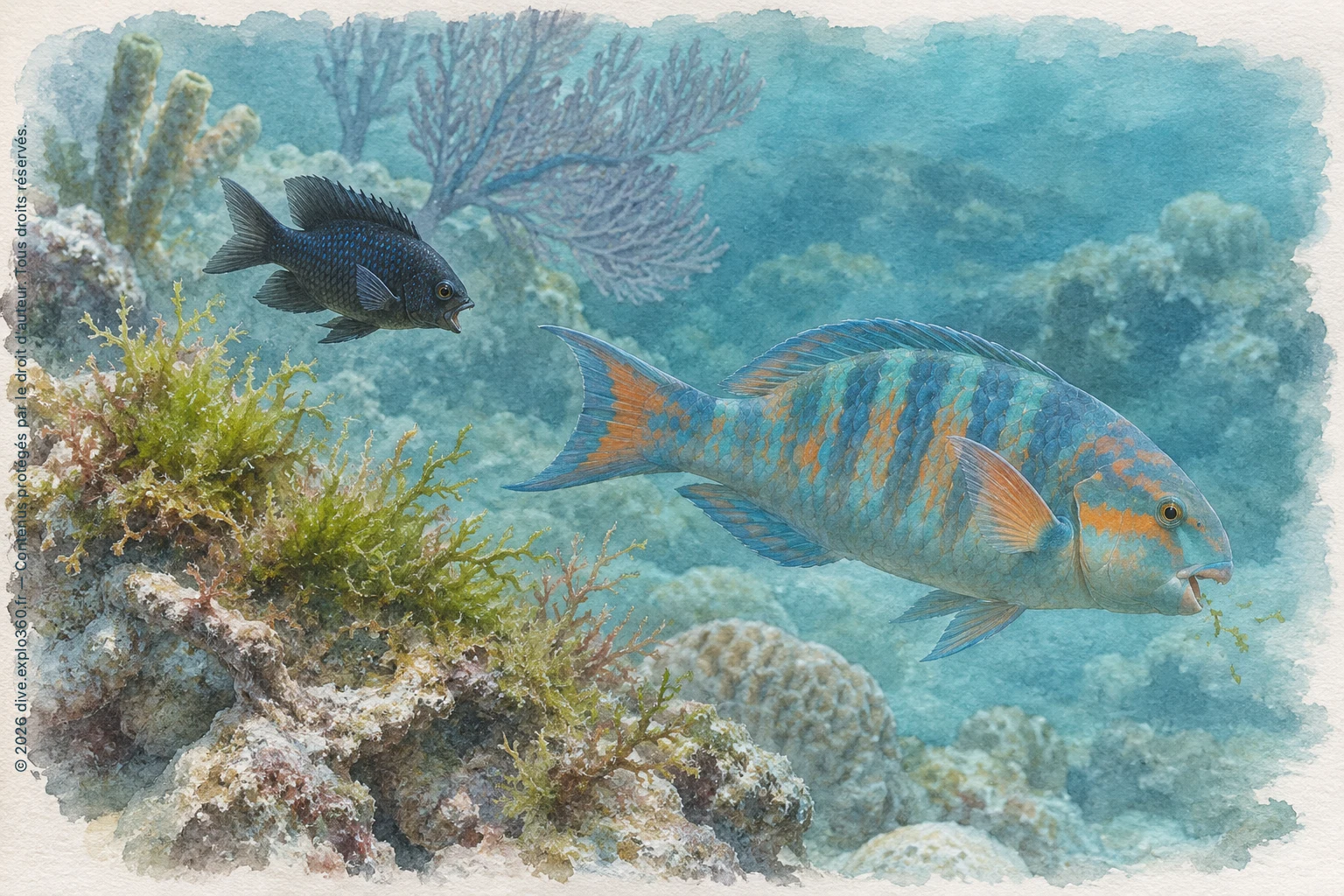
On Caribbean reefs, the threespot damselfish, Stegastes planifrons, is only about ten centimetres long. It can defend its territory against much larger fish. If a surgeonfish approaches its patch of algae, the damselfish may dart towards it and give chase until the intruder leaves.
The intruder can be two or three times the damselfish’s size. What makes the patch worth the risk? Look at what grows on the reef beneath the fish.
The damselfish feeds on the mat of algae it tends. Driving off grazers leaves more of the patch for the damselfish to feed on over time.
The threespot damselfish can also bite into living coral tissue. Algae can colonise the exposed skeleton, and tending the garden can contribute to the deterioration of the coral beneath it.
A single fish can reshape a small patch of reef. Its chases also affect which fish pass through and where they graze.
A boundary revealed by chasing
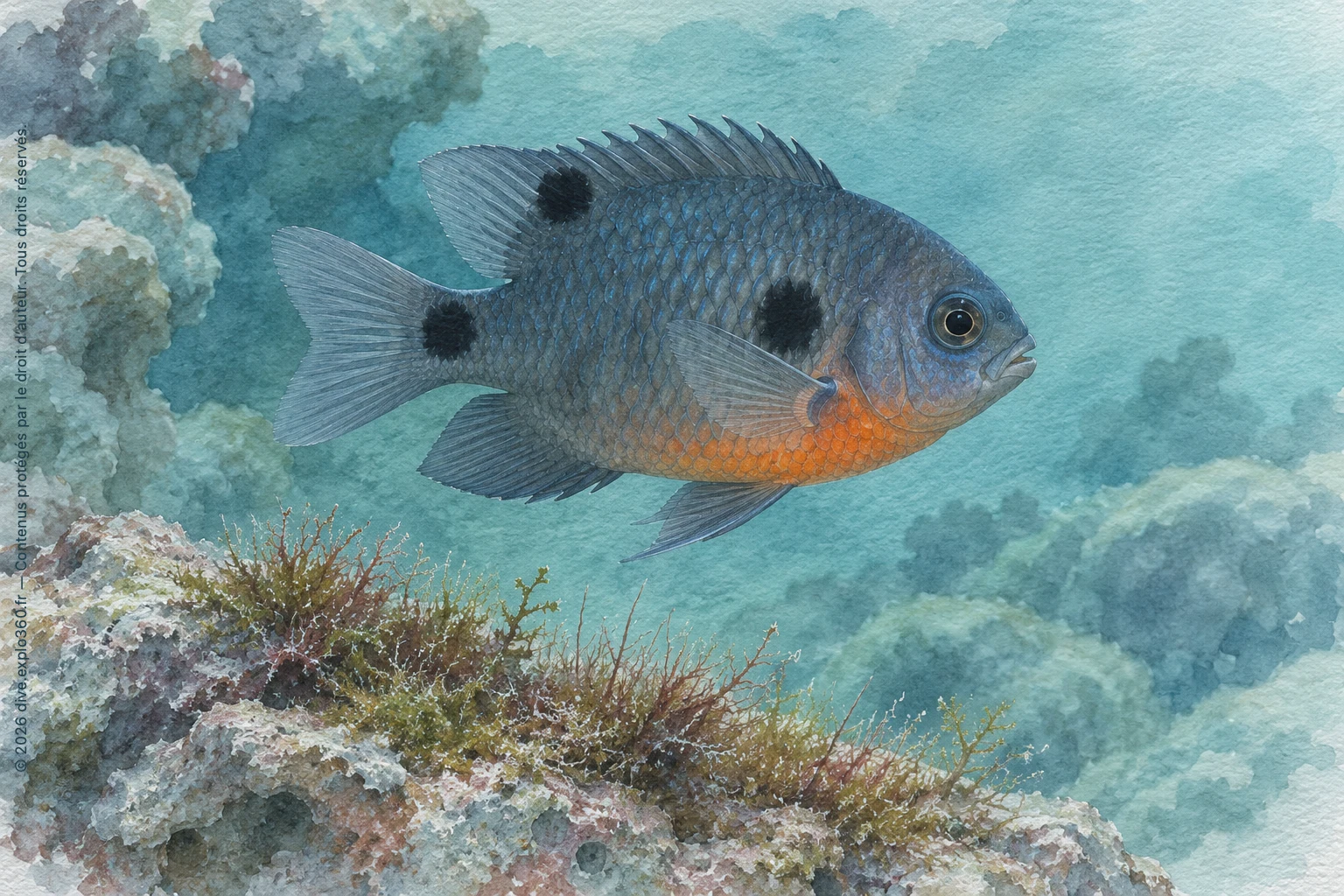
On a reef, no line marks the boundaries of a territory. Yet, occupants often seem to know where their territory begins. A territorial fish can patrol a relatively small area, return regularly to the same places and react when an intruder approaches.
The boundaries can shift with food availability, the fish’s neighbours, the breeding cycle or the features of the seabed. A damselfish tending an algal garden often rushes towards an intruder and gives chase. But not all visitors trigger the same reaction.
In Utila, Honduras, two species of territorial damselfish, Stegastes planifrons and Stegastes diencaeus, were observed on mapped reef plots. The fish did not attack every intruder. Some territory holders were much more aggressive than others.
Fewer competing fish were seen near the most aggressive individuals. The number of territorial damselfish alone could not explain where other fish were found on the reef. How readily the residents gave chase mattered too.
A particularly aggressive damselfish could make its patch a risky route for grazers and change how they moved around the reef. But what happens when an intruder refuses to leave?
In territorial fish, confrontation often begins before the first contact. The resident may turn to face the intruder, spread its fins, rush towards it or approach it repeatedly. These displays can sometimes drive an intruder away without either fish being injured.
If the intruder stays, a display can give way to a longer chase, repeated charges or physical contact, including bites. Some species rely more on displays, while others may come to blows. Size plays an important role, but it is not always enough to predict the outcome.
A fish that already occupies a territory has a possible advantage: it knows the refuges, passages and resources it defends. It may also have more to lose than a passing individual. This does not mean that an owner always wins. Defence takes energy. A fish that gives chase gives up time it could spend feeding or doing something else. Confrontations can also lead to injuries.
A large, exposed patch or one that rivals cross constantly can be hard to defend. A well-placed patch of a few square metres may be enough. Food is just one reason to hold a territory.
Some defend a place that will only gain its full value at the time of reproduction.
A damselfish guards its eggs
For much of the year, schools of Mediterranean damselfish, Chromis chromis, seem to share the water above rocky seabeds without much conflict. Then the breeding season begins.
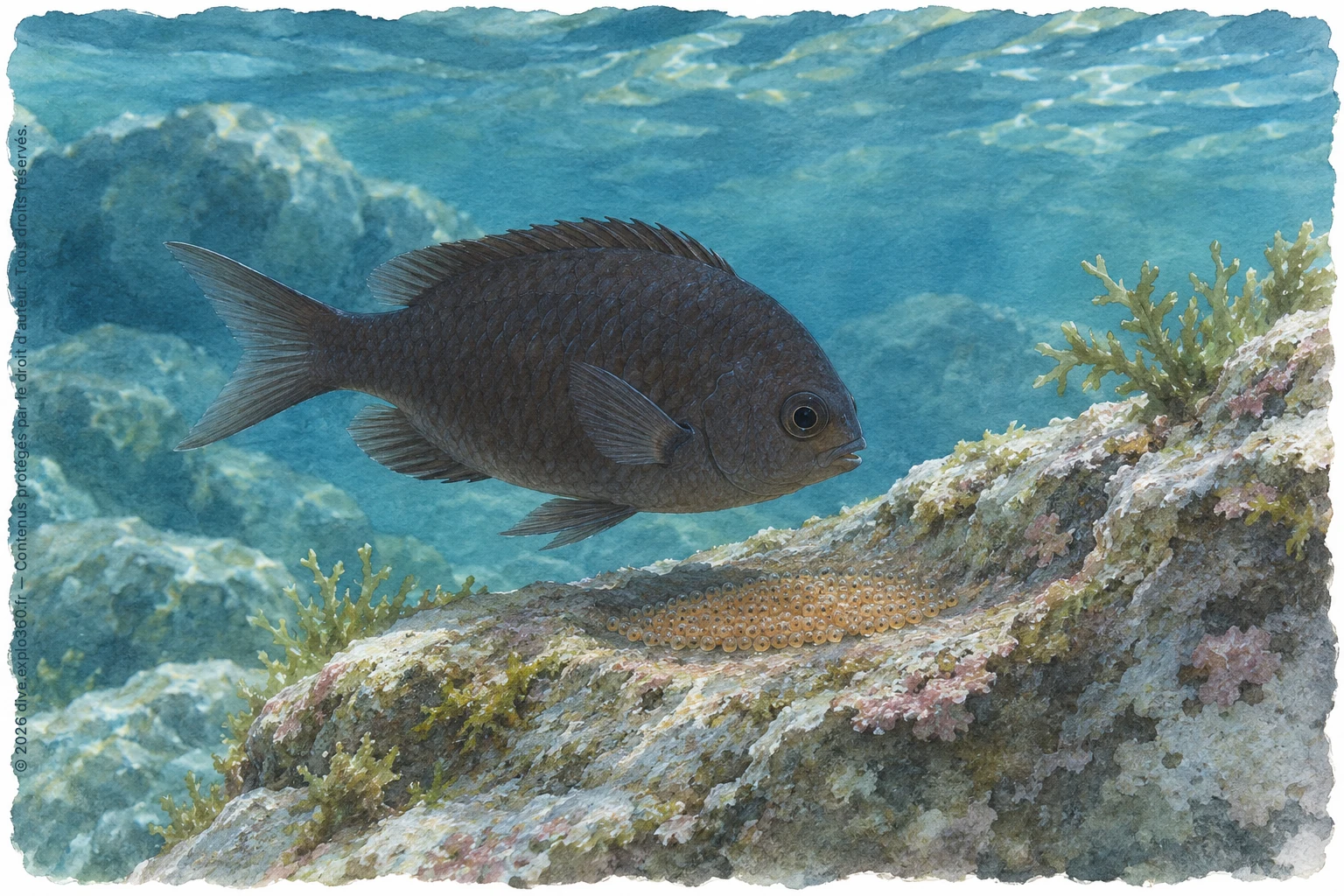
From late spring into summer, breeding males can leave the school and establish small territories near the bottom. A male clears a patch of rock for the eggs. Once the site is ready, he may swim towards a female and then lead her back towards the nest with his fins spread.
If the female follows, she lays eggs that stick to the rock, and the male fertilises them. The patch now holds a clutch that will take days to develop.
The male stays close, guarding the eggs and fanning water over them with his fins. Other animals can still eat the eggs if they reach them.
A small patch of rock can hold several days’ reproductive investment. For the male, losing the nest may mean losing the whole clutch.
Defence can intensify while there are eggs to protect. For fish that live among an anemone’s tentacles, losing a territory can mean losing the chance to stay on that part of the reef.
Explore the same world