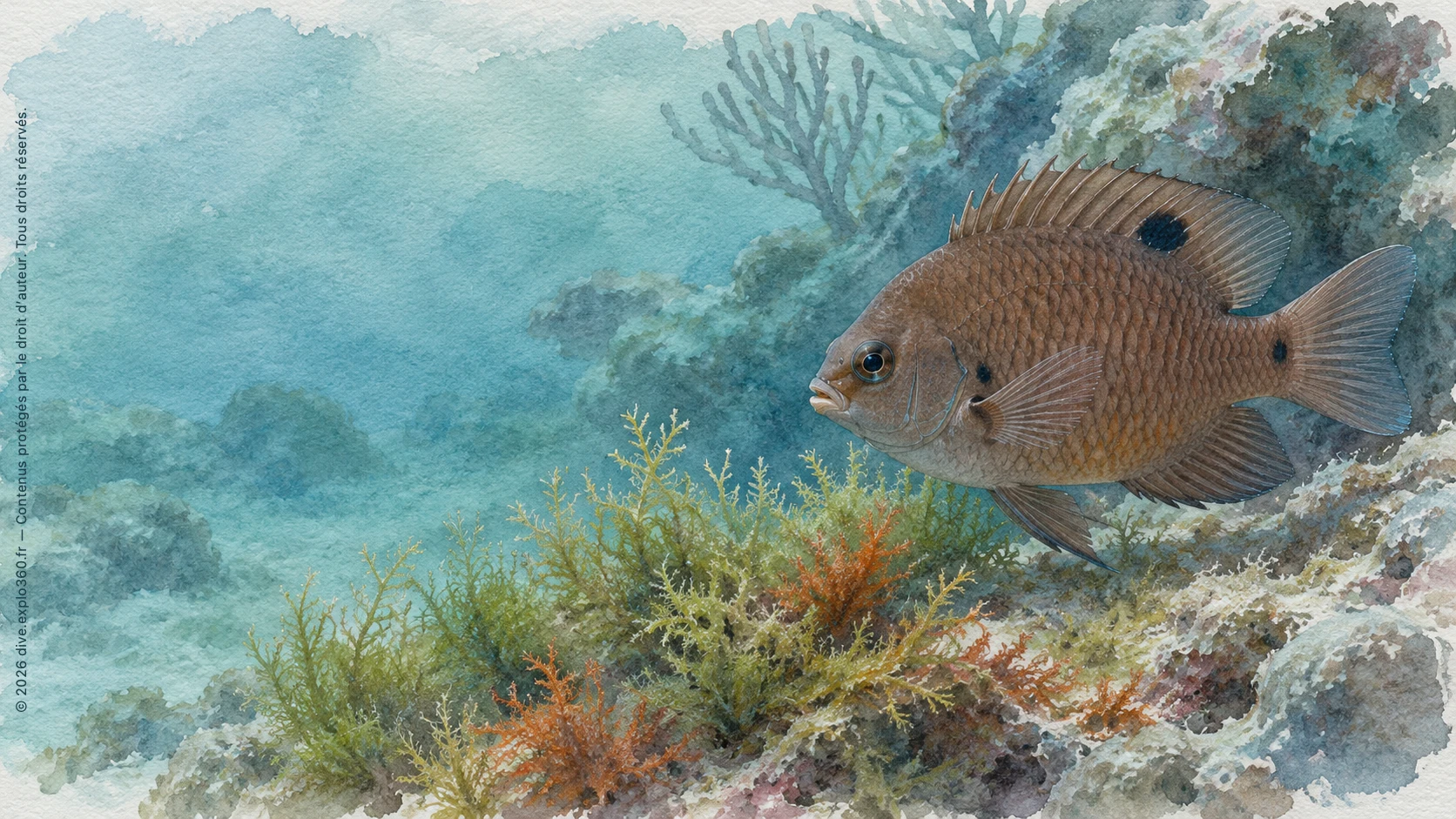
The damselfish and its garden

In the threespot damselfish, a territory provides access to algae for food. By chasing approaching herbivores, the fish changes their movements and may limit local grazing.
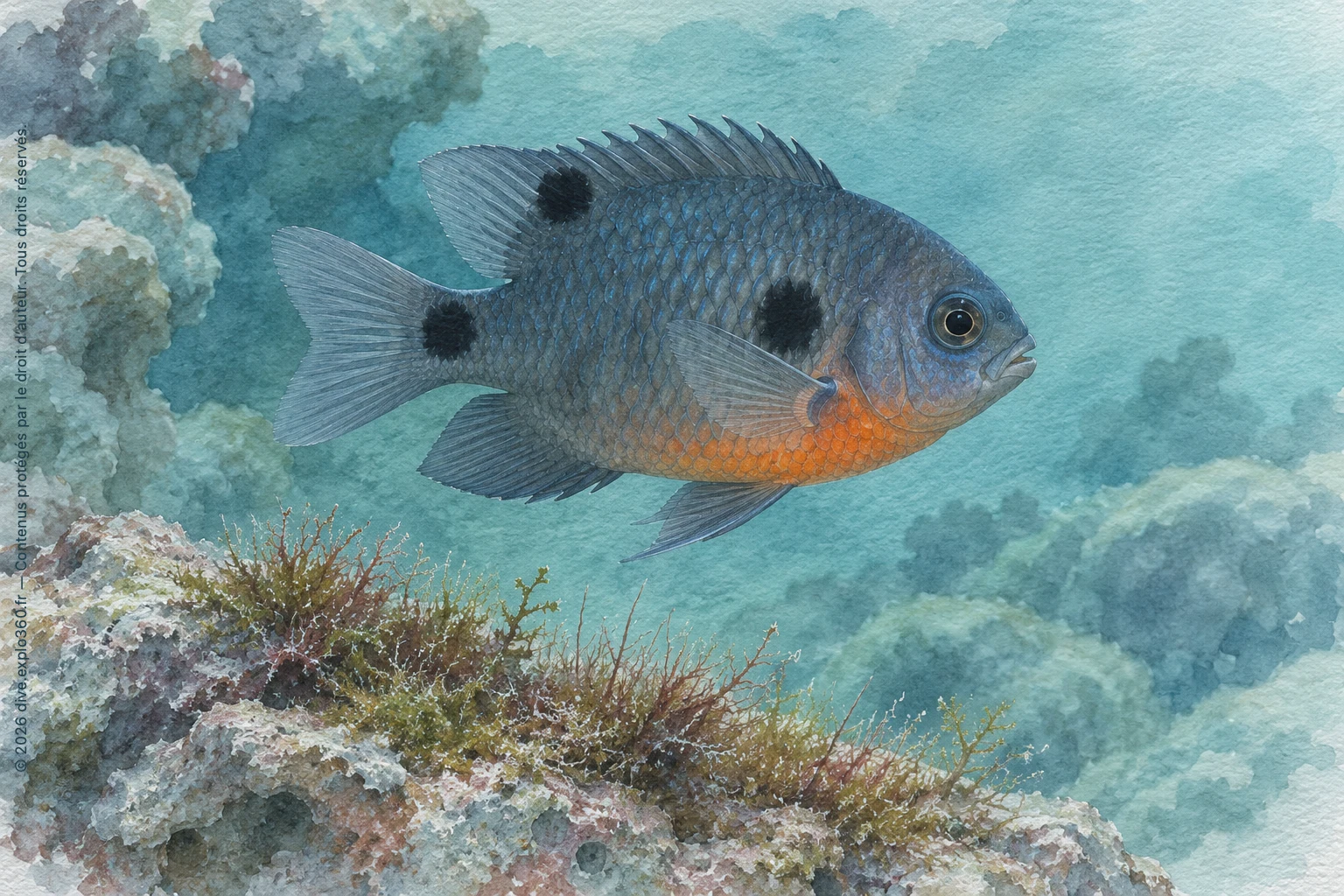
A damselfish above its algal turf.
The algal turf provides food for the damselfish. © dive.explo360.fr — All rights reserved. Reproduction requires permission.
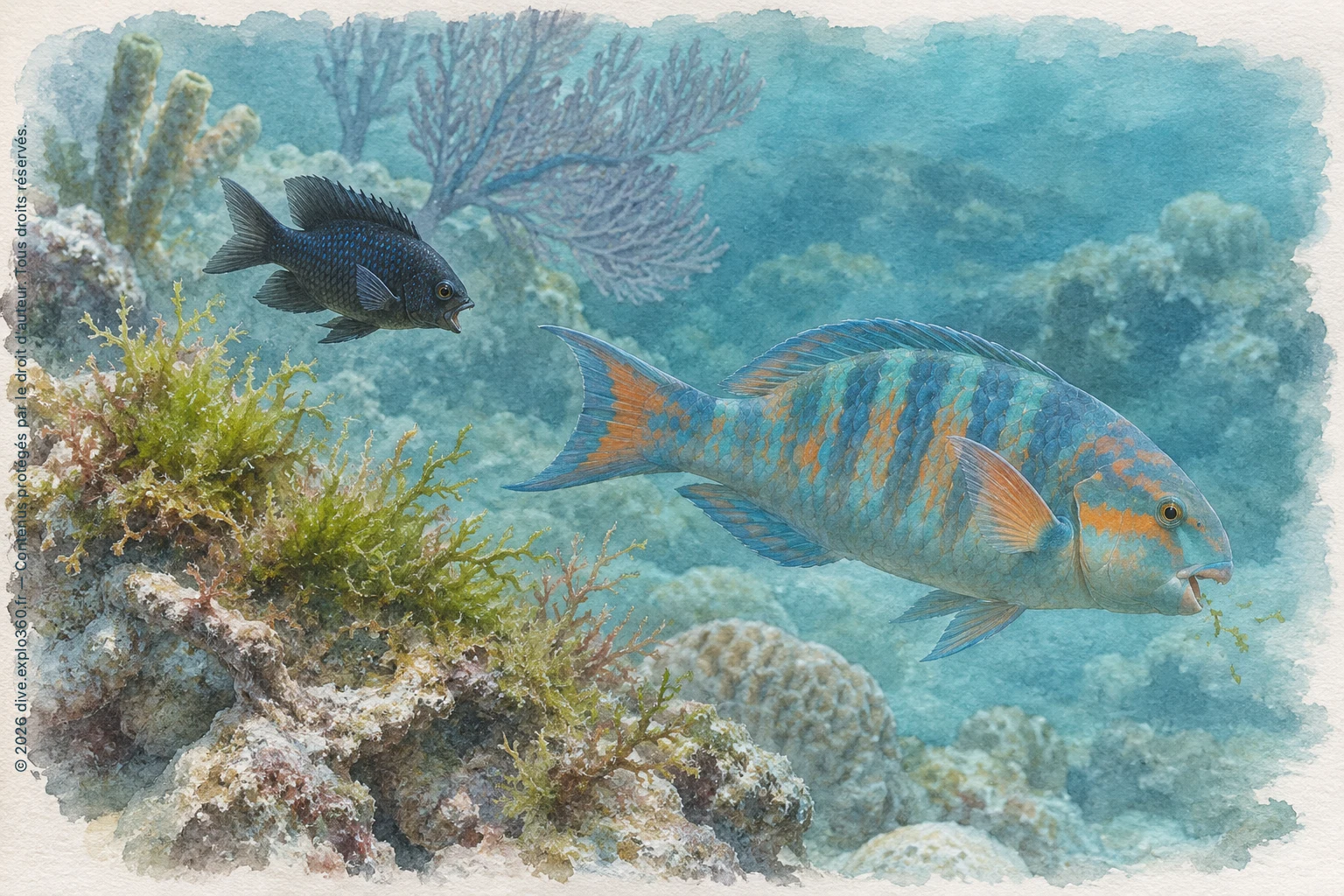
A damselfish and a grazer near an algal patch.
In this illustrated scene, repeated chases give a clue to where the fish’s territory ends. © dive.explo360.fr — All rights reserved. Reproduction requires permission.

A boundary revealed by chasing

A fish may use more space than it actively defends. Repeated chases can reveal which part it protects. How much effort that takes depends on the number of intruders and how they respond. A warning can sometimes avert physical contact.

Three resources worth defending

1

Food

An algal patch feeds the damselfish.
2

Reproduction

A rock surface holds the damselfish’s eggs.
3

Shelter

An anemone shelters a group of clownfish.

A damselfish guards its eggs

In Chromis chromis, a male prepares a site where the female lays adhesive eggs. The eggs stay fixed in one place as they develop, and the male’s defence of the site protects the clutch during that period.
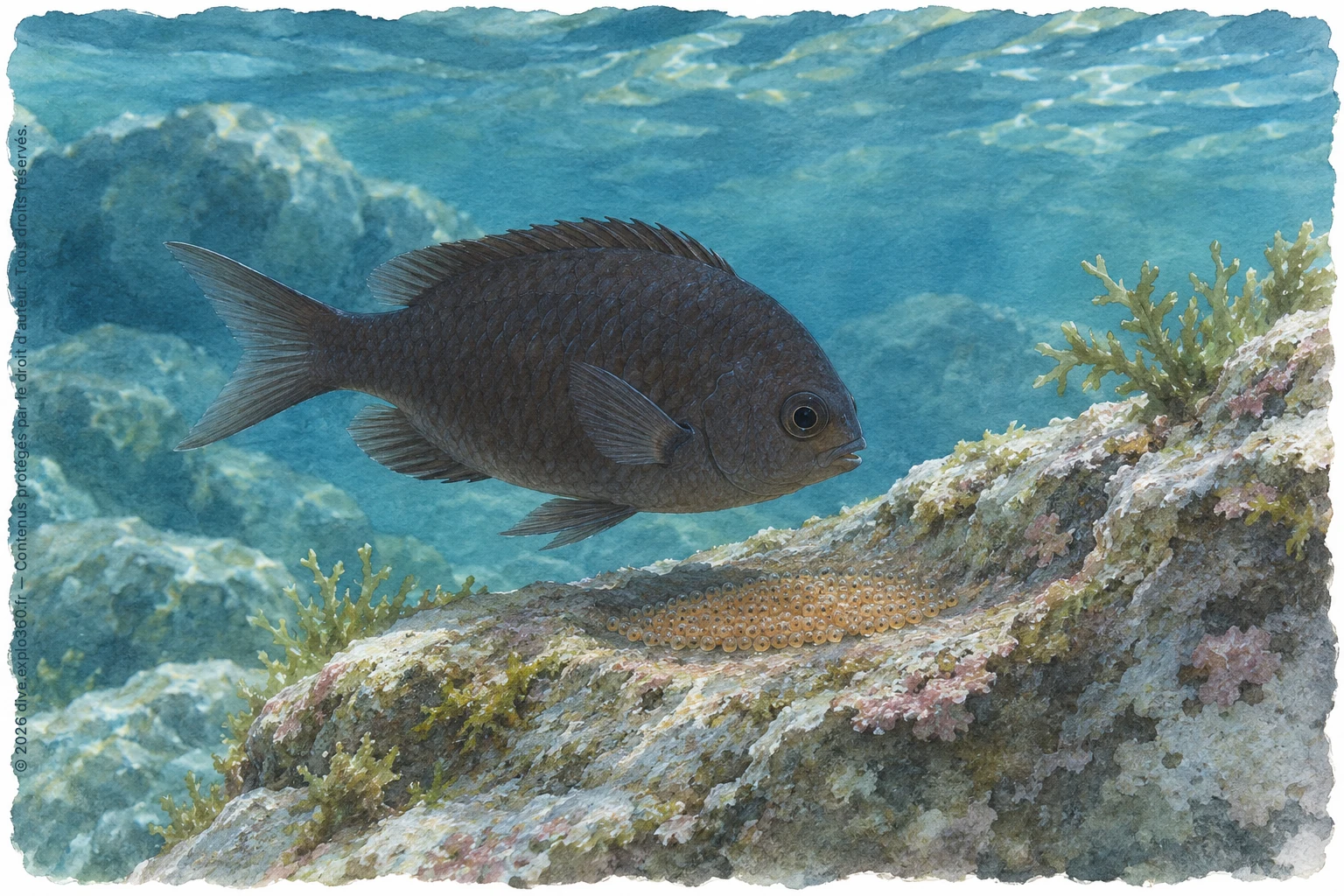
A dark Mediterranean damselfish above eggs on a rock.
Mediterranean damselfish often school above the seabed. Breeding males guard eggs laid on the substrate. © dive.explo360.fr — All rights reserved. Reproduction requires permission.

Continue reading

AMIGANSEAU CONTENT

The rest of this article is for subscribers

Log in with your AMIGANSEAU licence to continue reading.

All active AMIGANSEAU licences give access to the full article.