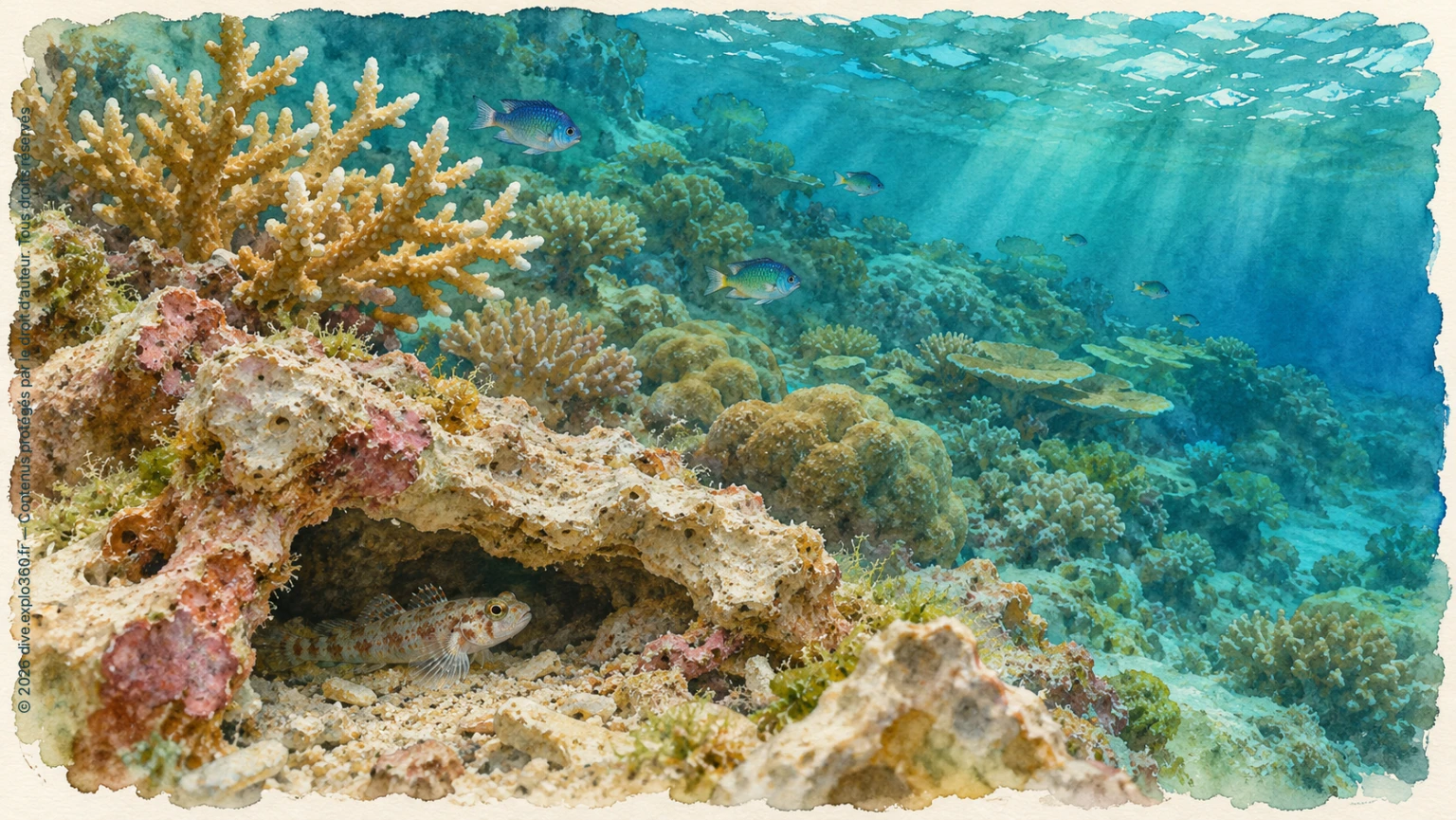
Beneath the tiny coral animals

The hard skeleton under the coral’s polyps is made of calcium carbonate. Cut across it and you may see signs of organisms living inside.
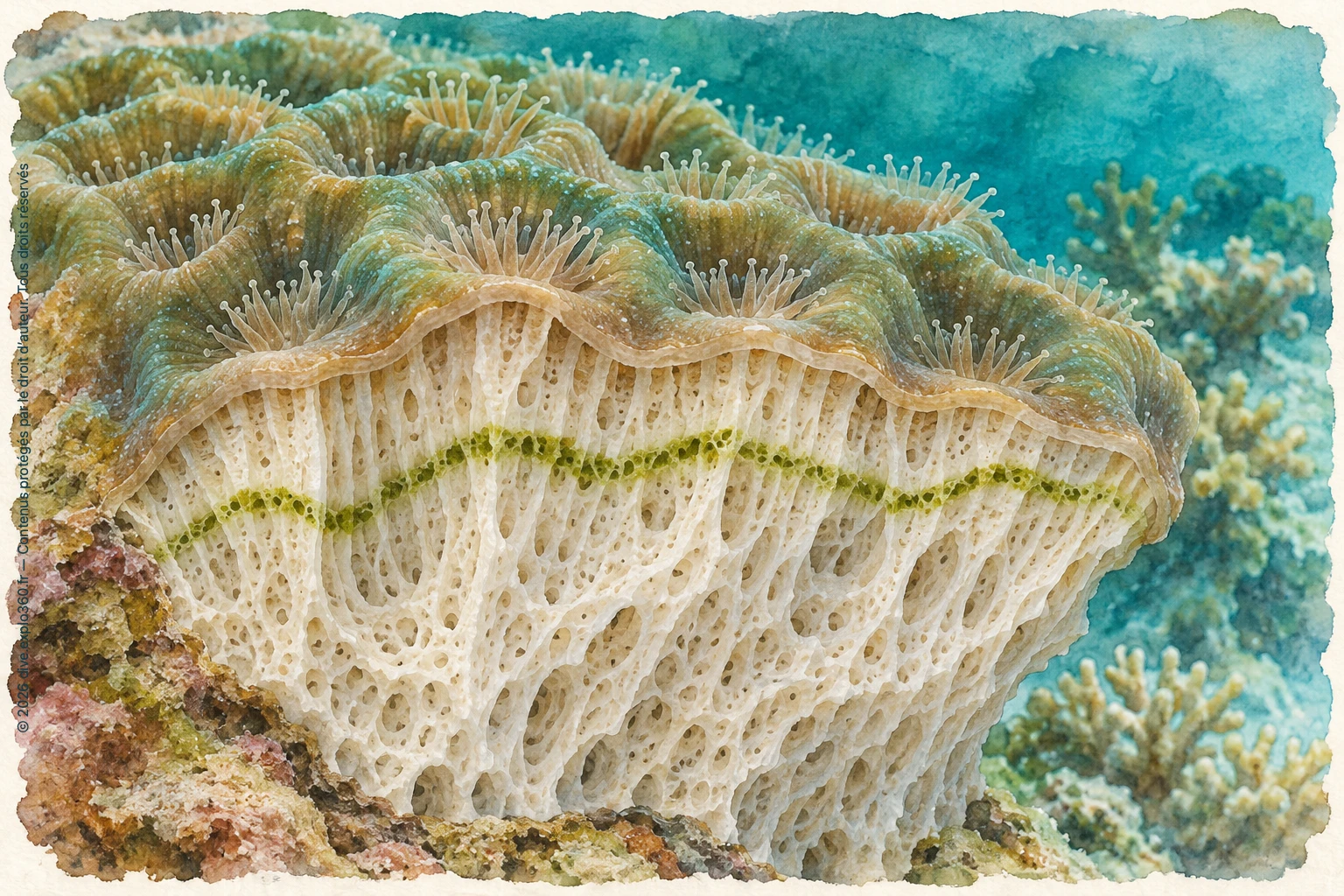
Schematic cutaway. The green band shows algae living within the carbonate skeleton, beneath the living tissue.
The green band lies beneath the living surface. It is formed by algae that use the faint light reaching them. © dive.explo360.fr — All rights reserved. Reproduction requires permission.

Coral skeletons shelter algae

A green band inside a coral can be a clue to the presence of microscopic algae. Enough light reaches them through the coral for them to photosynthesise.

Sponges bore tunnels

A boring sponge removes tiny chips of calcium carbonate as it grows. Small openings at the surface lead into the tunnels it makes.
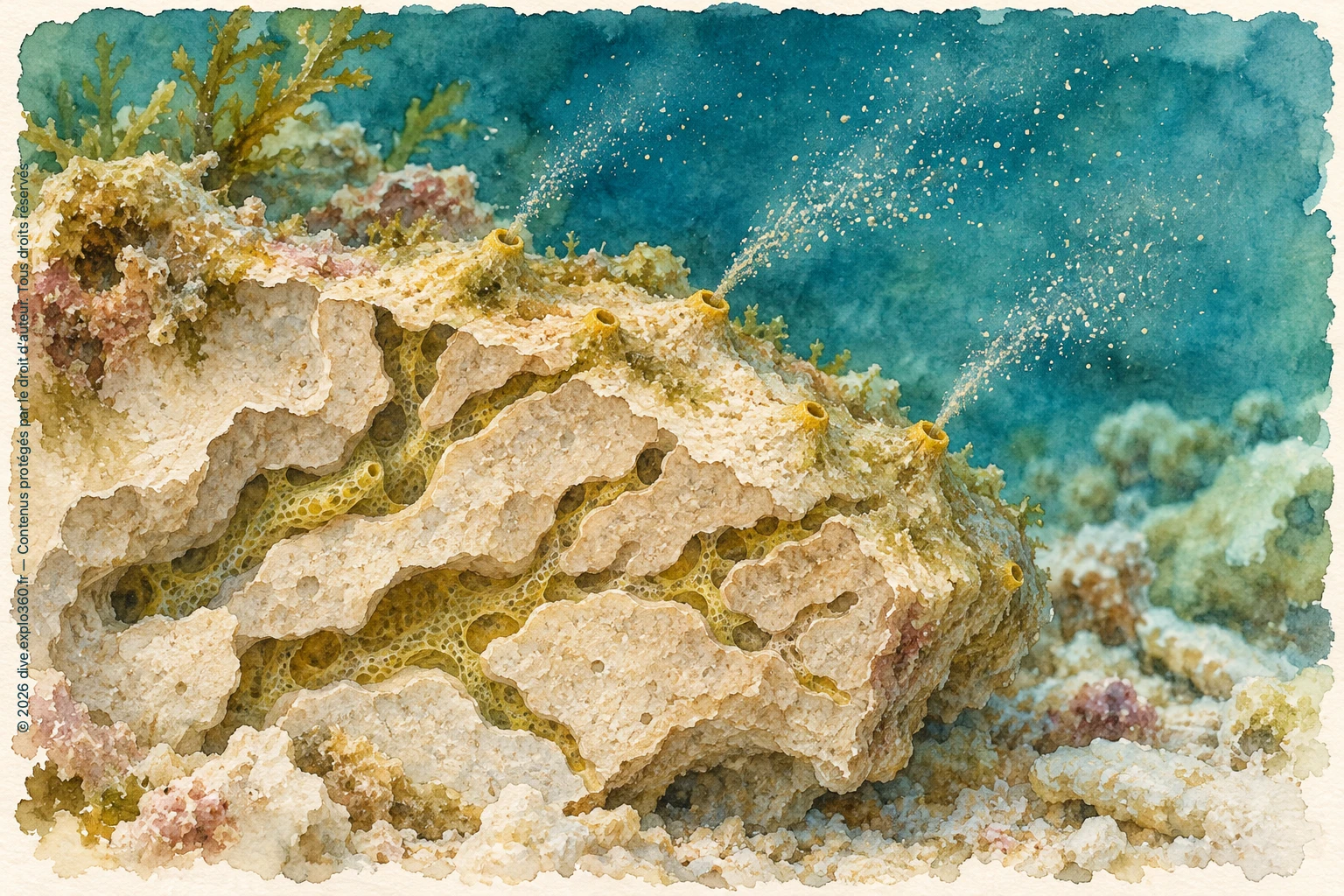
Schematic cutaway. A boring sponge excavates galleries connected to the surface by small openings.
Schematic cutaway. A boring sponge excavates galleries connected to the surface by small openings. © dive.explo360.fr — All rights reserved. Reproduction requires permission.

Building and boring at the same time

A reef produces calcium carbonate while organisms remove some of it. Both processes shape it over time.
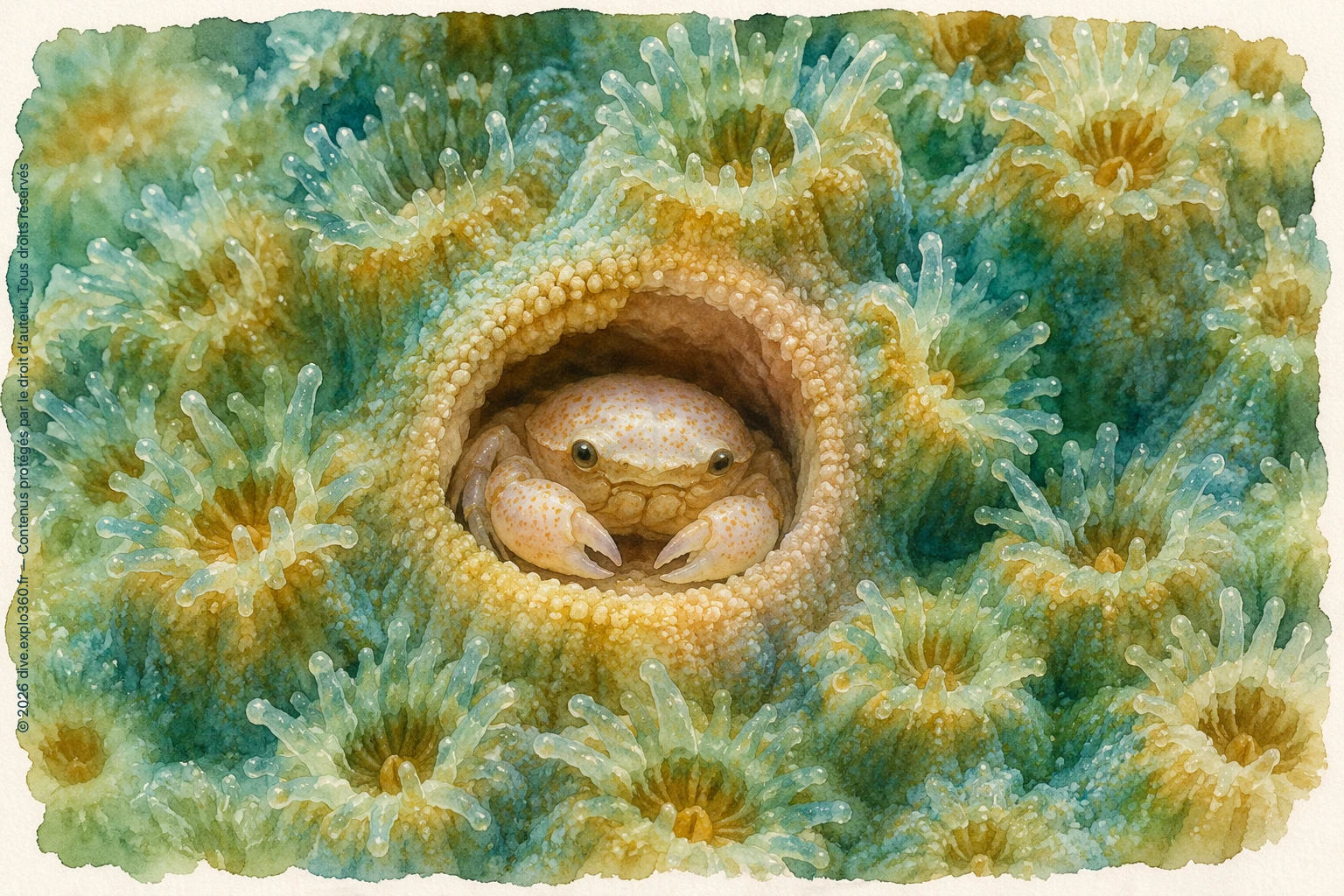
A gall crab lives in a chamber shaped as the coral grows.
A gall crab lives in a chamber shaped as the coral grows. © dive.explo360.fr — All rights reserved. Reproduction requires permission.

A crab inside the coral

A small crab shelters in a chamber in the coral. As it grows, it may become too wide to leave.
Continue reading

AMIGANSEAU CONTENT

The rest of this article is for subscribers

Log in with your AMIGANSEAU licence to continue reading.

All active AMIGANSEAU licences give access to the full article.