


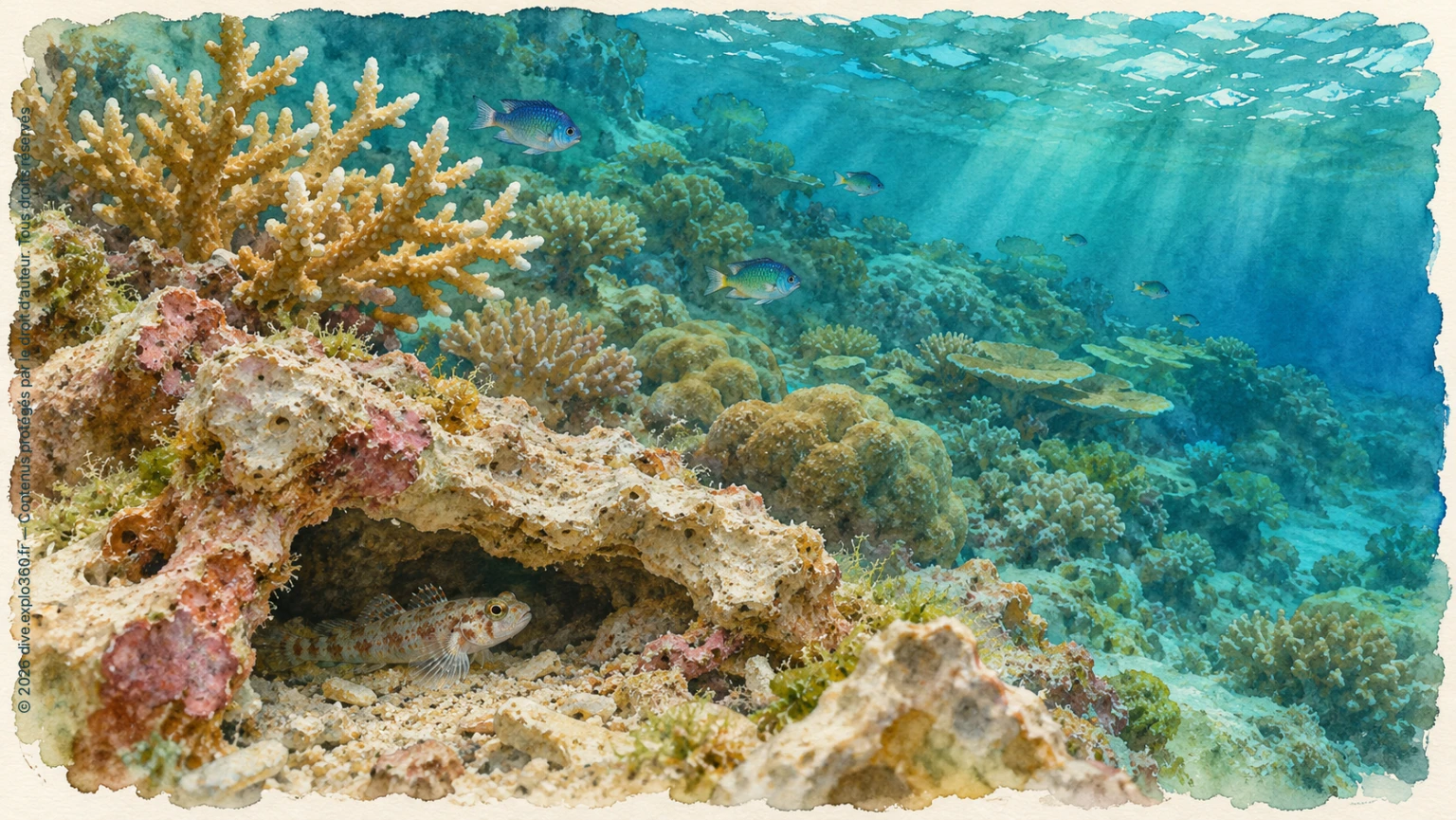
Beneath the tiny coral animals

The coral skeleton forms an internal habitat distinct from living tissue. Organisms settle or bore tunnels within it.
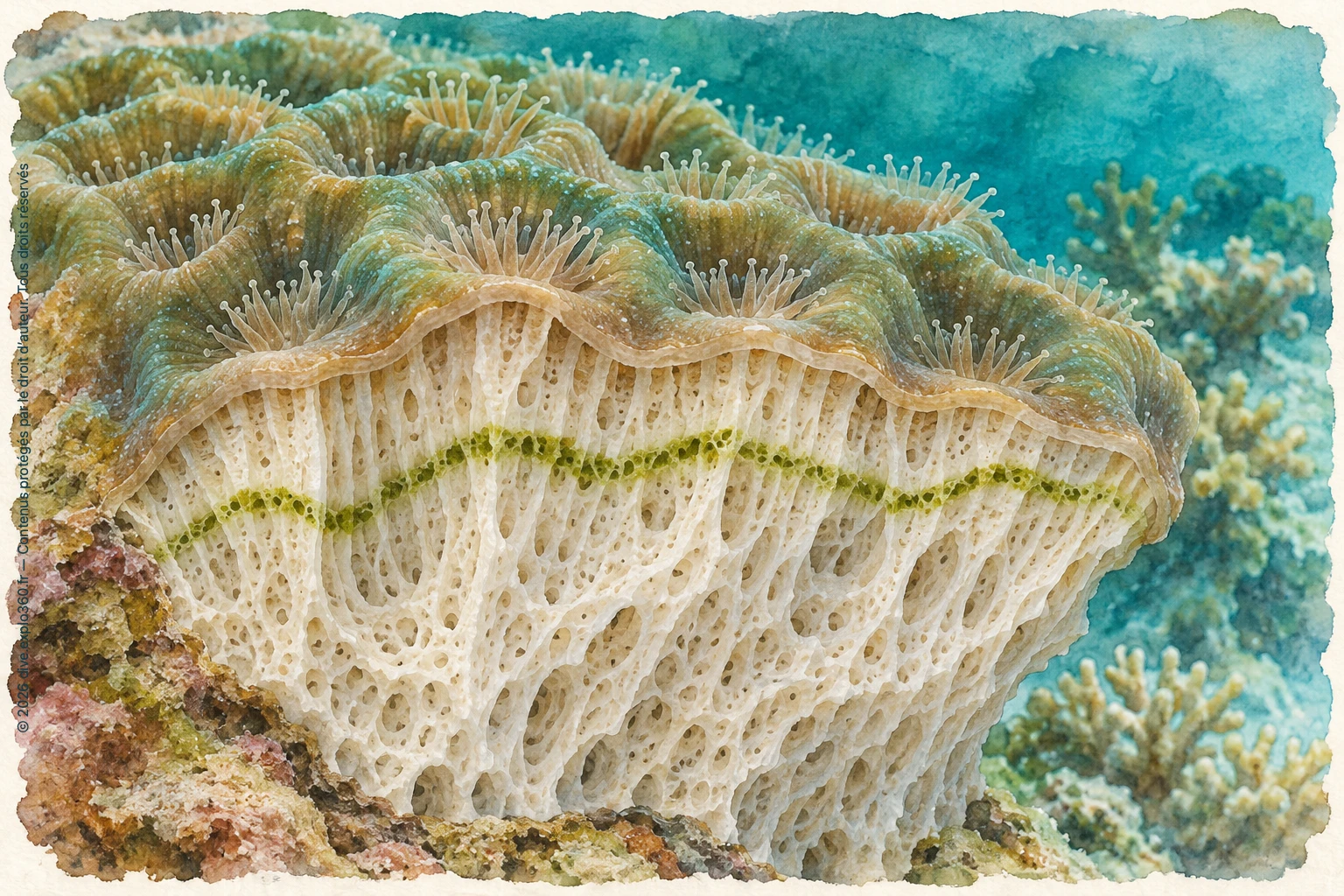
Schematic cutaway. The green band shows algae living within the carbonate skeleton, beneath the living tissue.
The green band represents endolithic algae such as Ostreobium. They photosynthesise within the mineral skeleton, beneath the coral tissue. © dive.explo360.fr — All rights reserved. Reproduction requires permission.

Endolithic algae

Ostreobium grows inside the mineral skeleton, where it can photosynthesise with very little light. Its habitat lies below the living tissue that houses the coral’s photosynthetic symbionts.

Sponges that dig

Boring sponges remove carbonate and extend a network of tunnels through the substrate. This contributes to bioerosion.
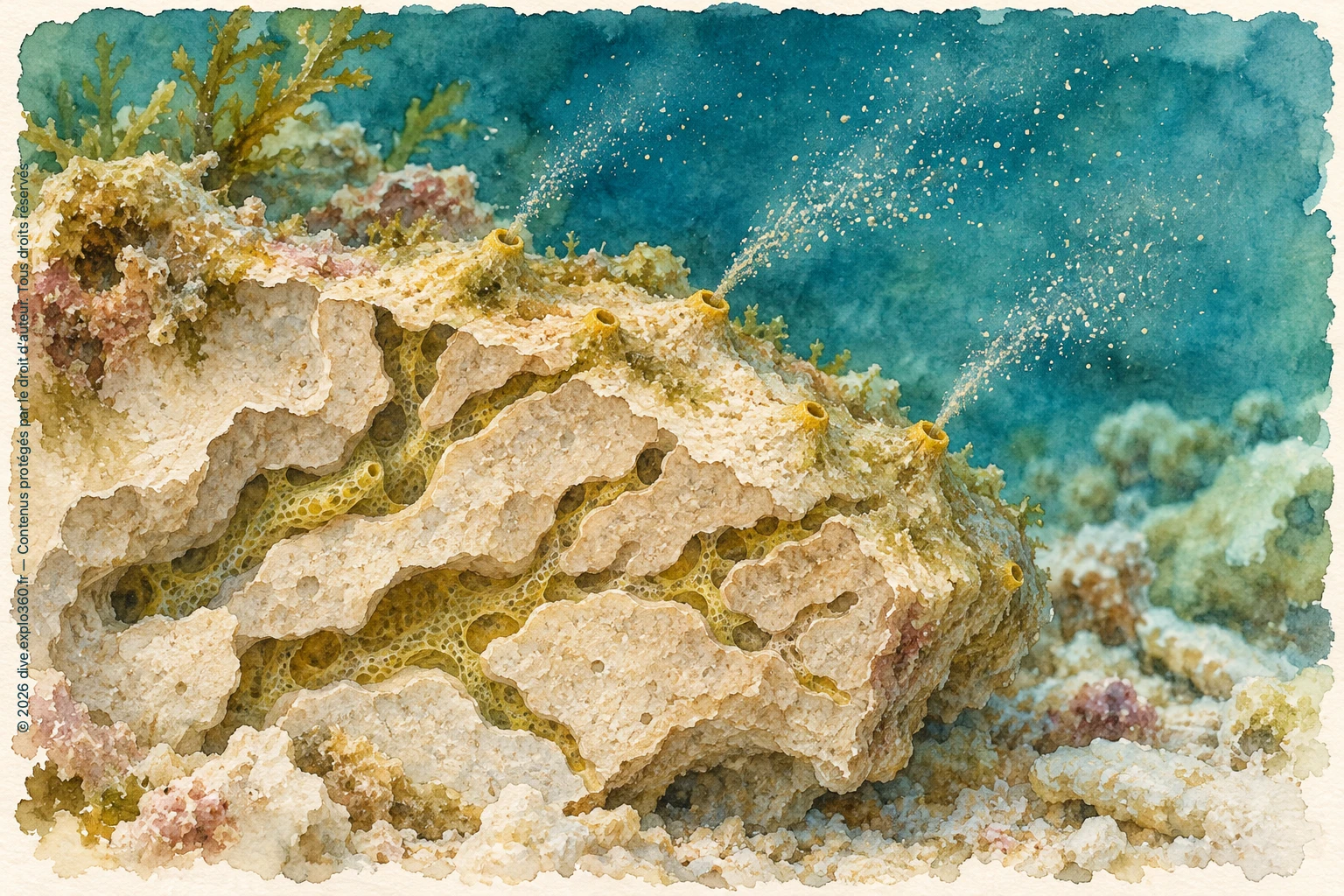
Schematic cutaway. A boring sponge excavates galleries connected to the surface by small openings.
Schematic cutaway. A boring sponge excavates galleries connected to the surface by small openings. © dive.explo360.fr — All rights reserved. Reproduction requires permission.

Construction and bioerosion

Polyps deposit calcium carbonate. Boring sponges remove some of it and create galleries. The balance of these processes helps shape the reef.
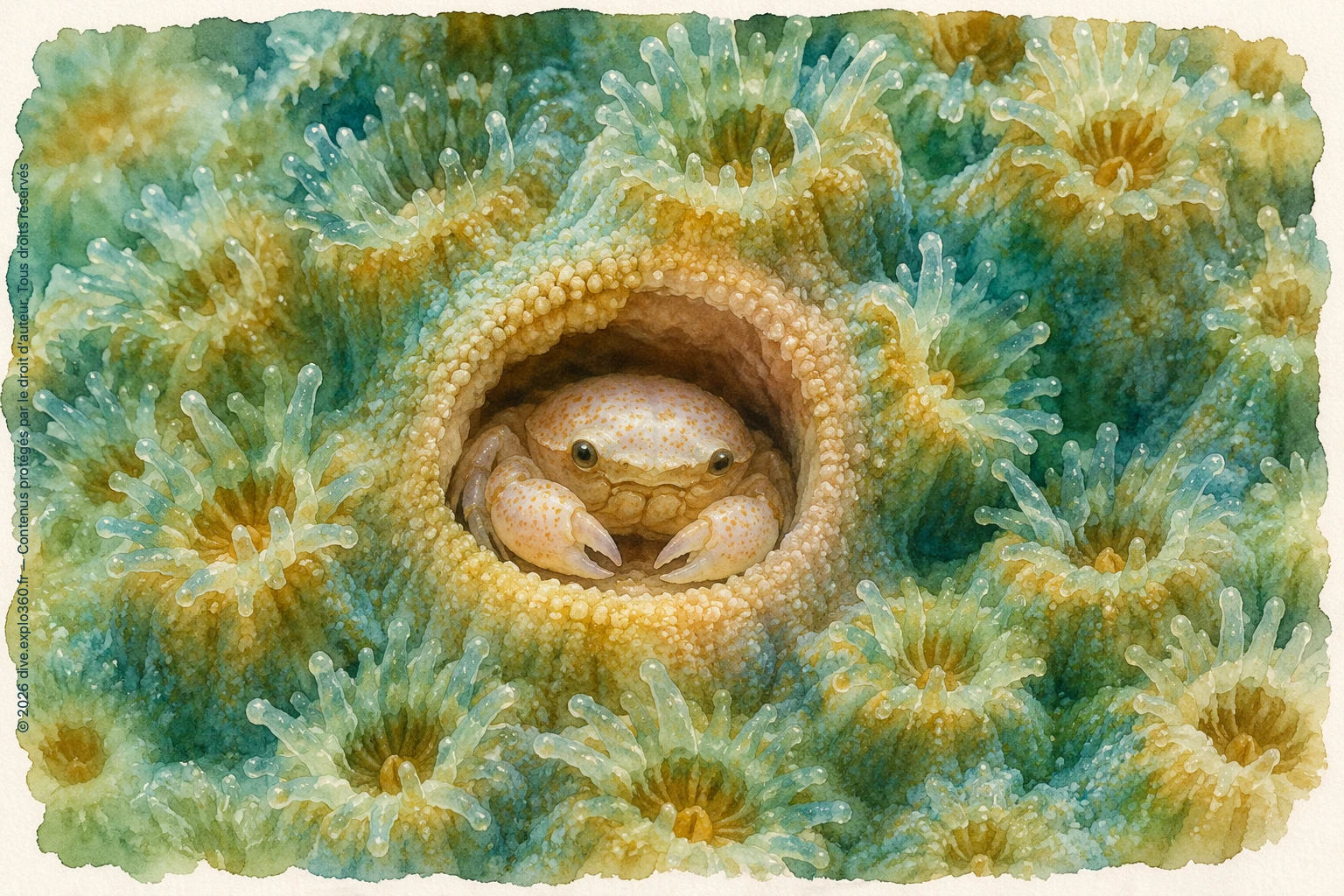
A gall crab lives in a chamber shaped as the coral grows.
A gall crab lives in a chamber shaped as the coral grows. © dive.explo360.fr — All rights reserved. Reproduction requires permission.

A crab inside the coral

Females of some coral-dwelling crabs remain in a chamber within the colony. Its opening may be too narrow for them to leave as adults.
Continue reading

AMIGANSEAU CONTENT

The rest of this article is for subscribers

Log in with your AMIGANSEAU licence to continue reading.

All active AMIGANSEAU licences give access to the full article.