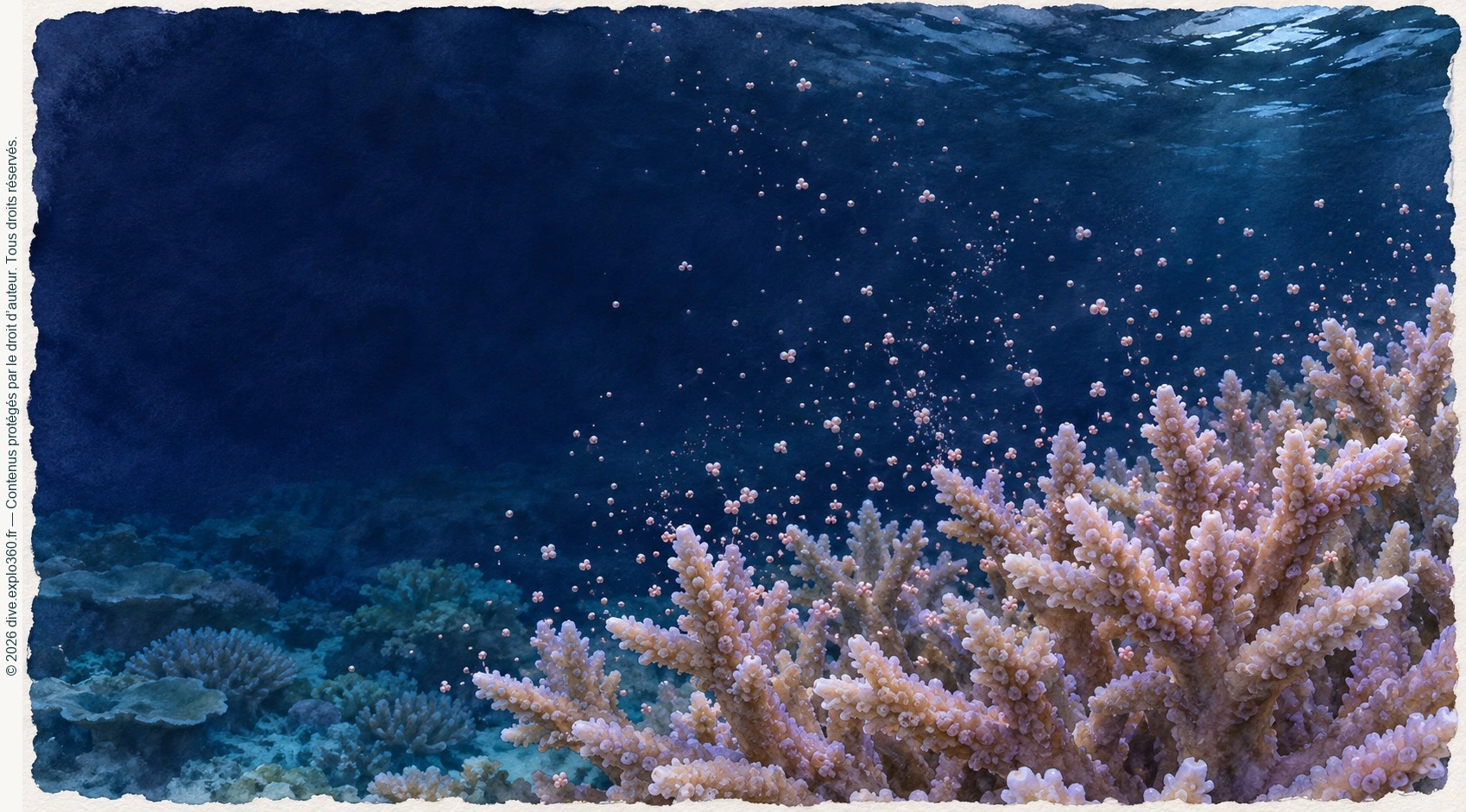
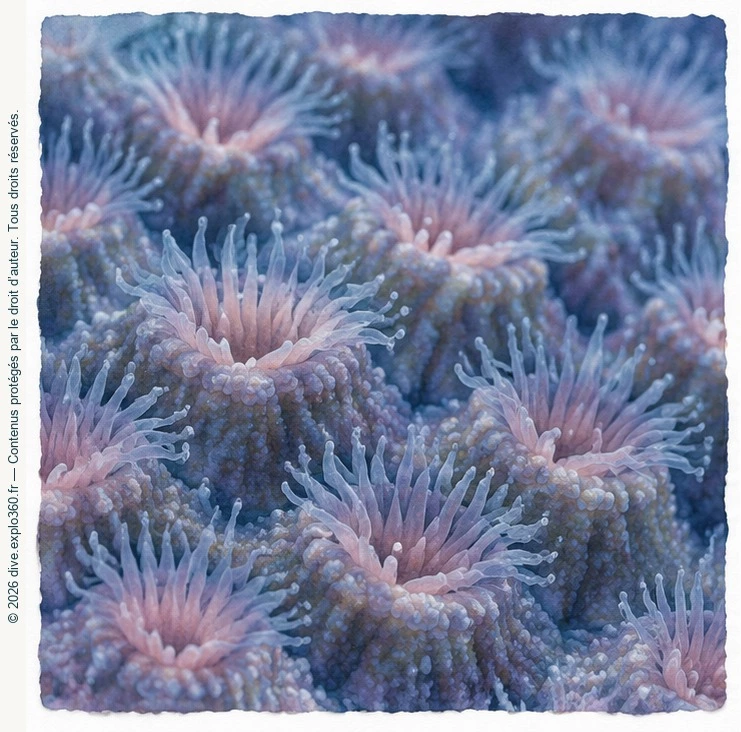
Connected polyps
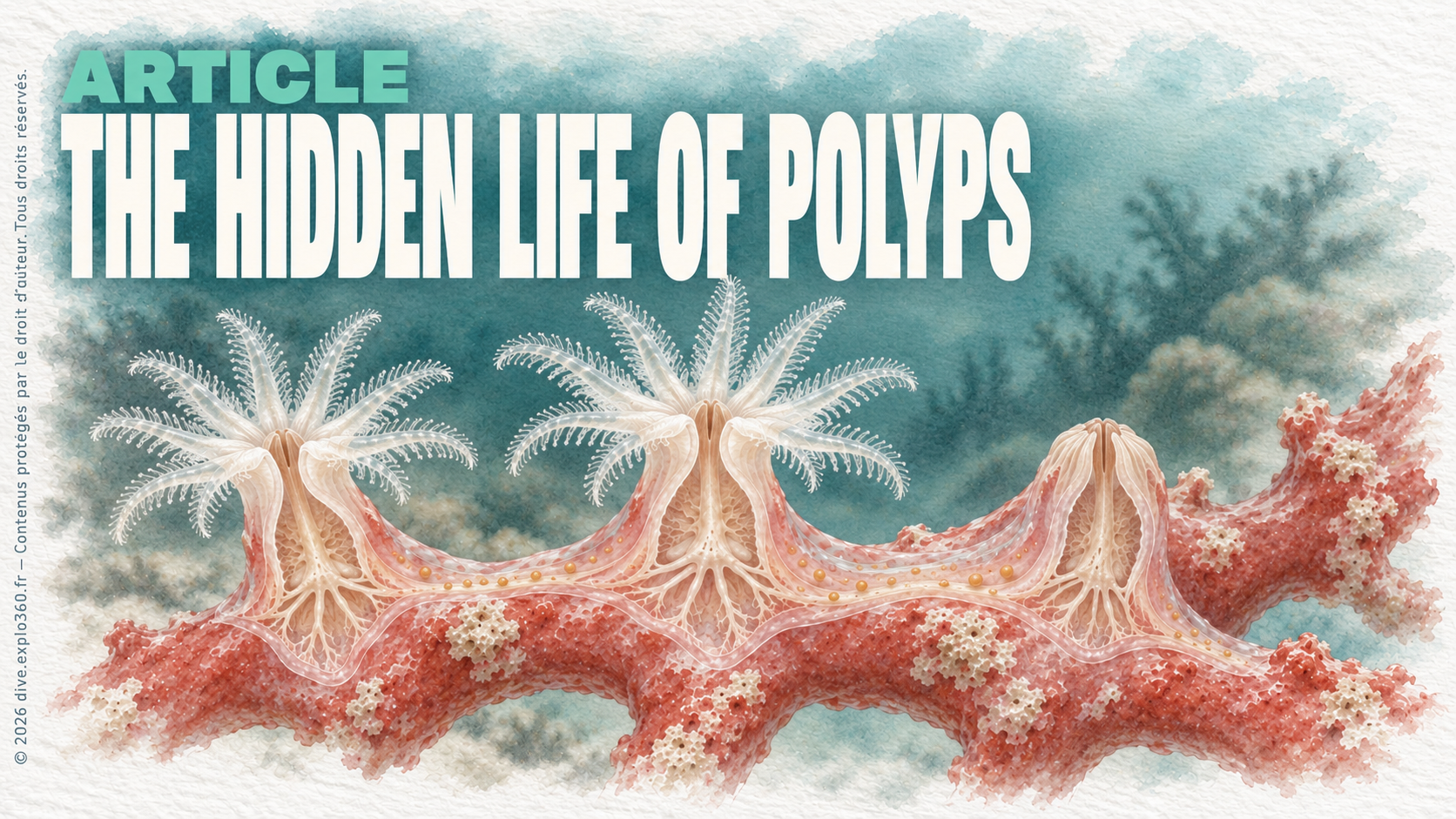
A reef-building coral colony is made up of polyps joined by living tissue. They lay down a skeleton of calcium carbonate. New polyps bud from existing ones, so the colony grows.
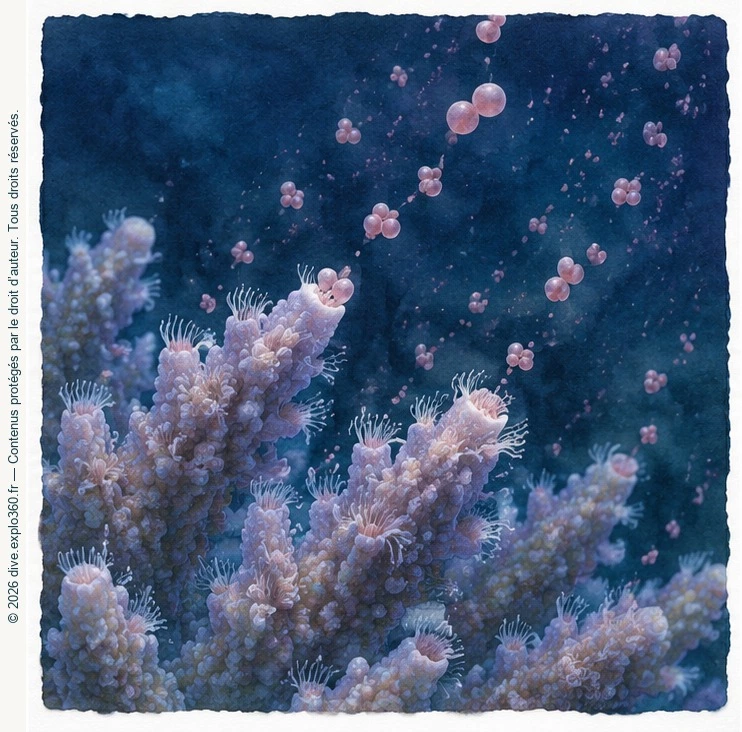
Gametes released together
Many corals release bundles of eggs and sperm around the same time. The bundles rise and break apart. When compatible colonies spawn together, their eggs and sperm have a better chance of meeting before currents spread them out. Timing varies by species and reef.
Two ways to release offspring
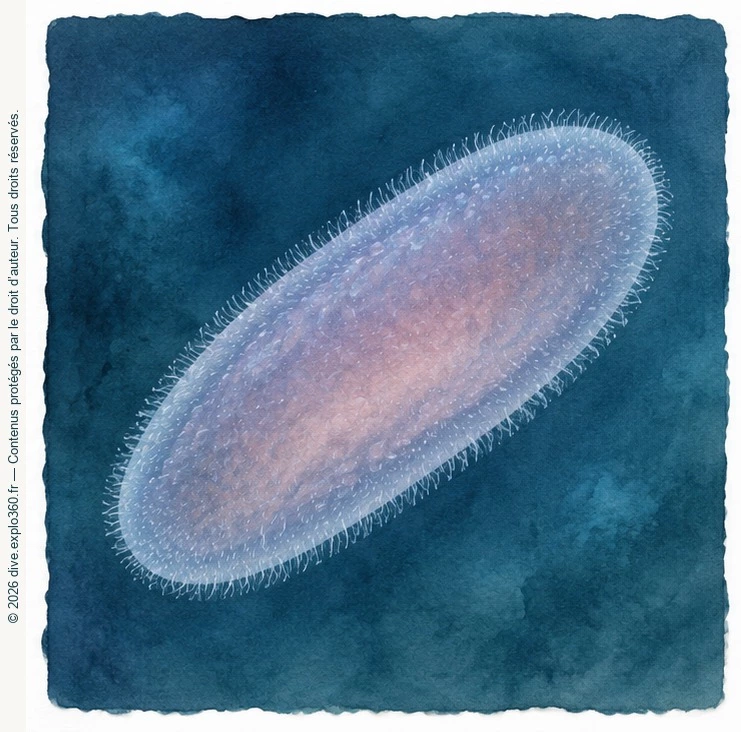
A fertilised egg divides and develops into a larva called a planula. Tiny beating hairs called cilia help it swim. Currents can also carry it, sometimes as far as another reef.
Larvae under shelter
Brooding corals keep the developing young inside their polyps for part of their development. Some larvae are ready to settle within hours of release.