Tentacles and their cells

Touch and chemical stimuli can trigger nematocyst discharge. The capsule, housed in a cell called a cnidocyte, ejects a thread that can pierce prey and deliver venom.
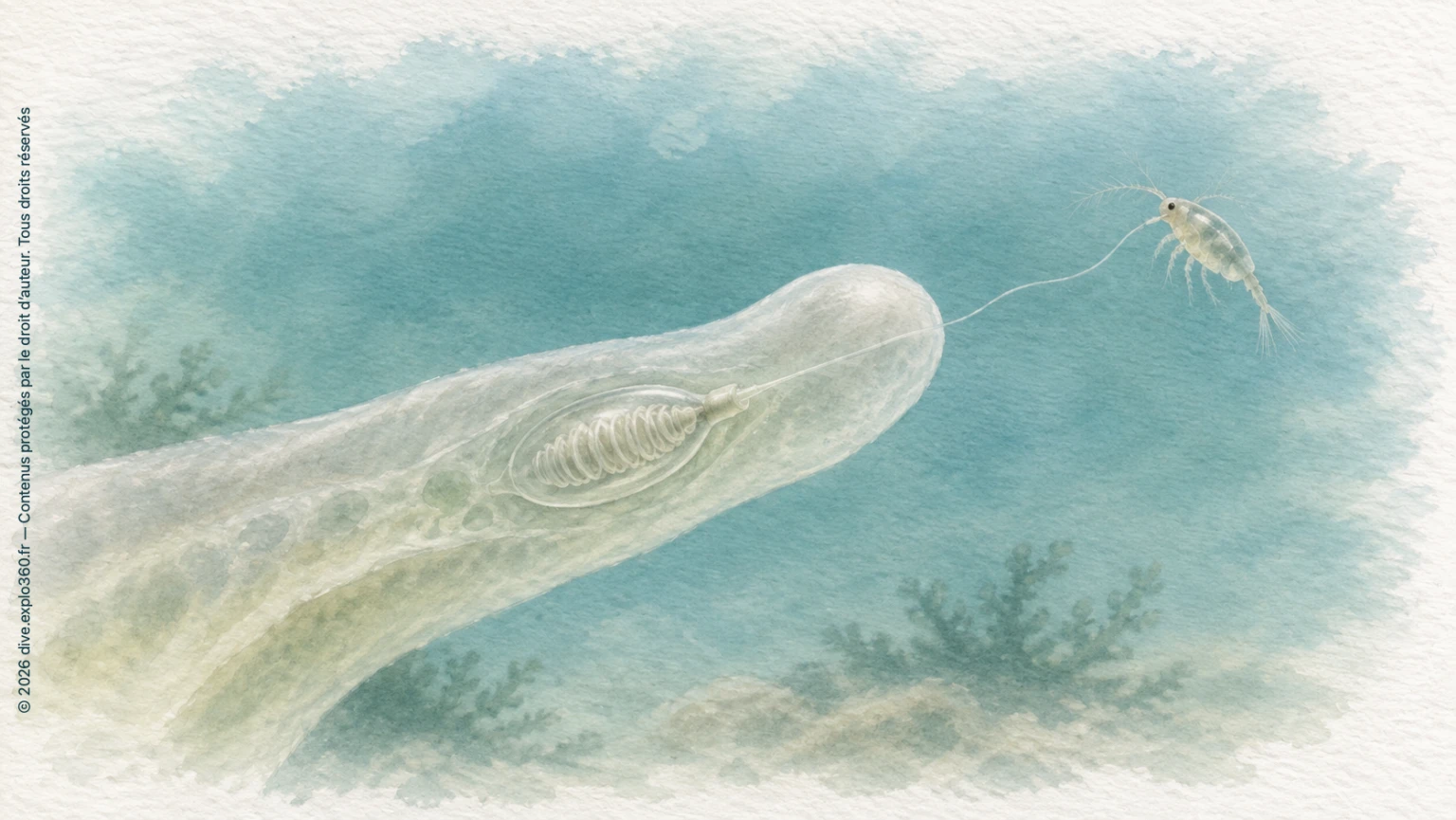
A tentacle can sting. A thread shoots from the stinging capsule.
A thread shoots from the stinging capsule. © dive.explo360.fr — All rights reserved. Reproduction requires permission.

Mucus and chemical recognition

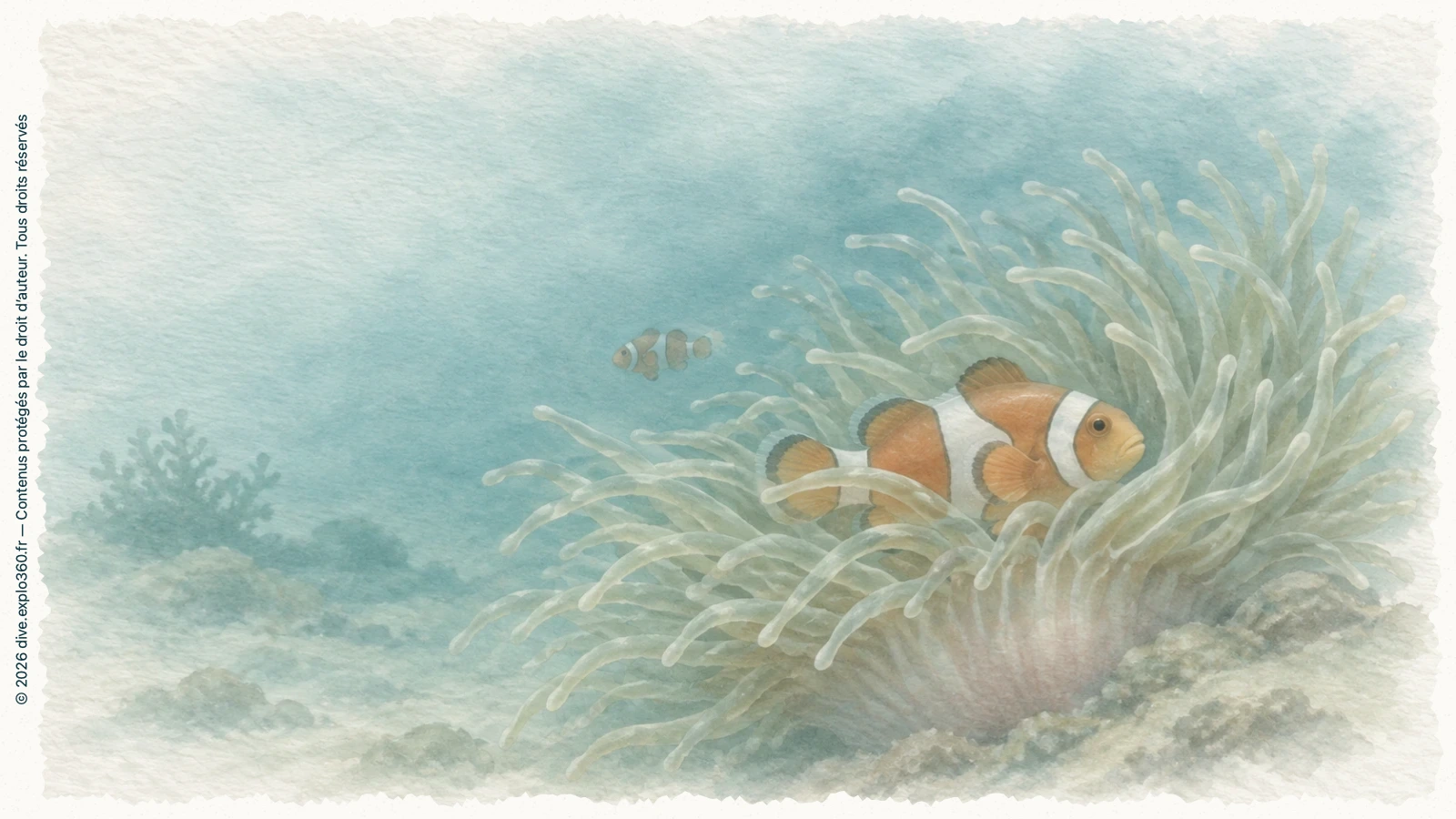
Some clownfish maintain low concentrations of sialic acids in their mucus. Experiments support the idea that this reduces one of the chemical cues that can trigger discharge. Protection may involve other features of the mucus and vary with the host.
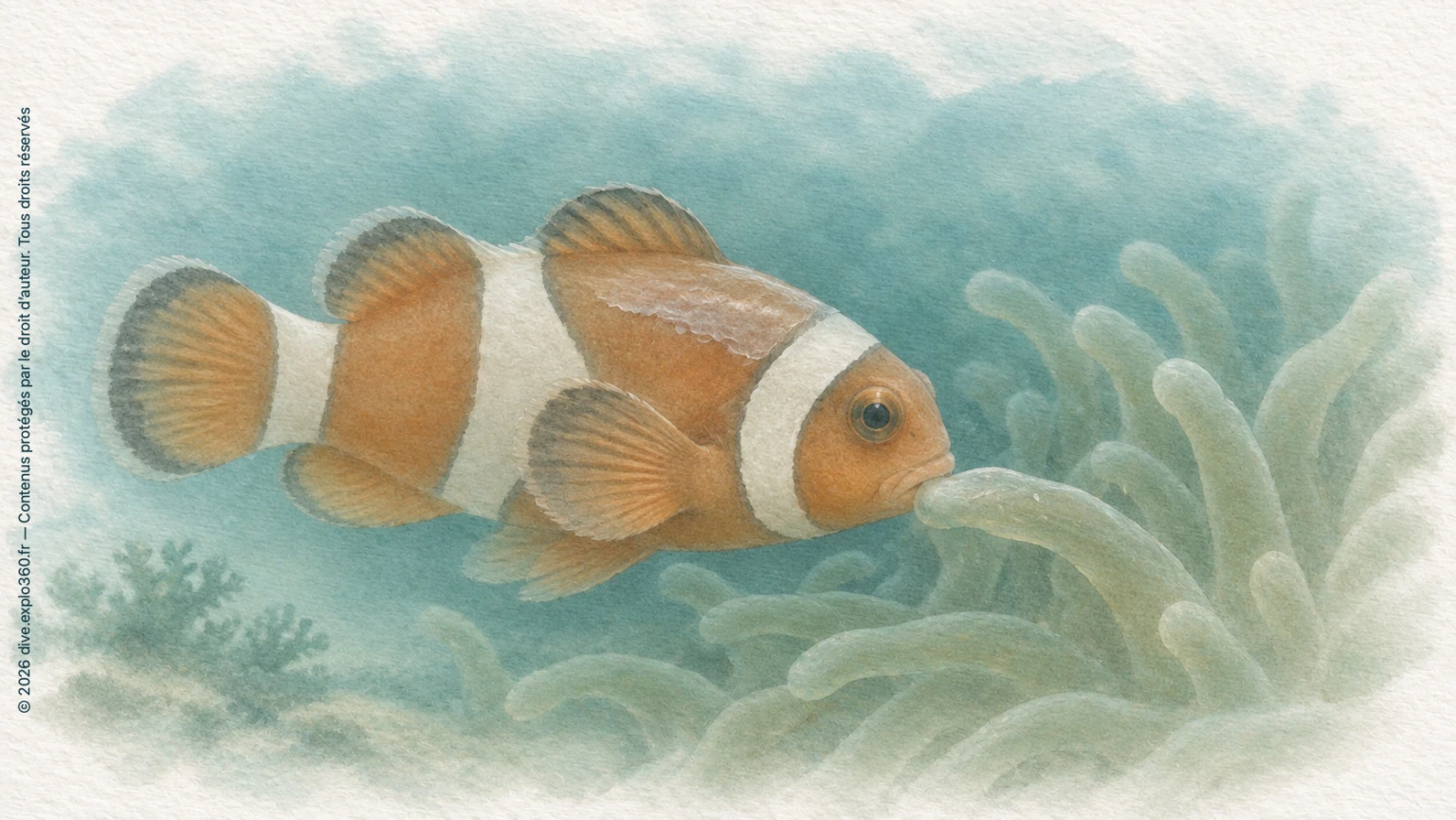
Mucus reduces the signal. Some surface sugars occur at lower levels.
The sugar composition of the mucus can reduce some of the signals that trigger stinging cells. © dive.explo360.fr — All rights reserved. Reproduction requires permission.

What happens before contact

In one experiment, the surface microbial communities of clownfish and anemones became more similar even before physical contact. Whether that shift helps prevent stings remains an open question.
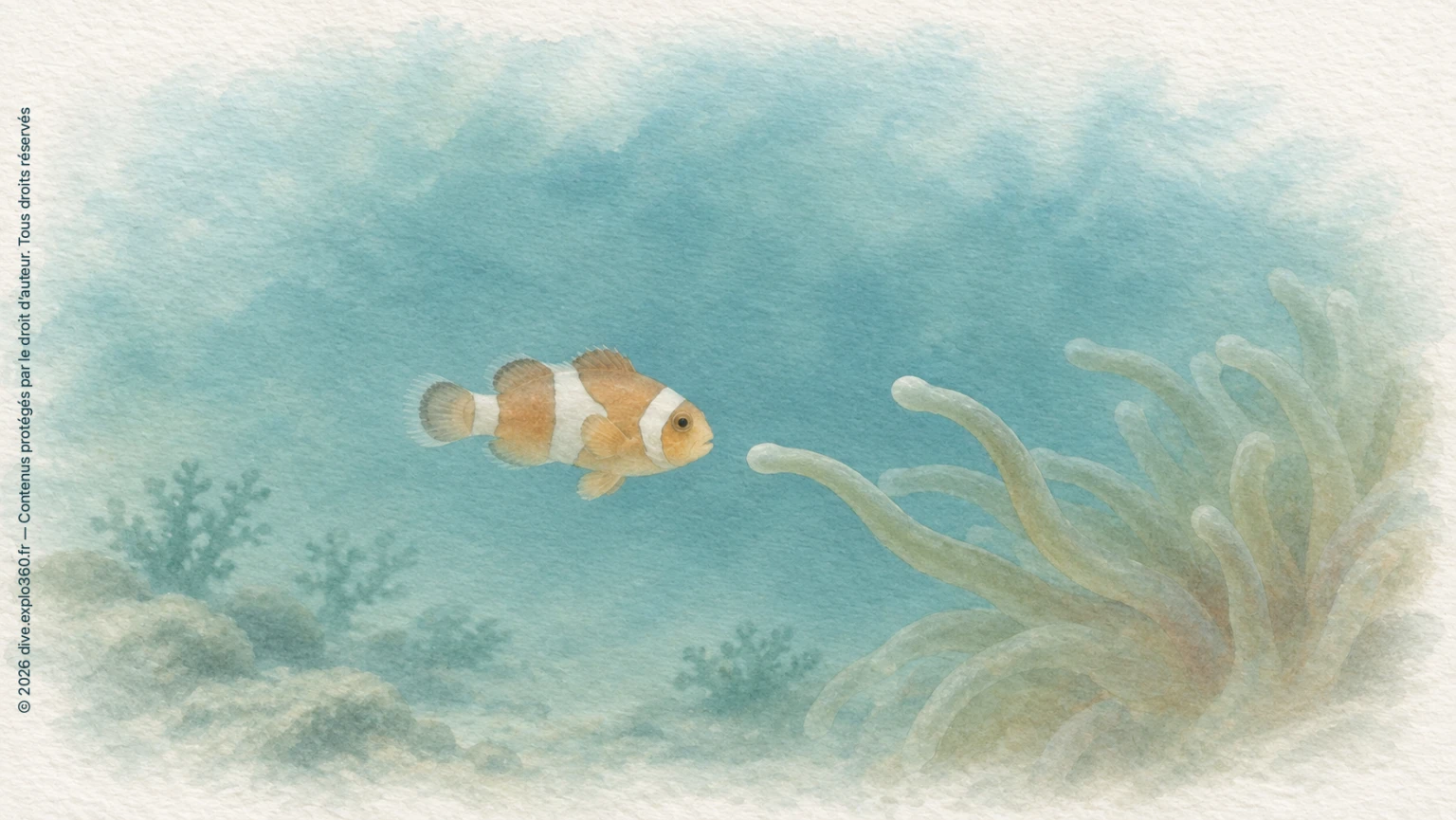
Gradual first contact. A young fish brushes the tentacles.
Initial contact can be gradual, with brief touches before the fish settles into the anemone. © dive.explo360.fr — All rights reserved. Reproduction requires permission.

A suitable anemone

Compatibility is specific to the pairing. Acclimatisation with a natural host gives limited information about how the fish will respond to another anemone species.
Continue reading

AMIGANSEAU CONTENT

The rest of this article is for subscribers

Log in with your AMIGANSEAU licence to continue reading.

All active AMIGANSEAU licences give access to the full article.

Explore the same world

Explore further