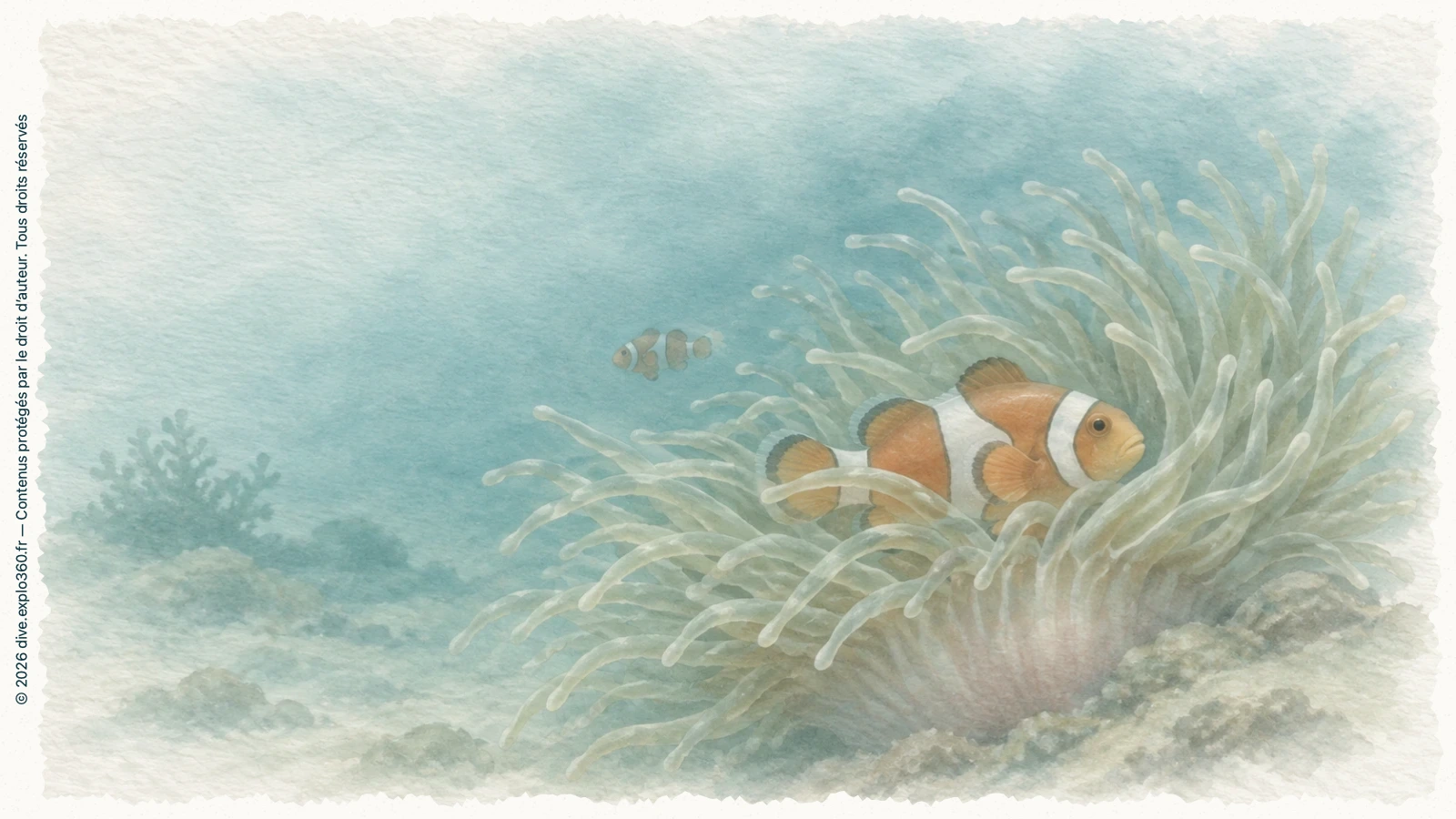
An anemone can sting

An anemone looks like a flower, but it catches its meals with its tentacles. Tiny capsules in the tentacles can shoot out threads that sting.
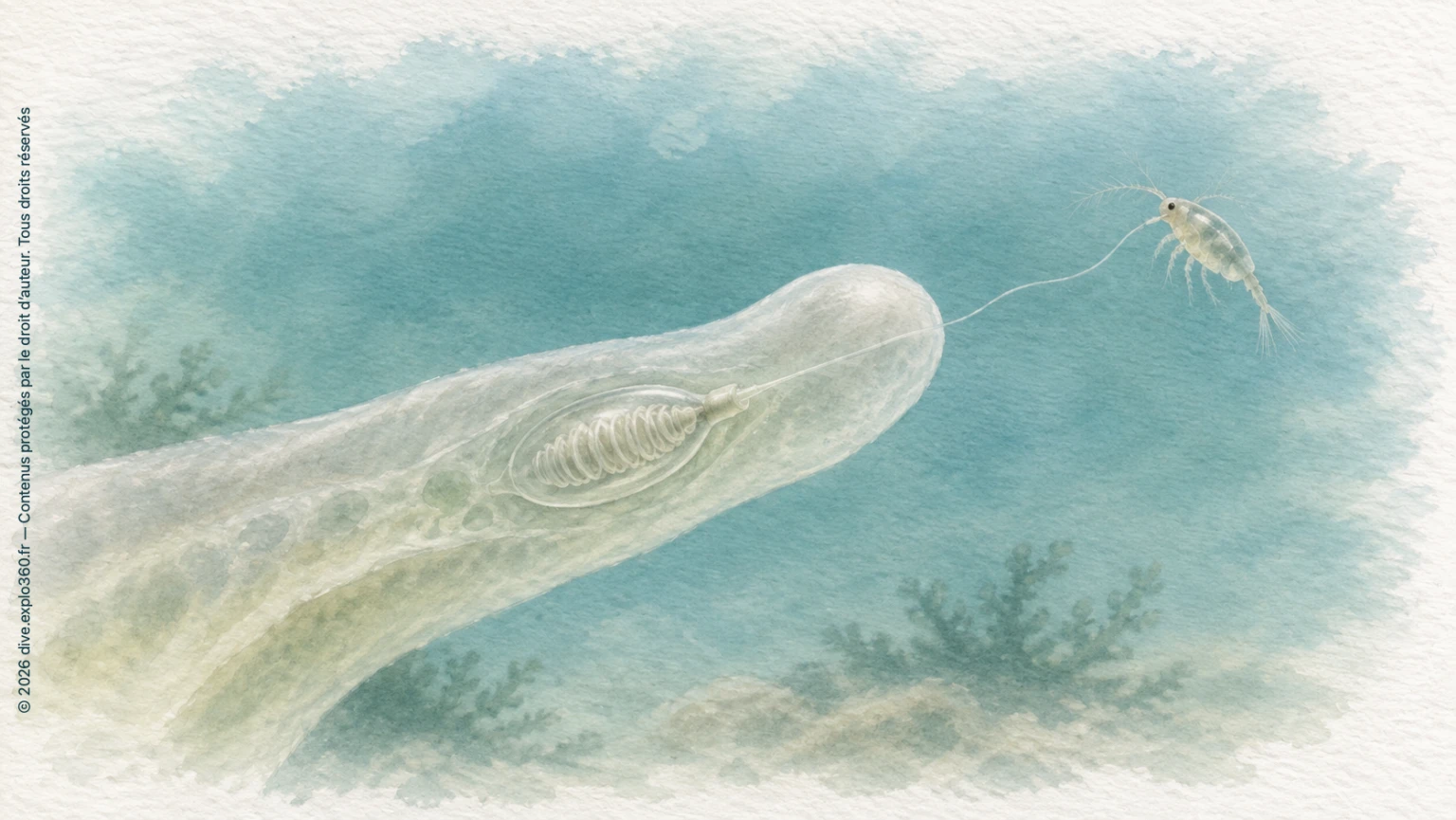
A tentacle can sting. A thread shoots from the stinging capsule.
The tentacle can release a tiny stinging thread. © dive.explo360.fr — All rights reserved. Reproduction requires permission.

Clownfish have mucus

The clownfish’s skin is covered in a slippery layer called mucus. In the fish scientists studied, this coat contained less of some of the substances that can set off a sting.
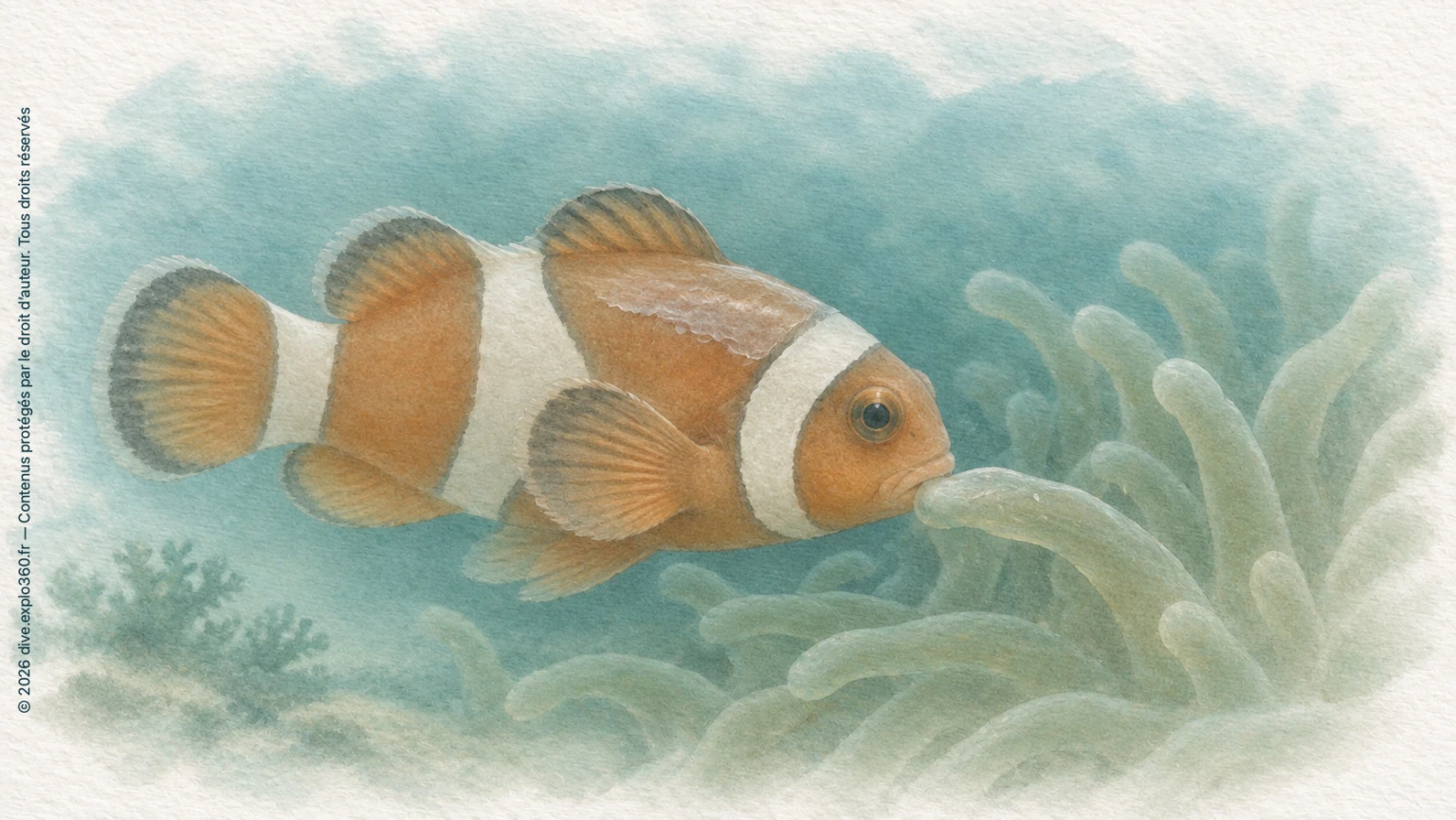
Mucus reduces the signal. Some surface sugars occur at lower levels.
Clownfish have a slippery skin coating that helps protect them. © dive.explo360.fr — All rights reserved. Reproduction requires permission.

Approaching gradually

A young clownfish may brush a tentacle, swim back and then try again. It can get used to its new home a little at a time.
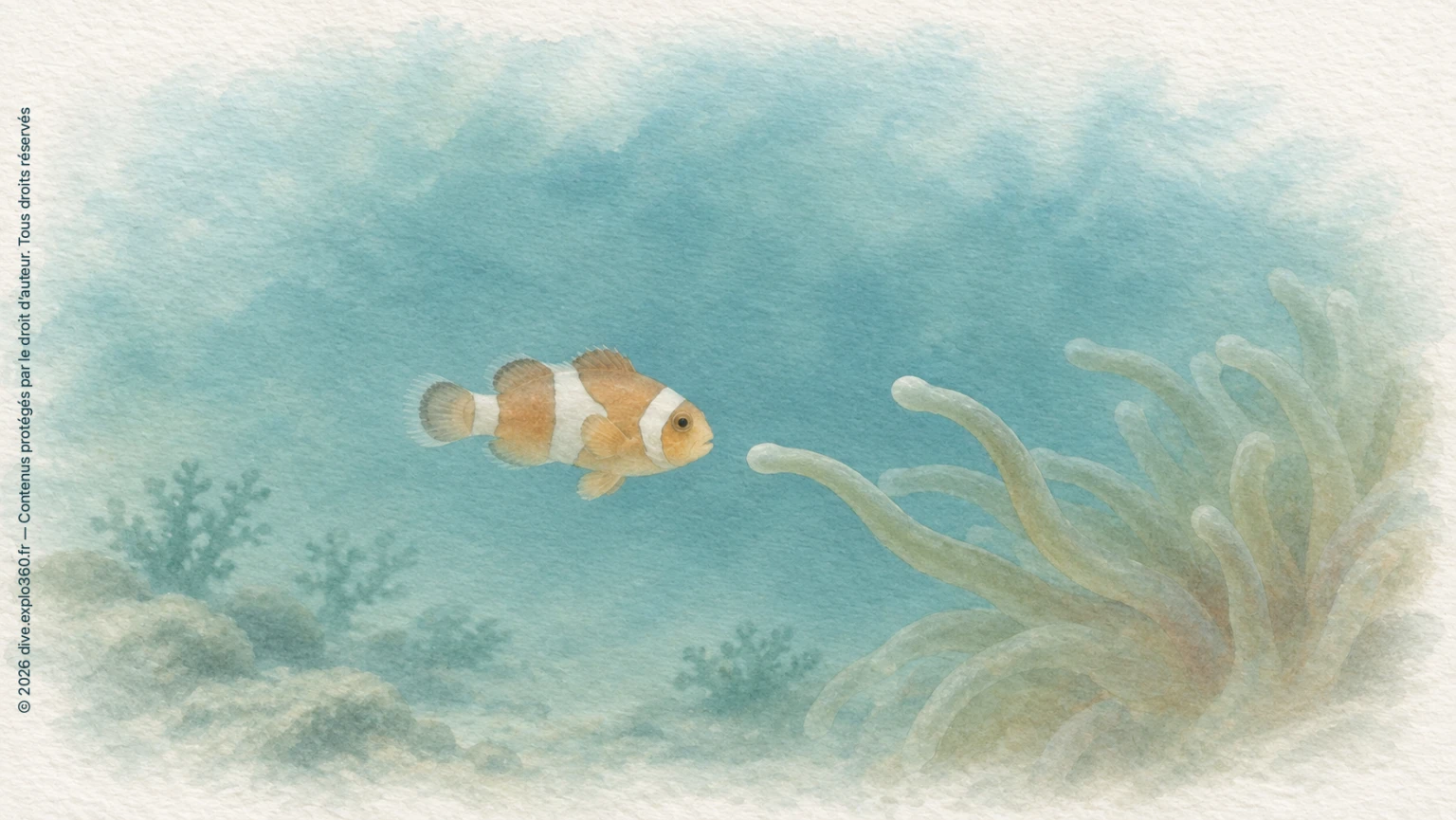
Gradual first contact. A young fish brushes the tentacles.
A young fish brushes the tentacles. © dive.explo360.fr — All rights reserved. Reproduction requires permission.

A suitable anemone

Clownfish have different kinds of anemones they can live with. A good home for one kind of clownfish may be dangerous to another.
Continue reading

AMIGANSEAU CONTENT

The rest of this article is for subscribers

Log in with your AMIGANSEAU licence to continue reading.

All active AMIGANSEAU licences give access to the full article.

Explore the same world

Explore further