Light enters the sea
Water absorbs and scatters ultraviolet radiation. How far it penetrates depends on the wavelength, dissolved substances and suspended particles. In clear, shallow water, appreciable UV can still reach fish.
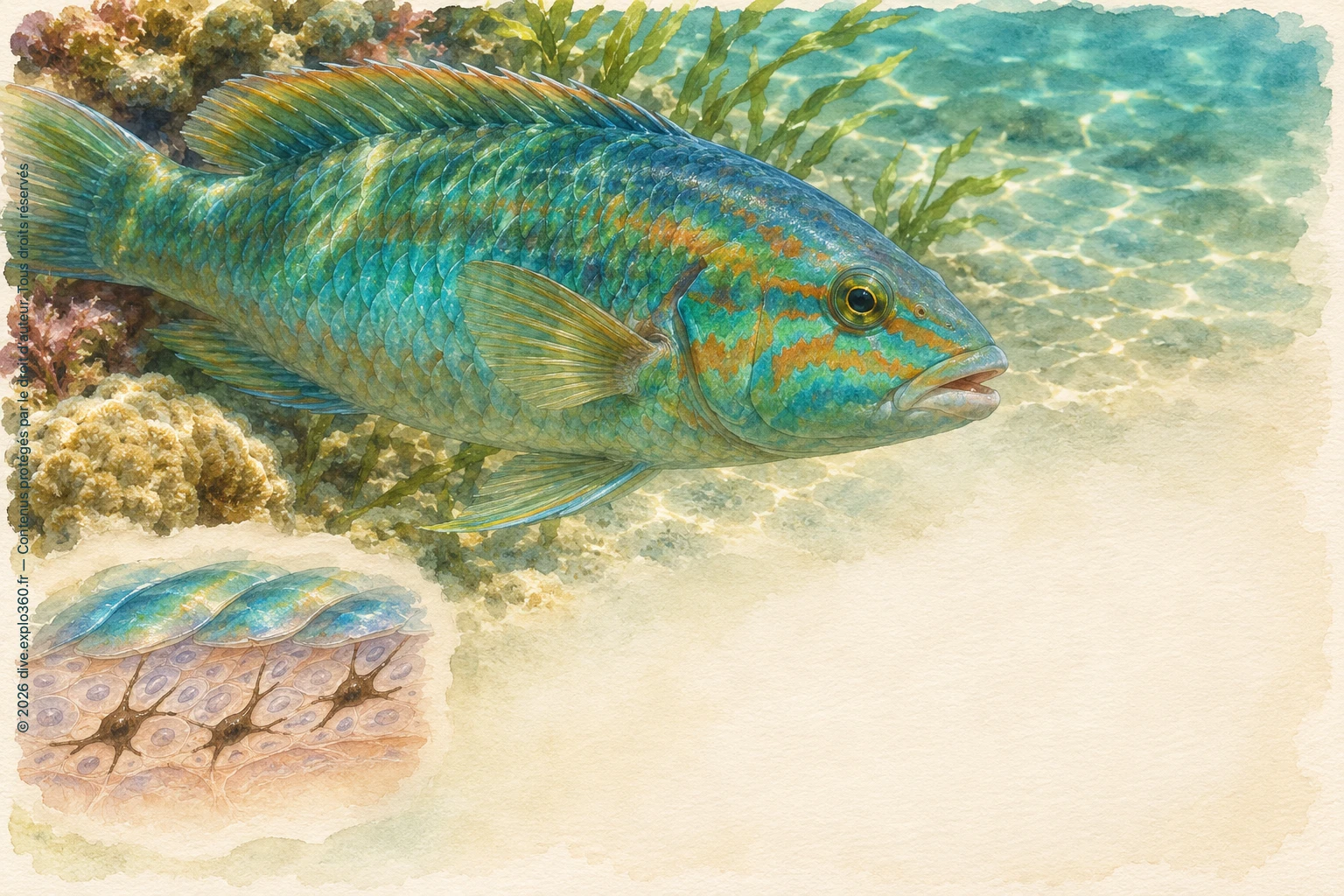
Pigments under the scales
Melanin in pigment cells absorbs some UV. Its contribution depends on how much pigment is present and where it lies in the tissue. Visible colour alone tells you little about the strength of the UV filter.
Chemical filters at the surface
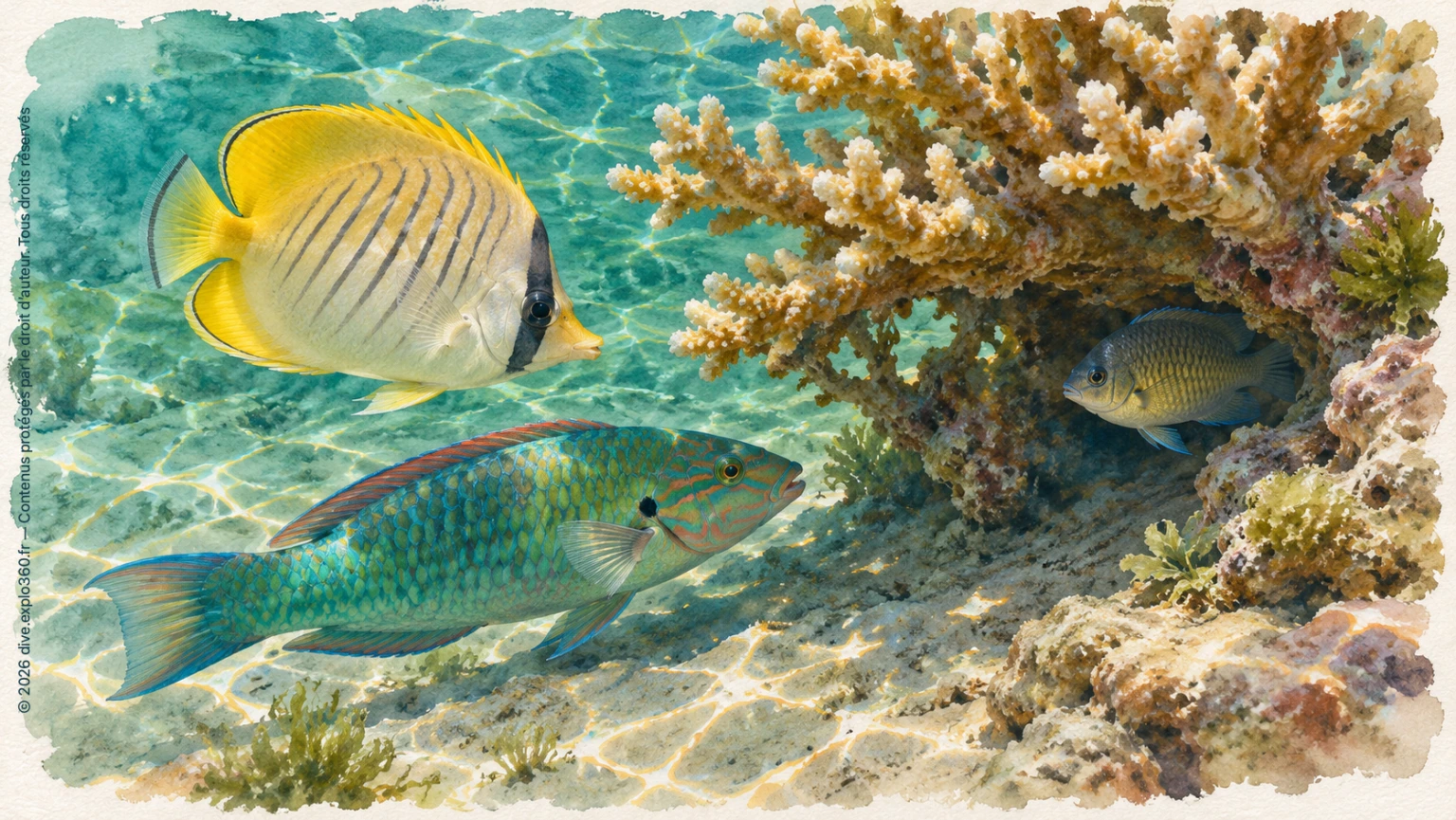
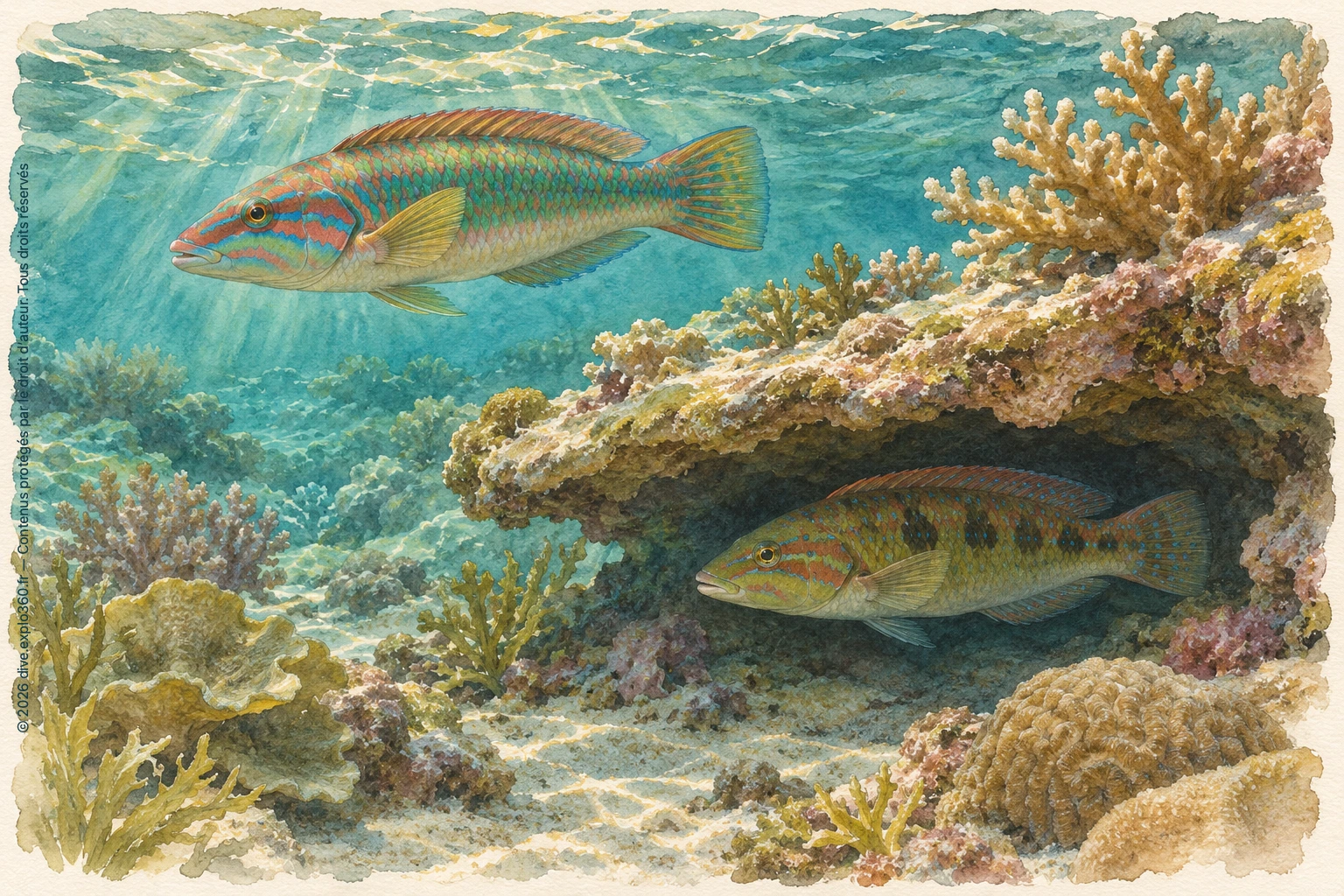
In some species, the mucus contains mycosporine-like amino acids (MAAs), which absorb particular UV wavelengths. Moon wrasses and Ambon damselfish differ both in how much UV their mucus absorbs and in how that absorption changes after exposure.
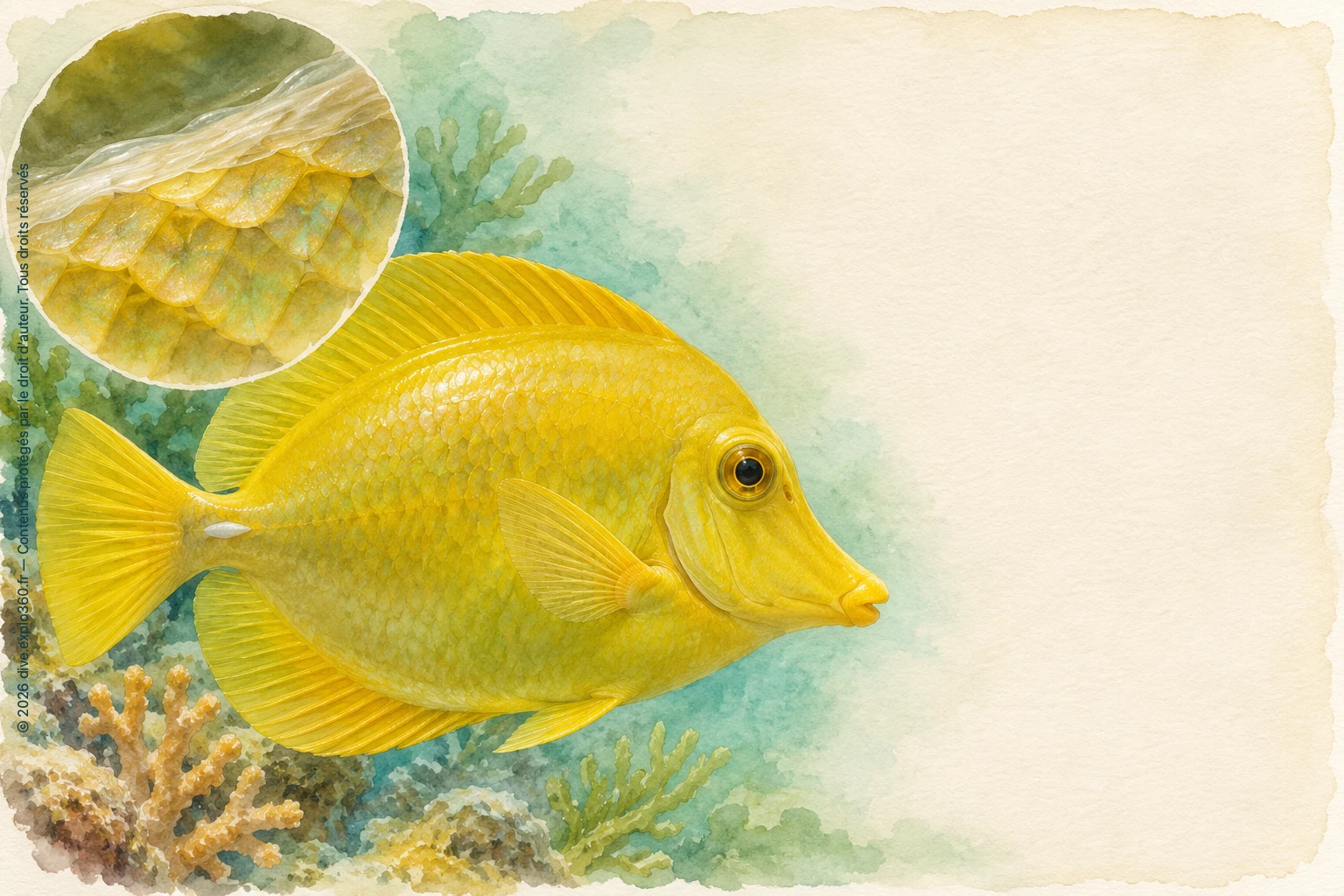
Fish do not all respond in the same way
Under controlled UV exposure, fish whose mucus absorbed more radiation showed fewer DNA lesions in the skin. Comparing the species under the same conditions makes differences in their mucus easier to study.
Explore the same world