Sunlight enters the sea

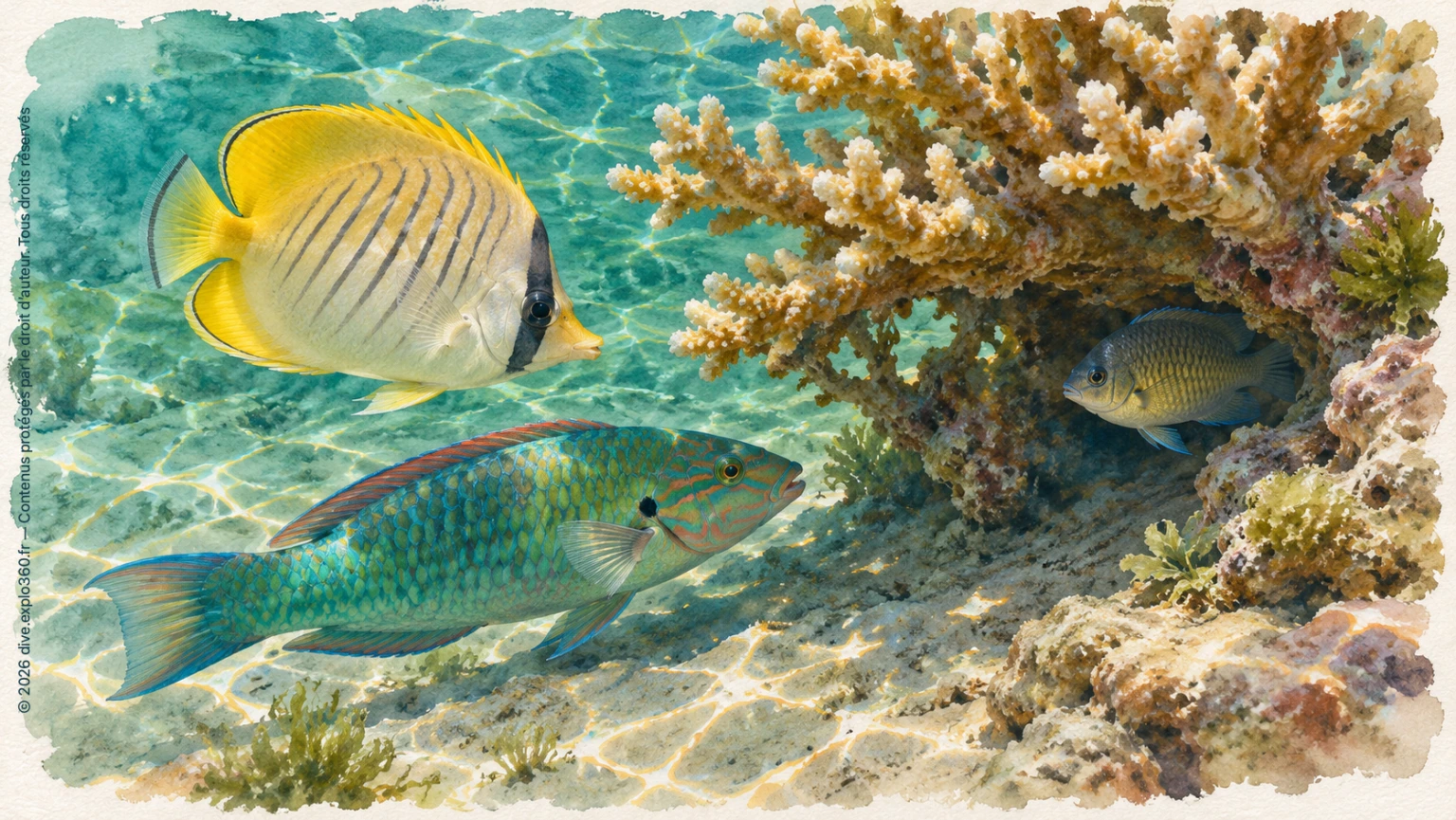
Even underwater, fish get some of the Sun’s invisible ultraviolet rays, called UV rays. In clear water, those rays can reach fish swimming near the surface.
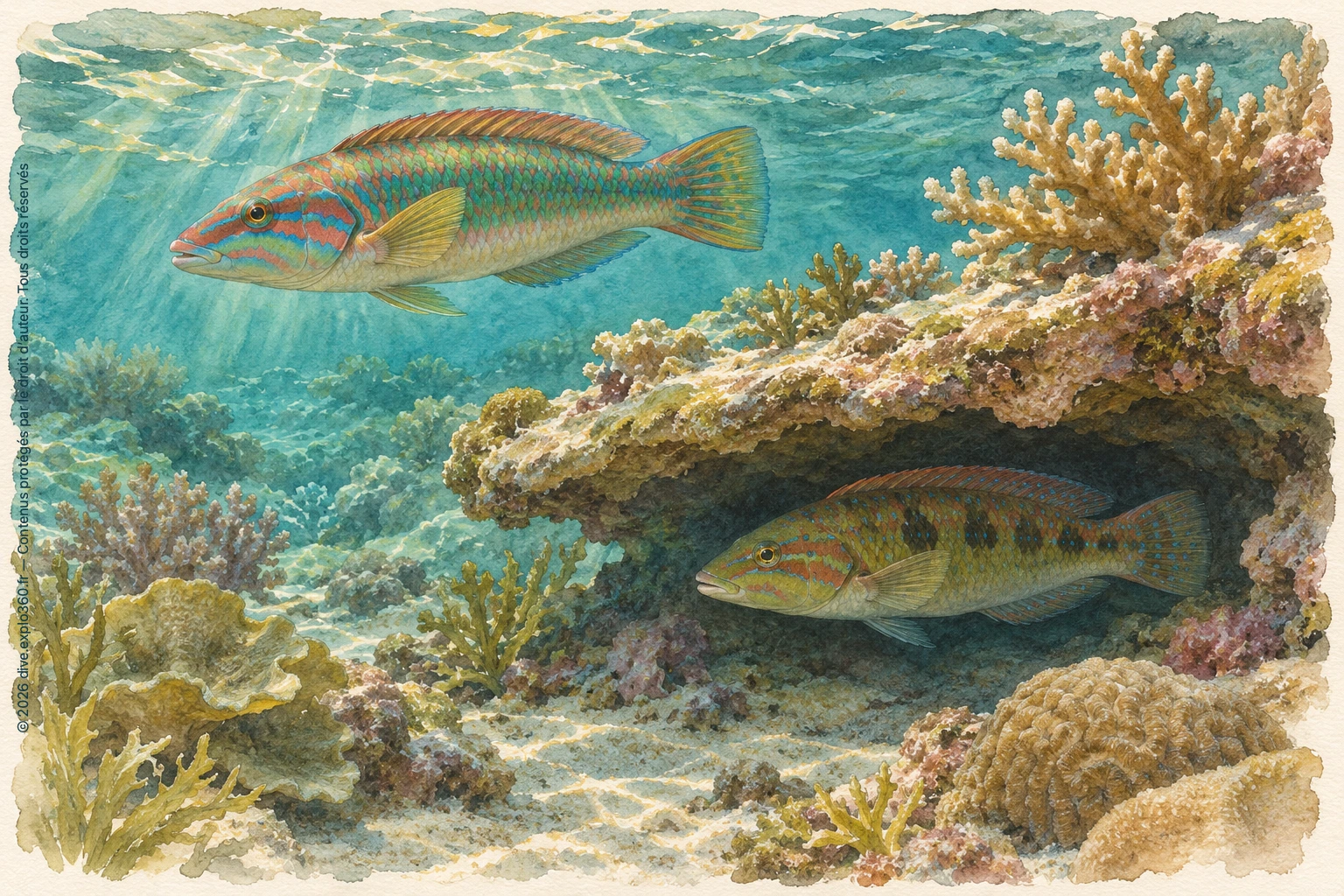
On a reef, the shape of the seabed can change how much light reaches places just a few metres apart.
On a reef, the shape of the seabed can change how much light reaches places just a few metres apart. © dive.explo360.fr — All rights reserved. Reproduction requires permission.
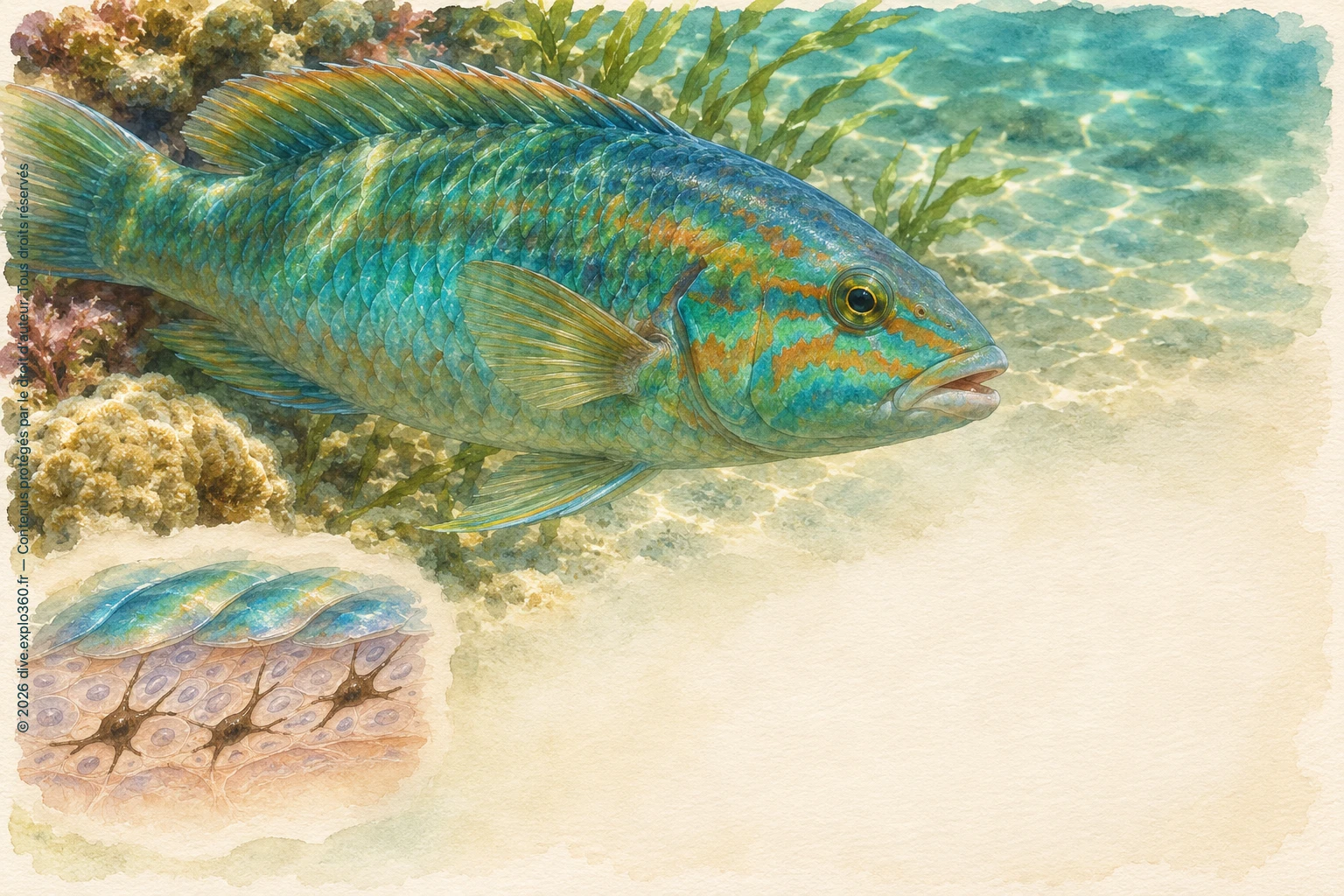
Diagram of melanin in skin cells absorbing some ultraviolet rays.
Schematic view: melanin in skin cells absorbs some UV. Melanin in the skin absorbs some ultraviolet light. You cannot tell how well a fish is protected from UV just by looking at its colour. © dive.explo360.fr — All rights reserved. Reproduction requires permission.

Pigments under the scales

Some fish have a pigment called melanin in their skin. It soaks up some of the UV light.

A thin layer over the skin

Look closely at a fish’s shiny side. The skin is covered in a thin, slippery layer called mucus. In some fish, it soaks up some of the UV rays.
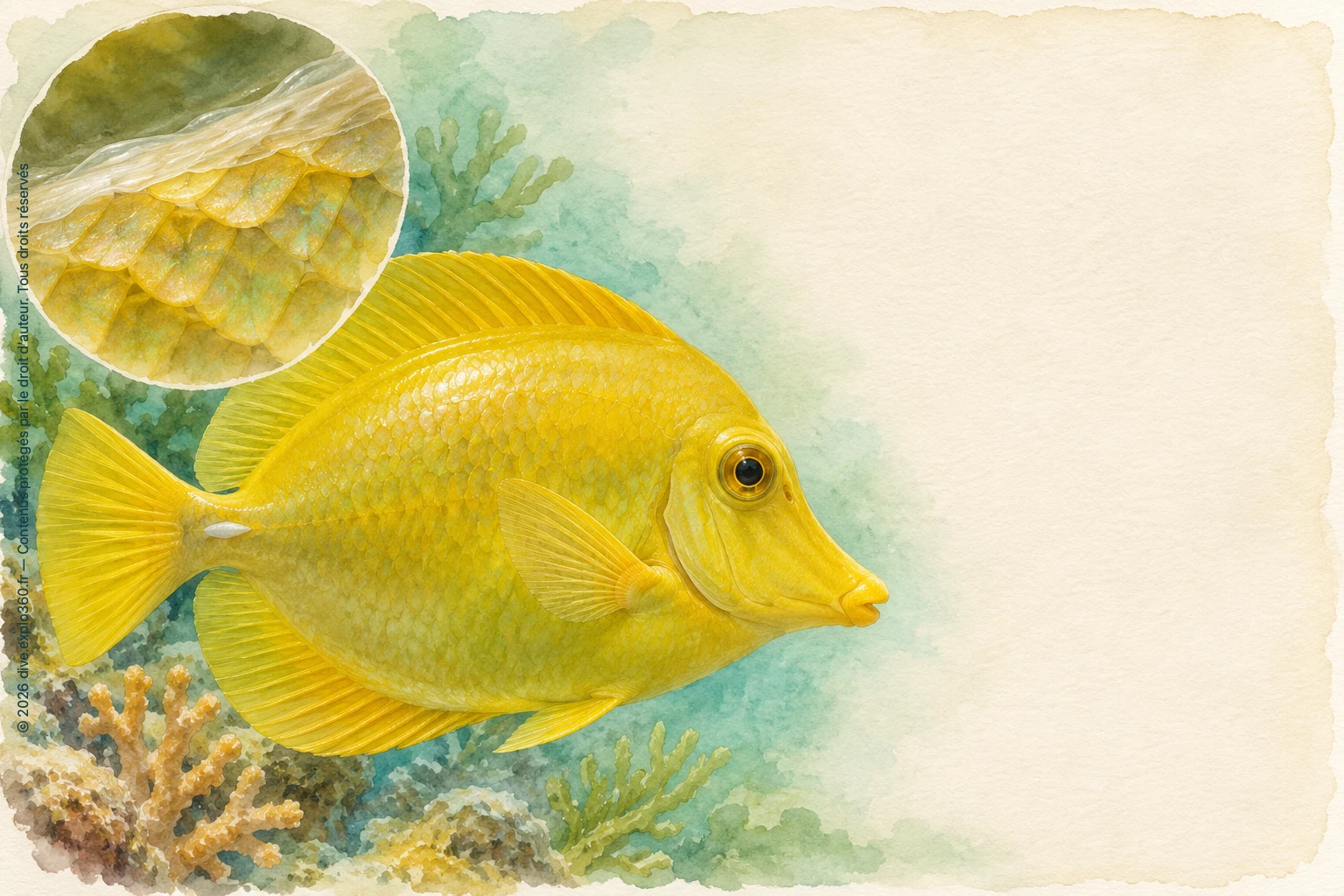
Mucus forms a thin layer over the fish. In some species it filters some UV.
A thin coat of mucus covers the fish. In some species, it absorbs UV before the rays reach the skin. © dive.explo360.fr — All rights reserved. Reproduction requires permission.

Fish do not all respond in the same way

Two fish swimming side by side get the same sunlight. One may have mucus that soaks up more UV than the other’s.

Continue reading

AMIGANSEAU CONTENT

The rest of this article is for subscribers

Log in with your AMIGANSEAU licence to continue reading.

All active AMIGANSEAU licences give access to the full article.

Explore the same world

Explore further