A spiny body and a stomach that turns outward
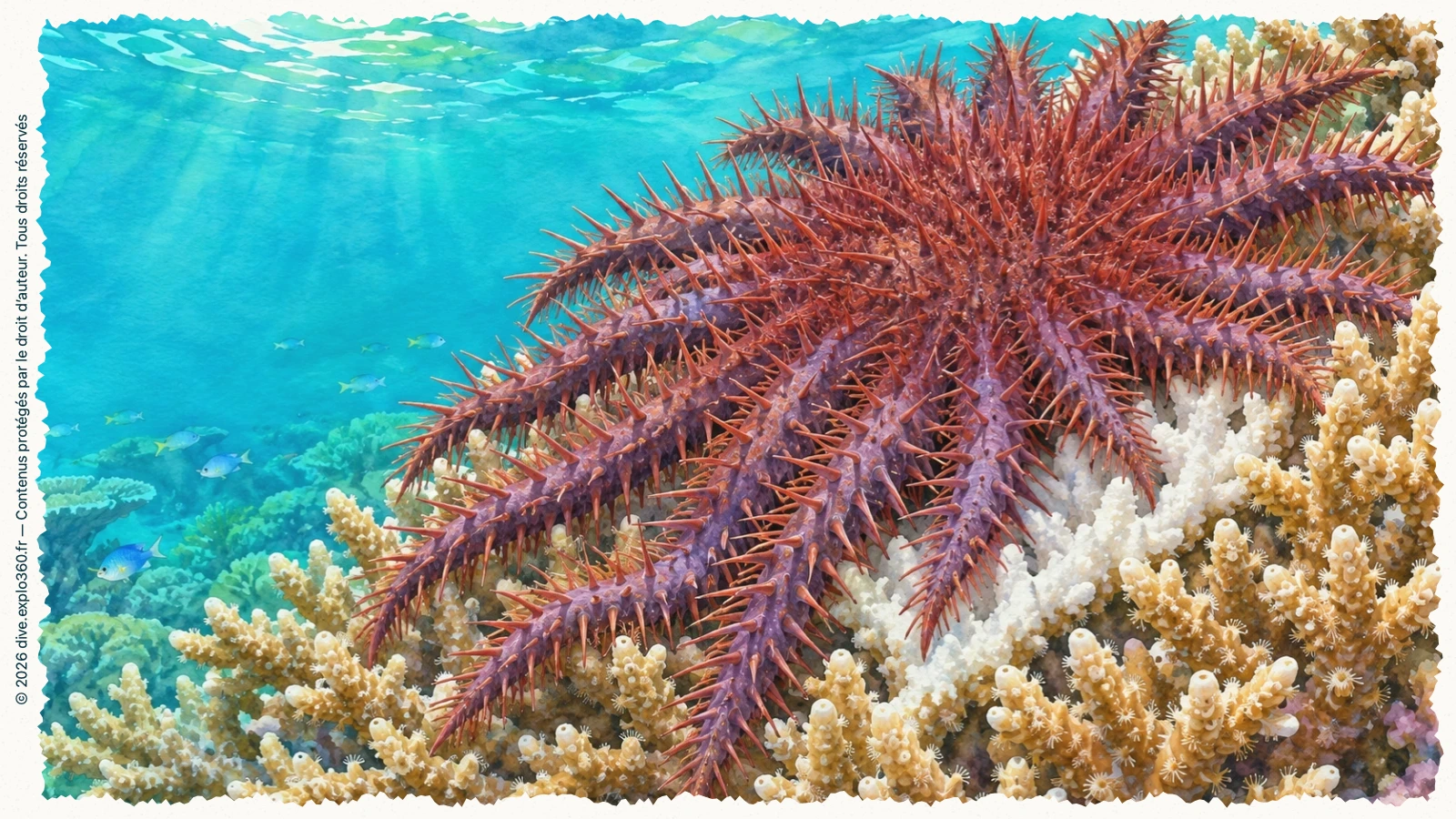
A crown-of-thorns sea star often has ten to twenty arms radiating from its central disc. Its body can exceed fifty centimetres across, and some individuals grow even larger.
Its long spines can deliver venom if they puncture the skin. They deter some attackers, although predators can still eat the sea star.
Hundreds of tiny tube feet beneath its body let it move, grip the surface and hold steady on uneven ground. Its mouth is in the centre of its underside.
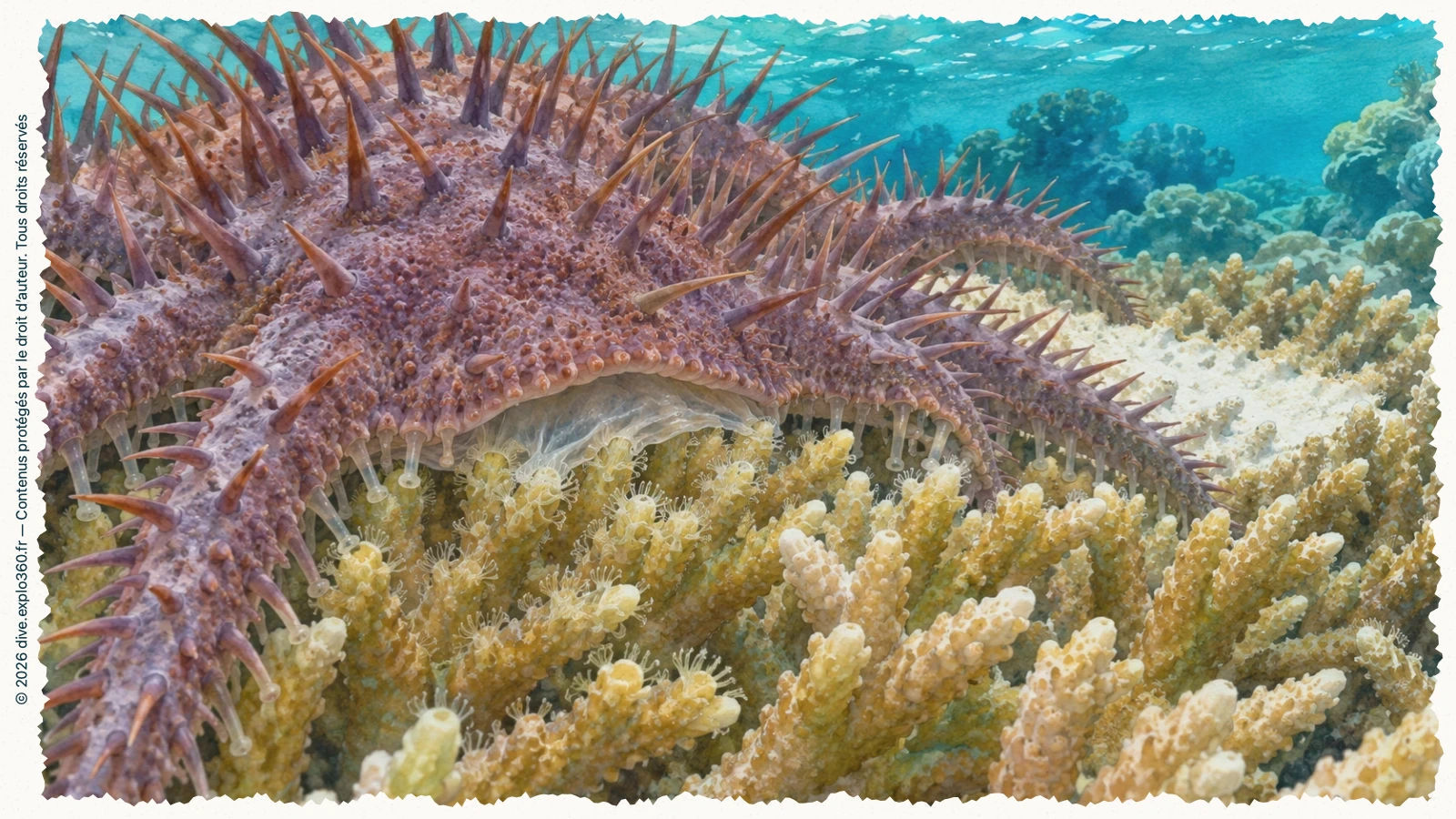
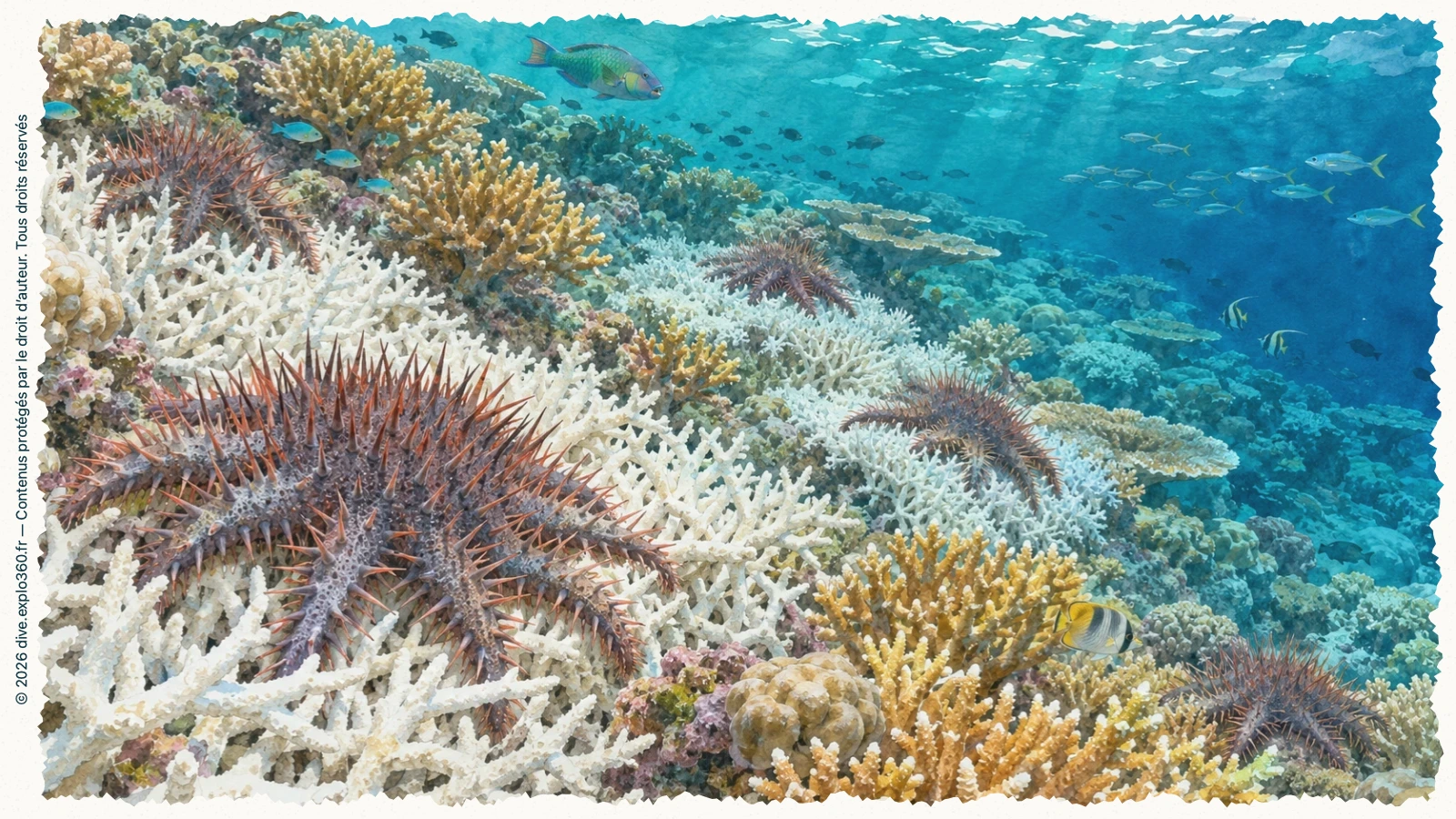
The sea star grips the coral and pushes part of its stomach out through its mouth. Spread over the polyps, the stomach releases enzymes that break down their tissue and absorbs nutrients before the sea star draws it back in.
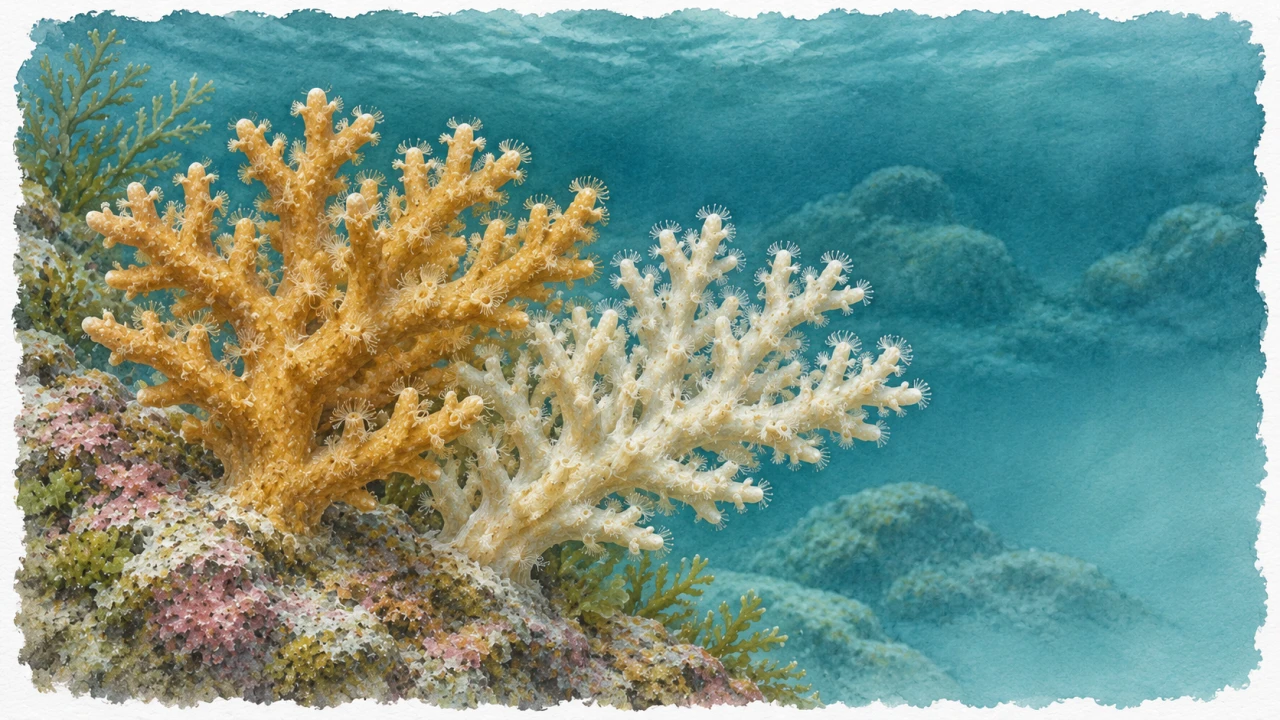
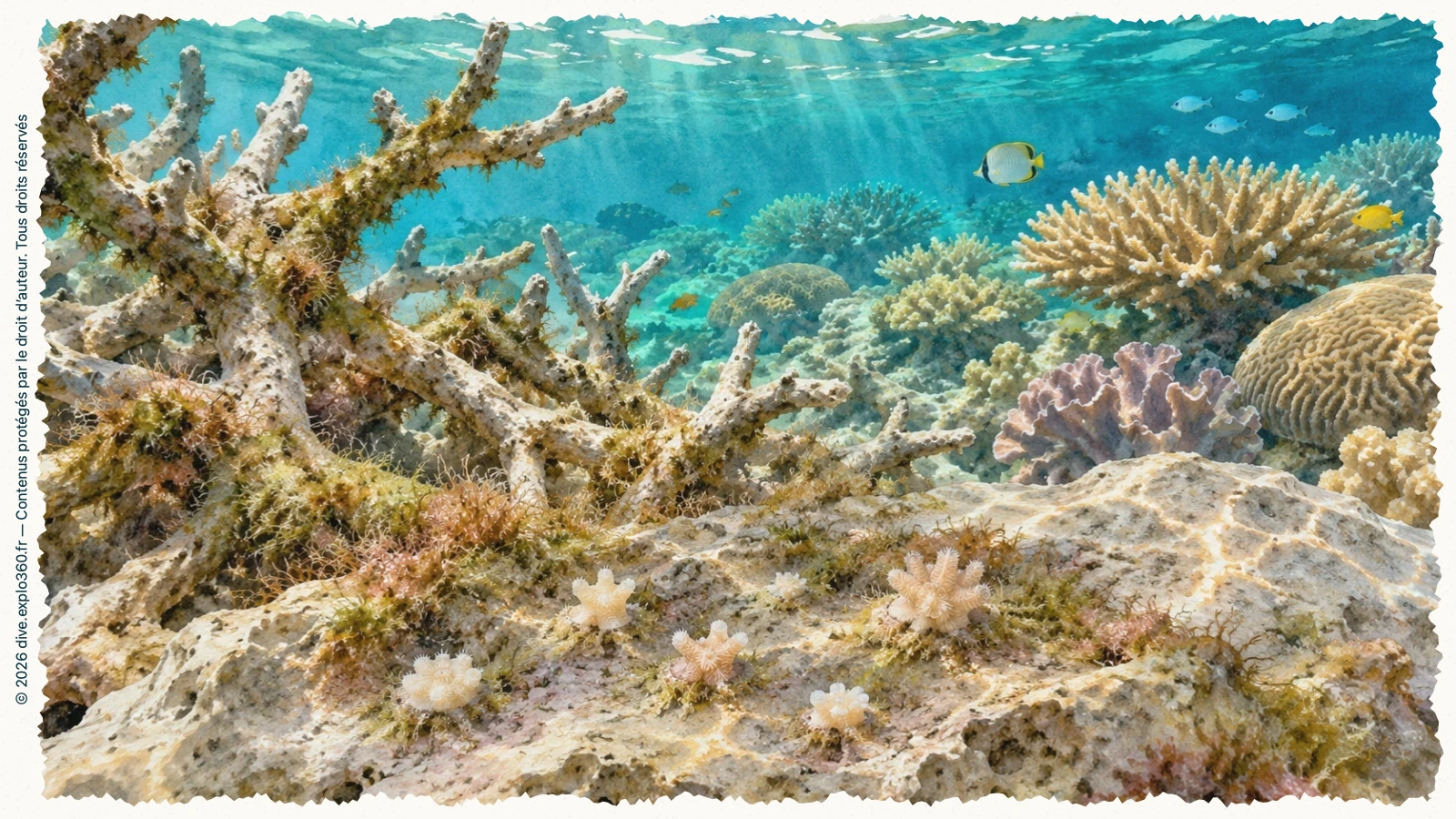
The coral skeleton remains in place. Its pale surface contrasts with the parts of the colony that still have living tissue and colour.
An adult can strip living tissue from several square metres of coral in a year. In favourable conditions the area can approach ten square metres, though it varies with the sea star, the coral and the conditions on the reef. A sea star may go several days without feeding, then eat intensively.
Some corals are eaten more often than others
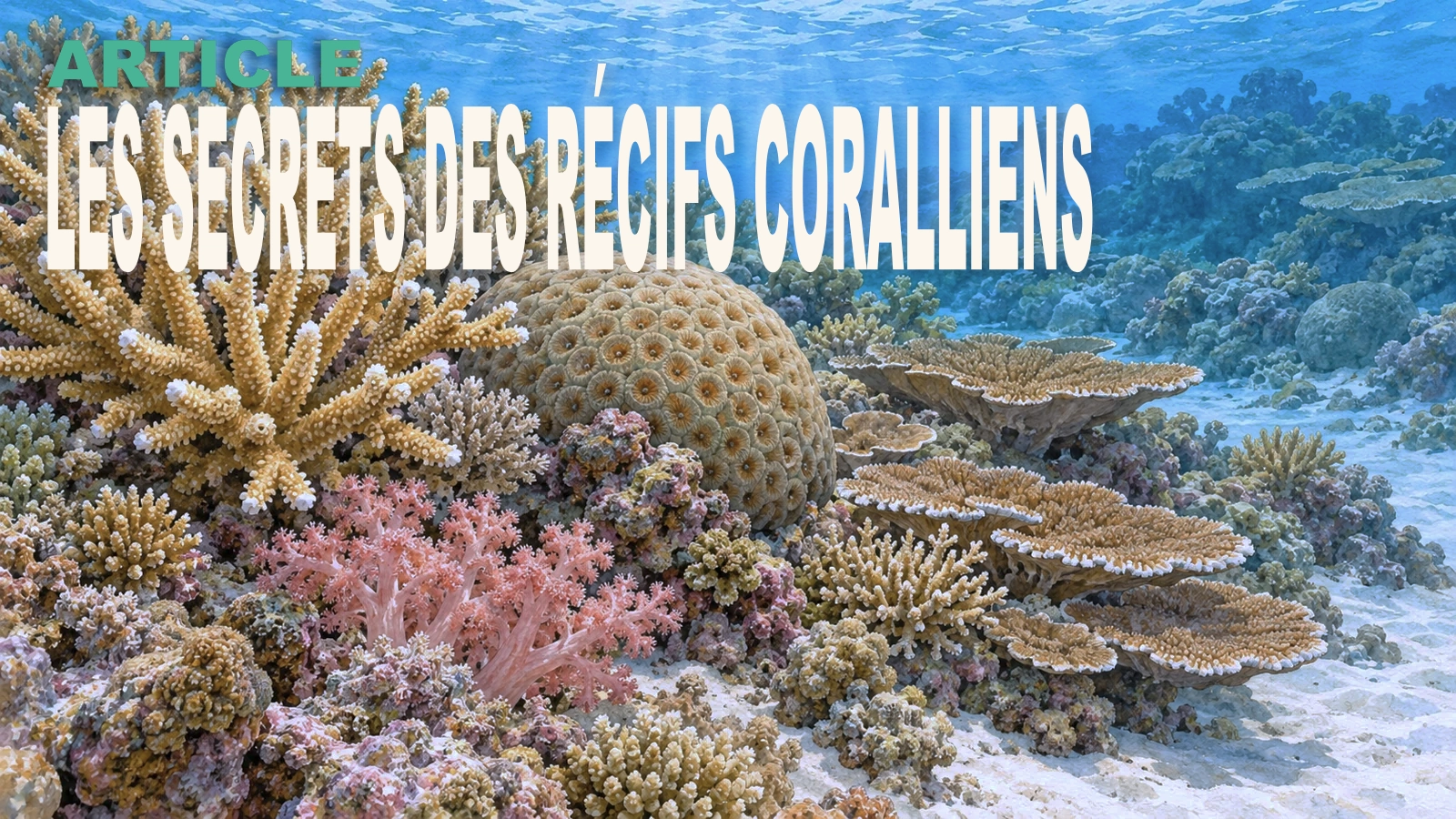
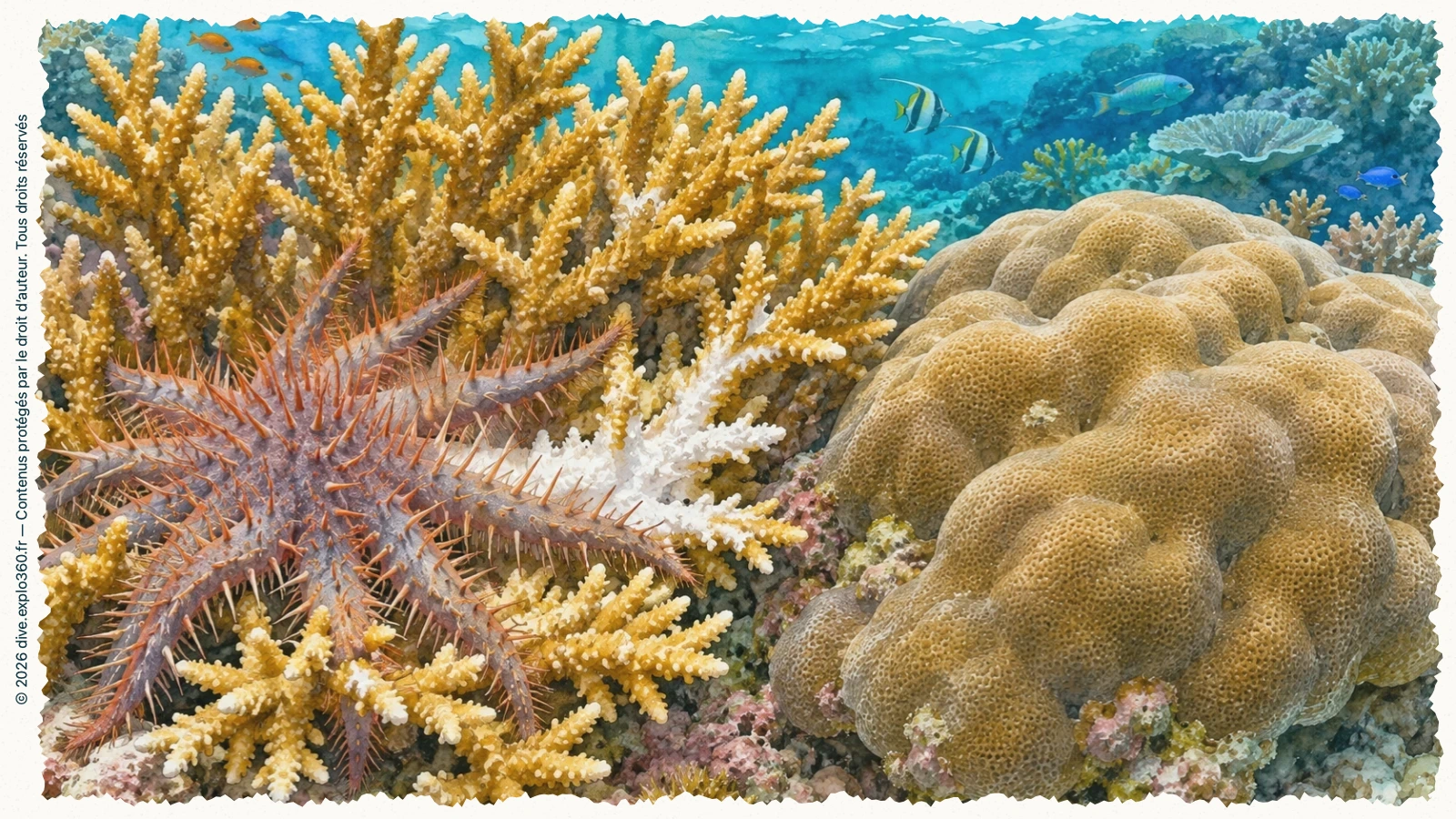
On a reef, crown-of-thorns sea stars feed selectively. Across much of the Indo-Pacific, branching and table-forming Acropora corals are among their preferred prey. They also eat Pocillopora, Seriatopora and other reef-building corals. Massive Porites colonies are often less sought after when other prey is available. Preferences vary with the sea star species, reef composition and available food.
What a sea star eats depends in part on how nutritious the tissue is and how easily it can reach it. Some corals harbour crabs or shrimp that can repel small predators and interfere with sea stars’ feeding.
Where sea stars are scarce, their feeding can locally limit the dominance of fast-growing corals and alter which species make up the community. When many sea stars feed on the same reef, their preferences can determine which corals disappear first. Less favoured species may then make up a greater share of what survives.
As dead branches and tables break down, the reef loses some of its three-dimensional structure. Crevices, shelters and spaces between branches become scarcer, extending the effects beyond the colonies eaten.
When a few sea stars become an outbreak
A lone crown-of-thorns sea star can go unnoticed, often hiding in reef crevices or beneath coral colonies. In some areas, numbers then rise sharply. Dozens or hundreds of individuals may occupy places where the species was previously scarce, and some outbreaks involve millions of sea stars.
Crown-of-thorns sea stars are native to Indo-Pacific reefs, where their populations have long fluctuated. If the sea stars keep eating coral faster than colonies can regrow or new ones can establish, coral cover falls.
Several major waves of outbreaks have been documented on the Great Barrier Reef since the 1960s. Some have spread from reef to reef, causing substantial losses of coral cover. How these outbreaks start is still an open question. Part of the answer may lie in the plankton, long before the adults are visible on the reef.
Millions of eggs and a hidden generation
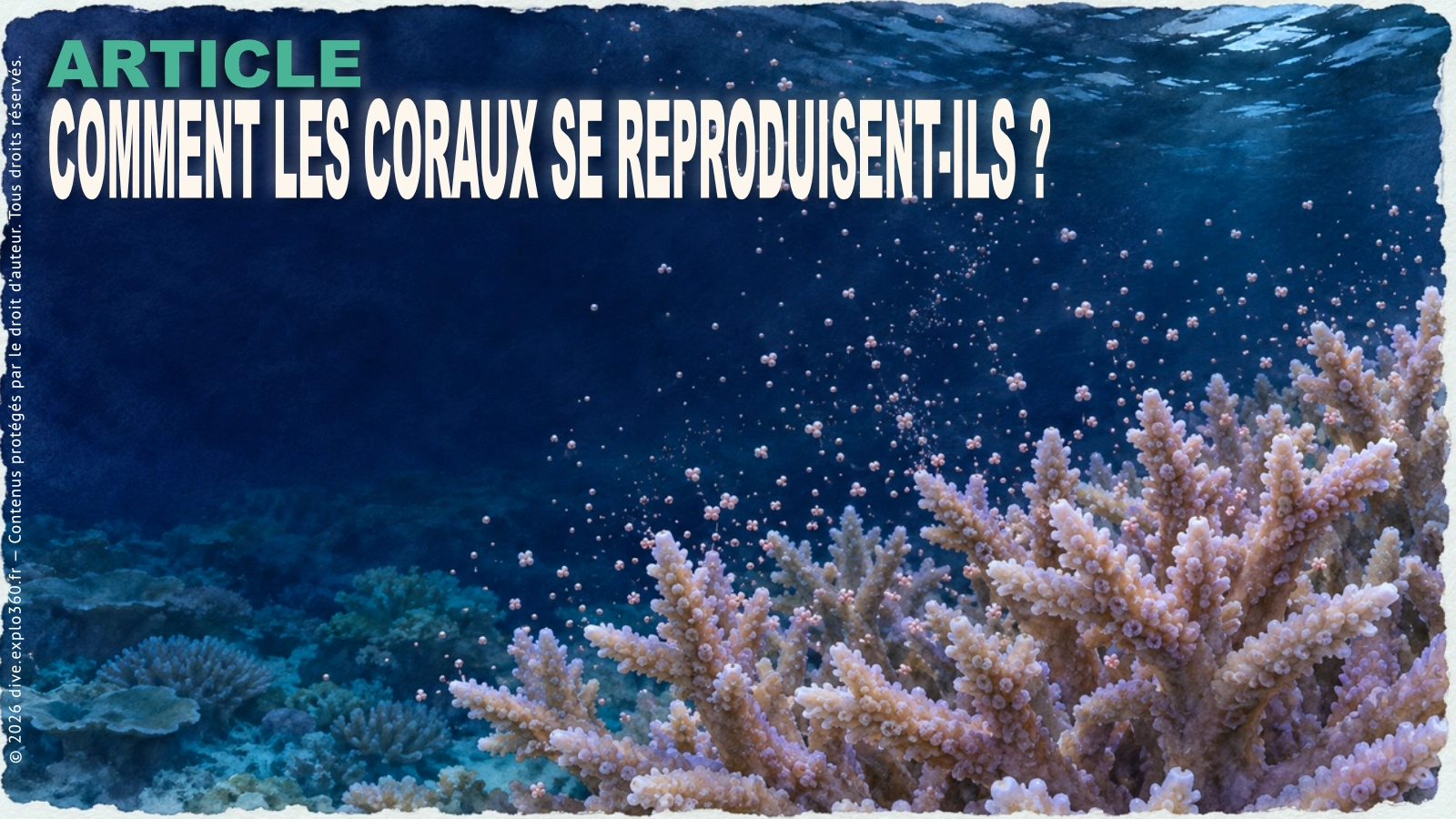
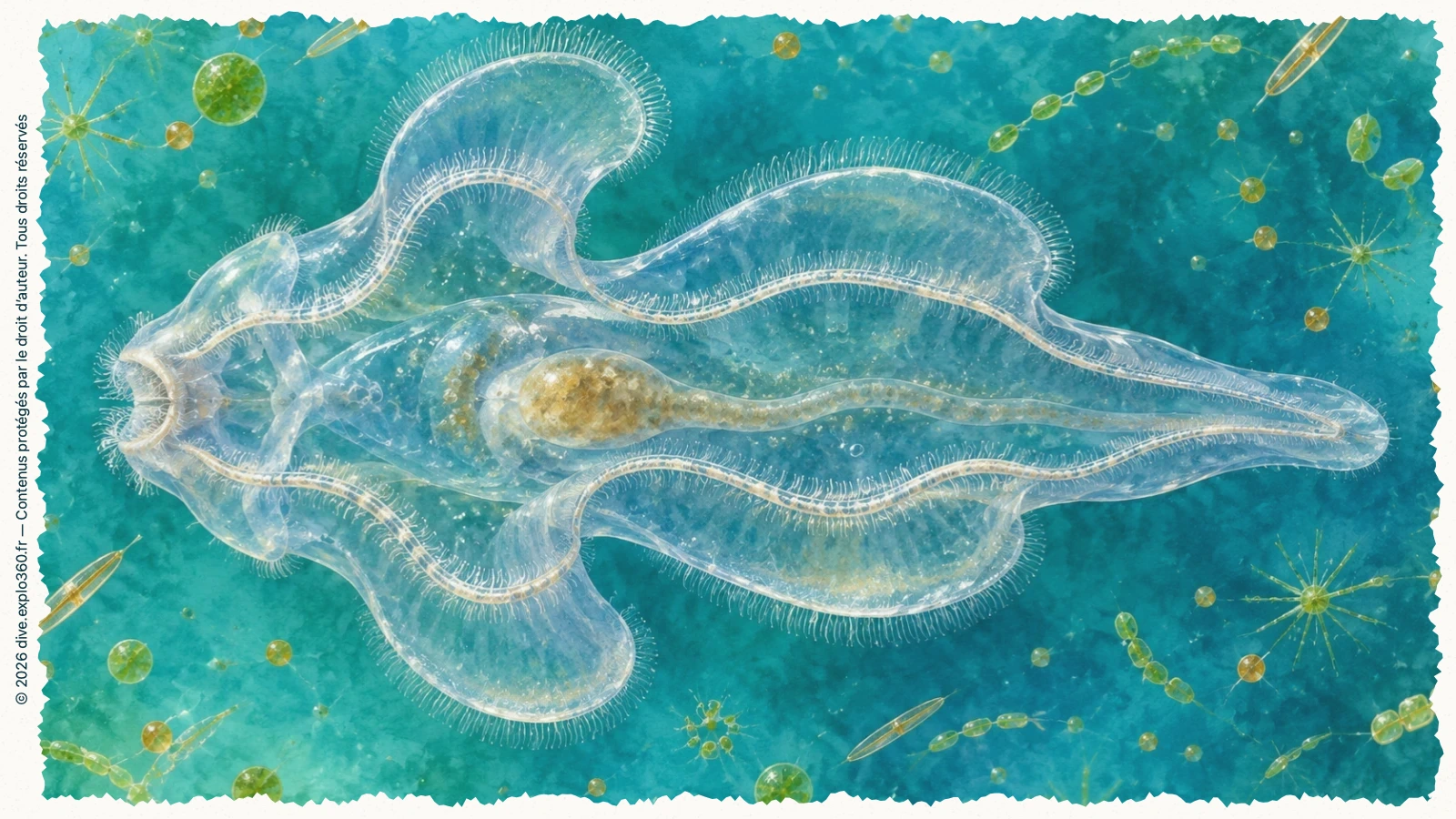
During the breeding season, adult crown-of-thorns sea stars release their eggs and sperm into the water, where fertilisation takes place. A large female can produce tens of millions of eggs in a season and some produce more than one hundred million. Most eggs and larvae fail to reach adulthood.
Fertilised eggs develop into microscopic larvae that drift in the currents. For several weeks they live in the plankton and feed on microalgae. On reaching a suitable surface, a larva can settle and transform into a tiny five-armed sea star.
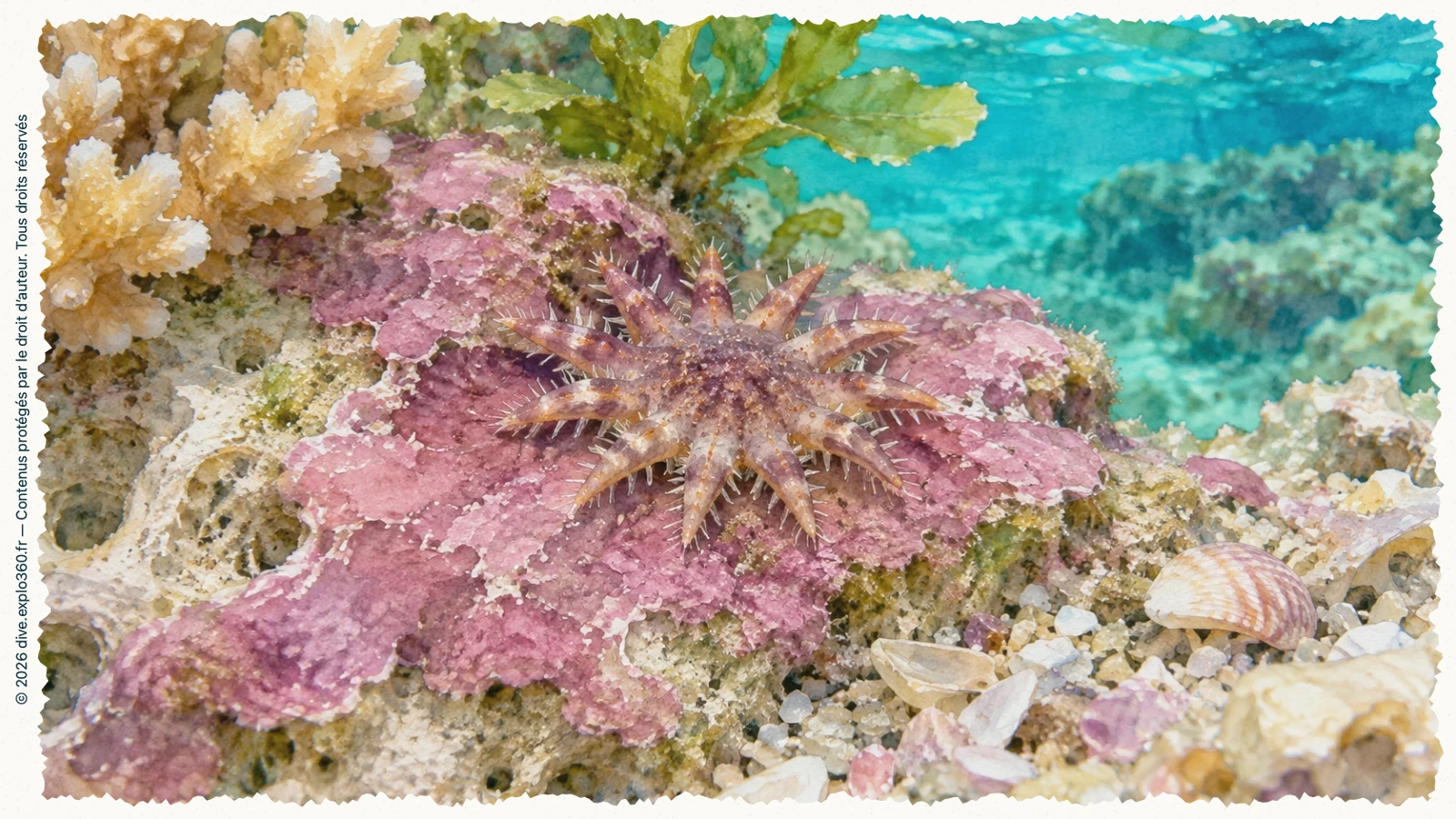
Young sea stars feed mainly on crust-forming coralline algae, though they can use other algae. They hide in reef rubble and small crevices, where their size makes them hard to spot. Their growth can accelerate sharply when they start feeding on coral.
In the laboratory, juveniles fed on algae survived for more than six years before they were offered coral. Once they received it, they grew rapidly again. The experiment shows how long juveniles can delay the switch to coral under laboratory conditions. Whether whole populations spend years hidden on reefs remains unknown.
When larval food becomes abundant
An outbreak can begin developing long before large sea stars appear on a reef. In tropical waters, crown-of-thorns larvae rely in part on phytoplankton. A greater supply of this food may improve their chances of survival. A pulse of nutrients can sometimes help those microalgae multiply.
On the Great Barrier Reef, heavy rains and floods carry material from catchments into the sea. Nitrogen and phosphorus in the runoff can fuel phytoplankton growth. Deep water can also rise and bring naturally occurring nutrients into the upper layers. Larvae can encounter suitable concentrations of food below the surface as well.
More phytoplankton may help larvae develop. Their survival also depends on currents, temperature, predators and conditions on the seabed. No single cause accounts for all the outbreaks observed across the Indo-Pacific.
What eats crown-of-thorns sea stars?
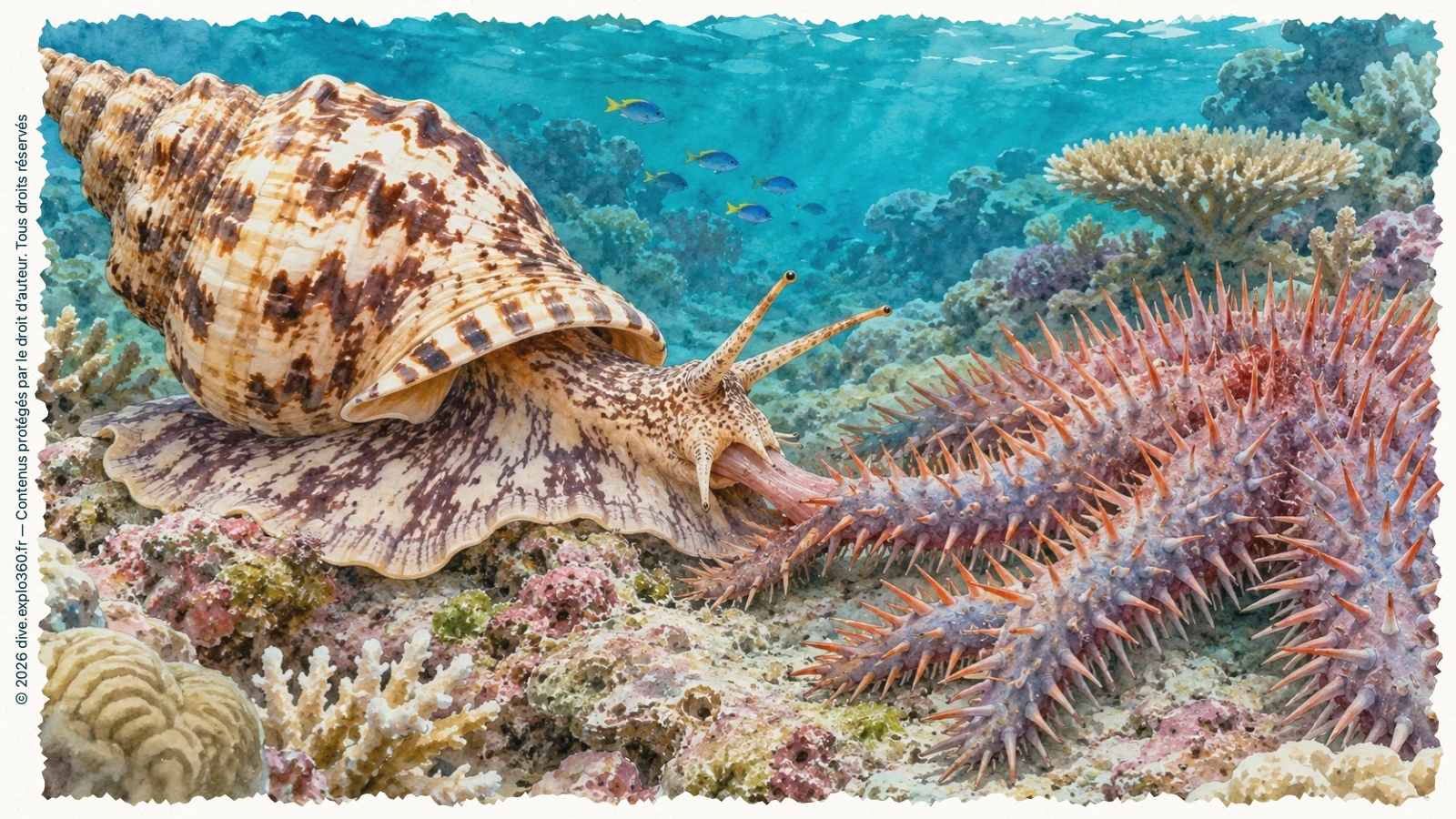
The sea stars’ long venomous spines offer considerable protection, but they still have predators. The giant triton, Charonia tritonis, can capture and eat adults. Some fish, including humphead wrasse, triggerfish and pufferfish, can also feed on them.
Young sea stars face a wider range of predators, including reef fish and various invertebrates. Predators can take them at every stage, from larvae drifting in the plankton to adults on the reef.
If some populations of predatory fish decline, predation on crown-of-thorns sea stars may decline as well. On the Great Barrier Reef, comparisons found significantly higher densities of the sea stars on reefs open to fishing than on protected reefs. The pattern is consistent with predators helping to keep sea star numbers down. It leaves open how much fishing contributes to any particular outbreak.
Several factors can act together, including more food for larvae, greater juvenile survival, plentiful coral and reduced predation. Once the sea stars become abundant, currents can carry their offspring to other reefs.
When coral losses outpace recovery
A partly eaten coral colony can sometimes recover. Surviving tissue can spread back over part of the bare skeleton. Recovery depends on the species, the extent of the damage and local conditions. If all the living tissue is eaten, the remaining skeleton can no longer produce new polyps. Algae, sponges and other organisms can colonise it, and biological and mechanical erosion gradually break it down.
A major outbreak can cause extensive coral losses. Crown-of-thorns sea stars often favour fast-growing species, including branching and table-forming corals that give the reef much of its three-dimensional structure. Their loss leaves fish and invertebrates with fewer spaces between branches and fewer places to shelter, feed or breed.
The effects depend on the severity and duration of the outbreak and on the condition of the reef beforehand. When sea star numbers fall, surviving colonies can grow and new coral larvae can settle on available surfaces. Rebuilding coral cover can take years. If another disturbance hits before the reef recovers, it can set that growth back.
A native reef predator
Crown-of-thorns sea stars are native to the Great Barrier Reef and have long been part of Indo-Pacific reef communities. The name covers several closely related species that differ somewhat in distribution and feeding preferences. In the western Pacific, the species studied on the Great Barrier Reef is generally referred to as Acanthaster cf. solaris.
At low densities, sea star predation is part of the reef’s natural ecology. By feeding preferentially on some corals, the sea stars can change which species dominate locally. Problems arise when sea stars become so abundant that coral losses exceed recovery for a prolonged period.
On the Great Barrier Reef, targeted control programmes look for and remove crown-of-thorns sea stars in priority areas. The aim is to reduce coral mortality where sea star densities are exceptionally high. The scale of their effect can change dramatically when conditions favour a sharp rise in their numbers.
Interactive quiz
Test your knowledge
5 question(s) to test your knowledge.
Interactive quiz
Test your knowledge
Question 1 out of 5Score: 0
How does a crown-of-thorns sea star eat coral?
Which part of the coral does it eat?
Where do young larvae live?
When can sea stars do serious damage?
What helps a reef recover?
Final result
Quiz completed
correct answers
Conclusion
After a crown-of-thorns sea star moves on, the branches are still standing. The white patches mark where it ate the polyps.
When hundreds of sea stars feed on a reef, those patches add up. As the corals they favour are lost, the mix of species that remains changes.
The process can begin long before the first feeding scars appear. Millions of eggs can give rise to larvae, but currents, food, places to settle and predators all affect how many become adults. Juveniles can wait on a diet of algae before switching to coral. How these factors combine to trigger an outbreak remains an open question.
A sea star moves slowly from colony to colony. When enough of them feed on the same reef, coral structures that took decades to grow can change in a matter of months.
Sources
Research and observations on crown-of-thorns sea stars.