External digestion and prey choice

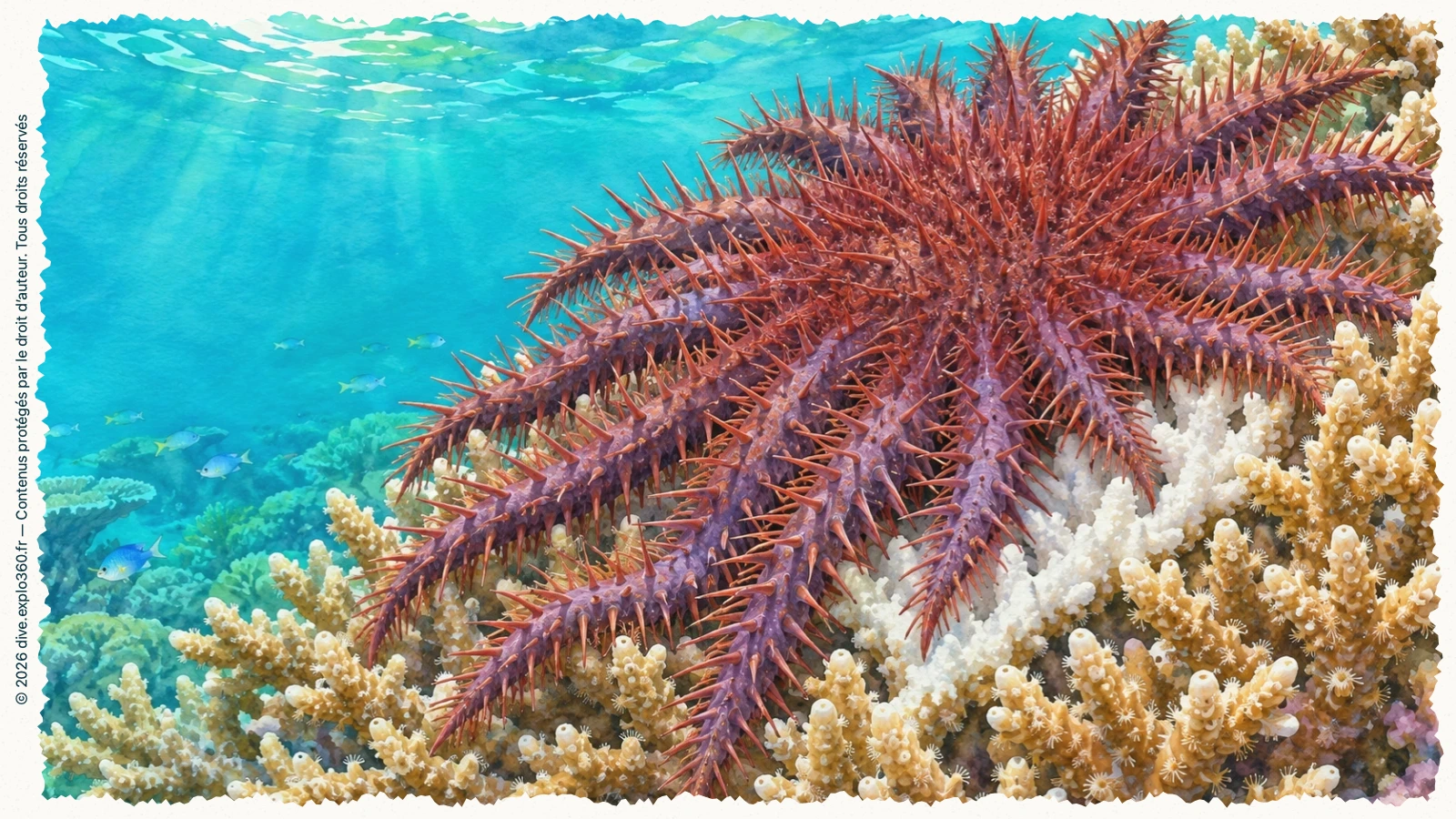
The sea star everts its stomach, turning it out through its mouth and spreading it over the polyps. It digests their tissue outside its body, leaving the skeleton bare. Its preference for corals such as Acropora can change the mix of species on a reef.
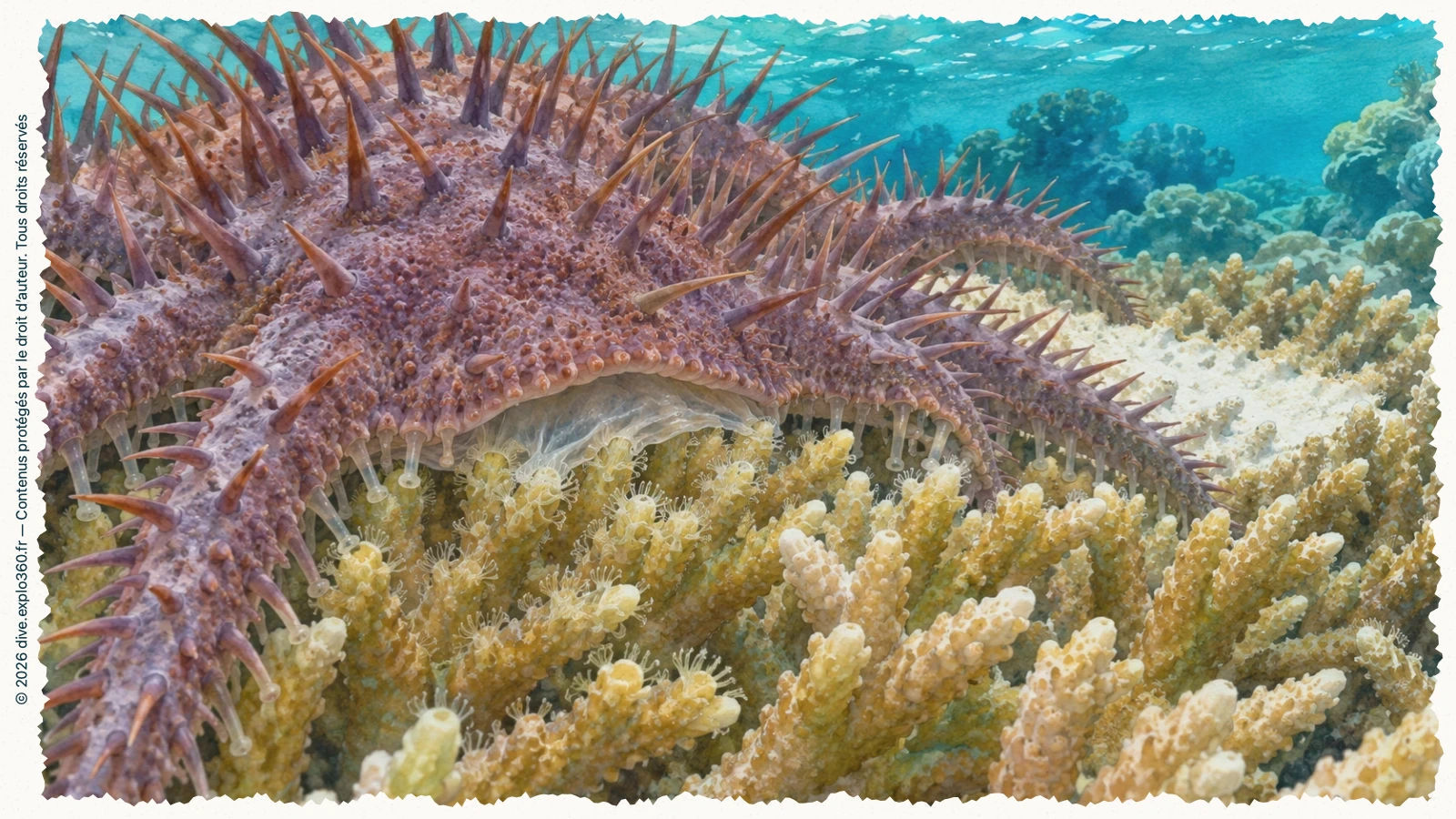
A crown-of-thorns sea star grips branching coral beside a white feeding scar.
The crown-of-thorns sea star extends its stomach over the colony and digests the tissue outside its body. © dive.explo360.fr — All rights reserved. Reproduction requires permission.

Which corals get eaten?

Feeding preferences can cause uneven losses among coral groups. The reef’s original composition therefore affects the consequences of an outbreak.
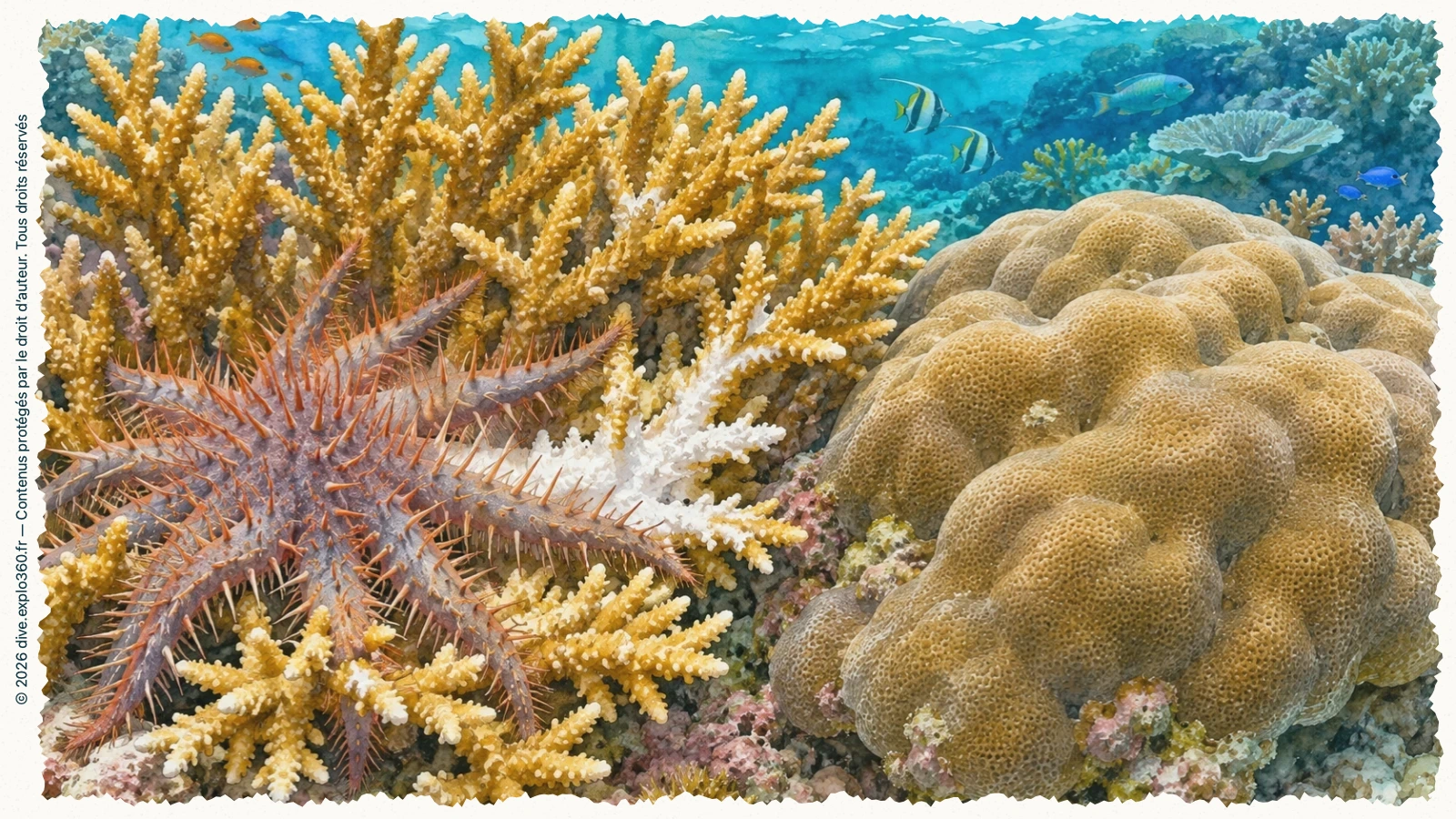
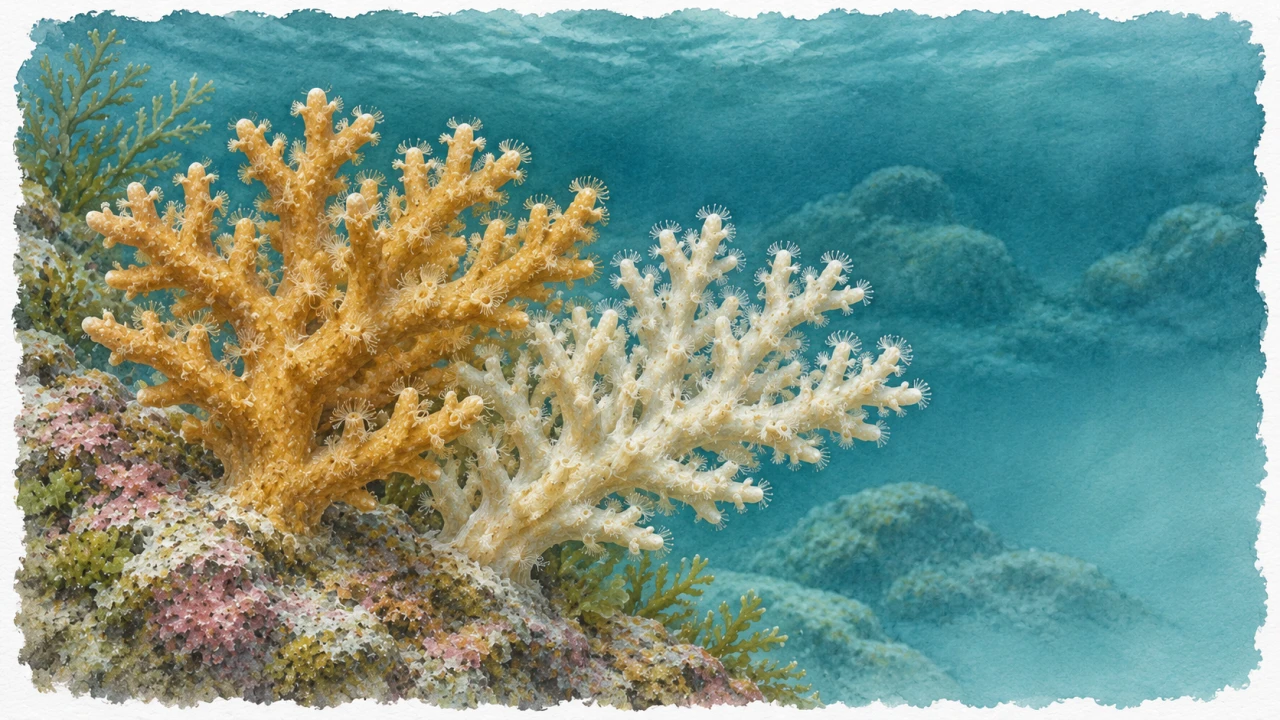
Branching coral with a white feeding scar next to a massive coral.
Feeding preferences vary among corals and reef sites. © dive.explo360.fr — All rights reserved. Reproduction requires permission.

Several mechanisms can contribute

Extra nutrients can increase the supply of plankton that larvae feed on. Currents, predators and settlement conditions also affect survival. Differences between fished and protected reefs are consistent with a role for fish predators, but they leave open what triggers individual outbreaks.
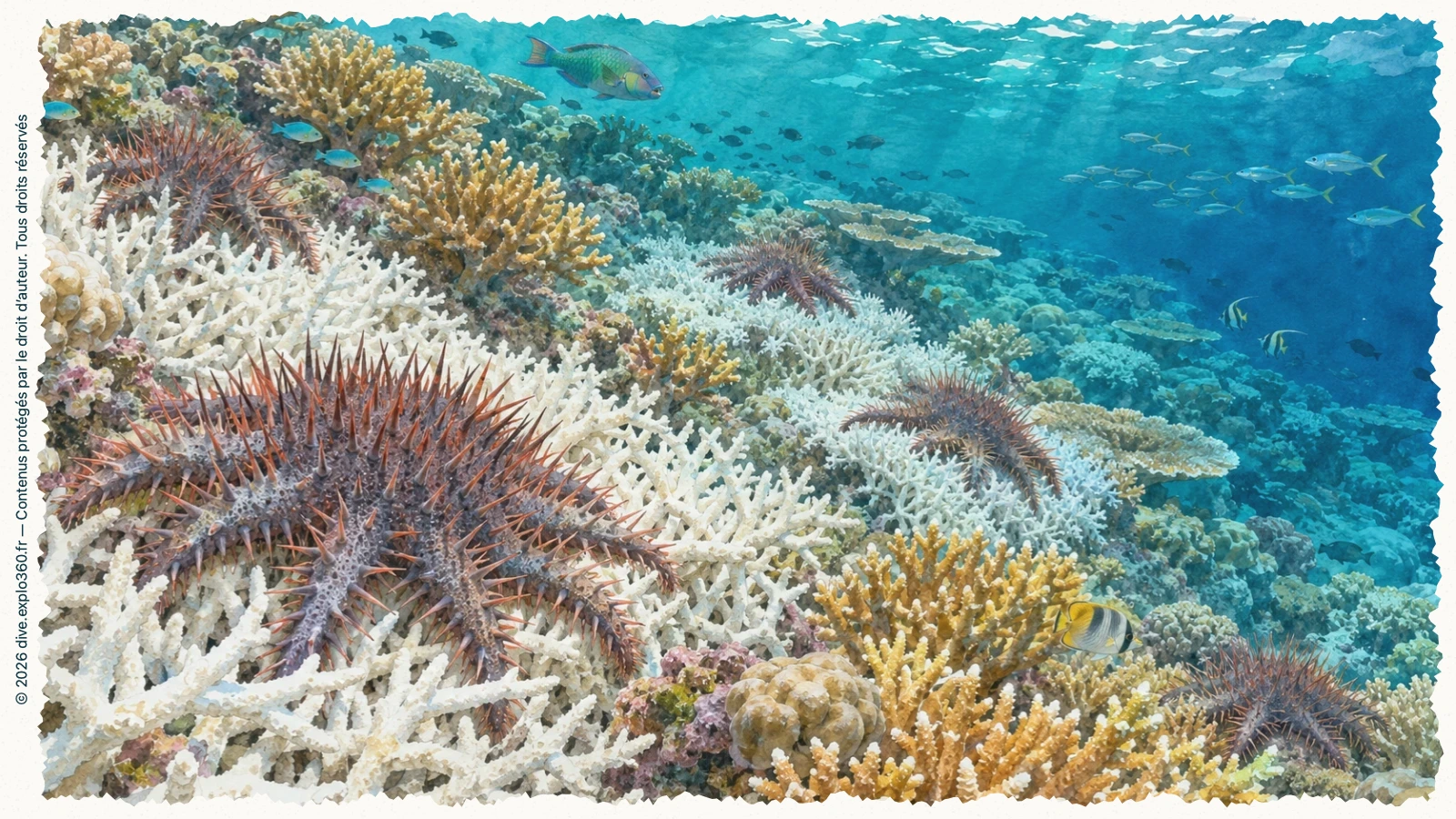
Several crown-of-thorns sea stars on a reef slope with pale coral skeletons.
During an outbreak, sea stars can eat coral faster than it can grow back. © dive.explo360.fr — All rights reserved. Reproduction requires permission.

From eggs to young starfish

After spawning, larvae spend time feeding and drifting in the plankton before they settle. Conditions along the way help determine how many reach the seabed and join the reef population.
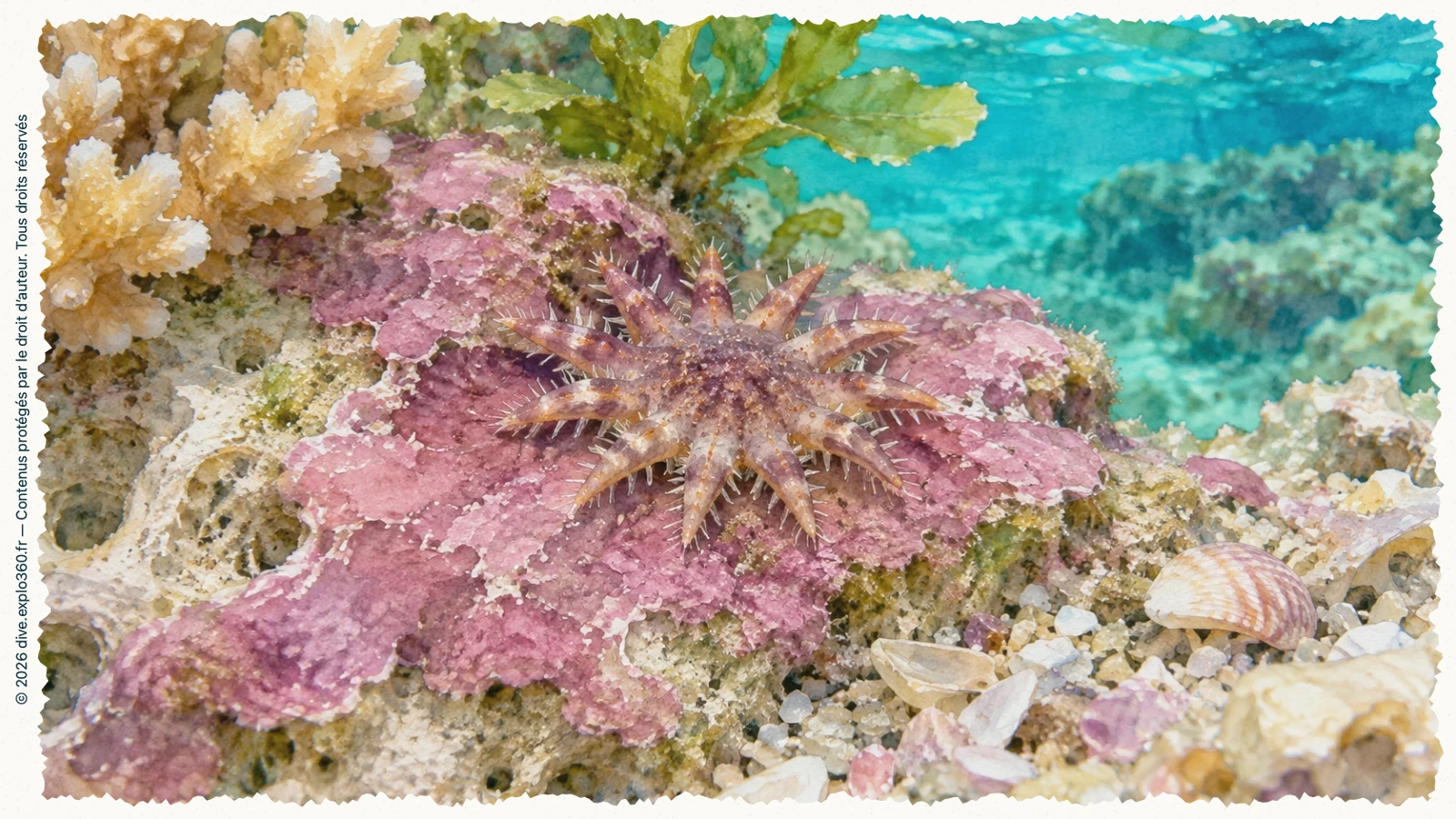
A juvenile sea star on a crust of pink coralline algae.
After settling on the seabed, a young crown-of-thorns sea star can graze on coralline algae before switching to coral. © dive.explo360.fr — All rights reserved. Reproduction requires permission.

From plankton to reef

Larvae feed in the plankton. After settlement, juveniles can graze on coralline algae before switching to coral. In the laboratory, some remained on algae for years. Adult numbers reflect how many survive those earlier stages and make the switch.
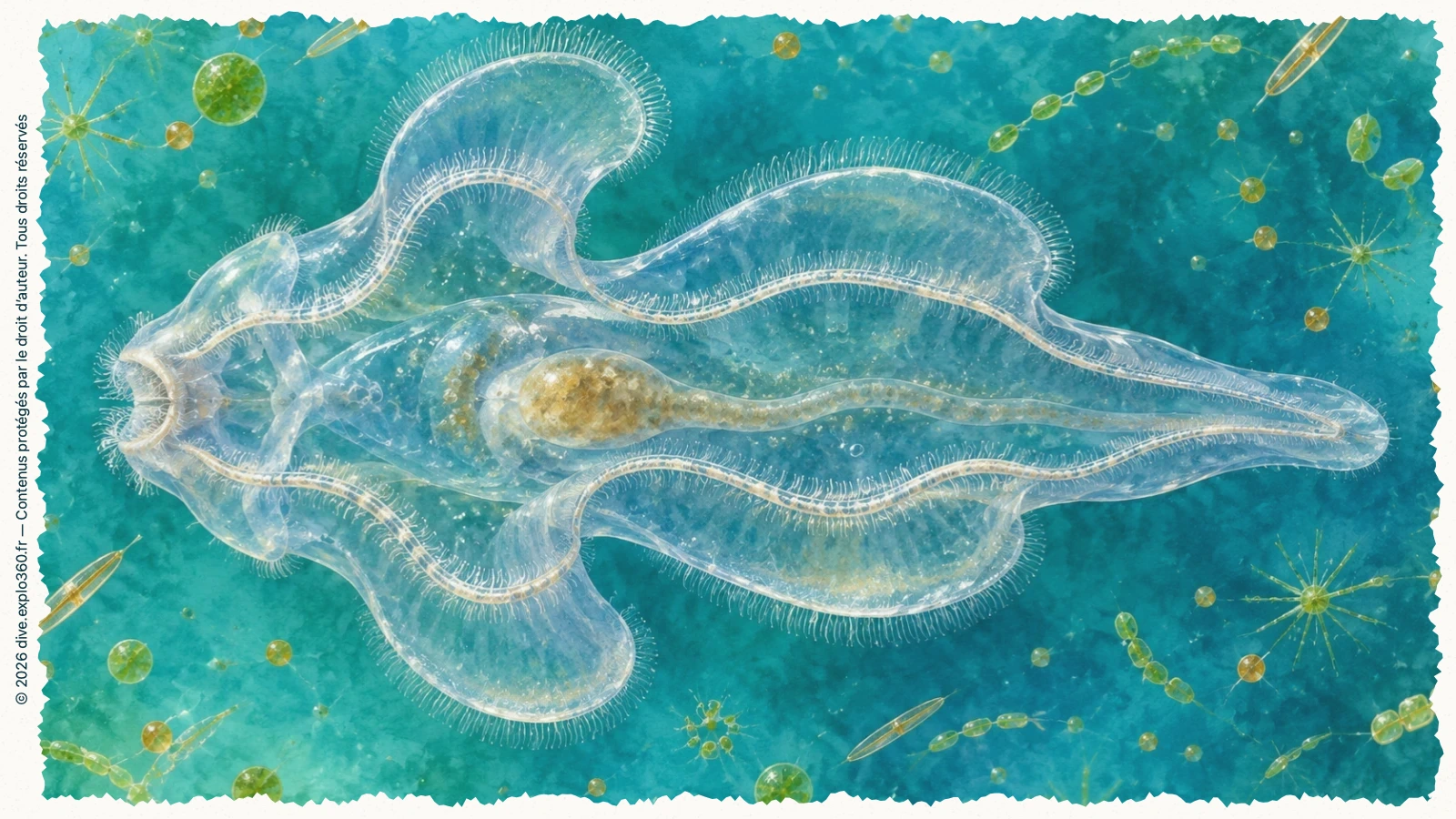
A transparent larva drifts among phytoplankton cells.
The planktonic larva feeds on phytoplankton. Food availability can influence its survival. © dive.explo360.fr — All rights reserved. Reproduction requires permission.

What eats these starfish?

Predation can act at several life stages. The presence of a predator alone does not establish its effect on outbreak frequency.
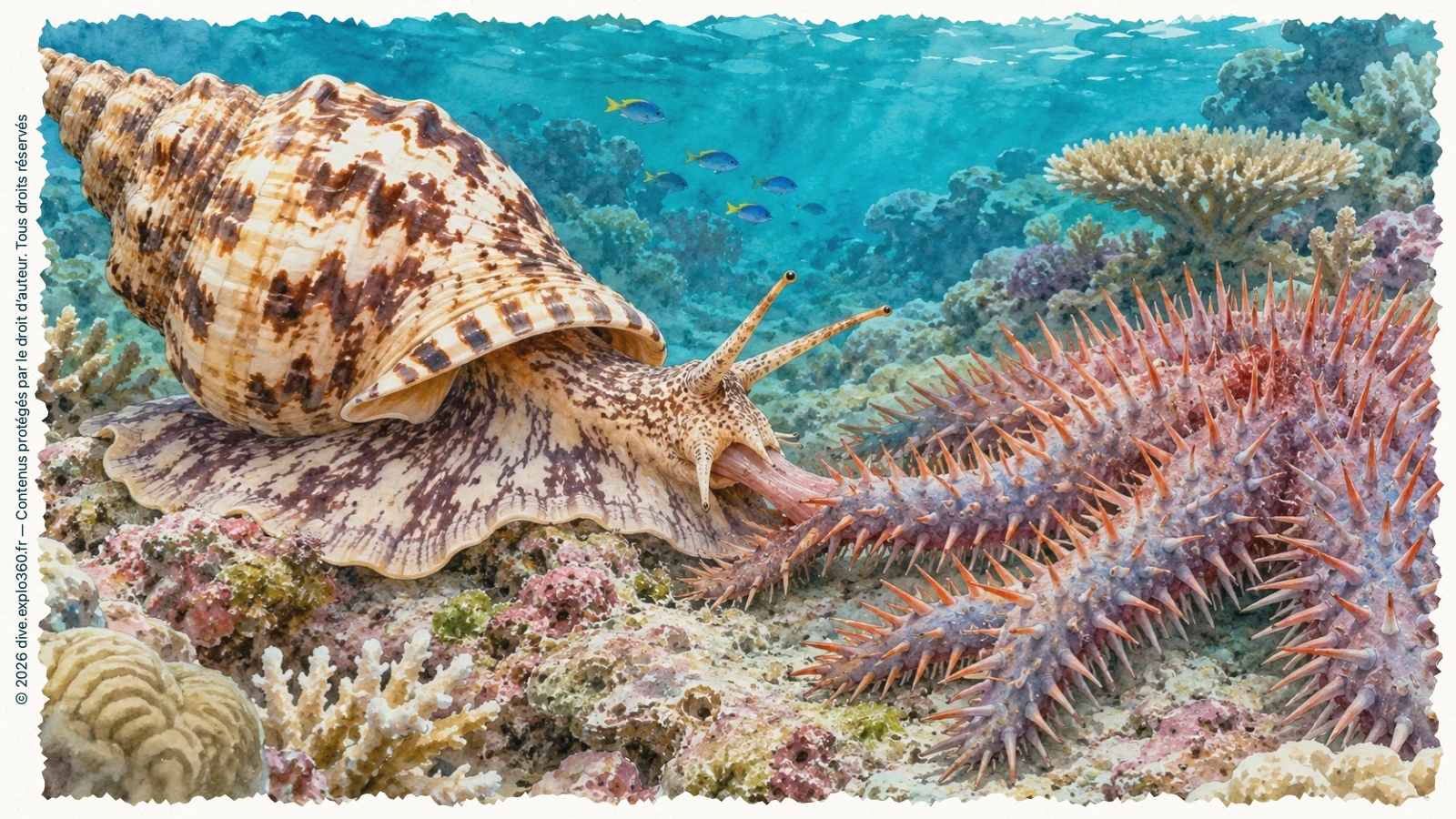
A giant triton extends its foot towards a crown-of-thorns sea star.
The giant triton is among the predators of adult crown-of-thorns sea stars. © dive.explo360.fr — All rights reserved. Reproduction requires permission.

Can the reef grow back?

Coral cover remains low if, over a prolonged period, losses outpace the growth of surviving colonies and the establishment of new ones.
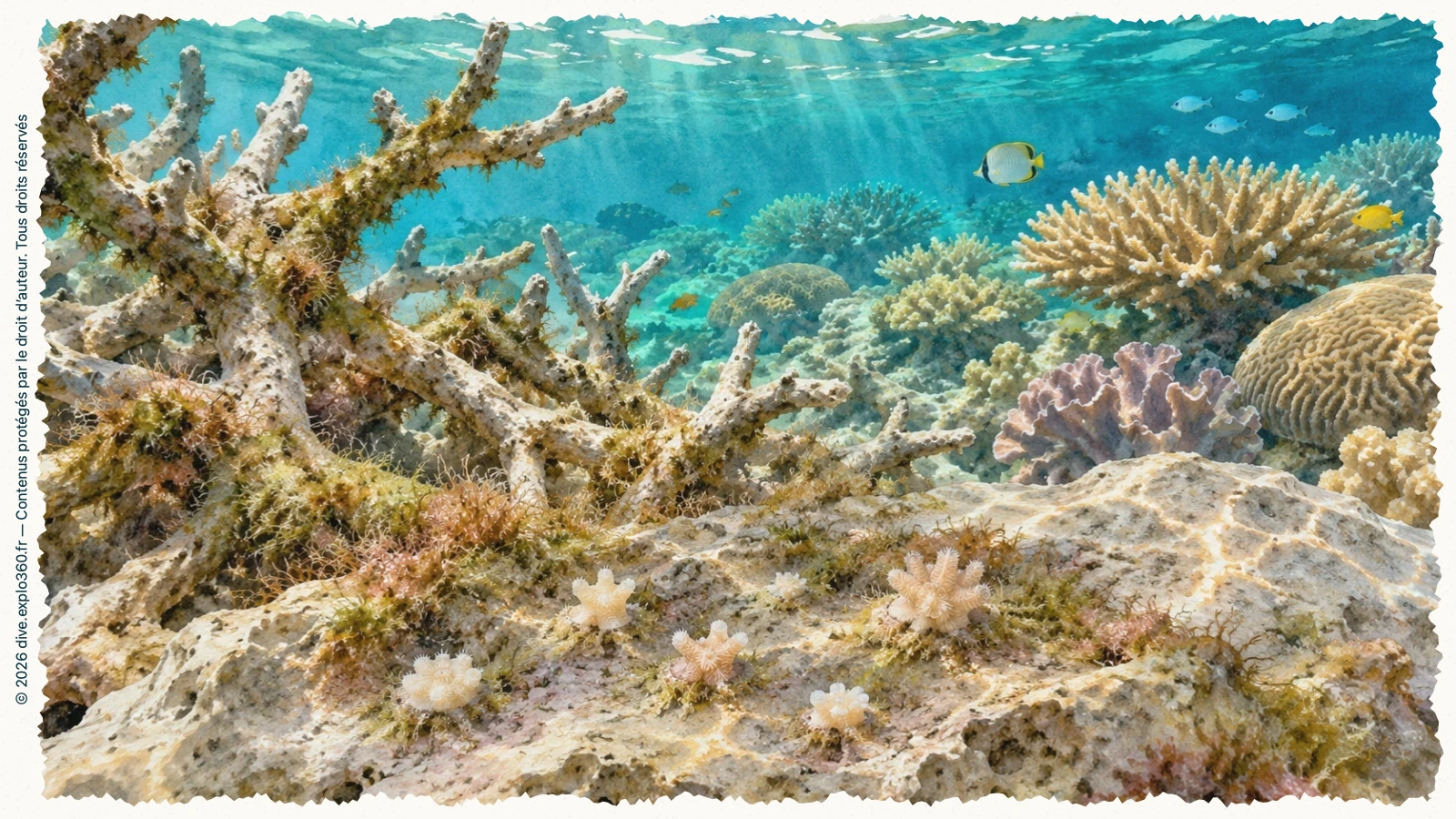
Young corals settle on the reef near skeletons covered by algae.
Reef recovery depends in part on surviving colonies and the settlement of new corals. © dive.explo360.fr — All rights reserved. Reproduction requires permission.

A species that belongs on the reef

The ecological effects of predation depend on the balance between consumption, growth and coral recruitment. An outbreak shifts that balance.

Interactive quiz

Test your knowledge

5 question(s) to test your knowledge.

Conclusion

Crown-of-thorns predation is part of reef ecology. During an outbreak, losses can exceed both the growth of surviving colonies and the arrival of new ones. Even after sea star numbers fall, coral cover can take years to recover.

Sources

Research and observations on crown-of-thorns sea stars.
Byrne, M. et al. (2022). Crown of thorns starfish life-history traits contribute to outbreaks, a continuing concern for coral reefs. Emerging Topics in Life Sciences, 6(1), 67–79. Reproduction, développement larvaire, changement de régime alimentaire et dynamique des populations.pmc.ncbi.nlm.nih.govThe hidden army: corallivorous crown-of-thorns seastars can spend years as herbivorous juveniles (2020). Communications Biology. Maintien prolongé du stade herbivore et reprise de croissance après accès aux coraux.pmc.ncbi.nlm.nih.govContrasting size and fate of juvenile crown-of-thorns starfish linked to ontogenetic diet shifts (2020). Proceedings of the Royal Society B. Changement de régime alimentaire et accélération de la croissance des jeunes acanthasters.pmc.ncbi.nlm.nih.govKroon, F. J., Barneche, D. R. & Emslie, M. J. (2021). Fish predators control outbreaks of Crown-of-Thorns Starfish. Nature Communications, 12, 6986. Relations entre populations de poissons, pêche et densité des acanthasters.doi.orgCrown-of-thorns seastar (Acanthaster spp.) feeding ecology across species and regions (2024). Science of the Total Environment. Préférences alimentaires, différences entre espèces et effets sur les communautés coralliennes.pubmed.ncbi.nlm.nih.govDaily Variation in the Feeding Activity of Pacific Crown-of-Thorns Starfish (Acanthaster cf. solaris) (2025). Biology, 14(8), 1001. Quantification de la consommation corallienne et variations individuelles.doi.orgBiophysical and eDNA sampling reveals upwelling-enhanced food availability for larvae of the corallivorous crown-of-thorns seastar, Acanthaster cf. solaris (2026). Marine Pollution Bulletin. Distribution verticale des larves, disponibilité du phytoplancton et rôle possible des remontées d'eaux profondes.www.sciencedirect.comAustralian Institute of Marine Science. Causes of crown-of-thorns starfish outbreakswww.aims.gov.au