Flakes made from scraps
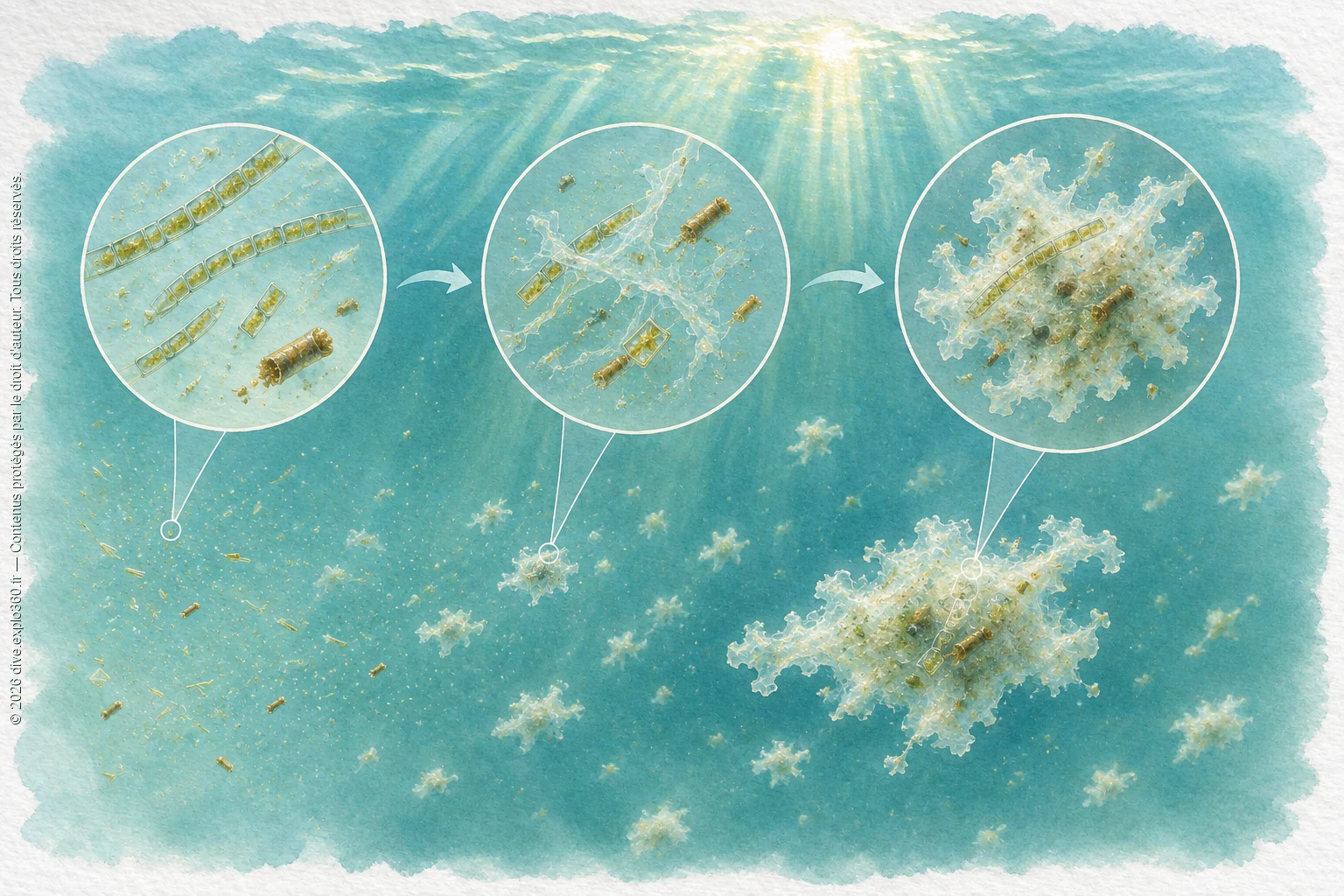
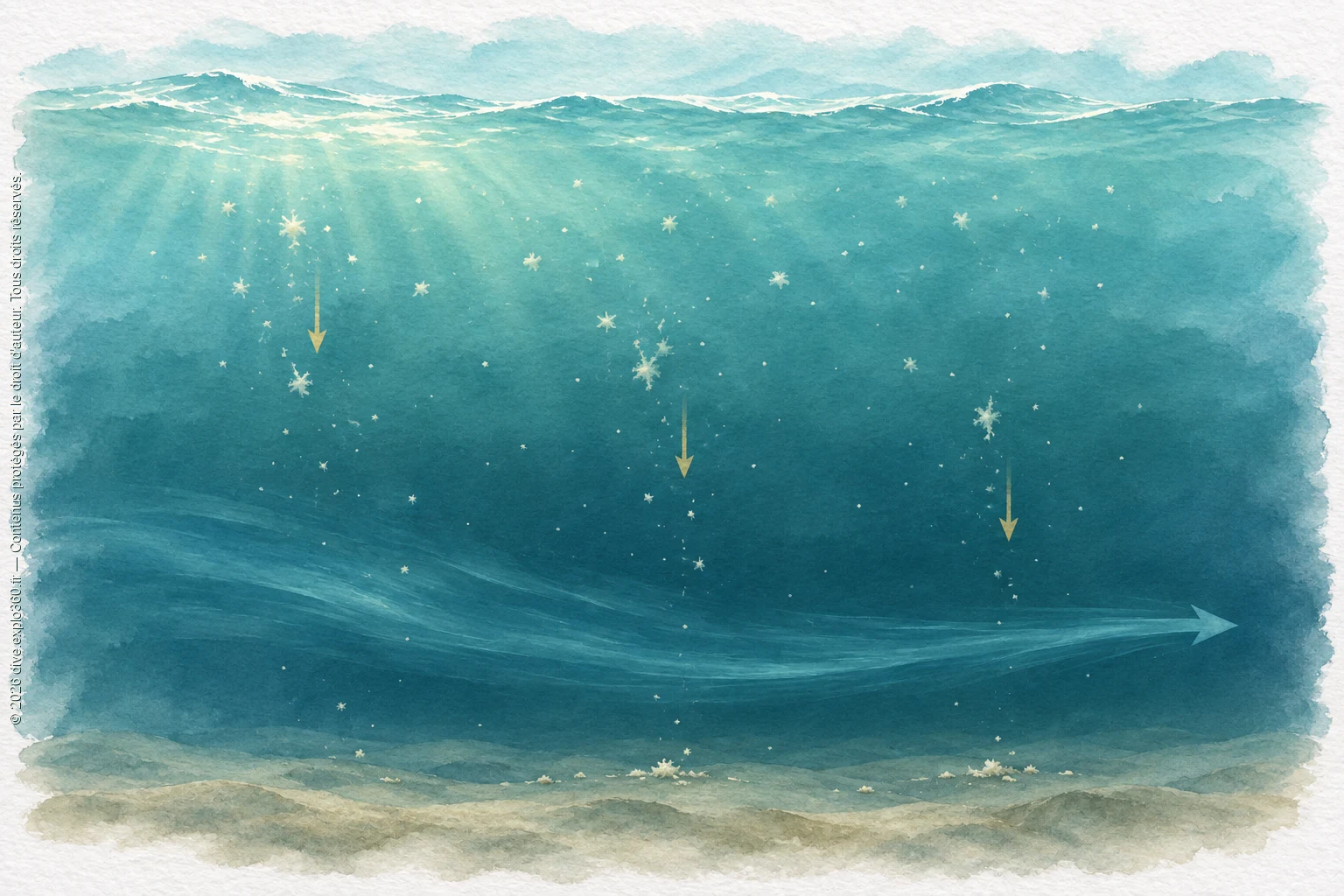
Near the surface, sunlight helps tiny algae grow. They are part of the plankton. Little animals eat them, and bigger animals eat those animals. Bits of algae, poo and other scraps float away.
A bumpy journey
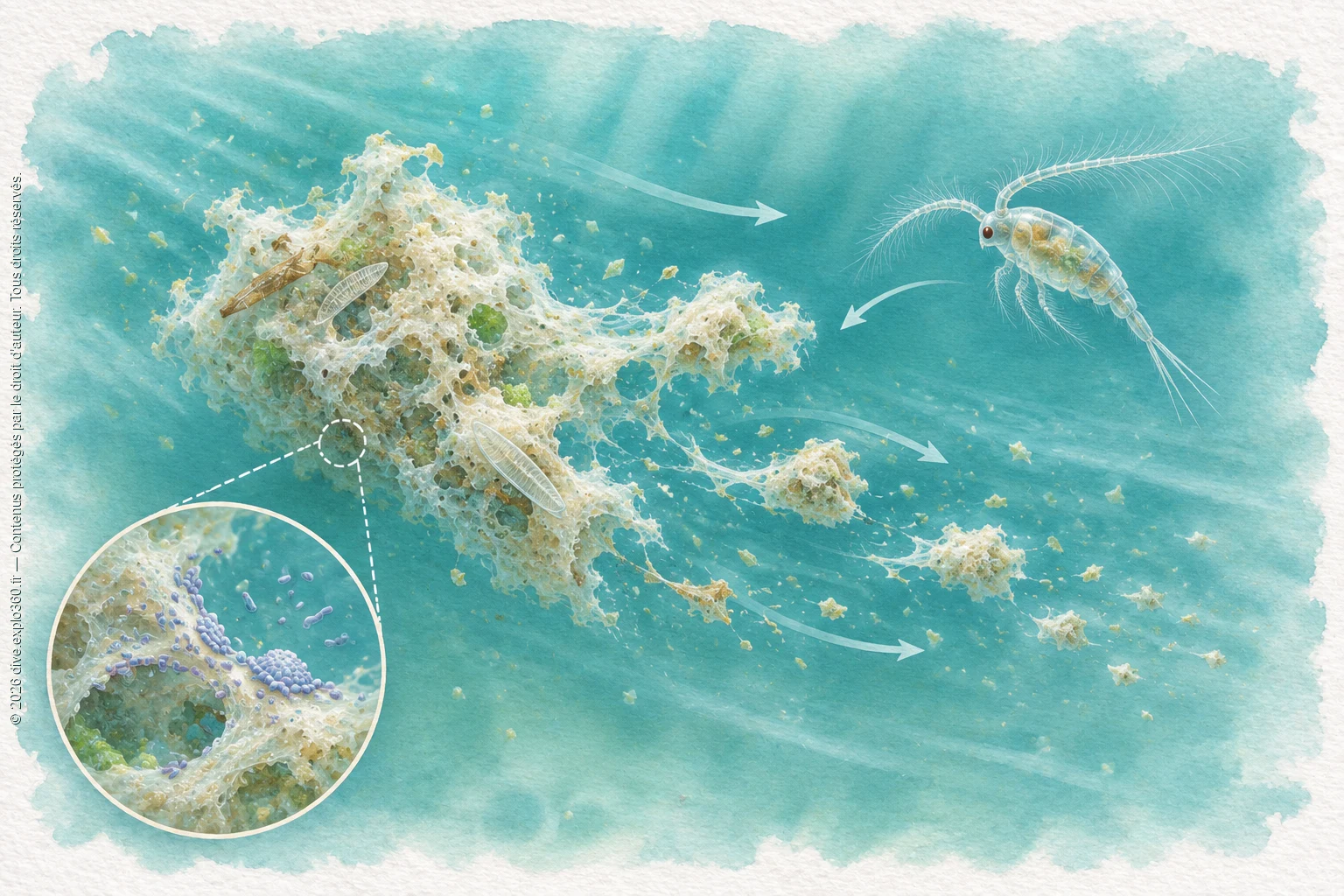
The current can sweep a flake sideways. It might break apart or pick up more scraps and sink faster. Some animals nibble at it. Bacteria help break it down, and some of it dissolves in the water.
Dinner in the dark
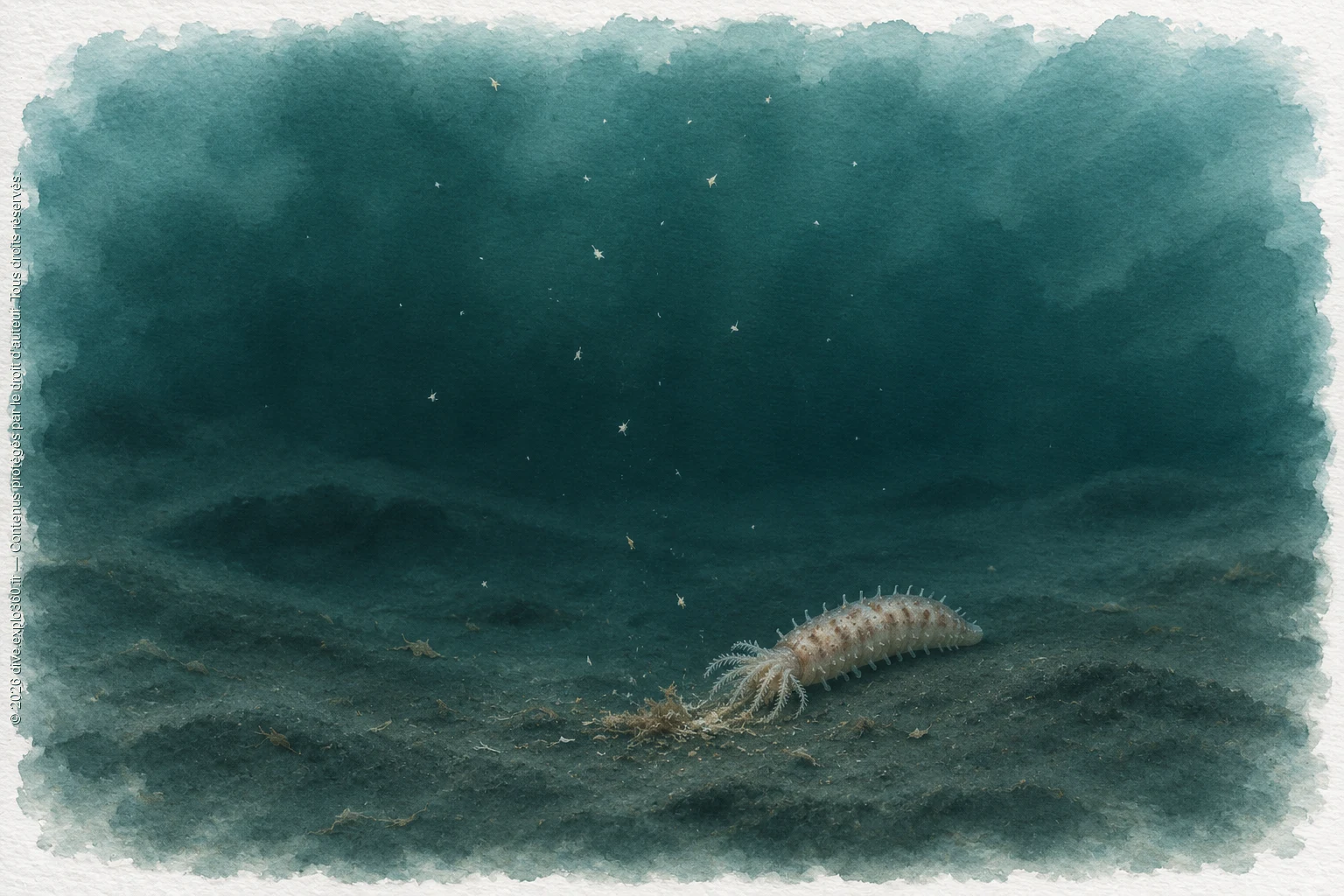
Deep down, it’s too dark for algae to grow using sunlight. Some animals catch the flakes as they fall. Others find them on the seabed or in the mud. The flakes carry food and carbon down from the surface. In some seas, more flakes sink after tiny algae grow in large numbers in spring.
Carbon on the move
Carbon is part of every living thing. Tiny algae near the surface take in carbon dioxide from the water as they grow. When scraps of algae sink, they carry carbon down with them. Scientists call this part of the biological carbon pump. When the scraps are eaten or break down, some of the carbon goes back into the water as carbon dioxide. Deep water can keep that carbon away from the air for a long time. A little of it stays buried in the seabed.
What about the Mediterranean?
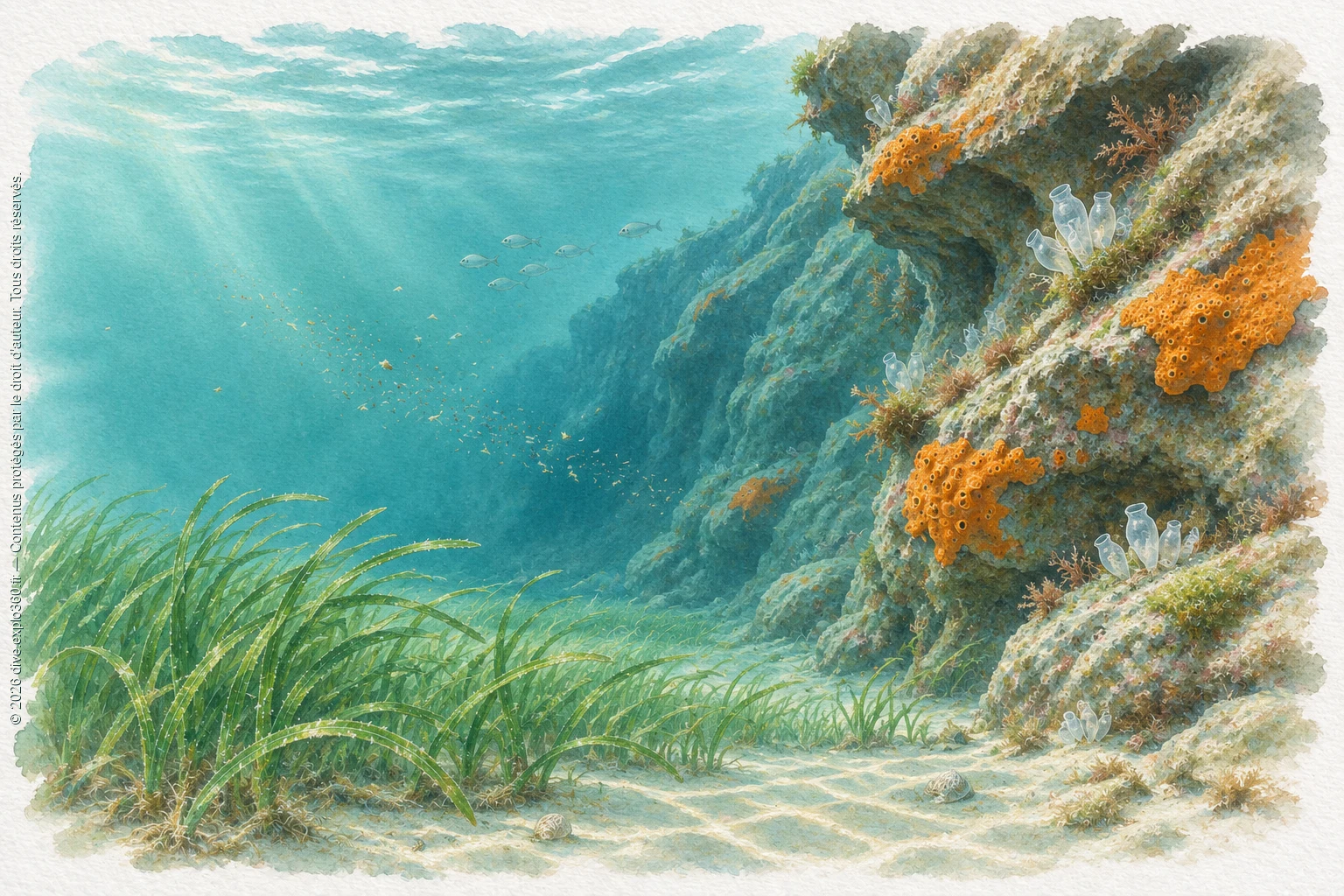
Marine snow falls in the Mediterranean too. It can be easier to see when plankton is plentiful or when sticky scraps gather into clumps. Grains stirred up from the seabed can look similar. Large jelly-like masses called mucilage form in a different way. Currents carry particles past rocky walls and over seagrass. Sponges and sea squirts attached to the rocks can filter out particles of certain sizes.
Interactive quiz
Marine snow quiz
5 question(s) to test your knowledge.
Interactive quiz
Marine snow quiz
Question 1 out of 5Score: 0
What are the flakes under the sea made of?
What makes the little scraps stick together?
What can a current do to the flakes?
What can eat the scraps that land on the seabed?
What do the flakes carry down as they sink?
Final result
Quiz completed
correct answers
Where the flakes end up
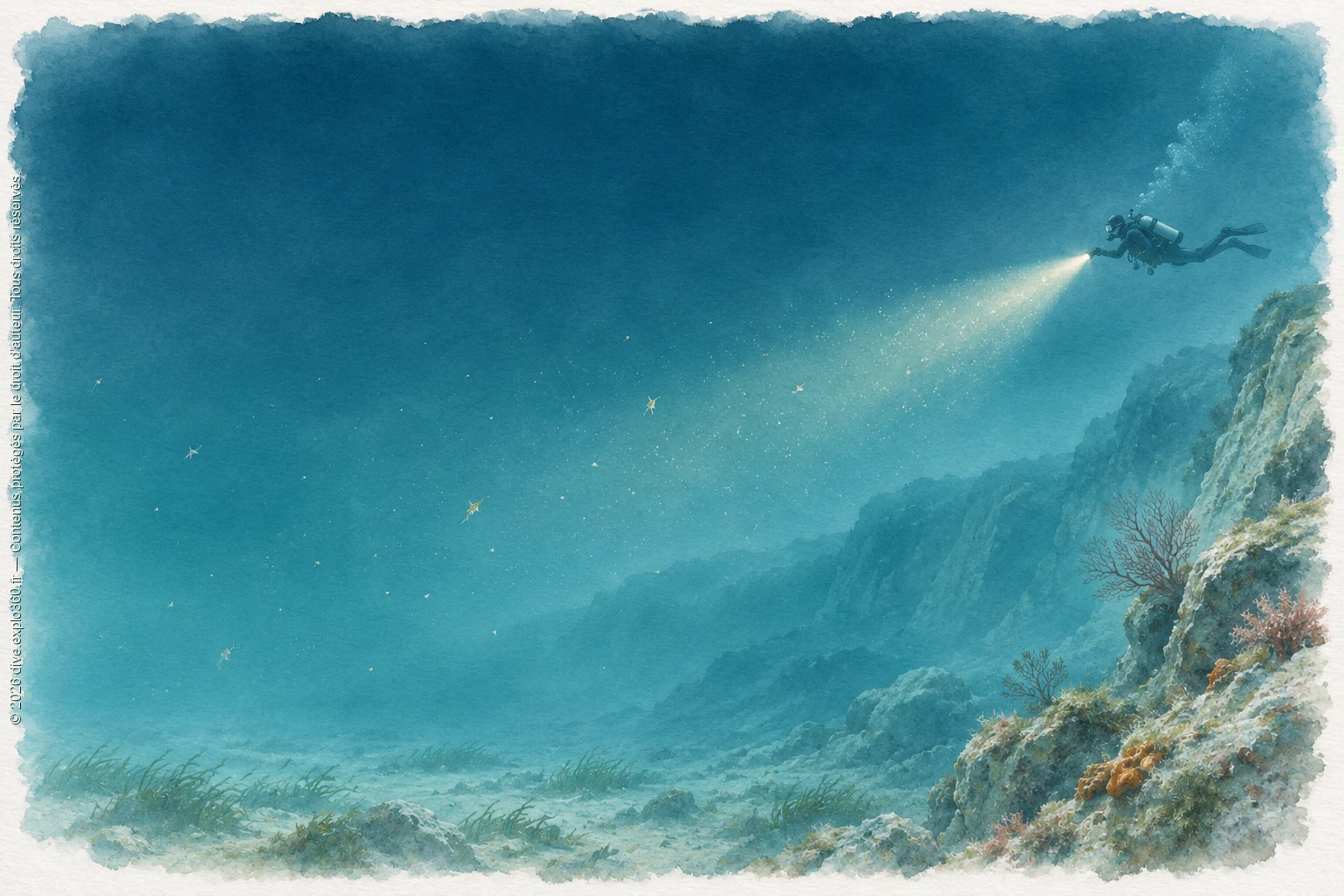
Watch the next flake that drifts past your torch. It might have started as a bit of algae, a scrap from an animal or a blob of mucus. It could feed several tiny animals on its way down. If any of it reaches the seabed, it can help feed an animal that lives in the dark.
Scientific references
These sources document the main processes described in the article.