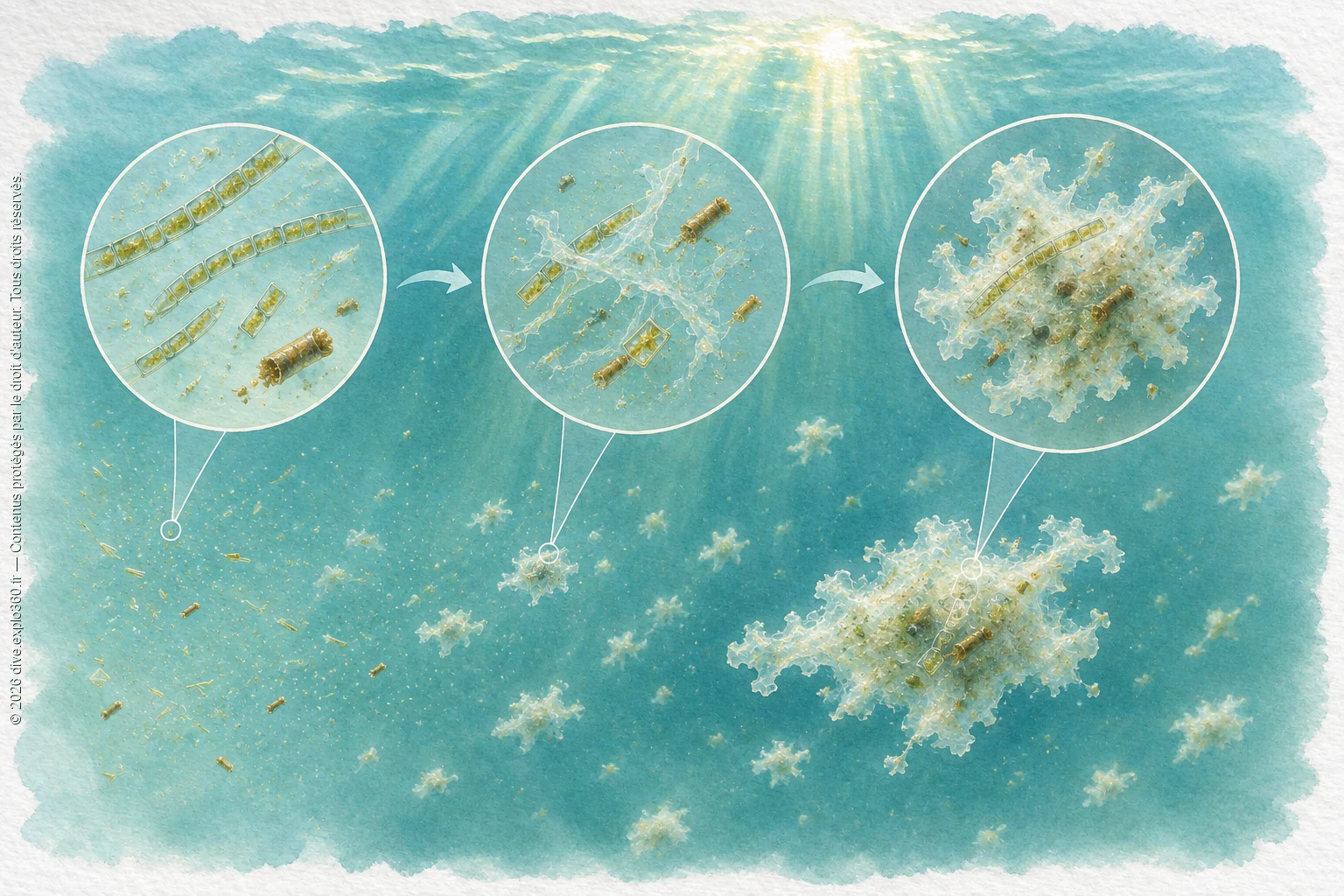
How particles stick together
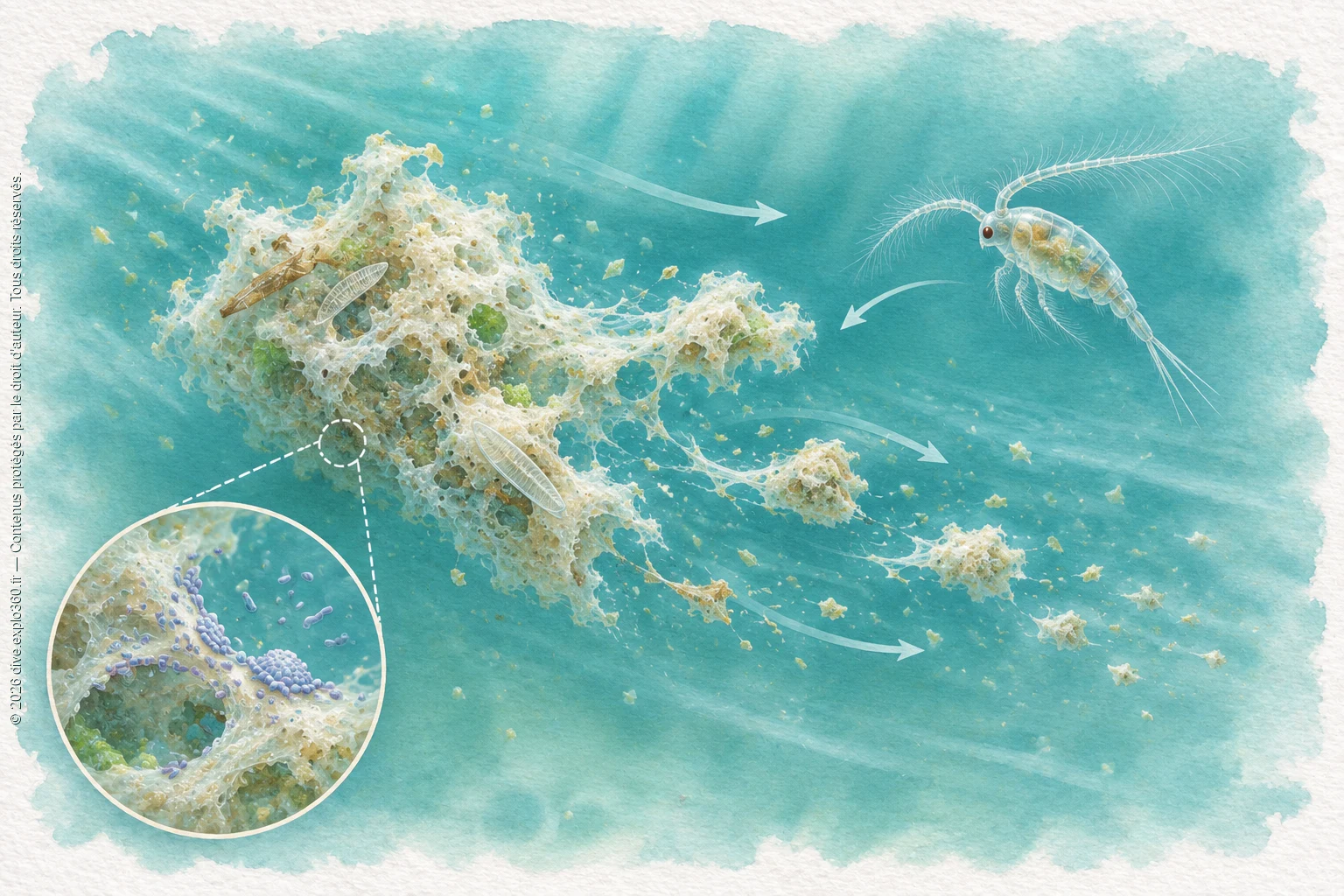
In sunlit water, microscopic algae in the phytoplankton grow using light and dissolved nutrients. Zooplankton feed on them, and in turn are eaten by other animals. Dead cells, droppings and scraps remain in the water.
Flakes change as they sink
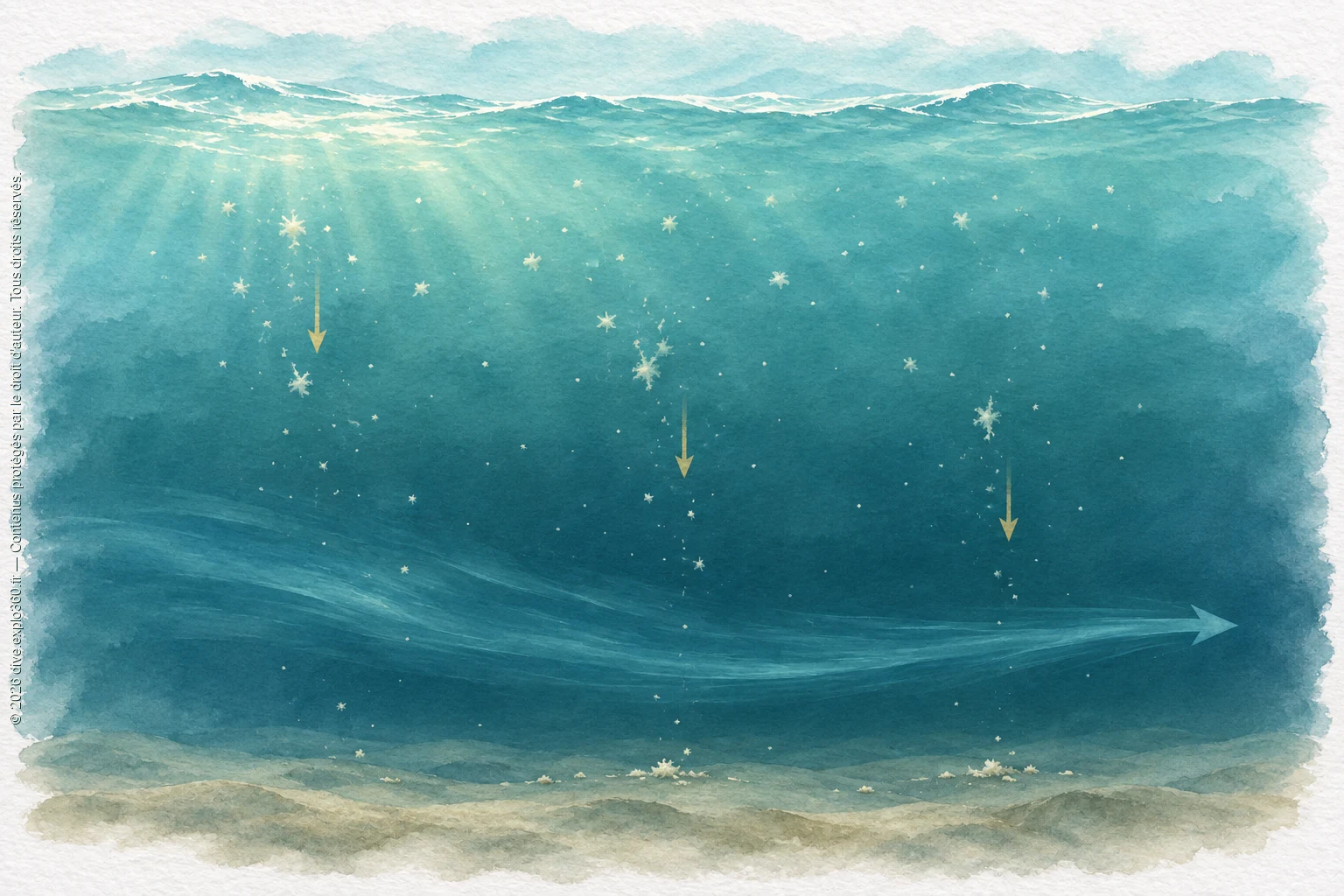
Moving water can carry the clumps sideways or break them apart. Some collect more particles and sink faster. Small animals eat or tear up flakes, and bacteria break them down. As some of the material dissolves, less remains to sink.
The surface feeds the seabed
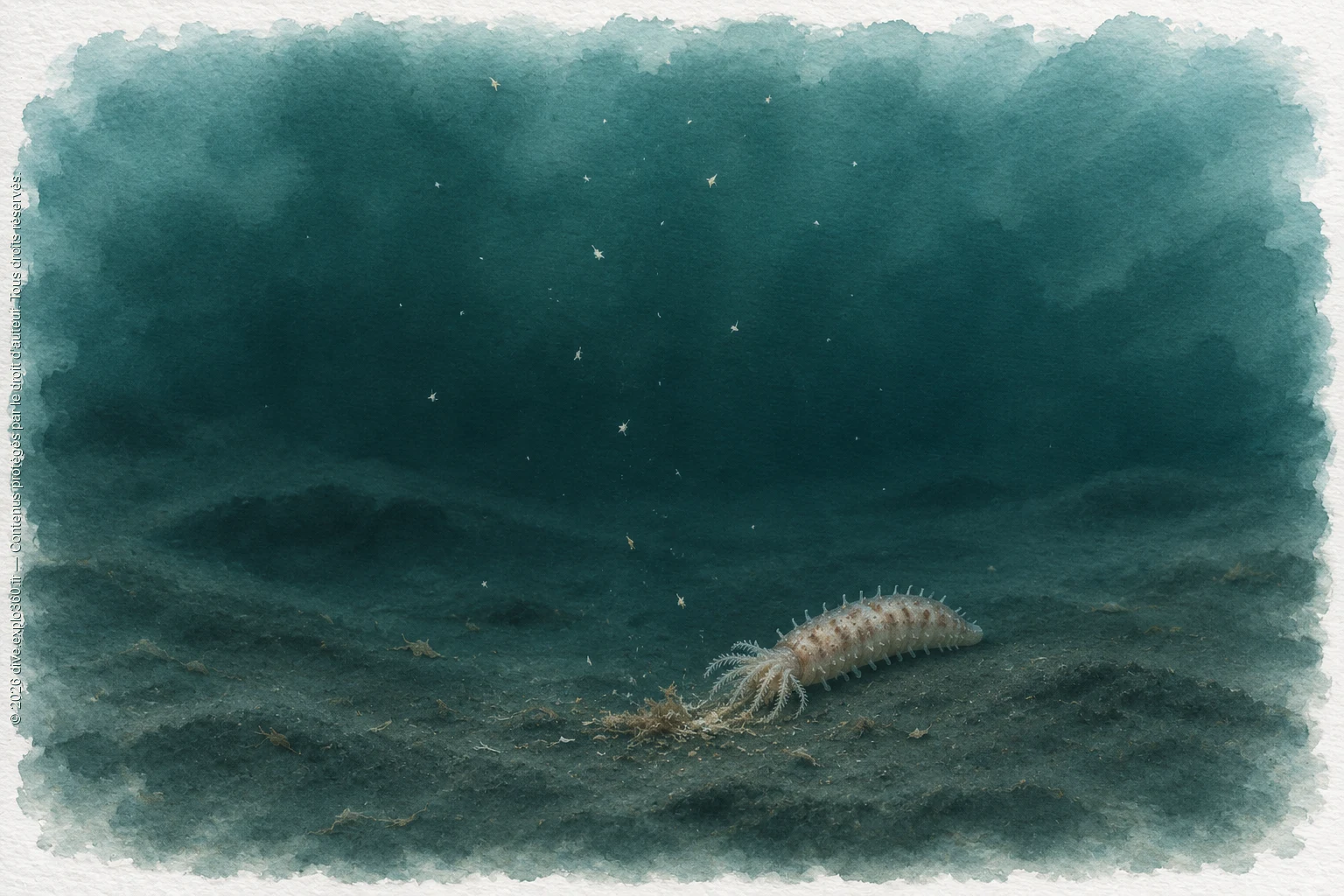
Far below the surface, there is too little light for photosynthesis. Marine snow brings food made near the surface. Some animals catch flakes in the water. Others eat what settles on the seabed, sometimes after microbes have broken it down. In some temperate seas, more food sinks after plankton blooms in spring.
The biological carbon pump
Phytoplankton use carbon dioxide dissolved in water to grow. When bits of plankton sink, they take some of that carbon along. This is part of the biological carbon pump. Feeding and decay release some carbon back into the water as carbon dioxide. How long it stays away from the air depends on where it’s released and where the water goes. Only a small share stays buried in the seabed.
Spotting marine snow in the Mediterranean
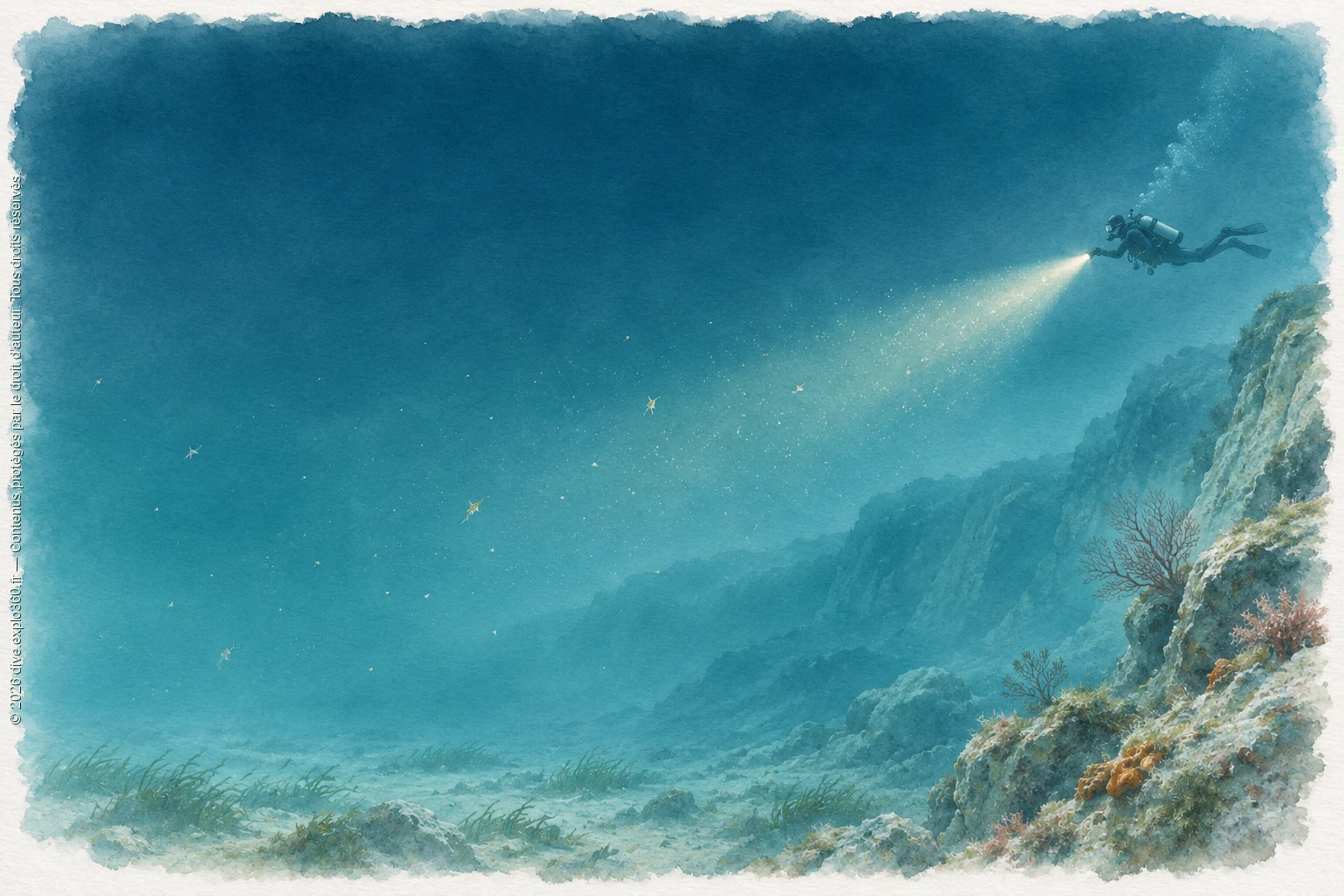
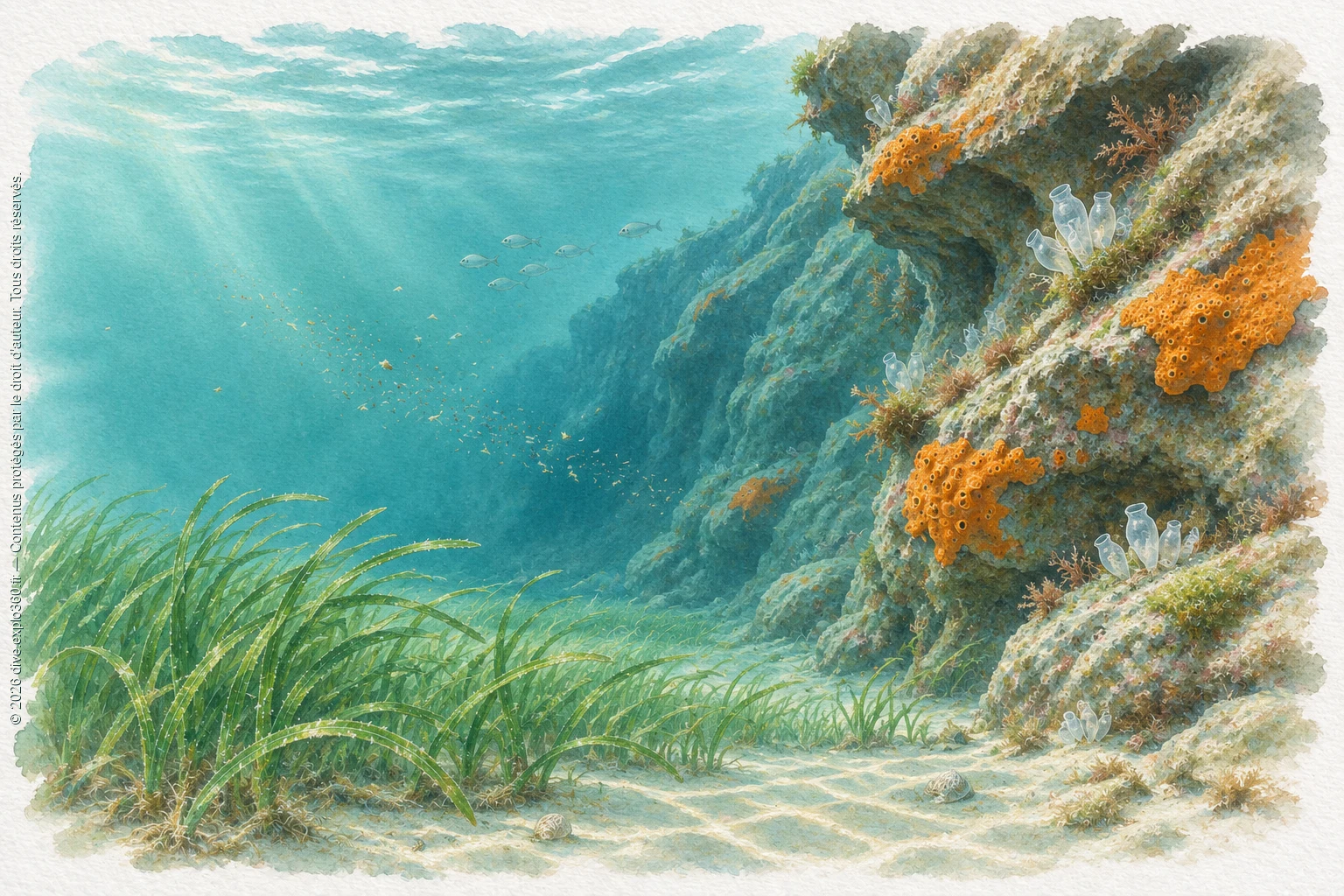
Marine snow may be easier to see when there is more plankton or when mucus-rich clumps form. Sediment stirred up from the seabed can look much the same through a diving mask. Large masses of jelly-like mucilage form through different processes. Currents carry particles past rock walls, through open water and over seagrass beds. Sponges and sea squirts filter particles of sizes they can capture.
Interactive quiz
Marine snow quiz
5 question(s) to test your knowledge.
Interactive quiz
Marine snow quiz
Question 1 out of 5Score: 0
How does a marine snow aggregate form?
Why does less marine snow reach deep water than starts sinking near the surface?
When might more material sink in a temperate sea?
How does phytoplankton take up carbon?
What might a diver mistake for marine snow?
Final result
Quiz completed
correct answers
What happens to the flakes
A flake in your torch beam might contain bits of algae, droppings or mucus. It may have fed several organisms before reaching you. If part of it reaches the seabed, it links places that can be thousands of metres apart.
Scientific references
These sources document the main processes described in the article.