How aggregates form
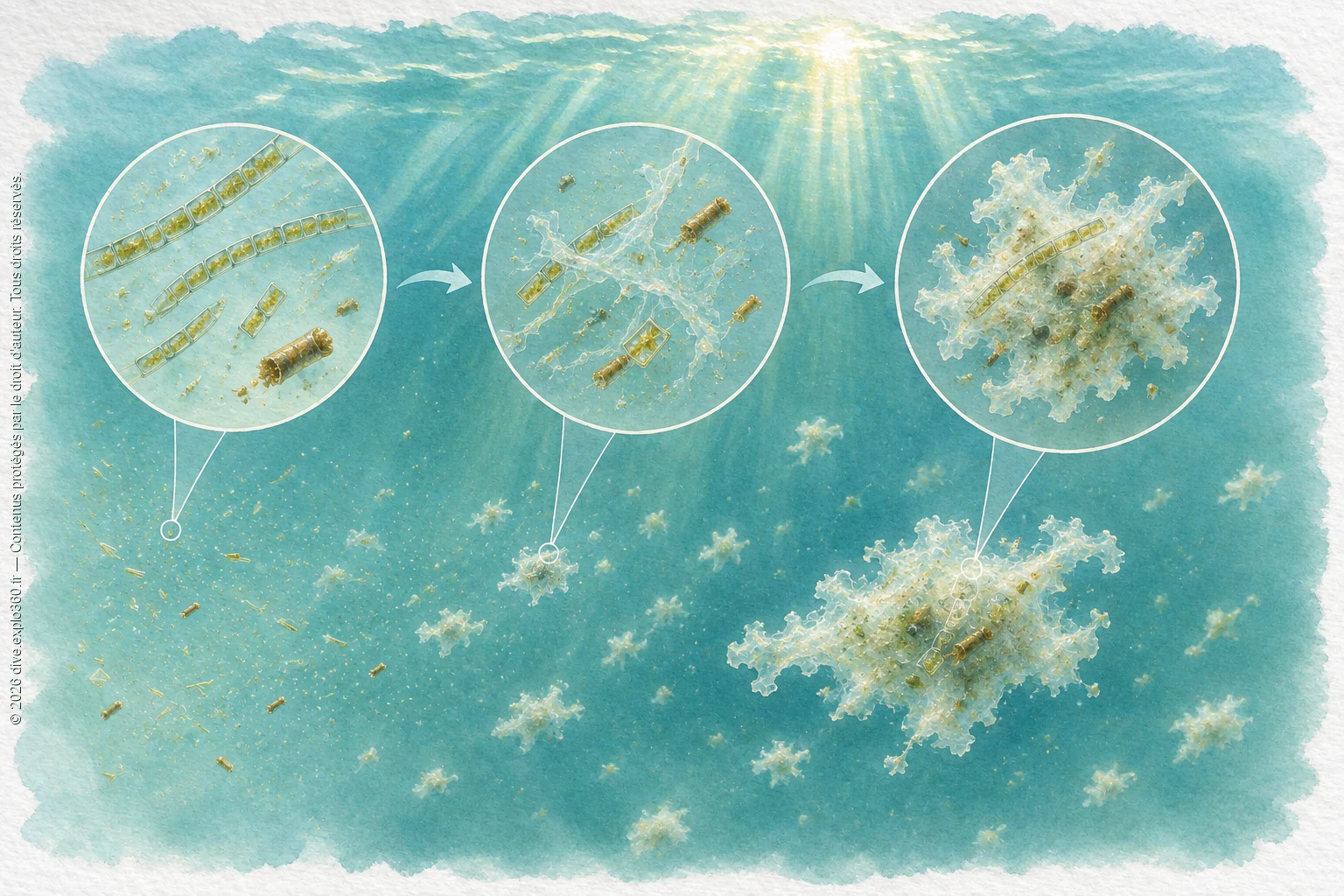
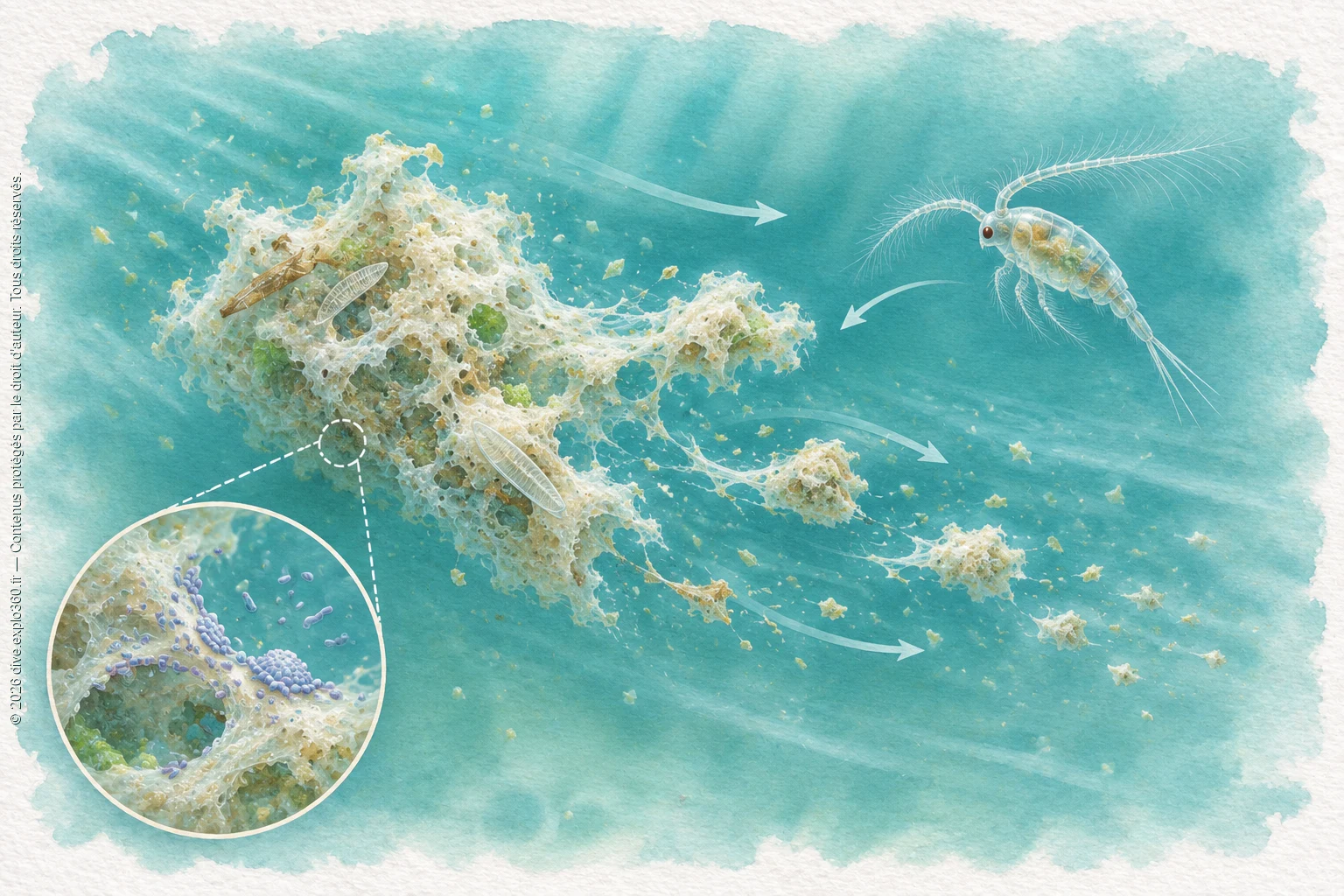
Phytoplankton use light and dissolved nutrients to make organic matter. That material moves through the food web as small planktonic animals are eaten in turn. Dead cells, faecal pellets and fragments enter the water along with secretions such as mucus.
A changing mixture
Moving water carries the aggregates, and turbulence can break them apart. Collisions may also add particles and make aggregates grow. Zooplankton eat or fragment them, while bacteria break down some of their organic matter into dissolved substances. The downward flux of particulate organic matter typically falls with depth.
A supply of organic matter for the deep sea
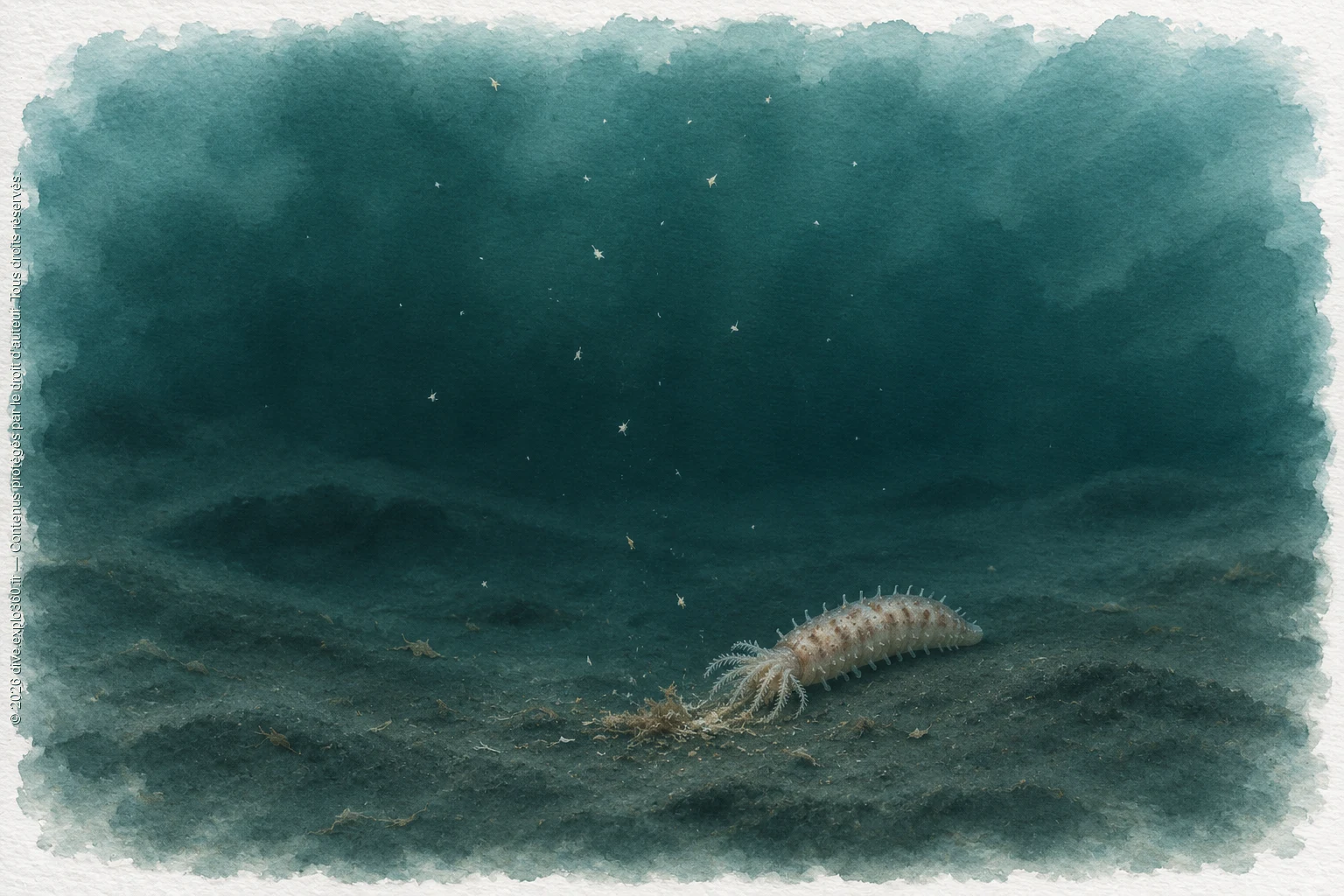
Below the sunlit layers, there is too little light for photosynthesis. Marine snow supplies organic carbon and nutrients from surface waters. Some organisms intercept particles in the water column, while others feed on what settles. Microbes can process the material before sediment-dwelling organisms use it. In some temperate seas, the supply rises after a spring plankton bloom.
What happens to exported carbon
Phytoplankton use photosynthesis to turn dissolved inorganic carbon into organic matter. Some sinks as particles, a process that forms part of the biological carbon pump. Respiration and decomposition return some of this carbon to the water as dissolved CO₂. How long it stays out of contact with the atmosphere depends on the depth at which it’s released and on ocean circulation. Only a small fraction of the original material remains buried over the long term.

Recognising marine snow in the Mediterranean
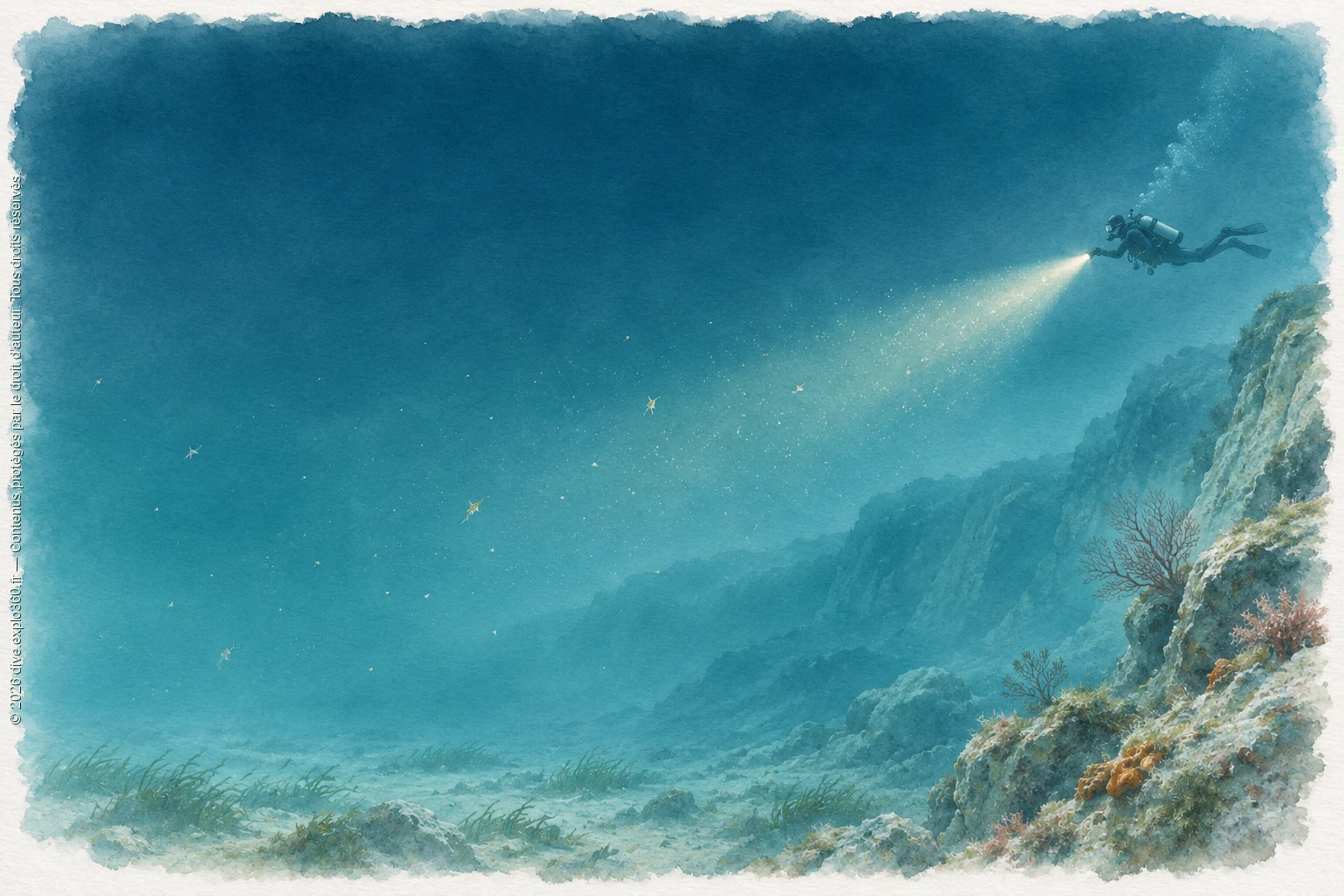
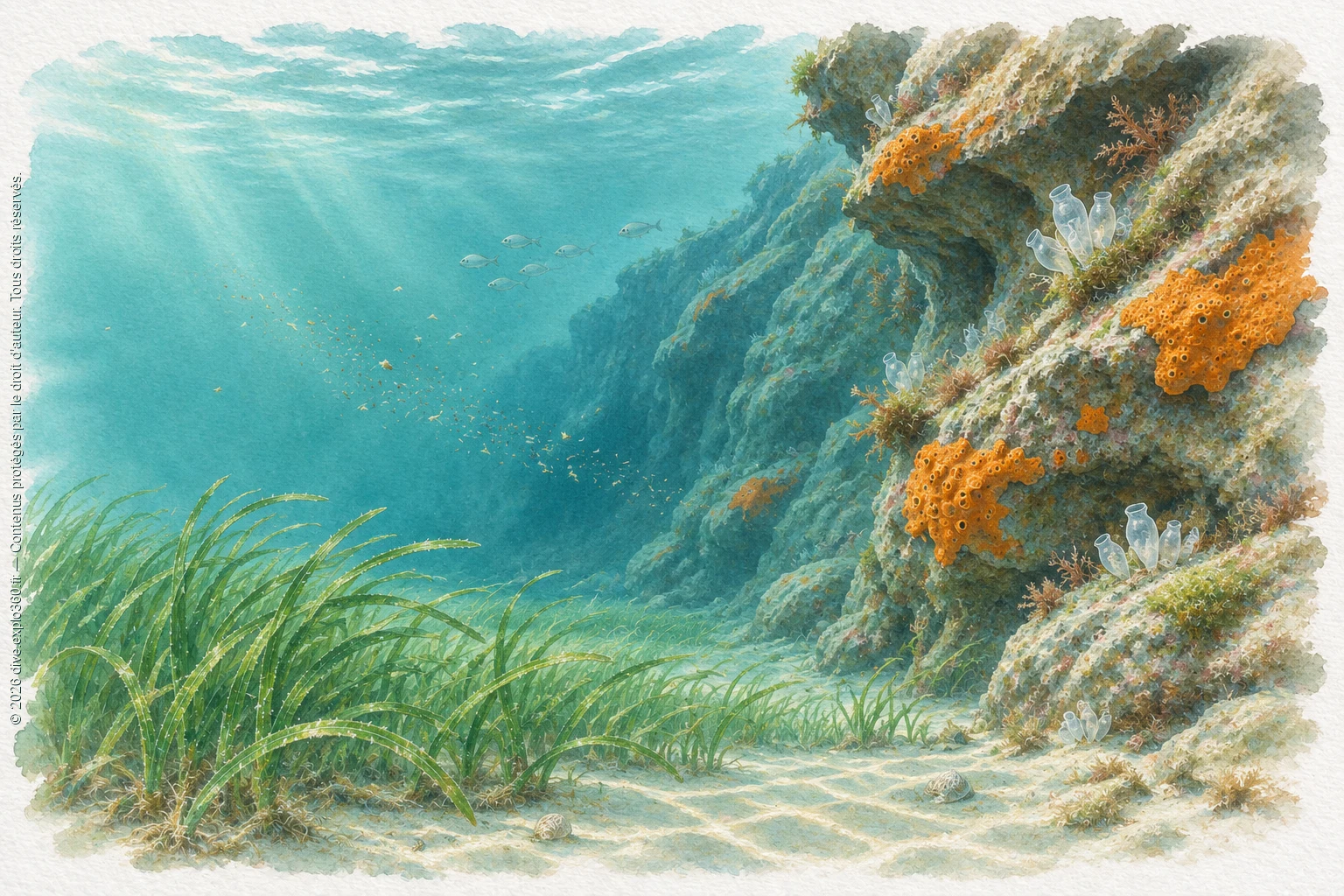
Marine snow can be more visible when plankton production increases or mucus-rich aggregates form. To a diver, resuspended sediment can look much the same. Large masses of gelatinous mucilage form through particular processes, although they can contain organic aggregates. Around rocky drop-offs, in open water and over seagrass beds, currents carry particles to filter feeders such as sponges and sea squirts. What each animal can capture depends partly on particle size.
Interactive quiz
Marine snow quiz
5 question(s) to test your knowledge.
Interactive quiz
Marine snow quiz
Question 1 out of 5Score: 0
How does mucus help aggregates form?
Why might two flakes look very different by the time they reach deep water?
What can explain a seasonal increase in food reaching the seabed?
What determines how long carbon released at depth stays out of contact with the atmosphere?
Which observation is insufficient to identify marine snow?
Final result
Quiz completed
correct answers
What falls stays in circulation
A flake may carry fragments of cells, faecal pellets and mucus that have already passed through several organisms. As it sinks, some of that material feeds other organisms or passes into solution. What reaches the seabed supplies ecosystems far below the reach of sunlight.
Scientific references
These sources document the main processes described in the article.