


What does each partner gain?

Two species can benefit from spending time together. Each may gain something from what the other does.

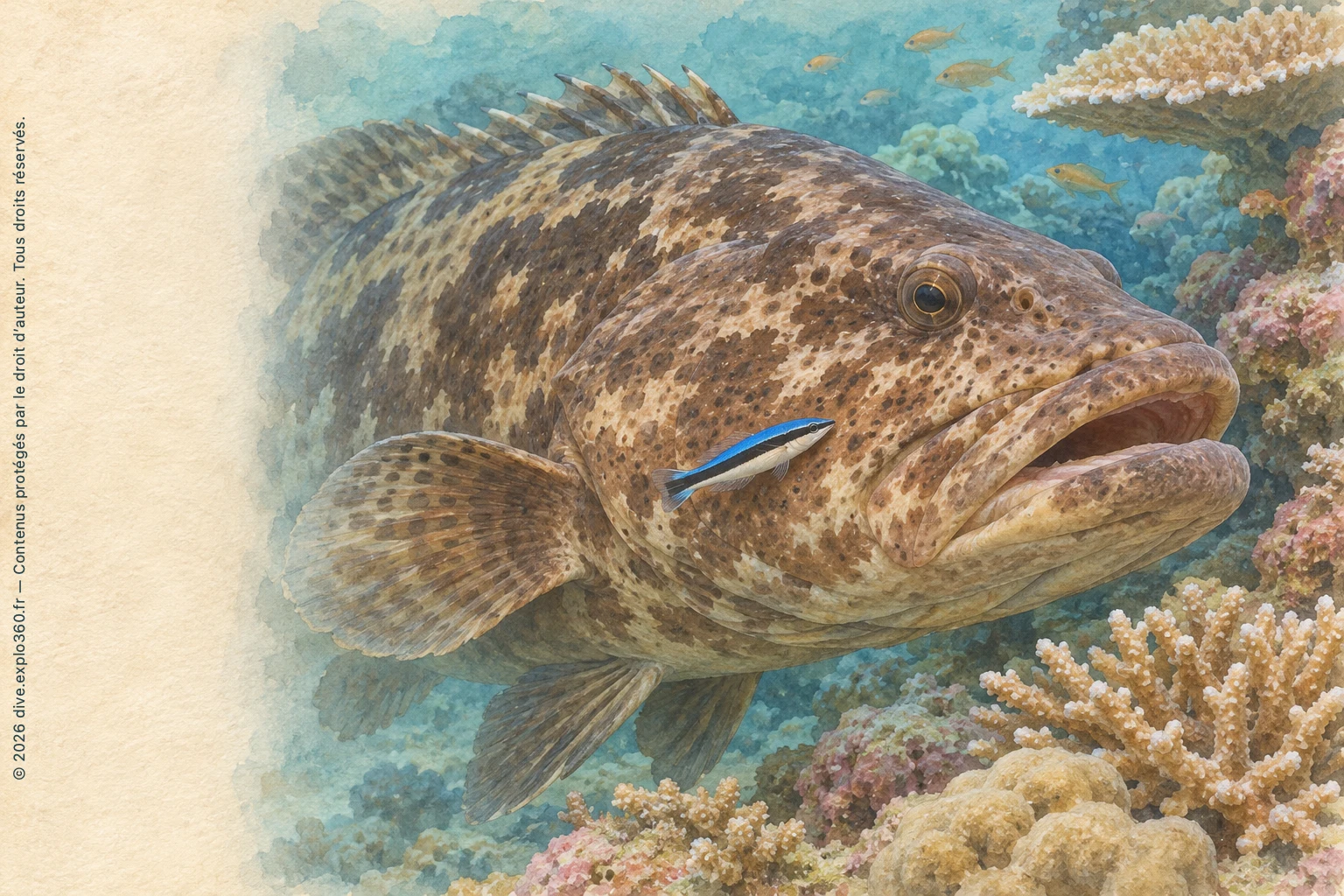
What matters is what each gains and what each gives up.Biologists describe the relationship by measuring its effects on each animal.What happens when one animal starts taking more at the other’s expense?Return to the grouper and the fish at its jaws.
Start with the same question for every encounter: what changes for each animal?

Three outcomes to compare

1

Mutualism

Biologists call an association mutualism when both partners benefit. It can give them access to food or help protect them from predators.
2

Commensalism

In commensalism, one partner benefits and the other experiences no significant effect.
3

Parasitism

In parasitism, one organism exploits another living organism over time, at the host’s expense.

When the cleaner takes mucus

The client can interrupt the visit. The option to leave helps explain why taking mucus can cost the cleaner a meal.

The little fish is a bluestreak cleaner wrasse, Labroides dimidiatus.

On tropical Indo-Pacific reefs, it holds a patch known as a cleaning station. Fish of several species visit, and some adopt postures that give the cleaner easier access.The wrasse moves along a visitor’s skin, checks its fins and ventures around its head.Among the things it finds are external parasites, including tiny crustaceans that feed on fish.The wrasse gets a meal. The visitor can benefit from having parasites removed.From a distance, the arrangement seems to work for both fish.Experiments reveal a complication.Given a choice, a cleaner wrasse can prefer a bite of its client’s mucus to a bite of some parasites.Mucus coats the skin and helps protect the fish from its surroundings. It also contains substances involved in the fish’s defences.Every bite can therefore have a different effect, depending on what the cleaner takes.A client that gets a nip of mucus may jolt, break off the visit or chase the wrasse.What happens after that bite can affect what the wrasse eats next.Experiments show that cleaners change their behaviour depending on how clients react, whether a visitor can go to another station and whether other fish are nearby.In some experiments, cleaners cooperate more when losing a client would cost them more.The balance can shift within the same relationship.The fish comes to have parasites removed. The cleaner may find a better meal in the coating that protects its visitor’s skin.A different kind of partnership plays out on the sand beside the reef.

The fish that keeps watch for two

On a sandy Indo-Pacific seabed, the entrance to a burrow can reveal a different kind of exchange.

A Steinitz’s goby (Amblyeleotris steinitzi) may hold still at the entrance while a snapping shrimp works behind it.The shrimp carries sand out and clears the opening. Currents and shifting sediment mean the burrow needs regular upkeep.Its claws are well suited to shifting sand and debris. Its eyesight is less suited than the goby’s to spotting approaching danger.Leaving the burrow puts the shrimp within reach of predators.Even so, it ventures out.One of its antennae stays in contact with the goby.The goby keeps watch. A movement from the fish can warn of danger, and the shrimp can feel it through the antenna and retreat quickly.The goby gets to use the shelter the shrimp has dug.The shrimp maintains the burrow, and the goby keeps watch while it works.What would happen if the goby left?The shrimp would lose its lookout. The goby would have to find another refuge.How much they depend on each other varies among species. In some partnerships, the association shapes where and how both animals live.Here, the benefits are shelter and an early warning of danger. Each animal can do something the other would struggle to do as well alone.
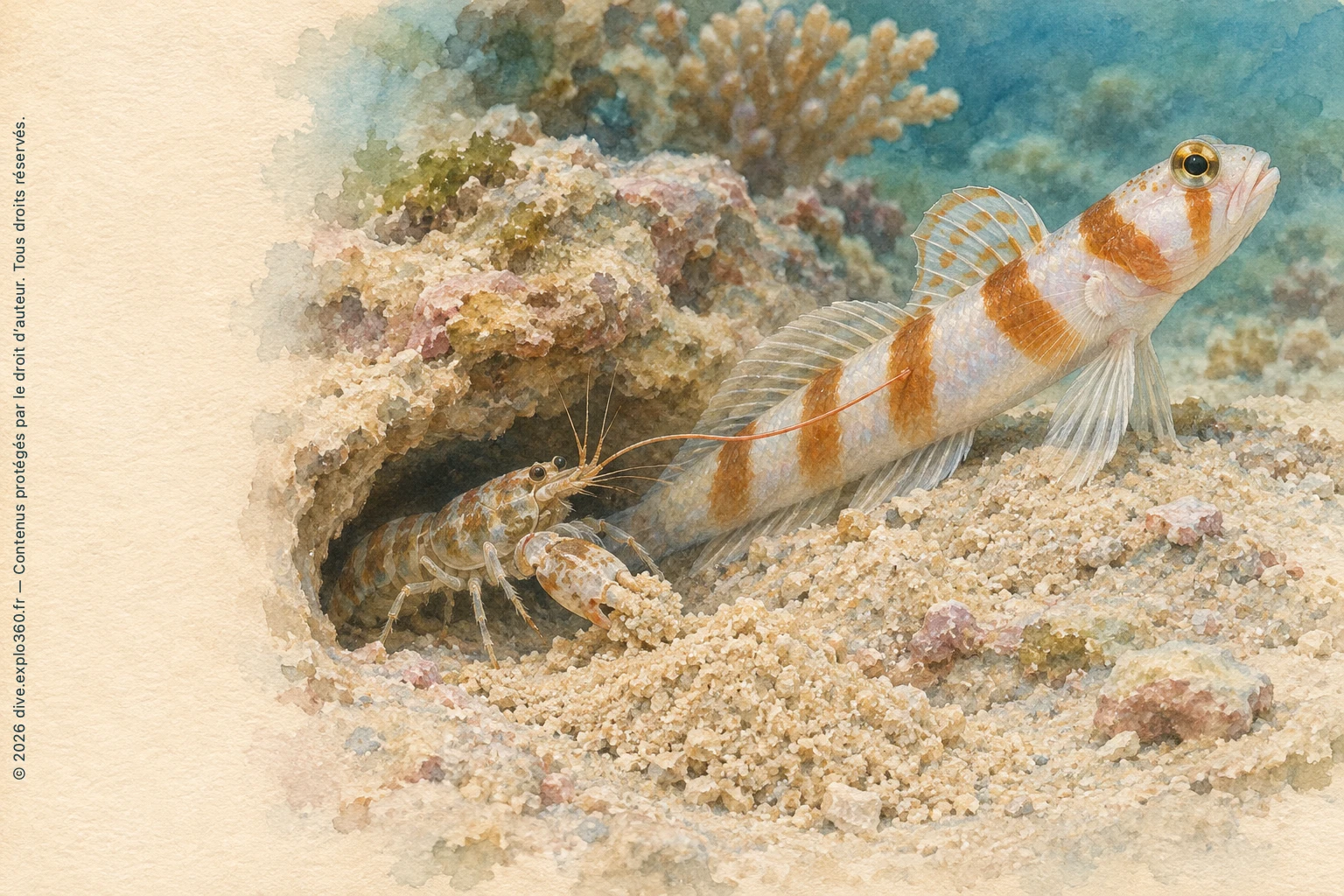
A goby watches a burrow entrance as a shrimp moves sand.
The goby keeps watch and the shrimp maintains the shelter. An antenna touching the fish can pick up its movements. © dive.explo360.fr — All rights reserved. Reproduction requires permission.

Continue reading

AMIGANSEAU CONTENT

The rest of this article is for subscribers

Log in with your AMIGANSEAU licence to continue reading.

All active AMIGANSEAU licences give access to the full article.