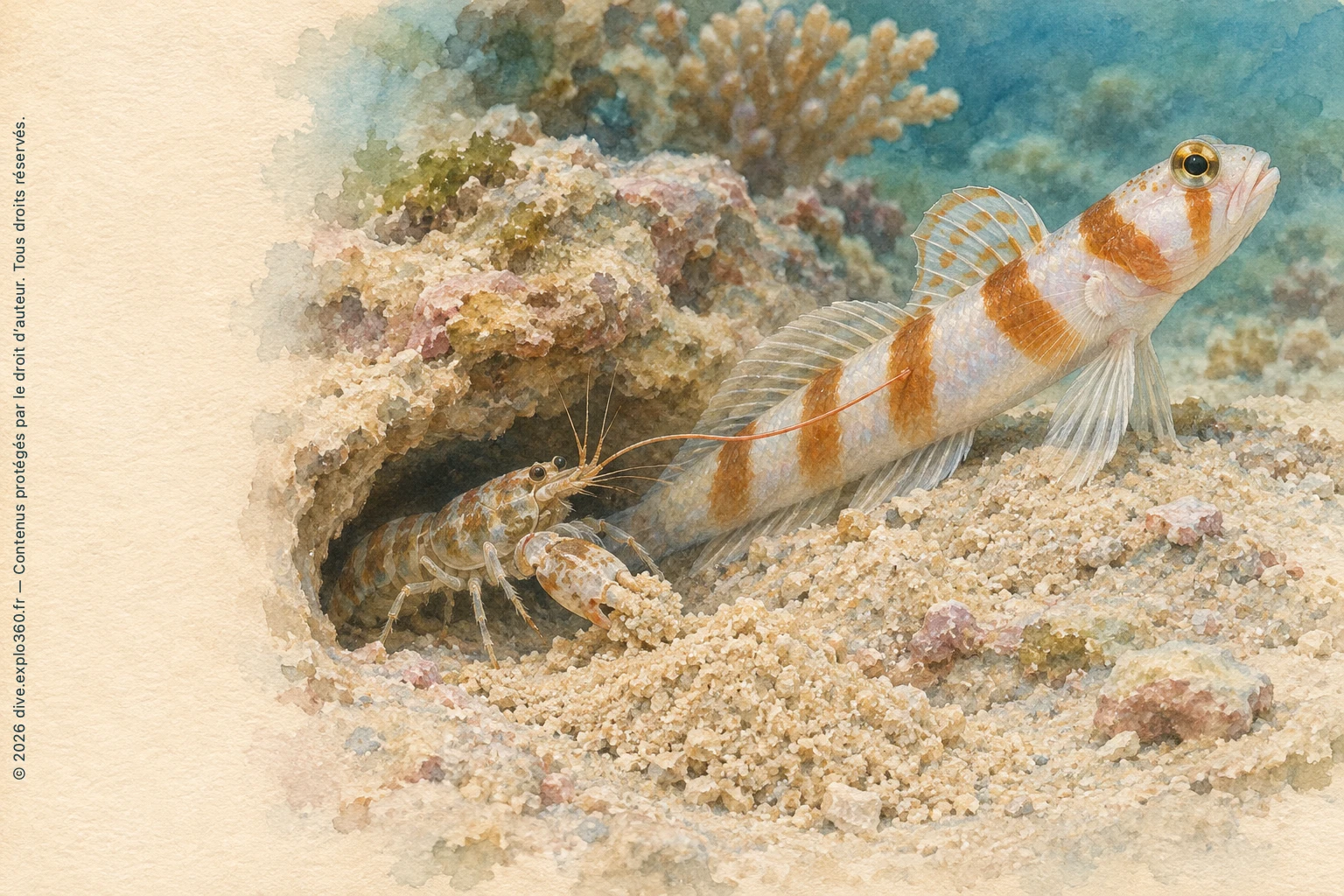
The fish that keeps watch for two
Watch the goby at the burrow entrance. It spots danger while the shrimp moves sand. An antenna touching the fish lets the shrimp feel its movements. The goby gains access to the shelter the shrimp digs.
Ecology · Natural history
Partnerships, cheating and parasites: the strange relationships that connect marine animals.
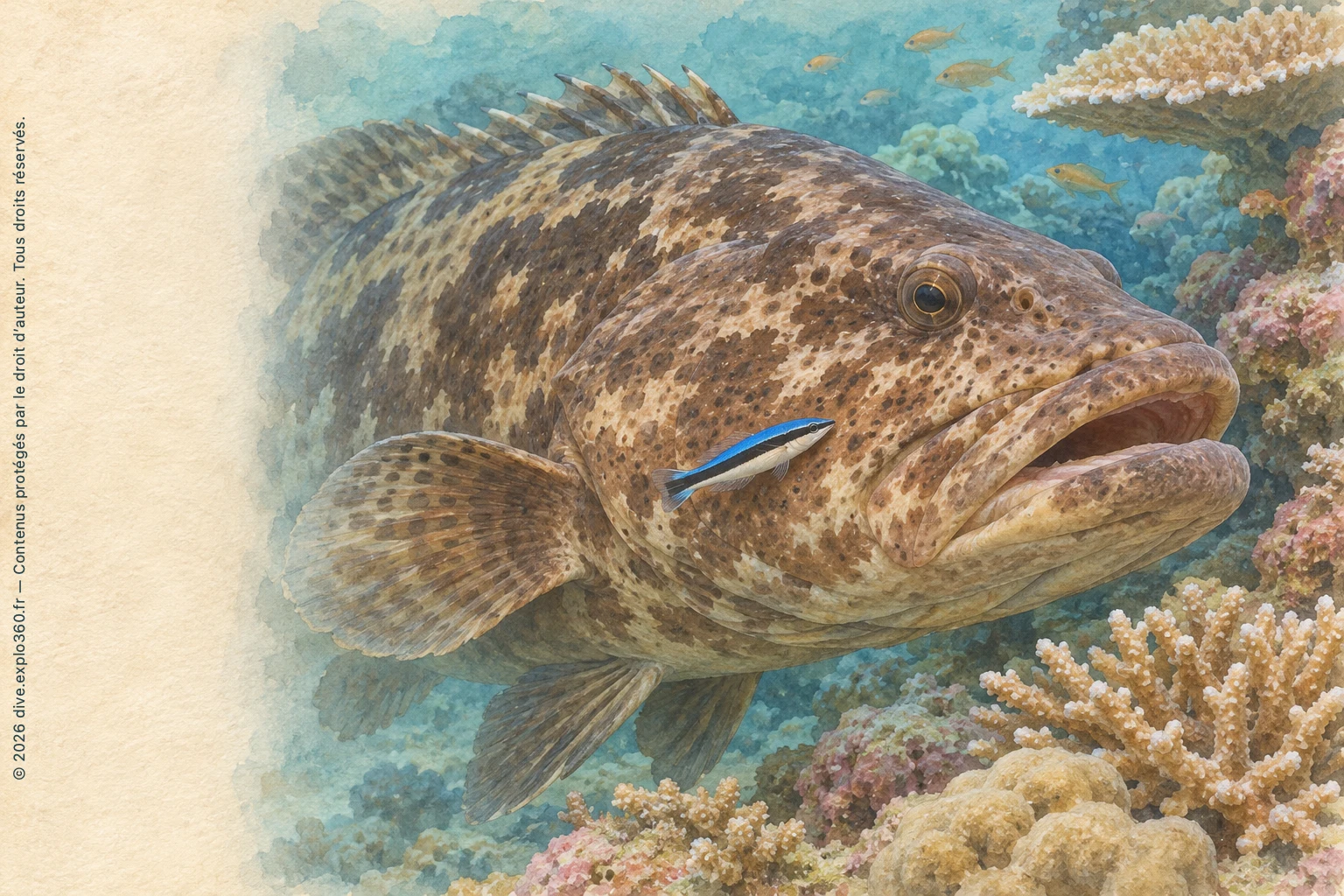
A grouper stops beside a little cleaner wrasse and opens its mouth. The wrasse may take a parasite, or it may bite off some of the slippery layer that protects the grouper’s skin.
At a cleaning station, a grouper tolerates the approach of a cleaner wrasse. Its pose alone does not reveal whether the wrasse takes a parasite or mucus. © dive.explo360.fr — All rights reserved. Reproduction requires permission.
Watch the goby at the burrow entrance. It spots danger while the shrimp moves sand. An antenna touching the fish lets the shrimp feel its movements. The goby gains access to the shelter the shrimp digs.