Diving into a living, connected world
Under the sea, organisms constantly interact
In a seagrass meadow, a mussel filters water while an octopus searches for prey. Yet both are molluscs. This example shows why two questions must be kept separate: which group does the animal belong to, and how does it live?
ALGAE AND PLANTS
Algae and plants generally use light to produce organic matter. “Algae” include several lineages; seagrasses are flowering plants.
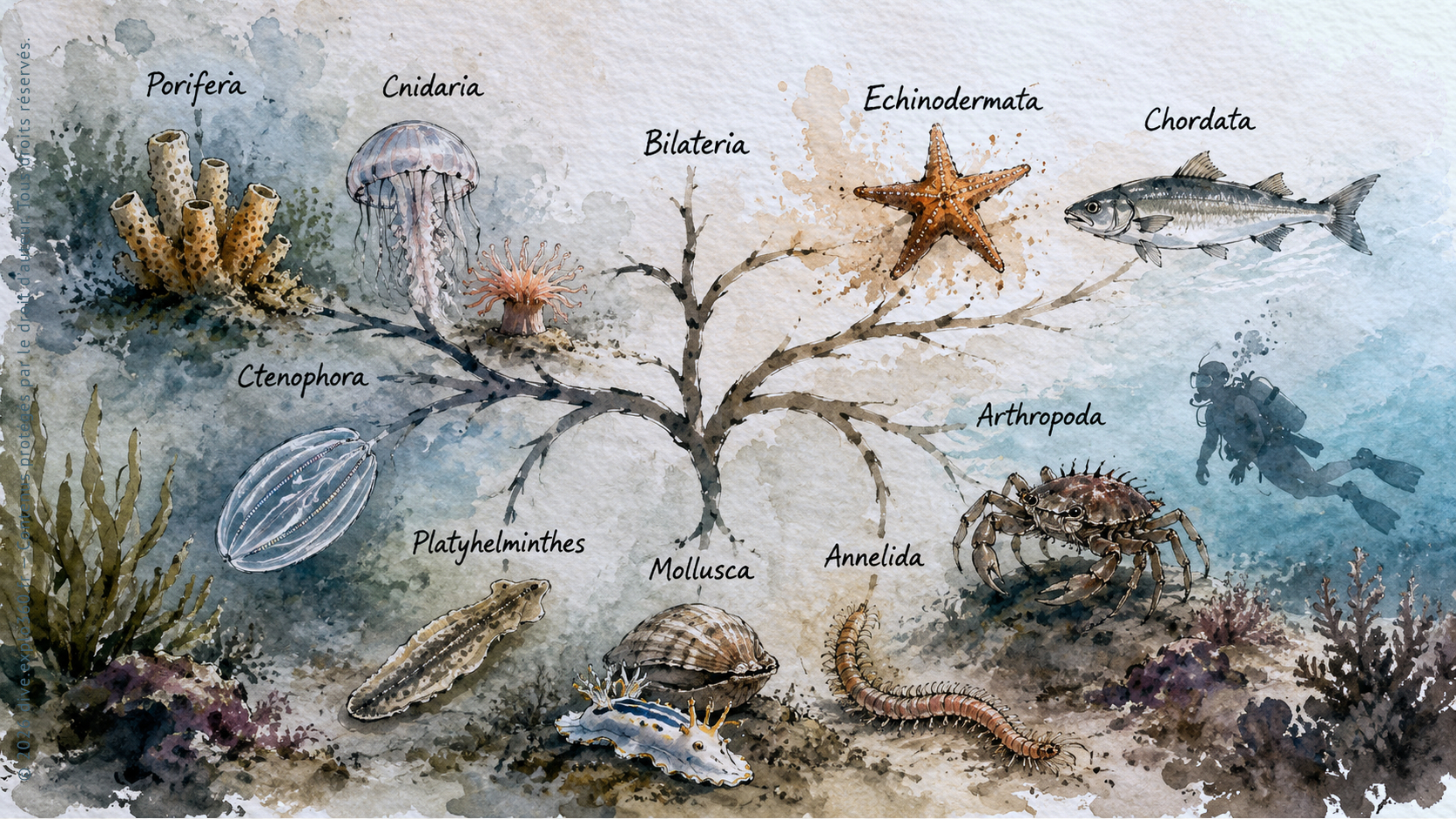
SPONGES, CNIDARIANS, BRYOZOANS AND TUNICATES
Sponges, sea squirts and bryozoans capture suspended particles. Anemones and many other cnidarians capture prey with tentacles: they cannot all be classified as filter feeders.
MOLLUSCS
Molluscs have varied diets: a mussel filters, some gastropods graze and an octopus is a predator. The group does not determine a single function.
CRUSTACEANS
Among crustaceans, some species eat remains; others graze, filter or capture prey. They are not all “cleaners”.
ECHINODERMS
Sea urchins, sea stars and sea cucumbers are echinoderms. Depending on the species, they may graze, capture prey or consume organic particles.
FISH
Fish include herbivores, predators, plankton feeders and other diets. Their movements can transfer matter between habitats.
1 — Primary producers
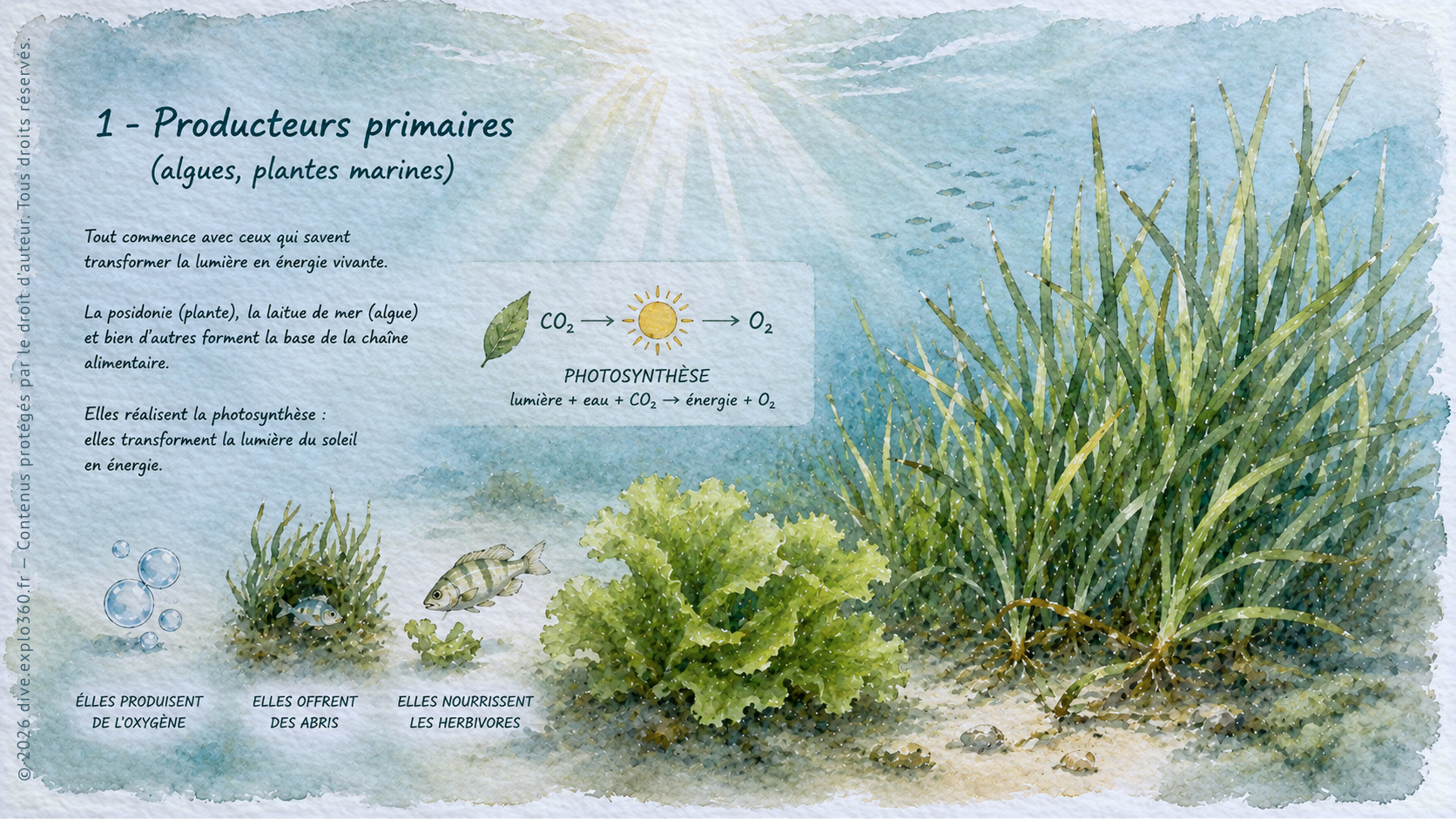
Algae, seagrasses and many phytoplankton organisms use light to make organic matter through photosynthesis. This production supports many food webs and releases oxygen. The material produced may be eaten alive or enter the detritus pool.
Explore the same world