
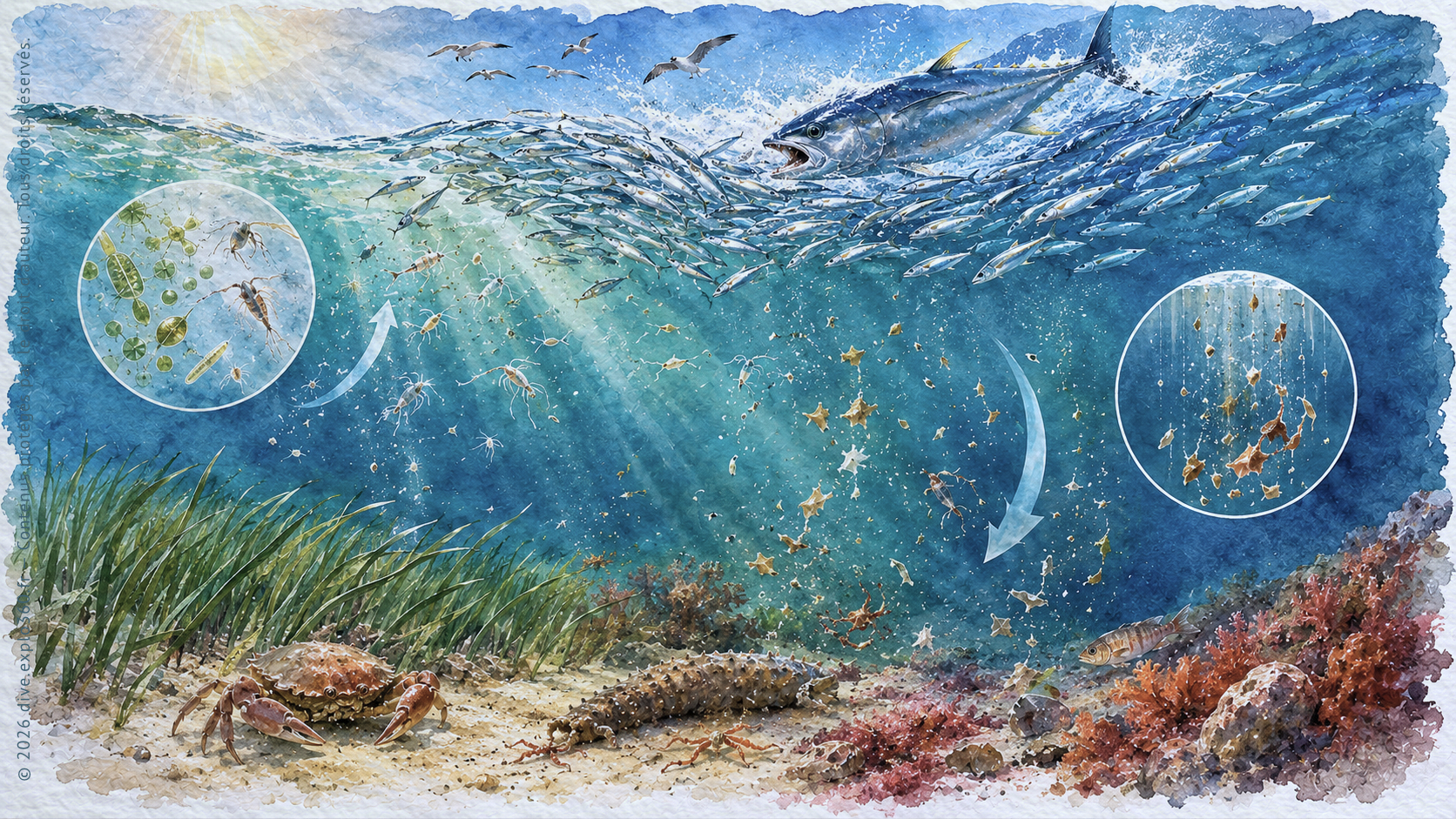
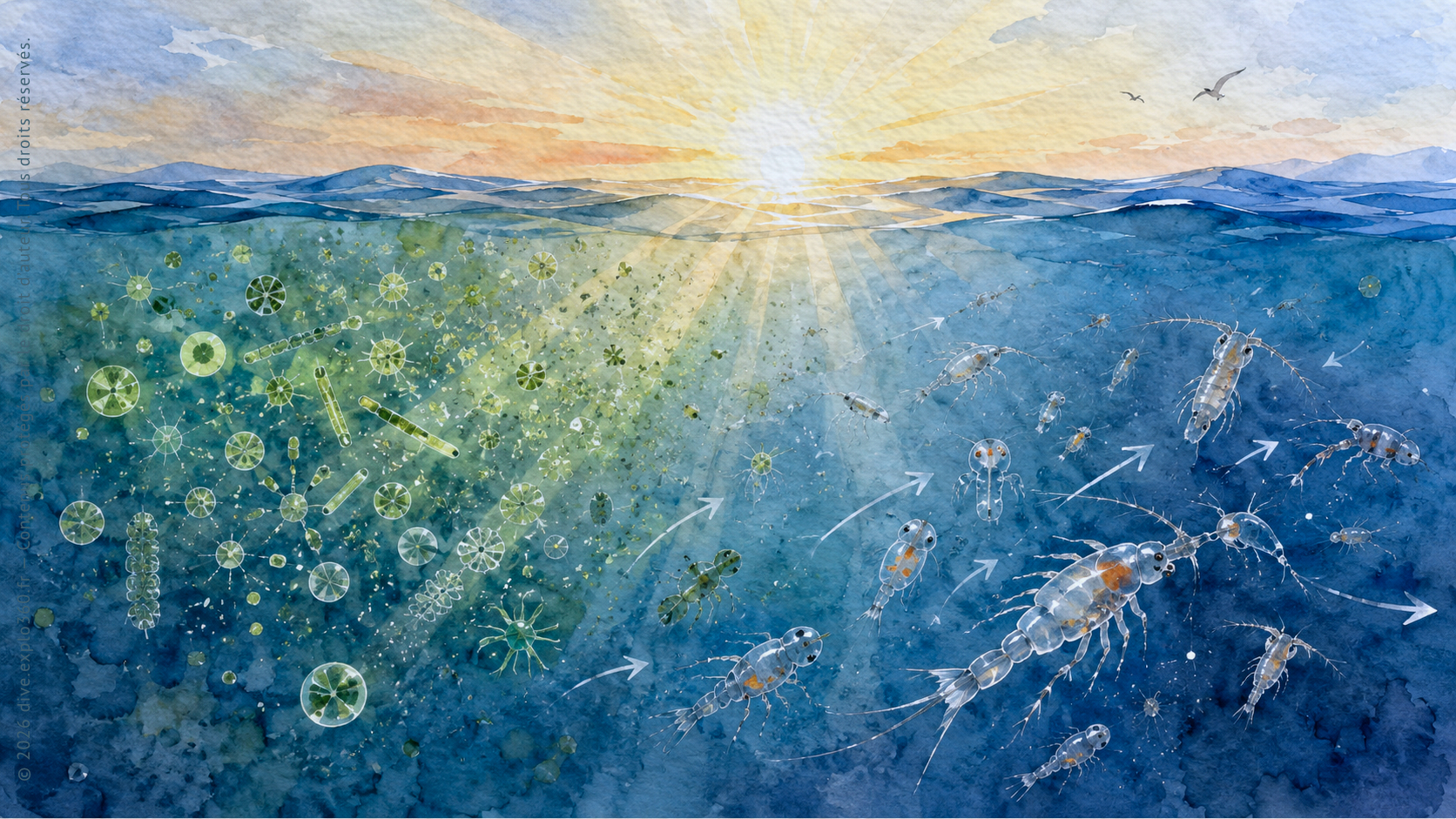
Each morning, the first rays of sunlight pierce the sea’s surface and strike the crystal-clear water. There, billions of tiny organisms drifting in the water column—phytoplankton—get to work. They capture this energy from the sky and transform it into living matter through the magic of photosynthesis. They also produce an immense amount of oxygen, not only for the ocean but also for us at the surface. Without them, the cycle would stop in its tracks.
Phytoplankton, floating with the currents, attracts zooplankton, an army of tiny organisms such as copepods and marine larvae. These minute beings form a vital link between light and the first visible consumers.
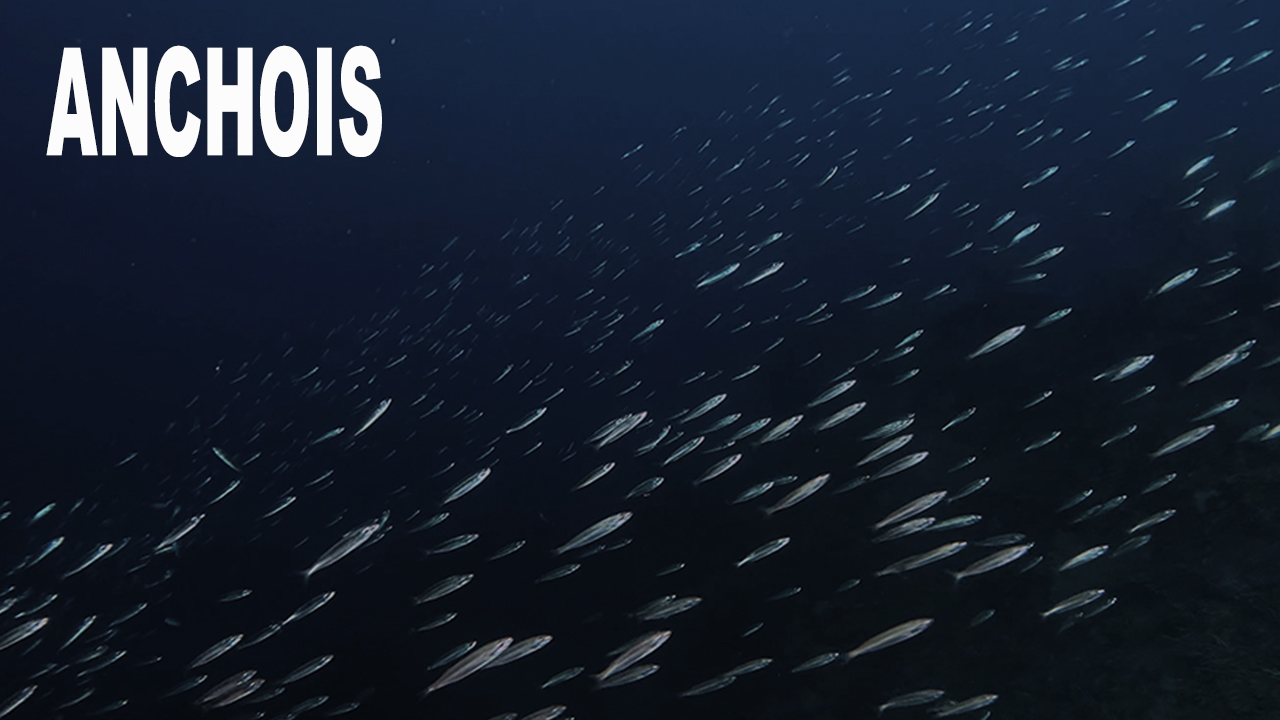
Suddenly, a school of sardines crosses a cloud of zooplankton, swallowing thousands of these microorganisms in a single pass. This small, seemingly fragile fish plays a central role in the balance of the ecosystem.
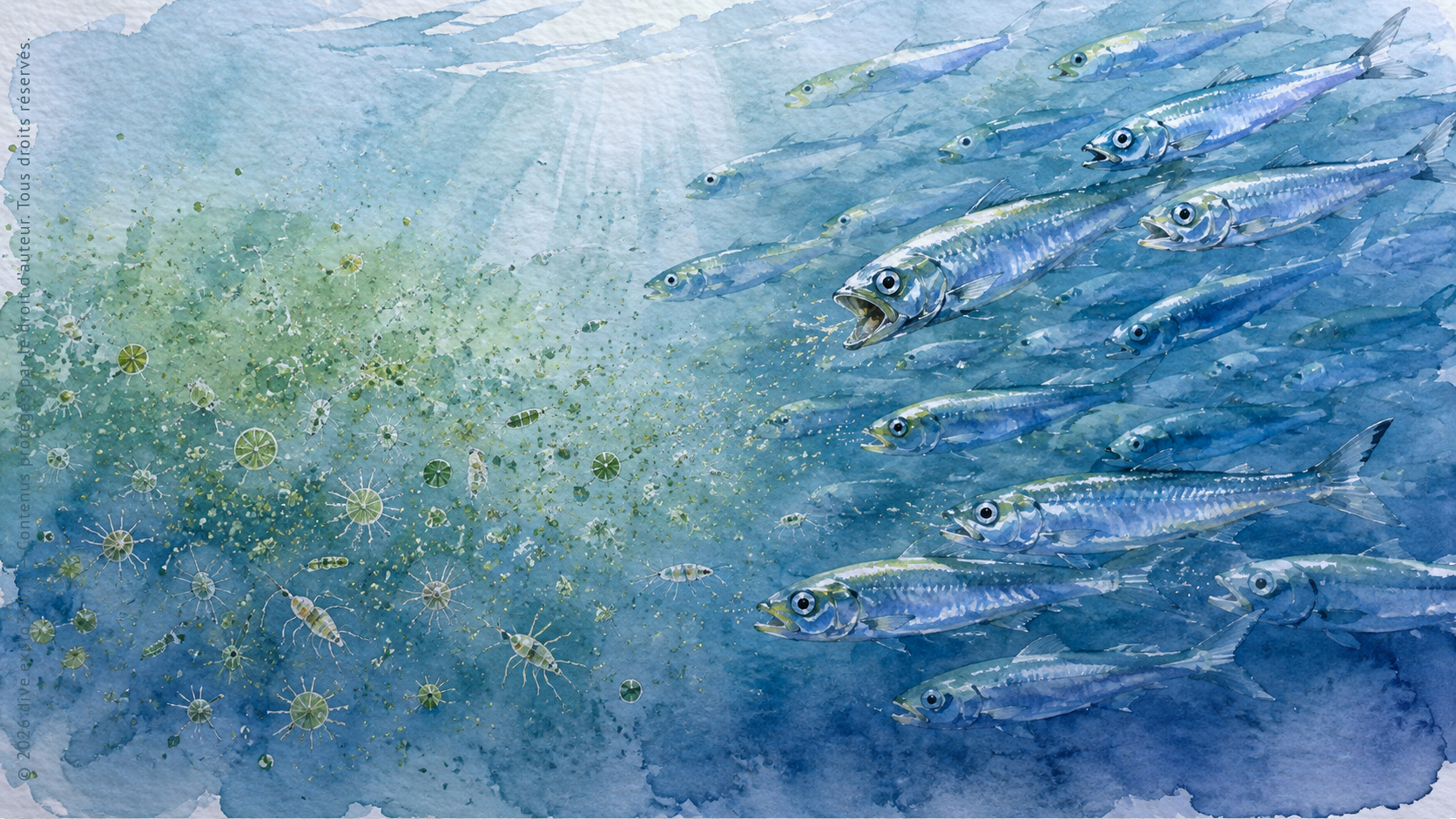
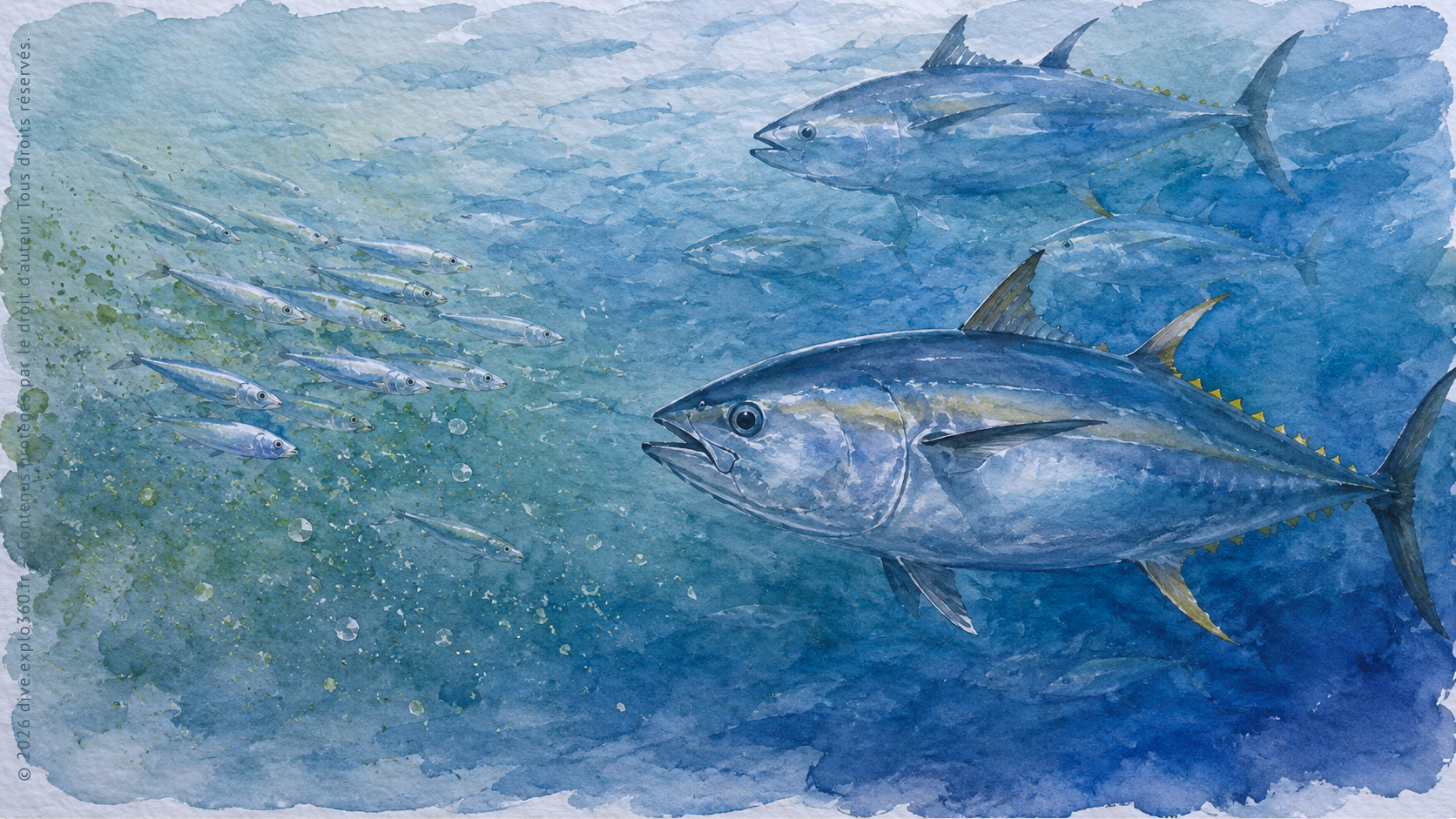
Swimming in vast schools, sardines attract pelagic predators such as bluefin tuna.
Fast and powerful, tuna feed on sardines to store the energy needed for their long migrations across the Mediterranean. Every sardine swallowed is a fraction of that solar energy captured at the very beginning of the chain.
AMIGANSEAU CONTENT
The rest of this article is for subscribers
Log in with your AMIGANSEAU licence to continue reading.
All active AMIGANSEAU licences give access to the full article.Explore the same world