
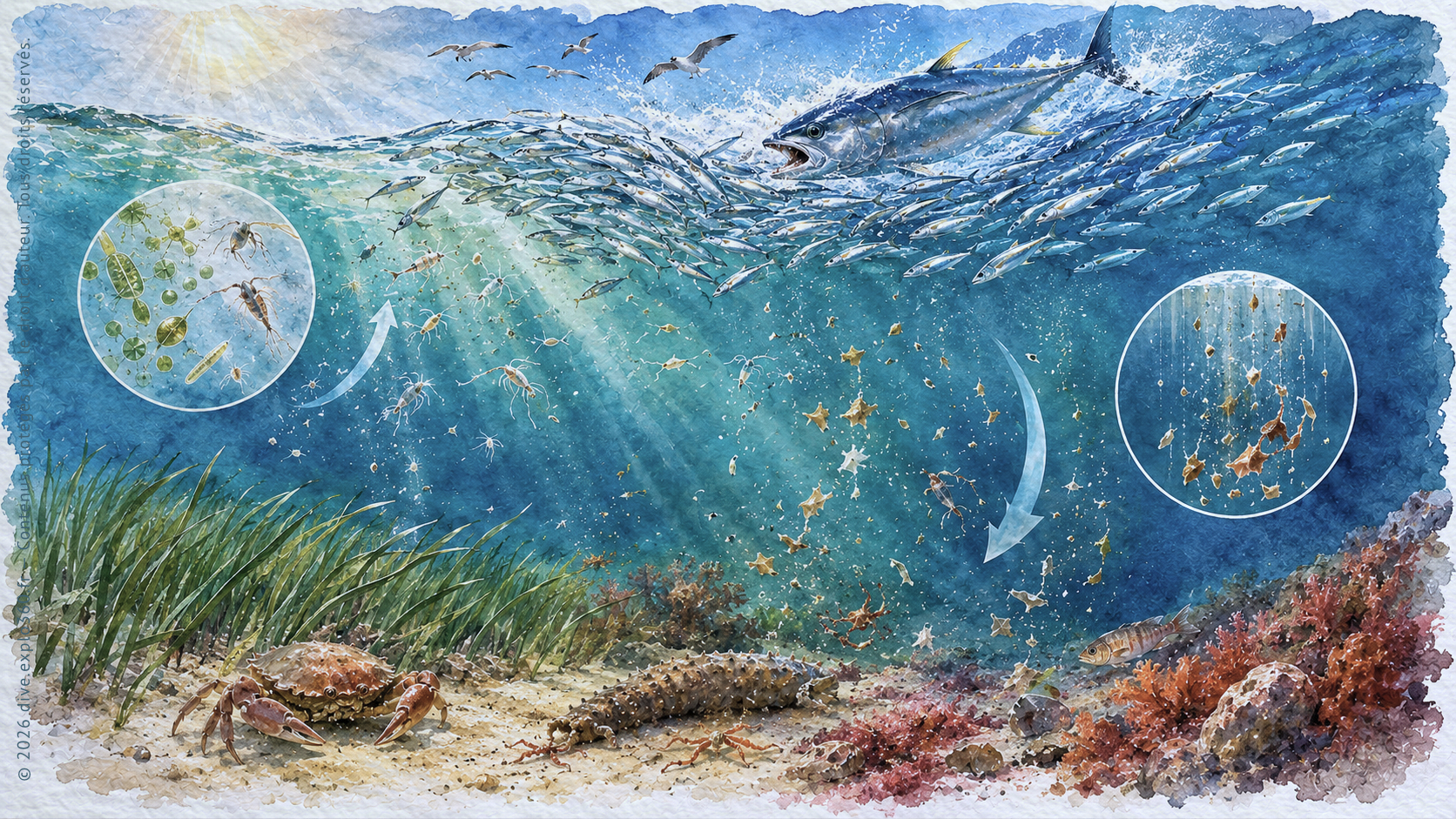
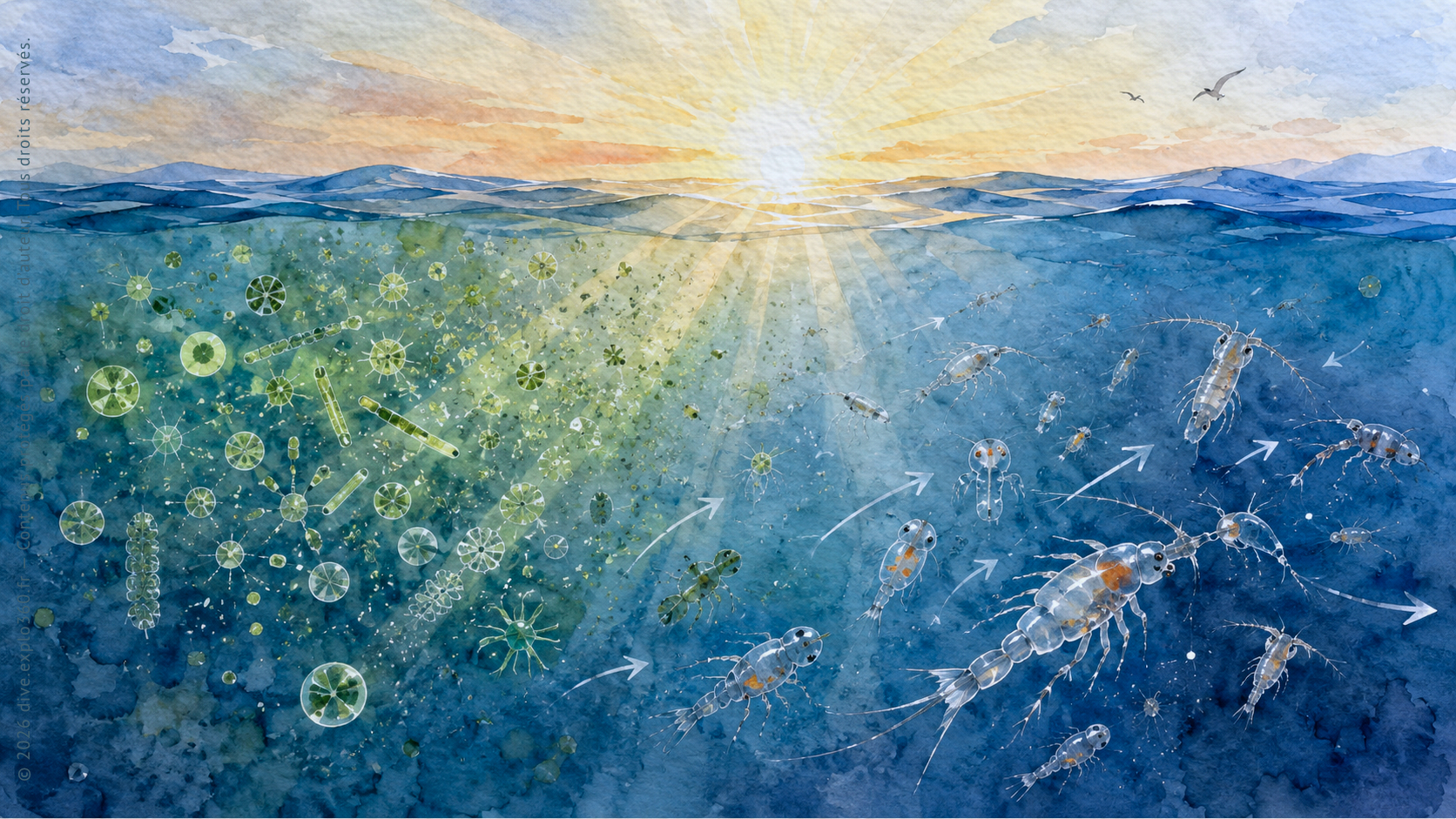
It consists of microscopic organisms, many of which use sunlight to carry out photosynthesis.
Through photosynthesis, they produce organic matter and release oxygen.
Phytoplankton can then be eaten by zooplankton, which includes many small organisms drifting in the water.
This is one of the first transfers of matter in the food web.
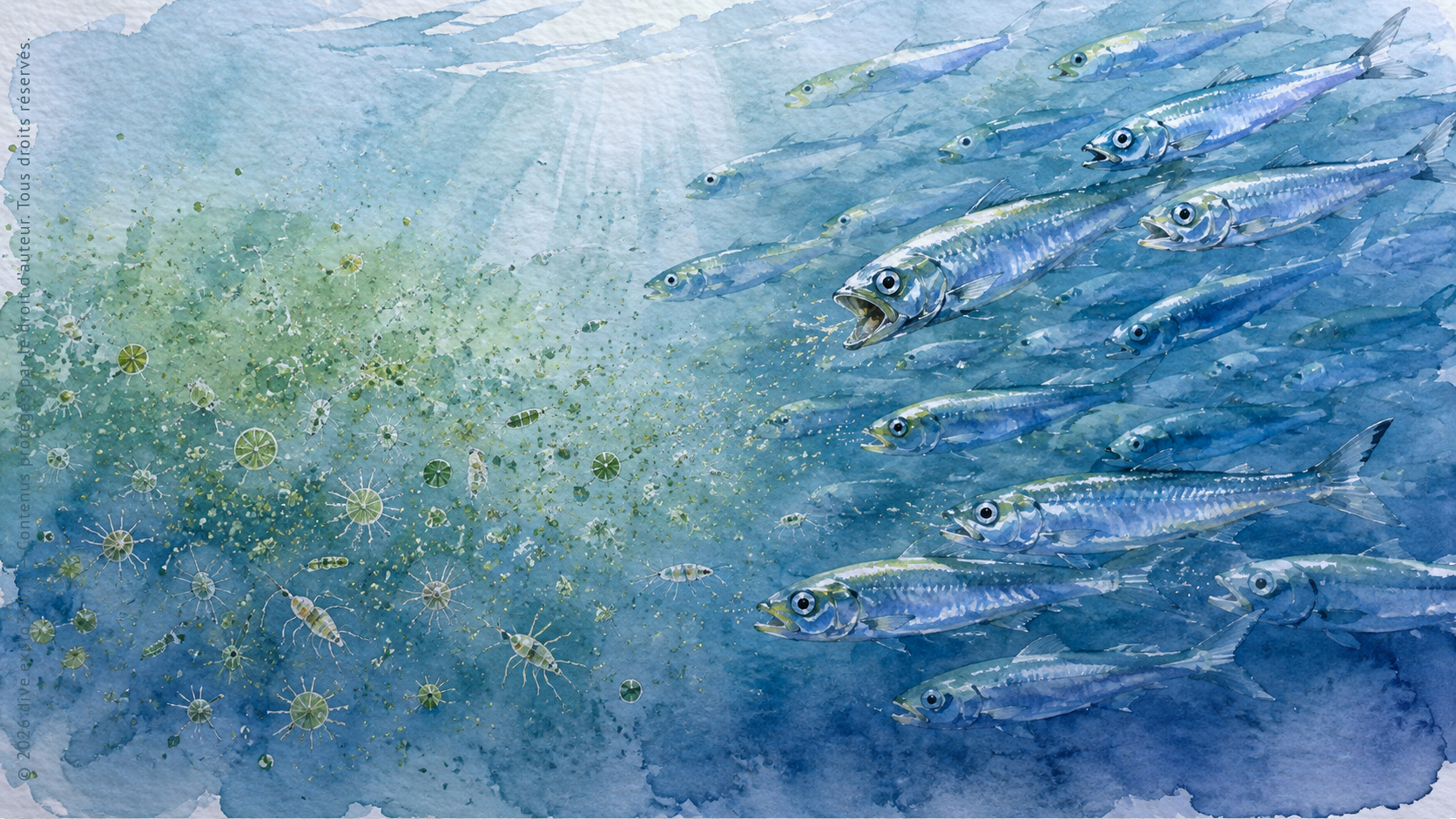
They thereby obtain matter and energy from the organisms they consume.
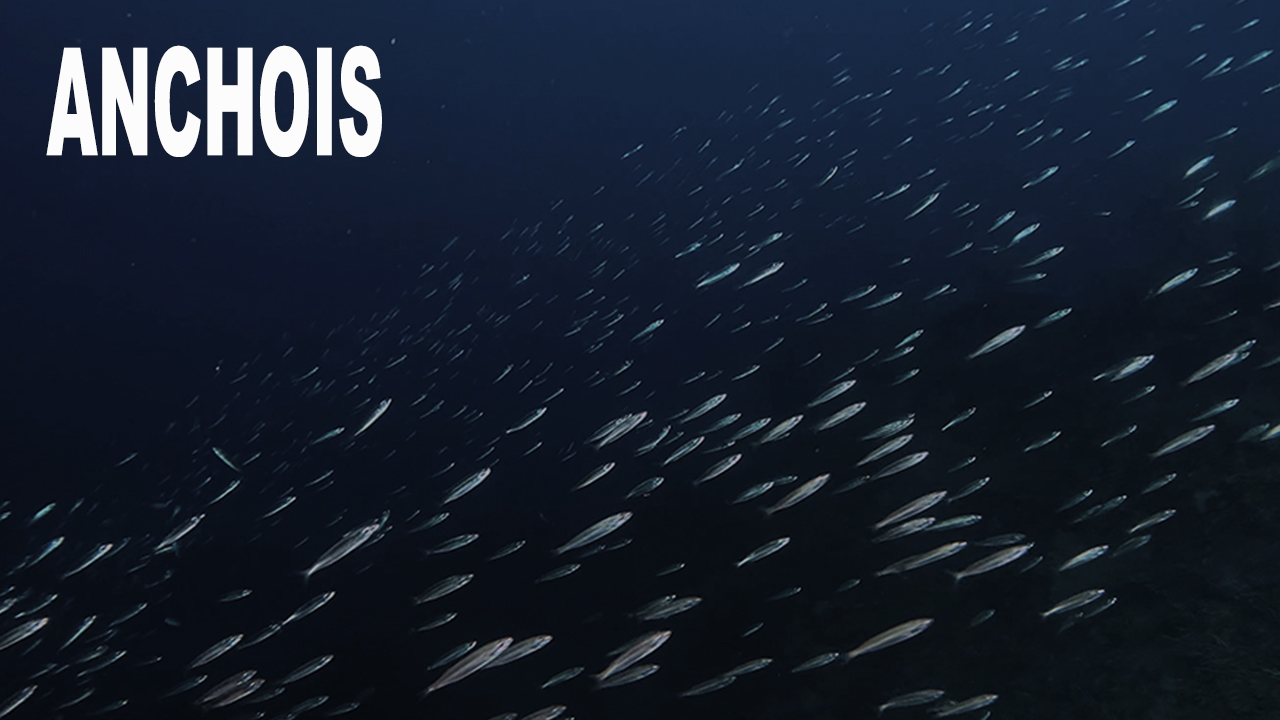
But sardines are themselves eaten by larger predators.
They therefore form an important link between small planktonic organisms and large predatory fish.
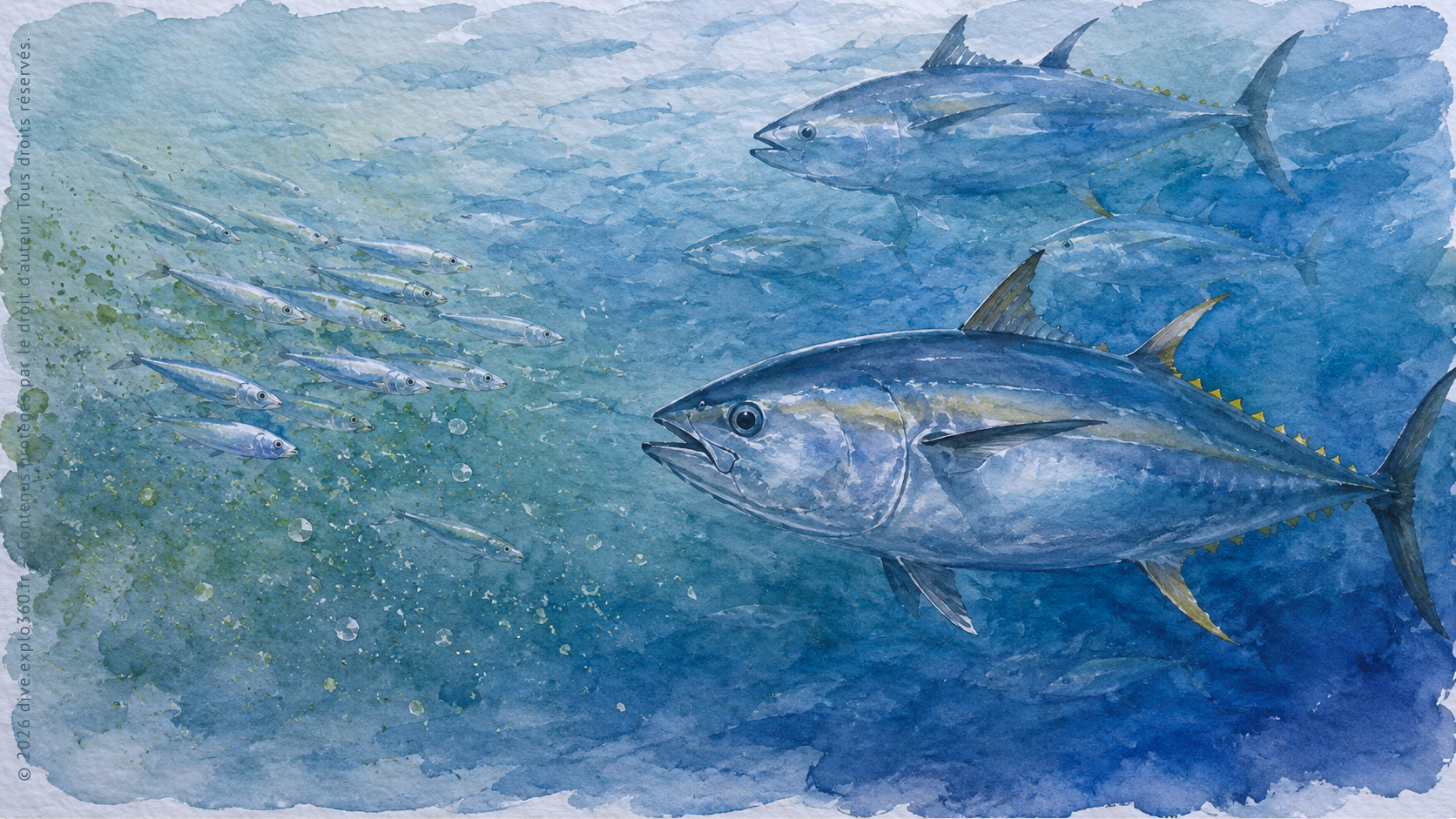
Some of the matter and energy contained in sardines then passes to the tuna.
It uses this energy to live, grow and move.
We can therefore follow part of the path of energy: Sun → phytoplankton → zooplankton → sardine → tuna.
This is a simplified example: in nature, food webs contain many more species and connections.
AMIGANSEAU CONTENT
The rest of this article is for subscribers
Log in with your AMIGANSEAU licence to continue reading.
All active AMIGANSEAU licences give access to the full article.Explore the same world