
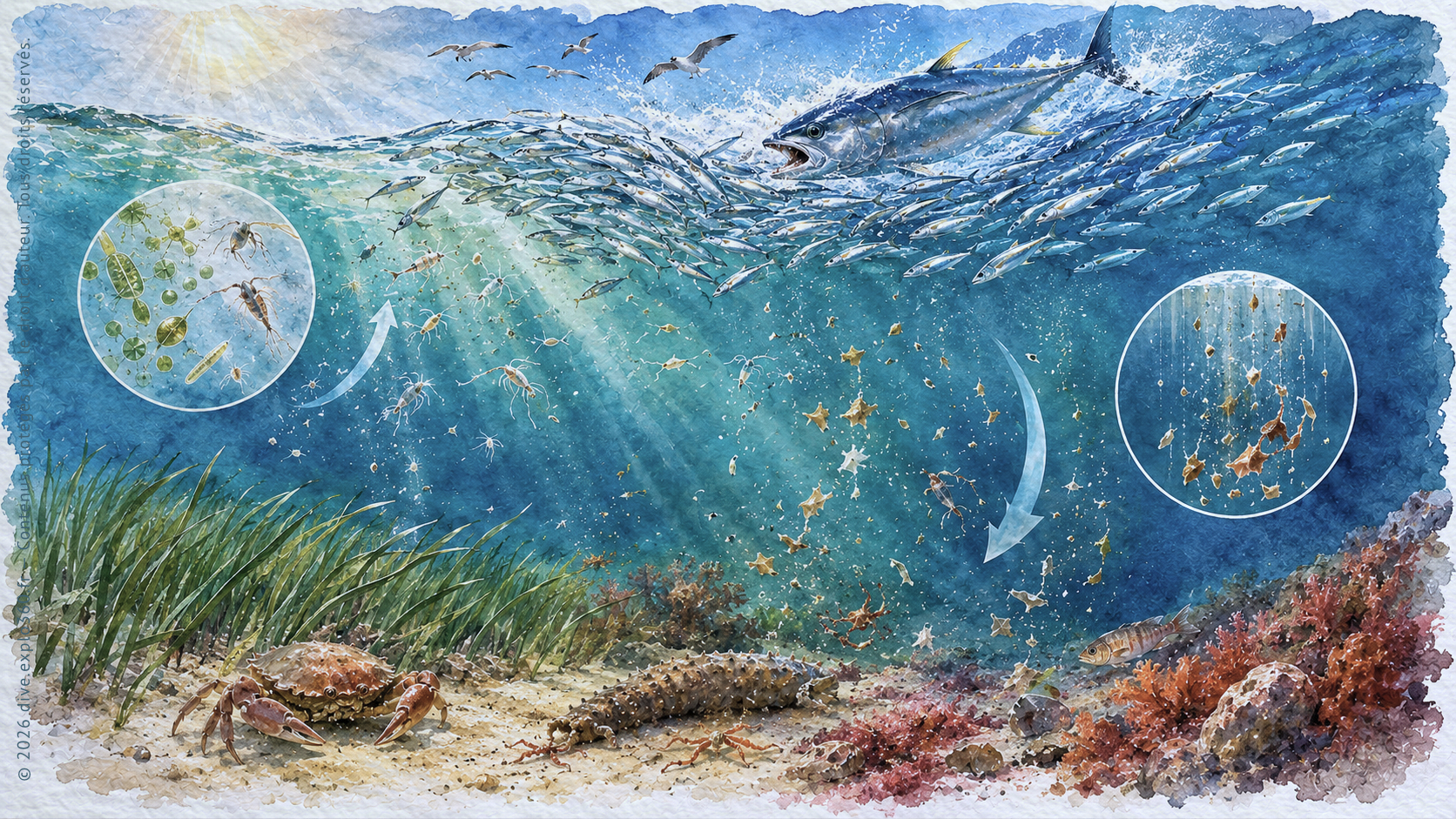
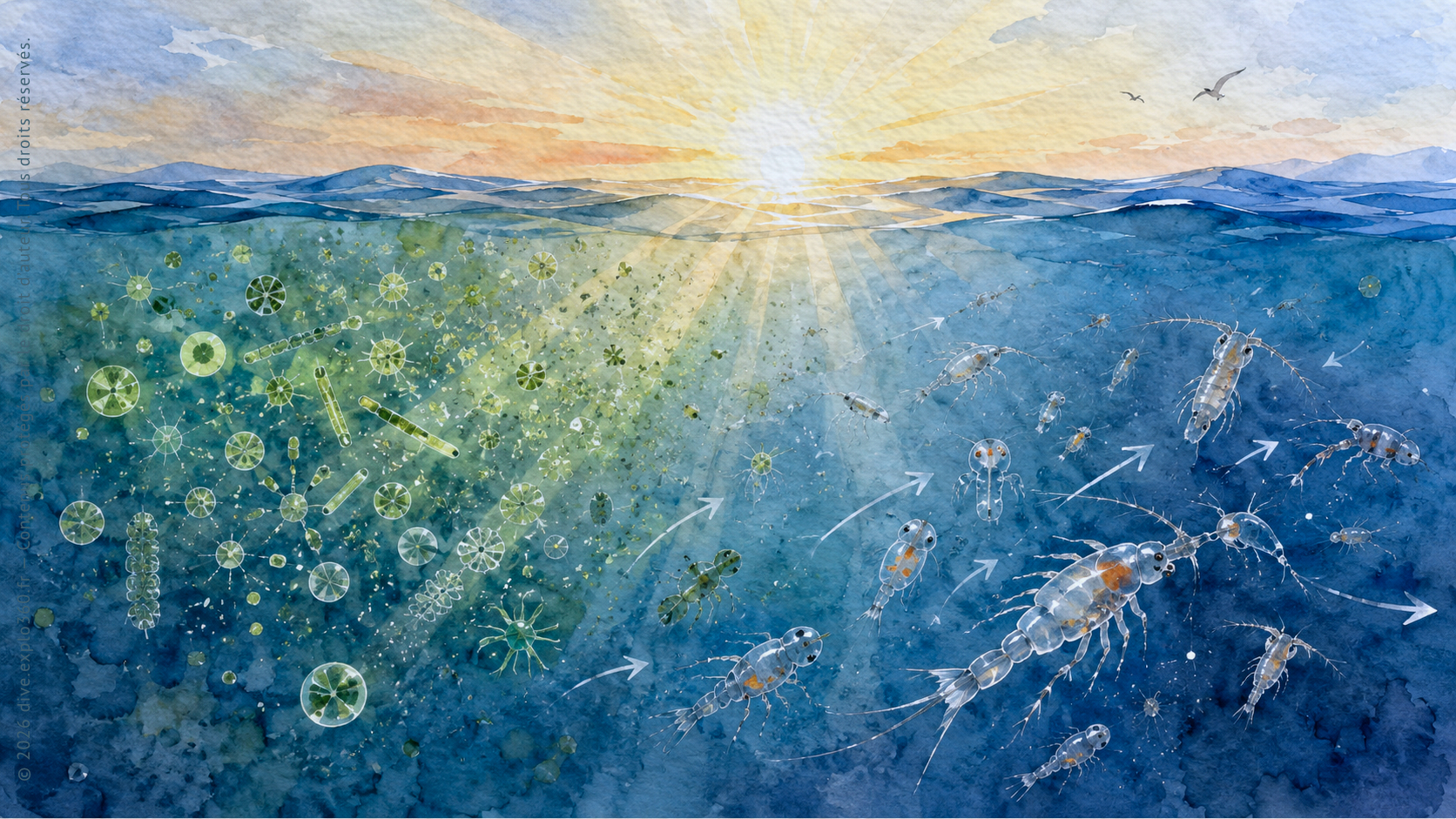
Using light energy, these organisms make organic matter from carbon dioxide, water and mineral nutrients, among other things. Photosynthesis also releases oxygen.
Phytoplankton is thus one of the main primary producers in marine environments.
It is consumed by various zooplankton organisms, including copepods and numerous larvae.
Some of the energy initially captured from light is then transferred from primary producers to the first consumers.
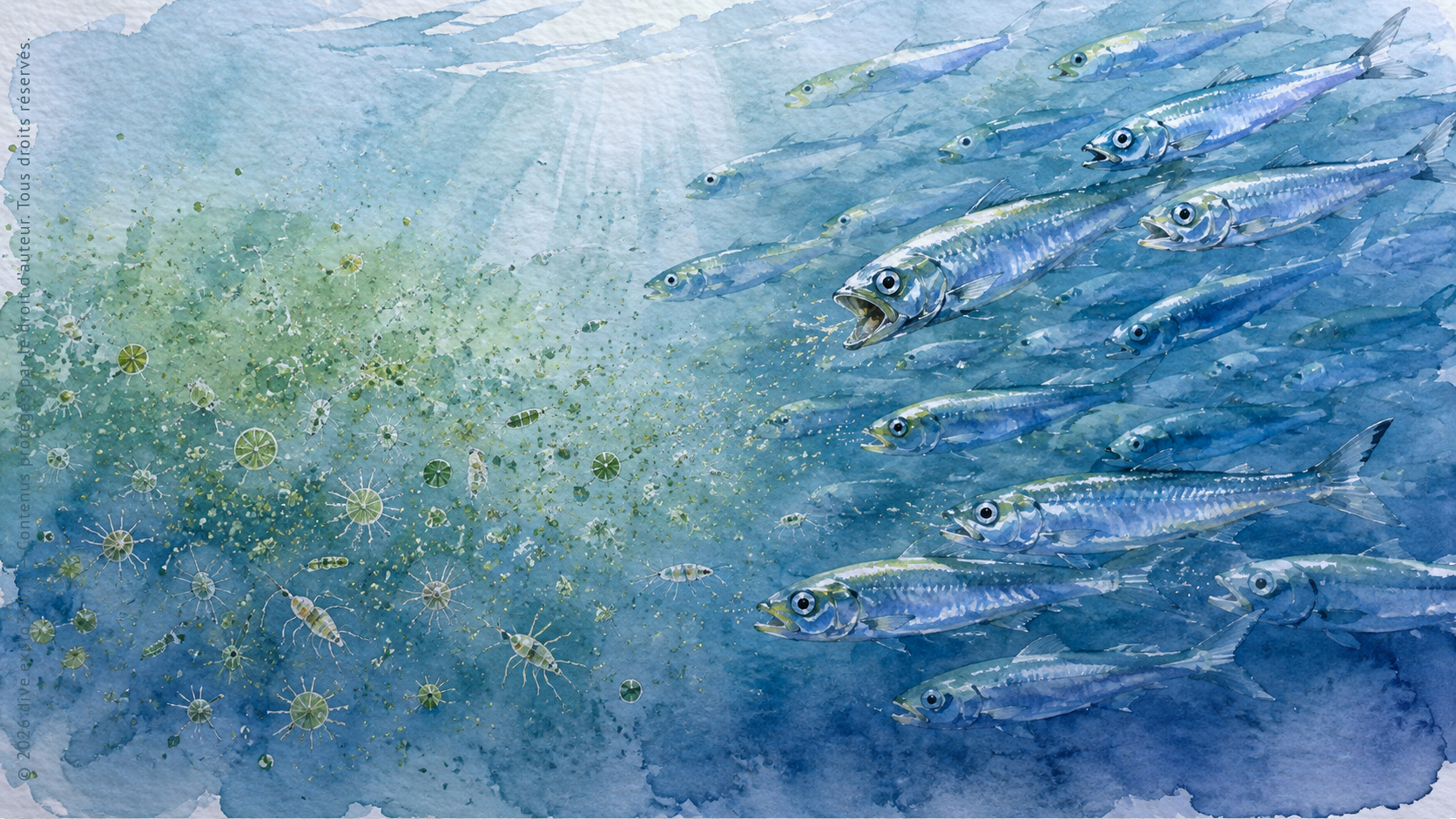
By feeding on these small organisms, they obtain some of the matter and energy that previously flowed from phytoplankton.
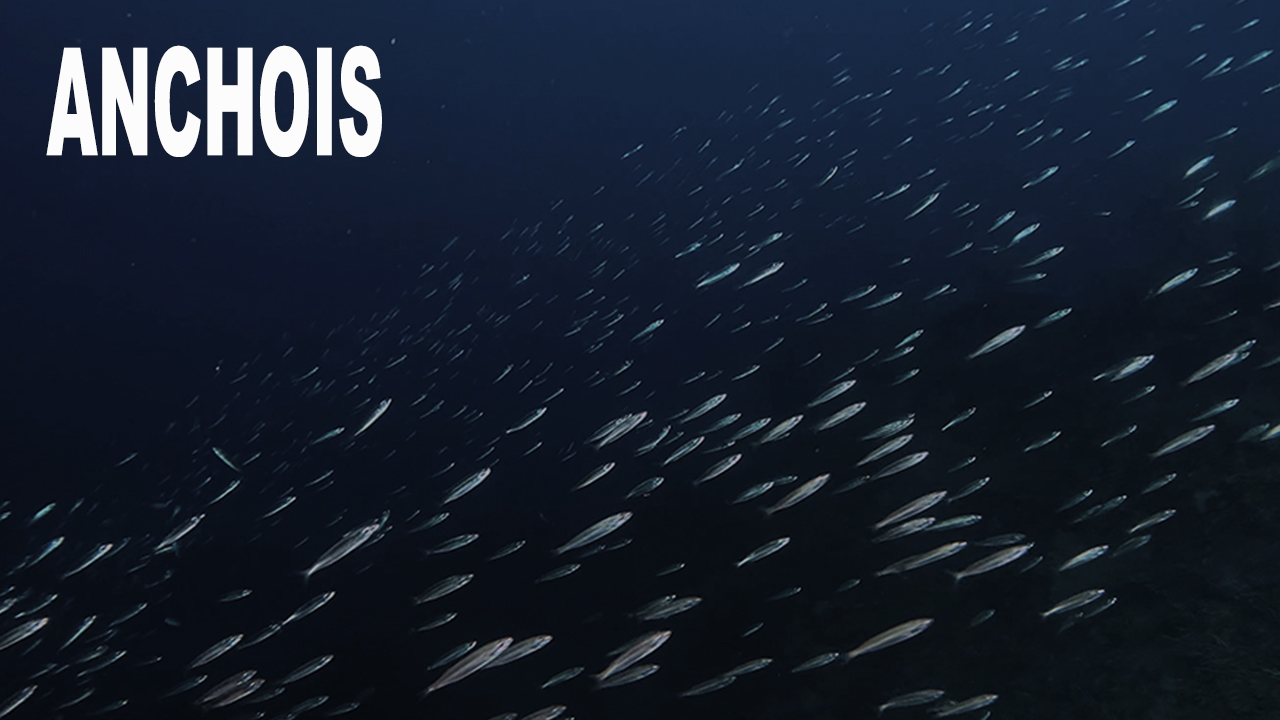
Sardines therefore occupy an important intermediate position: they consume small organisms but themselves become prey for larger predators.
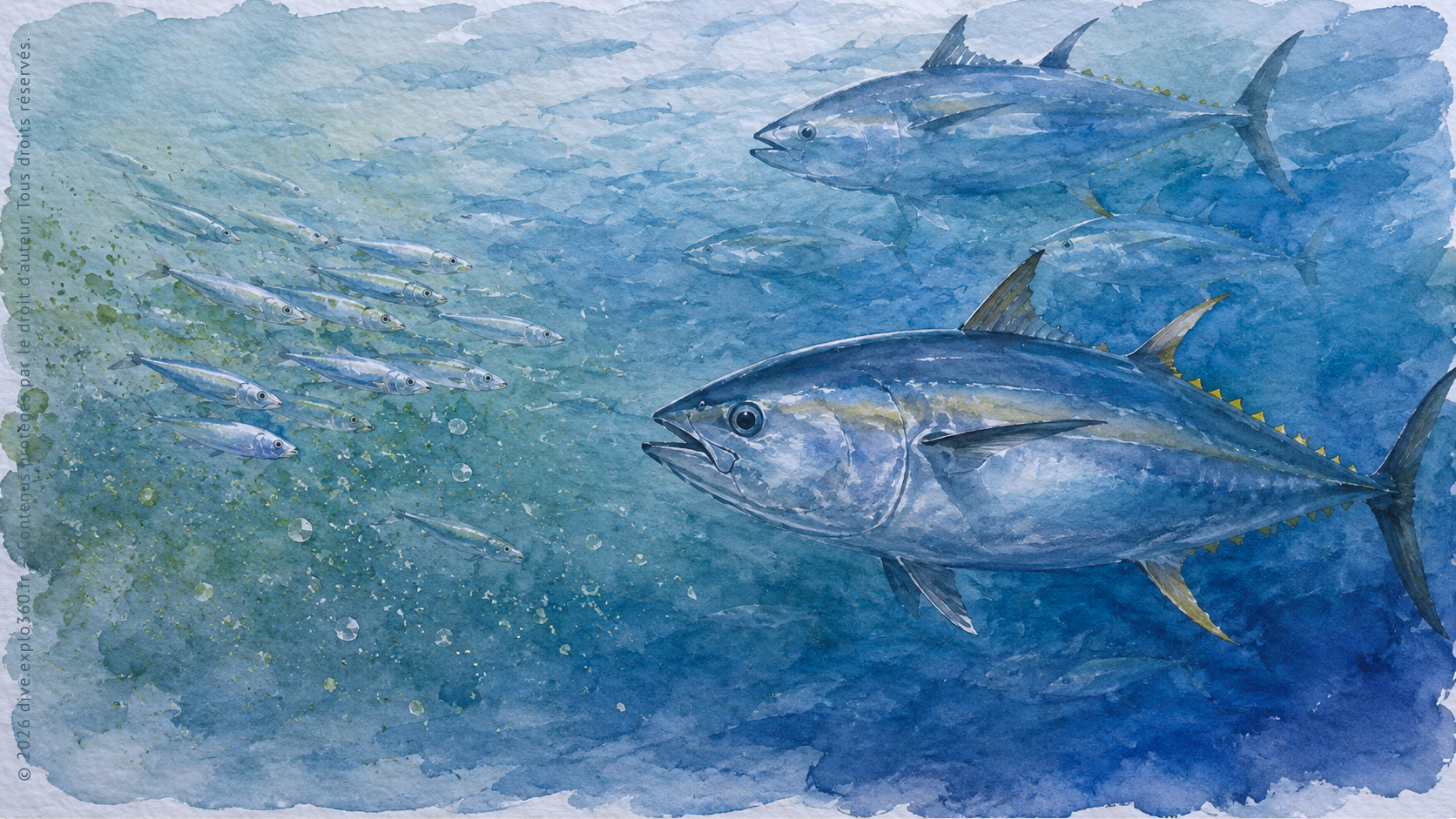
When a tuna eats a sardine, some of the energy it contains is used for the tuna’s metabolism, growth, movements and reproduction.
At each trophic level, only part of the available energy is transferred to the next level. Another part is used by the organism and dissipated, notably as heat.
Energy originally captured by primary producers can therefore flow all the way to large predators.
AMIGANSEAU CONTENT
The rest of this article is for subscribers
Log in with your AMIGANSEAU licence to continue reading.
All active AMIGANSEAU licences give access to the full article.Explore the same world