The crab out of reach
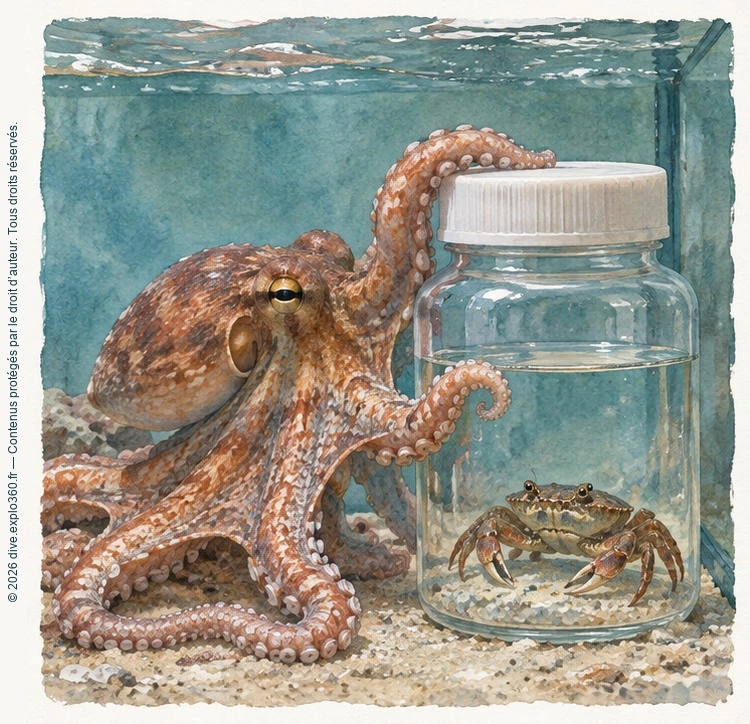
In a marine biology laboratory in Naples, a live crab moves inside a glass jar. A common octopus, Octopus vulgaris, faces the jar, which is sealed with a plastic stopper. The crab’s movements can draw the octopus towards the glass. The octopus approaches and runs its arms over the jar, its suckers gripping the surface.
The crab stays out of reach until the stopper comes free. Each of the octopus’s eight flexible arms carries suckers that can grip and taste what they touch. Together they give the animal fine control over an object. That still leaves the problem of what to do with the stopper. The octopus has to find a way to pull it out and then get hold of the crab.
Over successive trials, failed attacks became less frequent. The octopuses got quicker at removing the stopper and seizing the crab, while the time they spent exploring stayed much the same. The task stayed the same from one trial to the next. What changed was how the octopus approached it. The improvement could come from trial and error or from learning to associate a movement with its outcome. How the octopus understands the jar remains an open question.
The researchers could see the improvement in the time it took to get the crab. What happened on one attempt helped shape what the animal did on the next. Another experiment asked what would happen if an octopus watched one of its own kind make a choice.
The observer’s choice
Researchers give an octopus two objects that differ in colour. Choosing one earns a reward. A second octopus, new to the task, watches as the trained animal makes its choices. Then the demonstration ends.
The observer gets the same choice on its own. In the experiment published in 1992, observers tended to choose the object they had seen the demonstrator select. The preference could persist for several days without further training. Watching the other octopus made a difference. How it did so remains debated. The demonstration may simply have drawn attention to one object.
For an animal that generally lives alone, another octopus can still be a source of information. The result comes from the laboratory. Whether octopuses learn from one another this way in the wild is a separate question. An octopus’s nervous system is organised very differently from a vertebrate’s. Many neurons lie in the arms and their nerve networks, where they help process sensations and control movement.
Those circuits let each arm do some of the work of exploring a surface or handling an object locally, as part of a coordinated animal. Touch and movement are closely linked as a sucker grips a surface. Watching another animal is one way to pick up information in a lab. On the seabed off Indonesia, a different octopus shows what it can do with an object it finds.
A shelter carried across the sand
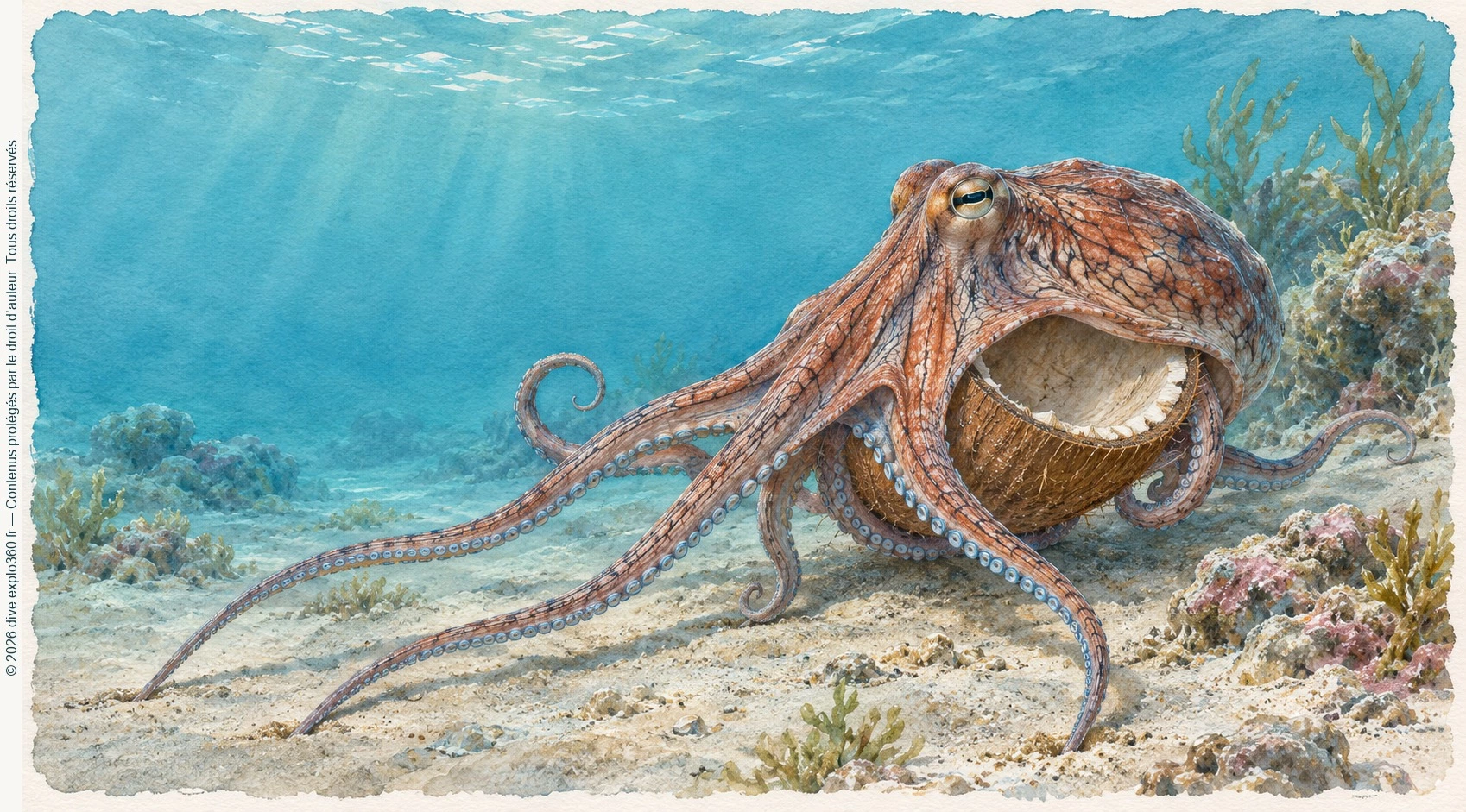
Across soft sediment off Indonesia, a veined octopus, Amphioctopus marginatus, carries pieces of coconut shell. The shells sit beneath its body. To keep them there as it moves, the octopus supports itself on some of its arms and walks awkwardly across the bottom. The load makes it harder to move and offers little protection on the way.
What makes the extra effort worthwhile?
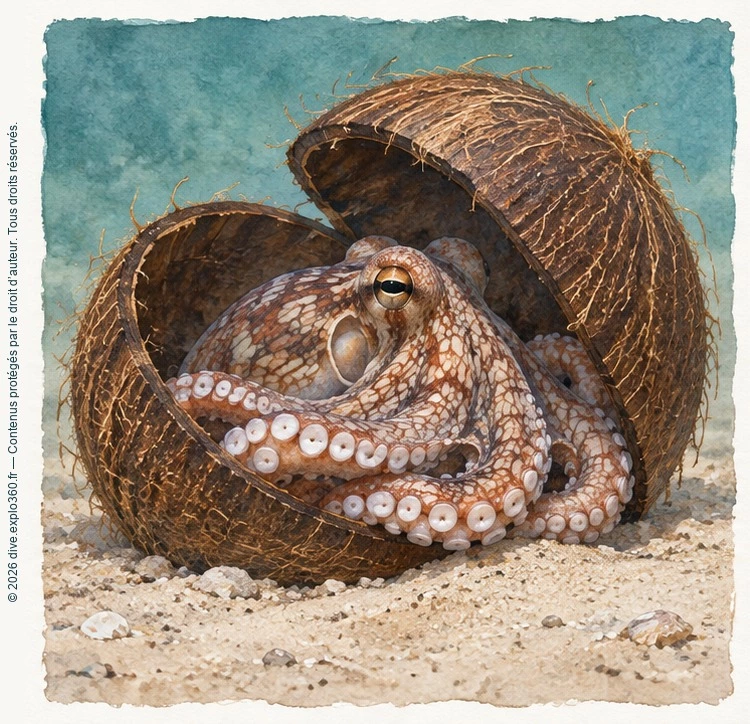
The answer comes when the octopus stops. It can fit the pieces together and settle inside, surrounded by the shells it has carried. On a seabed with few natural hiding places, a portable refuge can be useful. Researchers saw the behaviour more than once and described it as defensive tool use. The octopus transports an object and puts it to use later.
The sequence is easy to see. Whether the octopus consciously anticipates using the shells is harder to tell. The observations alone cannot establish what it expects as it carries them. The shells start to protect the octopus once it assembles them.
Until then, the octopus has to carry the load. A tool carried across the seabed makes for a conspicuous example of how an animal deals with its surroundings. On Indo-Pacific reefs, a much smaller animal drew attention with a scrape against a rock.
A rival that was never there
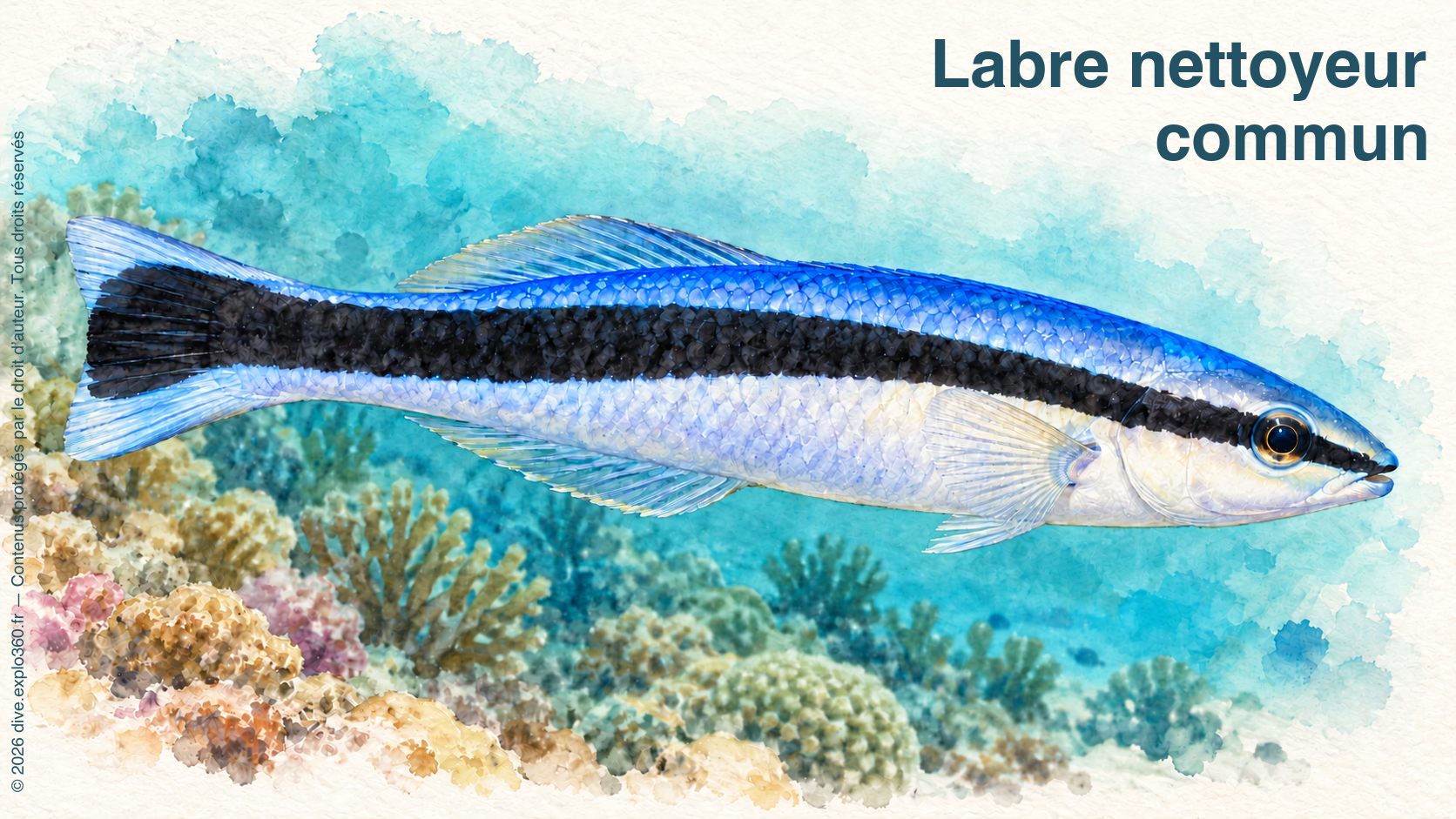
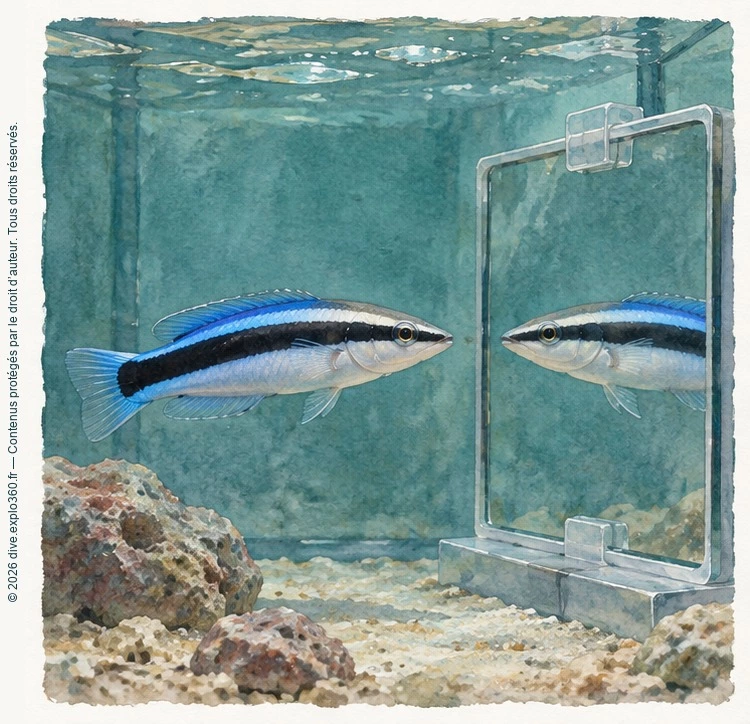
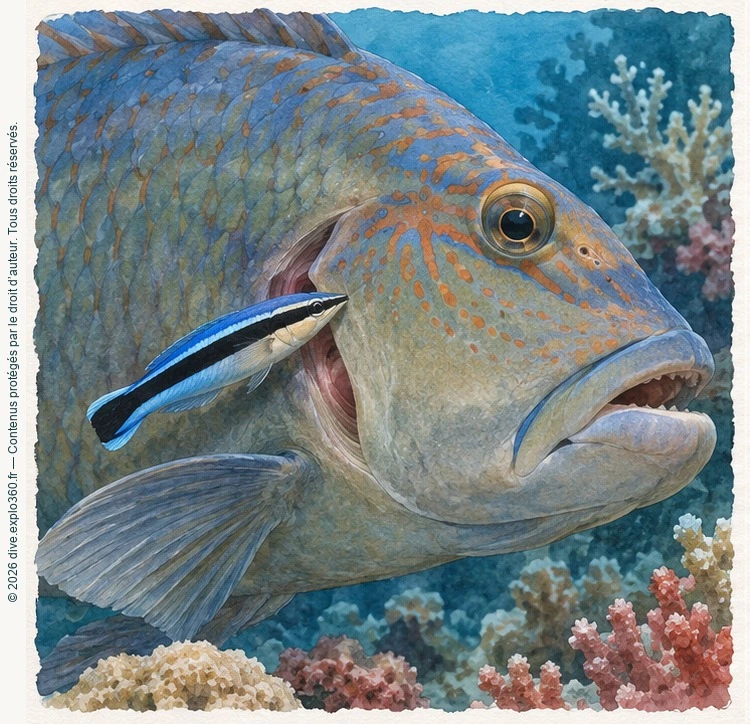
The cleaner wrasse, Labroides dimidiatus, spends much of its day inspecting other fish. On Indo-Pacific reefs, it picks parasites from visiting fish at a cleaning station. Encounters can end in conflict as well as a meal. A mirror presents the wrasse with an unfamiliar kind of encounter. A fish that looks just like it appears in front of it.
At first, the wrasse reacts aggressively, as though it faces a rival. Its response then changes. It then makes unusual movements in front of the mirror. Researchers apply a small coloured mark to a spot on the throat that the wrasse cannot see directly. With the mirror available, some fish rub the marked spot against a surface.
The researchers compare that response with what happens without a mirror or with a transparent mark.
Does the wrasse use its reflection to get information about its own body?
The results are consistent with this interpretation. The relationship with self-consciousness remains under discussion. Further work has used photographs to study whether fish recognise their own appearance. Using a reflection to locate a mark and recognising one’s own identity are separate questions.
The experiment also raises a practical question. How can a fish show that it has noticed a mark on its own body?
A fish can rub against a surface to reach a spot that an animal with hands could touch directly. The test has to allow for the ways a fish can investigate its own body. At a cleaning station, researchers can see the wrasse adjust its choices in a different way. There, a decision can change how long a fish stays to be cleaned.
Some clients can simply leave.
The client that can leave
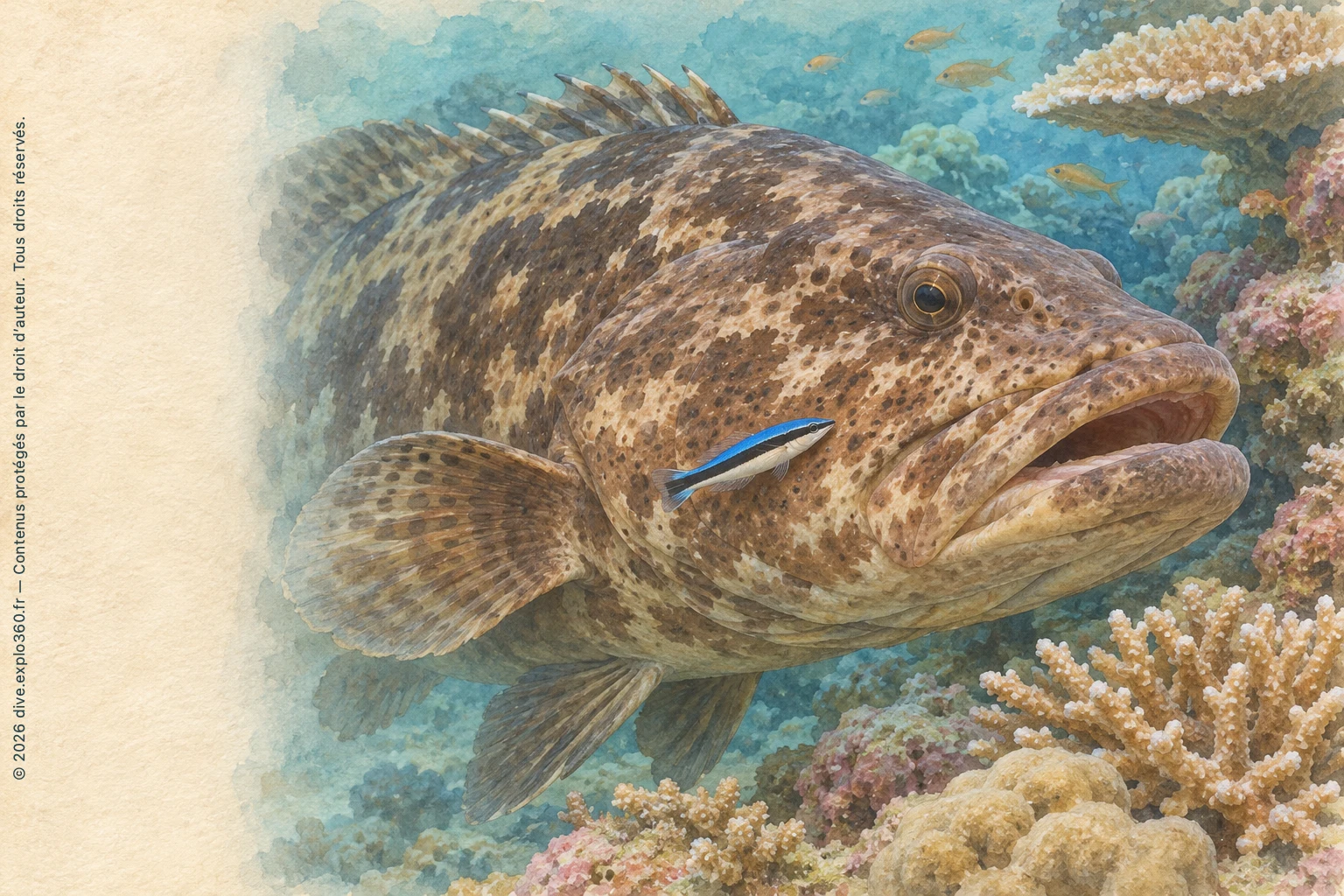
A fish approaches a cleaning station. The wrasse can pick off parasites, but it also eats mucus. Taking mucus can provoke a reaction from the client. The visitor may interrupt the session. Some fish have several cleaning stations and can go elsewhere.
Taking a bite of mucus brings an immediate reward, but the wrasse can lose a client that has somewhere else to go. Researchers turned that trade-off into a task with two plates of food. One plate stays available. The other is removed if the wrasse starts with the first. Starting with the plate that might disappear gives the fish access to both.
Adult cleaner wrasses learnt to choose that plate first. The fish adjusted their choice to what happened immediately afterwards. How they worked it out remains open. The same timing matters on the reef. A mobile visitor represents an opportunity that can disappear.
A customer who stays nearby offers more time. Being able to react to this difference can influence the course of a cleaning session. A decision made at the right moment can keep a meal within reach. On a Red Sea reef, an escaping fish poses a different problem for a predator.
Once the prey slips out of reach, a grouper can recruit another hunter.
Going to fetch a moray
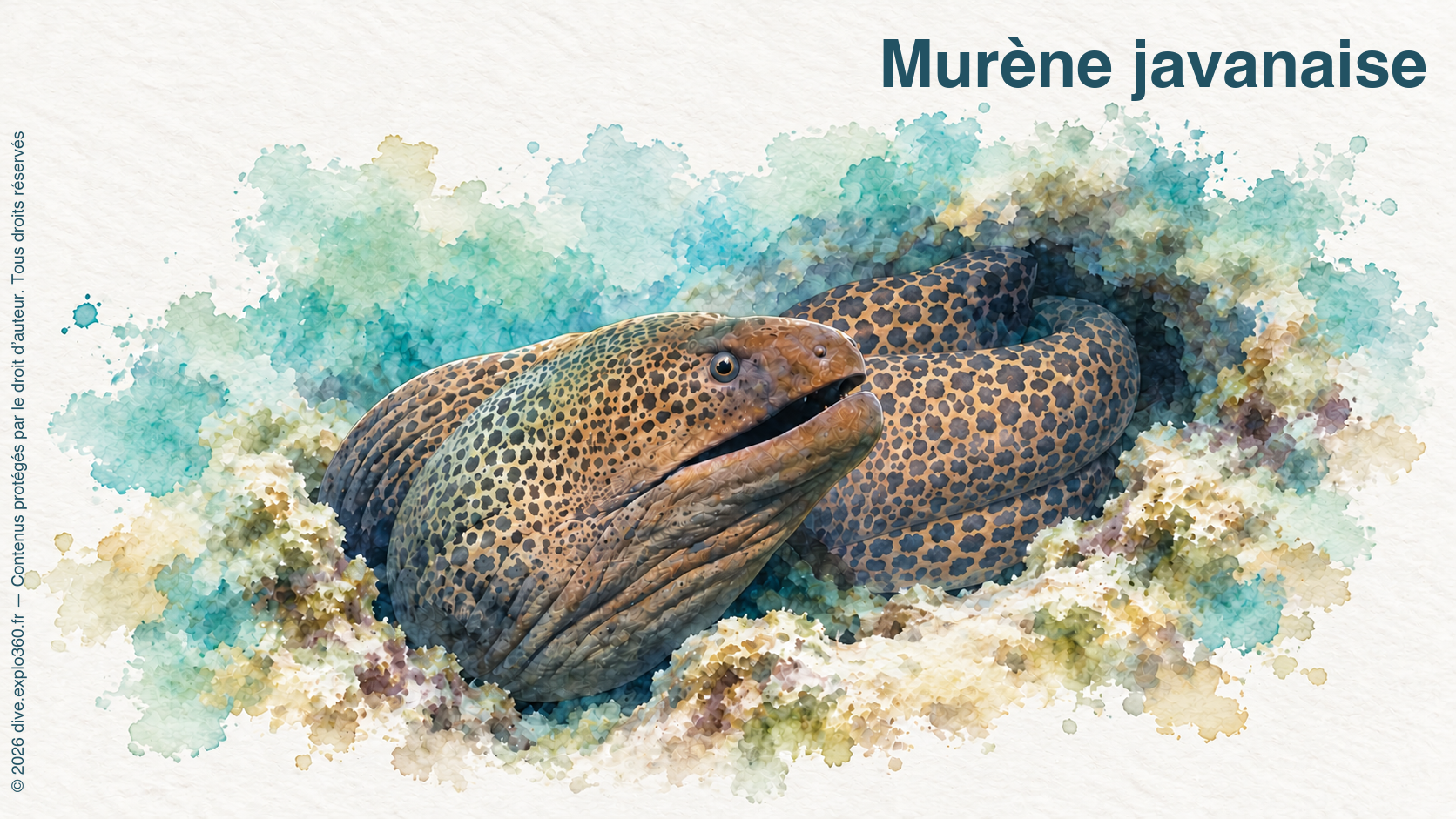
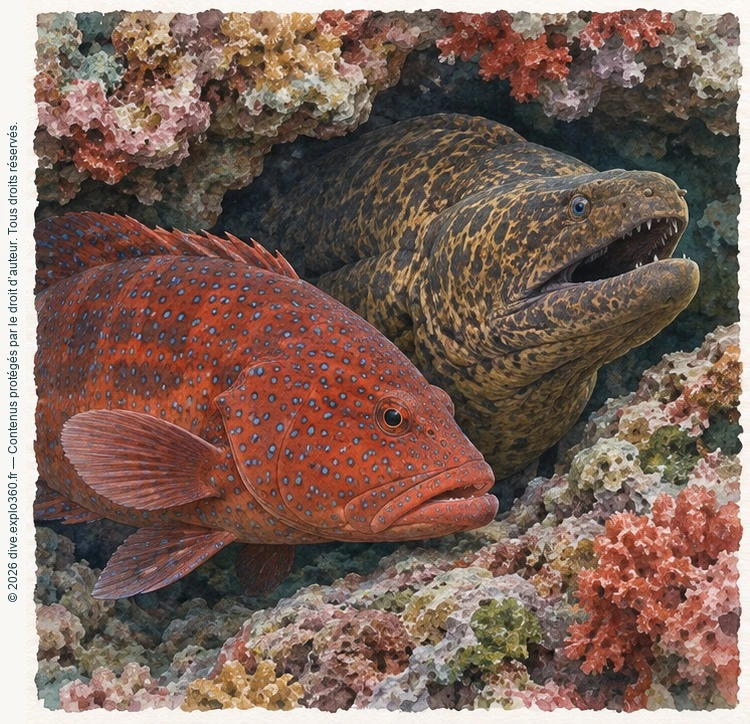
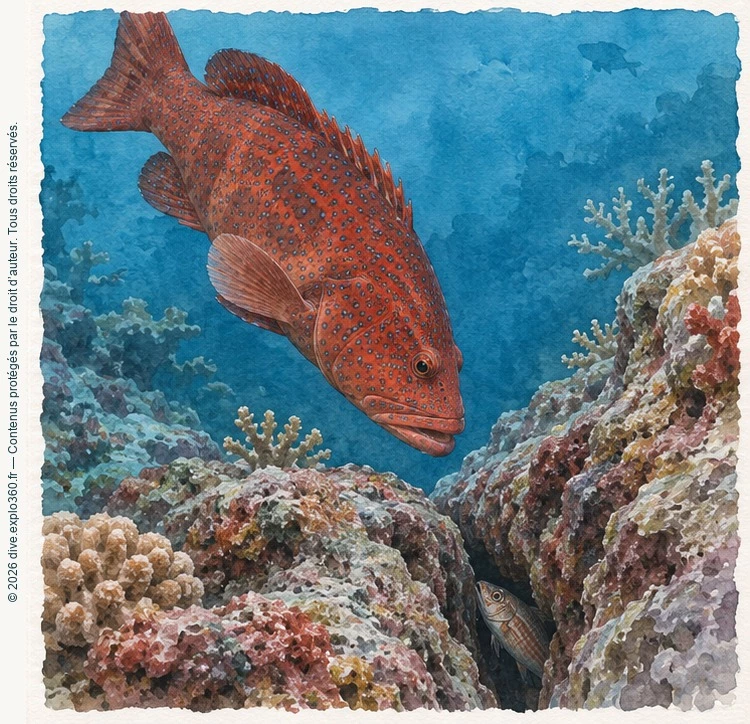
A prey fish has just disappeared into a crack. The grouper, Plectropomus pessuliferus, is too large to squeeze through the opening. The hunt seems to be over. The grouper can leave the crevice and approach a giant moray, Gymnothorax javanicus, in its shelter.
It shakes its head close to the moray. The moray can then come out. Both predators begin to move together. Together they cover places that either hunter would struggle to reach alone.
The grouper pursues fish in open water. The moray can explore the cracks where they hide. A fish fleeing the grouper can duck into the reef. A fish flushed out by the moray can bolt into open water. With both hunters present, either escape route can put the fish within reach of the other predator.
The grouper's behaviour does not stop at this invitation. When a prey fish escapes into a cavity, the grouper may hover head down above the hiding place. This signal can attract the attention of a hunting partner. The moray can then investigate the gap the grouper cannot enter.
The two animals do not share their catch. Whoever catches the fish can swallow immediately. The benefit comes from their complementary techniques. Giant morays are active at night, but they can join groupers on these hunts during the day. How often a grouper signals depends in part on hunger. In an experiment, recently fed groupers gave no recruitment signals during the observation period.
The timing of the signals helps explain how the hunters come together. It is based on signals that the other species can respond to.
What does the moray pick up from the grouper’s signal? What, if anything, does the grouper know about what its partner can do?
These questions remain open. The movements and the catches are easier to observe than the intentions behind them. Learning and memory raise a similar problem.
How can we tell whether a past encounter changes what an animal does the next time?
What memory looks like
A moray can use the same refuges for a long time. A reef fish can return to an area it knows. An octopus can find a shelter. These behaviours seem familiar. We too find our home, recognise a path or remember a place where we found food. Returning to a familiar spot could reflect several kinds of memory.
Smell, shape or a nearby landmark might guide an animal back to a cavity. It might also repeat a familiar route without relying on a map of the area. Researchers can test those possibilities by changing the conditions. They might remove a landmark, move a reward or block the usual route.
Does the animal still find its destination? Can it pick up a new cue or learn another route?
The change makes it possible to see what information the animal uses. Finding a place is one of several things a fish can remember. A fish can learn a sequence of movements, link a signal to food or adjust how it responds to another fish of the same species. These abilities do not all require the same nervous mechanisms.
In vertebrates, several brain regions are involved in the processing of spatial, sensory and social information. In octopuses, the parts of the nervous system involved in learning and memory are organised differently. Both kinds of nervous system can support complex behaviour. The differences matter when we compare what animals can do.
An octopus can explore an object with its arms. A cleaner wrasse can reach a marked spot by scraping against a surface. A moray explores cracks that the grouper cannot reach. Each faces problems shaped by its anatomy, senses and way of life.
A jar, a mirror and a crevice put different abilities to the test. To see what an animal has learnt, look at how its response changes with experience. The change can be small. It may repeat a familiar movement in a different way.
It may take another route to the prey. Or it may respond to a signal at the right moment.
Back to the stopper
The crab is still behind the glass. For an octopus, a sealed jar is an unfamiliar obstacle. Its arms and suckers are already capable of opening it. The suckers can grip the stopper while the arms move it.
At first, much of that effort goes into movements that leave the stopper in place. The octopus needs a movement that will pull it free. Across trials, failed attacks became less frequent and the stopper came out faster. The prey becomes accessible.
The physical task stayed the same. Experience changed the way the octopus tackled it.
What happened on earlier attempts helped the octopus reach the crab on later ones.
How the octopus understands the stopper is still open. What the experiment measures is the improvement with practice. The crab was visible from the beginning. It took practice to get to it.
Interactive quiz
Test your knowledge
Pick one answer for each question.
Interactive quiz
Test your knowledge
Question 1 out of 5Score: 0
What became less frequent as the octopus repeated the jar test?
What are the shells carried by the veined octopus used for?
Which part of its body does the wrasse scrape in the mirror test?
In what order can the wrasse eat from both plates?
What can the moray do during a coordinated hunt?
Final result
Quiz completed
correct answers
What changes when an animal learns?
Return to the jar. The crab was visible from the start. What changes with practice is how the octopus gets to it. A plate that may disappear and a fish that escapes into a crevice pose different problems. To find out what an animal has learnt, watch what it does when the conditions change.
Sources
Studies behind the examples in this article.
Explore the same world