The jar experiment
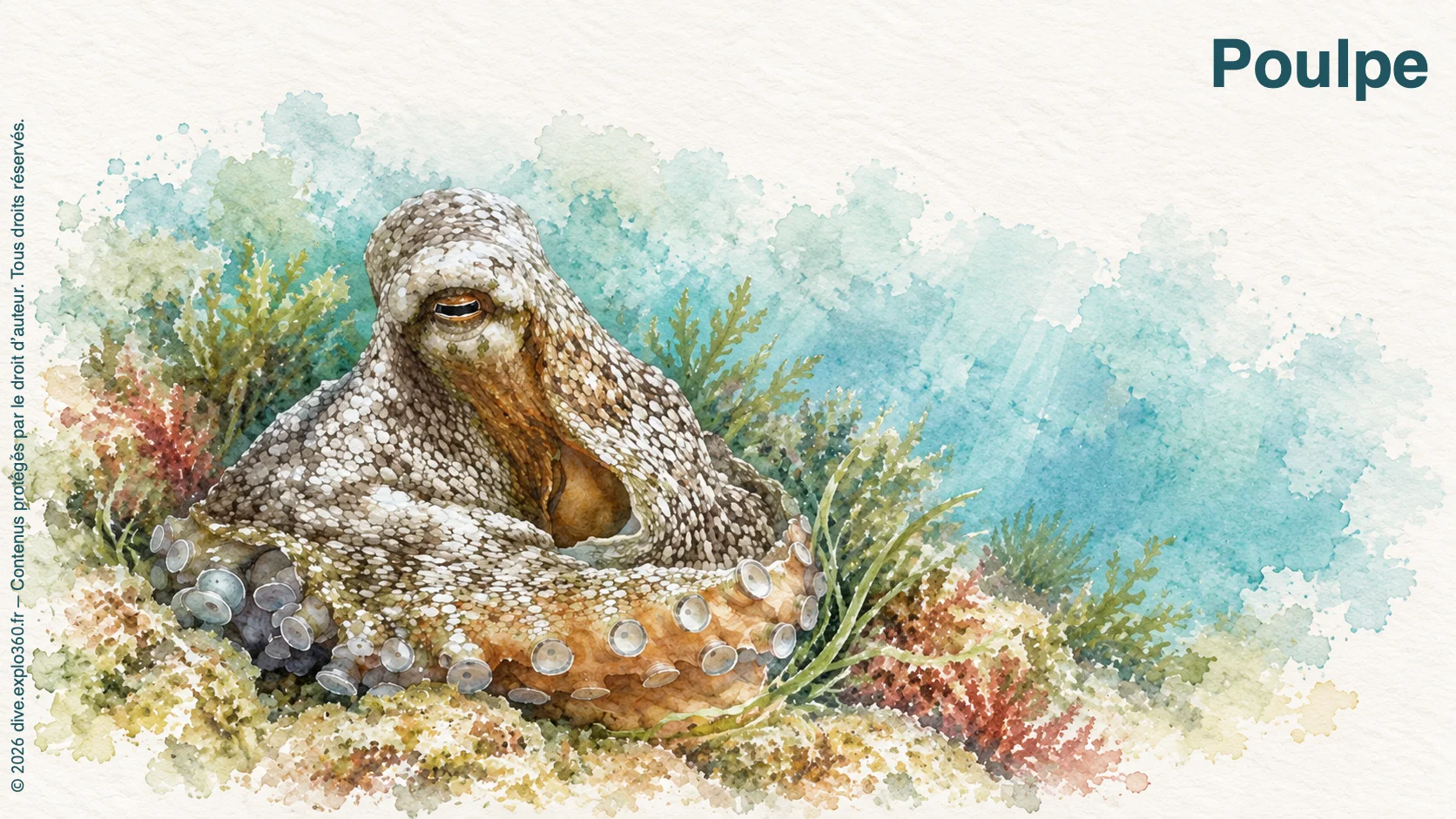
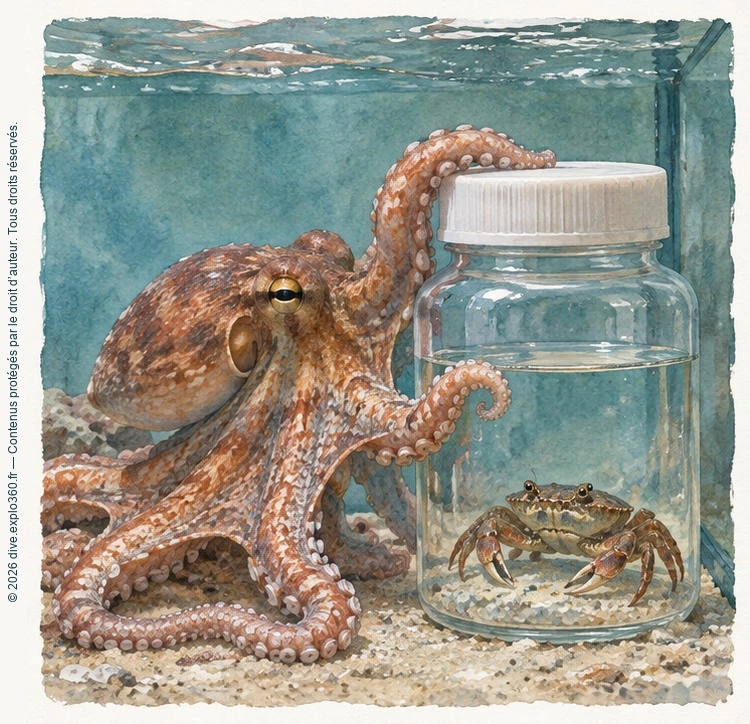
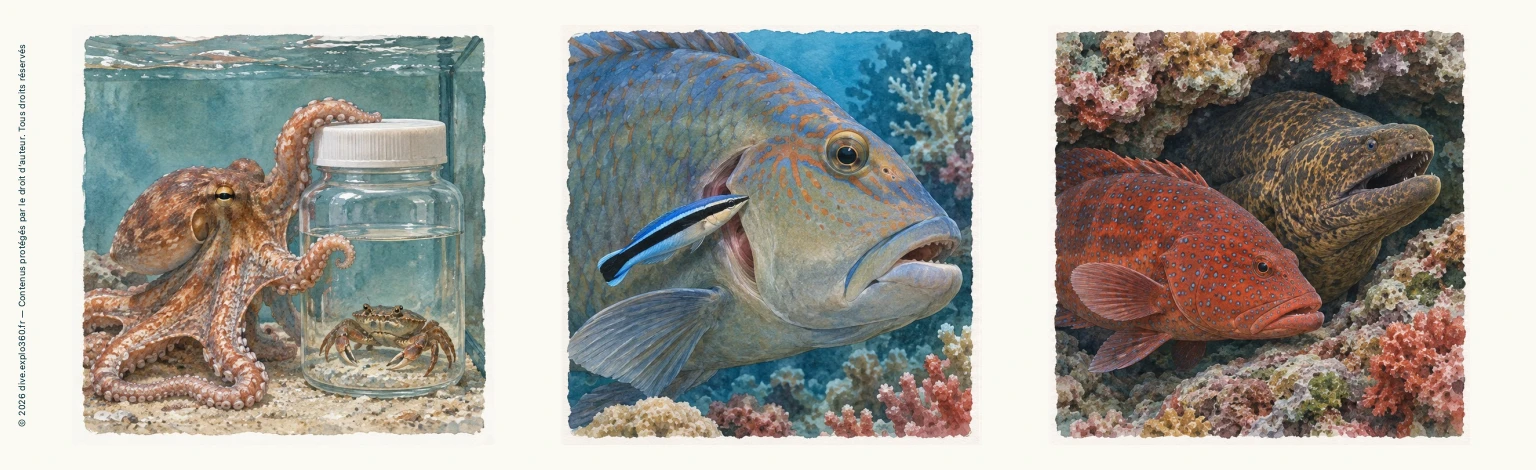
In the lab, common octopuses had to pull out a stopper to catch a crab. With practice, they failed less often, even though they spent about as long exploring the jar. In another experiment, octopuses tended to choose an object they’d seen another octopus pick. The demonstration made a difference. Exactly what the observers picked up from it is still debated.
Watching another octopus
To test learning by observation, researchers compare animals that saw a demonstration with animals that did not.
The octopus that carries its shelter
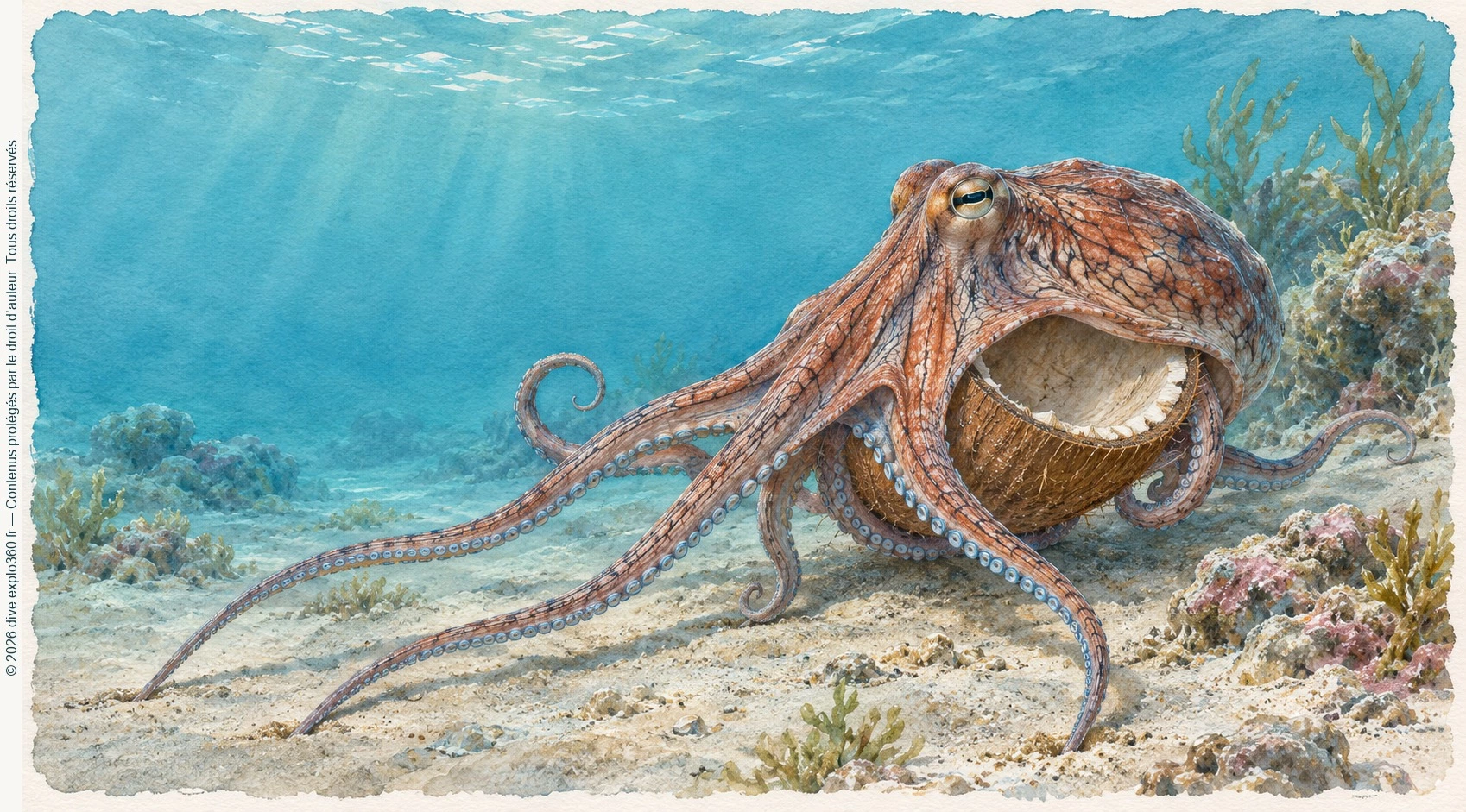
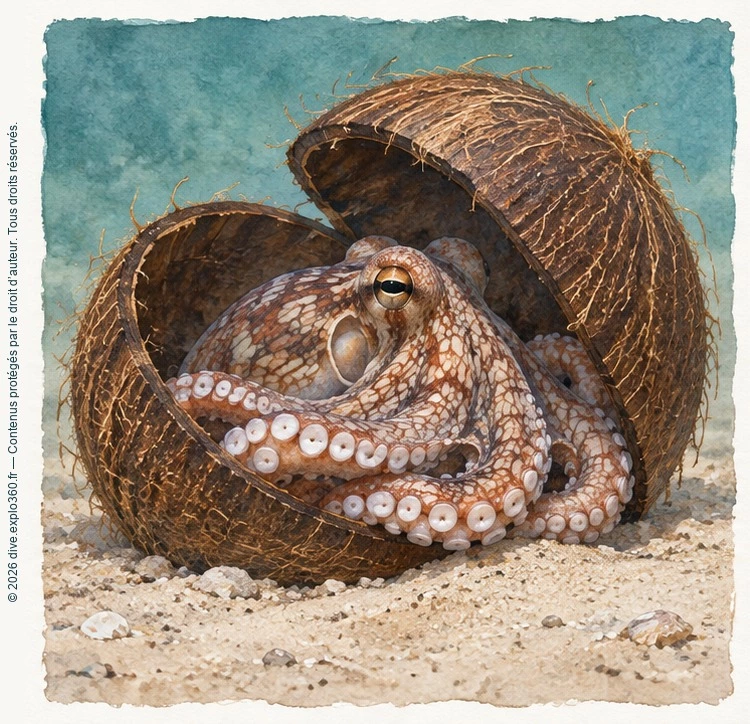
On a soft seabed, a veined octopus can carry coconut shell halves tucked beneath its body. The shells become a refuge once the octopus stops, fits them together and slips inside.
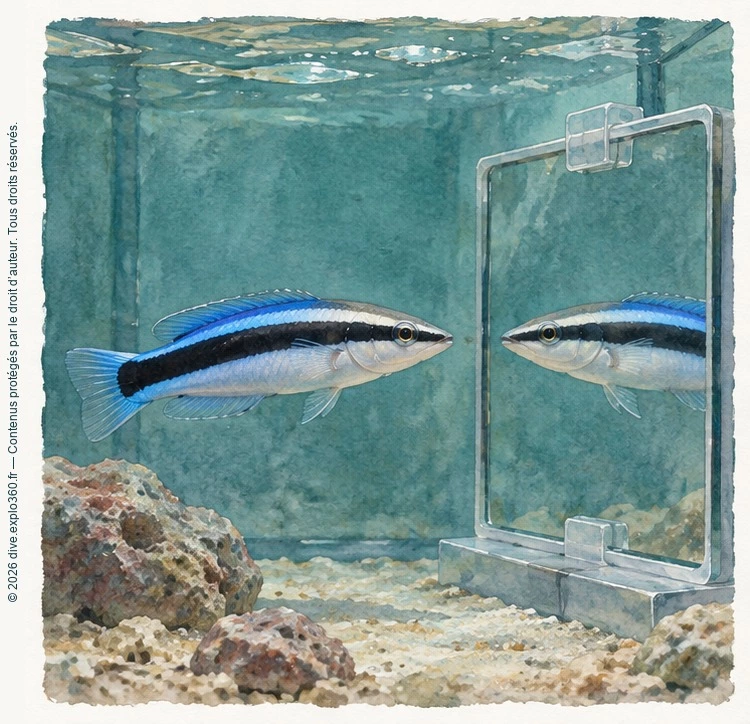
A mark in the mirror
At first, cleaner wrasses reacted to their reflections as though they faced another fish. When they had a coloured mark on the throat and could see it in a mirror, some rubbed the spot against a surface. The researchers compared those reactions with what happened with a transparent mark or without a mirror. The scraping suggests the fish used its reflection to find the mark. How it understands that reflection is harder to tell.
A plate that disappears
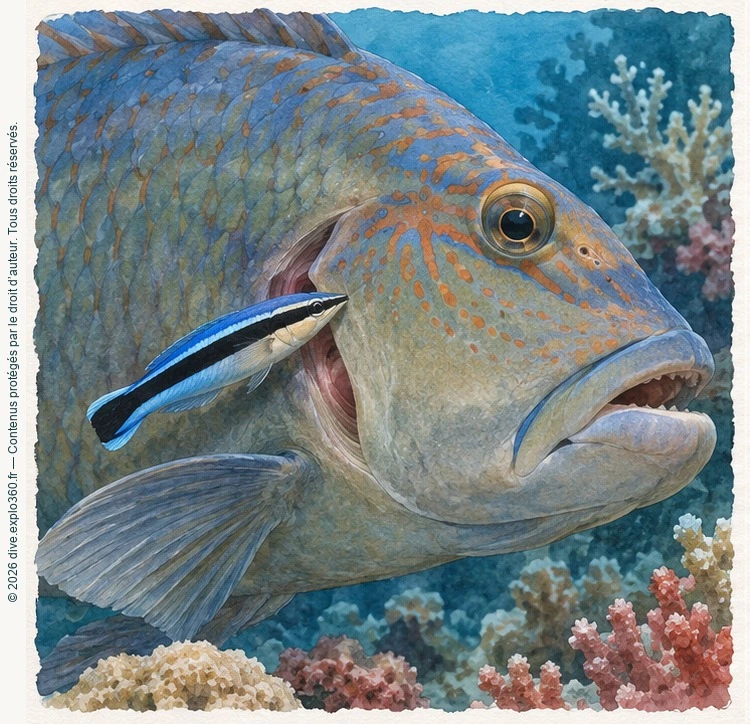
On the reef, some of a cleaner wrasse’s clients can take their business to another station. In the lab, researchers offered two plates of food. One was taken away if the fish started with the other. Adult wrasses learnt to start with the plate that might be taken away. That left them free to eat from the other one afterwards.
A partner at the crevice
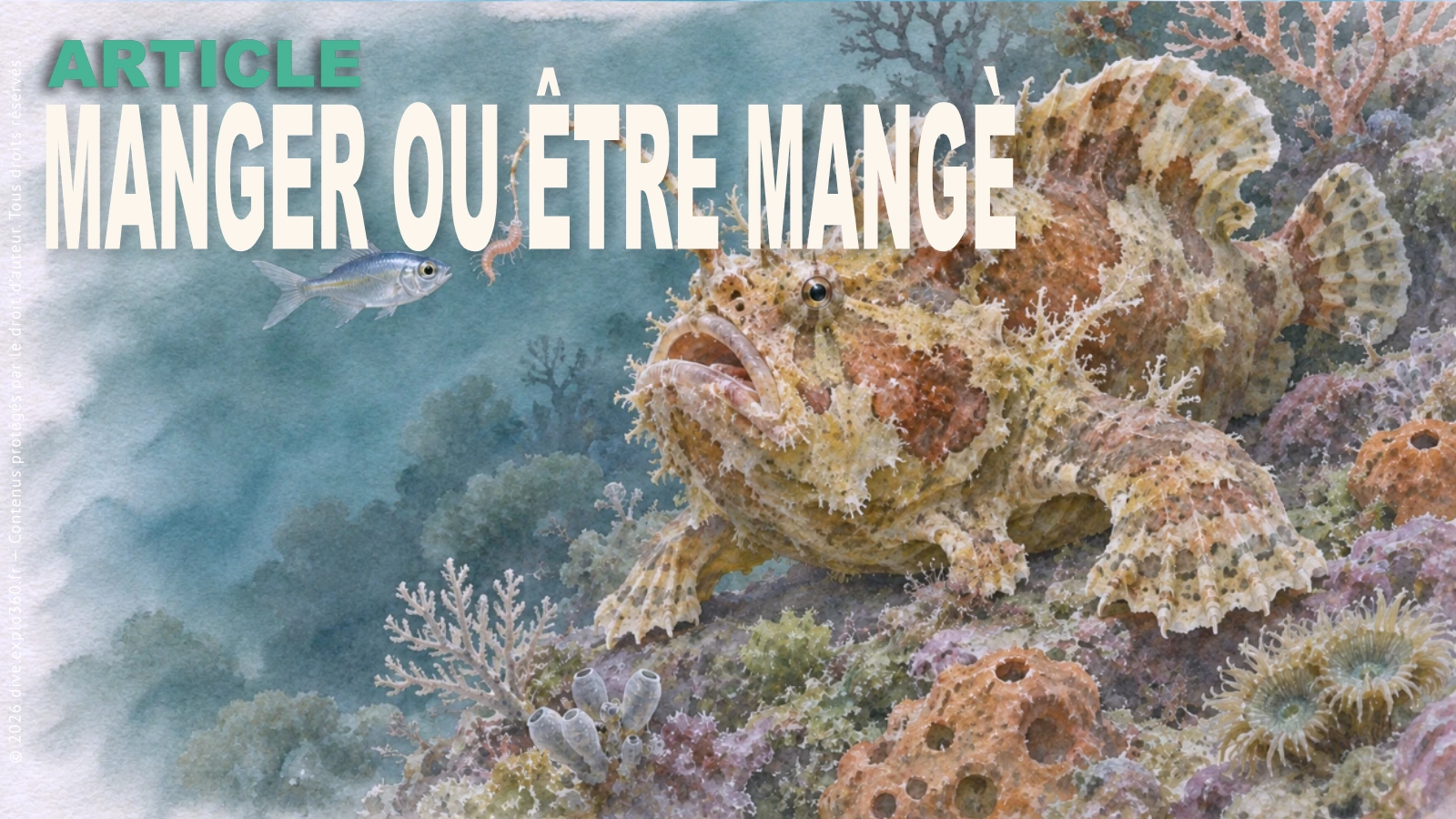
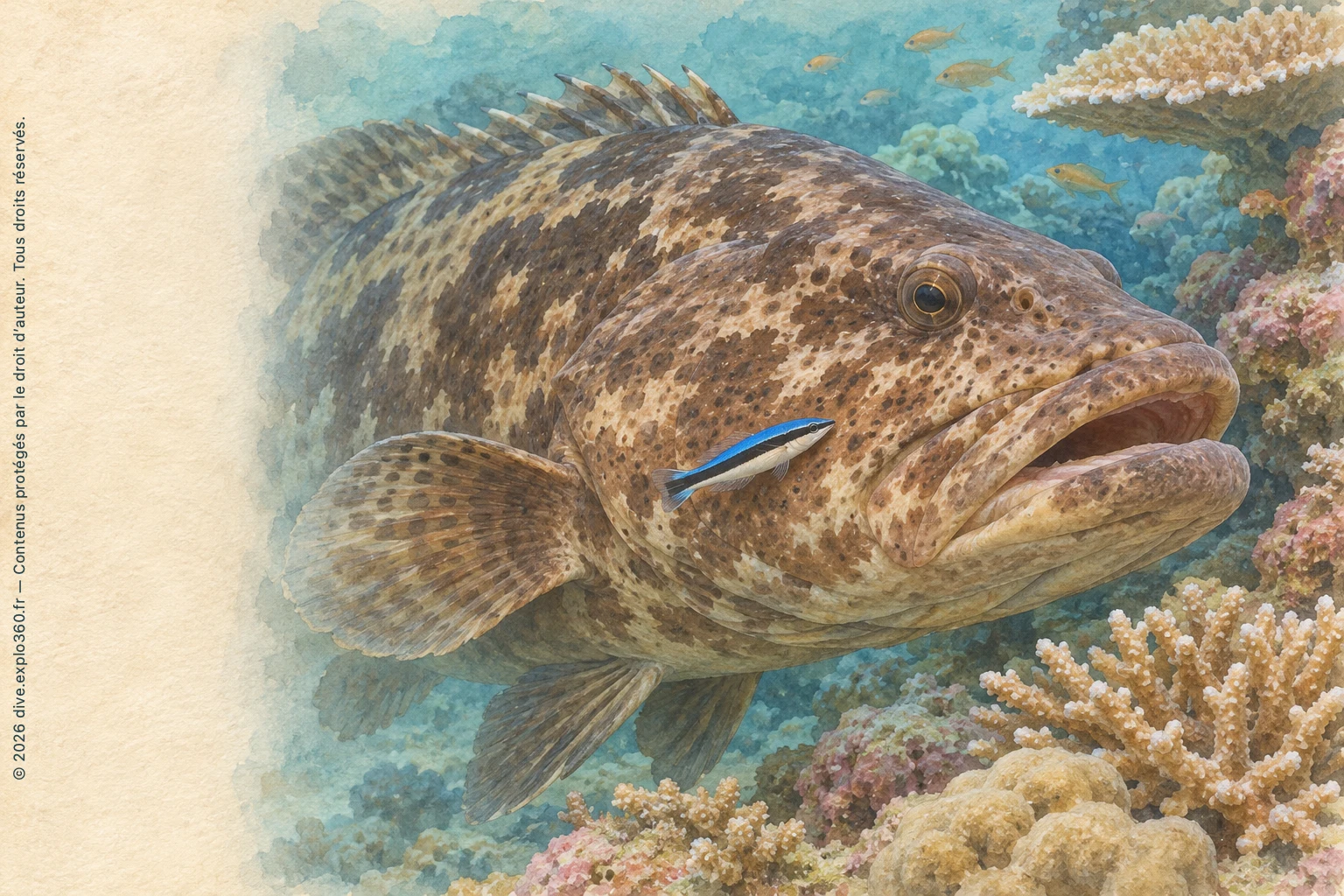
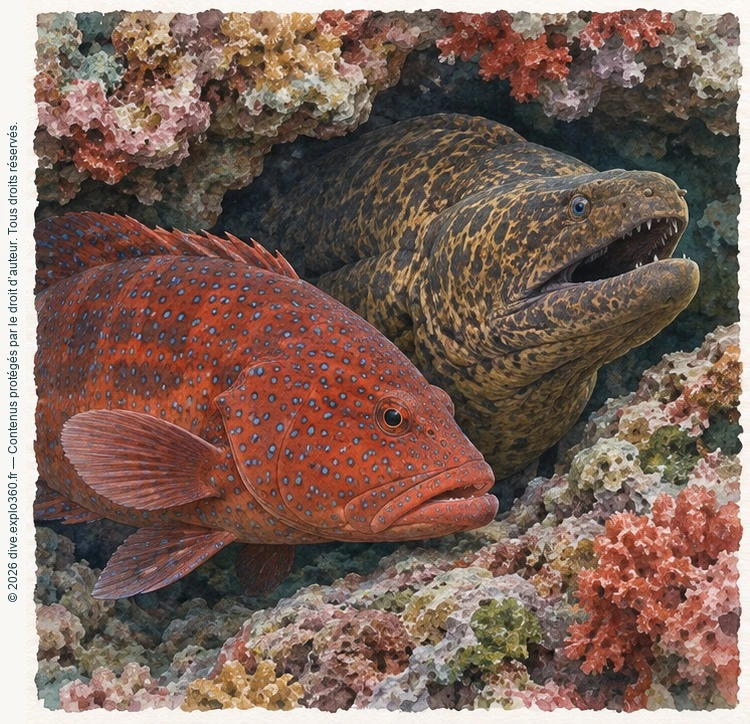
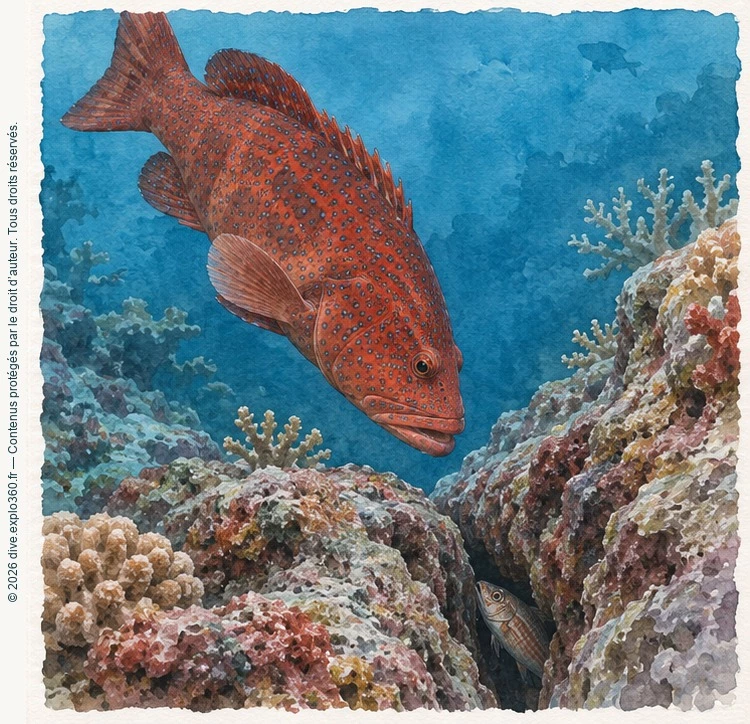
A grouper can shake its head near a moray, which may leave its shelter and follow. The grouper can also turn head down over a gap where a prey fish has hidden. The moray can search inside while the grouper can intercept prey that escapes into open water.
How can we detect a memory?
Leave some time between practice and the next trial. Can the animal still use what it learnt?
Returning to the jar
Comparing several trials distinguishes a repeated effective action from an isolated success.
Interactive quiz
Test what you know
Pick one answer for each question.
Interactive quiz
Test what you know
Question 1 out of 5Score: 0
What became less frequent as the octopus repeated the jar test?
What are the shells carried by the veined octopus used for?
Which part of its body does the wrasse scrape in the mirror test?
In what order can the wrasse eat from both plates?
What can the moray do during a coordinated hunt?
Final result
Quiz completed
correct answers
What changes with experience?
When an octopus gets better at opening a jar, the earlier tries have made a difference. To work out what it learnt, compare what it does across several trials and under different conditions. The same approach helps make sense of a wrasse’s choice or a grouper’s signal.
Sources
Studies behind the examples in this article.
Explore the same world