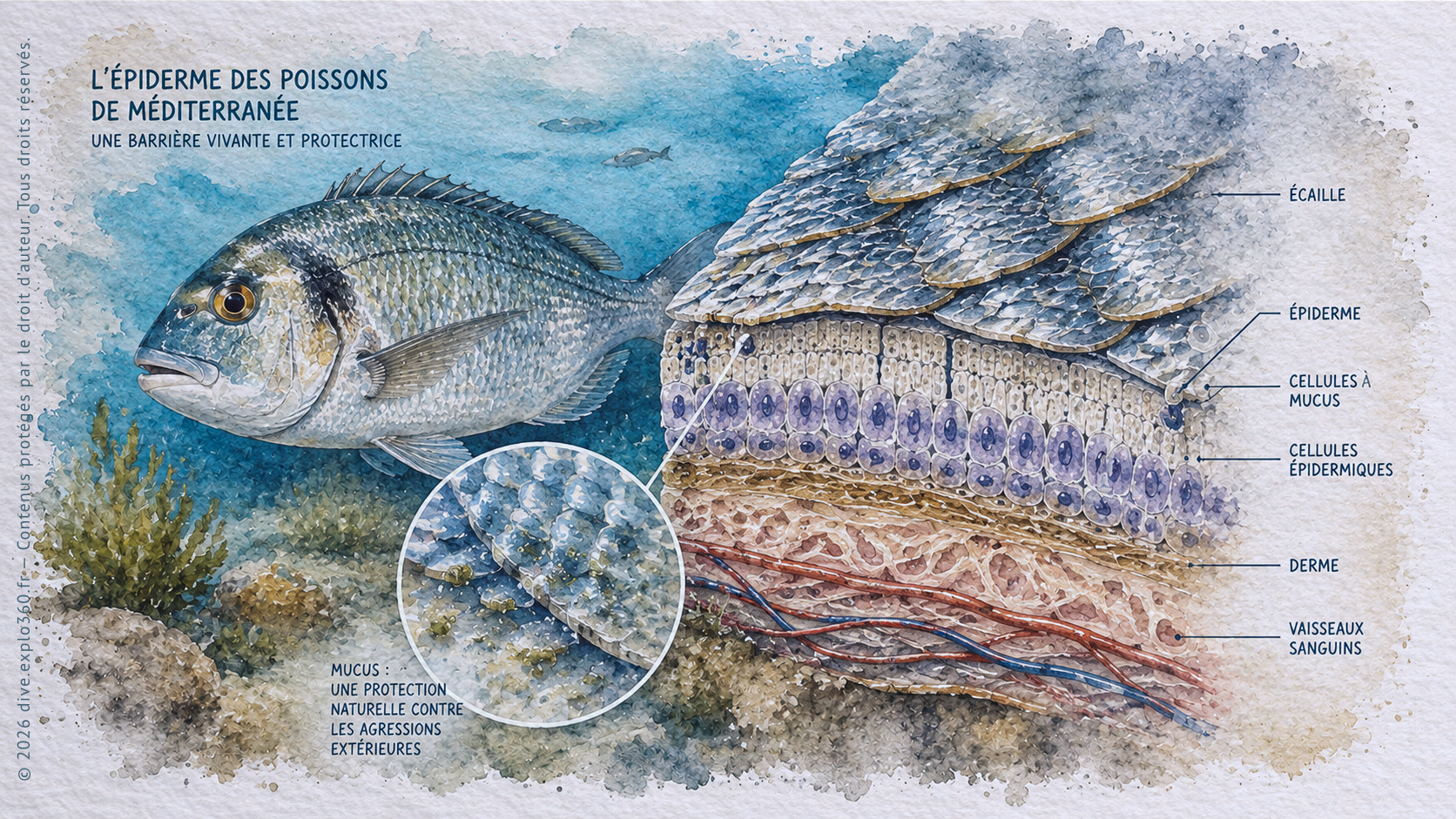
A protective barrier
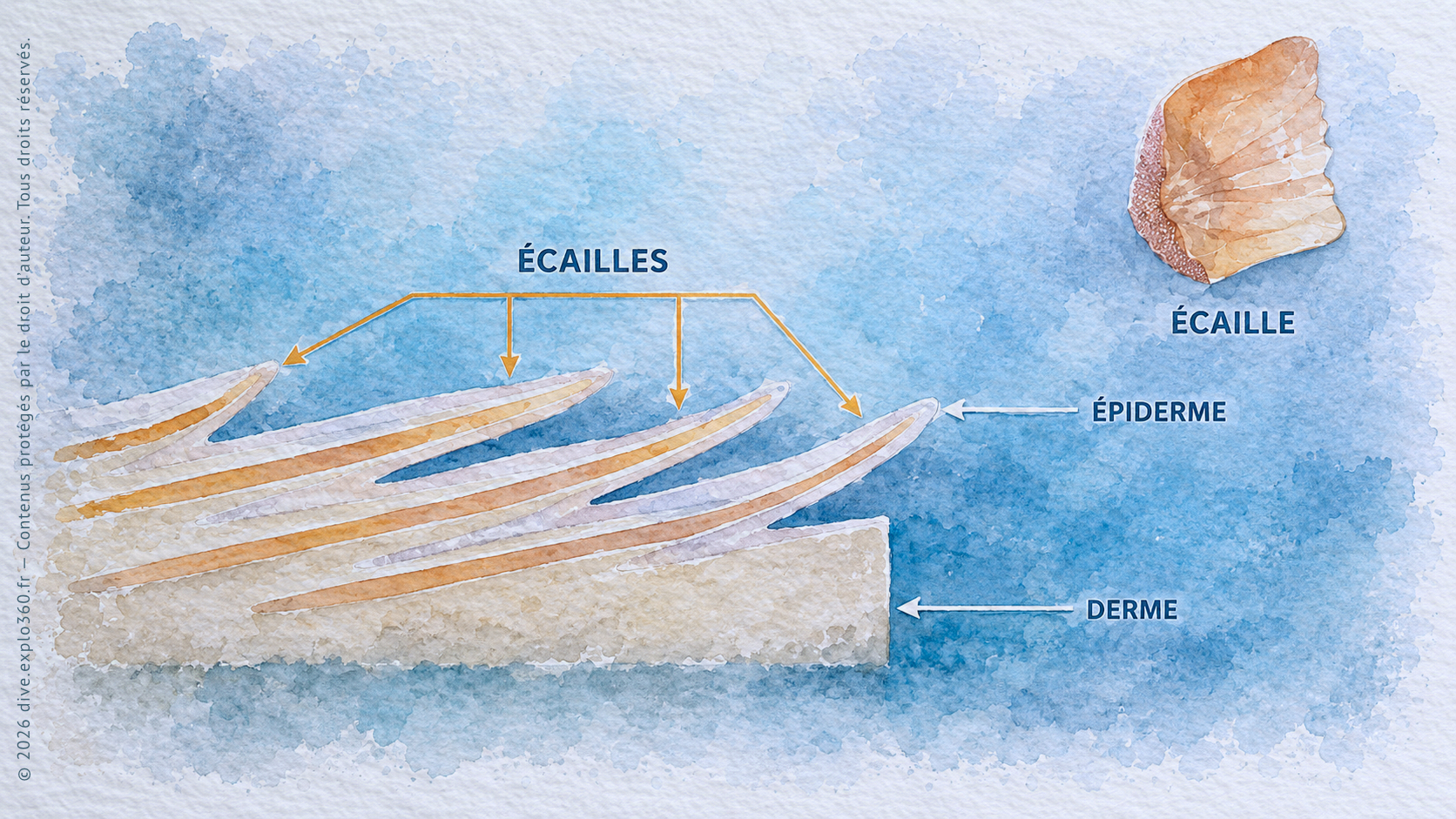
The epidermis is the outer layer of living skin. Some of its cells make slippery mucus. Below it lies the dermis, where scales sit in many fish.
INVISIBLE ARMOUR
Mucus can trap tiny particles and contains substances that help defend the skin against some microbes. The fish keeps making fresh mucus. Parasites and infections can still get through its defences.
Protection against infection
Components of mucus contribute to defence against some microbes. They do not prevent every infection or parasite.
Protecting the skin
The mucus layer modifies interactions between water and the body surface. Its effects on friction depend on skin properties and flow.
Defence
Some species have defensive substances in their secretions. This property does not apply to the mucus of all fish.
Protecting an injury
Mucus coverage and tissue renewal help protect injured areas. They do not guarantee healing of every injury.
Transmitting information
Molecules in secretions can provide information to other individuals. Their nature and function must be checked for each species.
EXCEPTIONAL SKINS
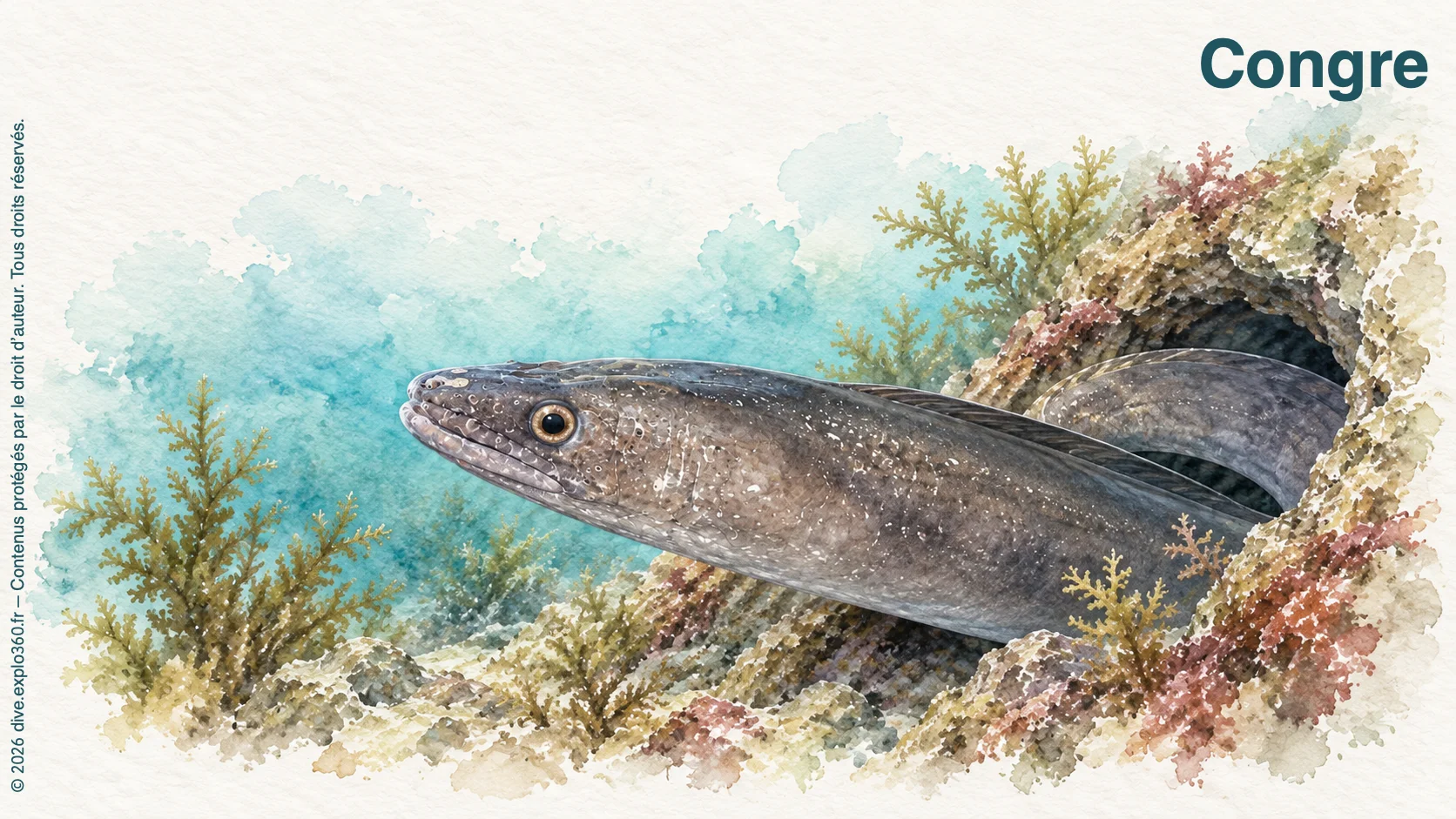
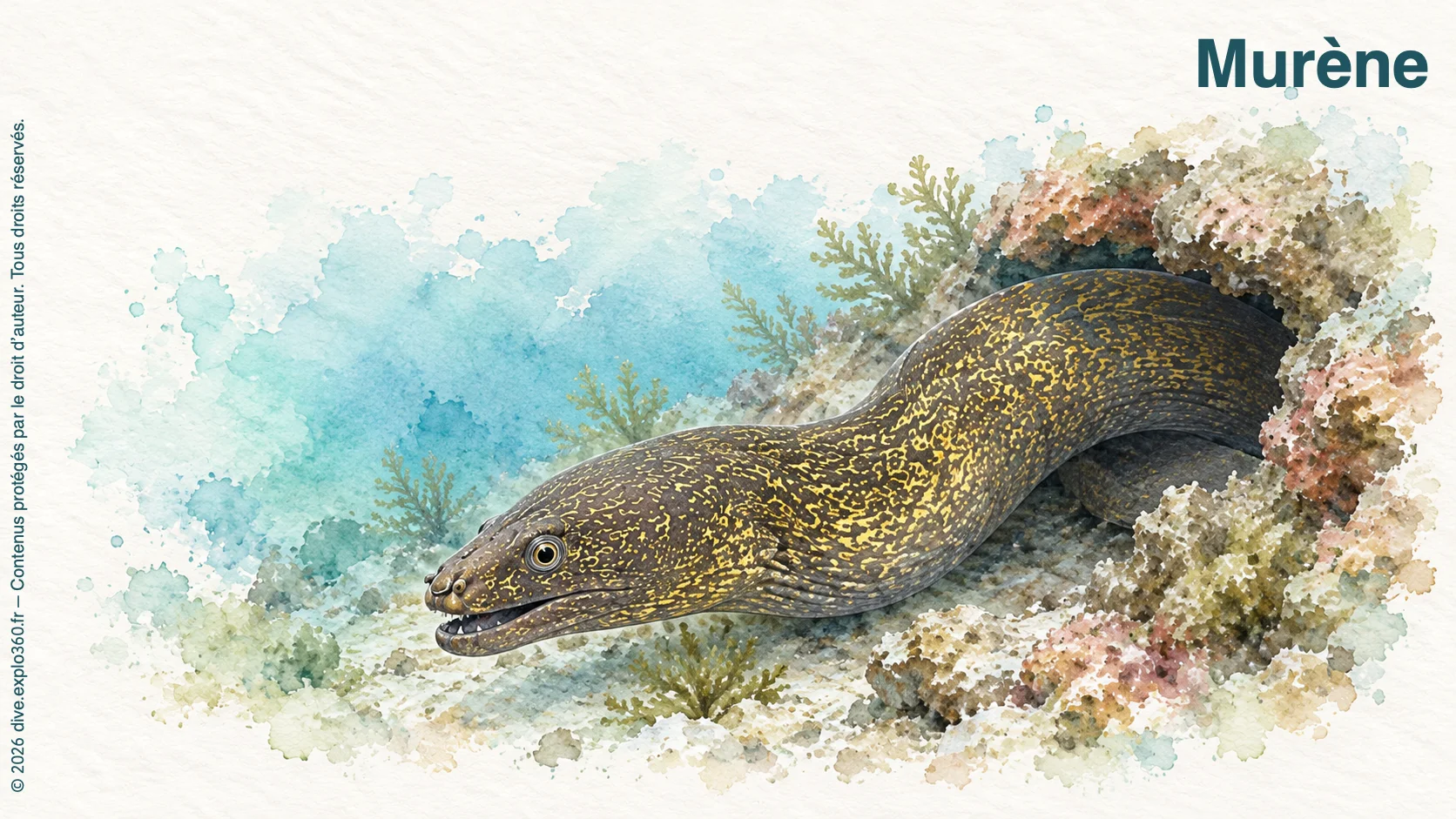
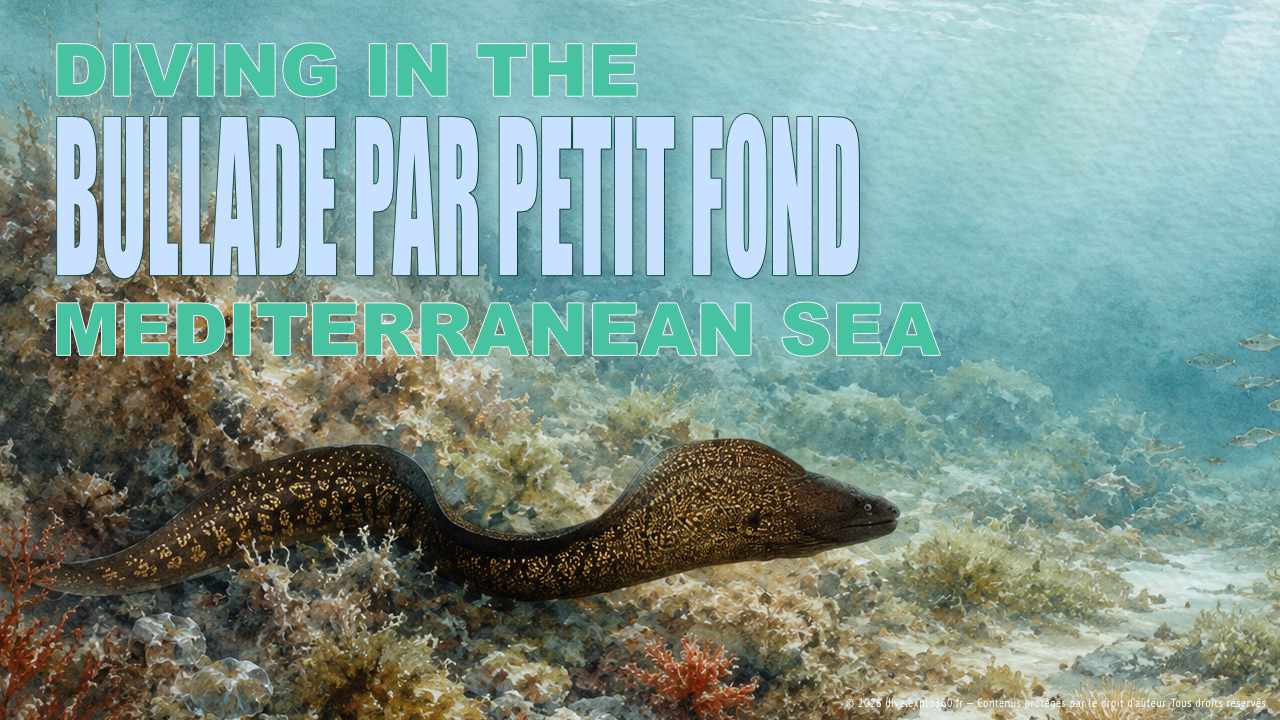
The European conger and Mediterranean moray have no visible scales. Their tissues and mucus nevertheless help protect them.
Conger and moray eels: skin without visible scales
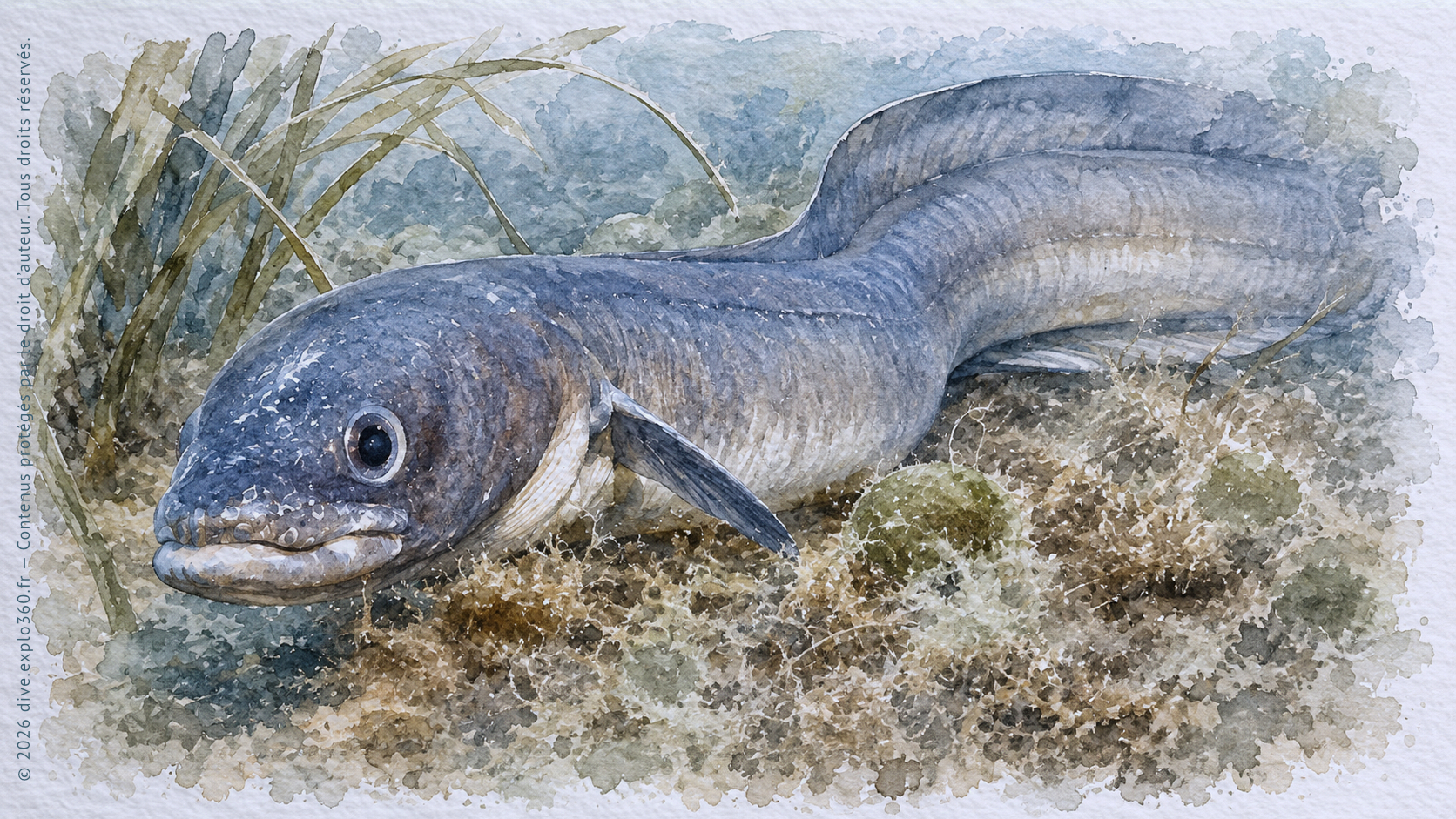
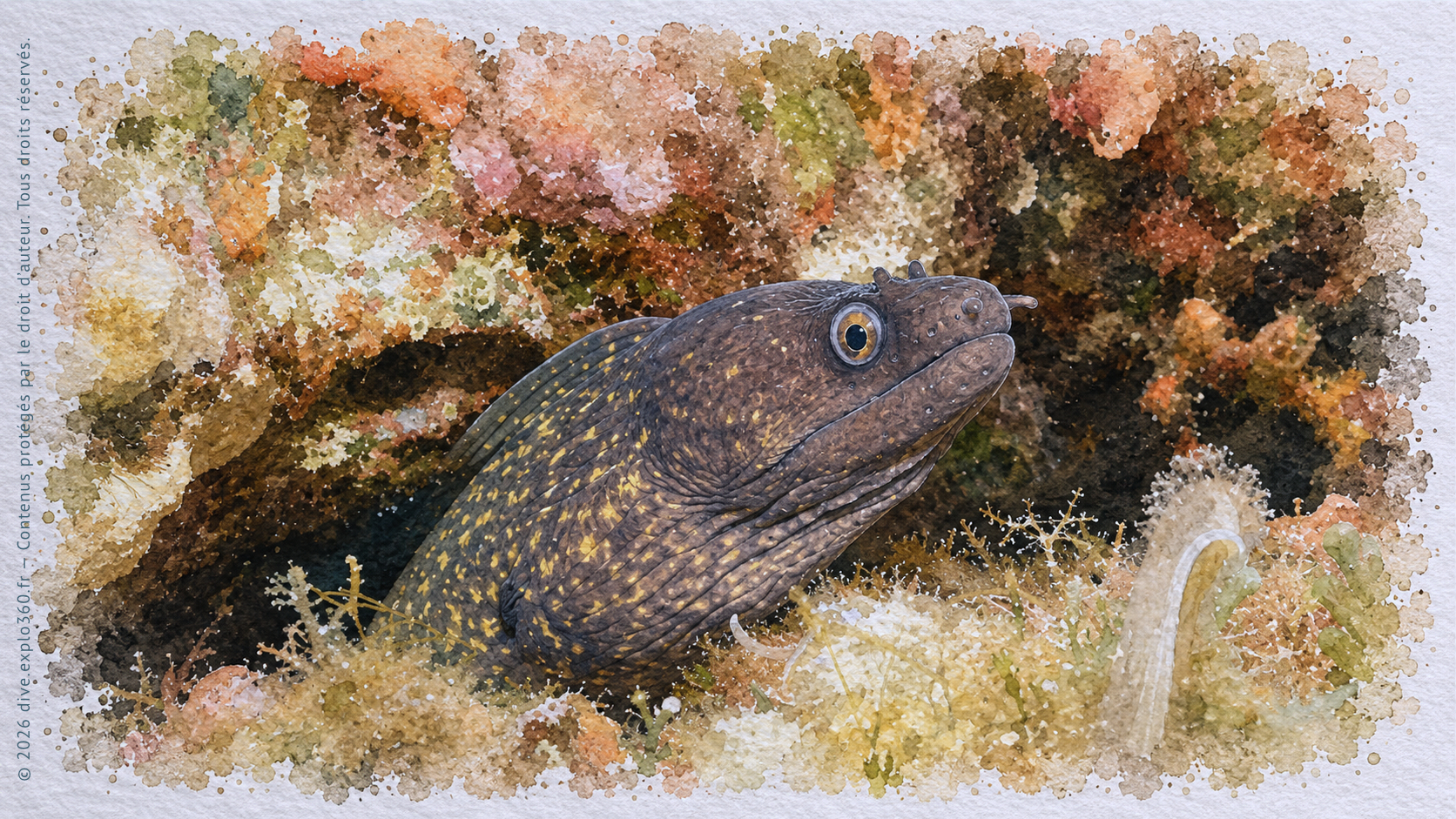
Mucus is not a shield against everything. These fish can be injured or parasitised. We should not assume that they resist all pollutants.
Explore the same world