
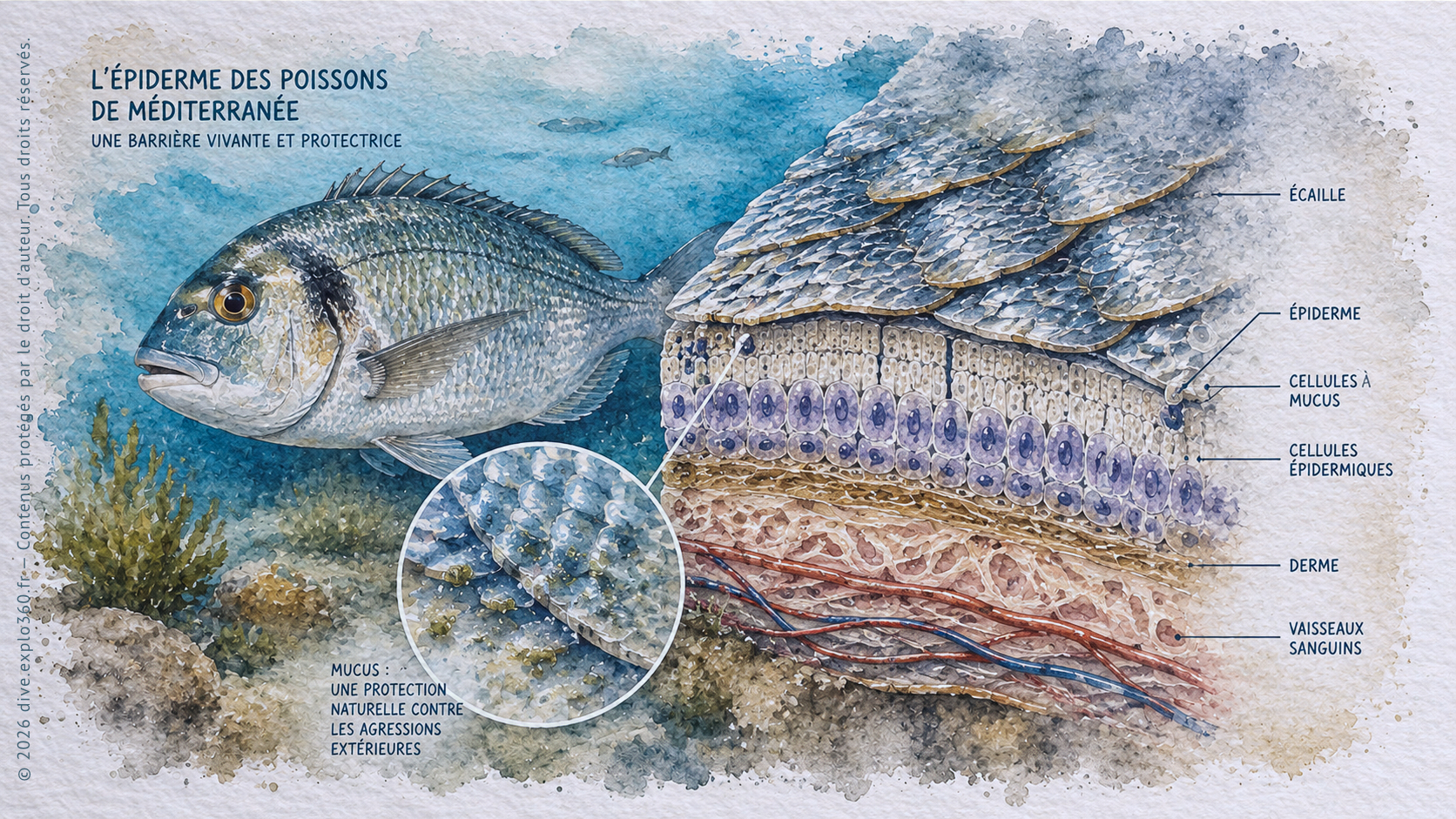
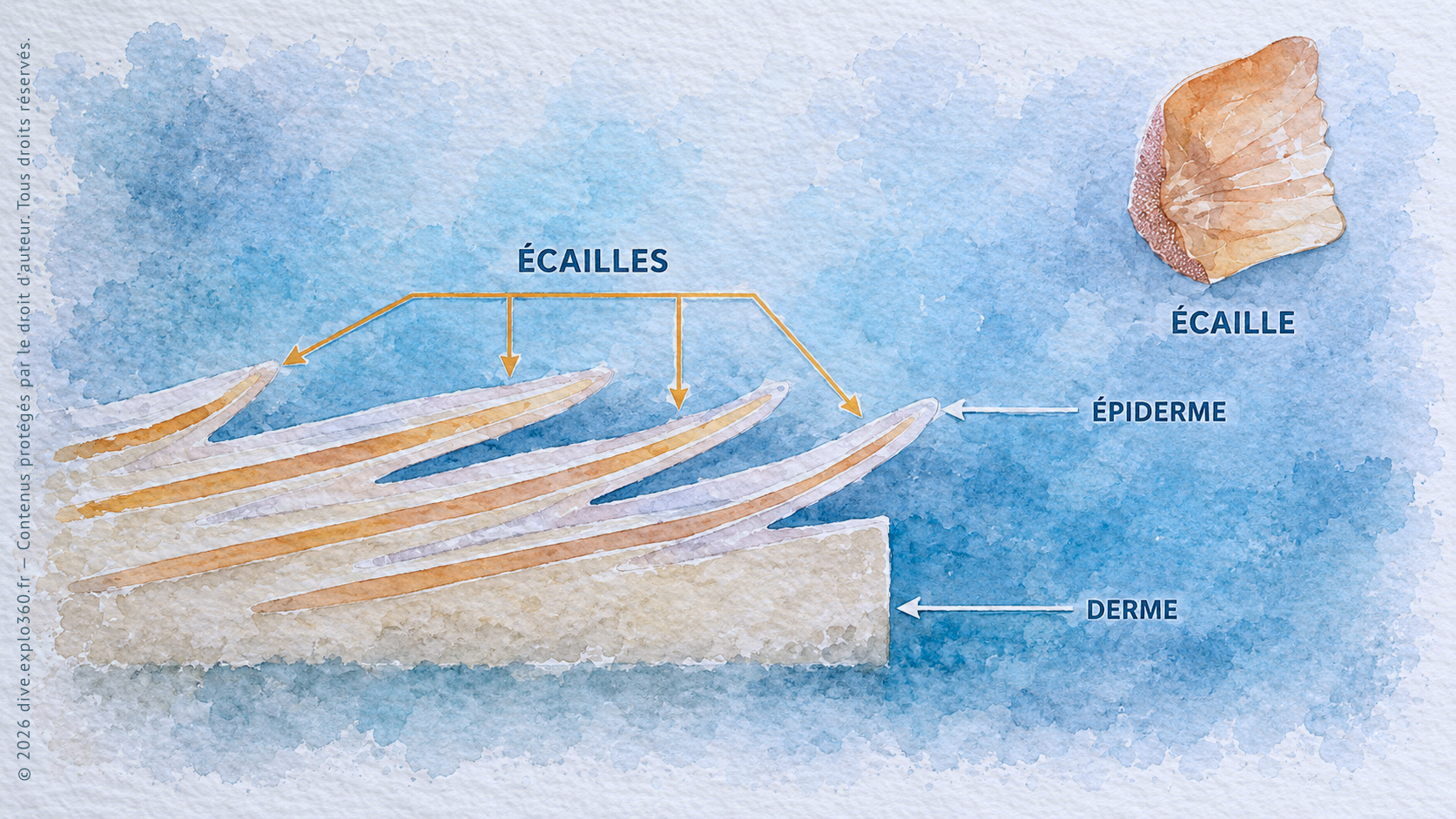
A fish’s skin has two main layers.
The epidermis is the outer part. It contains cells that produce mucus, among others.
The dermis lies underneath. In many fish, the scales are embedded in it.
Scales often overlap like roof tiles. They protect the fish while allowing its body to remain flexible.
INVISIBLE ARMOUR
The skin of many fish is covered by a thin layer of mucus.
This slippery substance is produced by cells in the epidermis and plays several important roles.
Protection against infection
Mucus forms a barrier between the fish and the many microorganisms in the water.
It thus contributes to the animal’s defences.
Protecting the skin
Mucus forms a slippery surface that helps protect the skin from rubbing against sand or rocks.
Defence
In some species, skin secretions can contain substances that are unpleasant or toxic to predators.
Protecting an injury
When the skin is damaged, mucus continues to protect the body surface during healing.
Transmitting information
Chemical substances produced by fish can also play a part in certain interactions with others of their species.
EXCEPTIONAL SKINS
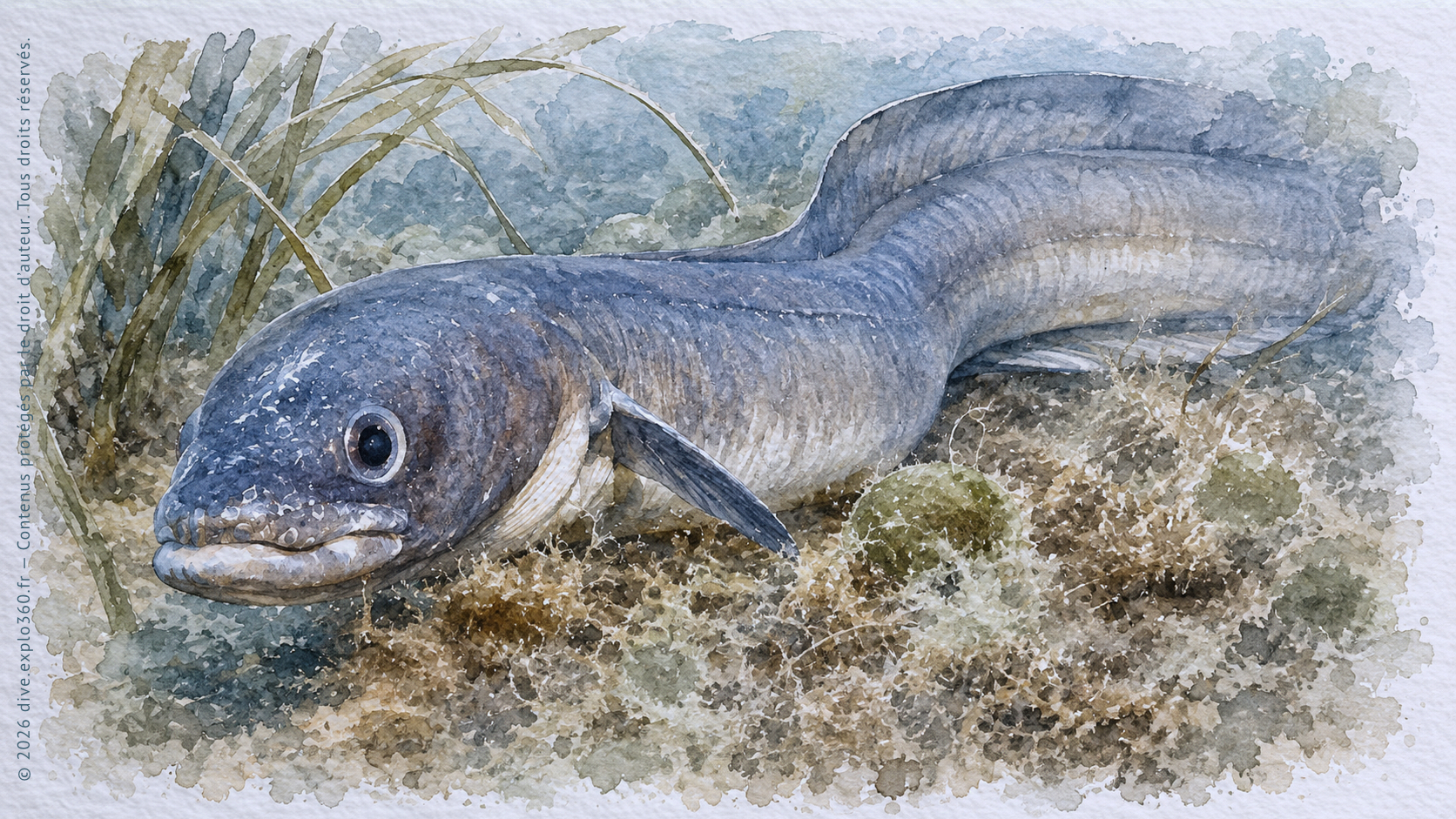
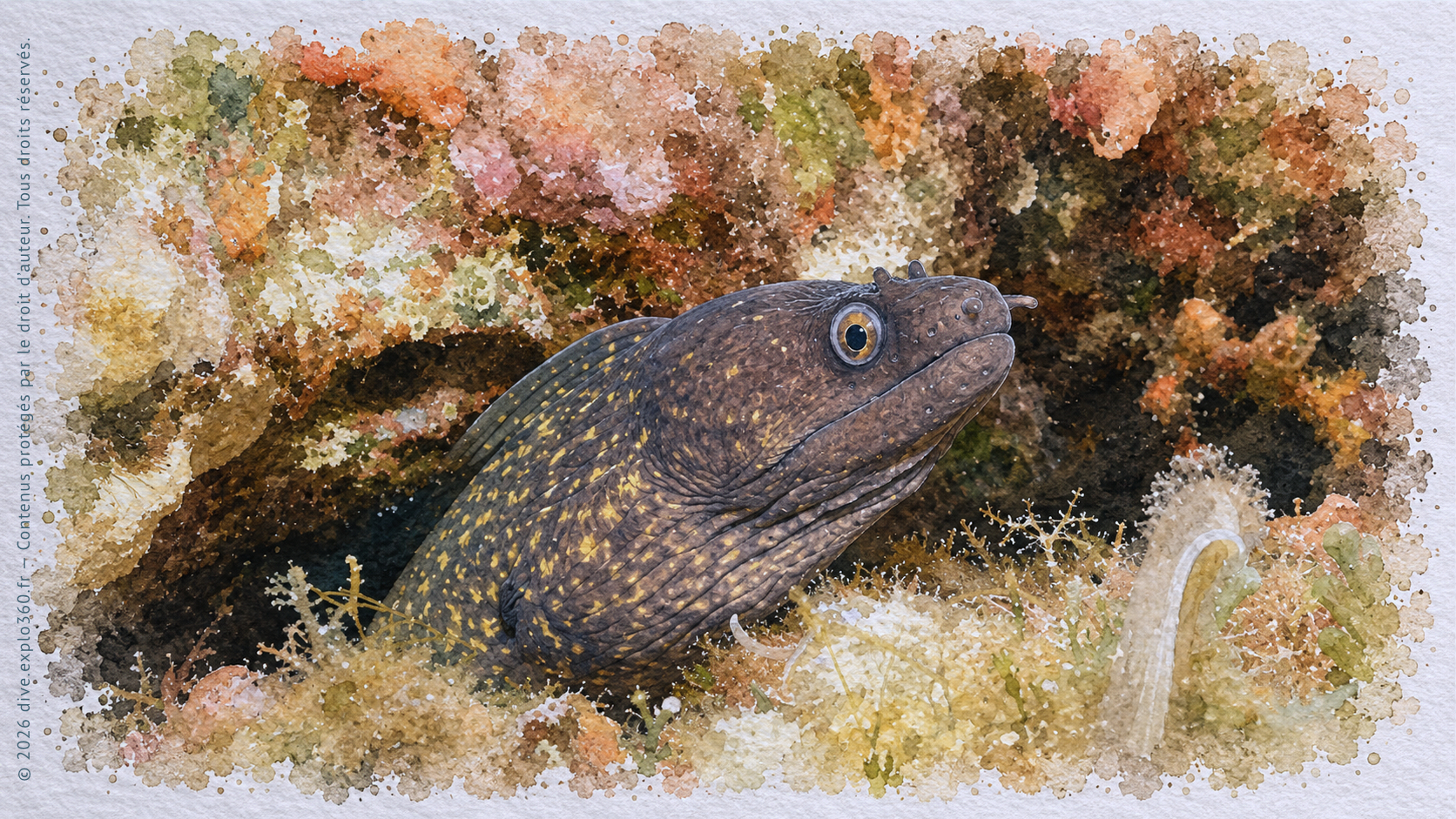
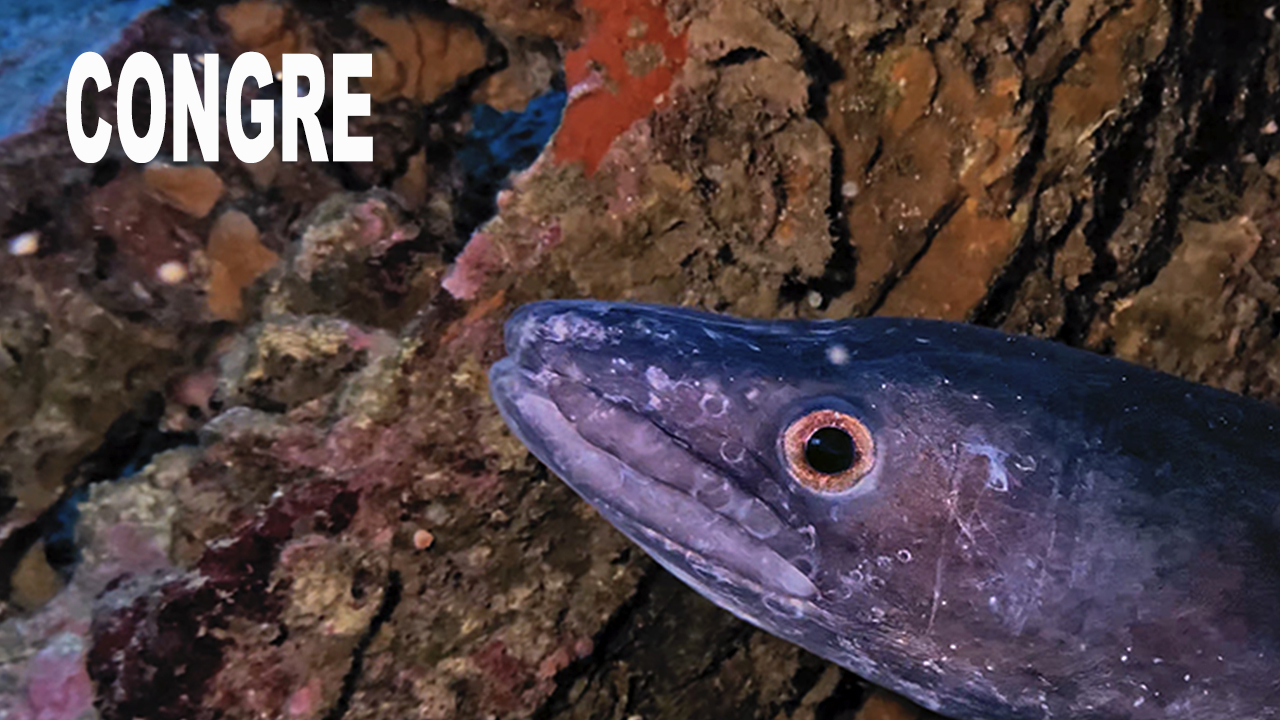
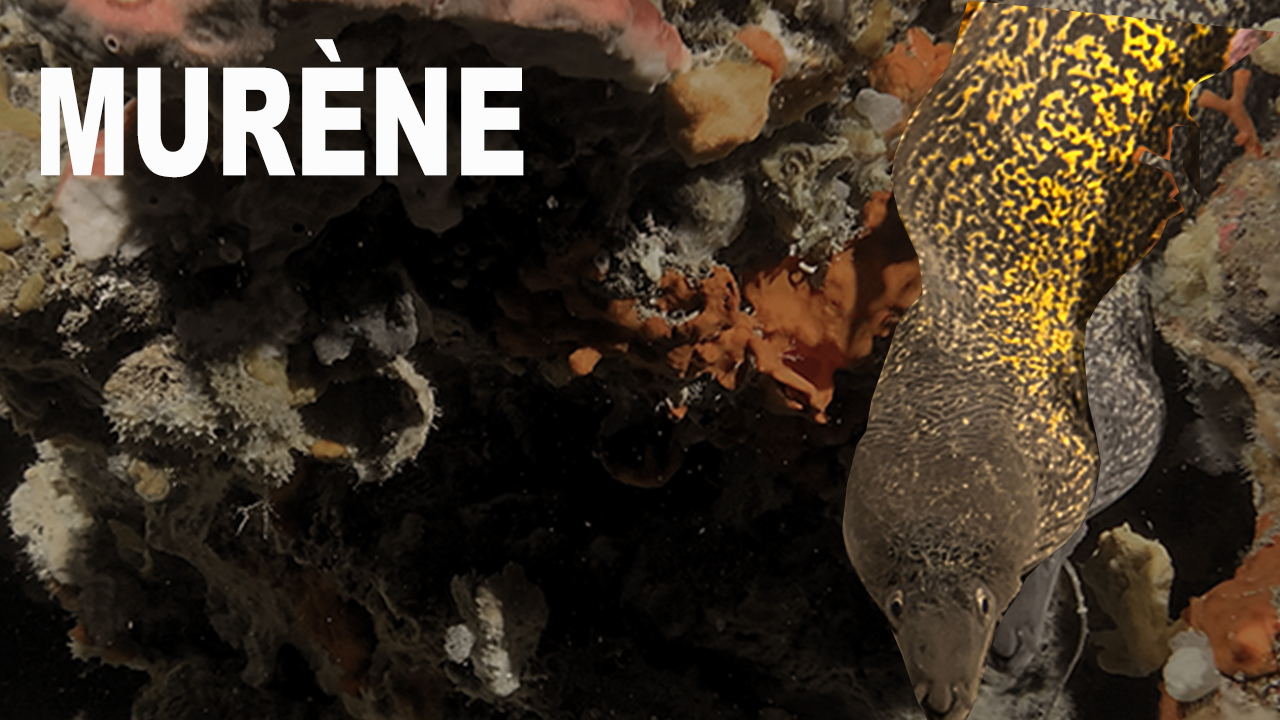
Conger and moray eels have very flexible skin covered with a large amount of mucus.
This slippery surface is particularly suited to their way of life: these fish spend much of their time in holes and cracks among rocks.
Mucus helps protect their skin as they move through these narrow passages.
AMIGANSEAU CONTENT
The rest of this article is for subscribers
Log in with your AMIGANSEAU licence to continue reading.
All active AMIGANSEAU licences give access to the full article.Explore the same world