
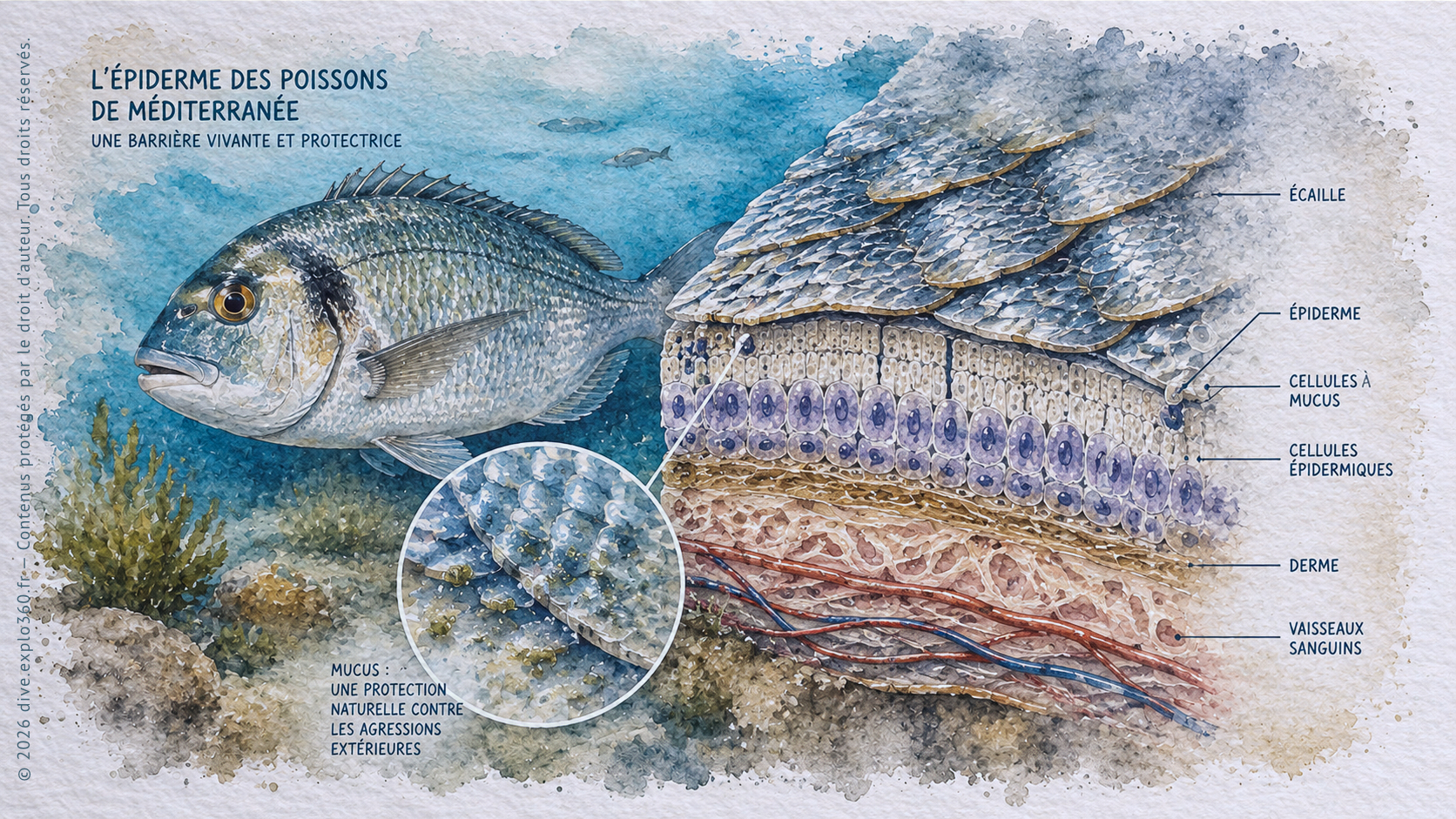
The epidermis, the living outer layer in contact with water, which contains mucus-producing cells, among others.
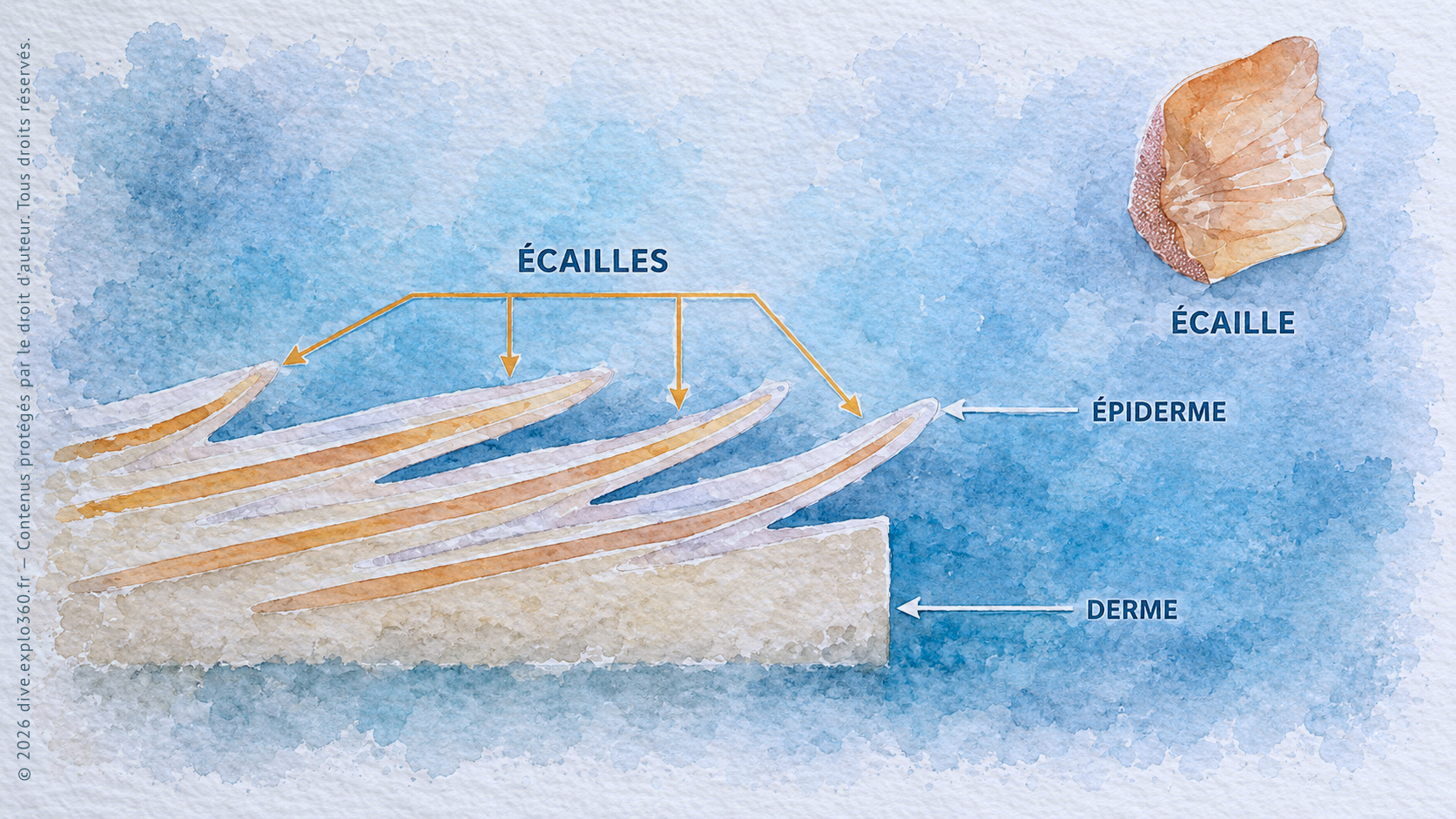
The dermis, beneath the epidermis, which contains blood vessels, nerve endings and, in many bony fish, scales embedded in the dermis.
Scales can overlap like roof tiles while retaining a degree of flexibility.
INVISIBLE ARMOUR
This mucus forms a first interface between the fish and its environment. It contributes notably to defence against certain pathogens and parasites and protects the body surface against mechanical damage.
Its properties and composition can vary between species.
Protection against infection
Protection of the body surface
It can also influence friction between the body and water.
Defence against predators
A very slippery surface can also make a fish harder to grasp.
Protection of wounds
Chemical information
EXCEPTIONAL SKINS
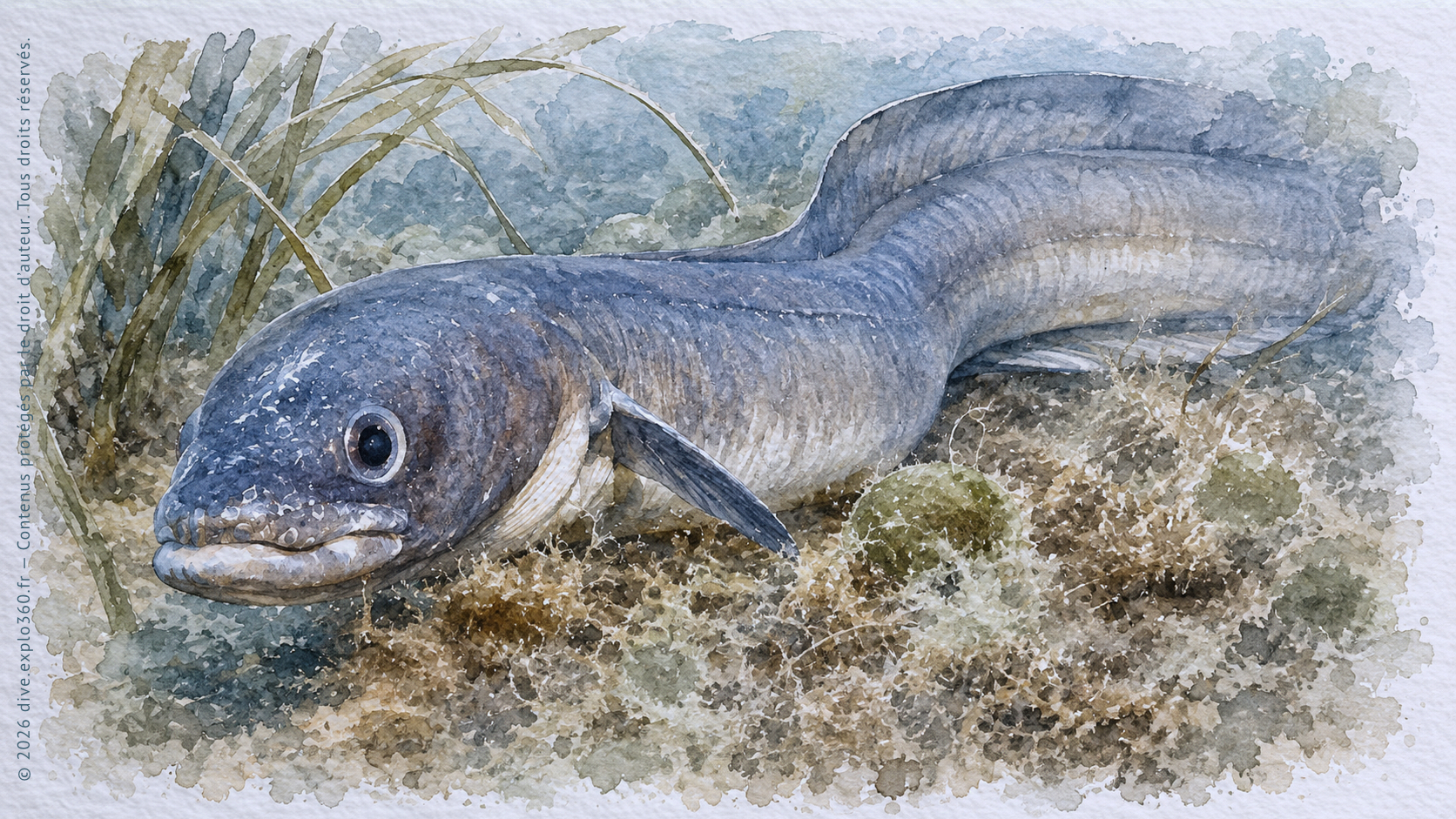
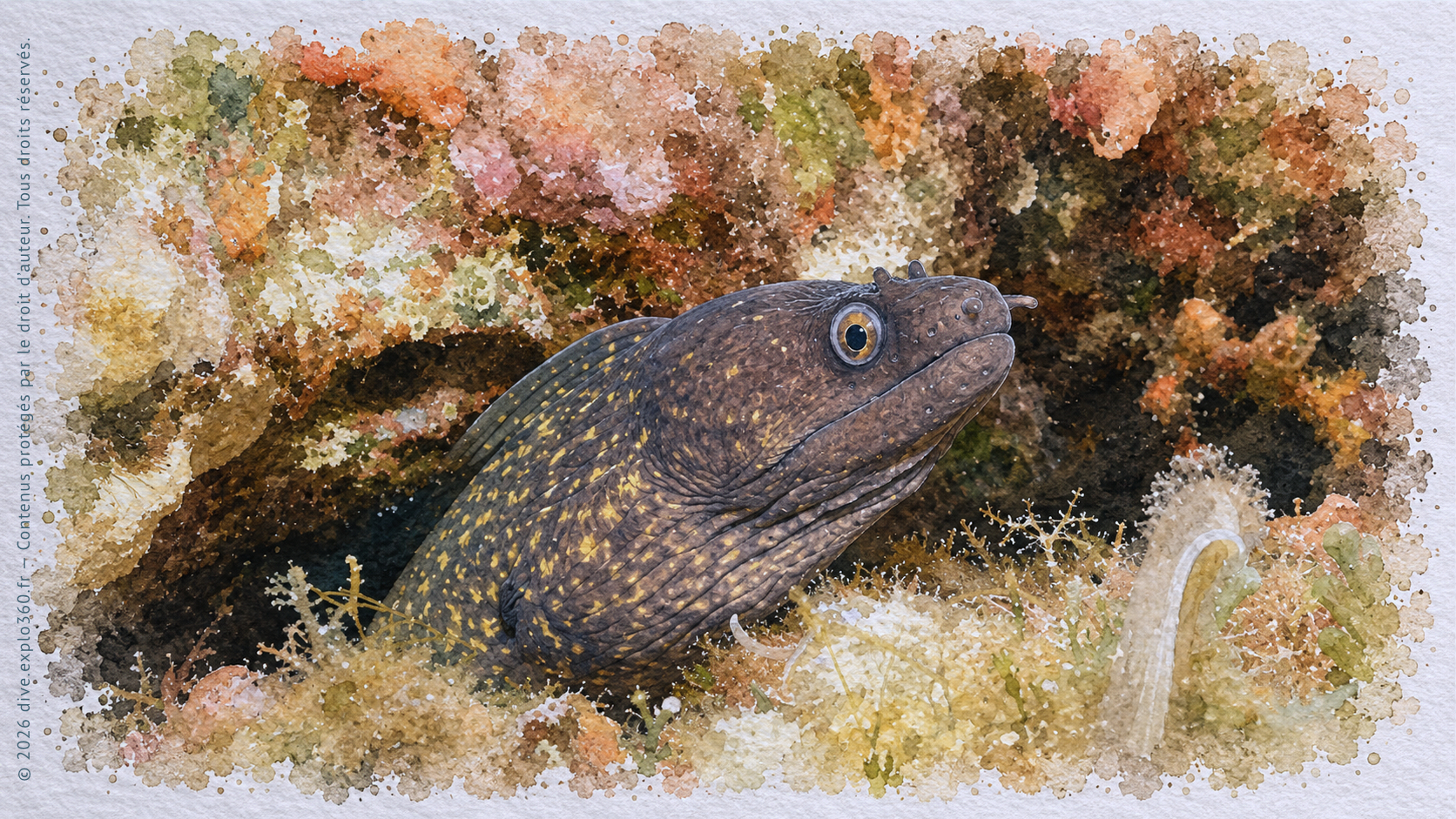
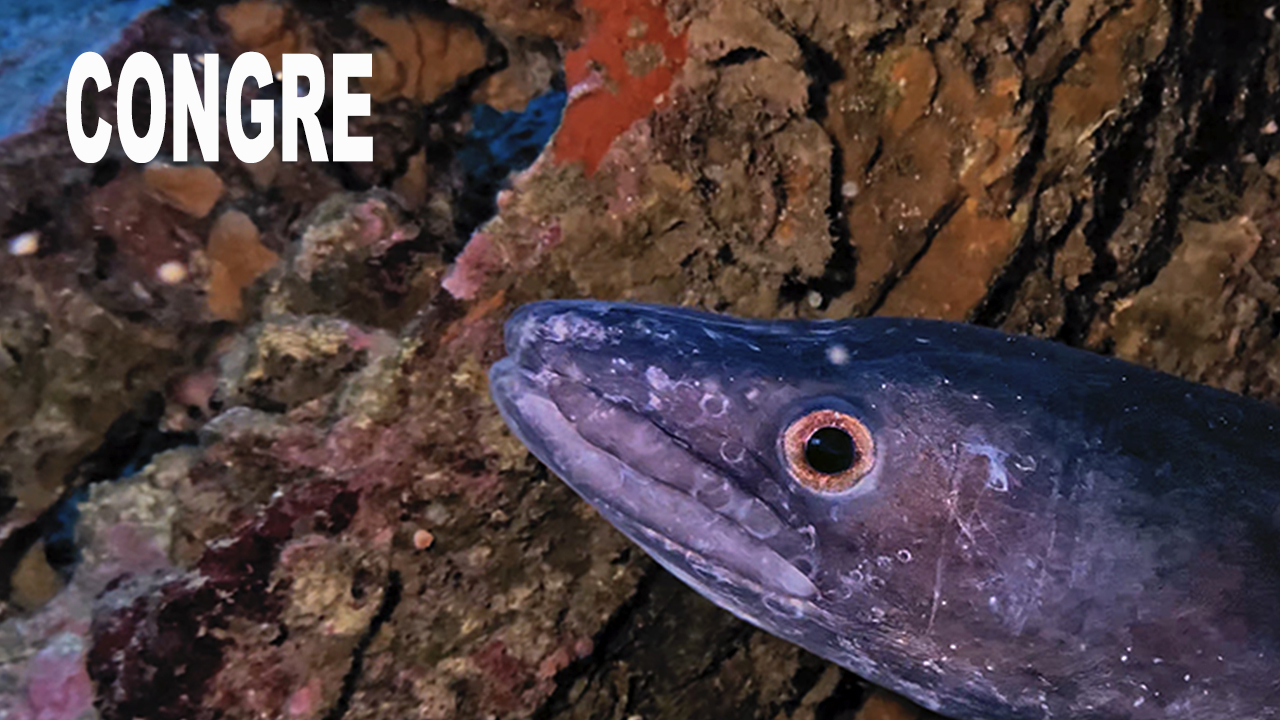
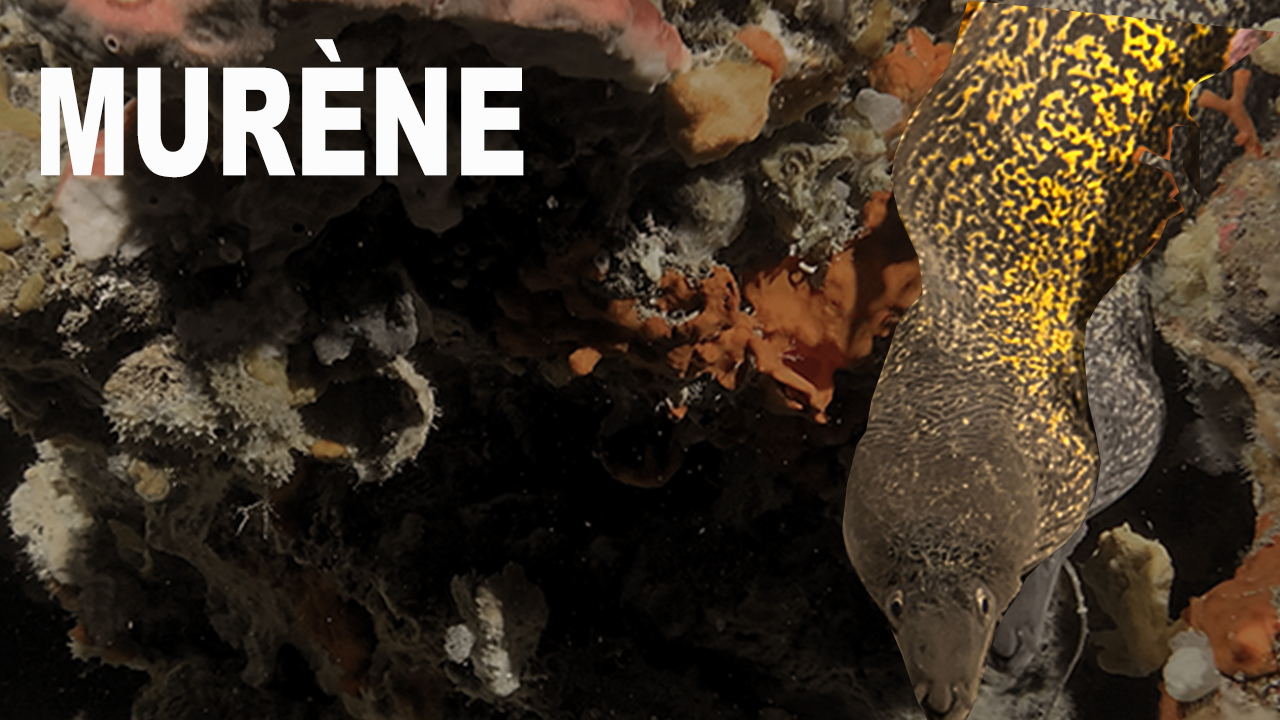
This very flexible, slippery skin is particularly suited to their way of life. These fish can move through rocky cavities and crevices while limiting direct friction against the walls.
Mucus also helps protect their epidermis.
AMIGANSEAU CONTENT
The rest of this article is for subscribers
Log in with your AMIGANSEAU licence to continue reading.
All active AMIGANSEAU licences give access to the full article.Explore the same world