An animal beneath the tentacles
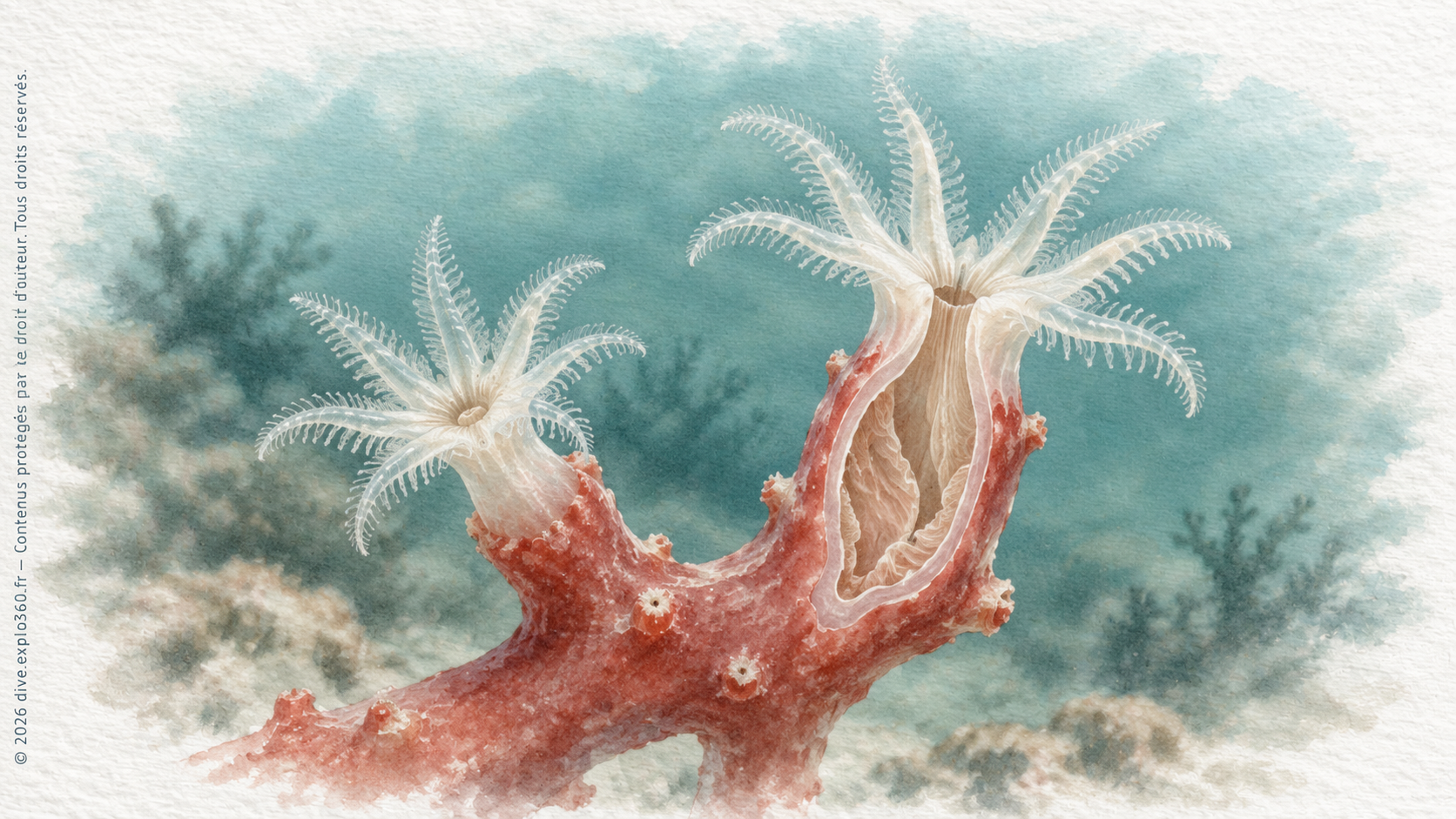
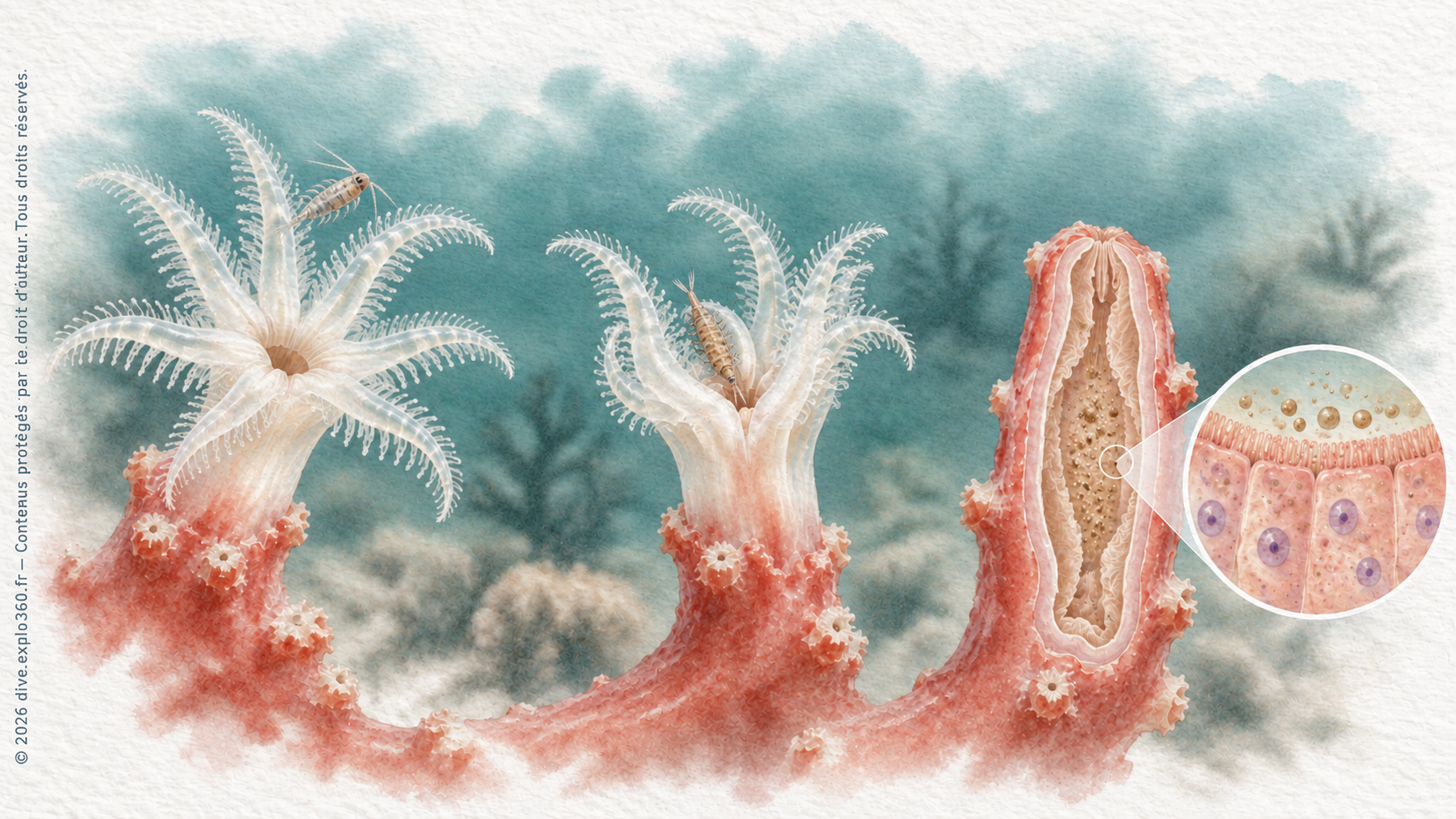
Look closely at a coral’s “flowers” and each resolves into a mouth surrounded by tentacles. This is a polyp. Its mouth leads to a gastrovascular cavity, where food is digested and from which substances can move into other tissues. A living wall separates the cavity from the seawater outside.
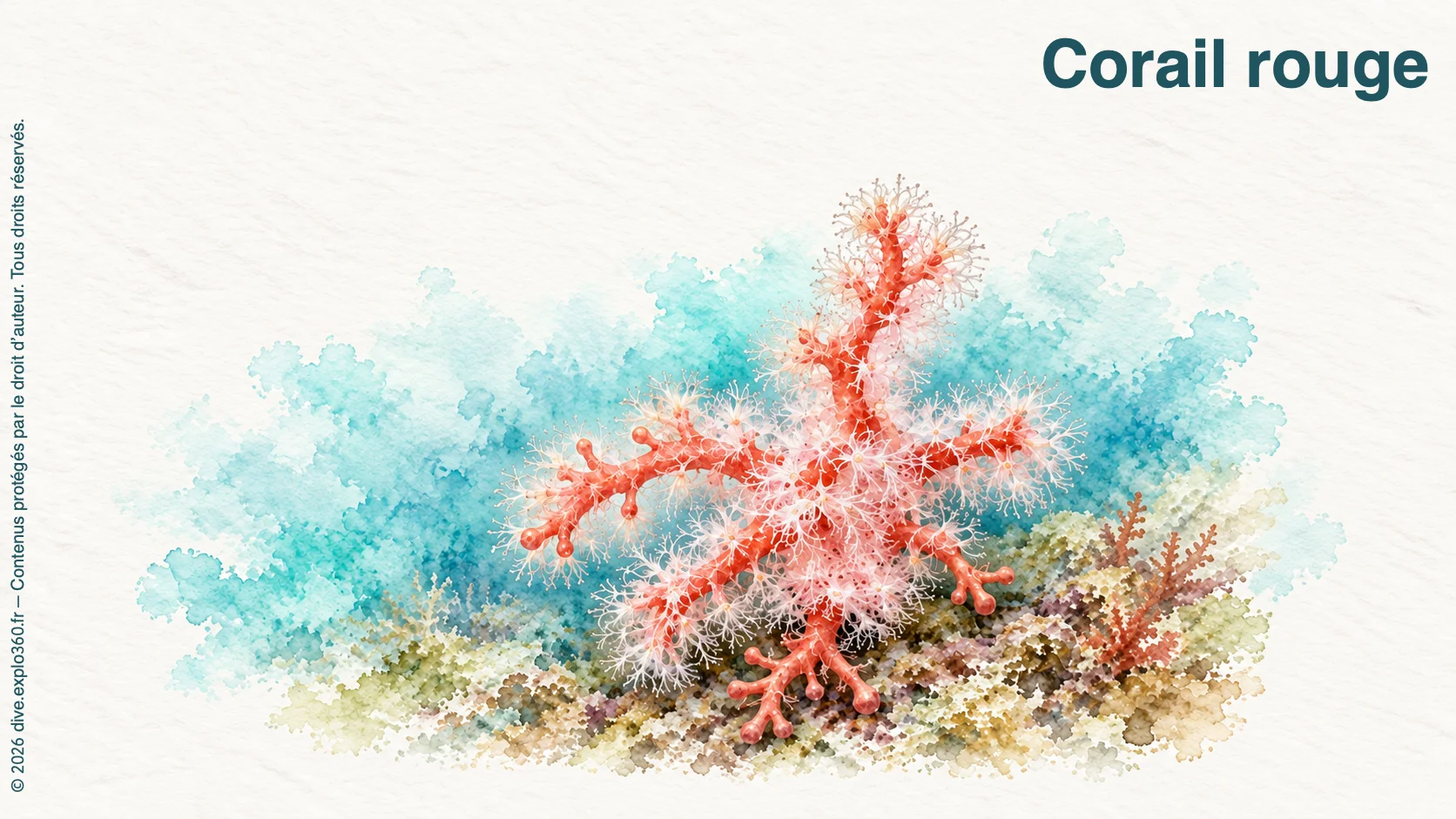
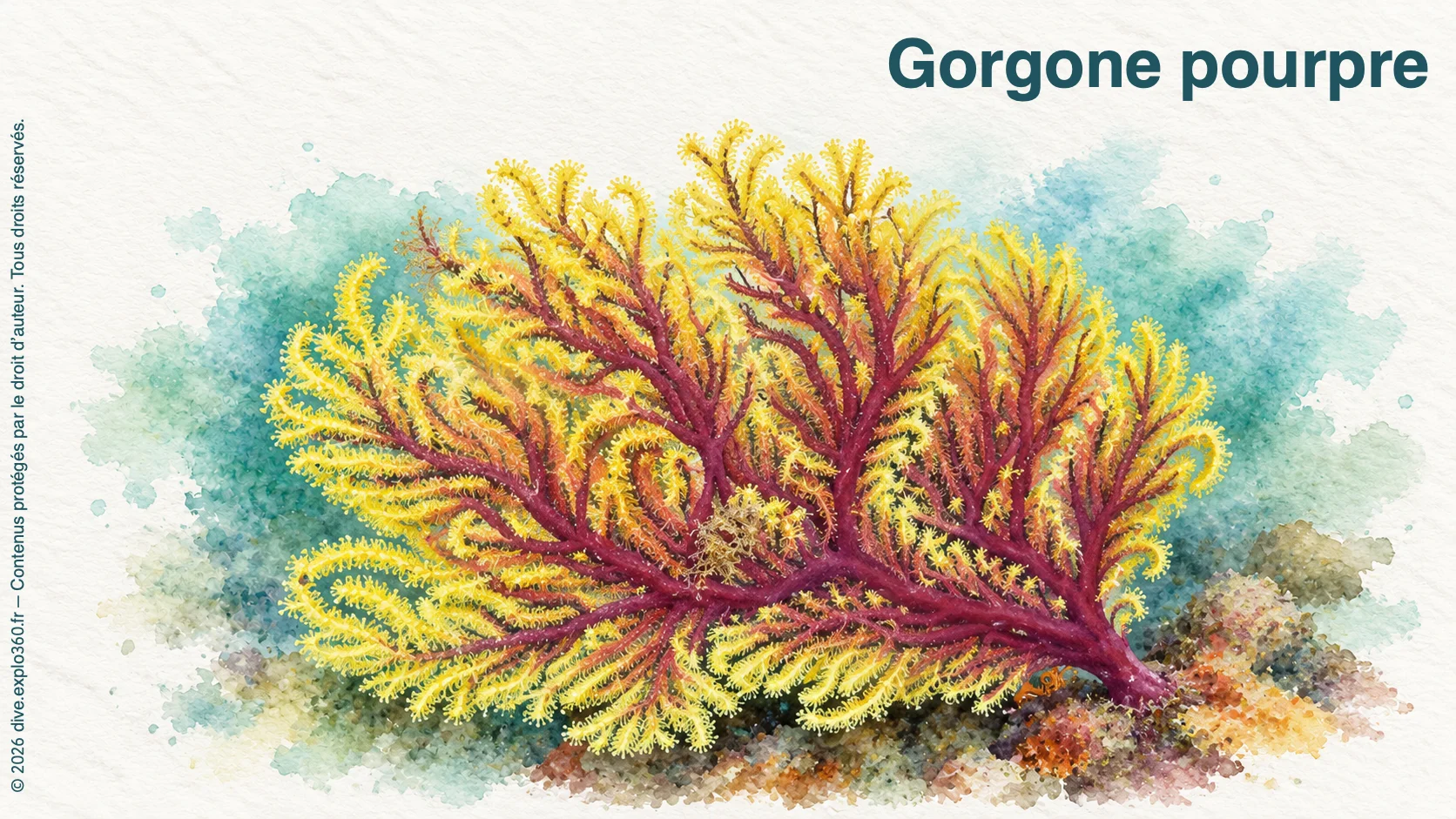
The white polyps of red coral (Corallium rubrum) have eight pinnate tentacles. Small side branches give each one a feathery outline. The purple sea fan (Paramuricea clavata) shares this feature of octocorals. The tentacles of stony reef corals are generally unbranched.
What enters through a mouth
A passing current brings small prey and suspended particles within reach. Tentacles can hold a meal with the help of sticky mucus or stinging cells that discharge threads. How much each method contributes varies by species. A polyp’s size and shape also affect what it can catch.
Once the food passes through the mouth, enzymes begin to break it down in the digestive cavity. Cells take up the products and finish digesting some particles themselves. The nutrients support cell activity and tissue growth. The mouth is also the opening through which undigested remains can leave.
A meal’s route through the colony
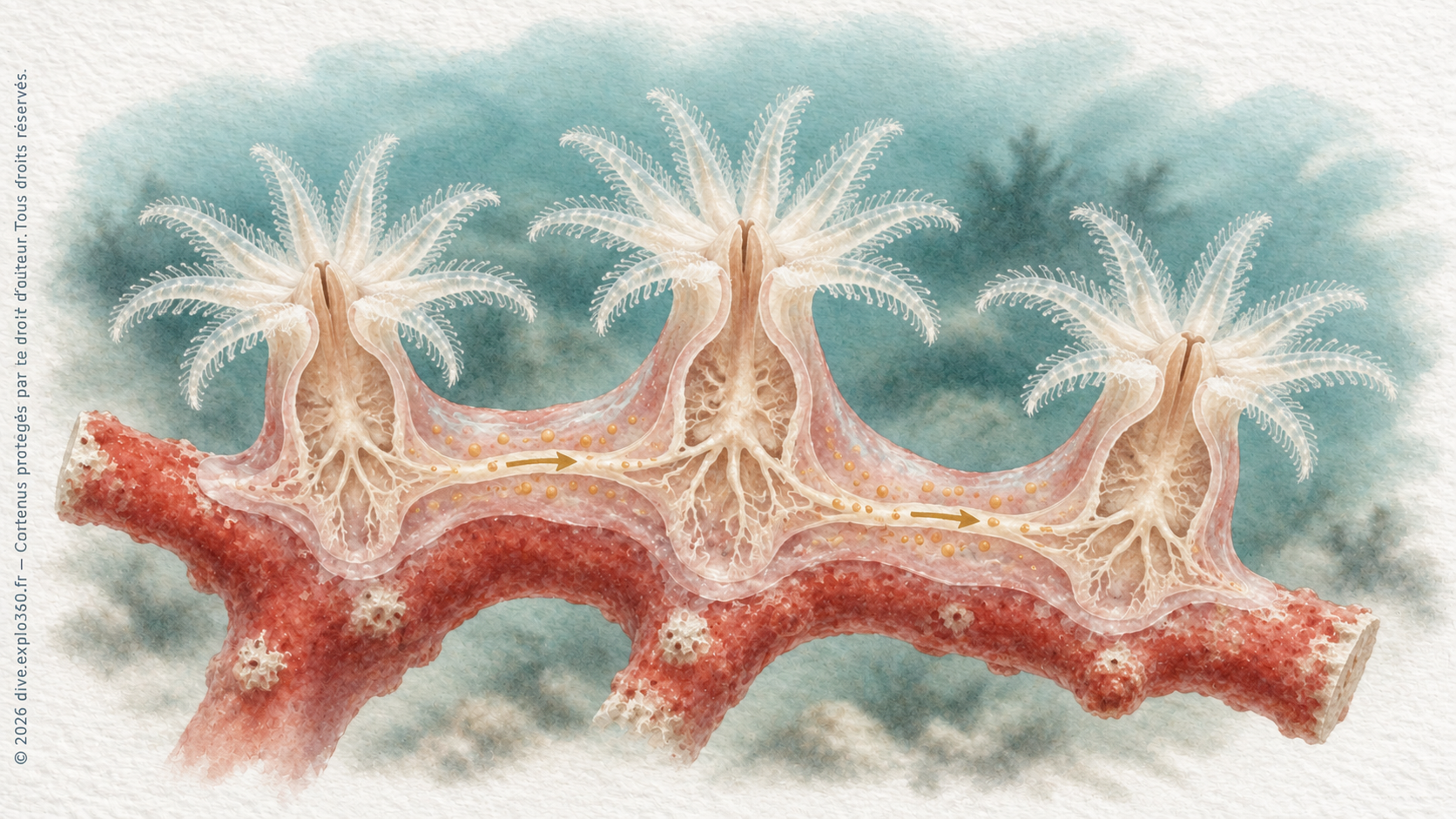
Beneath a sea fan’s surface, the polyps are joined by a layer of living tissue called the coenenchyme. It wraps around the central support and contains gastrovascular canals that open into the digestive cavities. Colonial stony corals also have connections through their shared tissues.
Some products of digestion can travel away from the polyp that caught the meal. Cells elsewhere in the colony can use those materials to maintain or grow tissue.
Cilia can help move fluid through this network without a heart or blood. The canals and the needs of the surrounding tissues help determine where the material goes. The connections can carry nutrients across the colony without distributing each meal equally.
Growing by budding
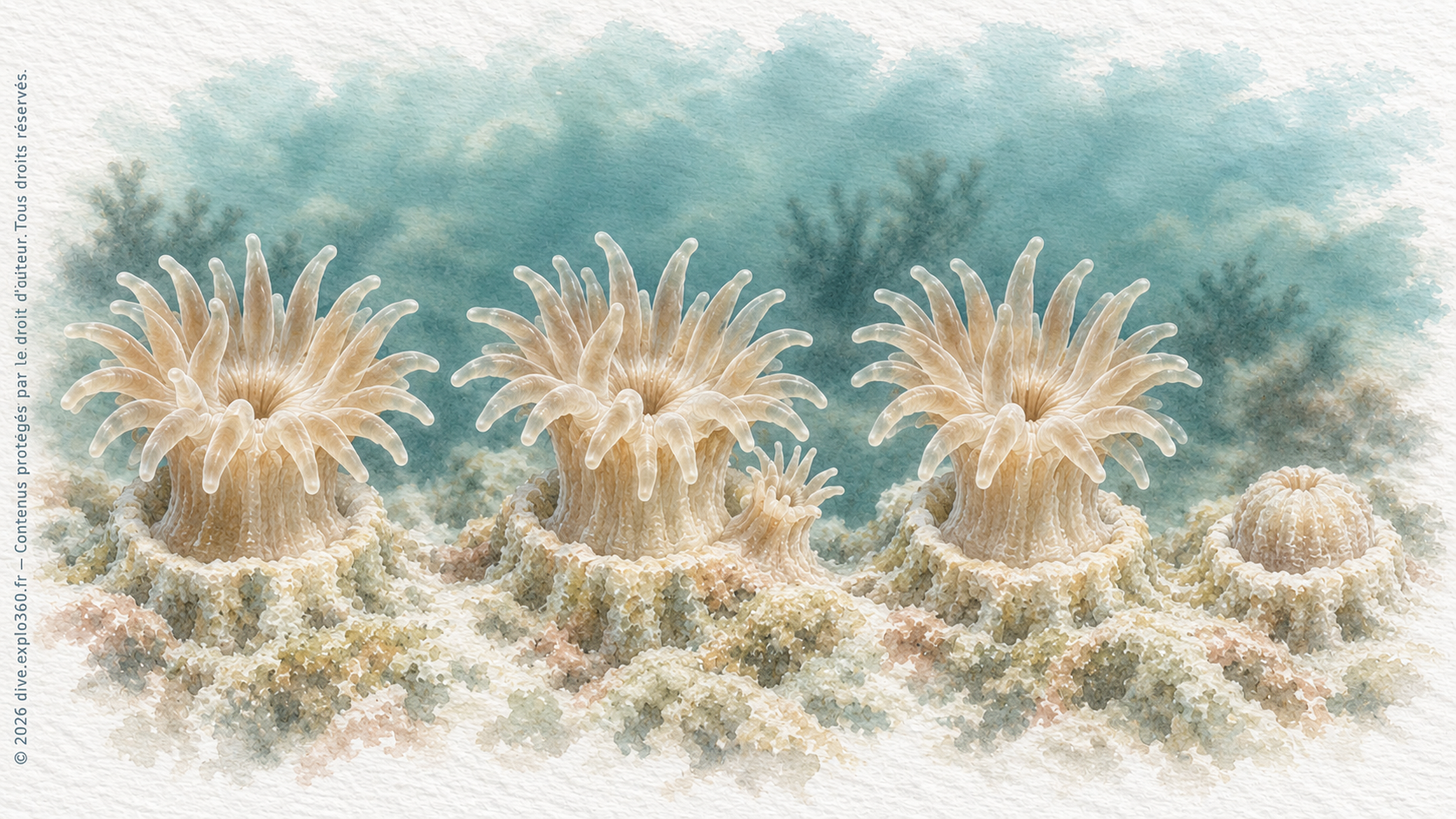
A growing branch can add a polyp by budding. The new polyp develops a mouth and tentacles from tissue already there and stays connected as the shared tissue and its support grow.
Budding enlarges a colony without fertilisation. The drawing shows a bud on a stony coral. The way the bud forms varies among groups, including sea fans.
Explore the same world