An animal beneath the tentacles
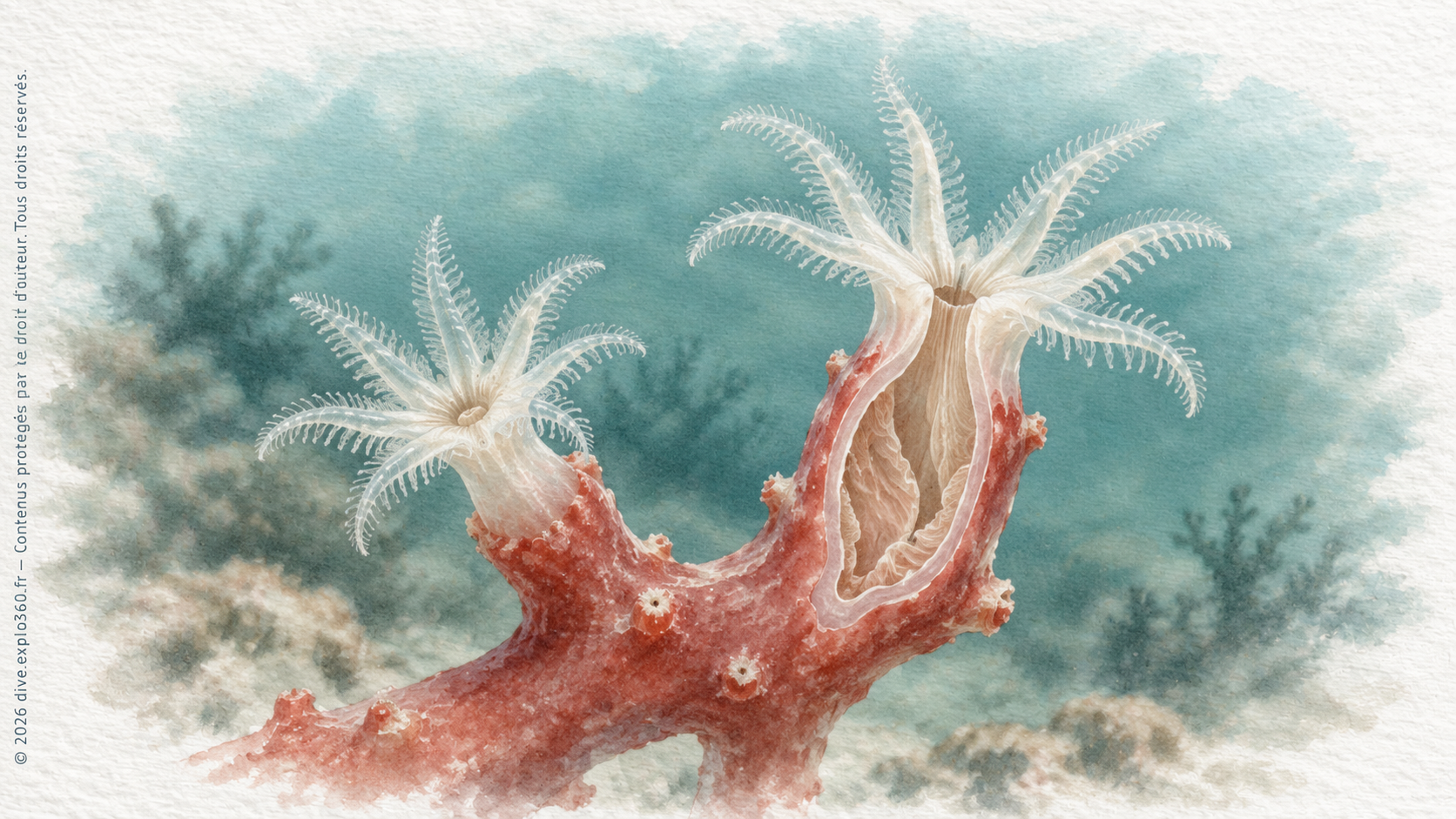
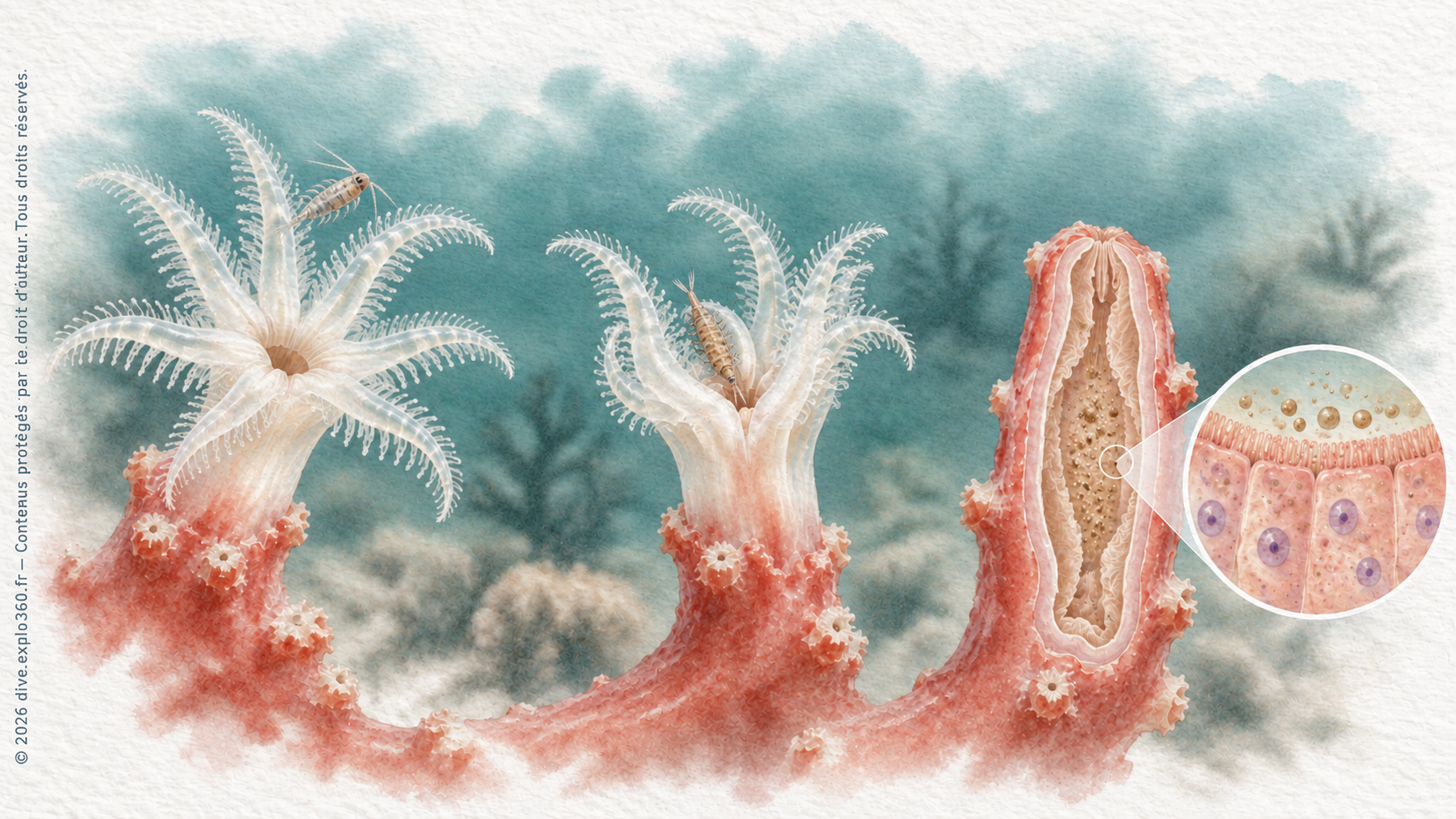
Each polyp has a mouth ringed by tentacles. Food passes through the mouth into a pouch, where it is broken down.
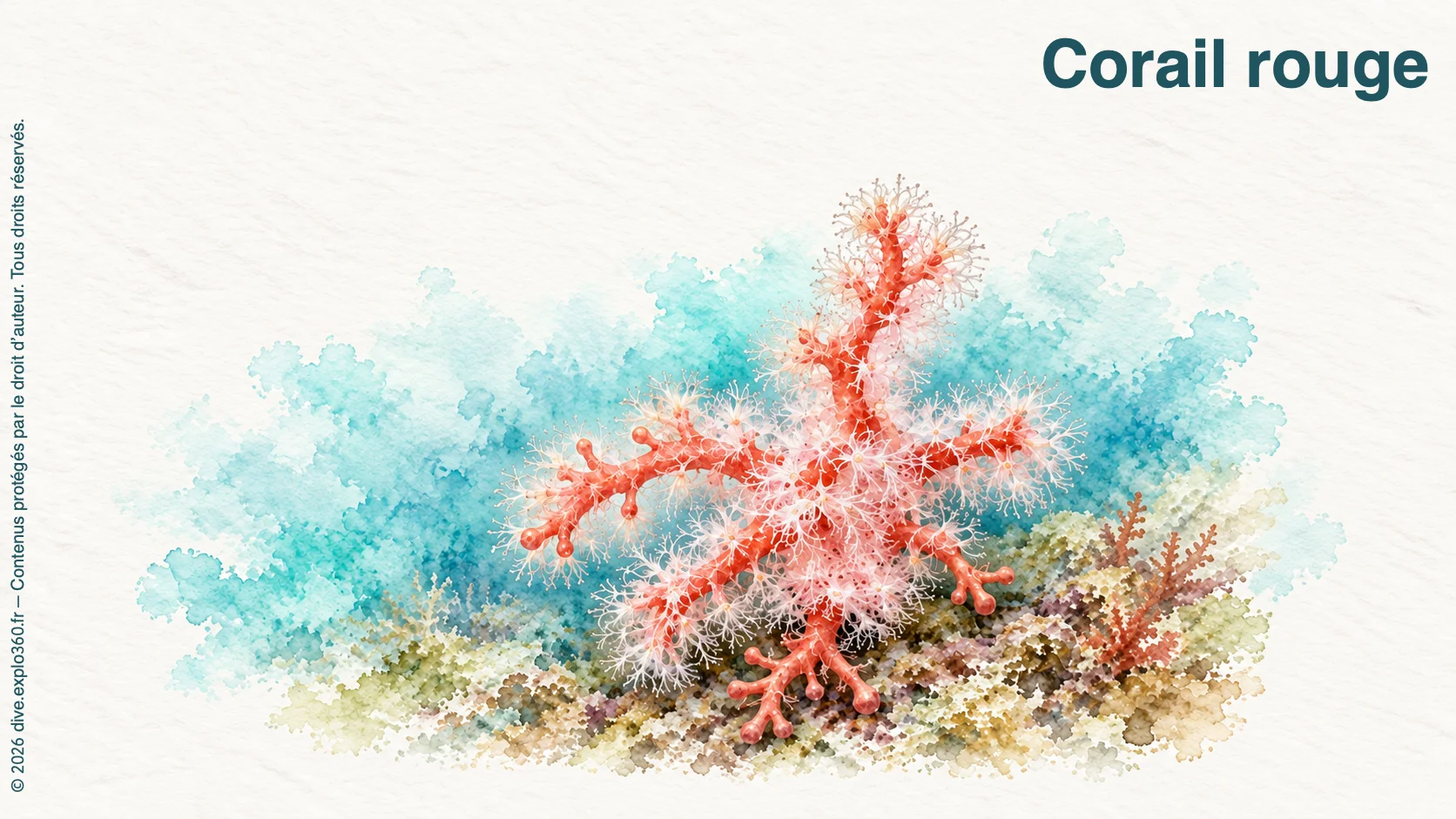
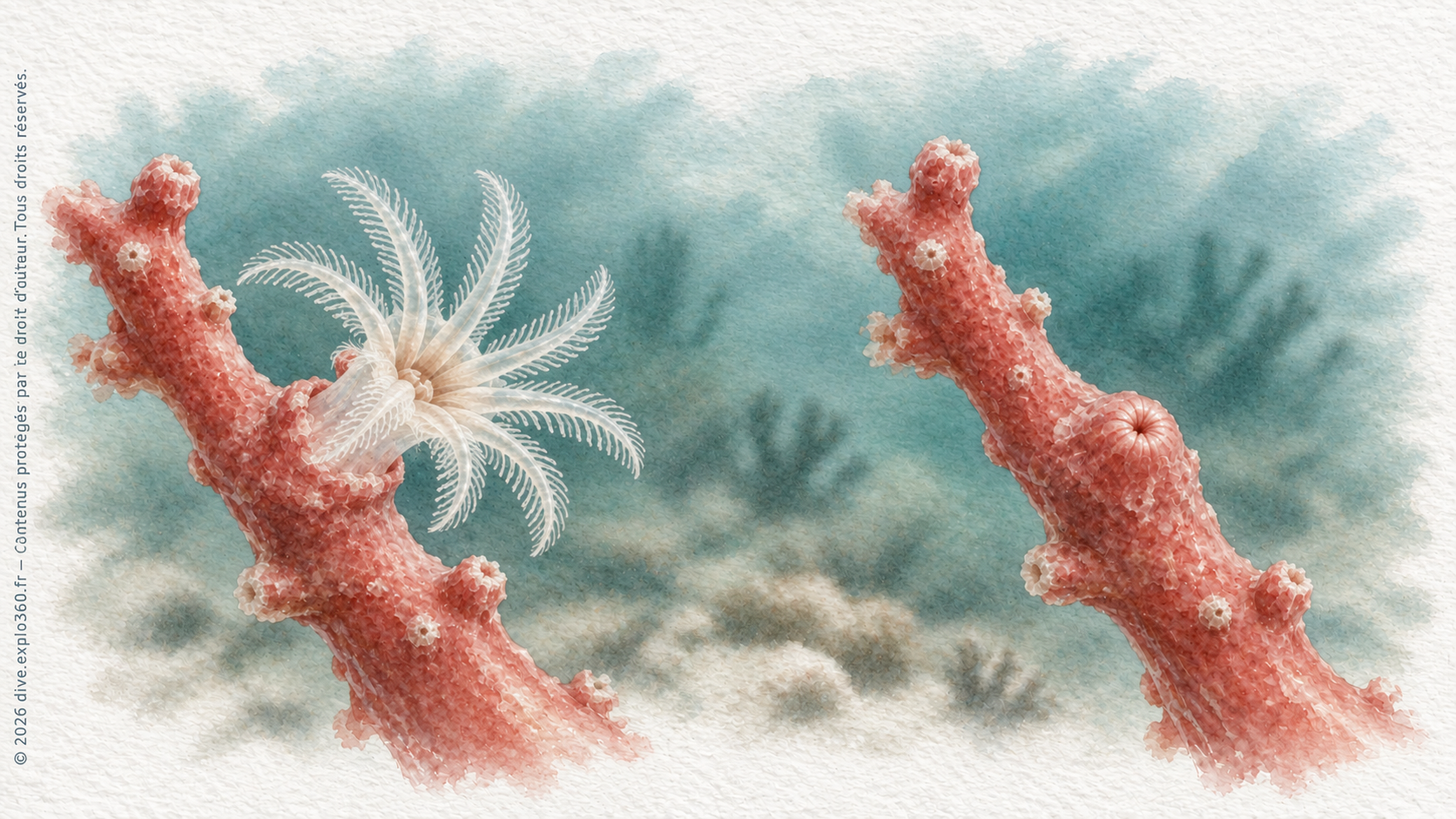
On red coral, the polyps are white and each has eight feathery tentacles. The little side branches give them that shape. Stony reef corals generally have tentacles without branches.
What enters through a mouth
The current brings plankton: organisms that live suspended in water and drift with currents. Tentacles hold small prey and move it towards the mouth. Stinging cells, which can release a thread that helps catch prey, may take part.
Digestion breaks down the meal. Cells absorb nutrients, the usable substances obtained from food. Undigested remains can leave through the mouth: a polyp has no anus.
A meal’s route through the colony
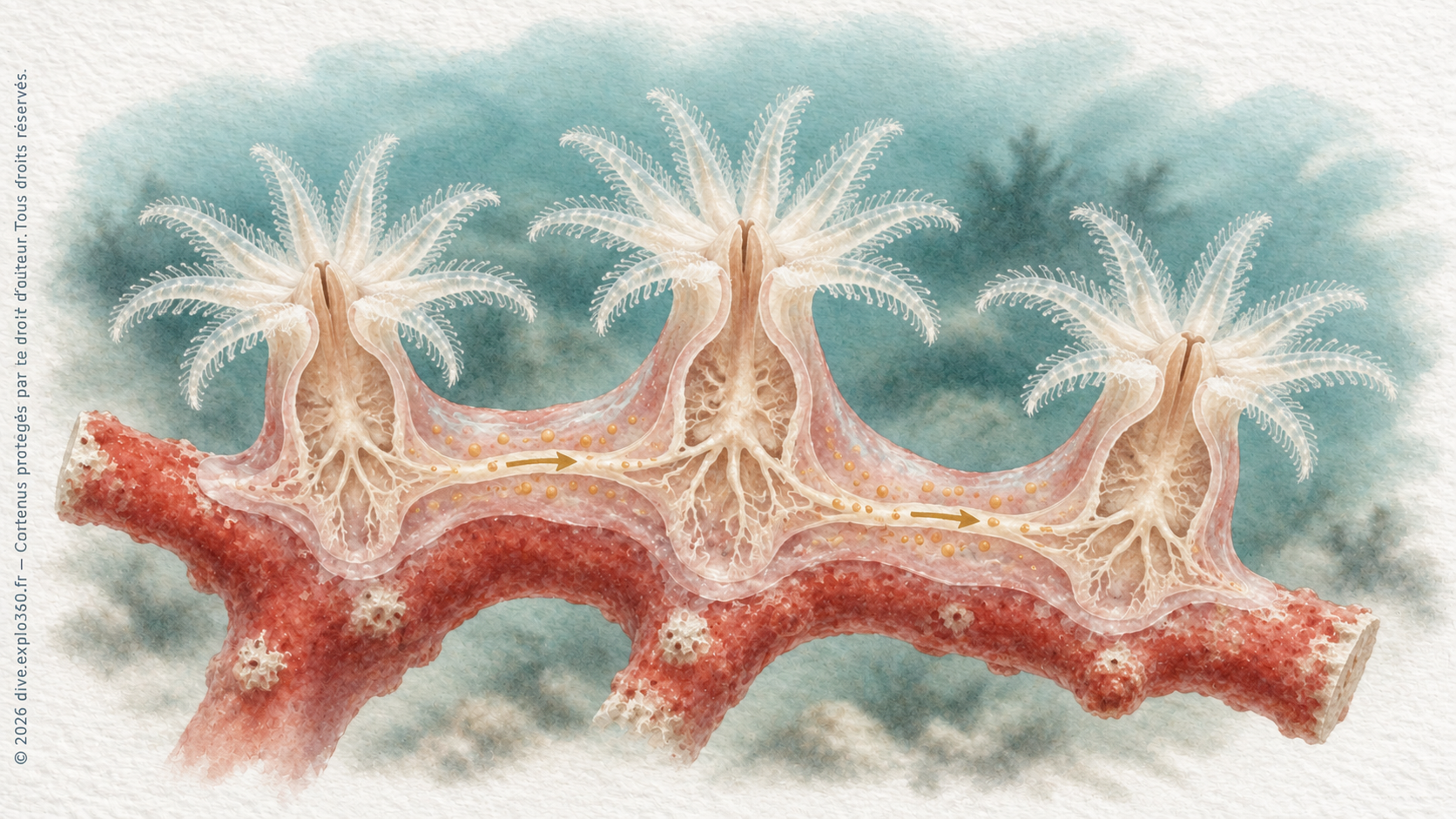
Living tissue joins the polyps along a sea fan branch. Running through it are tiny passages called gastrovascular canals. They connect to the polyps’ digestive cavities.
Some of the substances a polyp absorbs from its meal can reach other parts of the colony. Fluid moves through the canals without a heart pumping blood. How much reaches each polyp depends on how the colony is built.
Growing by budding
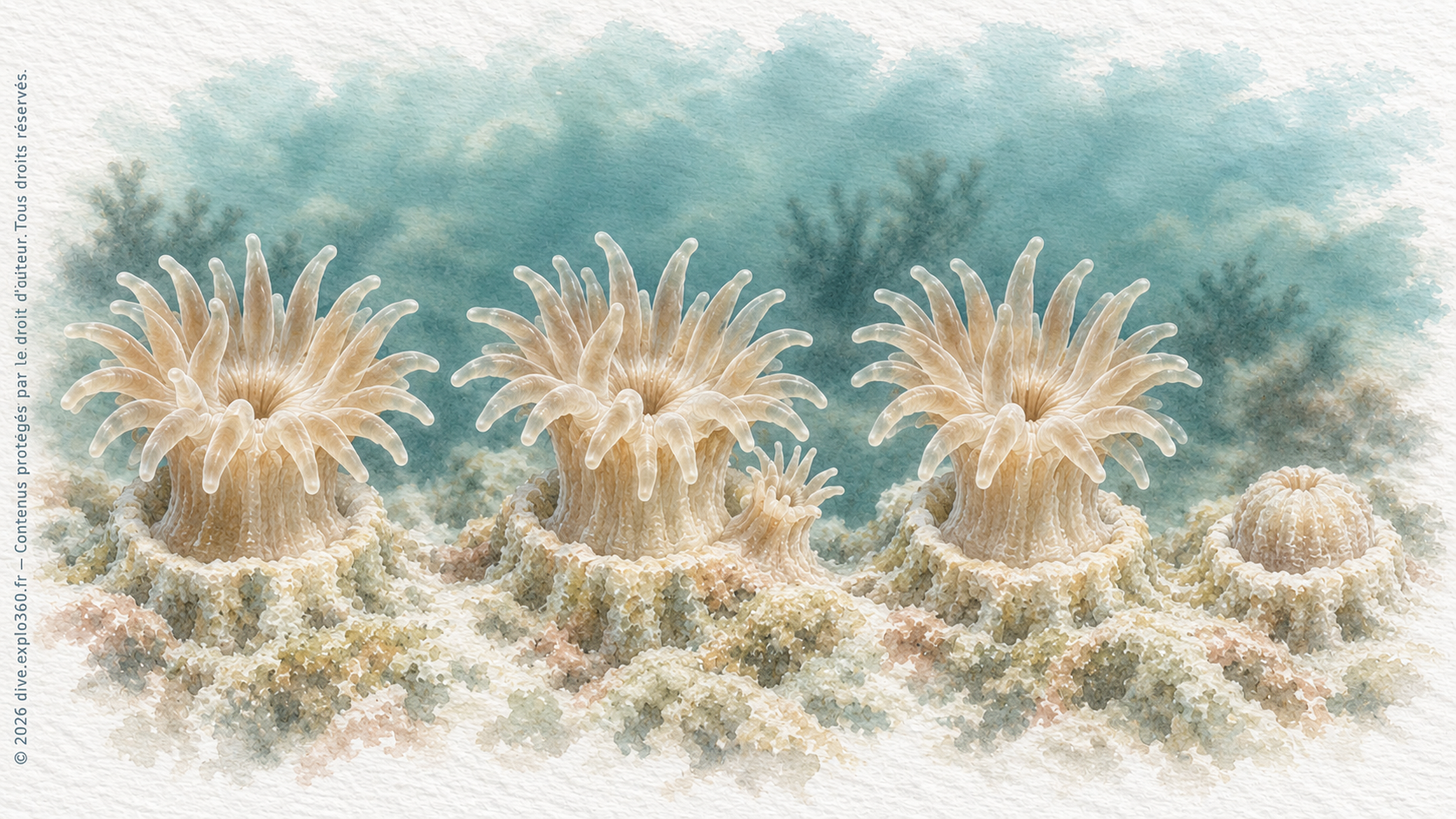
A new polyp can grow from tissue already on the colony. This is budding. It happens without reproductive cells joining. The new polyp grows a mouth and tentacles and stays attached to its neighbours.
As polyps bud, the colony can grow into branches, plates or rounded masses, depending on the species.
How does a colony begin?
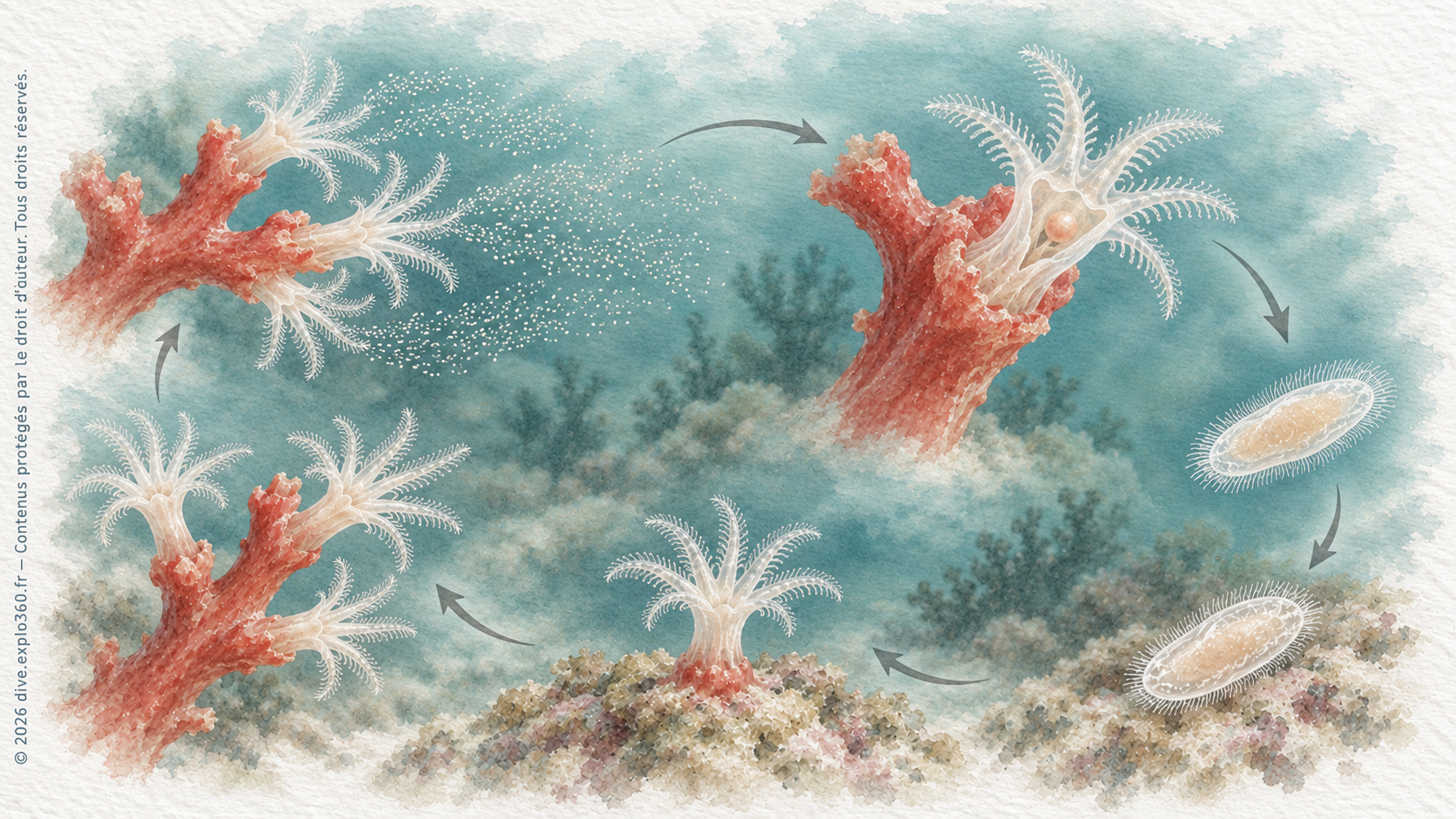
In red coral, colonies are generally male or female. Males release sperm, the male reproductive cells. Fertilisation, the joining of male and female reproductive cells, takes place inside female polyps. Larvae begin developing there.
A released larva may settle on a surface and change into the first polyp. Budding may then enlarge the colony. Other corals have a different cycle, with fertilisation in the water.
When polyps close
A polyp’s muscles can pull its tentacles in. A red coral polyp can retract so far that it disappears into the branch’s living tissue.
A touch may trigger that response. The current and other conditions can affect when polyps open or close. Seeing a closed colony tells you what it’s doing at that moment. Finding the cause takes more observation.
Breathing without lungs
Oxygen dissolved in the water passes through thin tissues to reach cells. Carbon dioxide can pass in the opposite direction. These exchanges occur by diffusion: molecules move from areas where they are more concentrated to areas where they are less concentrated.
Water movement helps renew the water close to the tissue. Polyps have neither lungs nor gills.
Different kinds of support
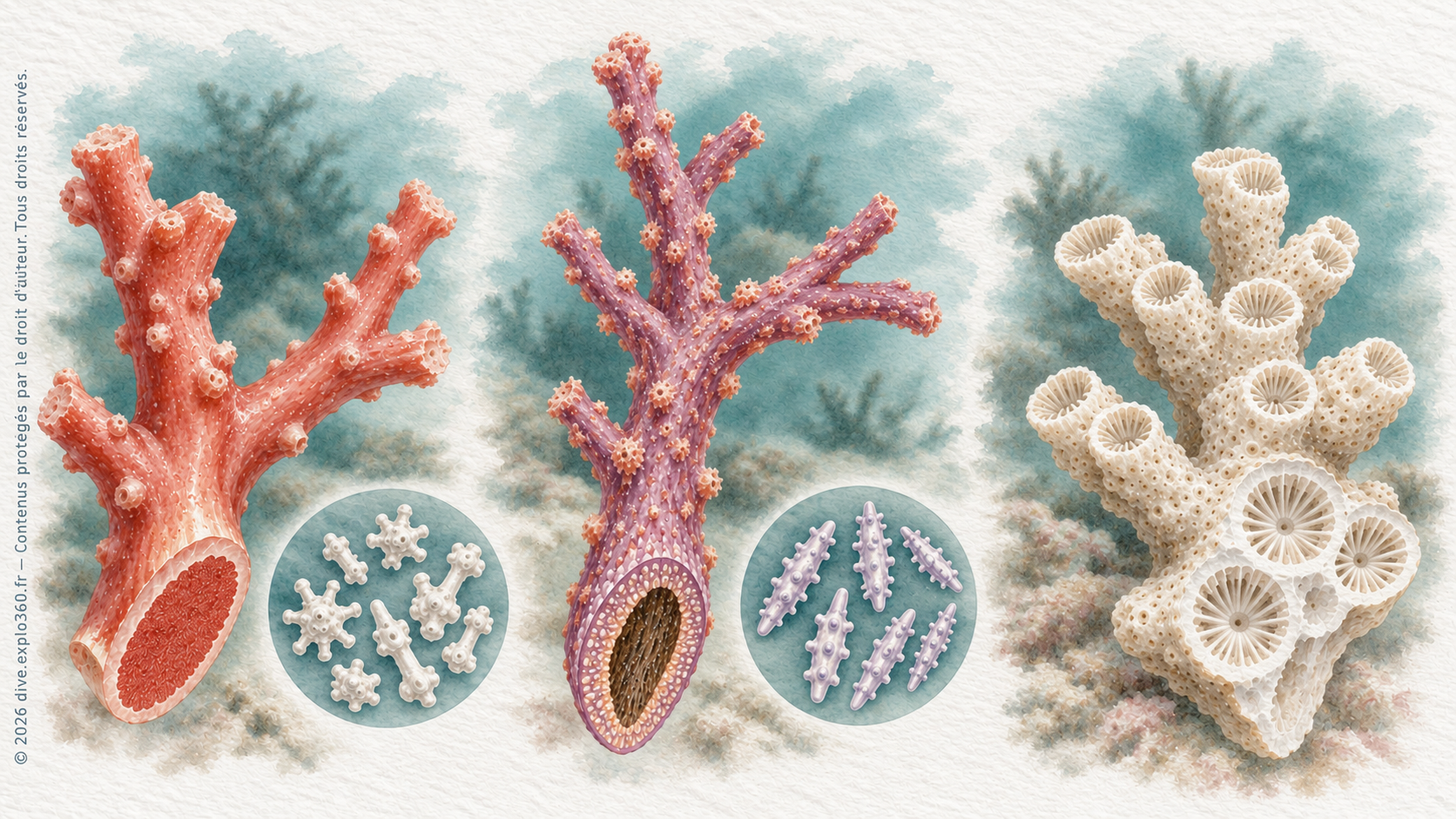
Red coral has a hard axis, the central support inside its branches. Living tissue surrounds it. This tissue also contains sclerites: small mineral pieces.
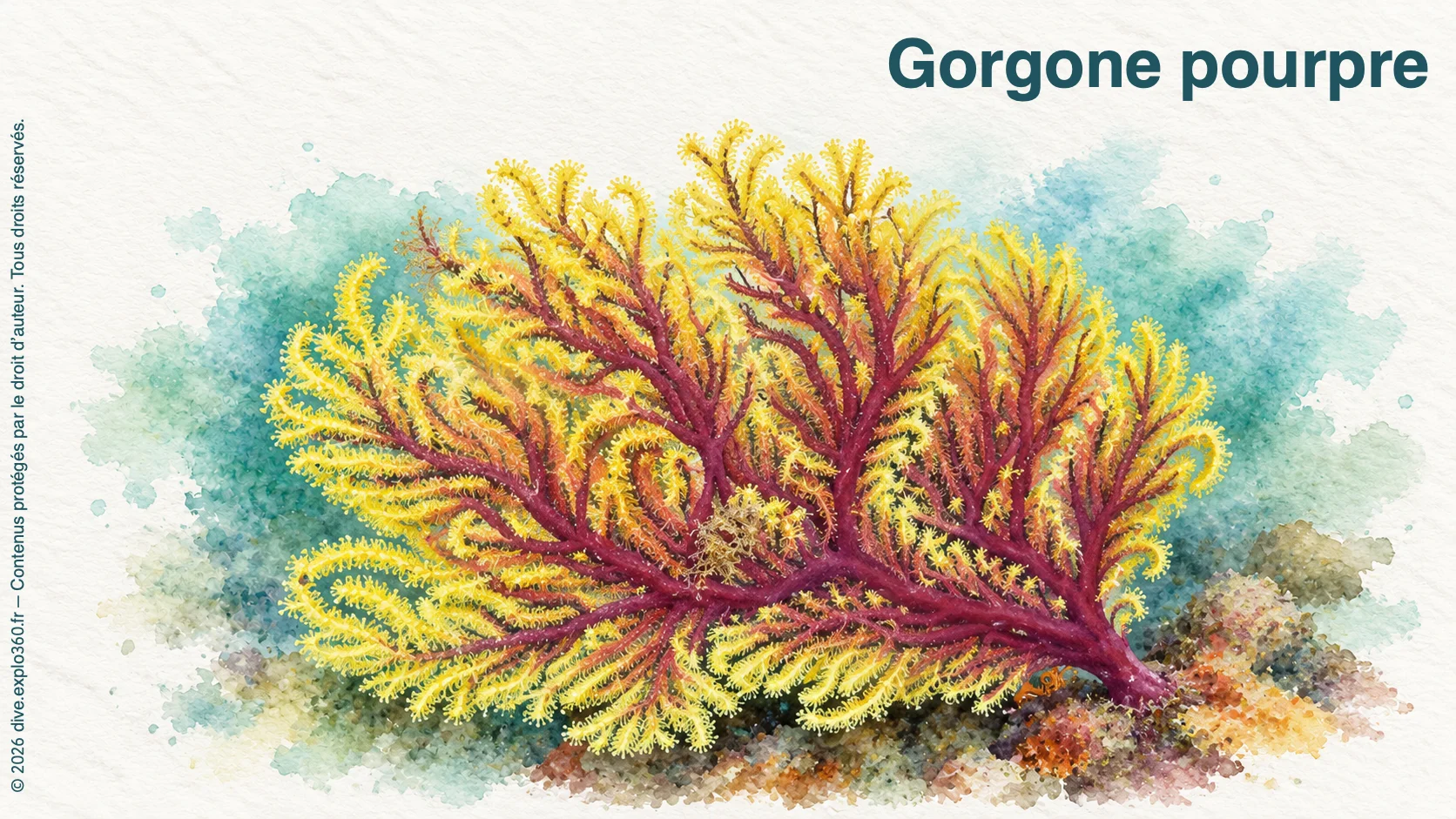
The purple sea fan has a more flexible central support rich in organic material, substances made by living organisms. Stony corals form a mineral skeleton with cups in which the polyps sit. These supports are built differently.
Light, for some corals
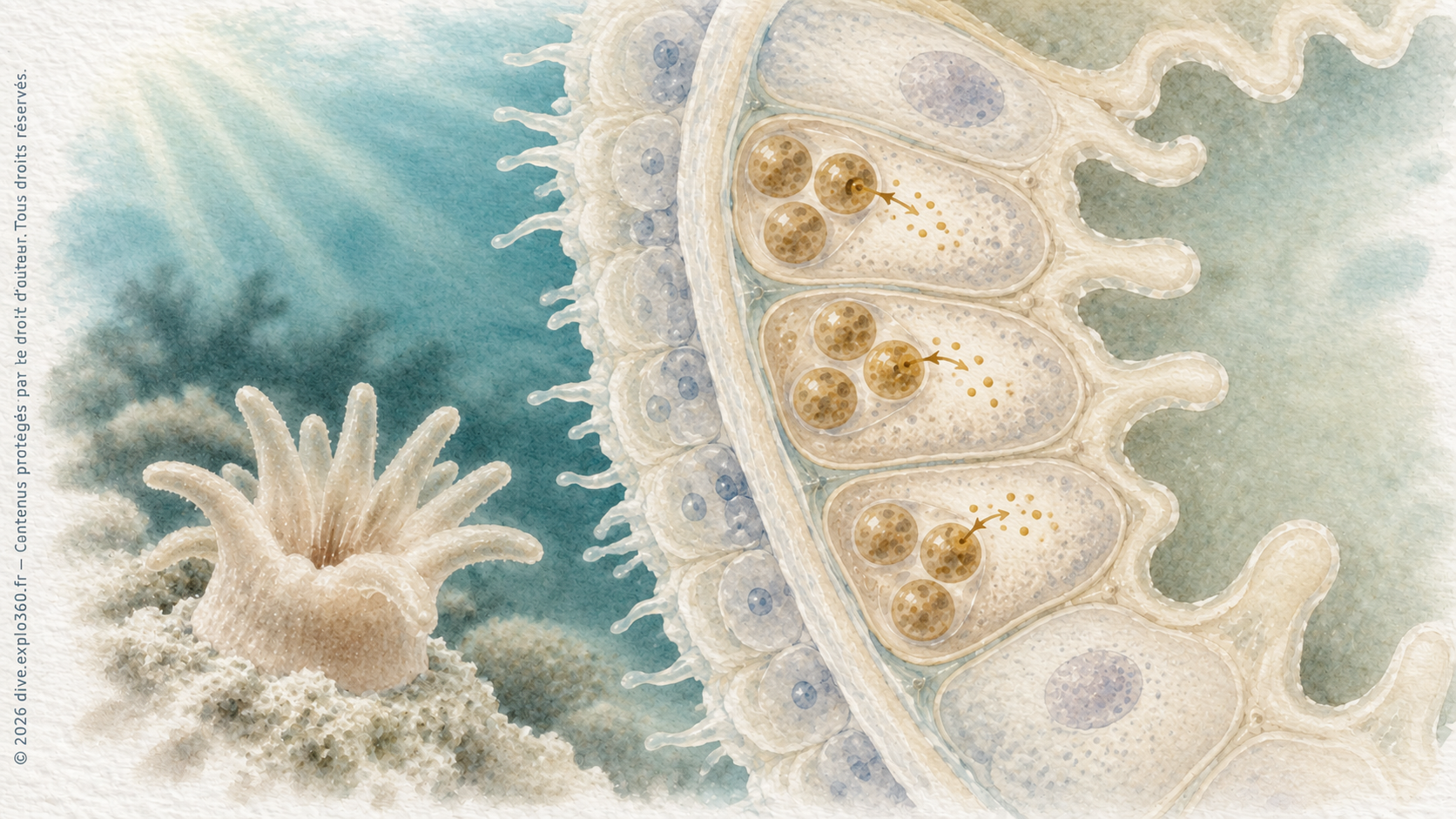
In some corals, microscopic partners called symbionts live inside the coral’s cells. Through photosynthesis, they use light, water and carbon dioxide to make substances such as sugars. The coral gets some of what they make.
Red coral and the purple sea fan live without photosynthetic partners.
Connected polyps, one colony
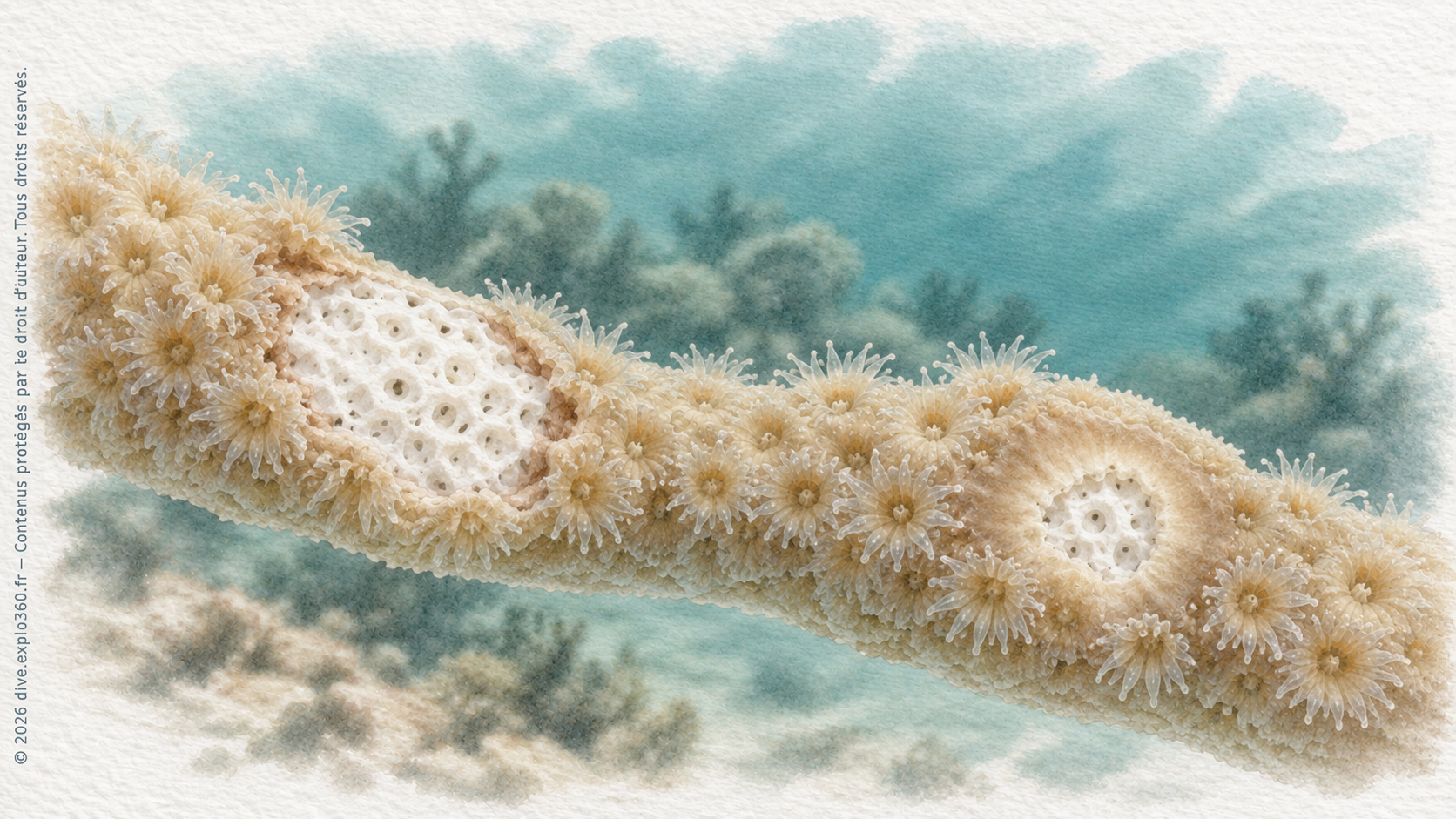
A polyp can catch prey or close while remaining connected to the colony. Shared tissues allow exchanges between its different parts.
In some corals, a limited wound can close. This does not mean a colony survives every injury. The species, the extent of the damage and living conditions all matter.
Interactive quiz
Try it yourself
Five questions about what you have just read. Choose one answer for each question.
Interactive quiz
Try it yourself
Question 1 out of 5Score: 0
How many tentacles does a red coral polyp have?
What do gastrovascular canals, passages connected to digestive pouches, allow?
How does budding differ from a colony starting from a larva?
Why might a colony be closed?
What does photosynthesis, making material using light, produce in some corals’ partners?
Final result
Quiz completed
correct answers
Understanding what we observe
Sources
Natural history accounts and publications used to check the mechanisms described.
Explore the same world