
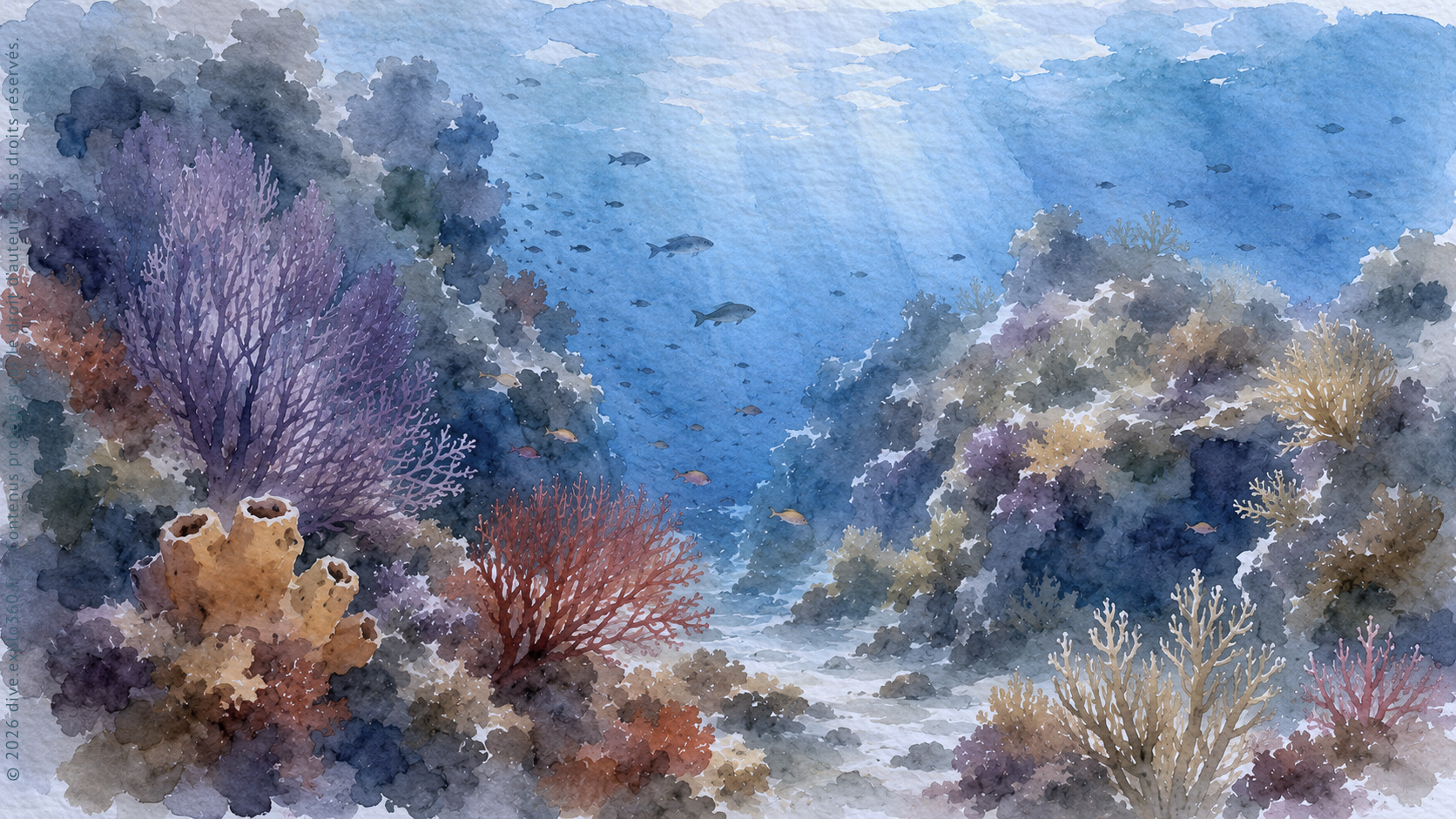
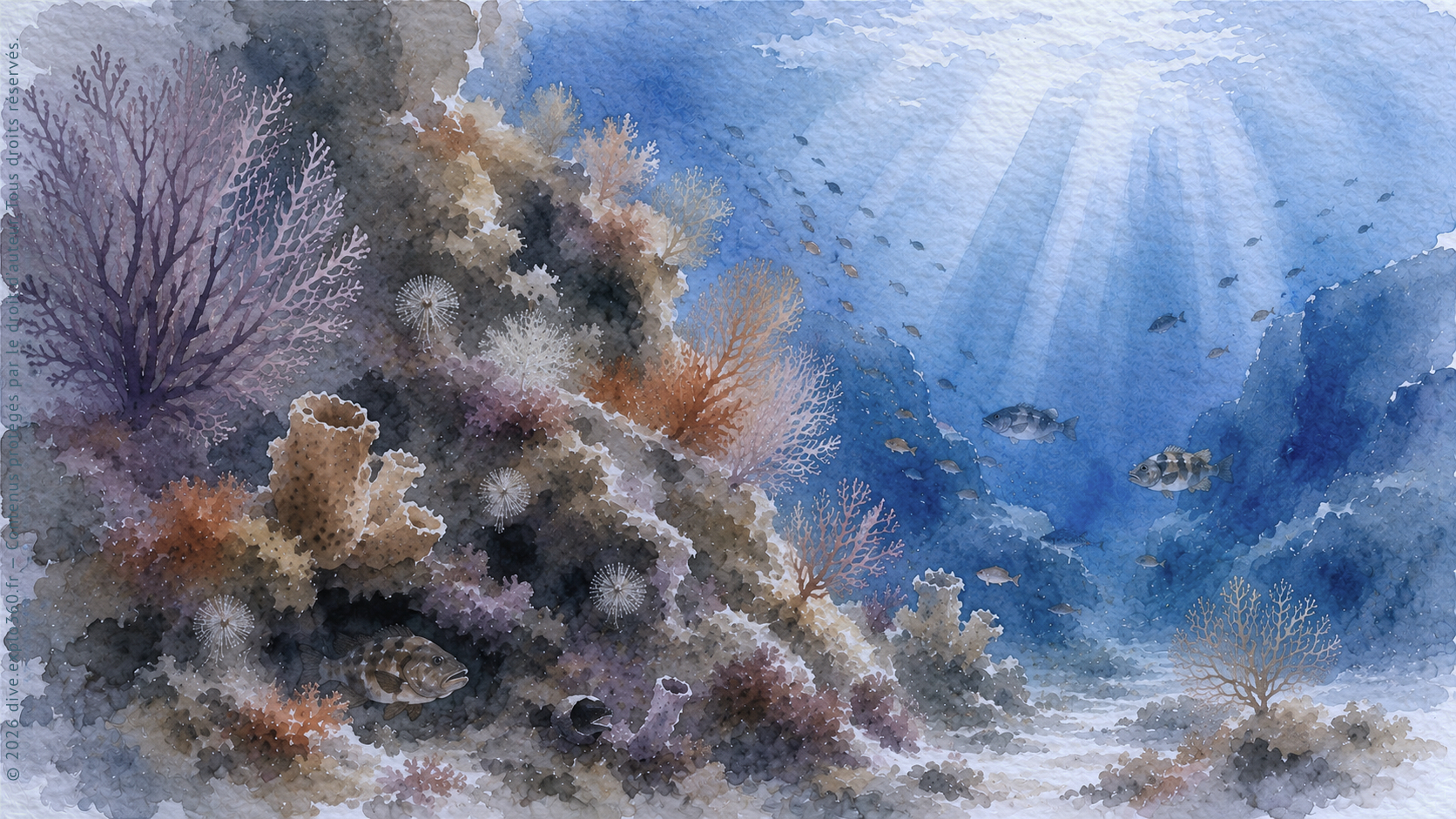
Yet part of this 'rock' was built by living things.
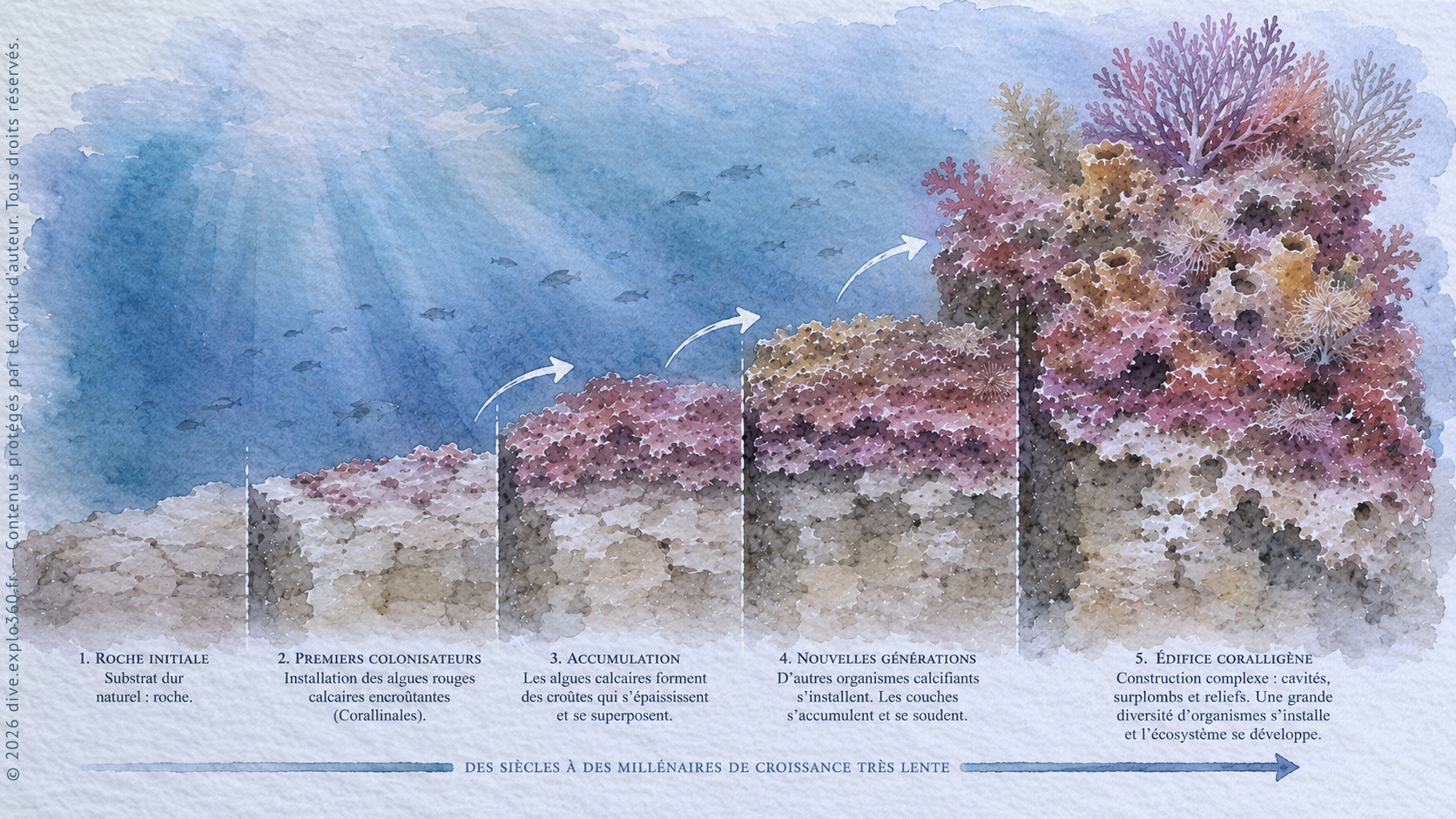
Calcareous red algae produce calcium carbonate and form hard crusts.
Over generations, these crusts accumulate. Other organisms settle on top and also contribute to construction.
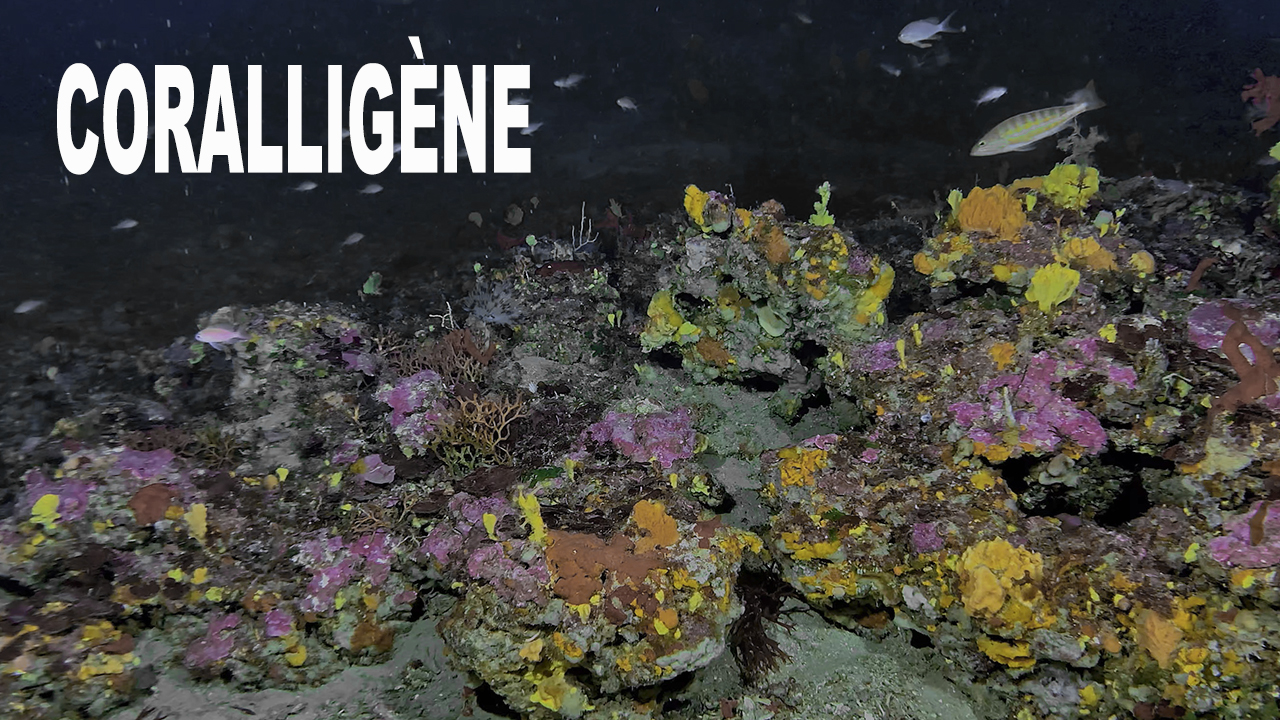
A coralligenous habitat is therefore a bioconstruction, meaning a structure built largely by living things.
BUILDING
STRENGTHENING
STARTING AGAIN
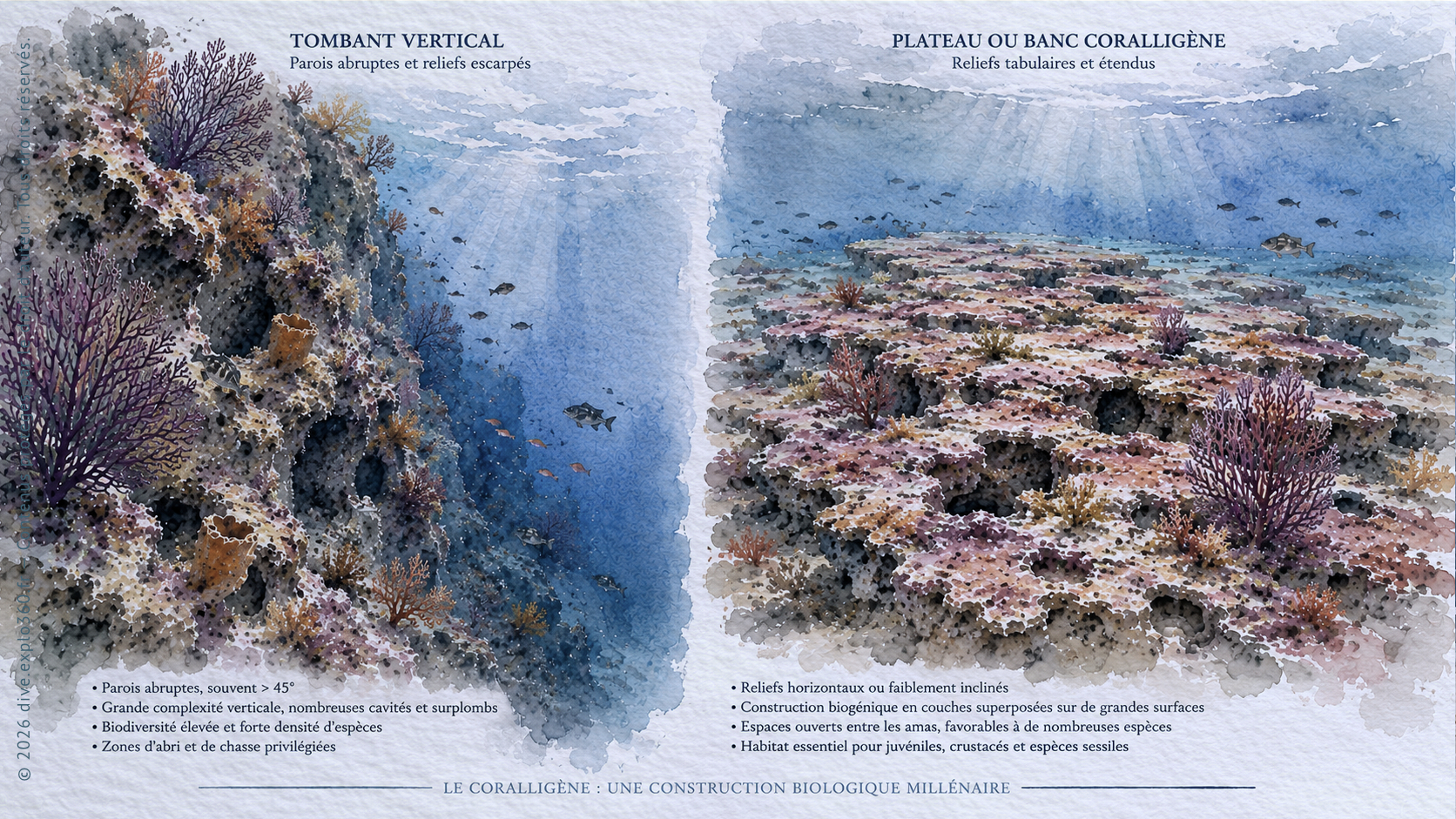
WALL CORALLIGENOUS HABITATS
Organisms colonise walls, cracks, cavities and overhangs.
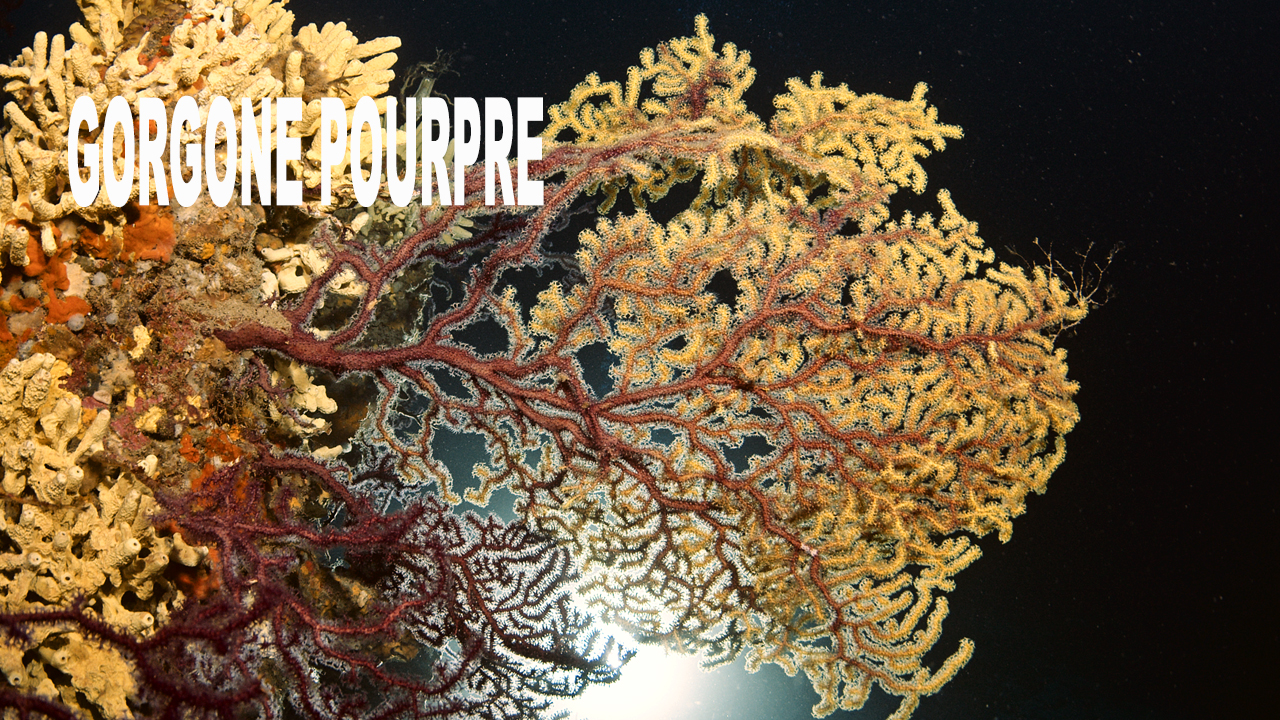
Sea fans, sponges and other organisms make the landscape very complex.
PLATFORM OR BANK CORALLIGENOUS HABITATS
The structure then often consists of blocks, bumps, depressions and cavities.
Light and sediment deposits do not act in exactly the same way as on a vertical wall.
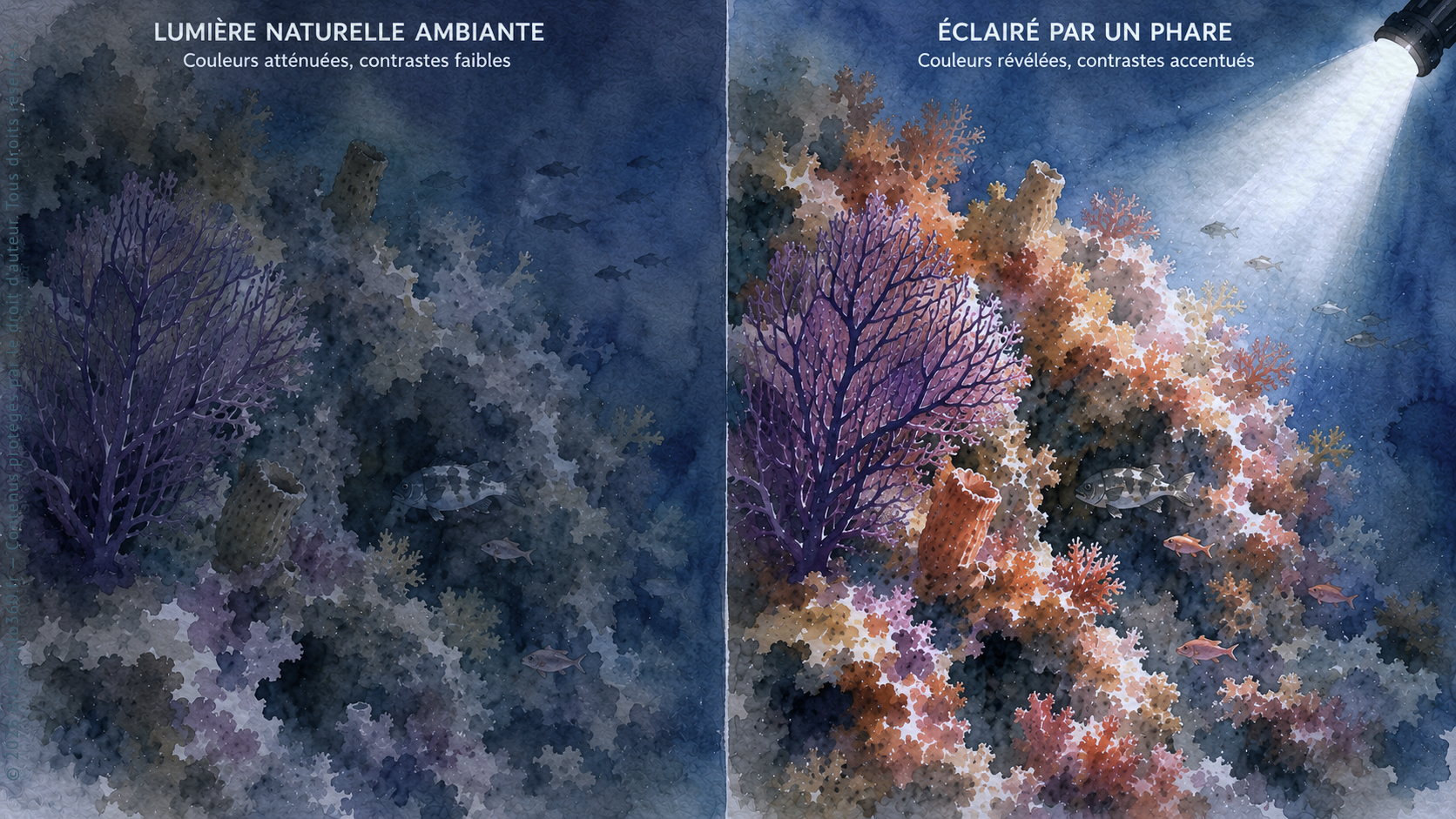
These colours come from pigments in the different organisms.
But underwater, not all colours remain equally visible.
With increasing depth, reds and oranges are strongly reduced and look much darker.
When a diver switches on a torch, these colours become visible again.
The torch therefore does not create the colours: it allows us to see them again.
AMIGANSEAU CONTENT
The rest of this article is for subscribers
Log in with your AMIGANSEAU licence to continue reading.
All active AMIGANSEAU licences give access to the full article.Explore the same world