
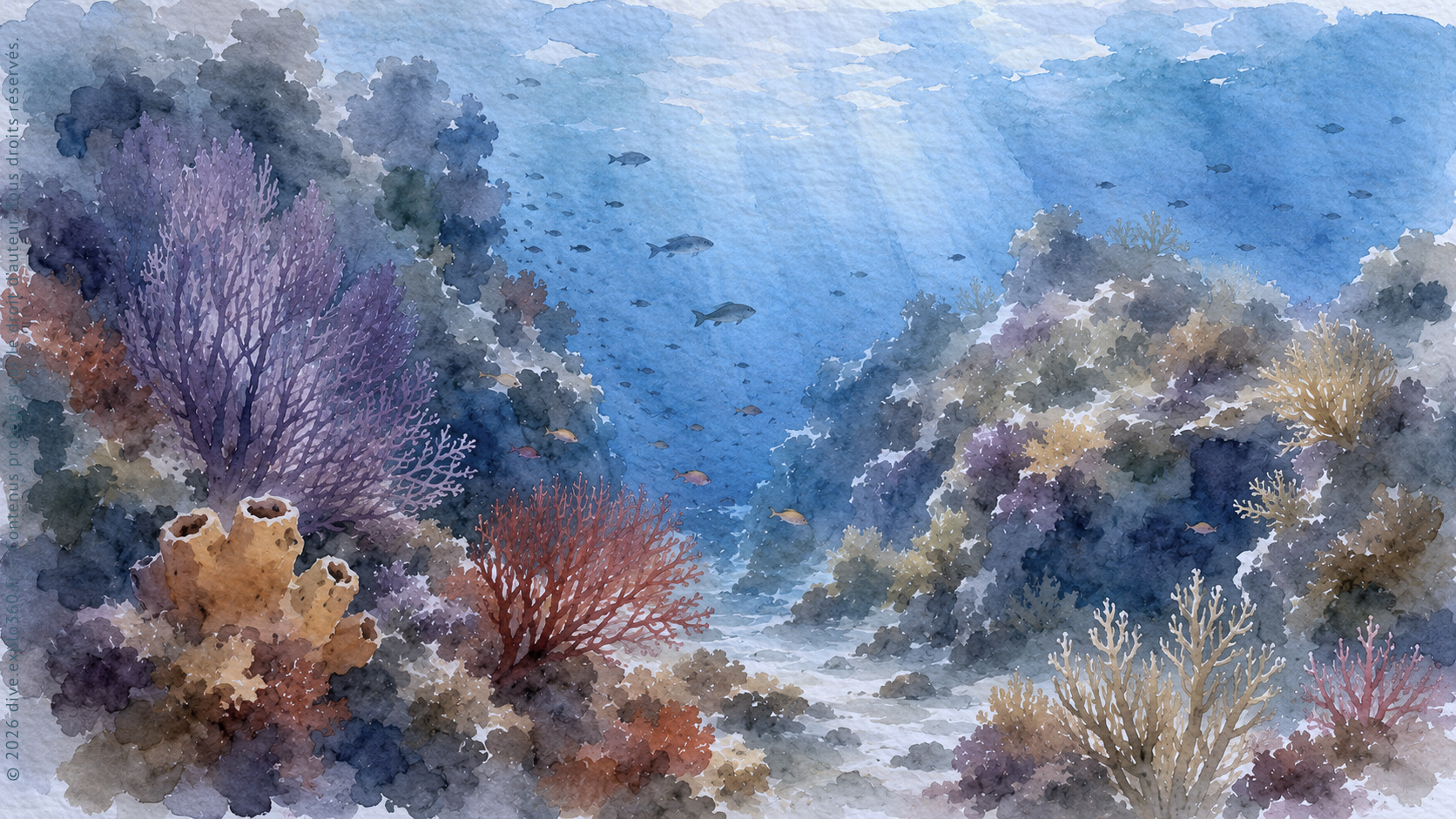
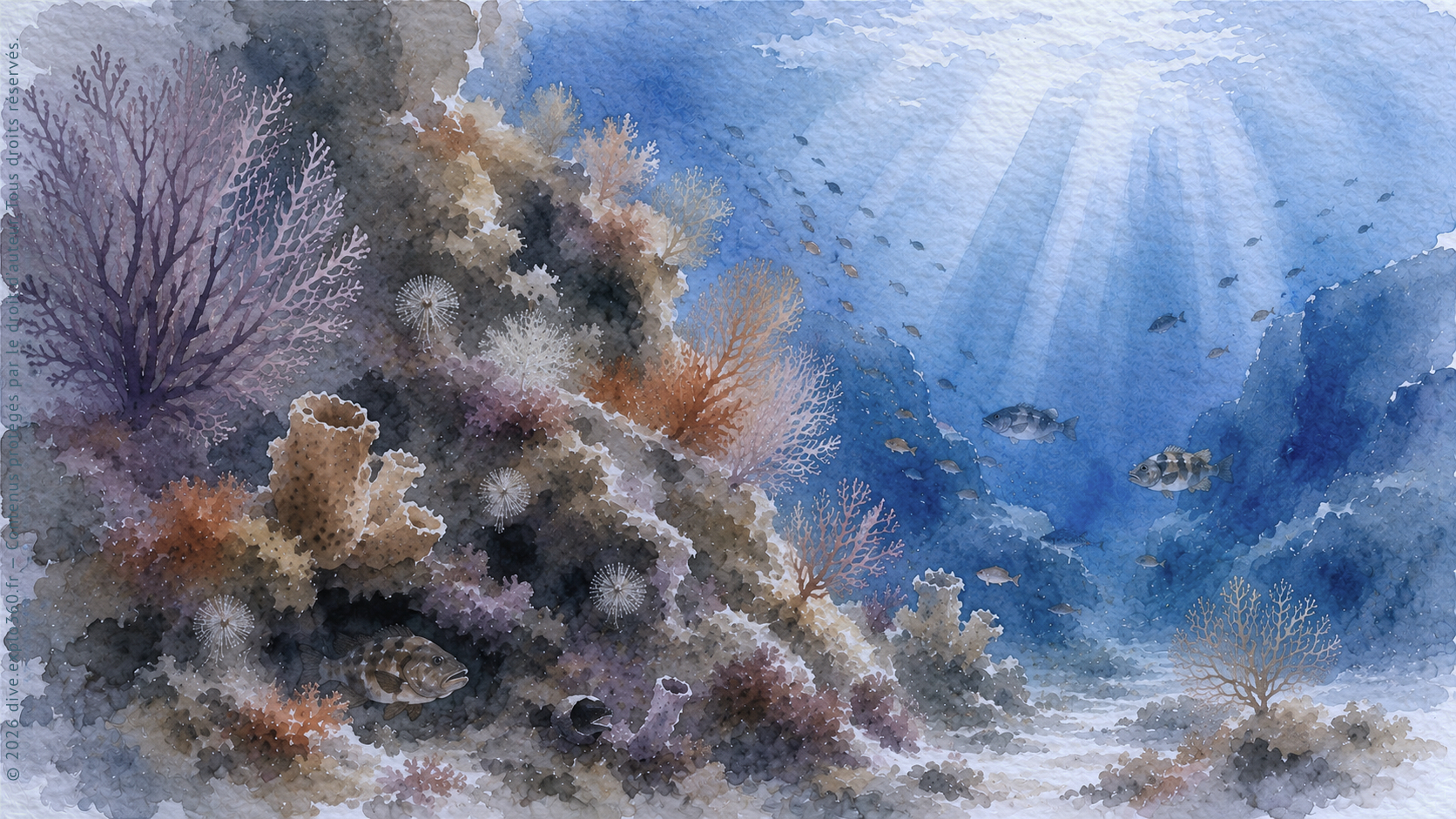
Yet part of this structure was itself built by life.
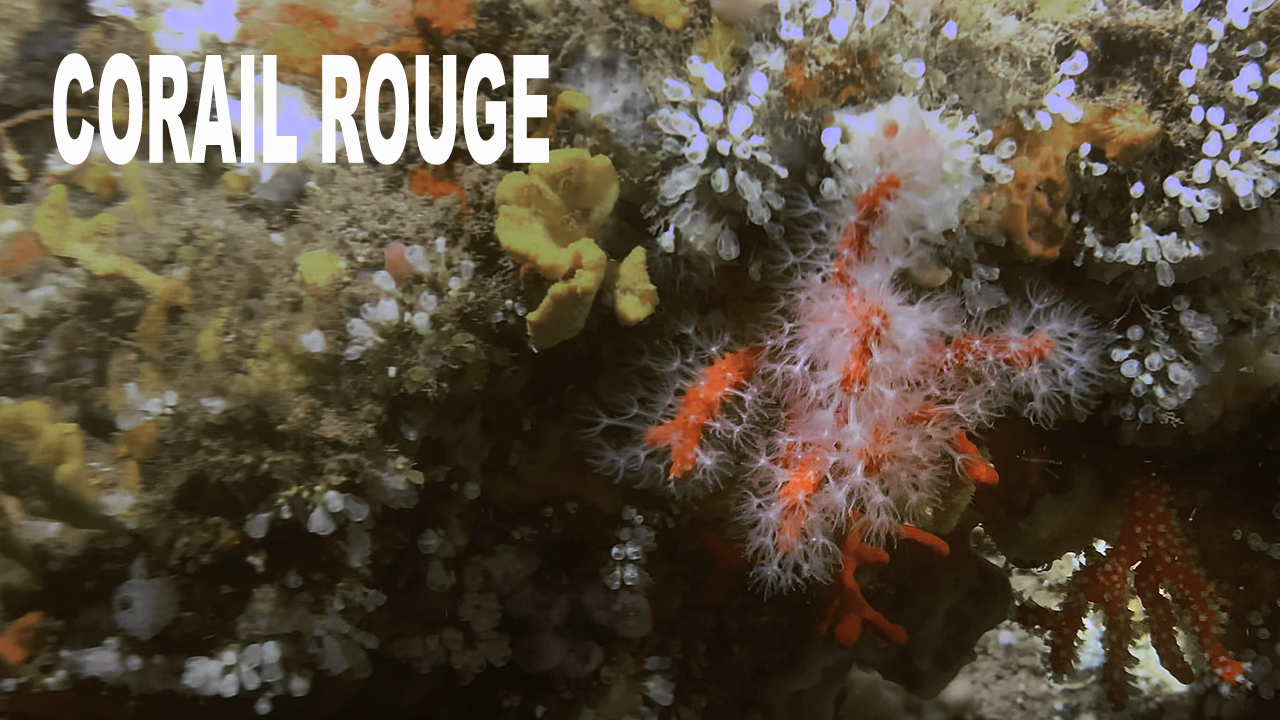
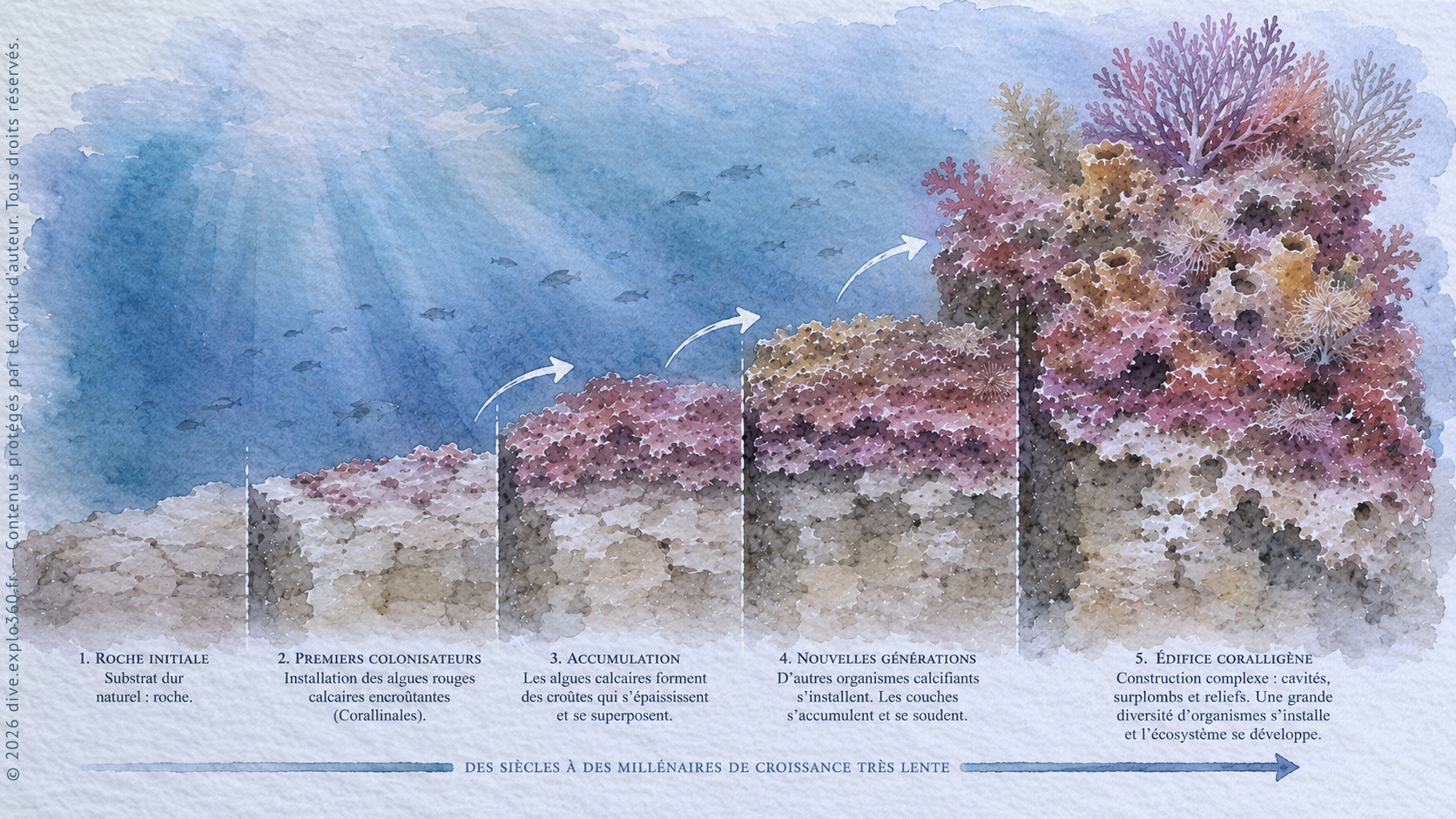
The main architects notably include encrusting calcareous red algae. They deposit calcium carbonate in their tissues and gradually form mineral structures.
Generation after generation, these constructions accumulate, creating a complex structure on which many other organisms can settle.
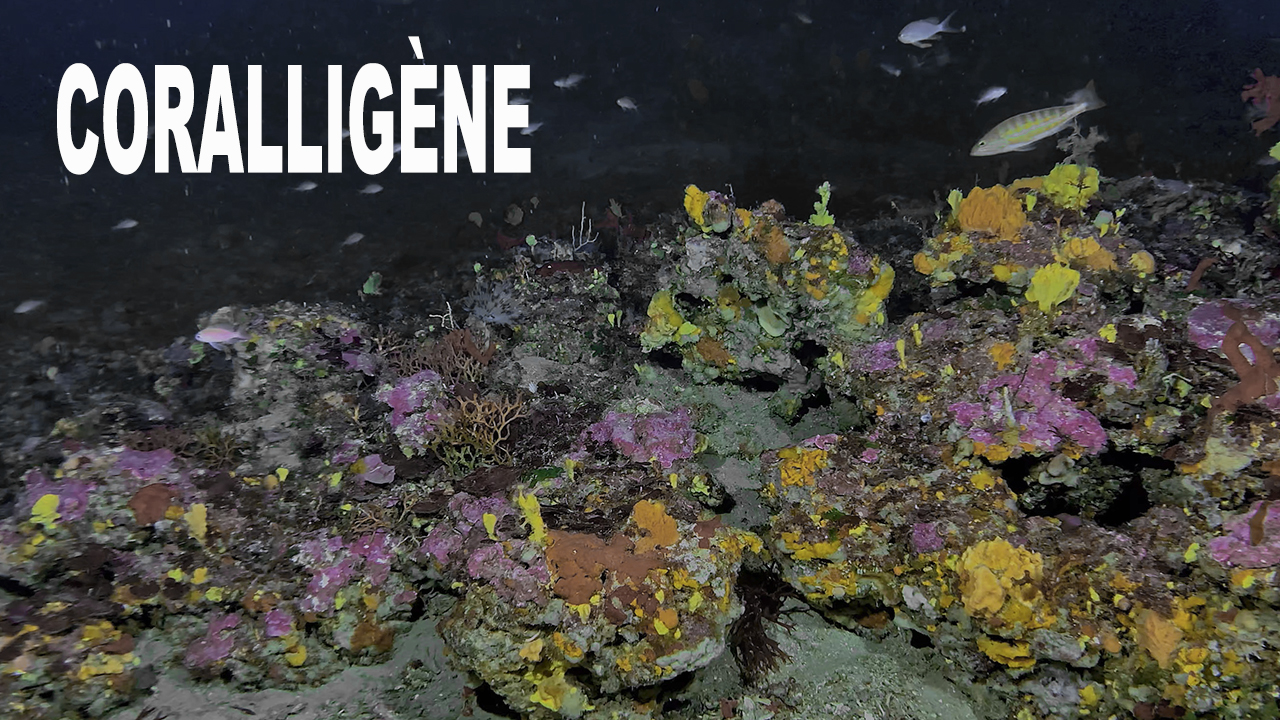
A coralligenous habitat is therefore simultaneously a landscape, an ecosystem and a continually evolving biological construction.
BUILDING
Building organisms gradually add material to the formation.
STRENGTHENING
STARTING AGAIN
The coralligenous structure thus grows through successive accumulations.
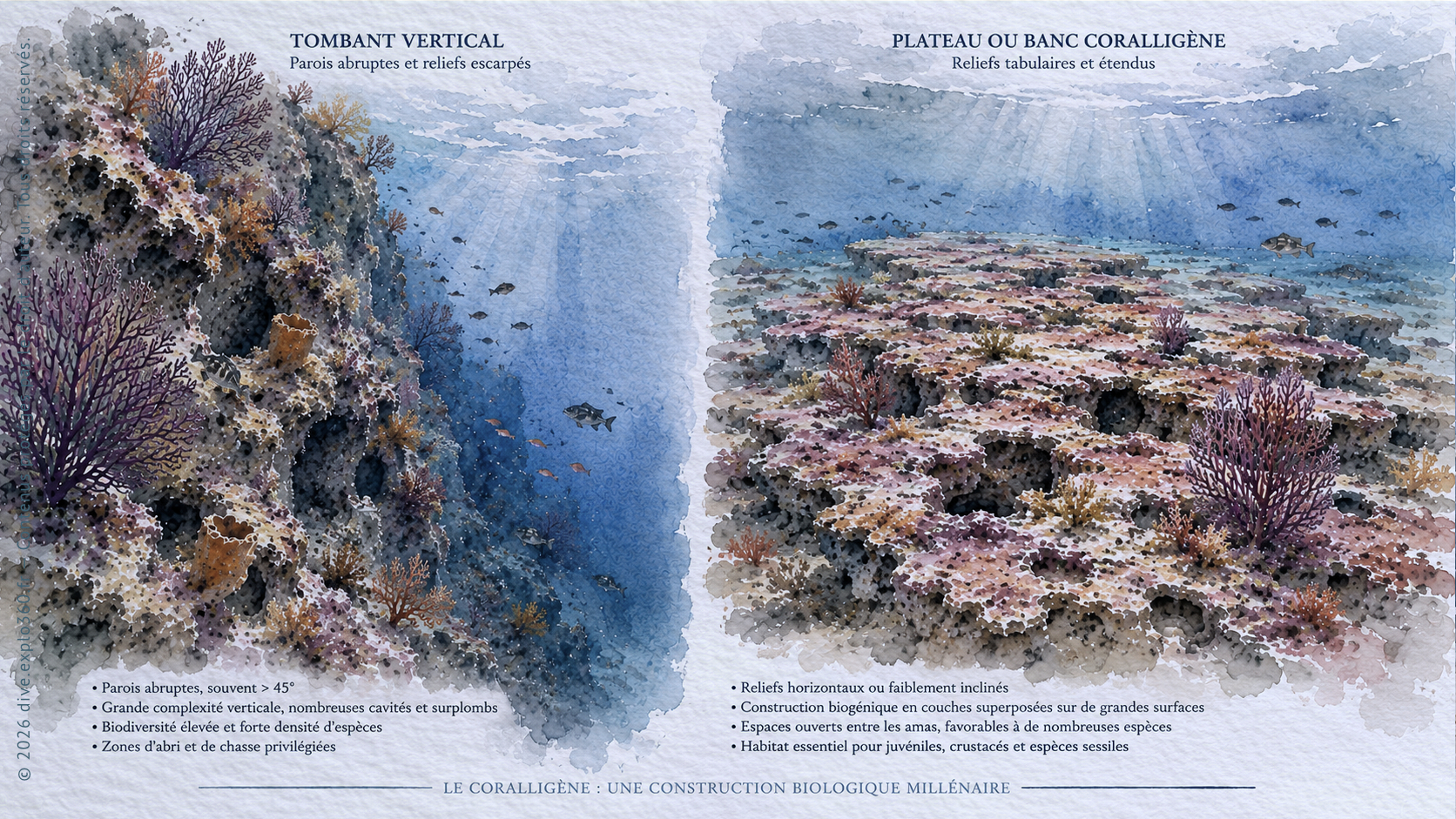
WALL CORALLIGENOUS HABITATS
Walls, overhangs, cracks and cavities can be colonised.
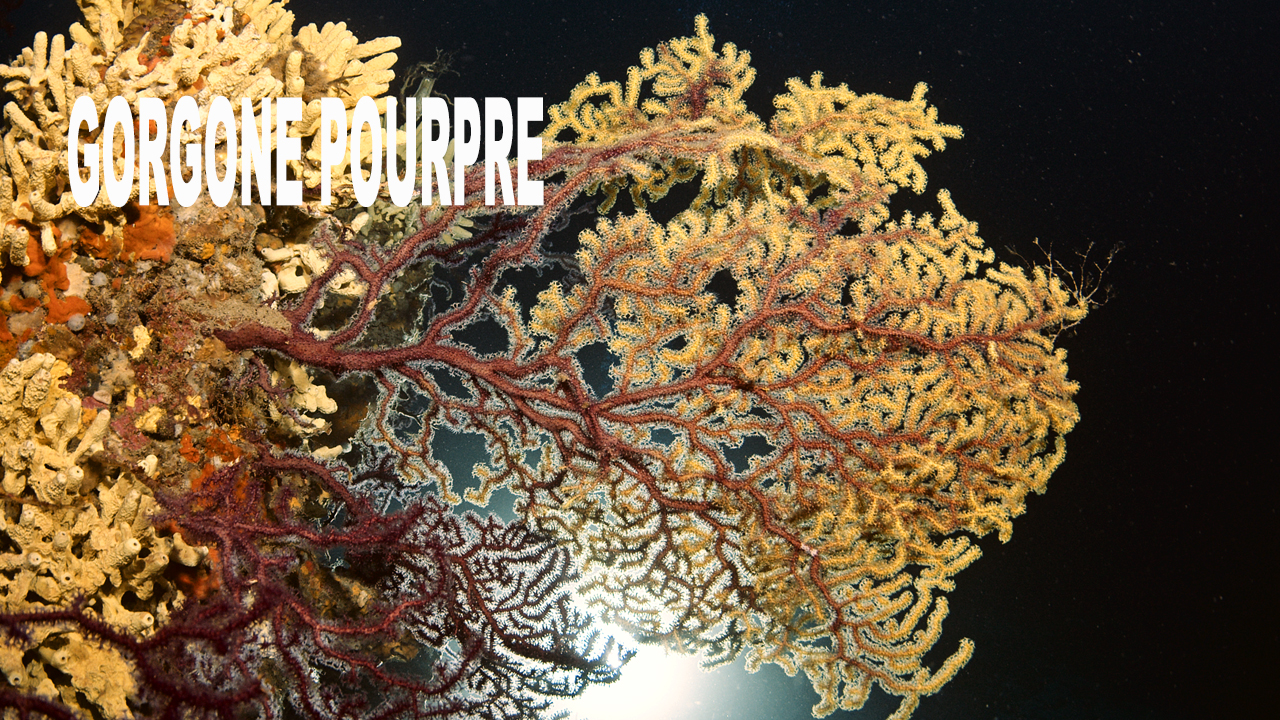
Sea fans, sponges, bryozoans, sea squirts and other upright organisms then make the landscape particularly complex.
PLATFORM OR BANK CORALLIGENOUS HABITATS
Light and especially sedimentation do not act in exactly the same way as on a vertical wall.
The landscape may be lower and irregular, with blocks, bumps, depressions and cavities.
In both cases, the principle remains the same: biological construction, slow growth and continual competition for space.
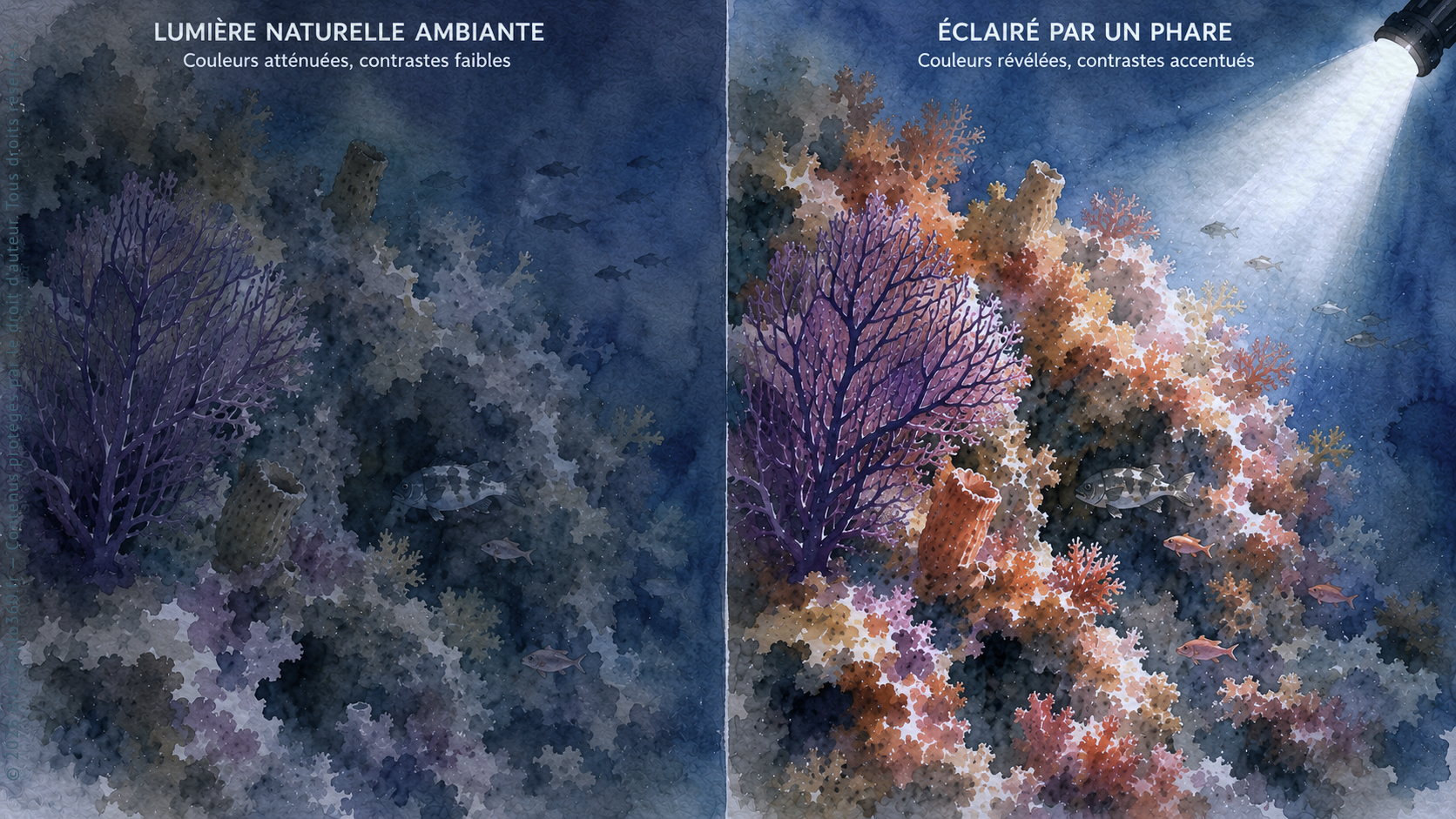
These colours come from pigments with different biological functions. In algae, some notably contribute to photosynthesis. In other organisms, they may help protect cells or play a part in various biological mechanisms.
With increasing depth, certain wavelengths are strongly attenuated. Reds and oranges in particular become much darker.
A diver's torch reintroduces these wavelengths and reveals colours that have become difficult to perceive under natural light.
The torch therefore does not create the colours: it reveals them.
AMIGANSEAU CONTENT
The rest of this article is for subscribers
Log in with your AMIGANSEAU licence to continue reading.
All active AMIGANSEAU licences give access to the full article.Explore the same world