
A world built by life
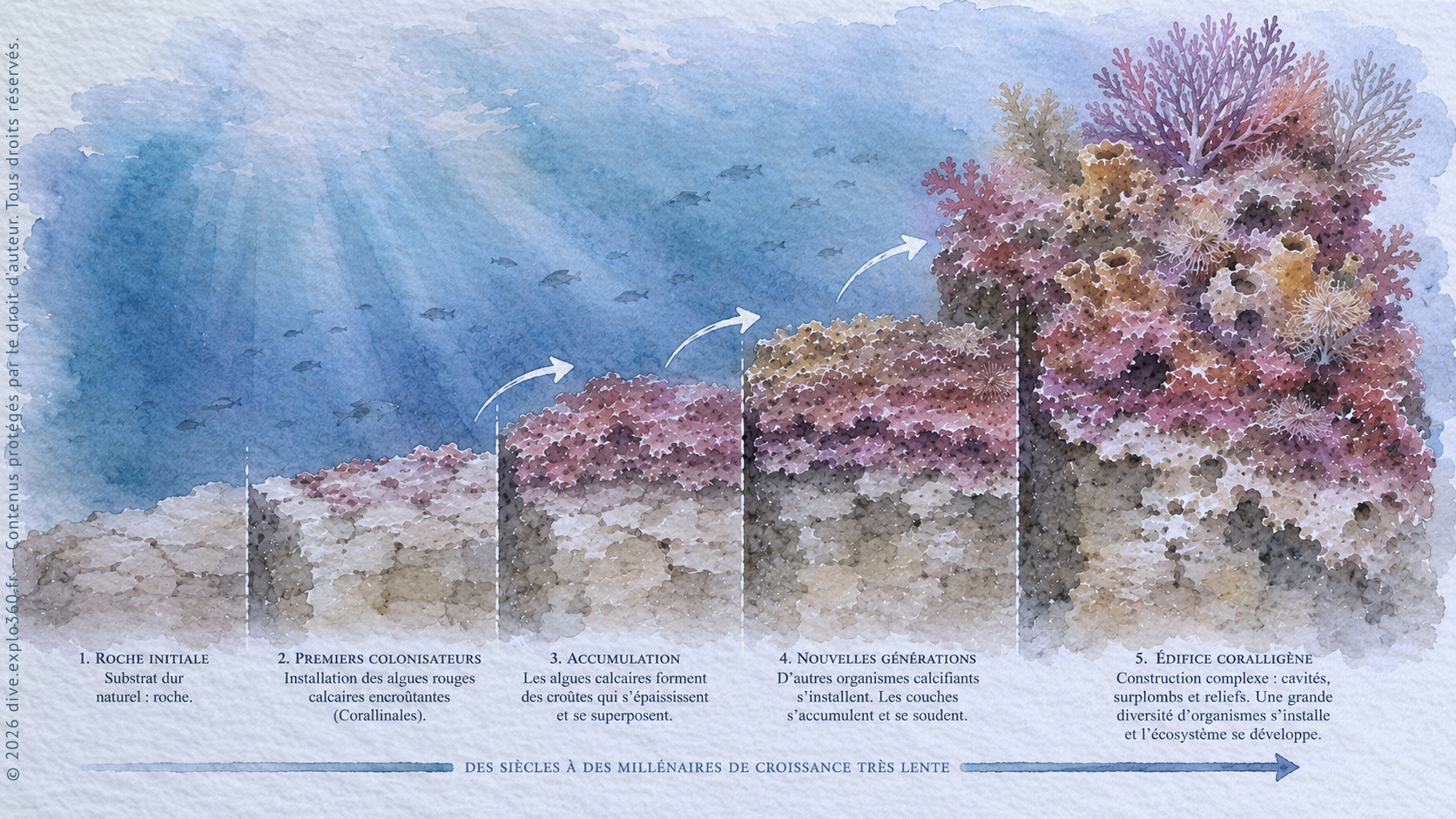
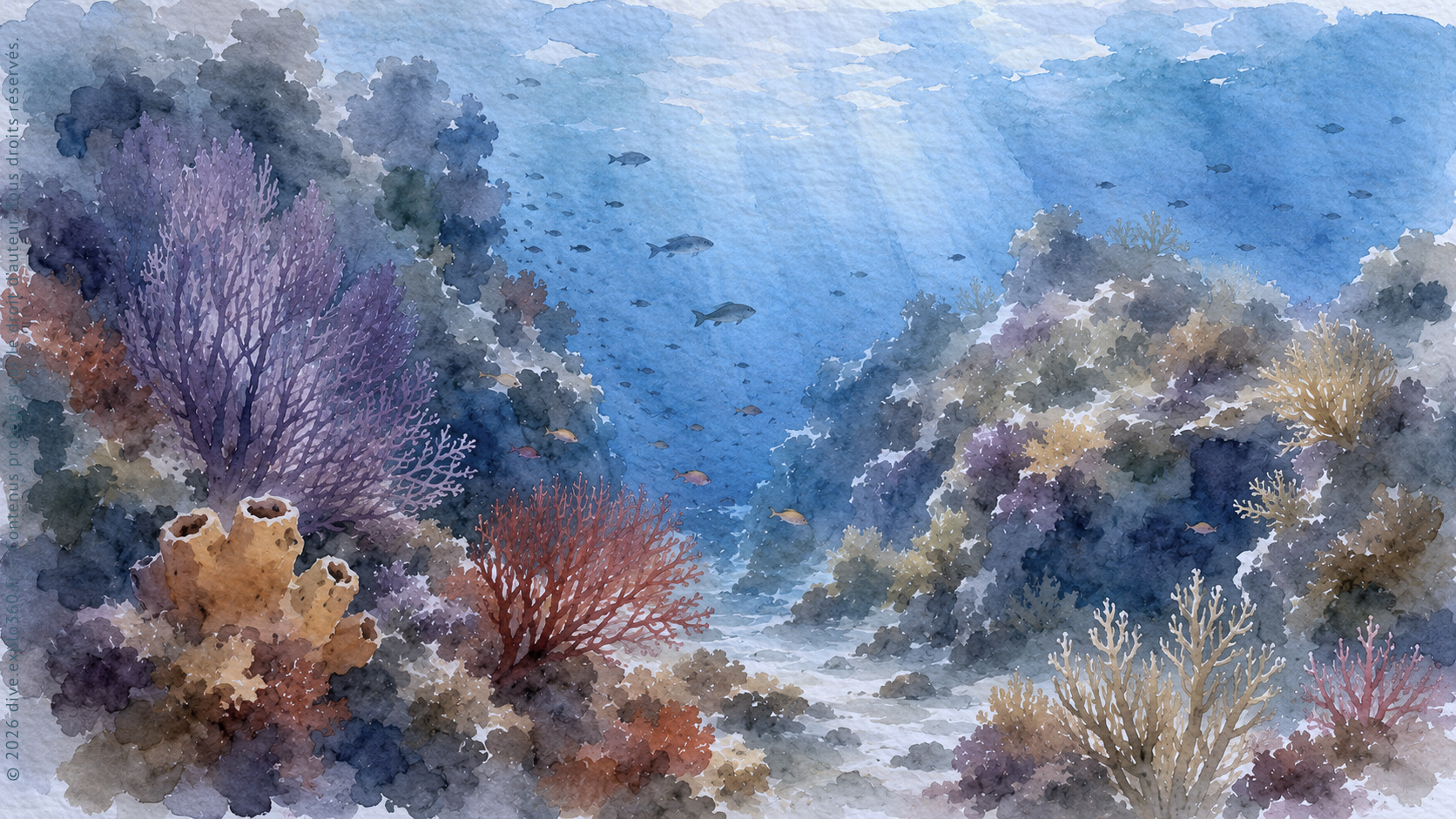
The coralligenous habitat is a landscape built very slowly by living things. Calcareous organisms gradually accumulate and help shape the structure. © dive.explo360.fr — All rights reserved. Reproduction prohibited without permission.
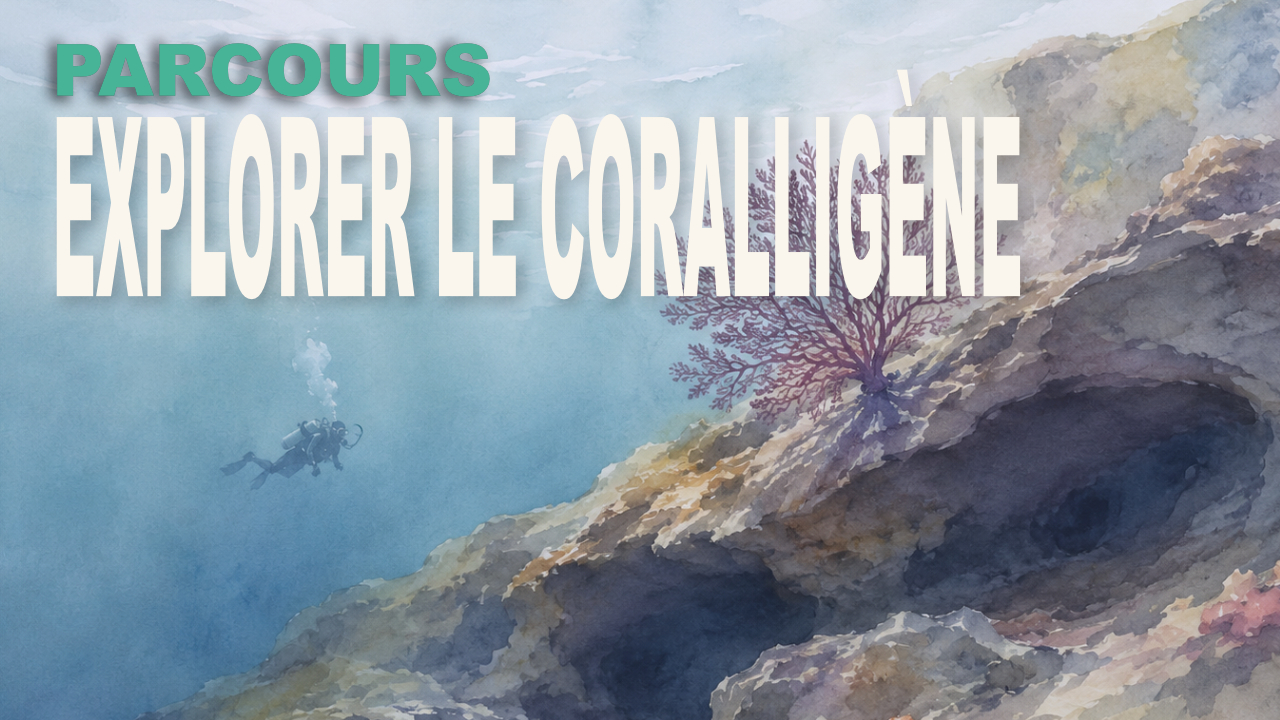
Imagine a wall covered in sea fans, sponges and many small animals.

You might think that all these living things simply settled on a rock.

But part of the structure was itself built by living organisms.

Small calcareous red algae make a hard material containing calcium carbonate.

Over time, layers accumulate and gradually form the coralligenous habitat.

1

BUILDING

Organisms make and add hard material.
2

STRENGTHENING

Other organisms cover some surfaces and help strengthen the whole structure.
3

STARTING AGAIN

New generations grow on top of earlier ones.
Very slow construction
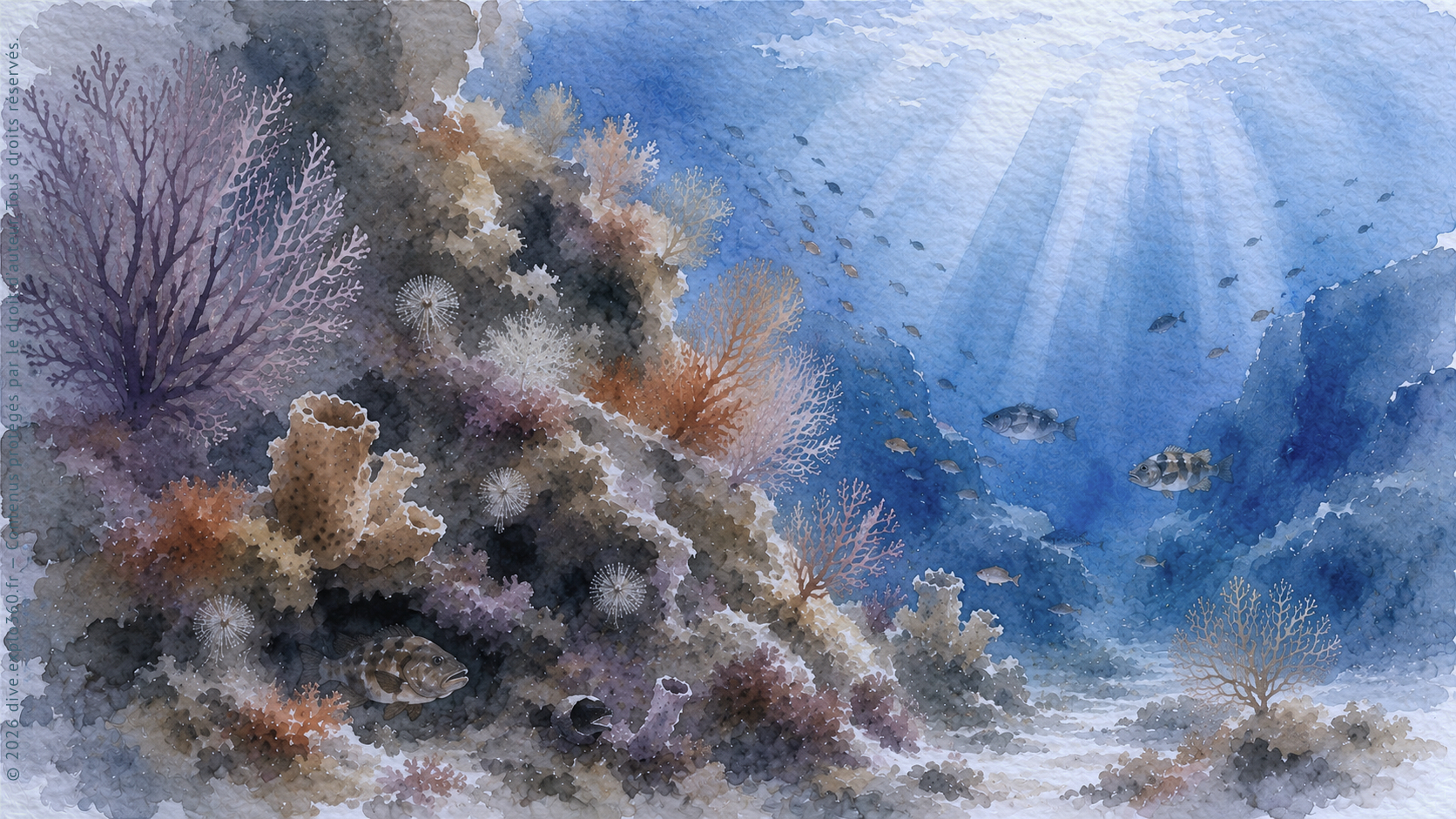
Coralligenous structures grow extremely slowly. Their construction can take hundreds or even thousands of years. © dive.explo360.fr — All rights reserved. Reproduction prohibited without permission.
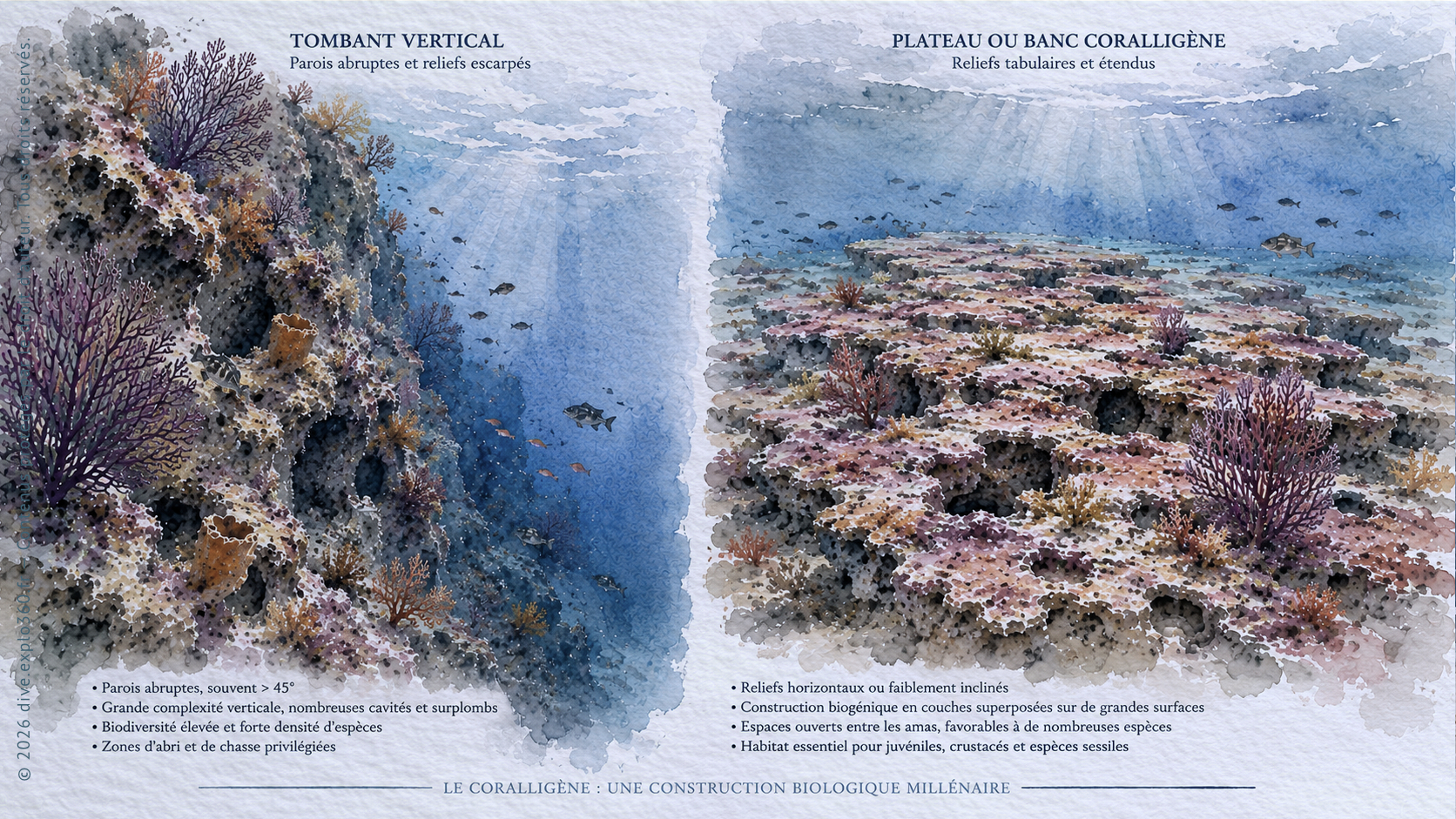
1

THE WALL

They can develop on a large vertical wall.

Animals live on the walls, in cracks, beneath overhangs and inside cavities.

Large sea fans sometimes give the impression of an underwater forest.

2

THE PLATFORM

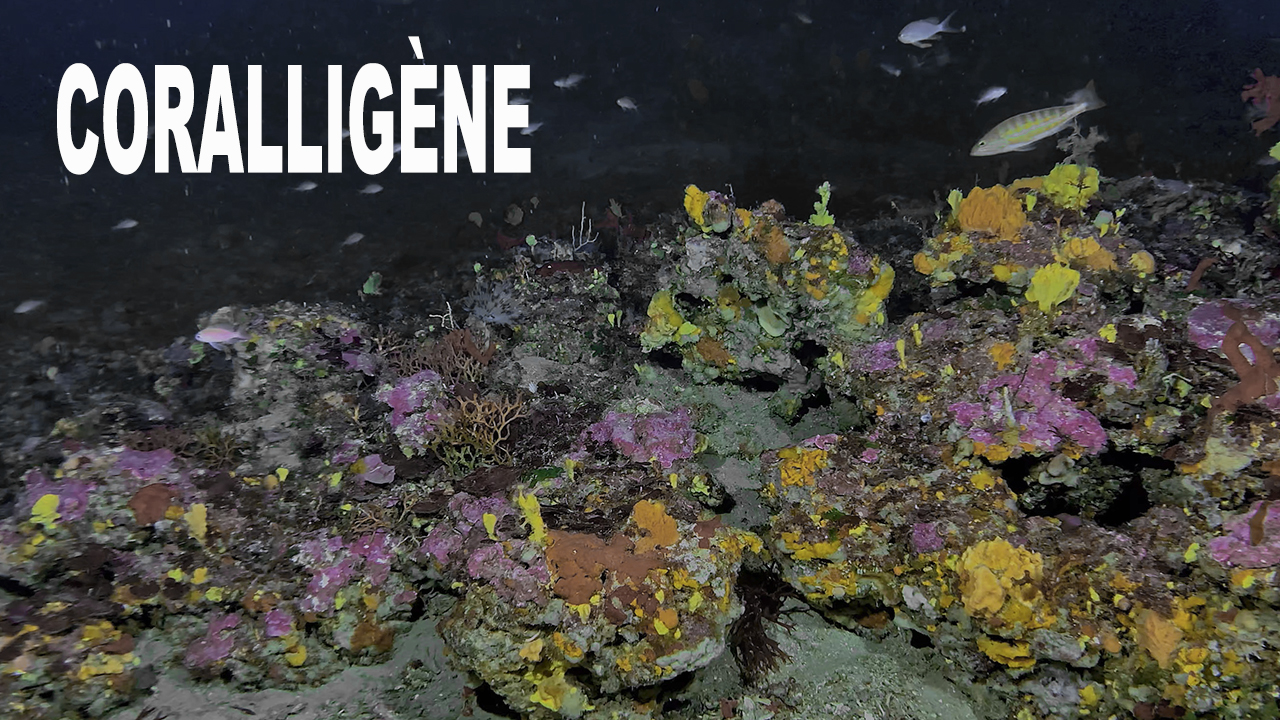
Coralligenous habitats can also develop on more horizontal seabeds.

They then form bumps, blocks, hollows and cavities.

In both cases, the landscape has been slowly built by living things.
Walls and platforms
Coralligenous habitats can form walls or platforms. Their shapes differ, but their construction relies on the same main processes. © dive.explo360.fr — All rights reserved. Reproduction prohibited without permission.
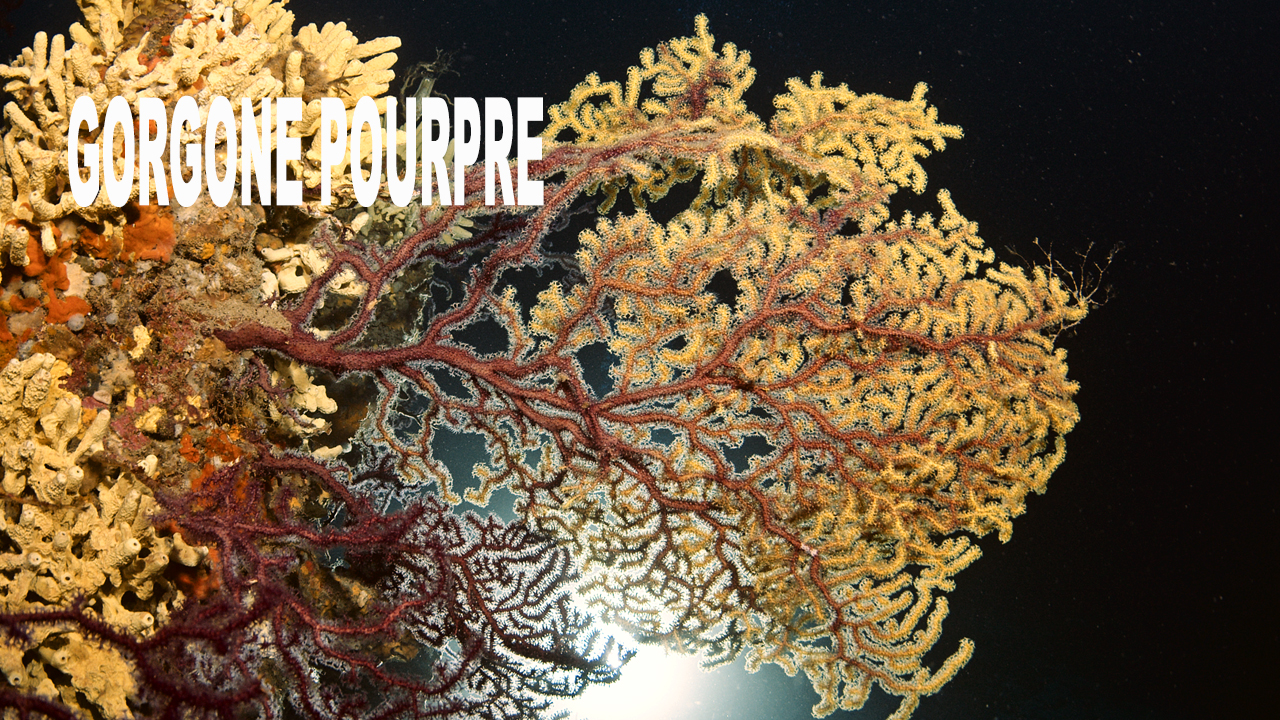
Red, orange, yellow, pink, purple…

Coralligenous habitats can be very colourful.

Yet underwater, some colours become difficult to see with increasing depth.

Red and orange in particular become much darker.

When a diver switches on a torch, these colours appear again.

They were already there: the torchlight simply makes them easier to see.
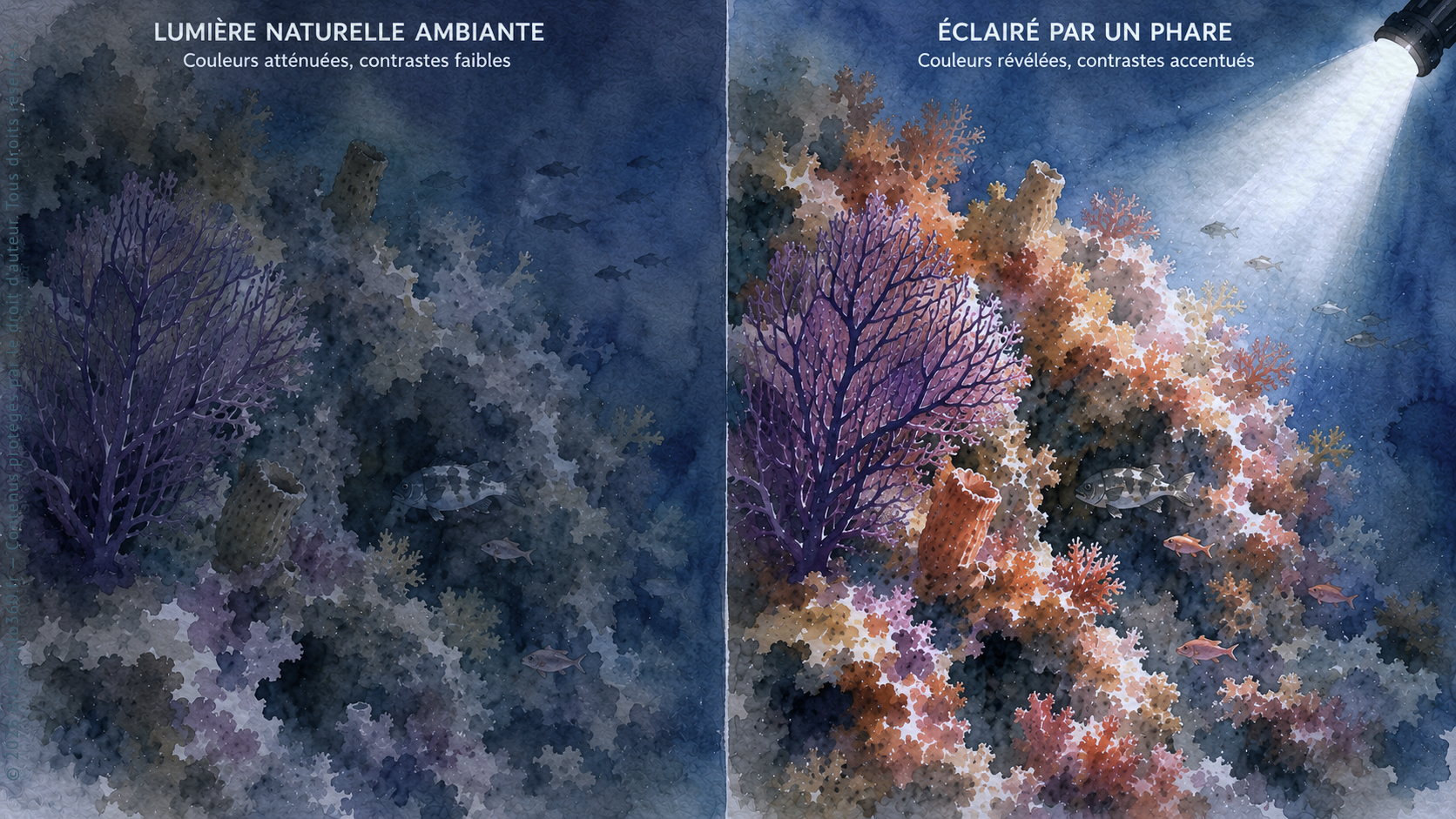
Why so many colours?
With increasing depth, some colours become difficult to see. A diver's torch reveals them again. © dive.explo360.fr — All rights reserved. Reproduction prohibited without permission.

AMIGANSEAU CONTENT

The rest of this article is for subscribers

Log in with your AMIGANSEAU licence to continue reading.

All active AMIGANSEAU licences give access to the full article.