A concert without a conductor
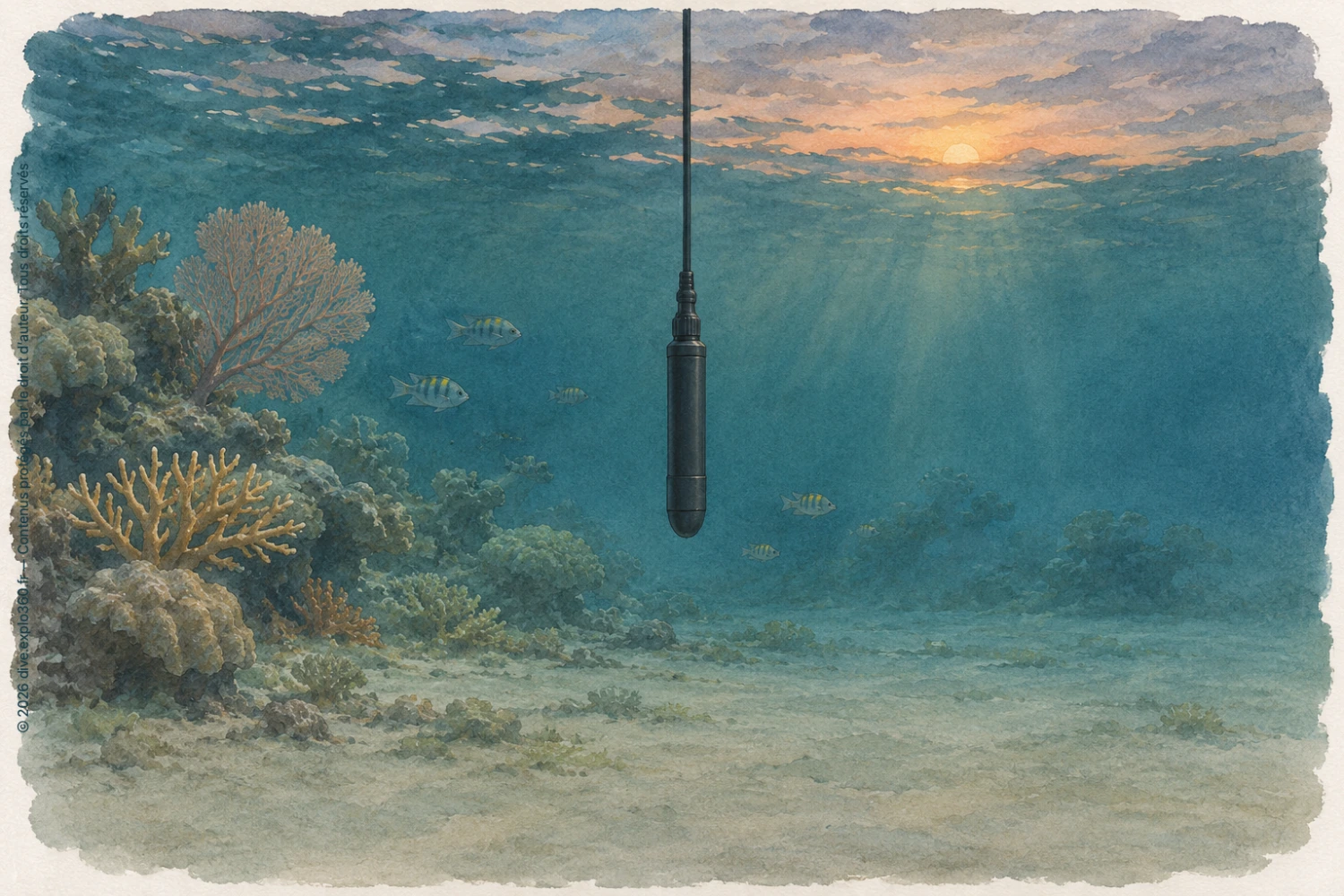
A hydrophone, a microphone designed for underwater use, picks up sounds a diver might easily miss. Sharp clicks and low pulses overlap in the recording. The animals share the recording with waves, currents and, in some places, passing boats. Waves, bubbles and water movements produce their own acoustic signatures, but in the midst of these sounds, living organisms add a multitude of signals.
Some fish emit low-pitched pulses or repetitive series of sounds. Snapping shrimp produce particularly short pulses. Other invertebrates also contribute to ambient sound. The result varies considerably from reef to reef. Depth, seabed shape, weather and time of day all affect what a hydrophone picks up. Move the microphone or come back at dusk and you may hear a different mix of sounds.
How a tiny shrimp makes such a loud snap
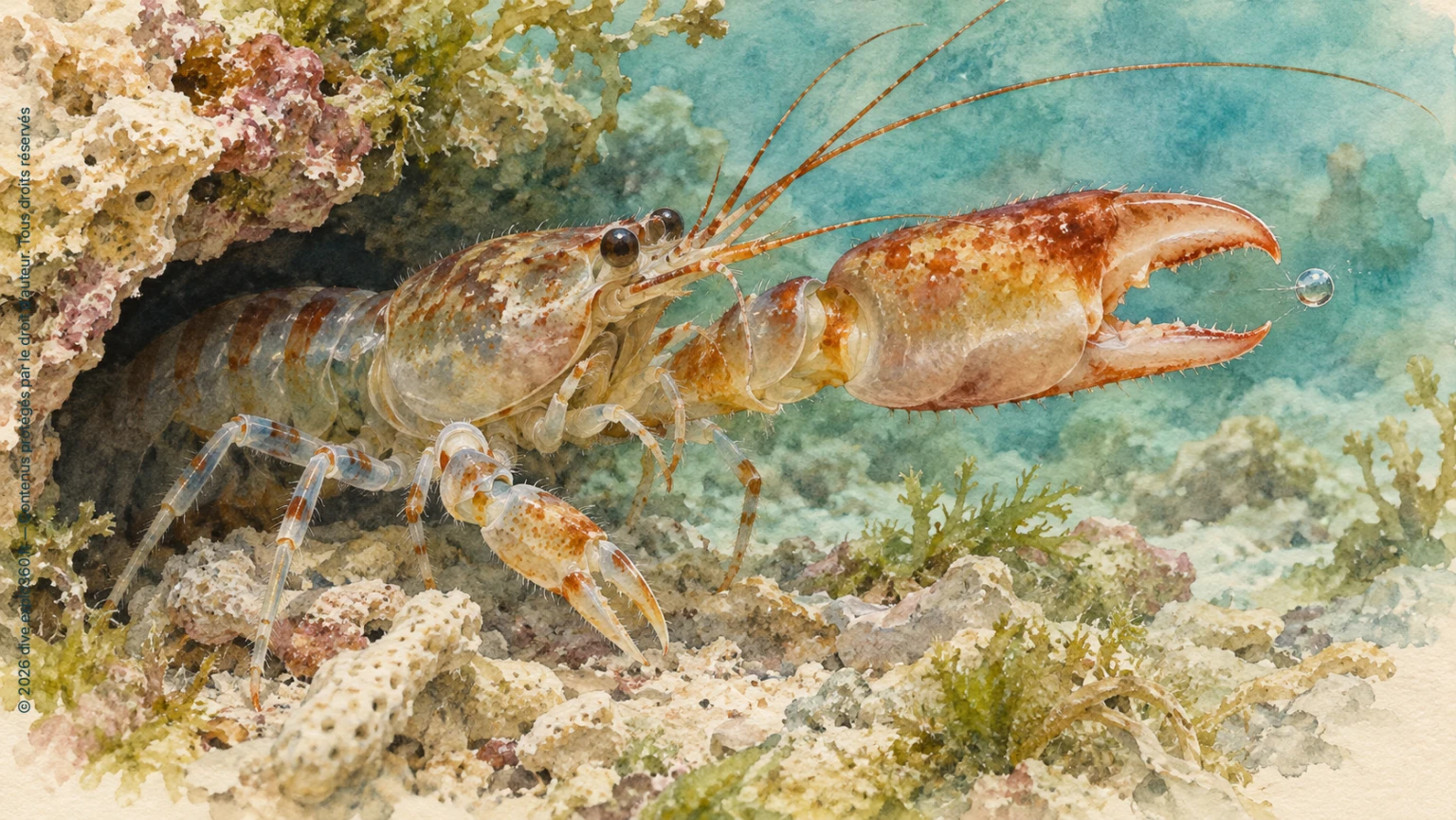
Much of the crackling on a tropical reef comes from snapping shrimp, particularly those in the family Alpheidae. These crustaceans have a specialised claw, often much larger than the other. The claw snaps shut and drives a fast jet of water. The pressure drops enough for a vapour bubble to form through cavitation. Its collapse produces the sharp pulse.
The pulse comes from the water just beyond the claw. Depending on the species and the encounter, a shrimp may use the snap in hunting or defence. But when many shrimp occupy the cavities of a reef, their impulses overlap. Together they make an almost continuous crackle, like food frying.
This activity contributes significantly to the soundscape of many tropical reefs, particularly in relatively high frequencies. A shrimp only a few centimetres long can make a sound that carries well beyond its crevice.
Fish make sounds too
Listen behind the crackle and you may hear a grunt or a short run of taps. In some species, specialised muscles vibrate the swim bladder. In others, sounds come from movements or contacts between bone structures. These mechanisms produce grunts, drumming, pulsations or short series of taps. Fish may make these sounds during courtship or when another fish enters their territory.
For example, damselfish include species that produce sounds during interactions with members of the same species. Some fish repeat calls when they breed. Others make short sounds during confrontations. Some sounds may also come from the movements of the fish itself. But their accumulation gives the reef a particular acoustic signature.
And this signature can change throughout the day.
The reef sounds different at noon and midnight
During the day, some species of fish move, defend their territory or seek their food. Others remain hidden. At nightfall, the activity of many organisms changes. Some fish retreat to their shelters, while nocturnal species become more active. As one group retreats and another becomes active, the mix of sounds changes. Recordings from several reefs show conspicuous shifts around dawn and dusk, with calls becoming more prominent in some frequency bands.
Shrimp can maintain significant acoustic activity during the day and at night, with variations depending on species and sites. The timing and strength of these changes depend on the animals present. The weather can also profoundly change what you hear. Wind, swell, rain and surges add sounds that can mask those of organisms. A burst of rain can mask a fish chorus even while the fish are still calling.
A larva in the open ocean
The animal listening from open water may be only a few millimetres long. Many reef fish spend their first weeks as larvae in the water column, where currents can carry them away from the reef on which they hatched. As they grow, some become able to swim actively and change their trajectory. Finding a suitable reef at the end of that journey is another matter.
A reef can be relatively small on the scale of movements during larval life. It can also be difficult to distinguish in the surrounding water. Larvae use several kinds of sensory cues: some respond to chemical signals, others use light or visual cues, and currents also influence their movement. Sound can give a larva another clue as it approaches the reef.
In several groups of reef fish, larvae close to metamorphosis can perceive the sounds produced by fish and shrimp. A fish’s inner ear detects the tiny movements of water particles set in motion by sound. These movements can provide information about the sound environment. A larva can detect that movement and still struggle to determine the direction of its source.
For some larvae, however, this information is sufficient to influence their behaviour.
Explore the same world