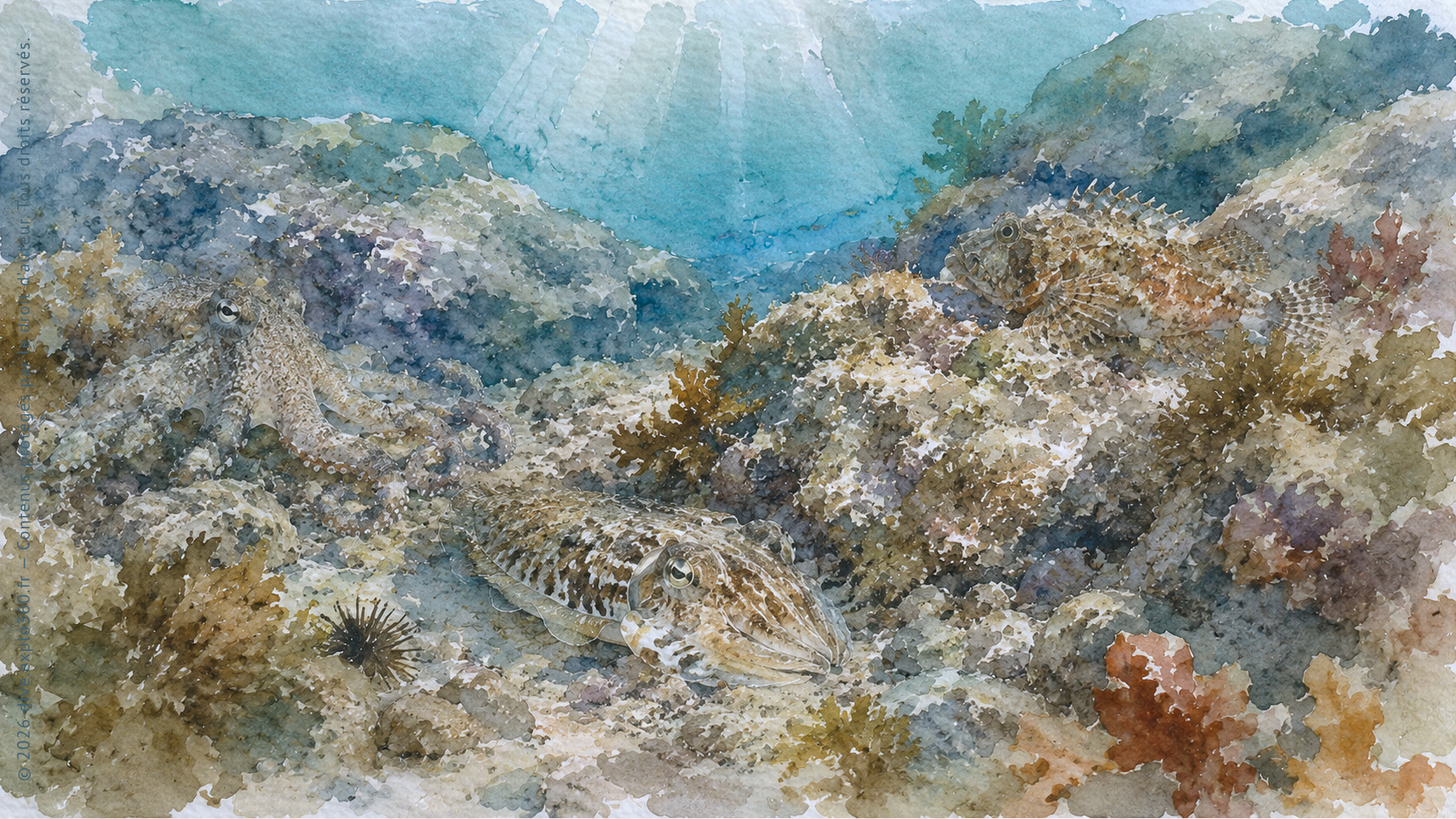
Predators do not see everything
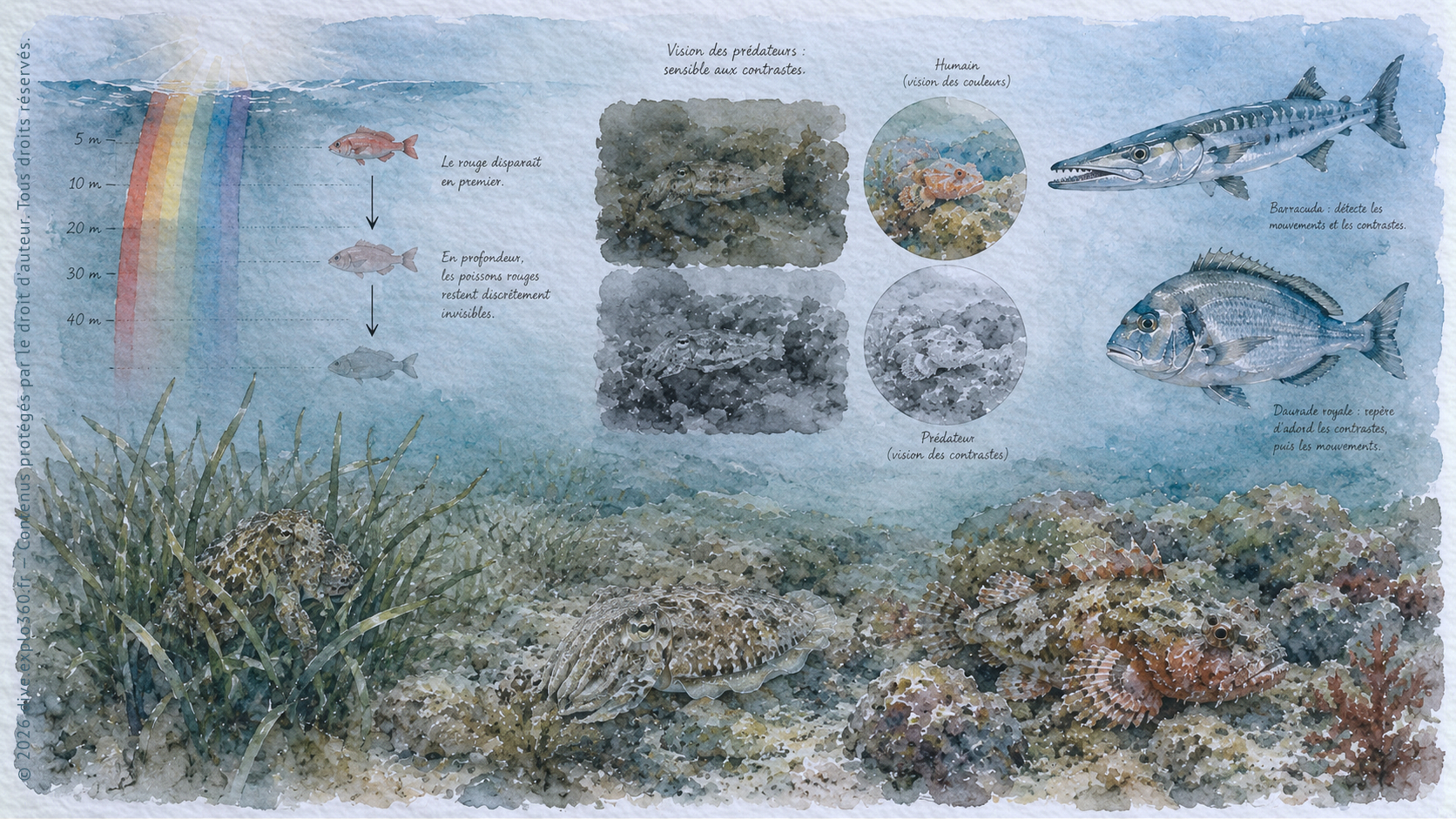
An animal’s visibility depends on light, distance and the viewer’s visual system. Matching the background may reduce contrast; irregular patterns can make outlines harder to follow. Predators do not all see the same colours, so camouflage effective against one may be less effective against another.
ACTIVE CAMOUFLAGE
Some animals can change their appearance.
Cuttlefish and octopuses can quickly change their colours and patterns. Octopuses can also alter their skin texture.
These transformations allow them to blend better into their environment.
Chromatophores
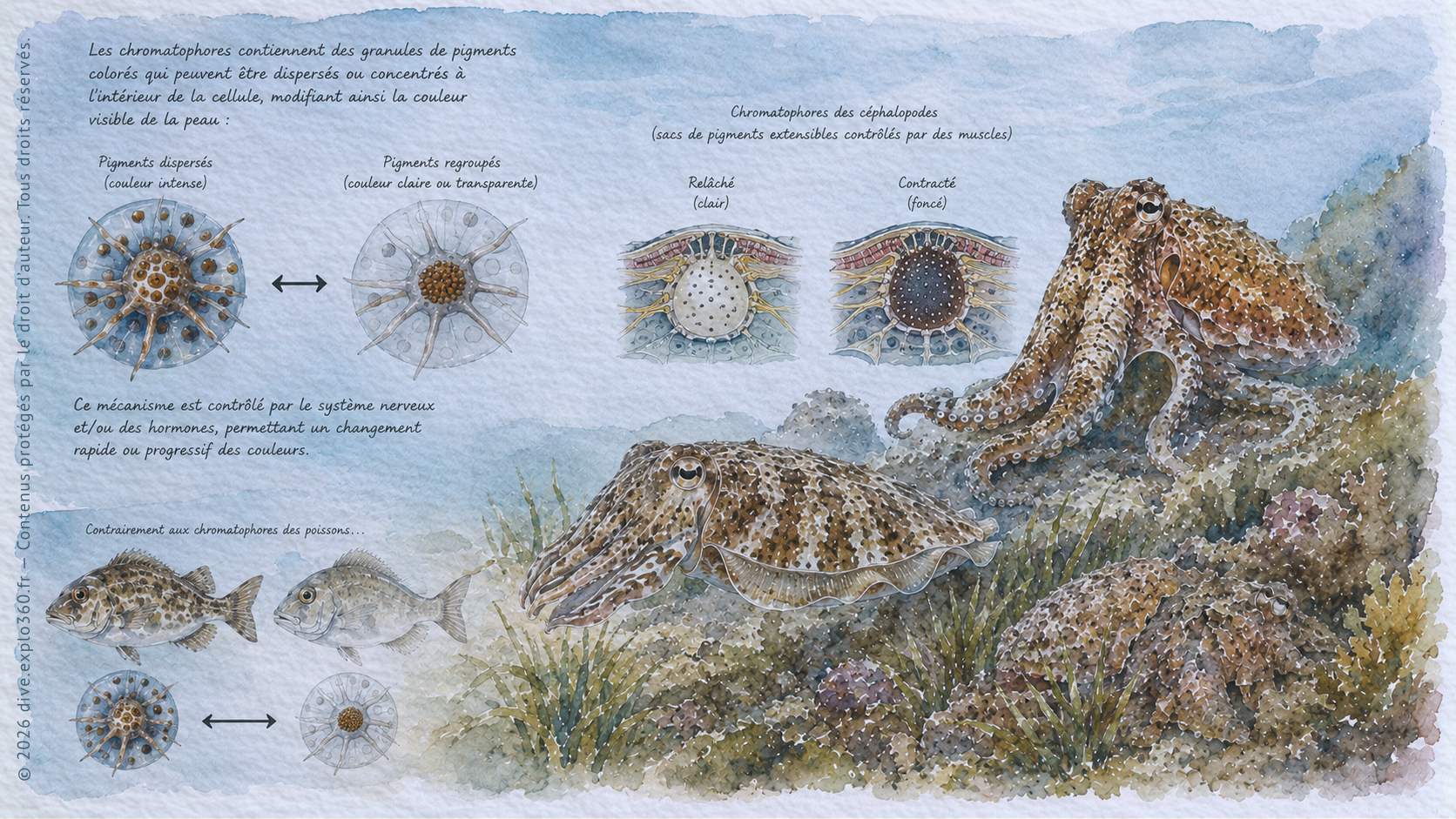
In cuttlefish and octopuses, muscles expand or relax small pigment sacs called chromatophores. The visible coloured area changes rapidly under nervous control.
In many fish, colour change instead involves pigment granules moving within cells. These two mechanisms should not be confused.
PASSIVE CAMOUFLAGE
Other animals do not change colour quickly.
Their bodies already have colours, shapes or patterns similar to their surroundings. By remaining still, they become even harder to spot.
Explore the same world