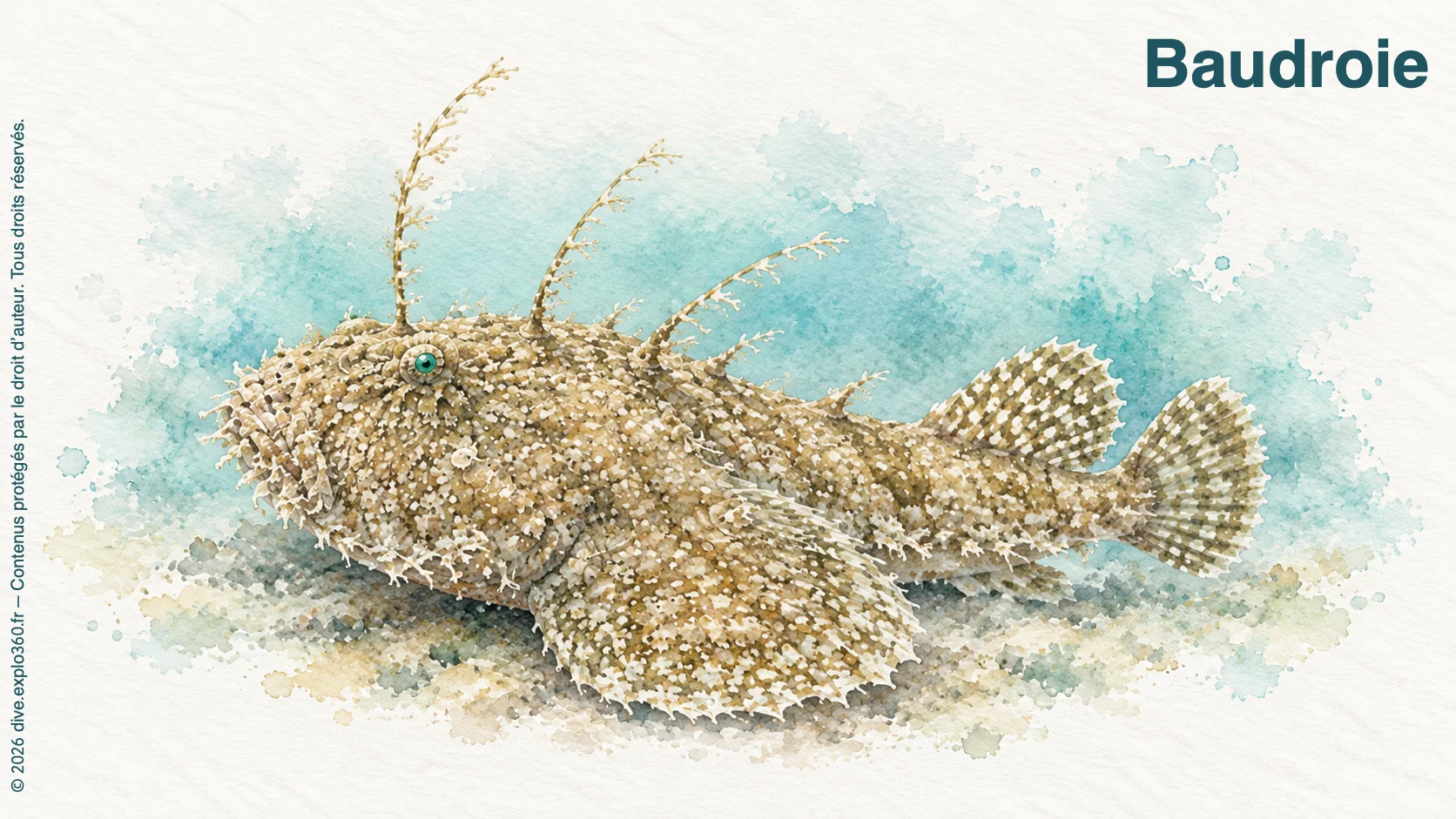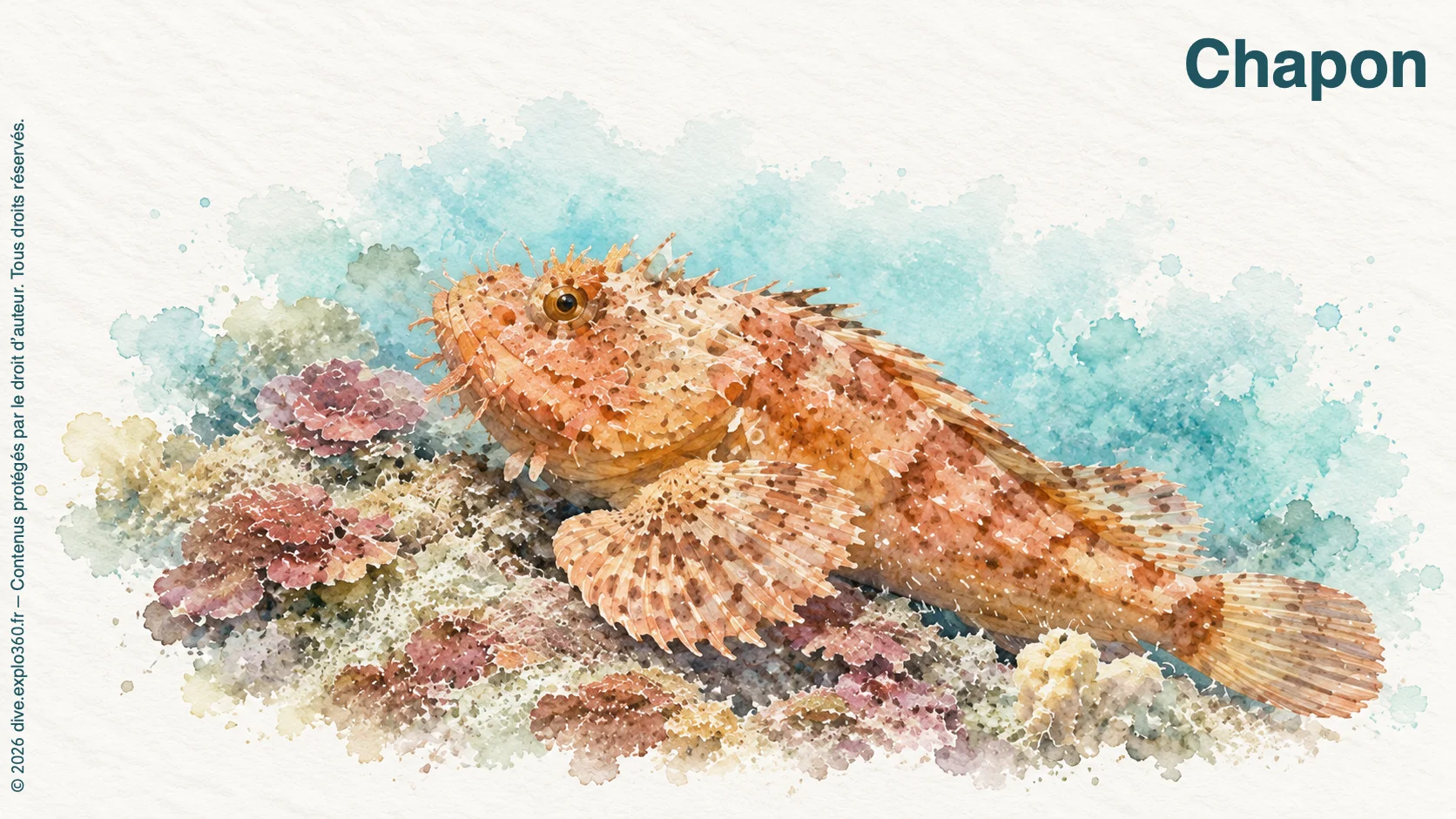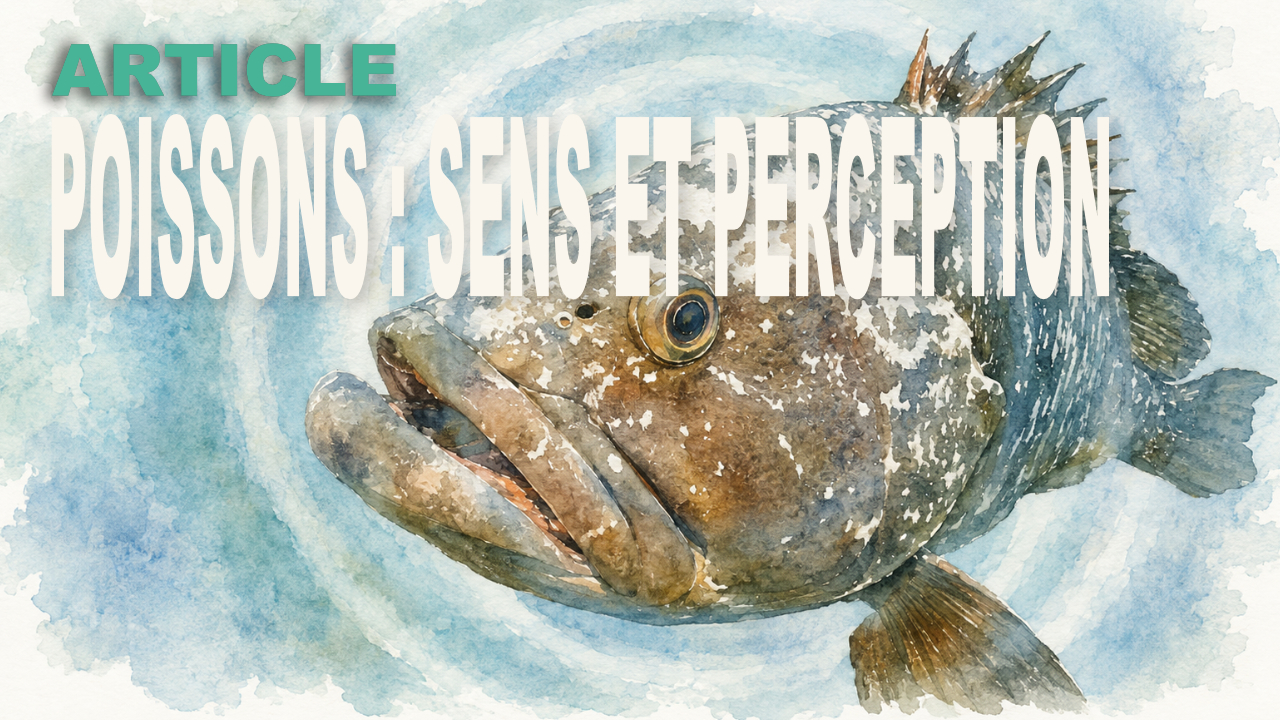
Predators do not see everything

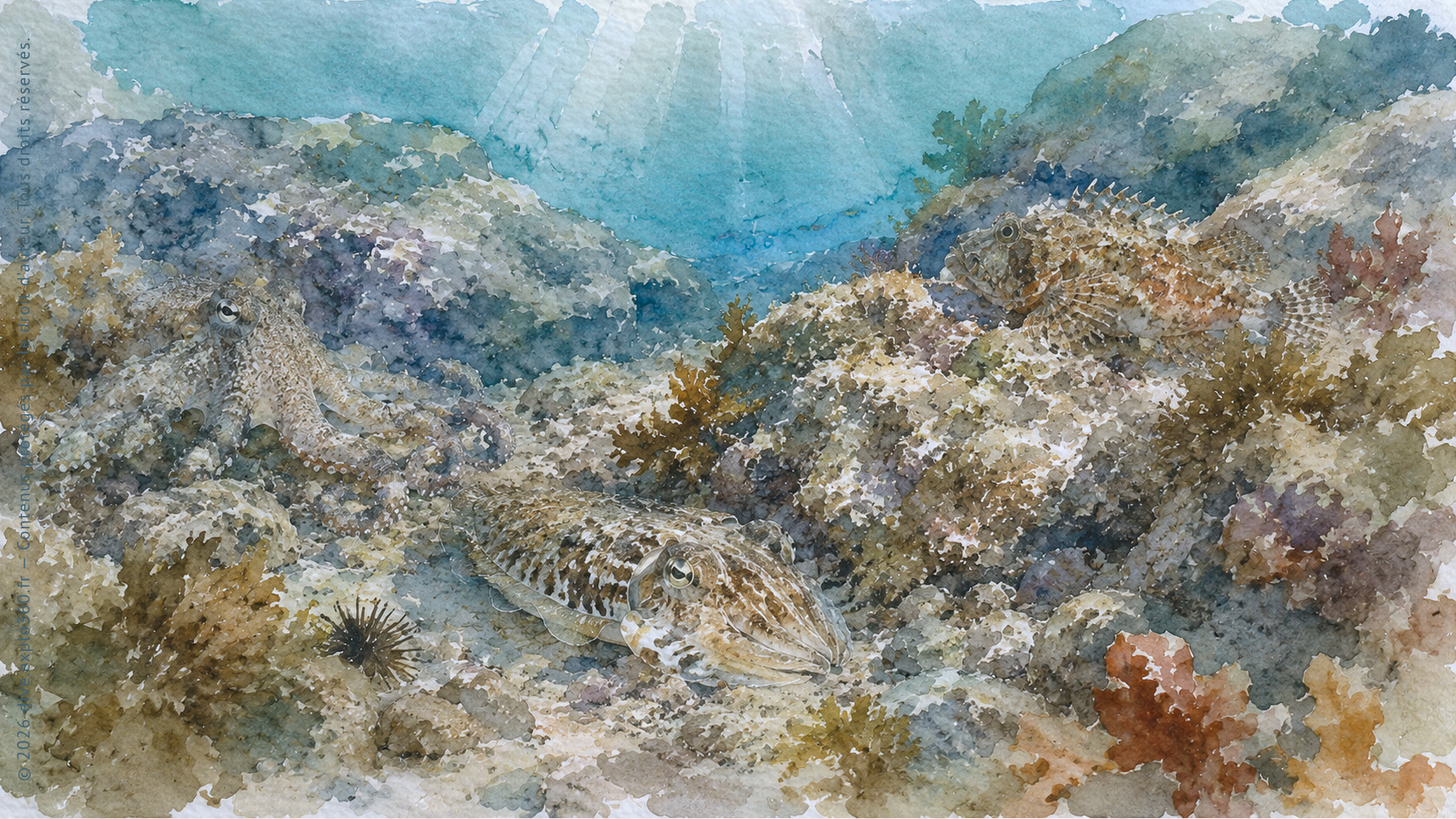
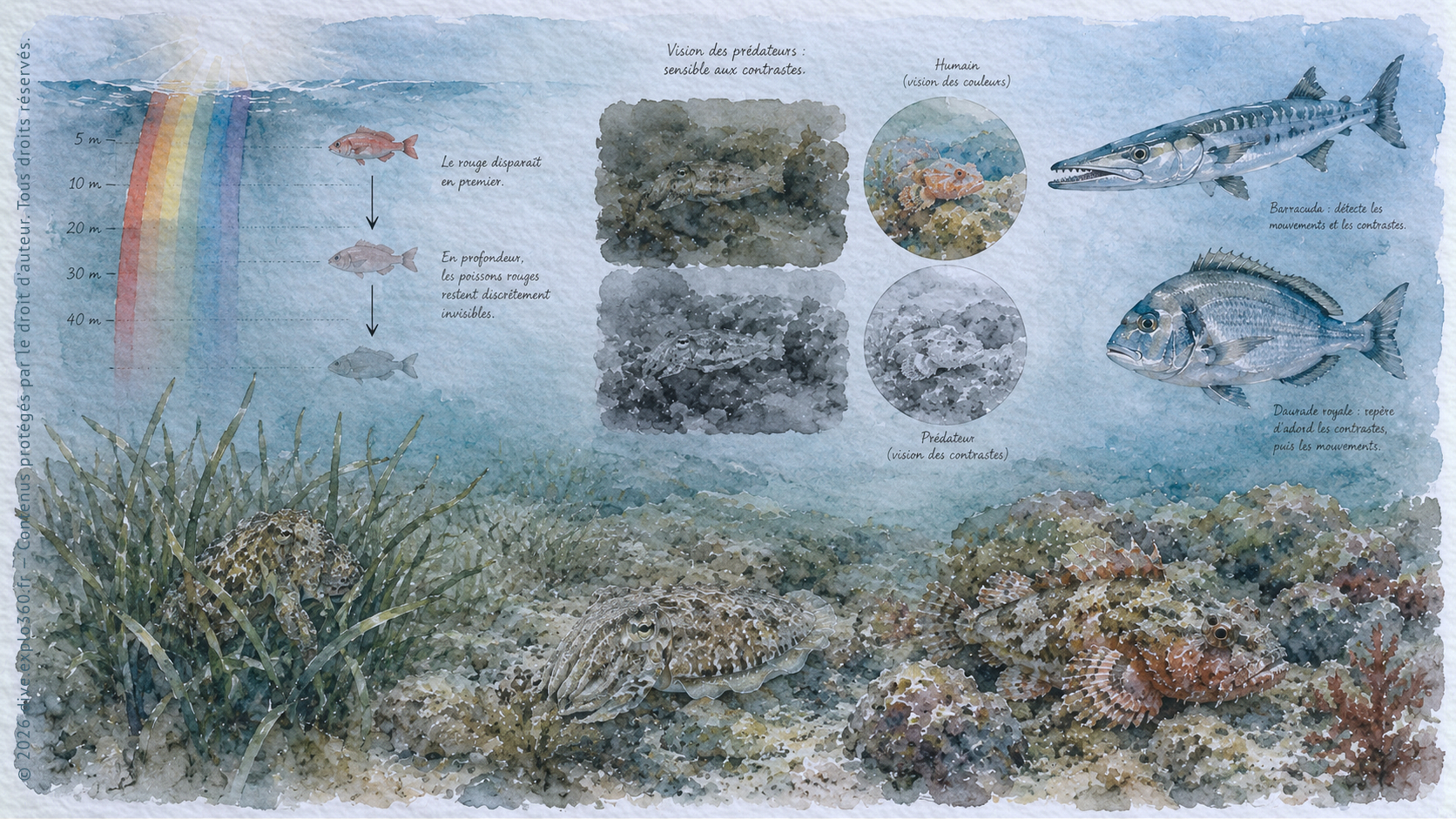
An animal you can see clearly up close may be hard to pick out from farther away. Light and distance matter, and a predator may see colours differently from you. A pattern that works against one hunter may be less effective against another.
The limits of fish vision
Colours, contrasts and movements influence how an animal is spotted underwater. © dive.explo360.fr — All rights reserved. Reproduction requires permission.

ACTIVE CAMOUFLAGE

Some animals can change their appearance.

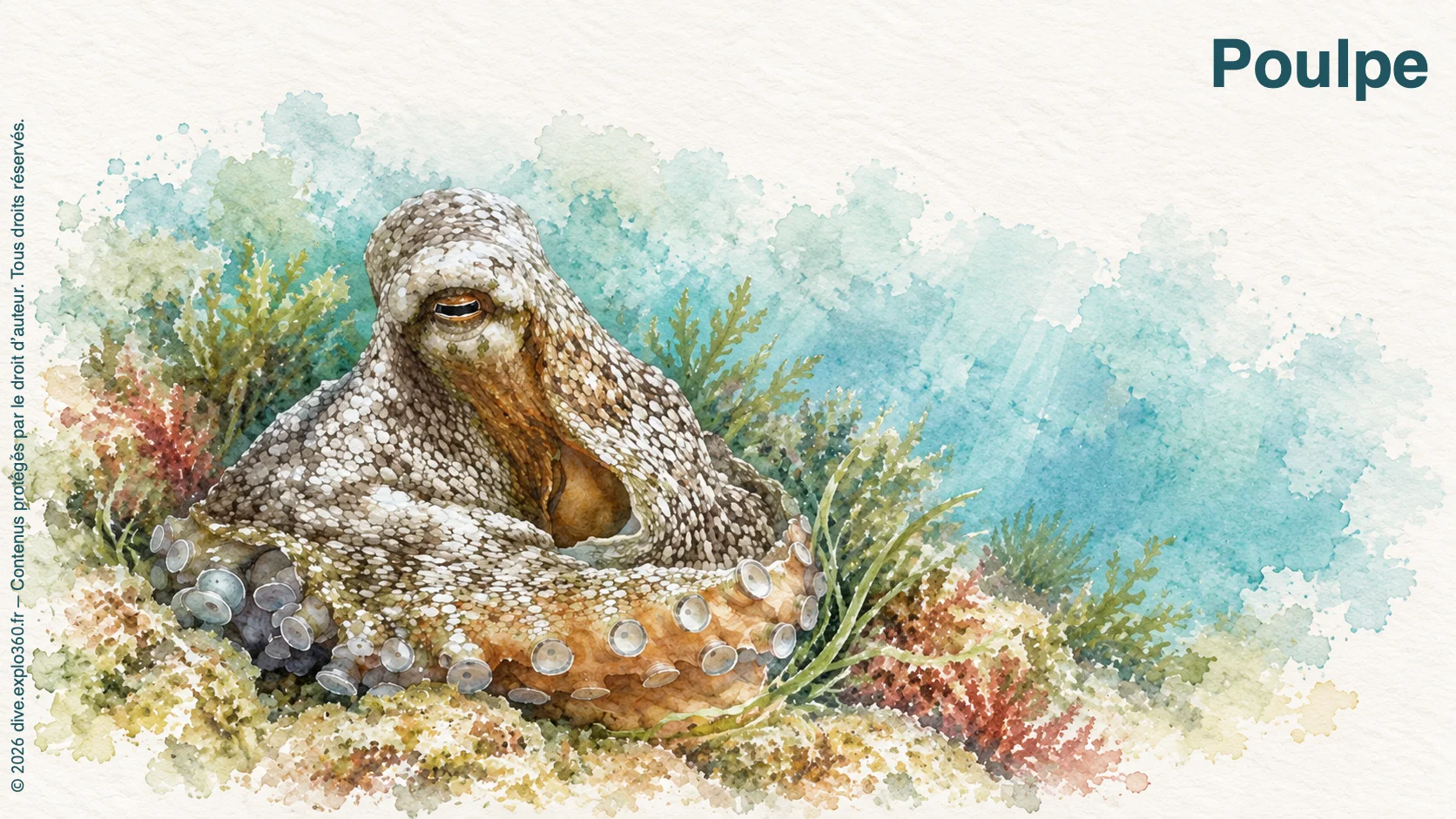
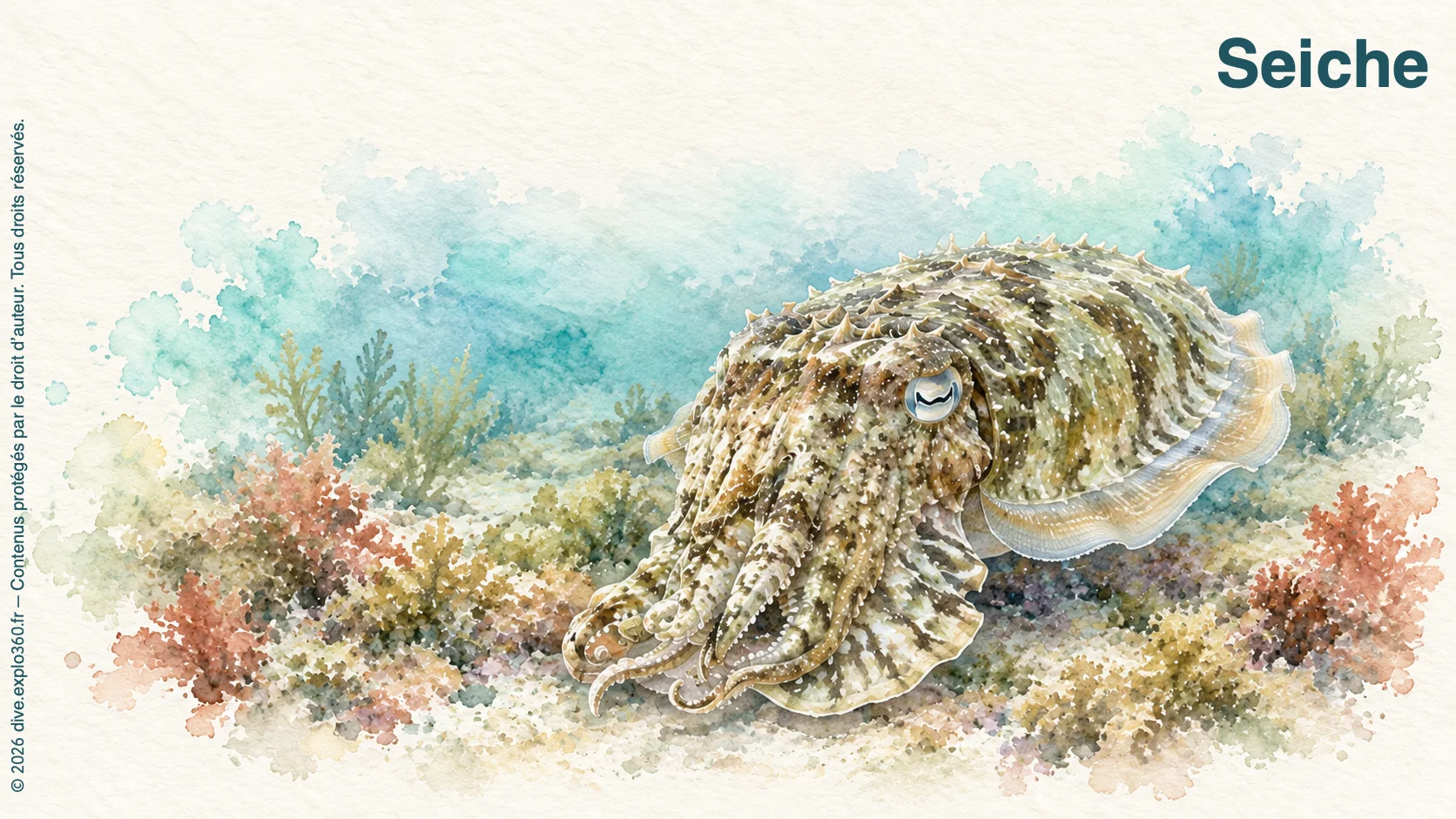
Cuttlefish and octopuses can quickly change their colours and patterns. Octopuses can also alter their skin texture.

These transformations allow them to blend better into their environment.

Chromatophores
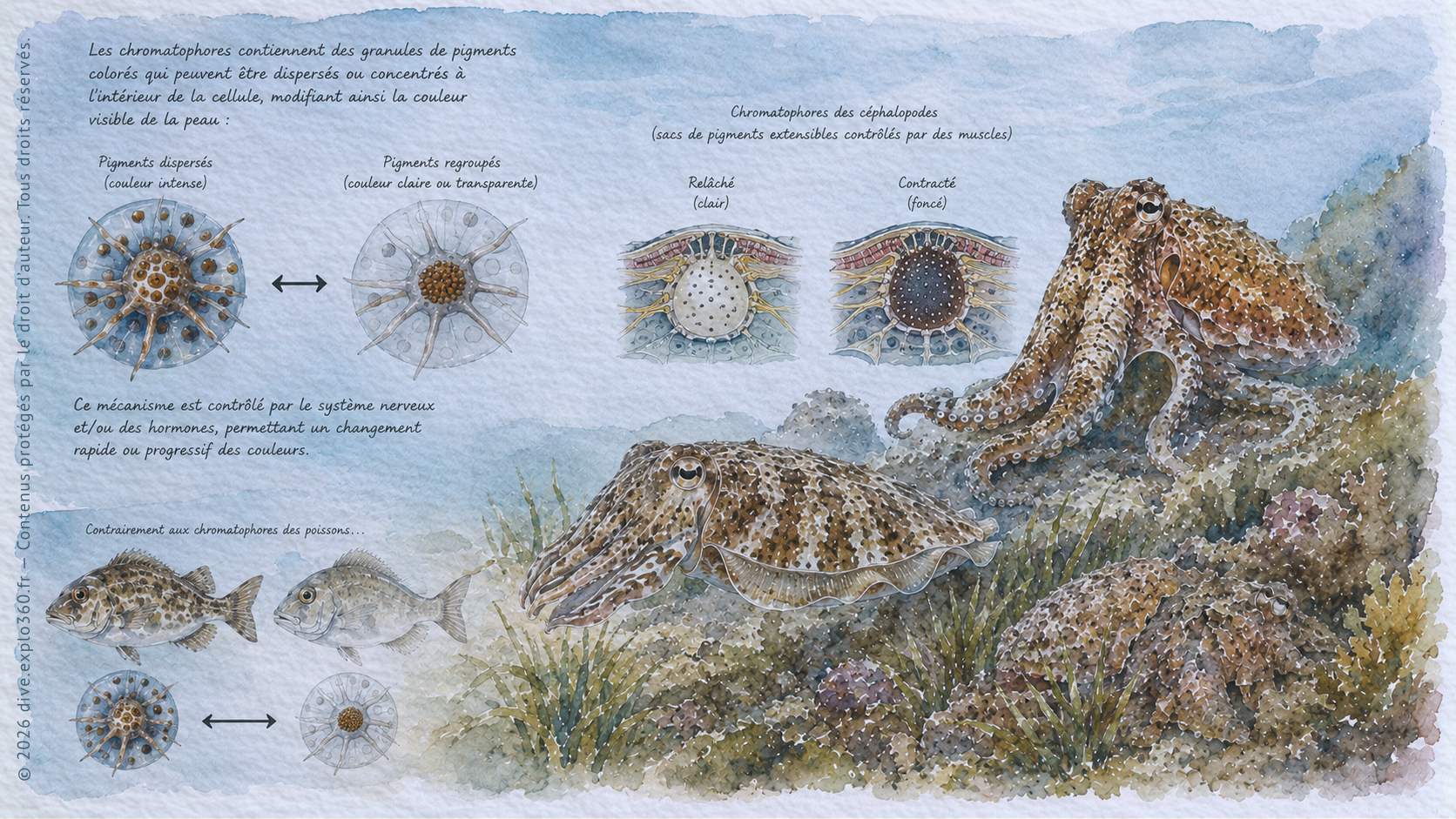
chromatophores
Different skin structures allow cephalopods to change appearance quickly. © dive.explo360.fr — All rights reserved. Reproduction requires permission.

A cuttlefish or octopus changes colour by stretching tiny pigment sacs. The sacs are part of organs called chromatophores. The nervous system controls the muscles that stretch them, so a patch of colour can spread very quickly.

Many fish change shade in a different way. Grains of pigment move within the cells themselves.

Pigments and effects of light

1

Melanophores

Melanin can spread within the cell and darken the skin.
2

Xanthophores

These cells contain pigments including yellow ones.
3

Erythrophores

Their pigments produce reddish or orange colours.
4

Leucophores

They scatter light and can produce a white appearance.
5

Iridophores

They reflect light and create shimmering colours.

Continue reading

AMIGANSEAU CONTENT

The rest of this article is for subscribers

Log in with your AMIGANSEAU licence to continue reading.

All active AMIGANSEAU licences give access to the full article.