Limits of marine predators’ vision

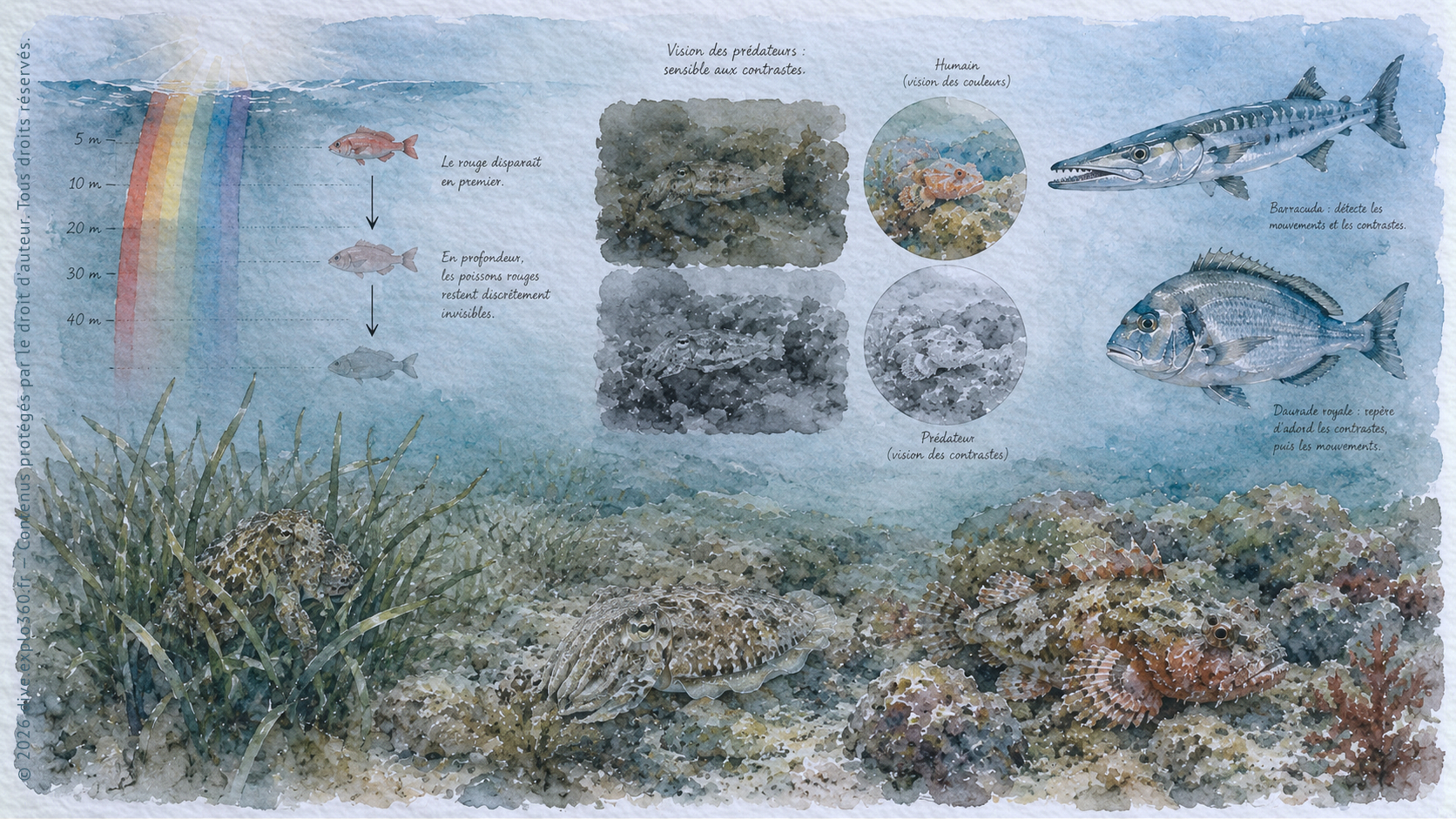
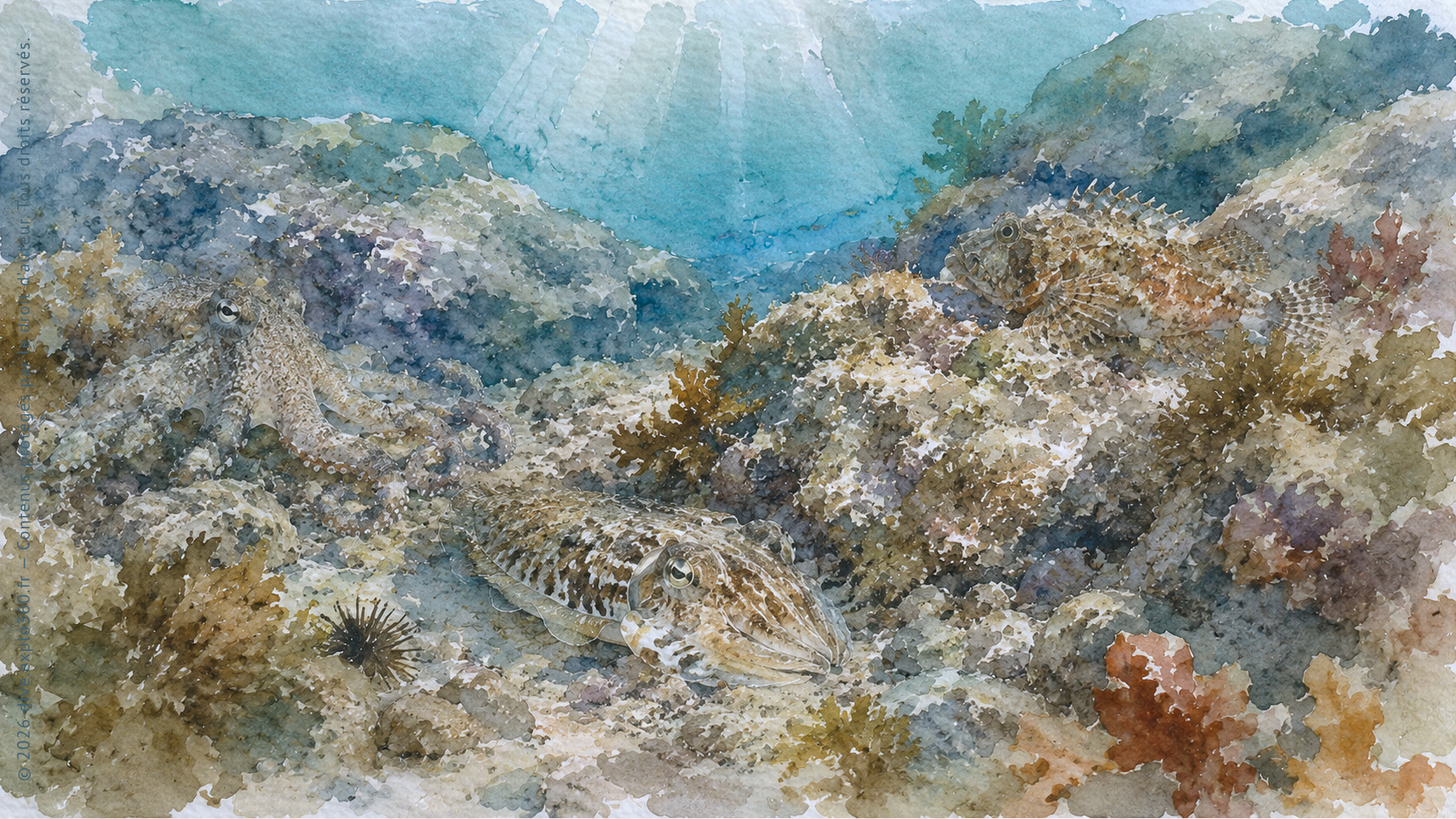
An animal’s visibility depends on light, distance and the viewer’s visual system. Matching the background may reduce contrast; irregular patterns can make outlines harder to follow. Predators do not all see the same colours, so camouflage effective against one may be less effective against another.
The limits of fish vision
Underwater, the perception of colours, contrasts and movements influences the effectiveness of camouflage. © dive.explo360.fr — All rights reserved. Reproduction prohibited without permission.

ACTIVE CAMOUFLAGE

Active camouflage allows some animals to change their appearance quickly according to their surroundings.

In cephalopods such as cuttlefish and octopuses, colour and pattern changes can be very rapid. Skin texture can also be altered in some species.

This ability is used for camouflage but can also contribute to hunting, defence and communication.

Chromatophores
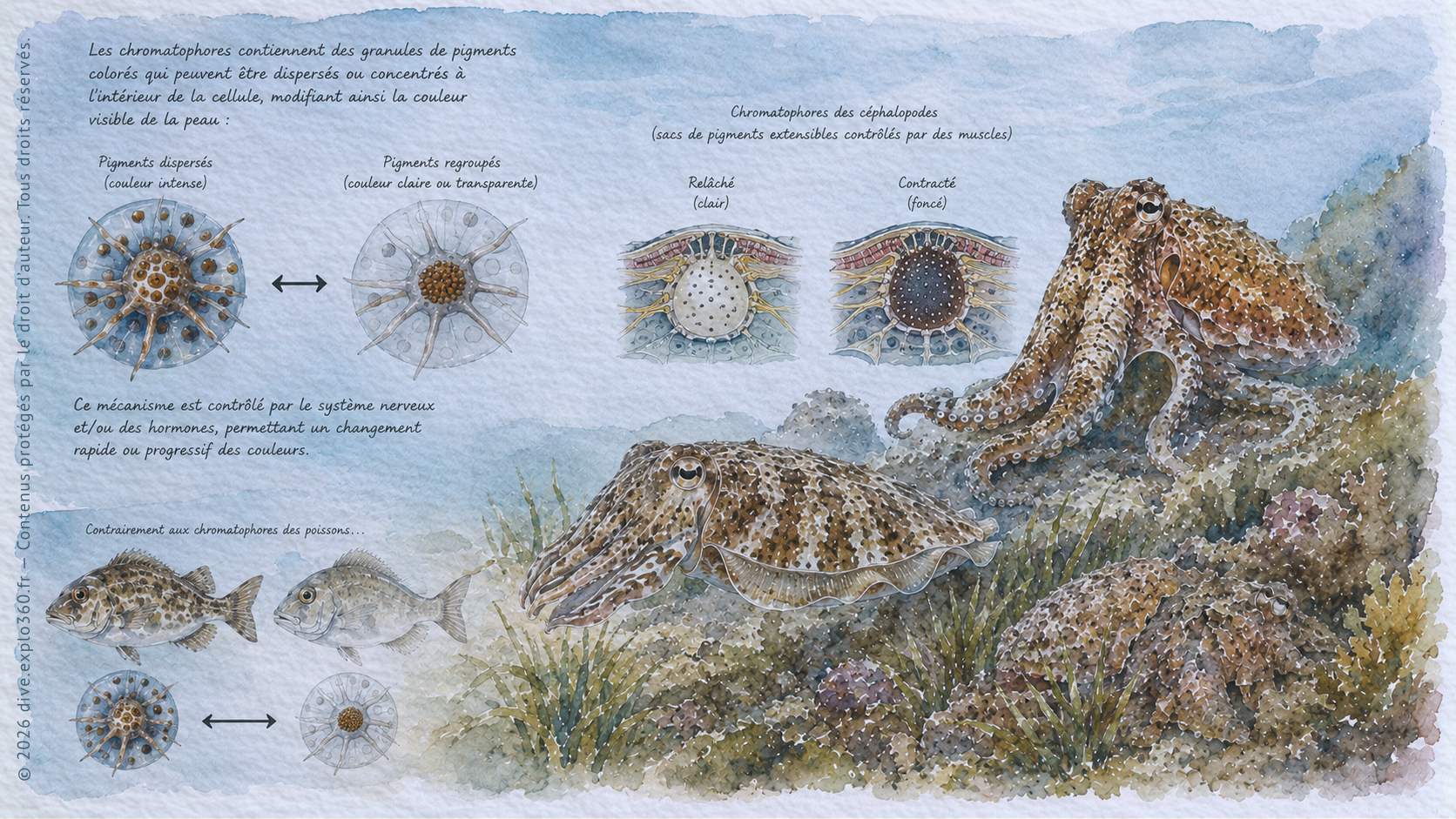
chromatophores
Changing colours, patterns and texture allows some cephalopods to adapt their appearance quickly. © dive.explo360.fr — All rights reserved. Reproduction prohibited without permission.

In cuttlefish and octopuses, muscles expand or relax small pigment sacs called chromatophores. The visible coloured area changes rapidly under nervous control.

In many fish, colour change instead involves pigment granules moving within cells. These two mechanisms should not be confused.

PASSIVE CAMOUFLAGE

Not all camouflaged animals can change appearance quickly.

Some naturally have colouring, patterns or a shape that make them difficult to distinguish from their surroundings. Their behaviour often complements this appearance: remaining still, positioning themselves against rock or burying themselves can greatly improve their camouflage.

Continue reading

AMIGANSEAU CONTENT

The rest of this article is for subscribers

Log in with your AMIGANSEAU licence to continue reading.

All active AMIGANSEAU licences give access to the full article.