Limits of marine predators’ vision

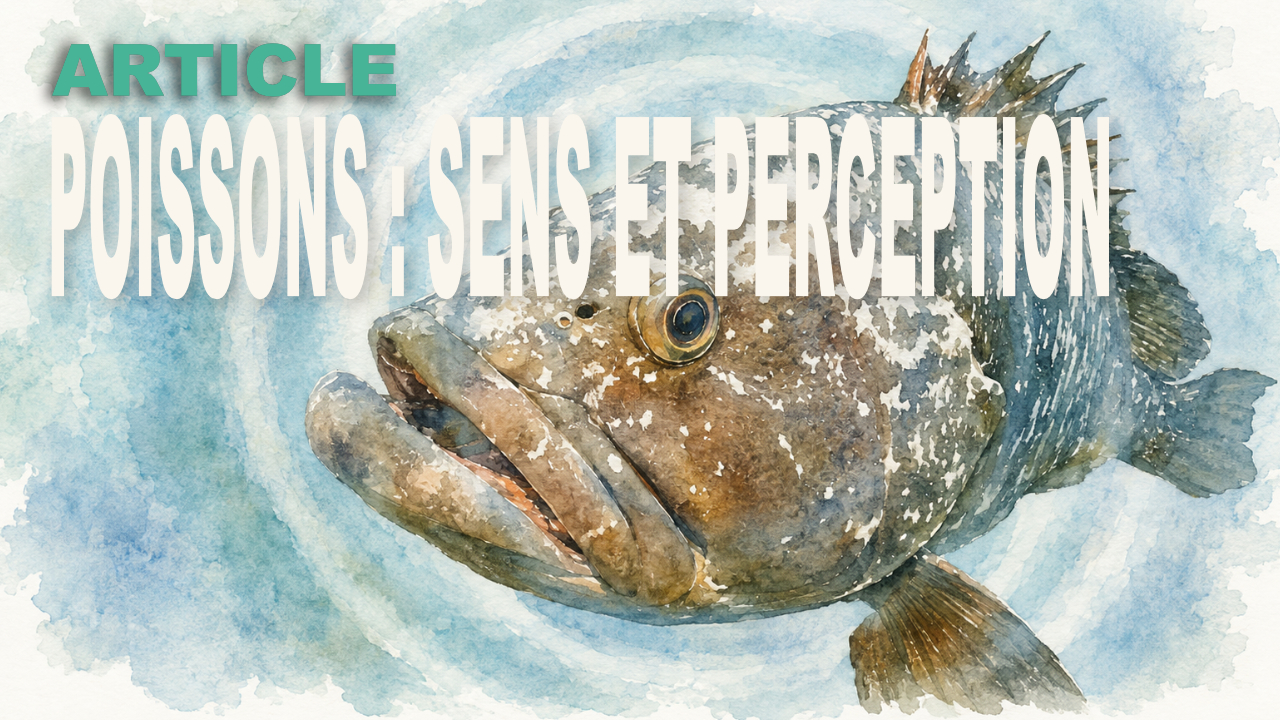
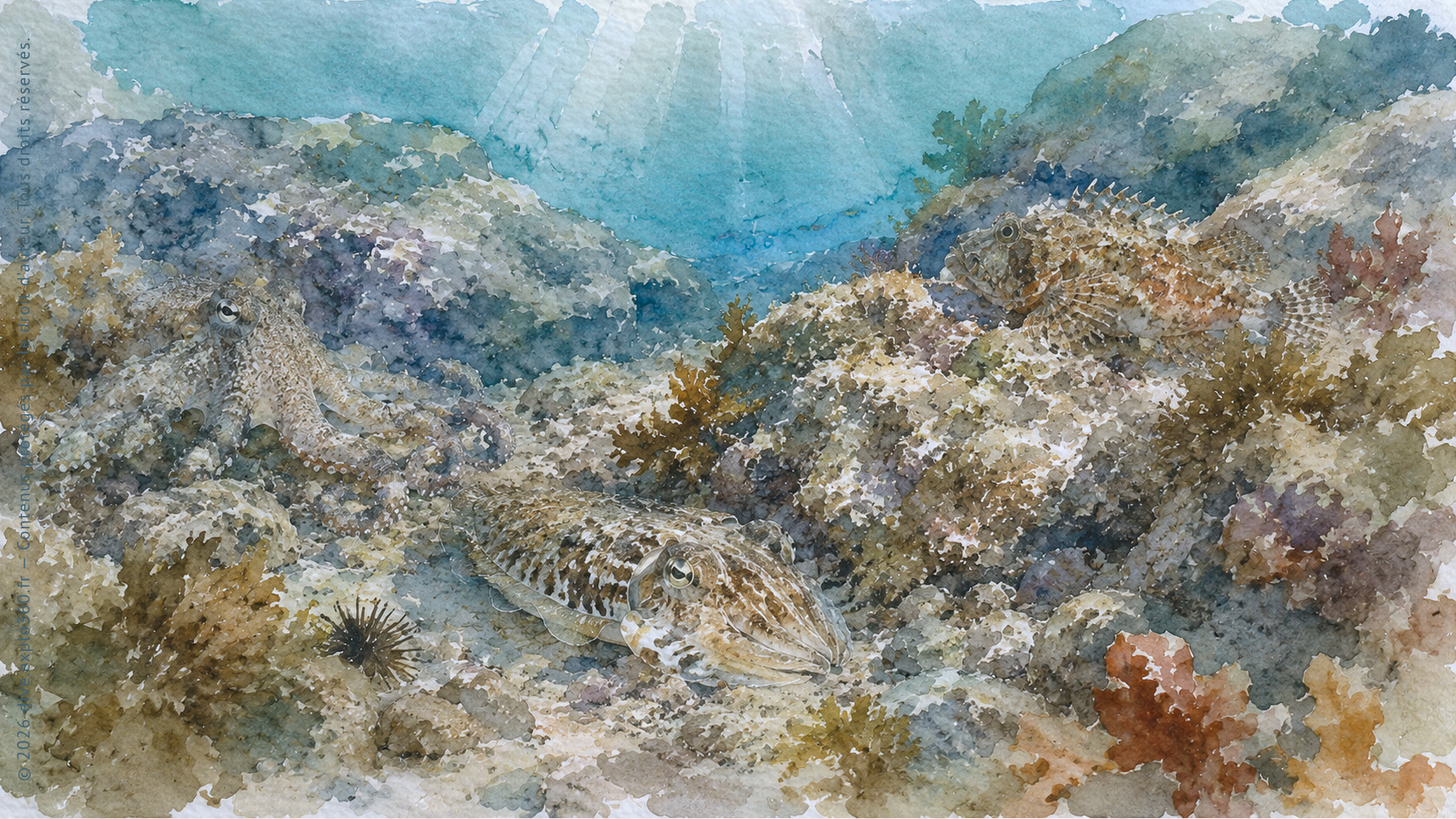
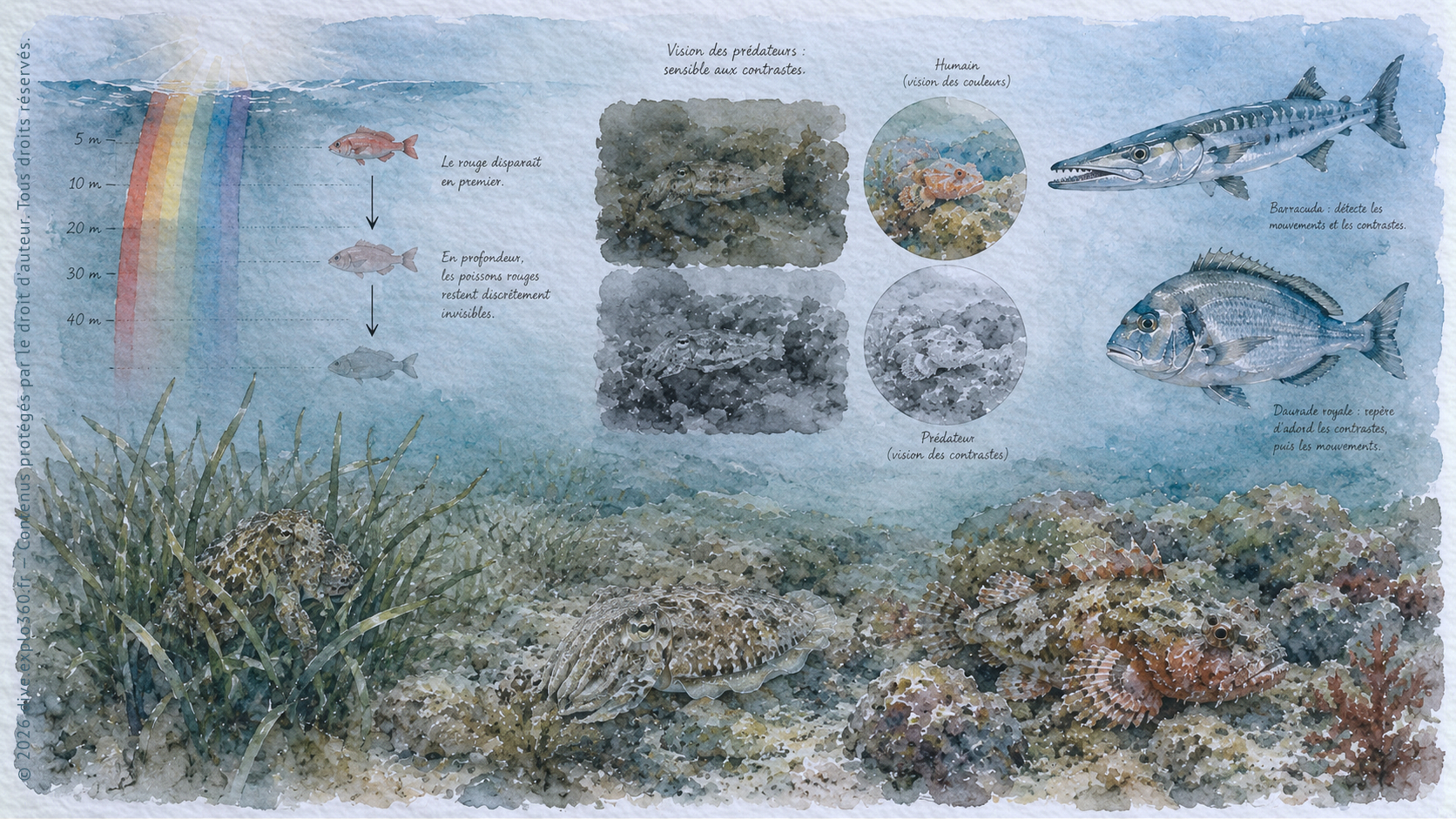
Visibility depends on the light, the viewing distance and the observer’s visual system. Matching the background reduces contrast. Patches that cross the edge of the body can make that edge harder to follow. Because predators differ in the colours they can distinguish, the same pattern can work better against one species than another.
The limits of fish vision
Underwater, the perception of colours, contrasts and movements influences the effectiveness of camouflage. © dive.explo360.fr — All rights reserved. Reproduction requires permission.

ACTIVE CAMOUFLAGE

Active camouflage allows some animals to change their appearance quickly according to their surroundings.

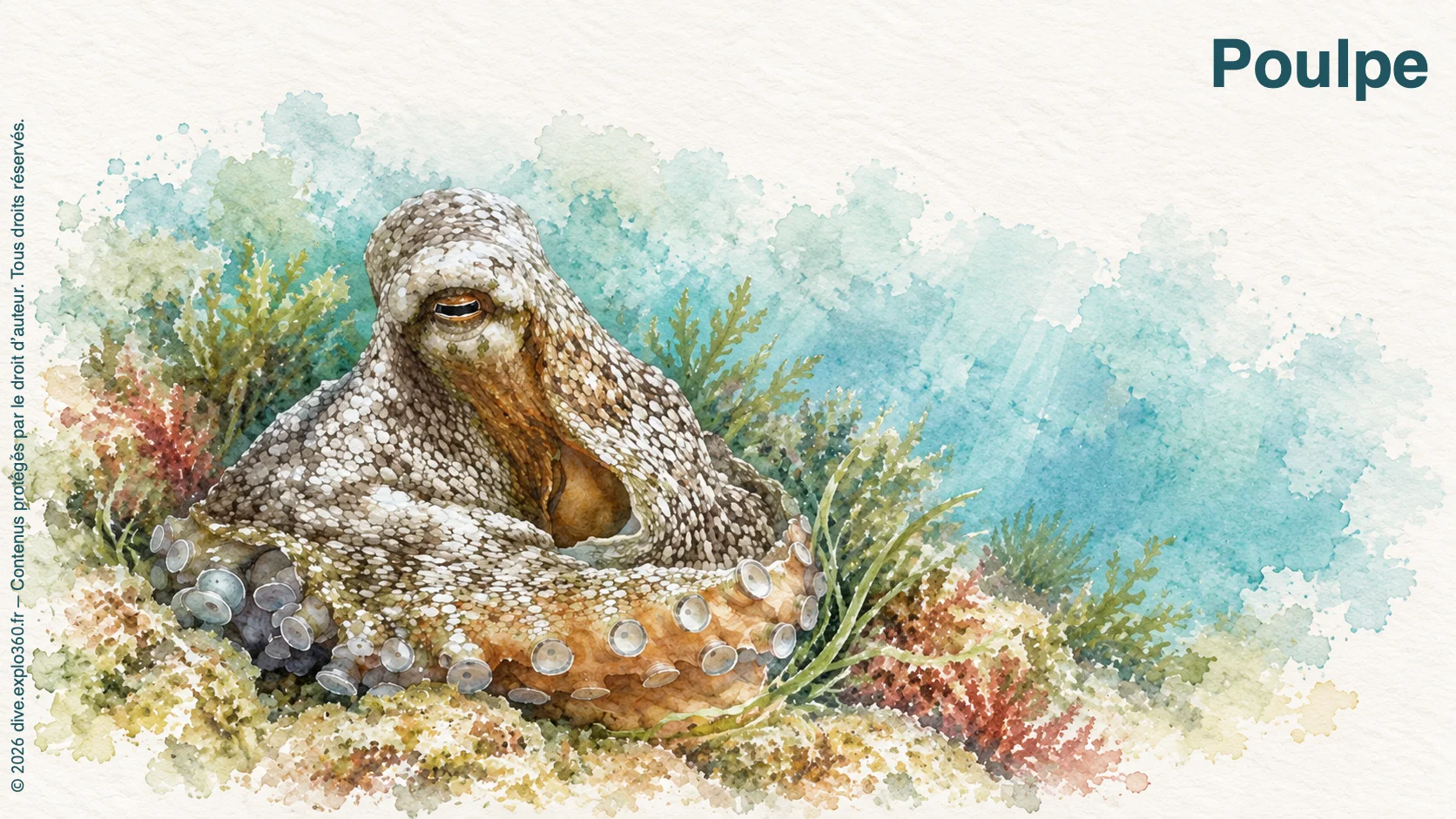
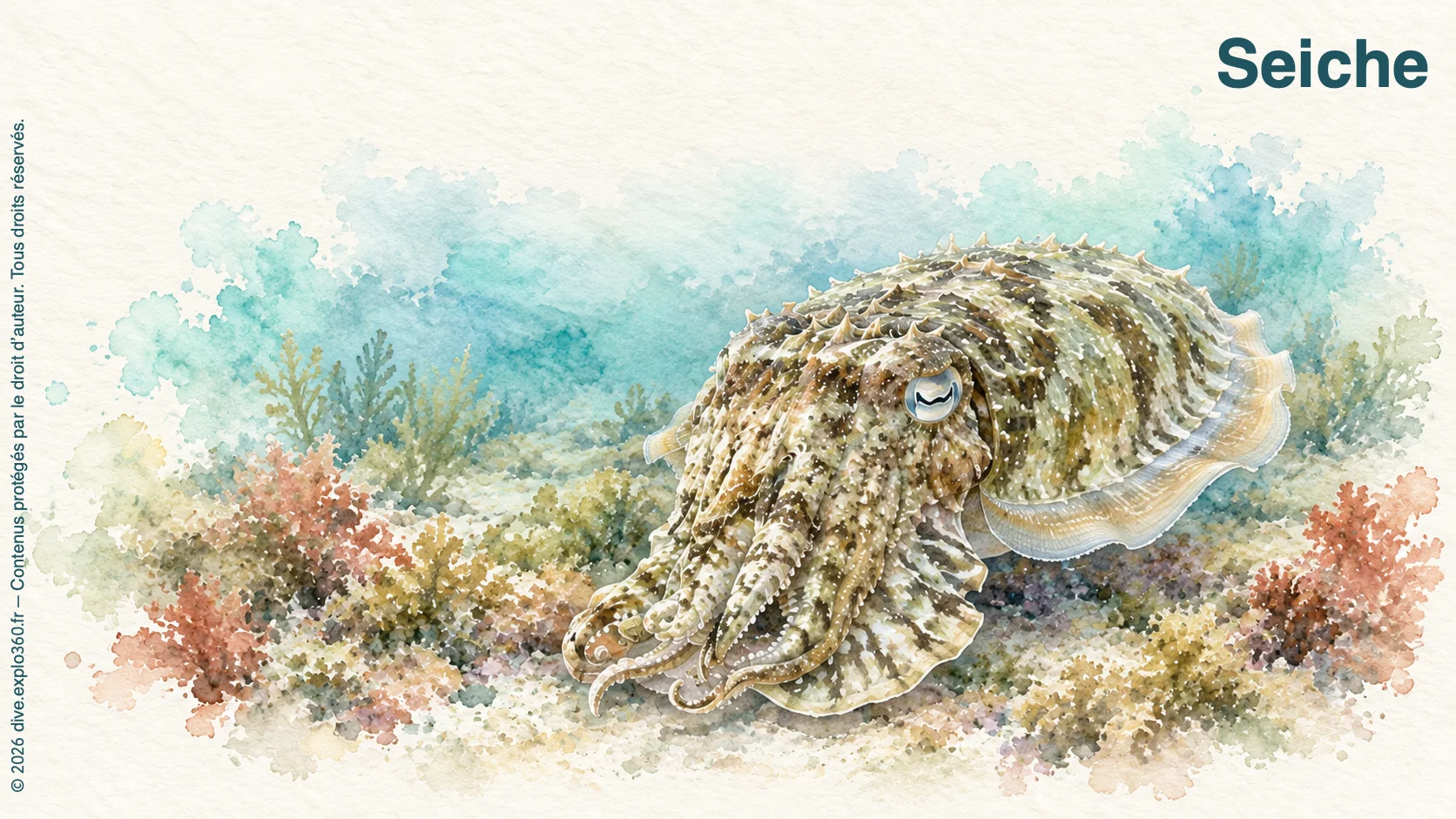
In cephalopods such as cuttlefish and octopuses, colour and pattern changes can be very rapid. Skin texture can also be altered in some species.

This ability is used for camouflage but can also contribute to hunting, defence and communication.

Chromatophores
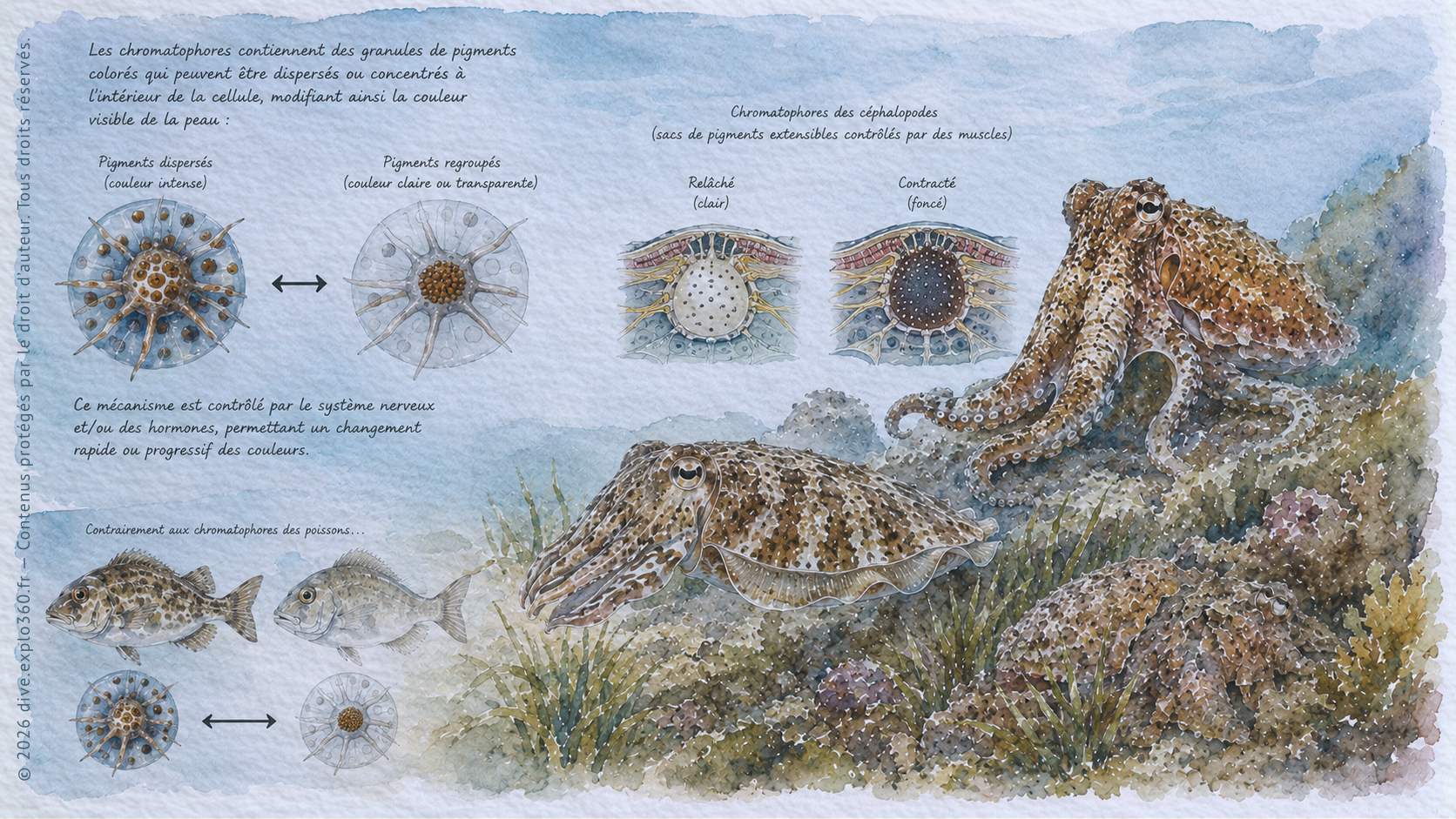
chromatophores
Changing colours, patterns and texture allows some cephalopods to adapt their appearance quickly. © dive.explo360.fr — All rights reserved. Reproduction requires permission.

In cuttlefish and octopuses, muscles under nervous control stretch the pigment sac within each chromatophore. When the muscles relax, the sac can shrink again. Changing its area changes how much colour is visible.

In many fish, the pigment granules themselves spread out or gather within the cells. Both mechanisms change the appearance of the skin, but they work at different scales.

Pigments and effects of light

1

Melanophores

In the fish concerned, melanin granules spreading through melanophores darken the skin; aggregation can lighten it.
2

Xanthophores

Xanthophores contain yellow pigments. This category described in vertebrates should not be directly applied to the muscular mechanism of cuttlefish and octopuses.
3

Erythrophores

Erythrophores contain red or orange pigments. Their contribution depends on the species and the organisation of its skin.
4

Leucophores

Leucophores scatter light and can produce whitish areas. This is an optical effect, not a universal white pigment.
5

Iridophores

Iridophores contain reflecting structures that produce iridescence. Depending on the species, these structures may be more or less adjustable.

Continue reading

AMIGANSEAU CONTENT

The rest of this article is for subscribers

Log in with your AMIGANSEAU licence to continue reading.

All active AMIGANSEAU licences give access to the full article.