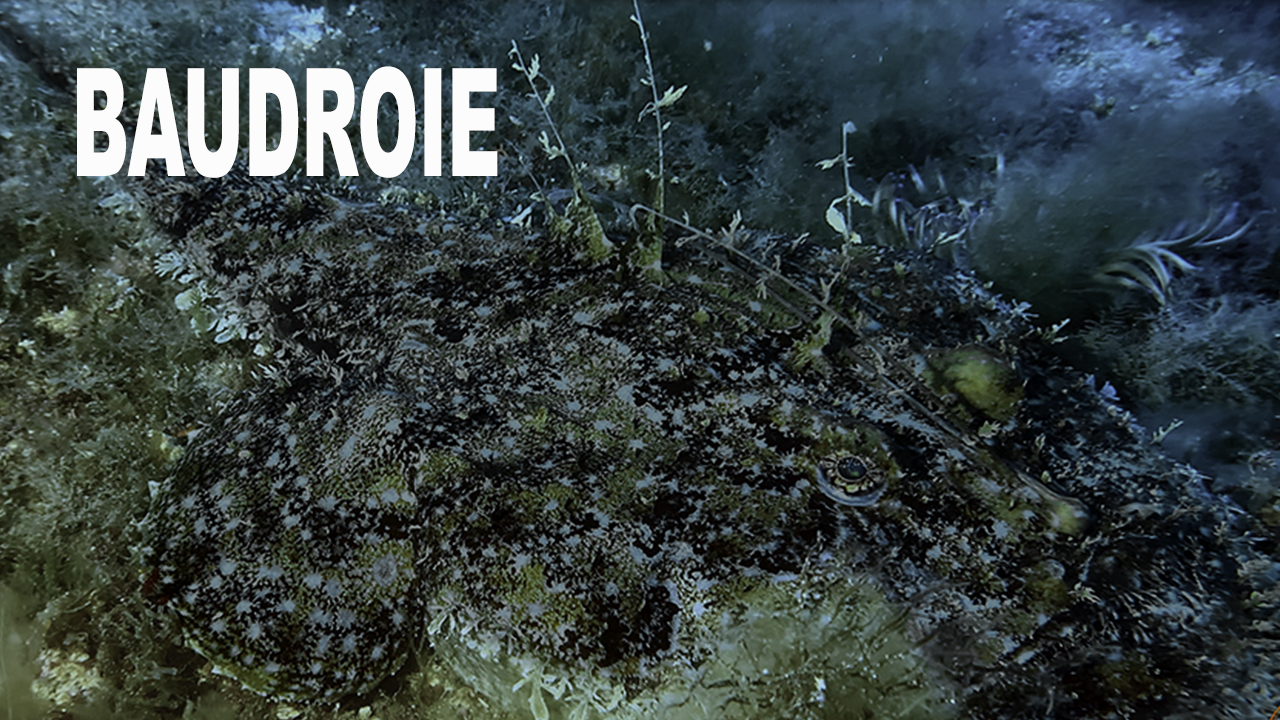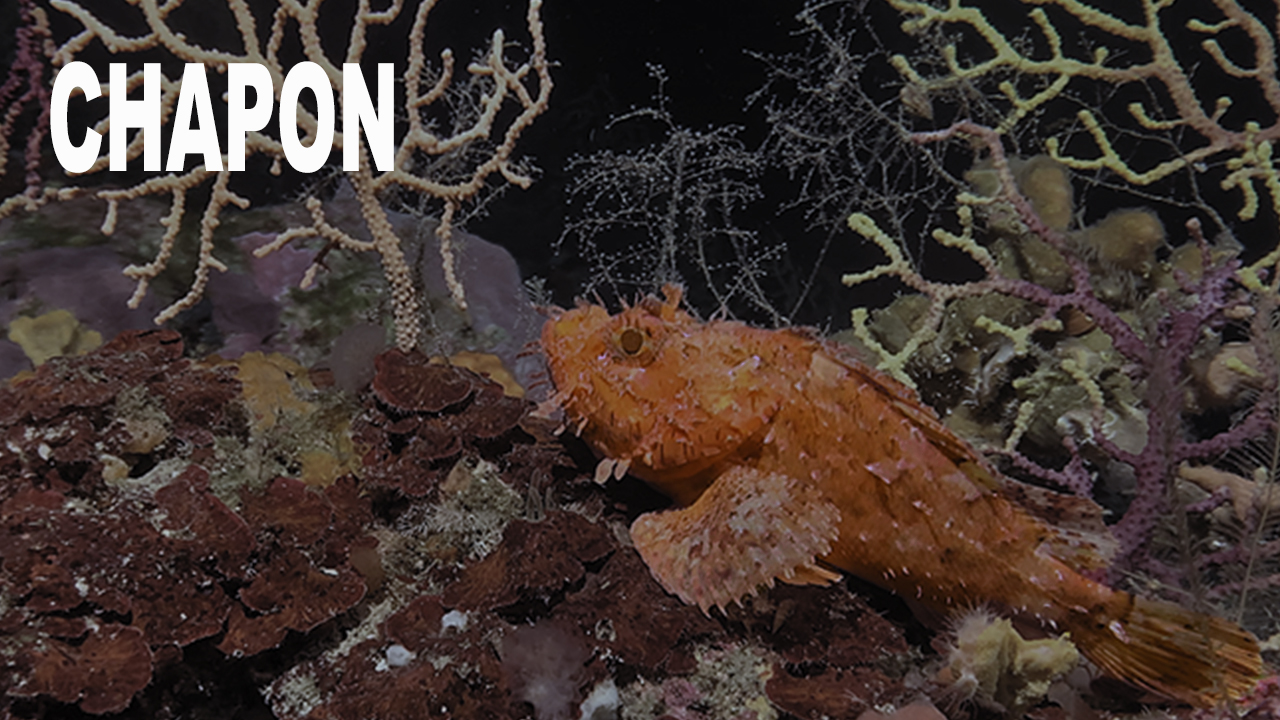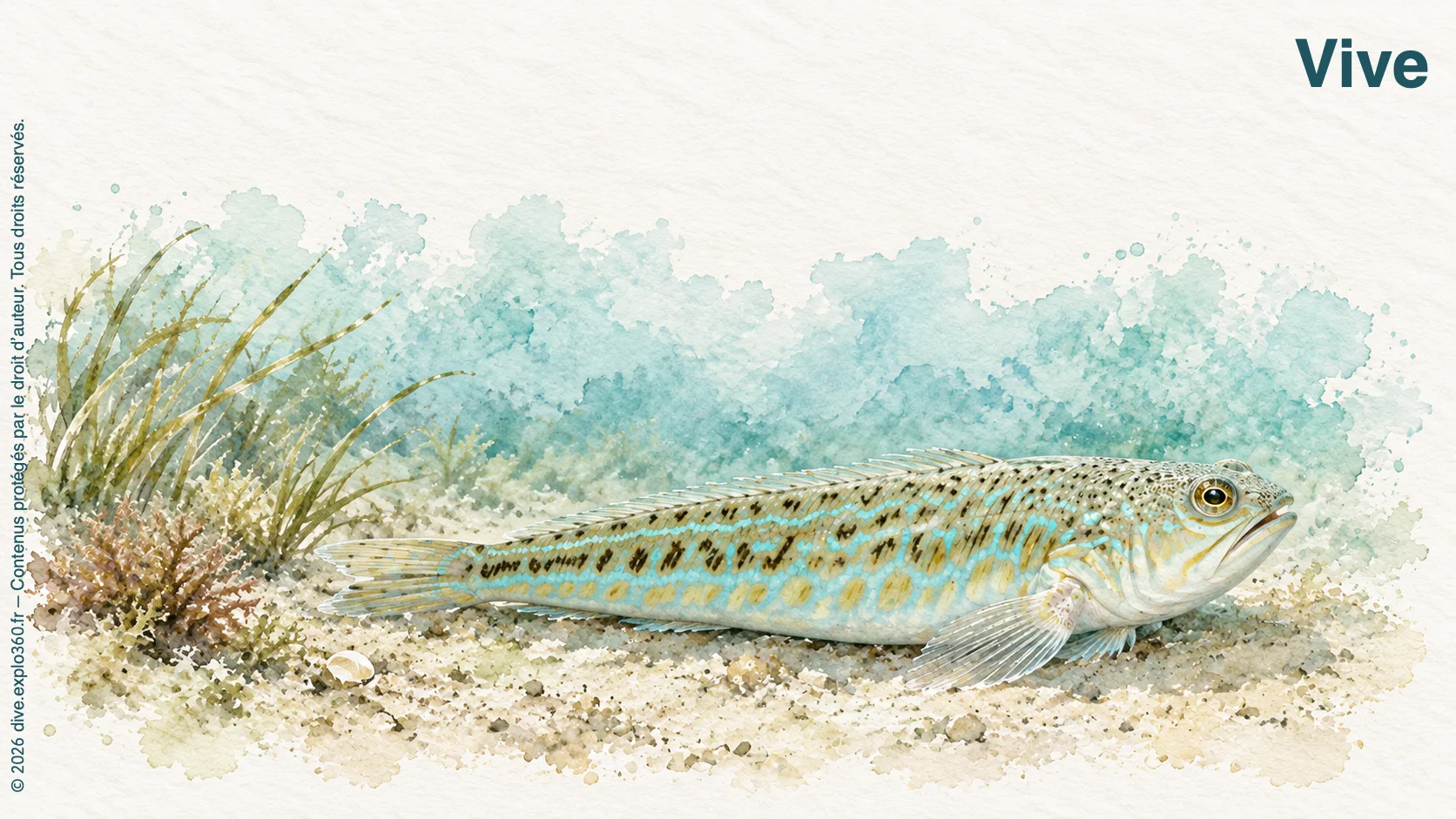

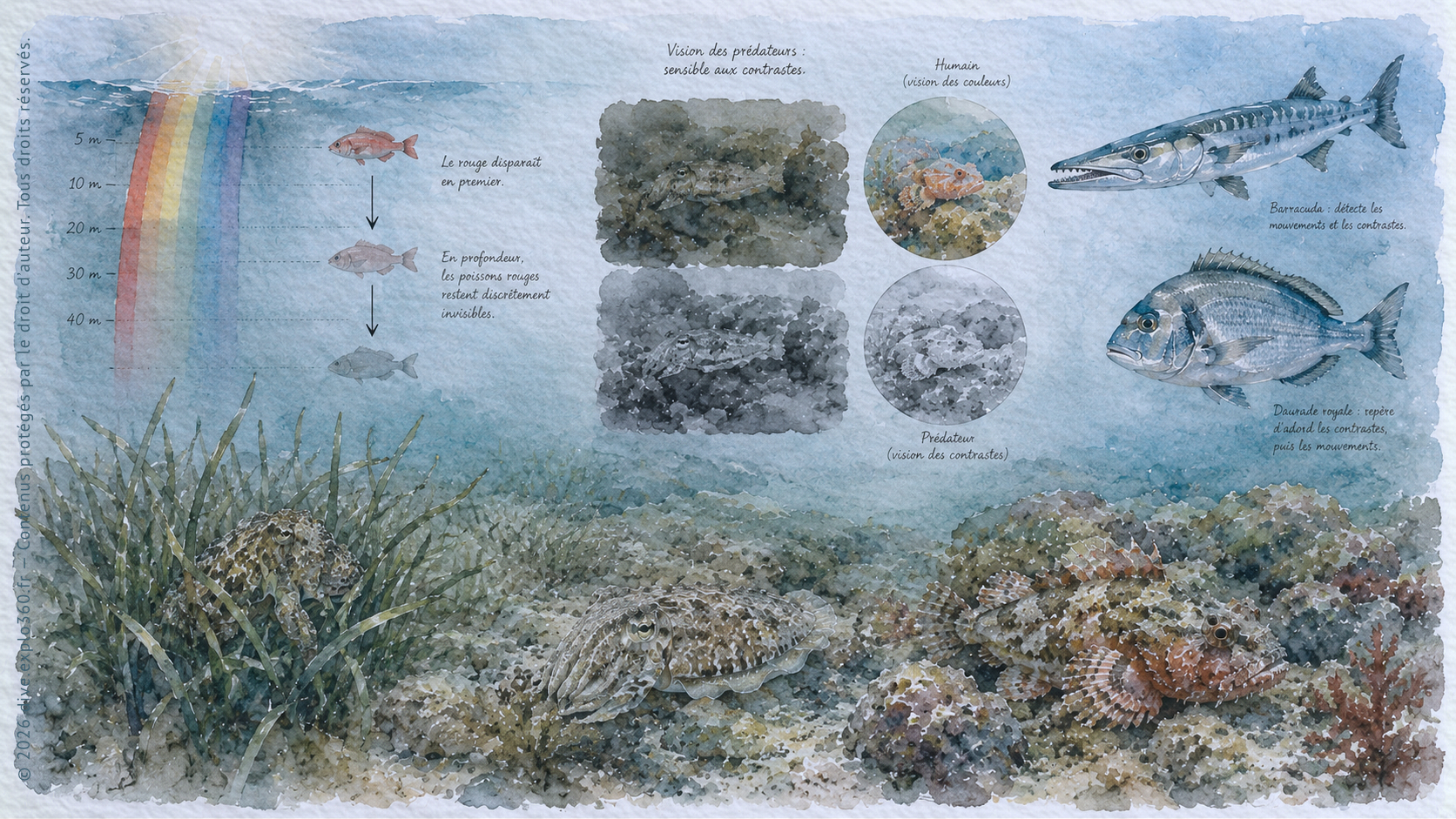
Colours do not always look the same underwater as they do at the surface. Light changes with depth. Movement can also catch a fish’s attention.
To understand camouflage, we need to look at colours, shapes and movements. An animal that stays still can be harder to notice.
Changing appearance
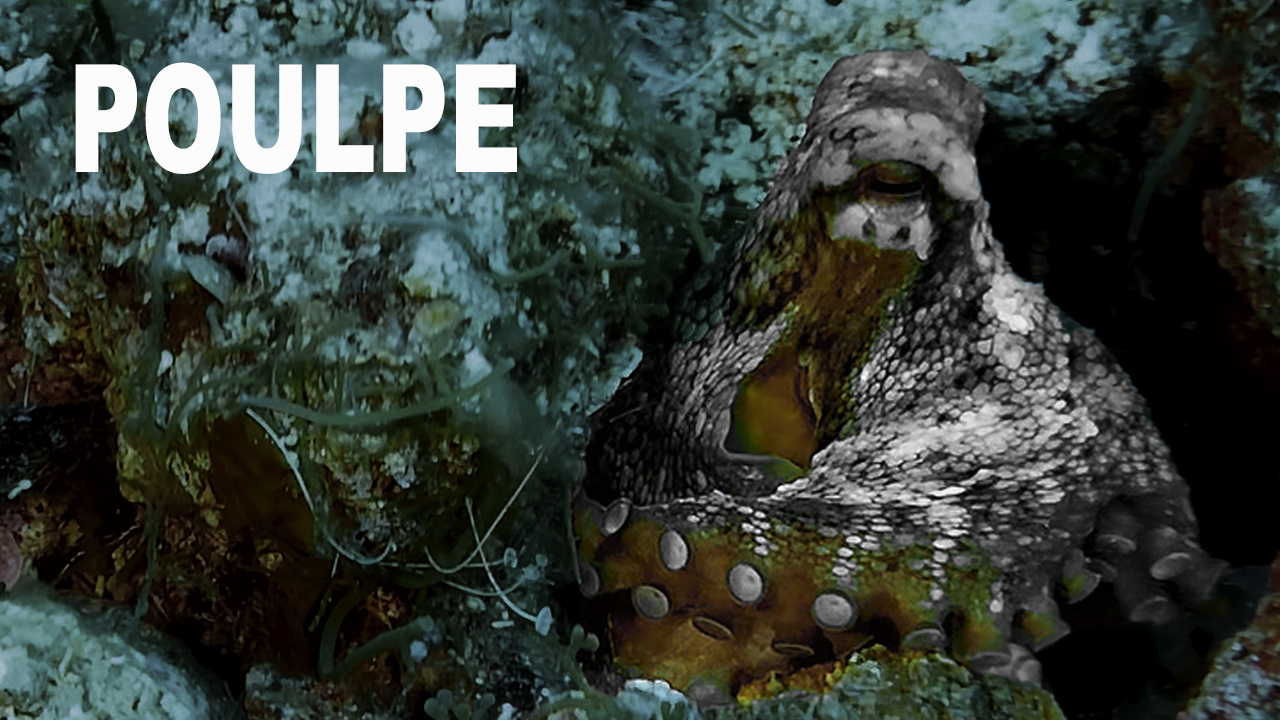
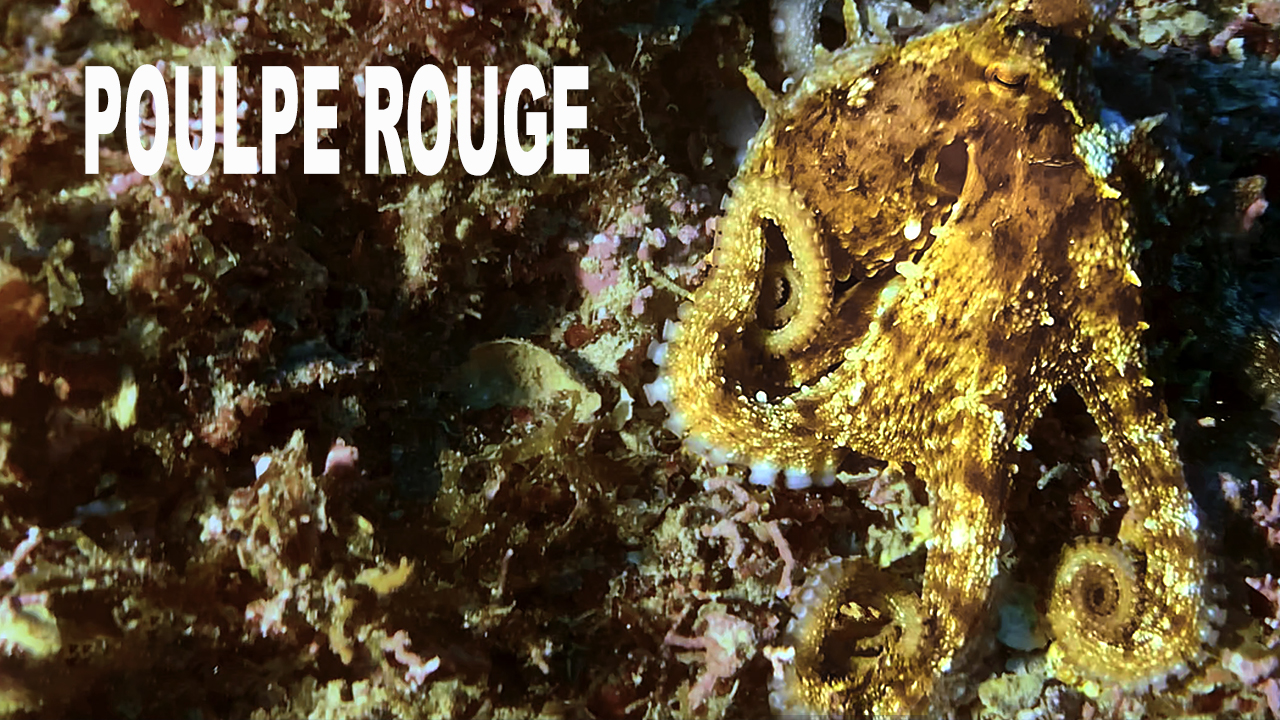
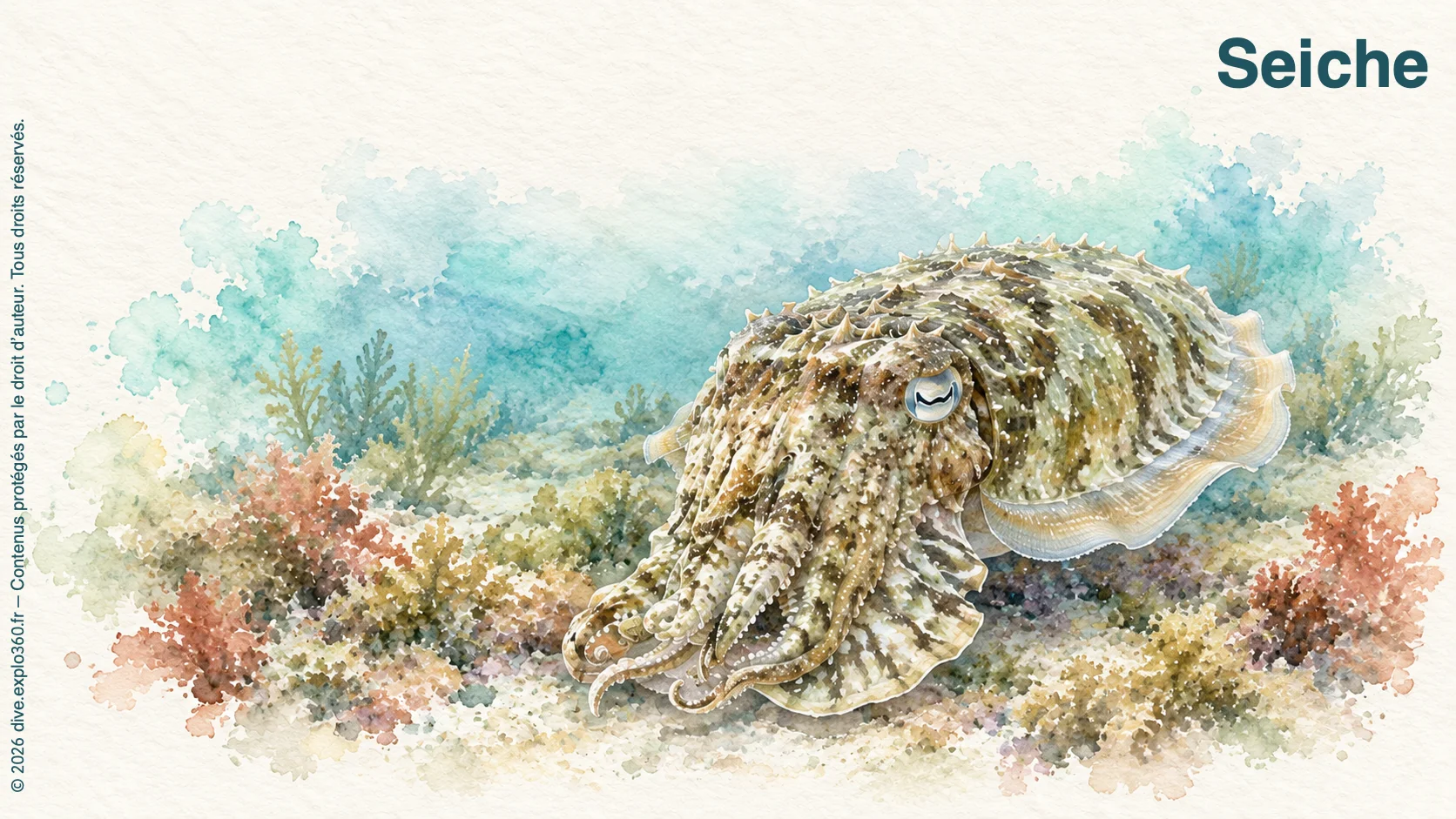
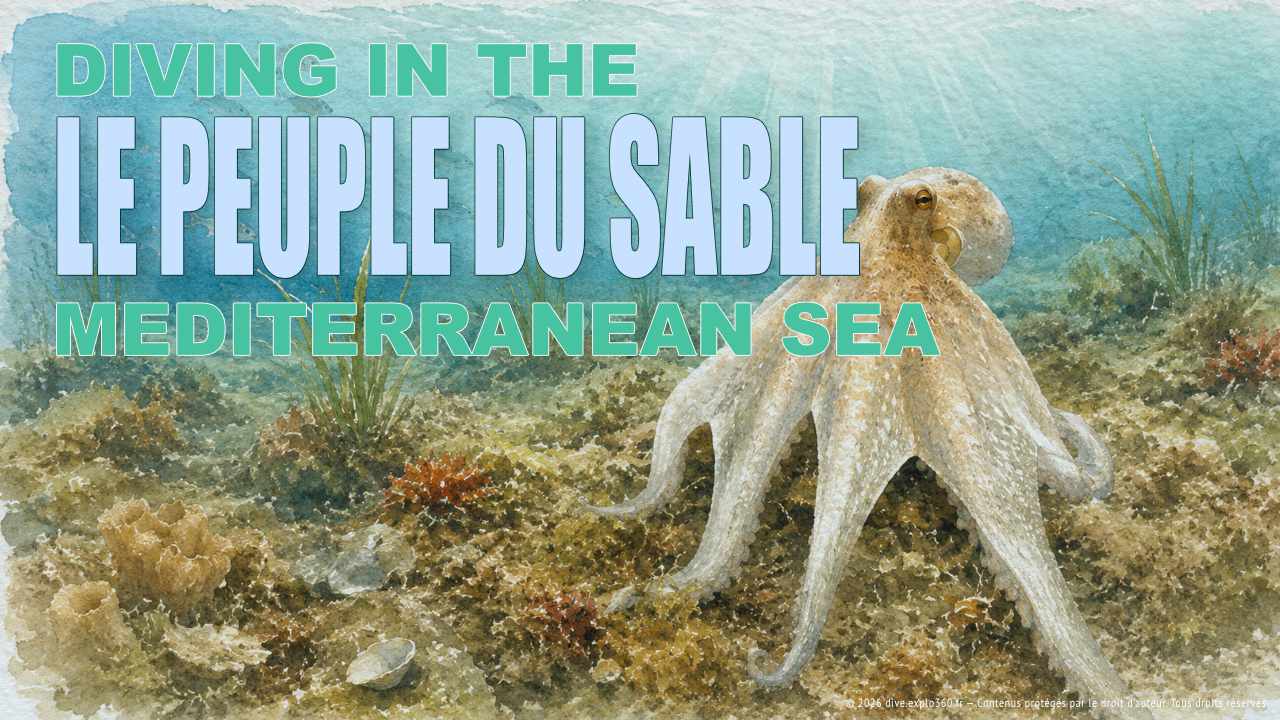
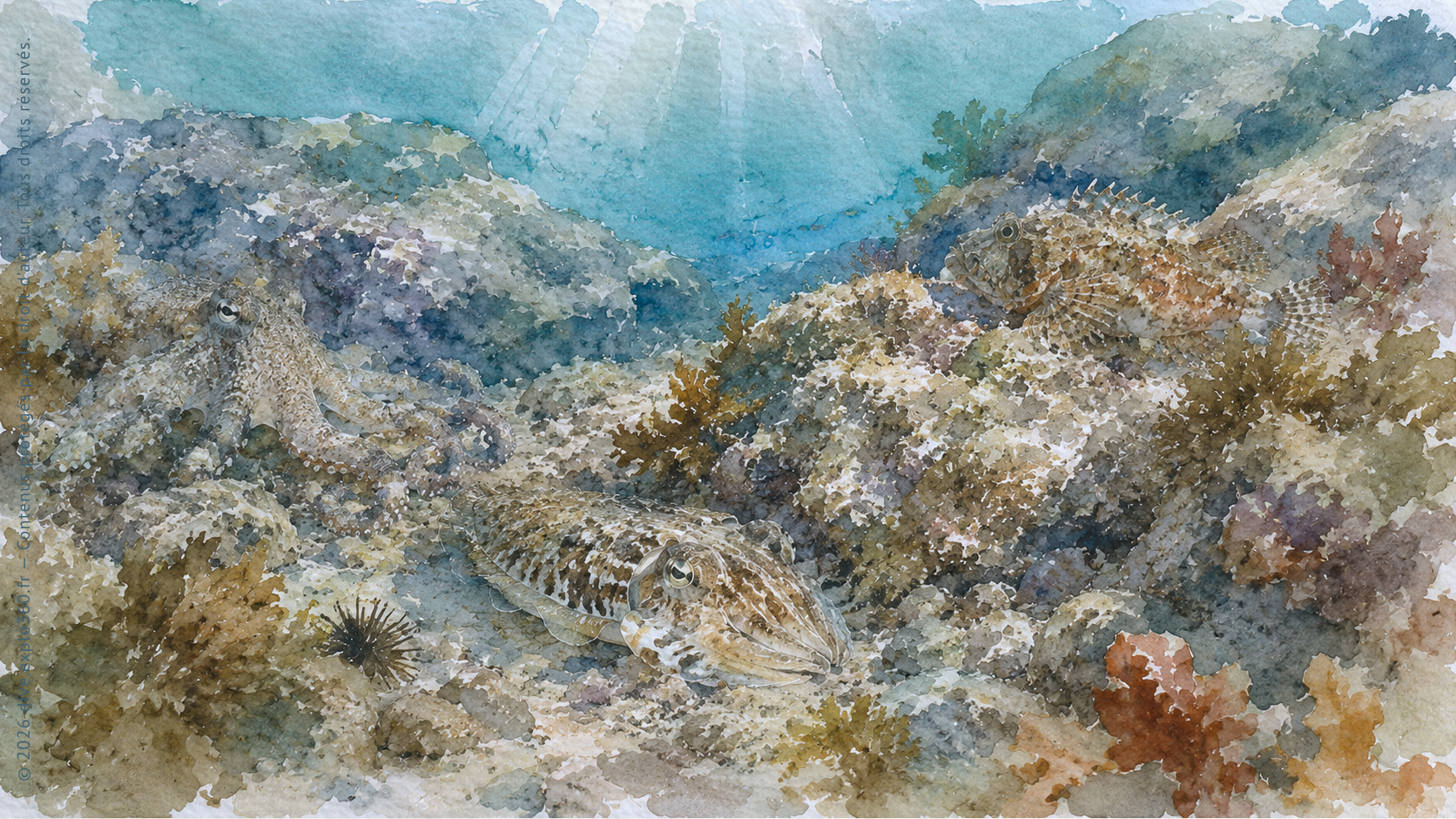
Cuttlefish and octopuses can change their colours and patterns. An octopus can also change the texture of its skin. These changes help them blend into their surroundings.
They do not really become invisible: they become harder to spot!
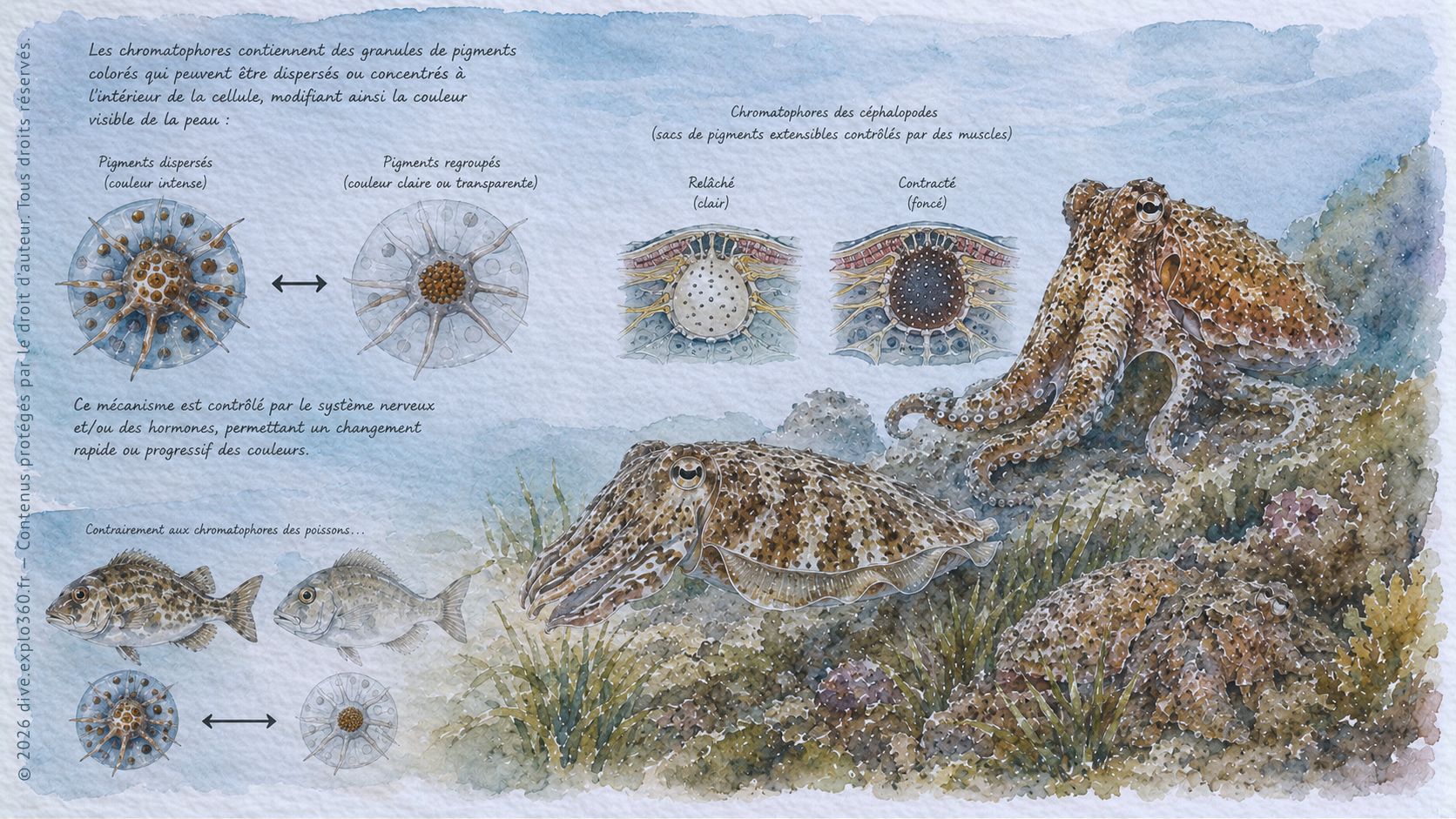
These animals have tiny cells in their skin that help create their colours. Some contain pigments, which are coloured substances. Others reflect light.
In cuttlefish and octopuses, tiny muscles can stretch sacs of pigment. This makes the coloured spots more visible. When the sacs become smaller again, the spots become less visible.
Dark colours
Yellow and orange
Red
White
Shiny reflections
AMIGANSEAU CONTENT
The rest of this article is for subscribers
Log in with your AMIGANSEAU licence to continue reading.
All active AMIGANSEAU licences give access to the full article.Explore the same world