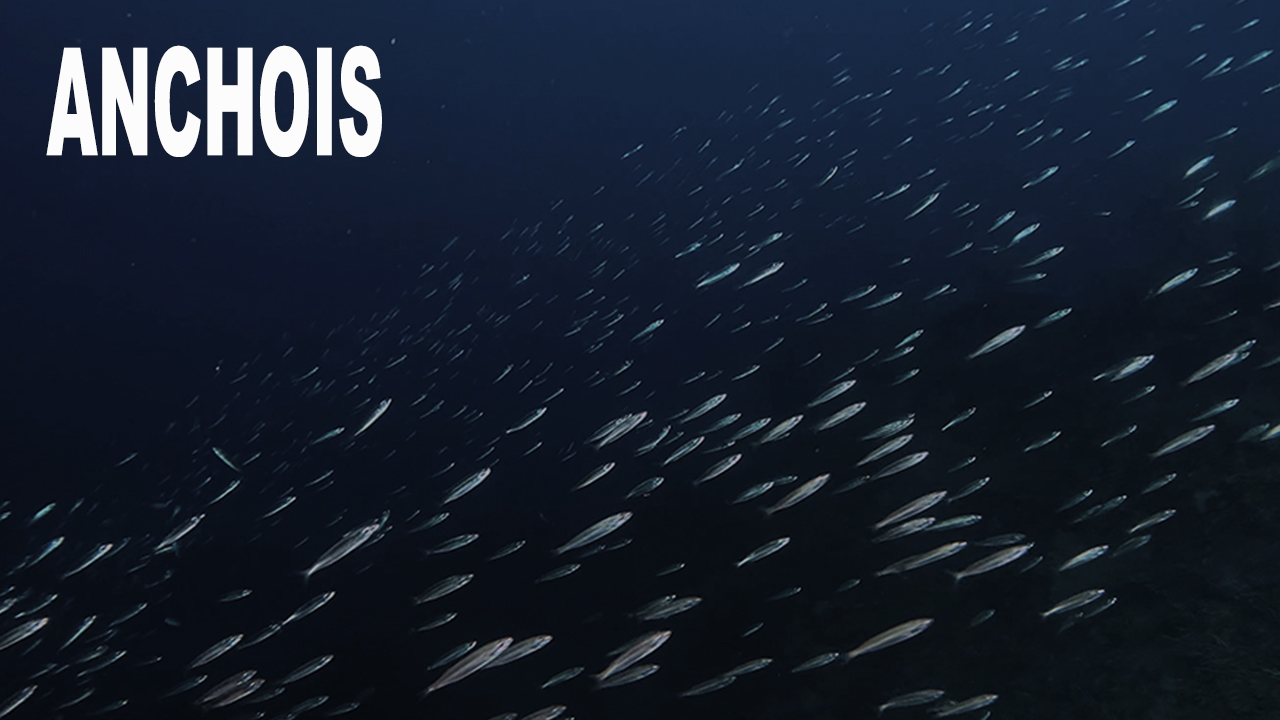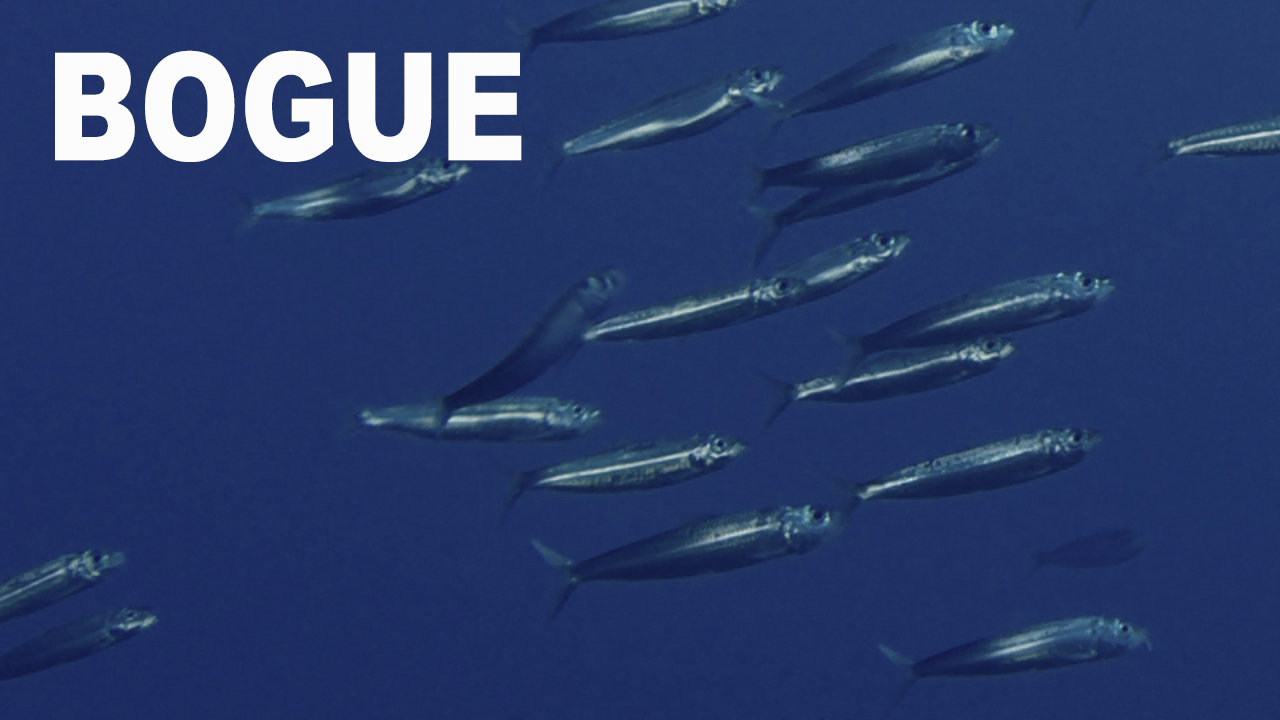

Protection
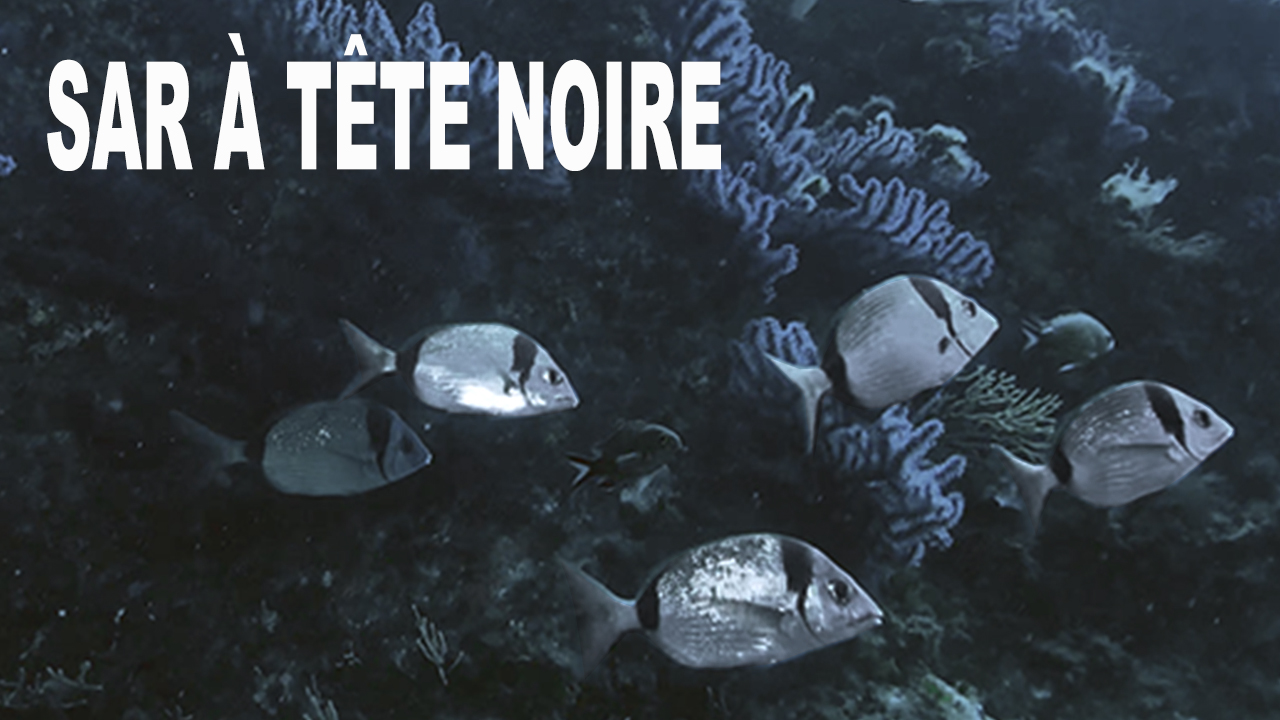
The group’s changes of direction can also confuse the predator and make a target harder to follow.
Searching for food
If some fish find food, others can react to their behaviour and join the area.
Reproduction
This can make it easier for mates to meet, particularly during certain breeding periods.
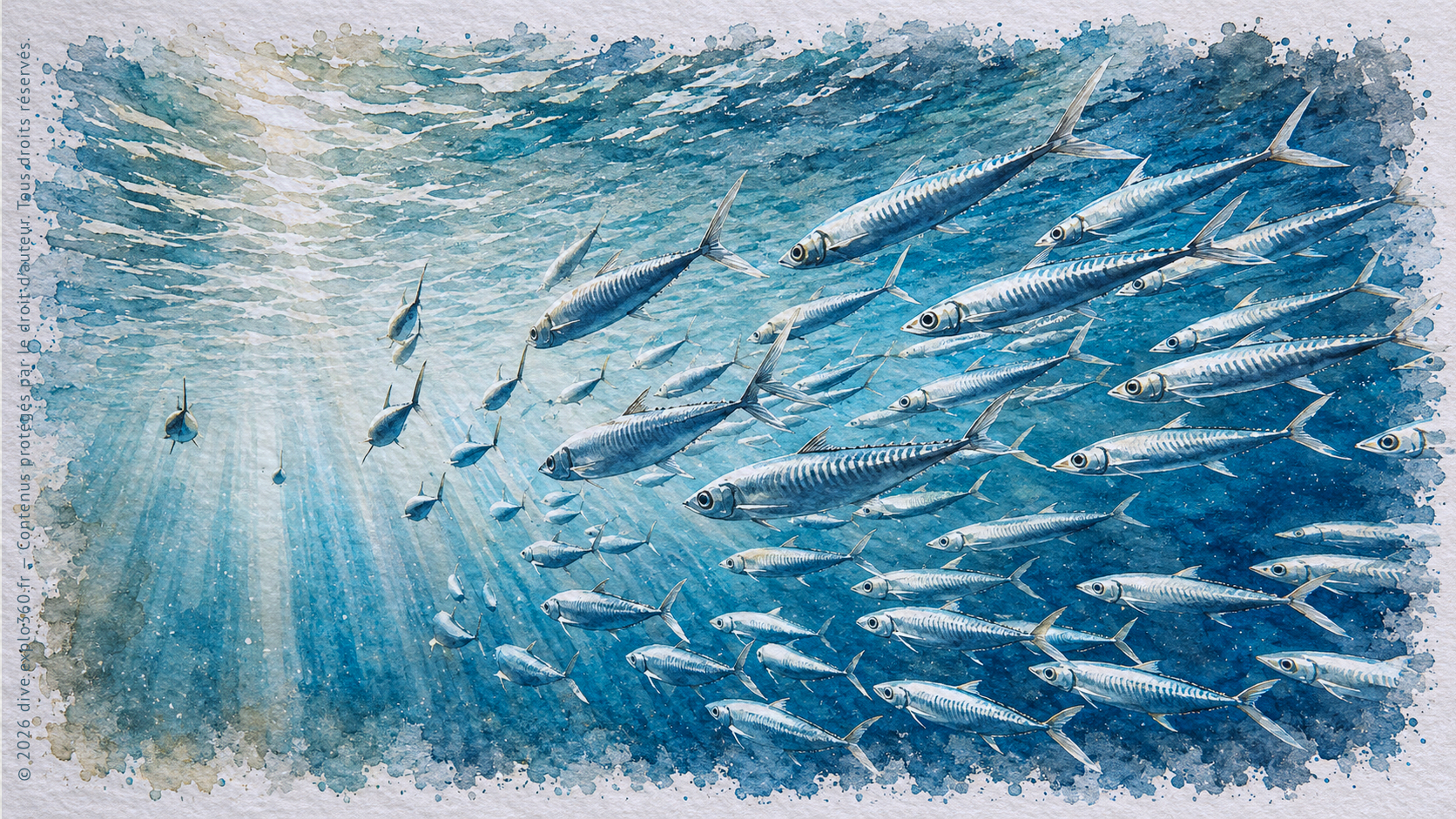
Depending on the situation, a school can stretch out, tighten up or change shape completely.
During an attack, these many moving fish can make it harder for a predator to choose its prey.

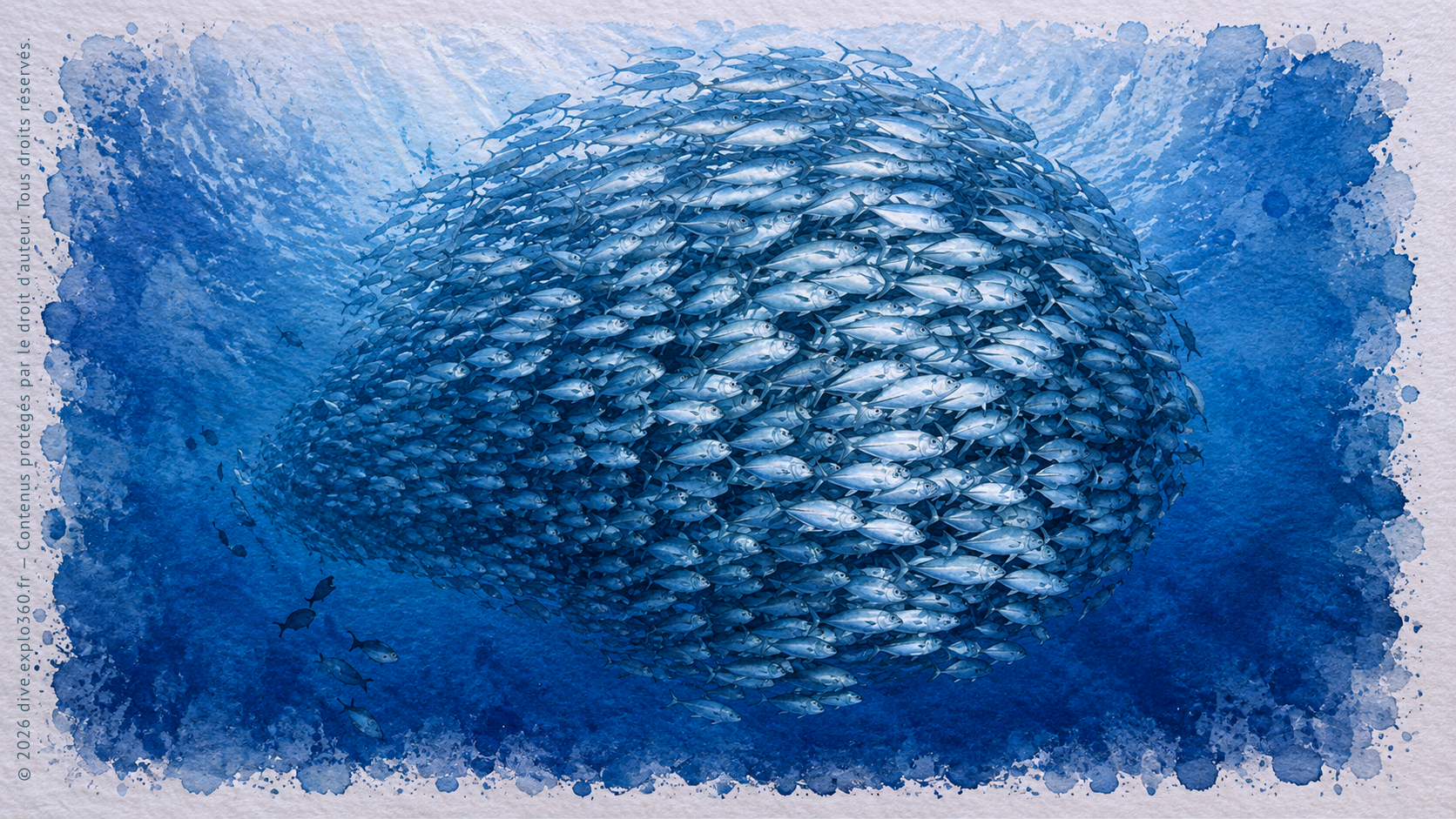
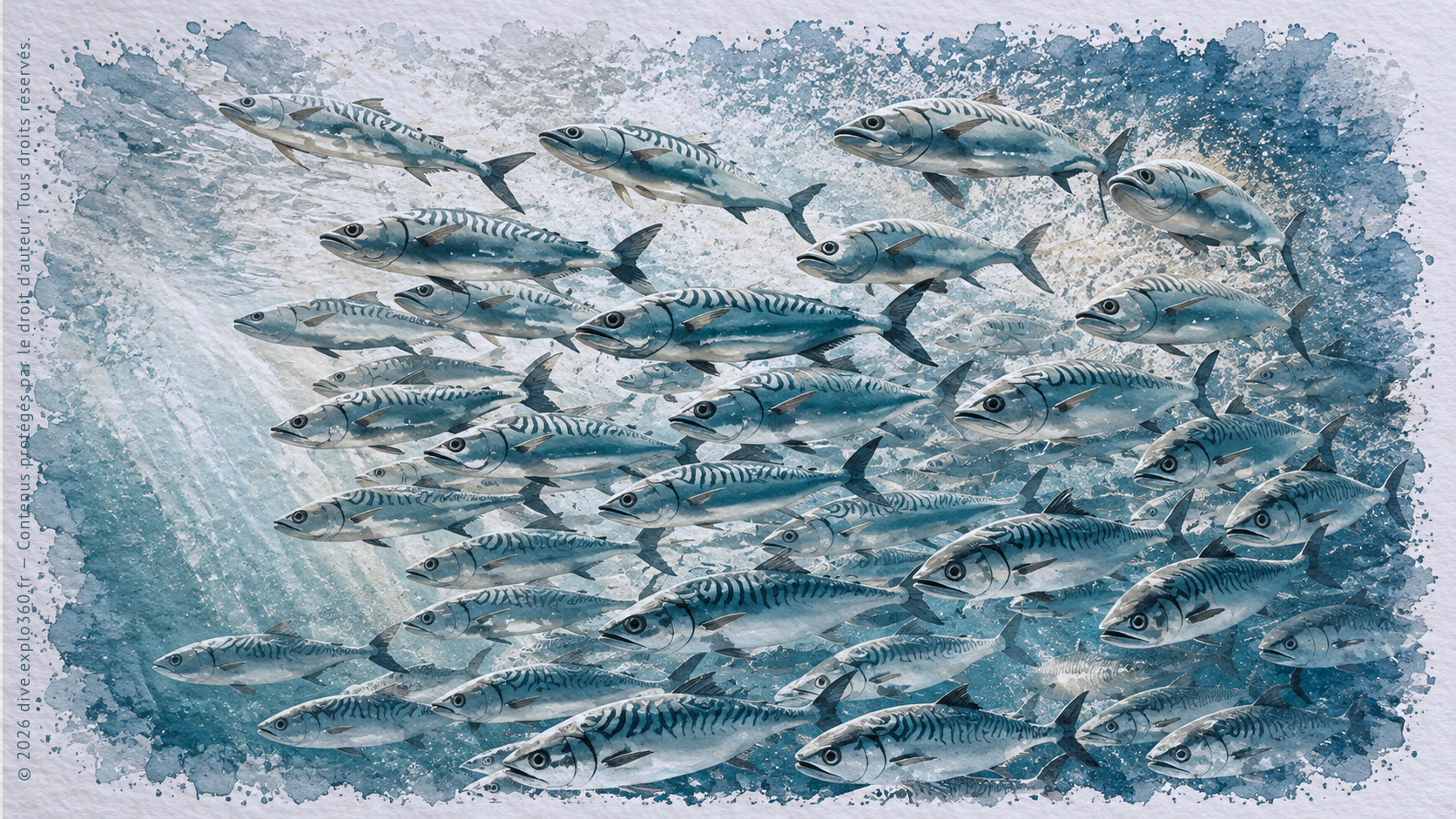
The school then becomes a compact mass resembling a ball.
This arrangement is particularly suited to travelling and searching for food.
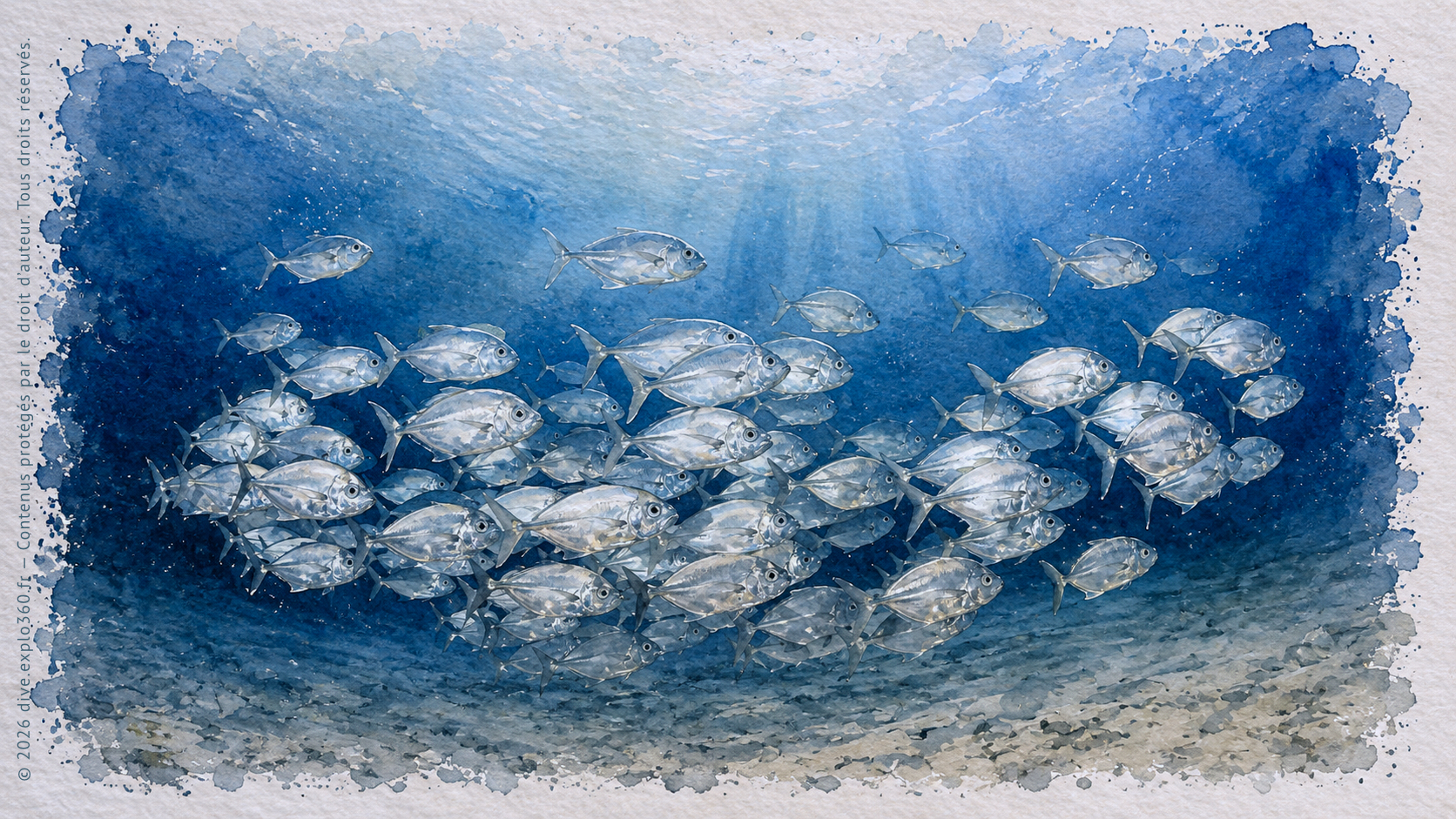
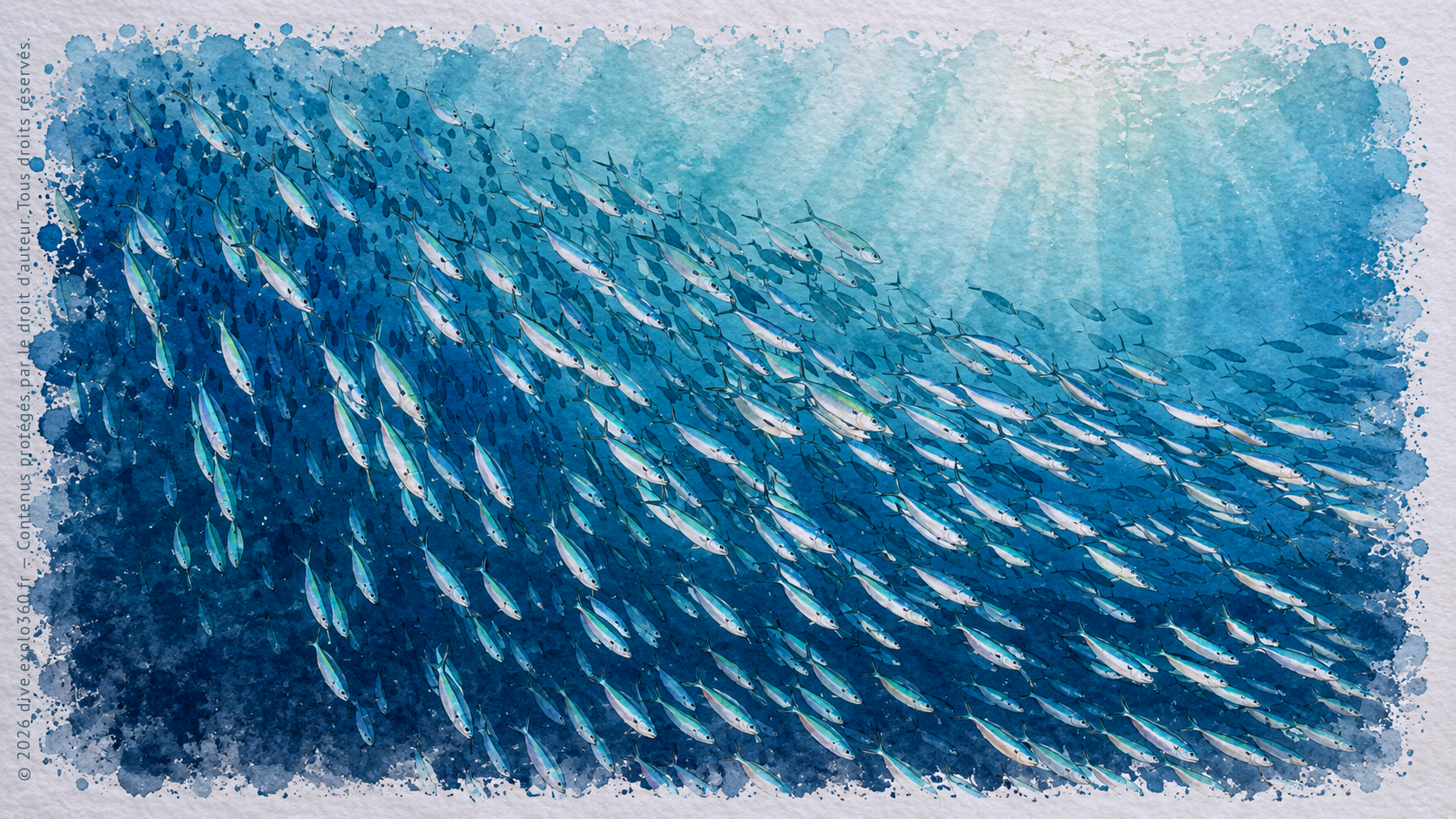
In the article, this formation is particularly associated with searching for small prey.
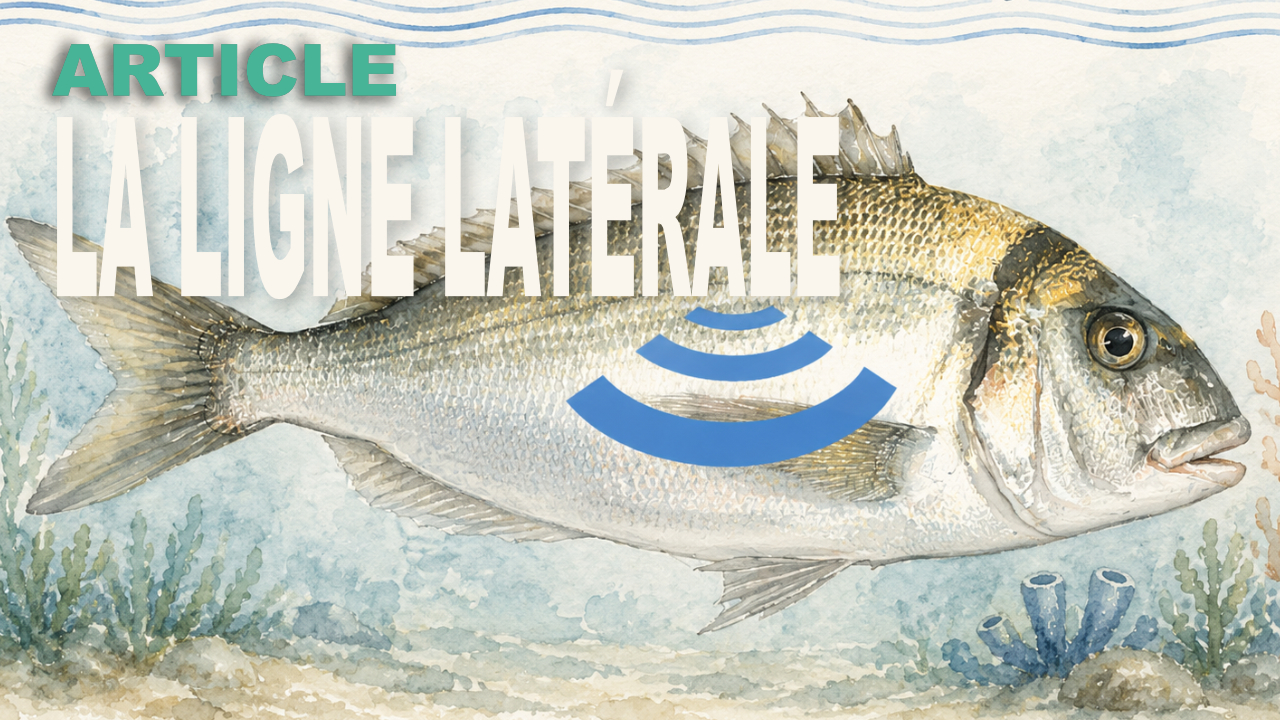
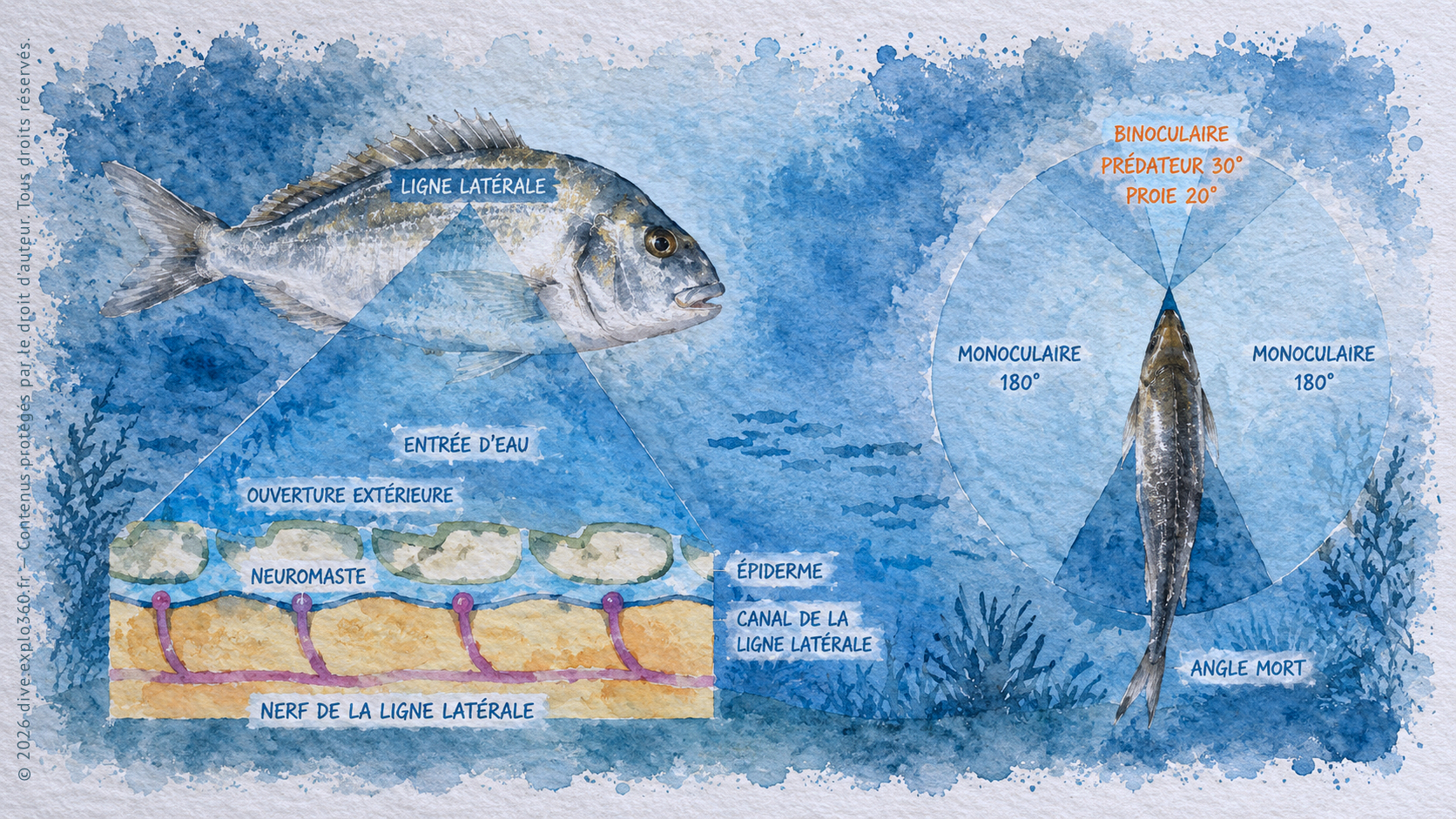
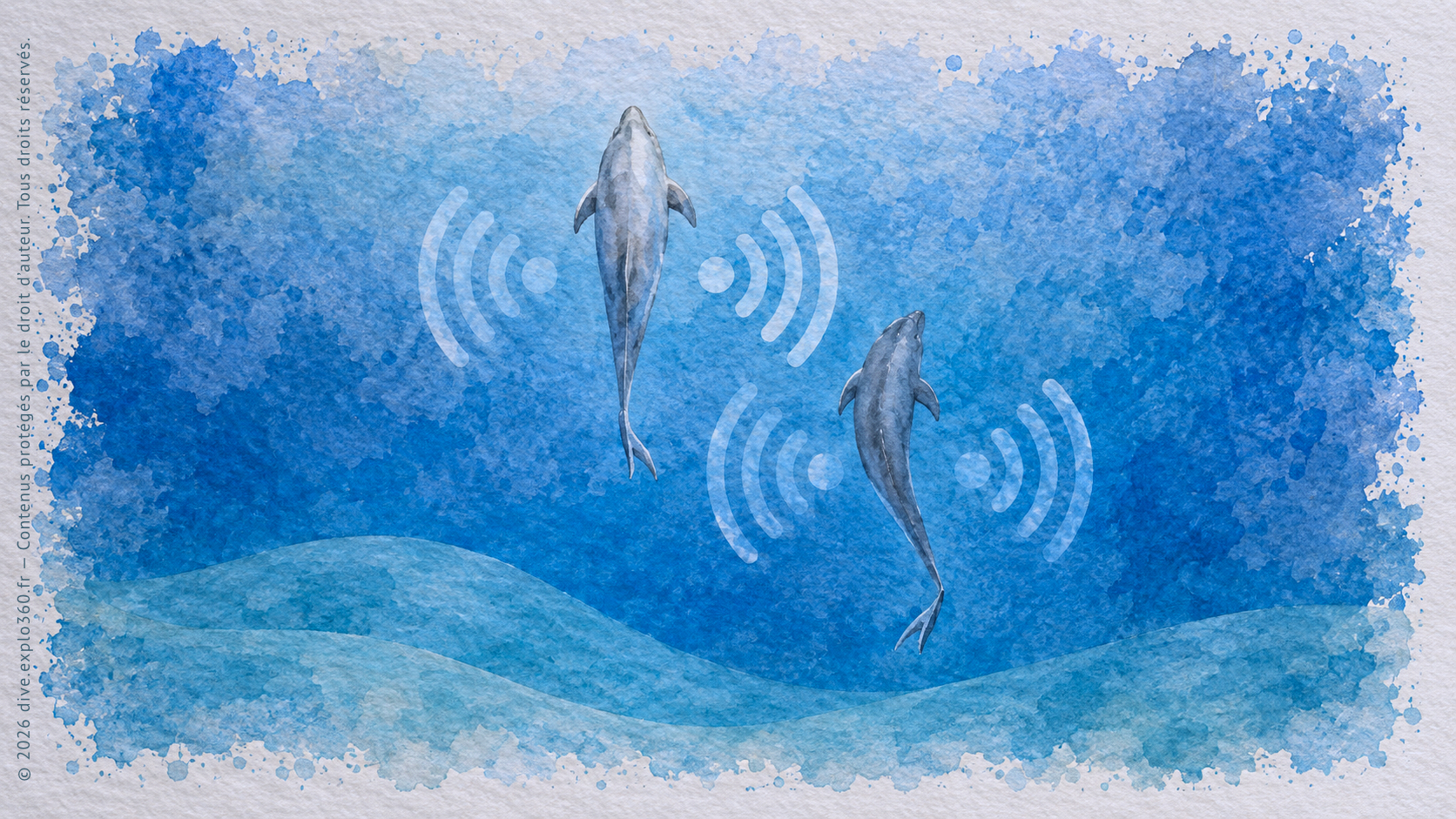
They also have a sensory system called the lateral line. It allows them to detect movements and vibrations in the water.
These two systems help them react very quickly.
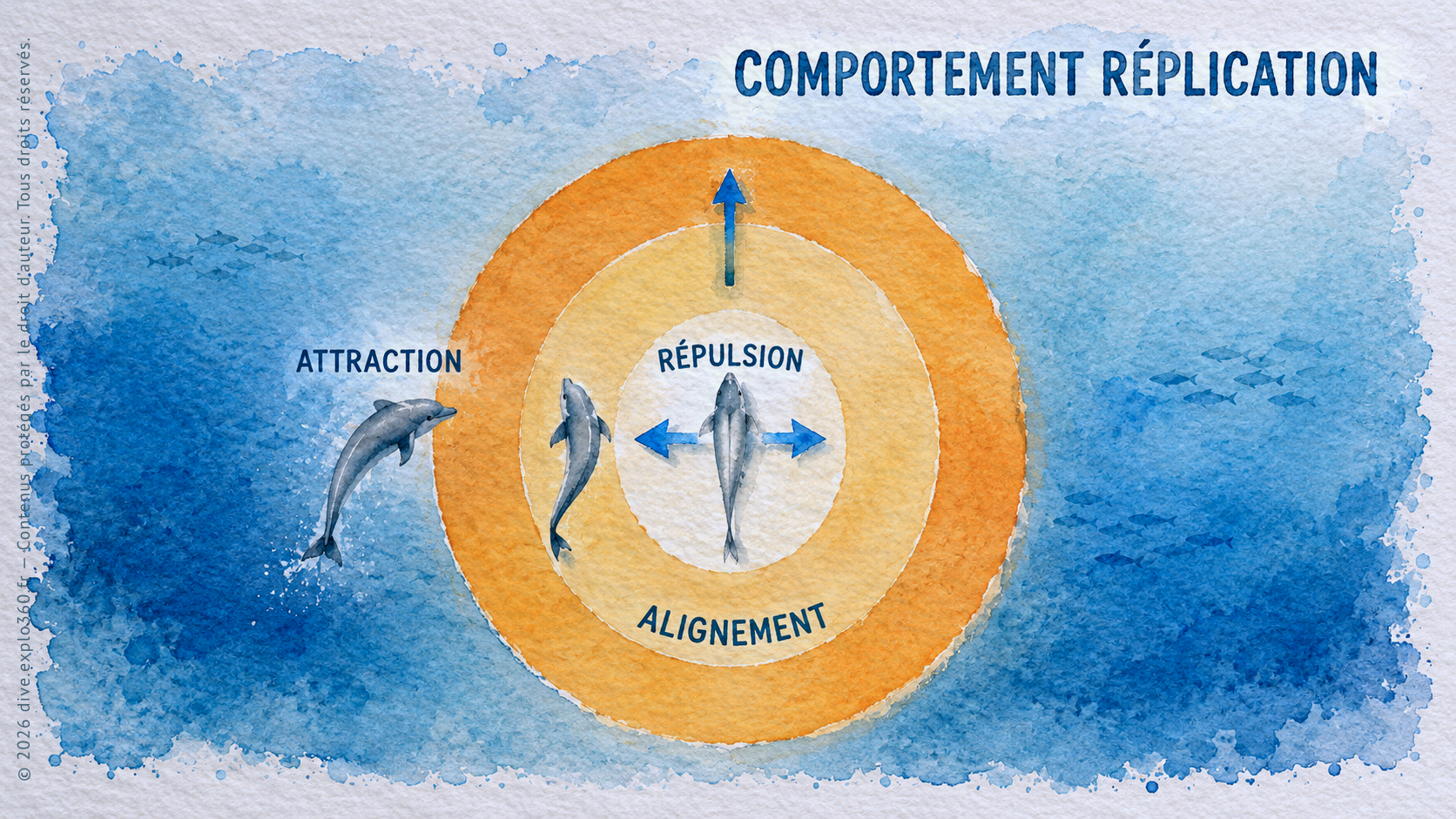
Attraction: stay near the group.
Alignment: swim in a similar direction to its neighbours.
Repulsion: do not get too close, to avoid collisions.
With these simple rules, the whole group can stay organised.
It can then change its own movement.
This reaction can be detected by other fish and spread quickly through the school.
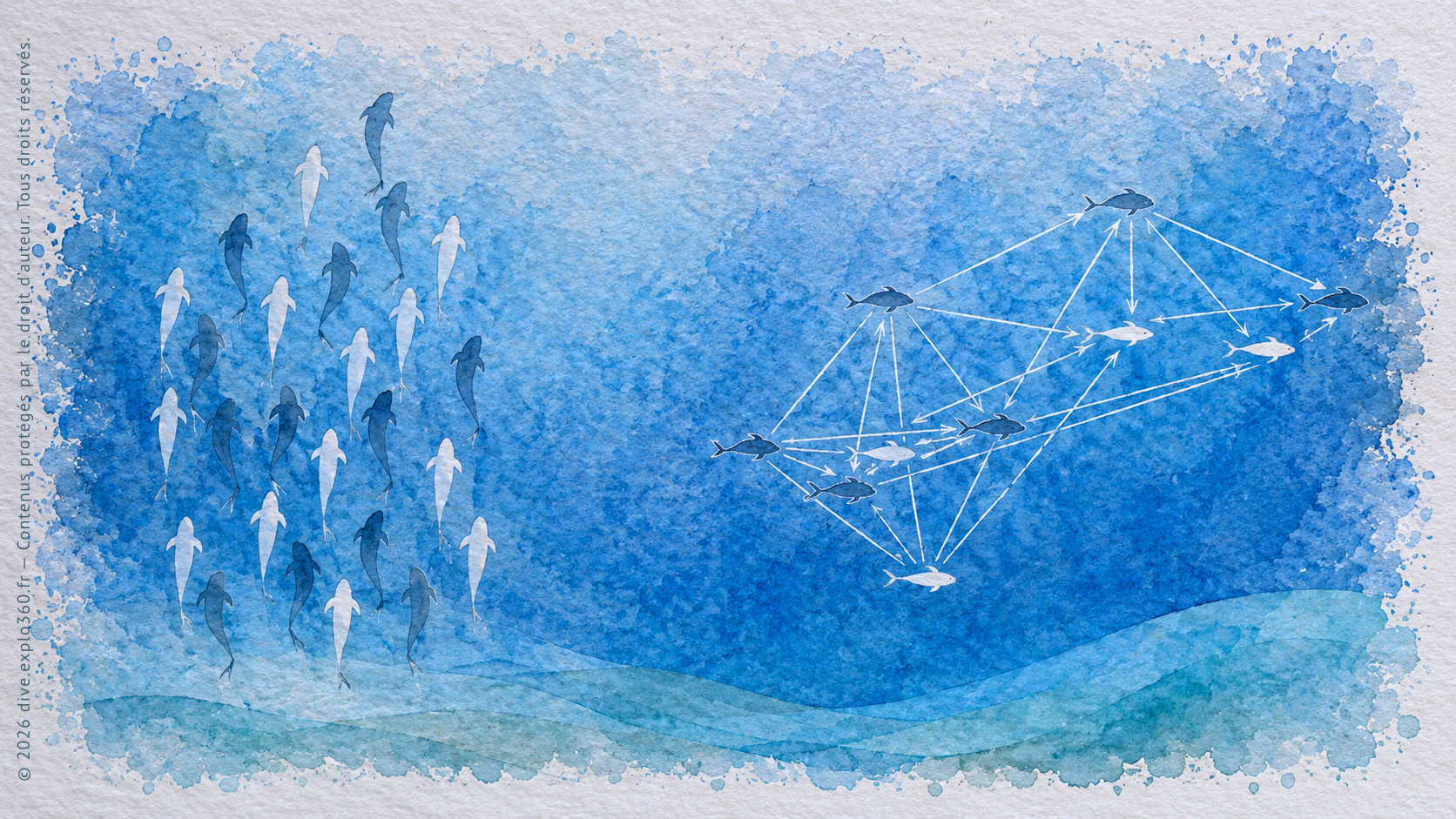
Each individual mainly reacts to the fish nearby.
If several fish detect danger and turn, their neighbours may follow. The change of direction then spreads through the group.
Interactive quiz
Test your knowledge
3 question(s) to test your knowledge.
Interactive quiz
Test your knowledge
Question 1 out of 3Score: 0
What is one of the main advantages of schooling for fish?
What does the lateral line do for fish in a school?
Which rules allow fish to stay organised in a school?
Final result
Quiz completed
correct answers
Conclusion
Vision and the lateral line allow fish to follow their neighbours. By staying close, aligning and avoiding collisions, they can move together.
This group life can help them protect themselves, find food and reproduce.
Sources
Explore the same world