Why do fish form schools?

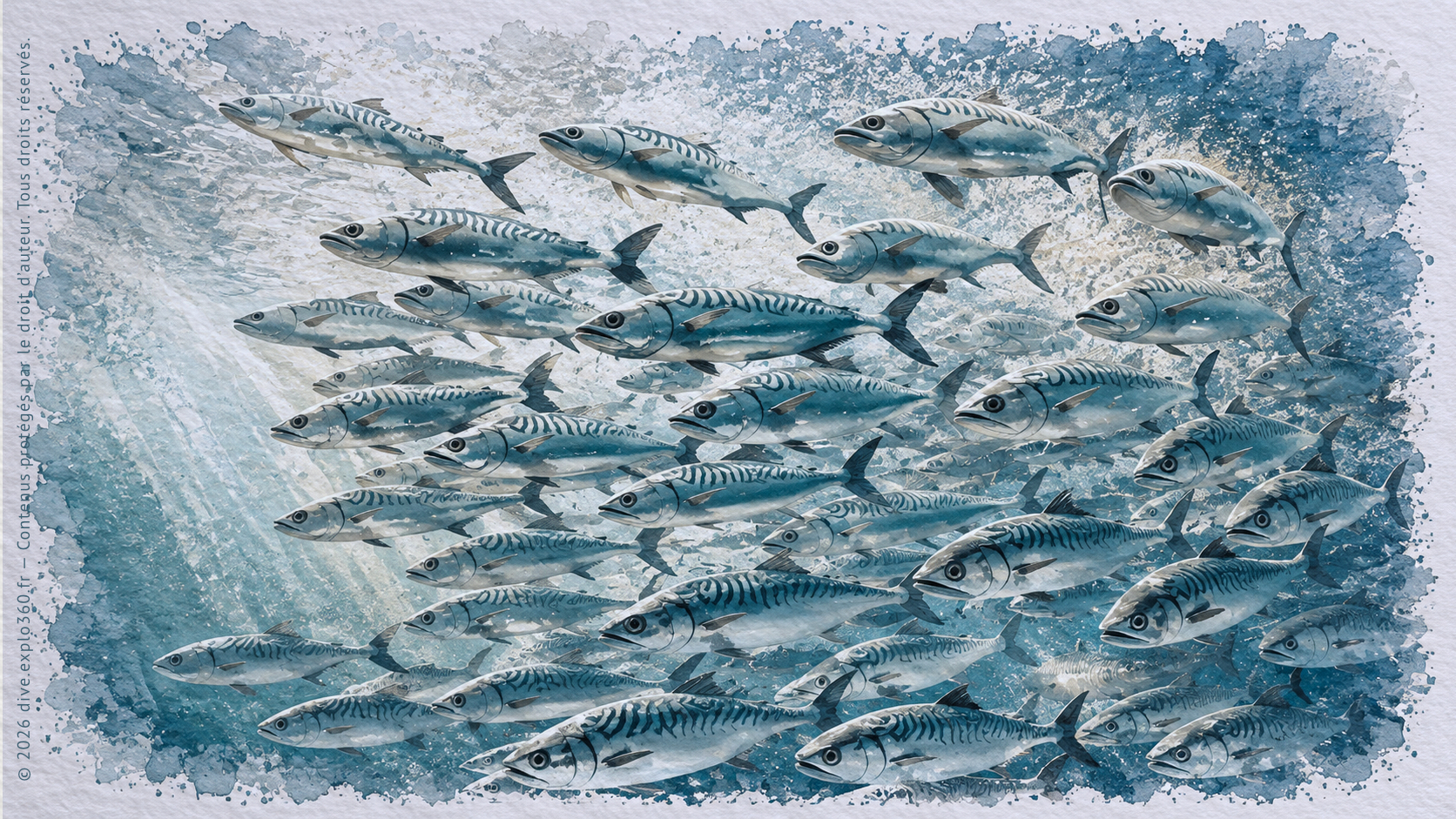
School of fish
Grouping together can help fish protect themselves, find food and meet mates. © dive.explo360.fr — All rights reserved. Reproduction prohibited without permission.
Fish mainly form schools to protect themselves from predators. By swimming together and coordinating their movements, they increase their chances of survival. To stay close to one another, they use their vision and their lateral line, a sensory organ that detects water movements.

When facing a predator, the school offers two advantages. The confusion effect makes it difficult to choose a prey among all the moving fish. The dilution effect reduces each fish’s risk of being caught, because that risk is shared among many individuals. The group can also detect danger more quickly.

Living in a school can also make food easier to find: when one fish discovers a food source, others can benefit from that discovery. However, they sometimes have to share the same resources.

Finally, groups make reproduction easier, because fish have more chances of finding a mate.

Schooling is therefore a collective strategy that supports protection, feeding and reproduction, although it also has some drawbacks, such as competition for food.

1

Protection

In a large school, a predator must choose its prey from many moving fish.

The group’s changes of direction can also confuse the predator and make a target harder to follow.

2

Searching for food

Having many fish can make it easier to discover a food source.

If some fish find food, others can react to their behaviour and join the area.

3

Reproduction

A school brings together many fish of the same species.

This can make it easier for mates to meet, particularly during certain breeding periods.

The shapes schools take
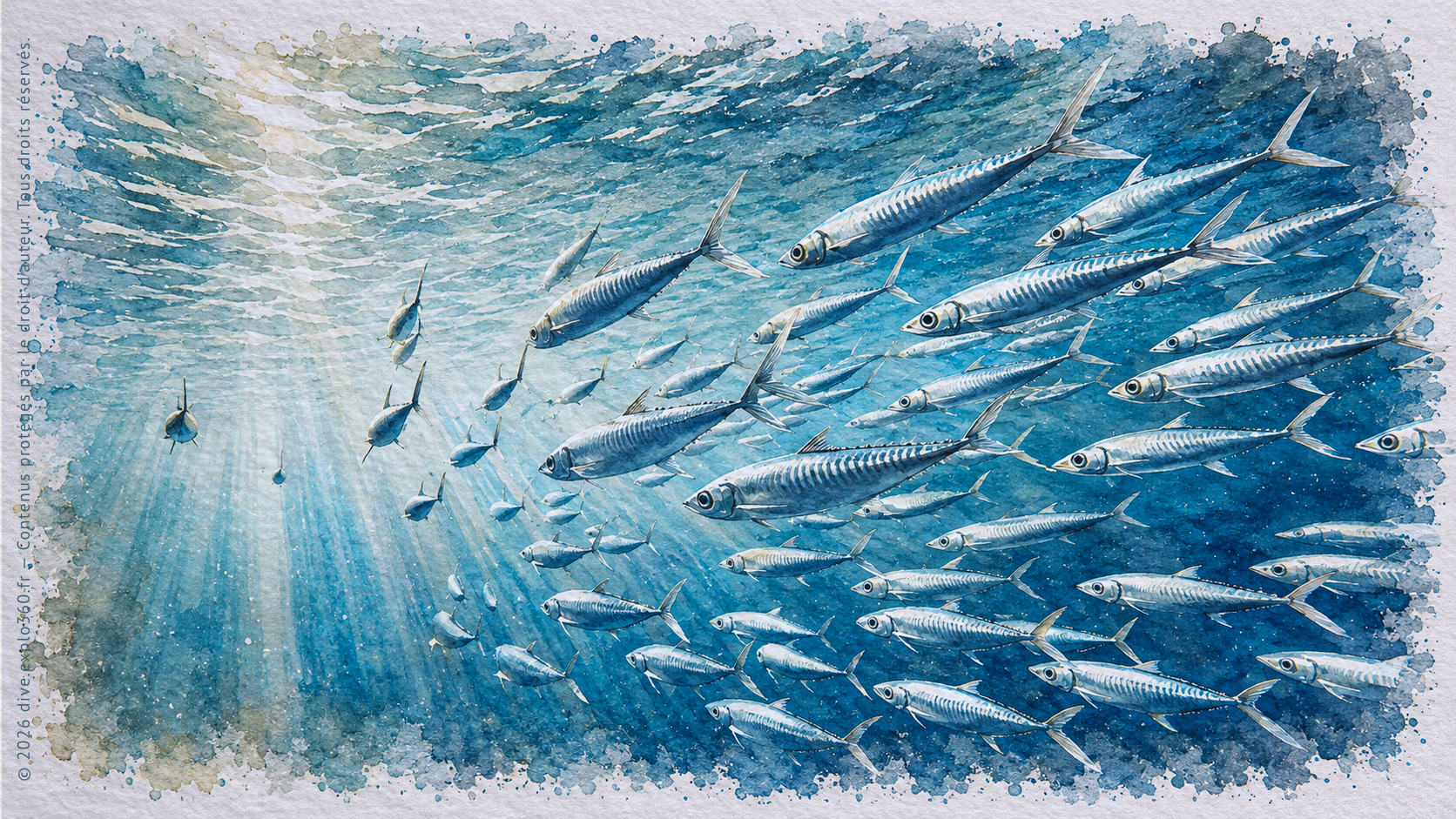
A school of fish fleeing
© dive.explo360.fr — All rights reserved. Reproduction prohibited without permission.
A school’s shape emerges from individual movements and interactions with the environment. It changes with speed, spatial constraints or an approaching predator. Assigning a single purpose to each shape would be too simple.

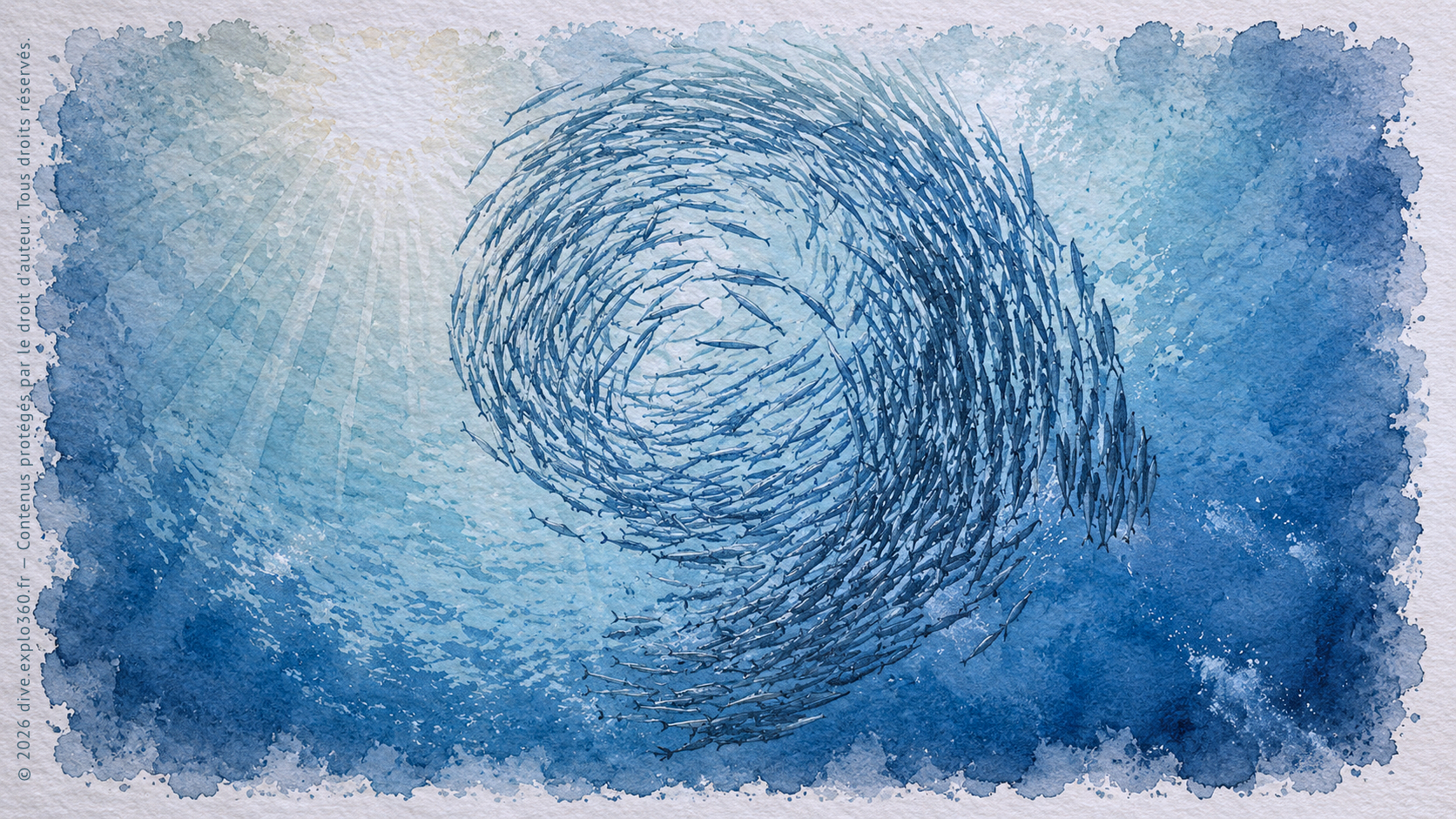
The vortex

A group can adopt collective rotation, sometimes called a vortex. This form can arise in several contexts. Seeing it is not enough to conclude that the fish are trying to confuse a predator.
Vortex
The vortex: fish turn together as if in a whirlpool. © dive.explo360.fr — All rights reserved. Reproduction prohibited without permission.

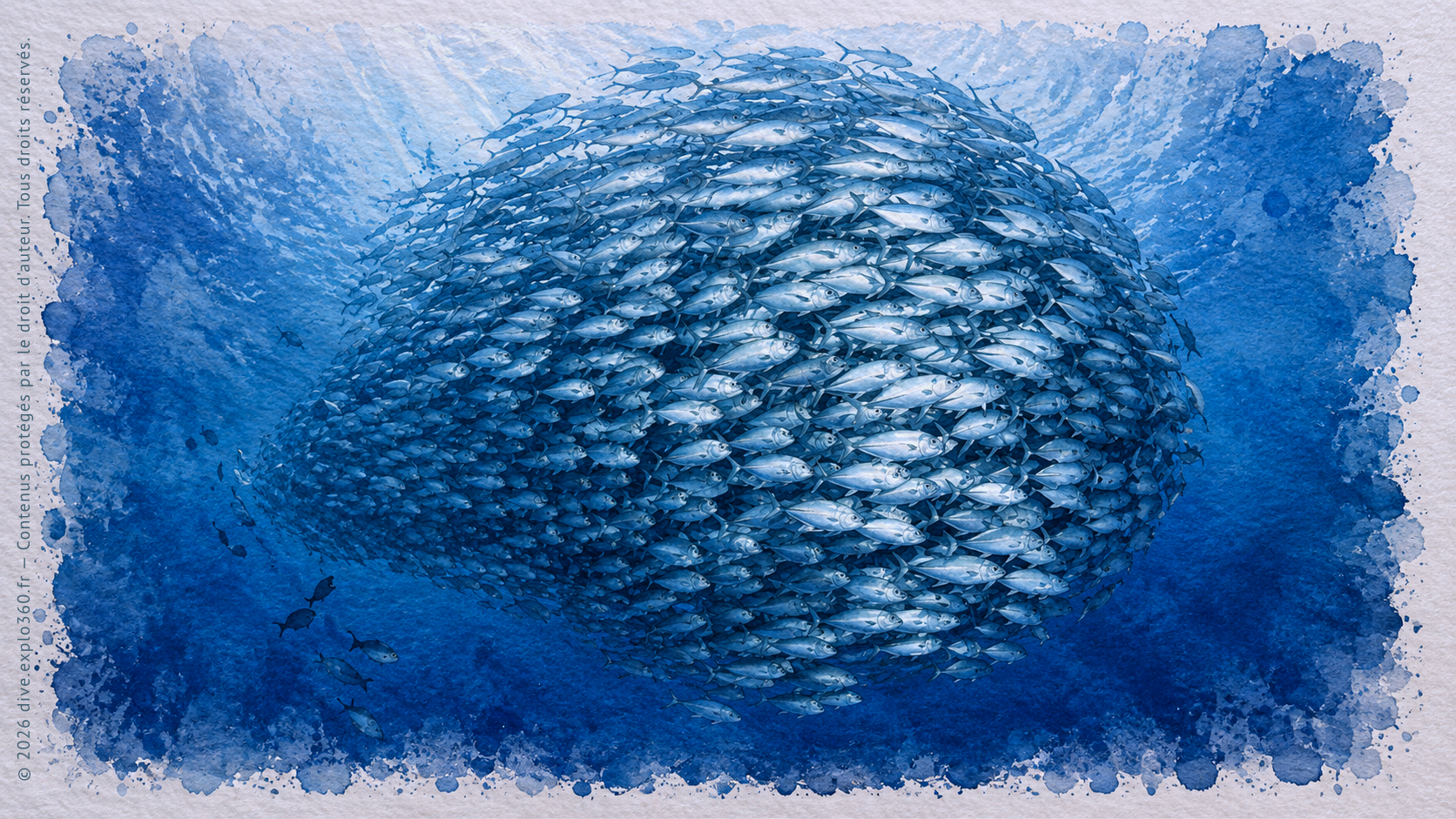
The ball

Ball
The ball: fish group very close together. © dive.explo360.fr — All rights reserved. Reproduction prohibited without permission.
An attack may compress a school into a dense ball. Grouping can dilute individual risk or make a target harder to track, but can also attract predators. Individuals at the centre are not guaranteed protection.

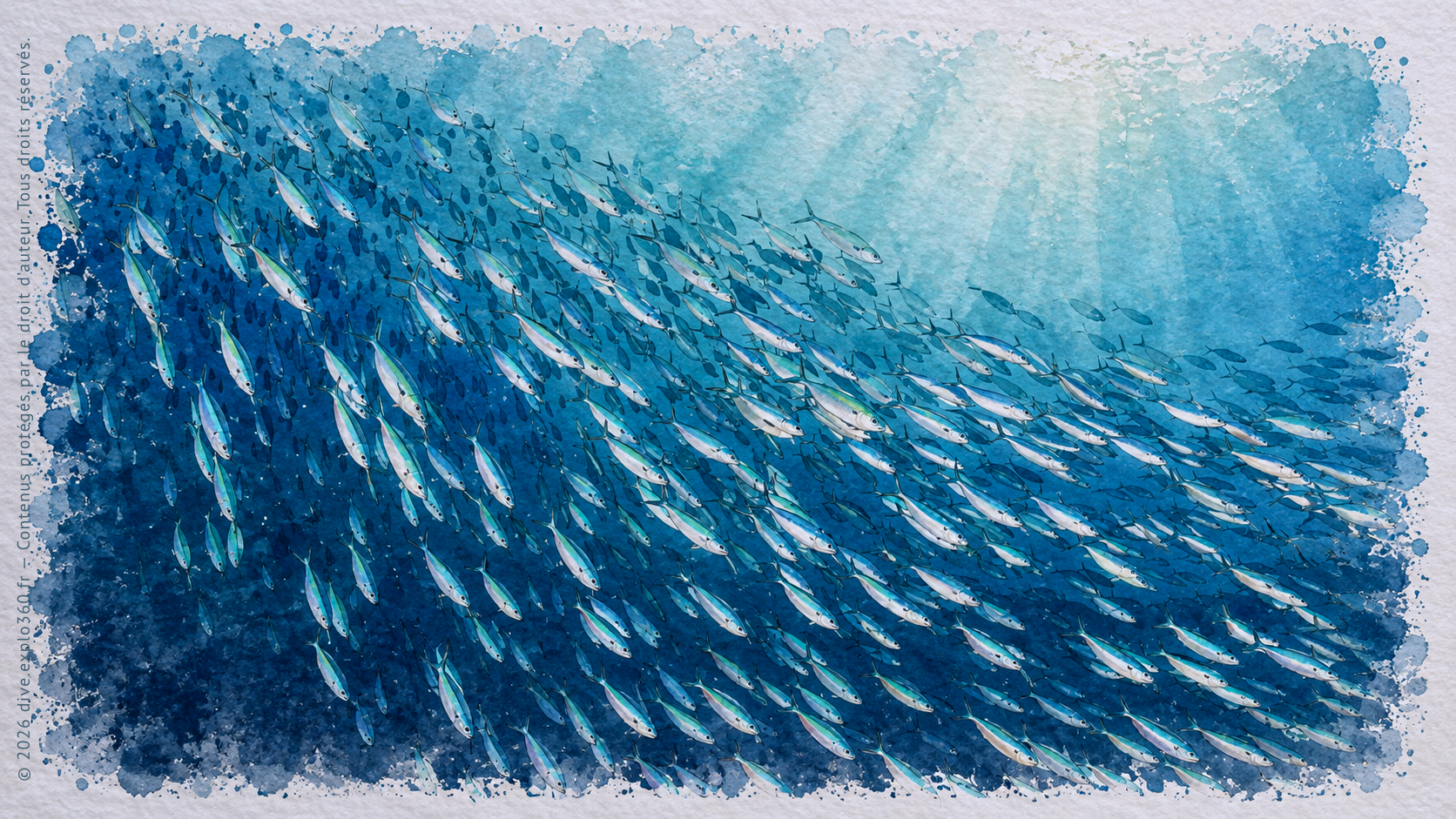
The linear school

Fish can swim in a long, stretched-out formation.

This arrangement is particularly suited to travelling and searching for food.
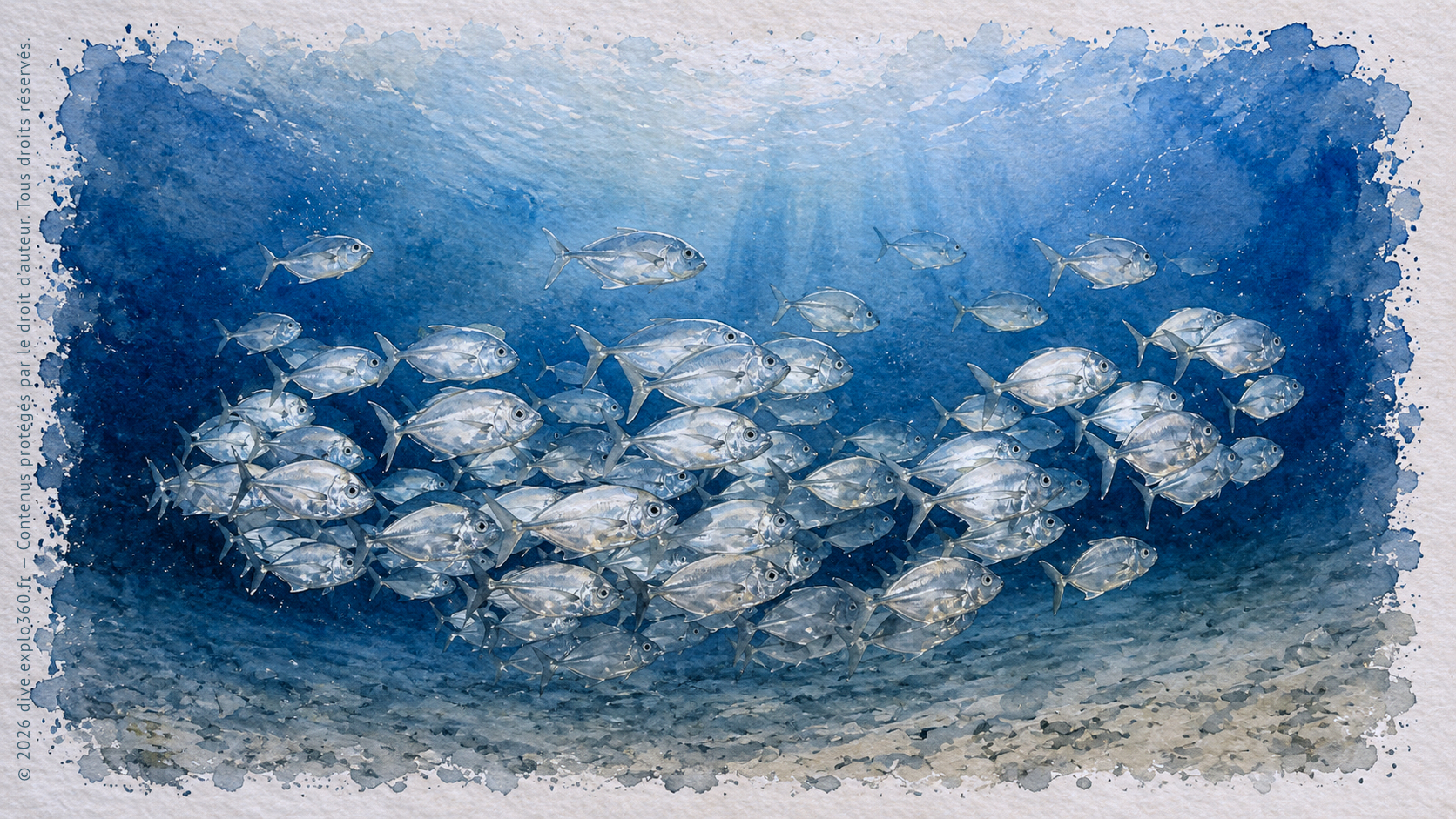
Linear school
The linear school: fish move together in an elongated formation. © dive.explo360.fr — All rights reserved. Reproduction prohibited without permission.

The fountain

Fountain
The fountain: the school’s movement traces an upward and then downward path. © dive.explo360.fr — All rights reserved. Reproduction prohibited without permission.
In a fountain-like response, fish may part around a predator and regroup behind it. This is not an ascent to the surface intended to confuse plankton. The trajectory depends in part on the attack and possible escape routes.

Vision and the lateral line

Fish use their eyes to see their neighbours and follow their movements.

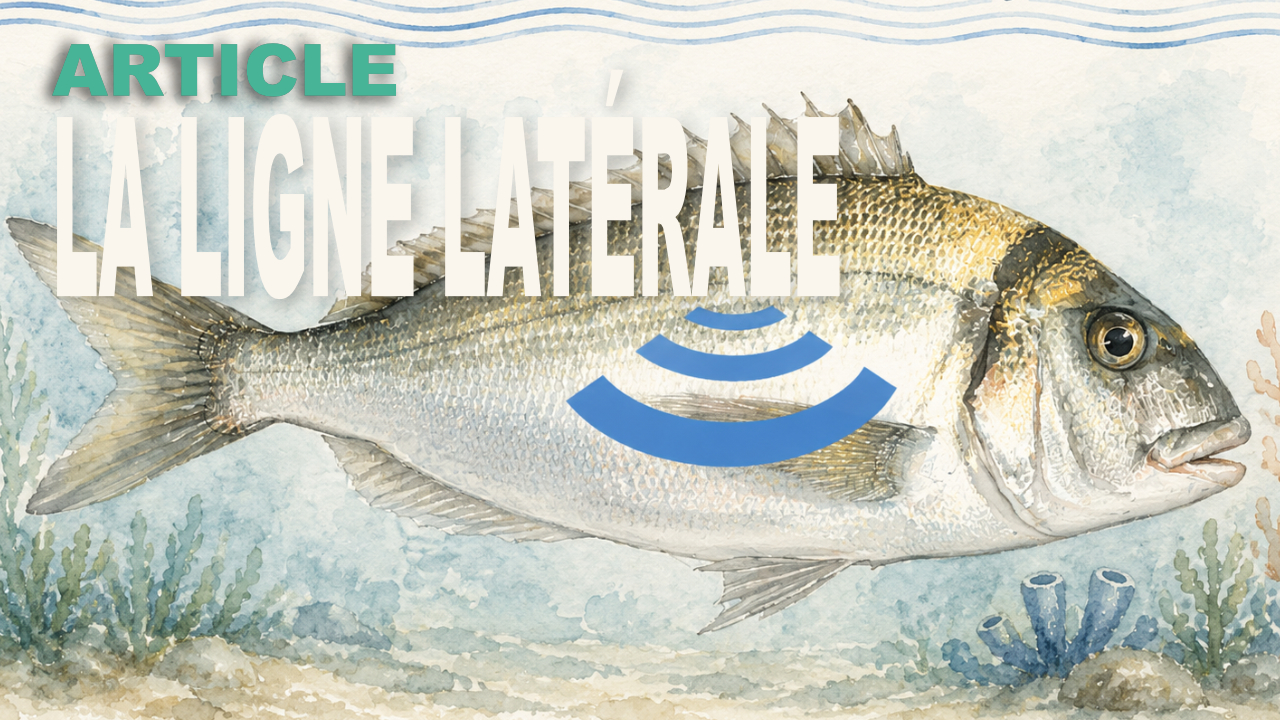
They also have a sensory system called the lateral line. It allows them to detect movements and vibrations in the water.

These two systems help them react very quickly.
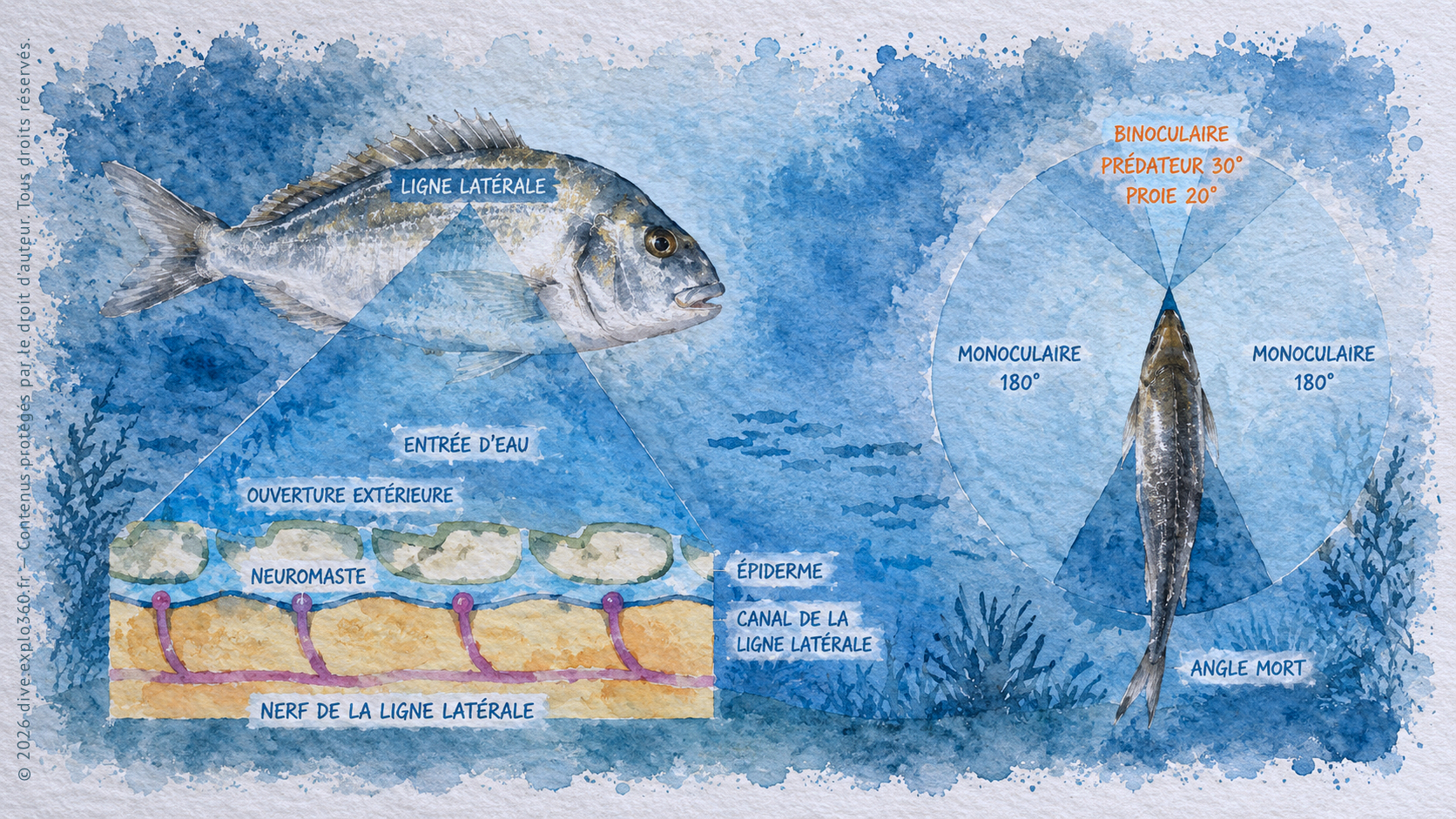
Lateral line and vision
Vision and the lateral line help fish detect their neighbours’ movements. © dive.explo360.fr — All rights reserved. Reproduction prohibited without permission.

Three simple rules

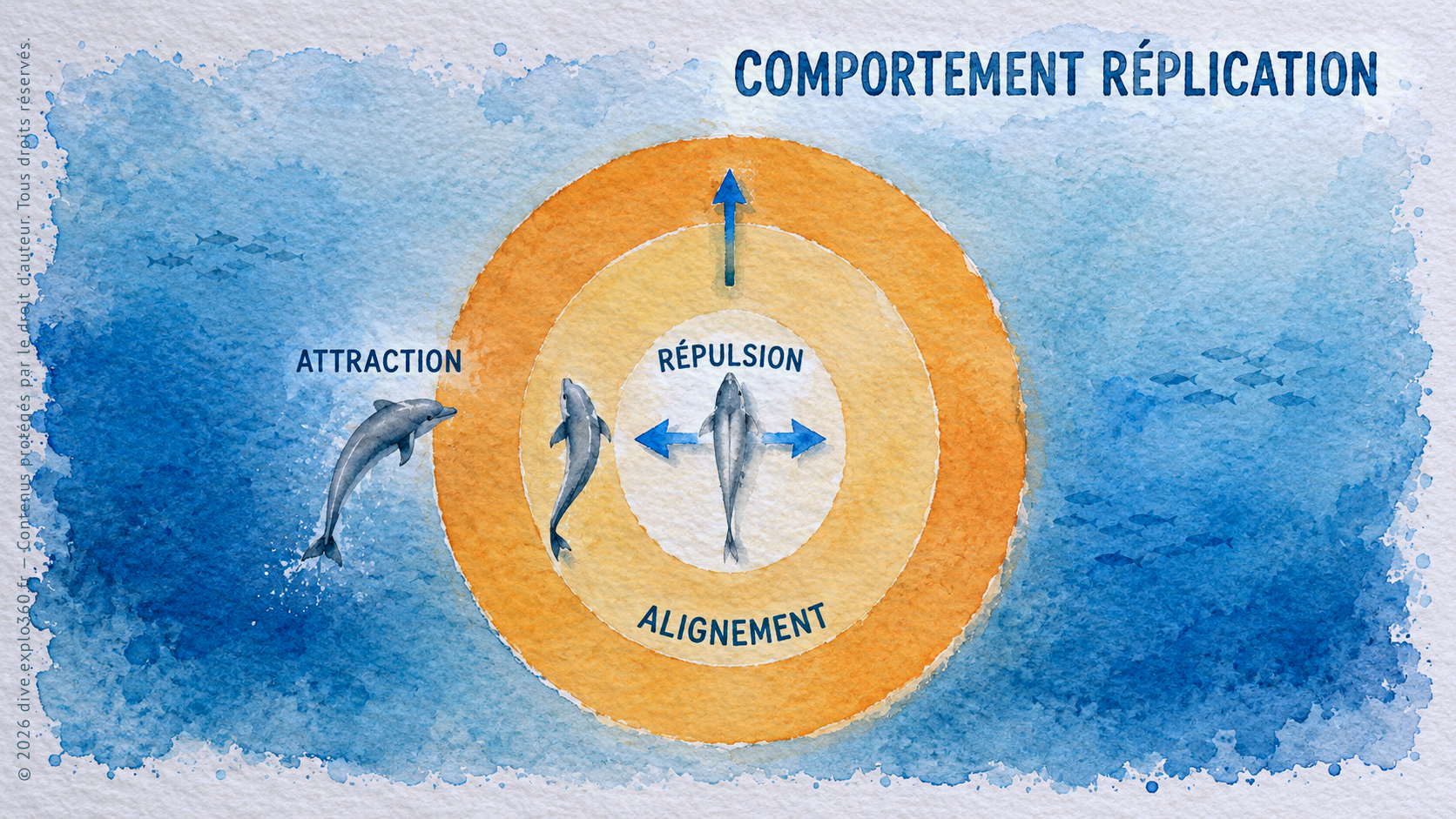
Schooling behaviours
Moving closer, aligning and keeping enough distance allow the school to stay organised. © dive.explo360.fr — All rights reserved. Reproduction prohibited without permission.

The simulator uses attraction, alignment and repulsion: approaching, adjusting direction and avoiding collisions. These rules are a simplified model of certain interactions.

Observations show that actual interaction rules vary by species and situation. Apparent alignment can even emerge without an explicit alignment rule. The model helps explore an idea; it does not by itself demonstrate how every school works.

Information spreading
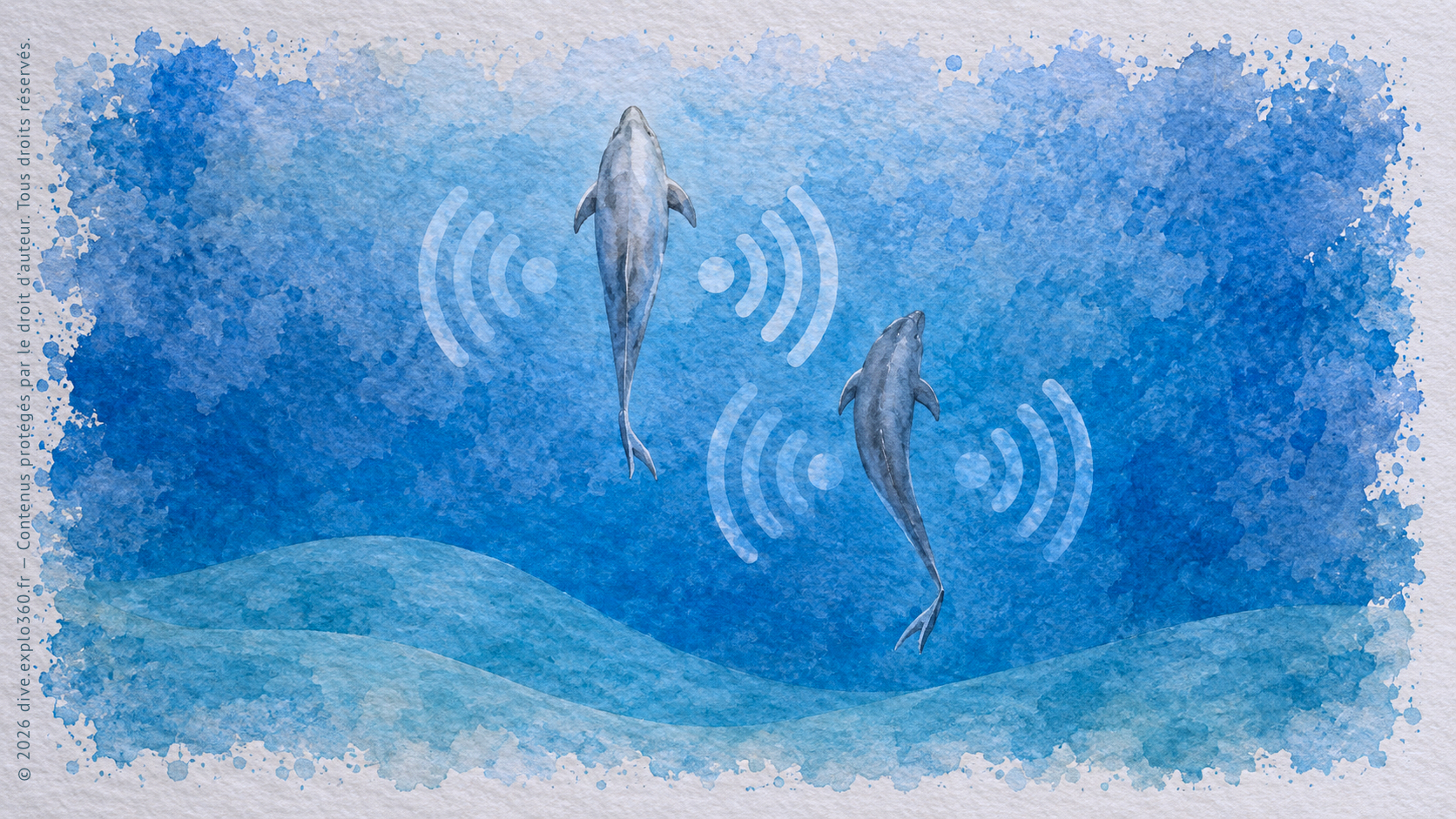
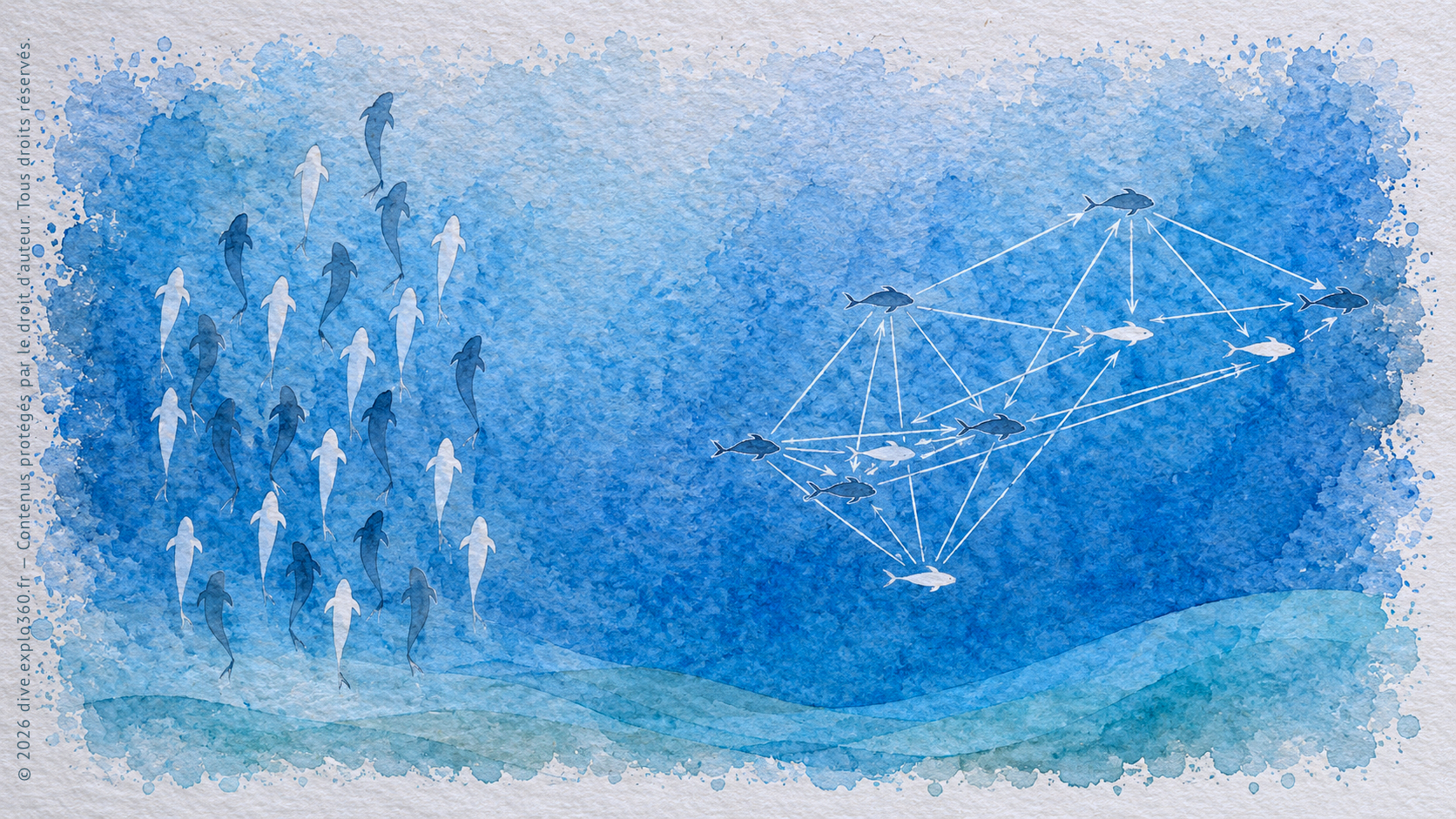
Vision and the lateral line provide information about neighbours and nearby disturbances. A response can spread as other fish react to movement. There is no need to assume a deliberate message or a chemical signal coordinating every turn.
Lateral line communication
One fish’s reaction can quickly influence its neighbours. © dive.explo360.fr — All rights reserved. Reproduction prohibited without permission.

A leader is not always needed

School leader
Each fish adjusts its movement to that of its neighbours: the school can thus coordinate without a permanent leader. © dive.explo360.fr — All rights reserved. Reproduction prohibited without permission.
Contrary to what we might think, a school does not always have one fish deciding the direction.

Each individual mainly reacts to the fish nearby.

If several fish detect danger and turn, their neighbours may follow. The change of direction then spreads through the group.

Interactive quiz

Test your knowledge

Conclusion

A school of fish is an organised group capable of quickly changing its shape and direction.

Vision and the lateral line allow fish to follow their neighbours. By staying close, aligning and avoiding collisions, they can move together.

This group life can help them protect themselves, find food and reproduce.

Sources