Why do fish form schools?
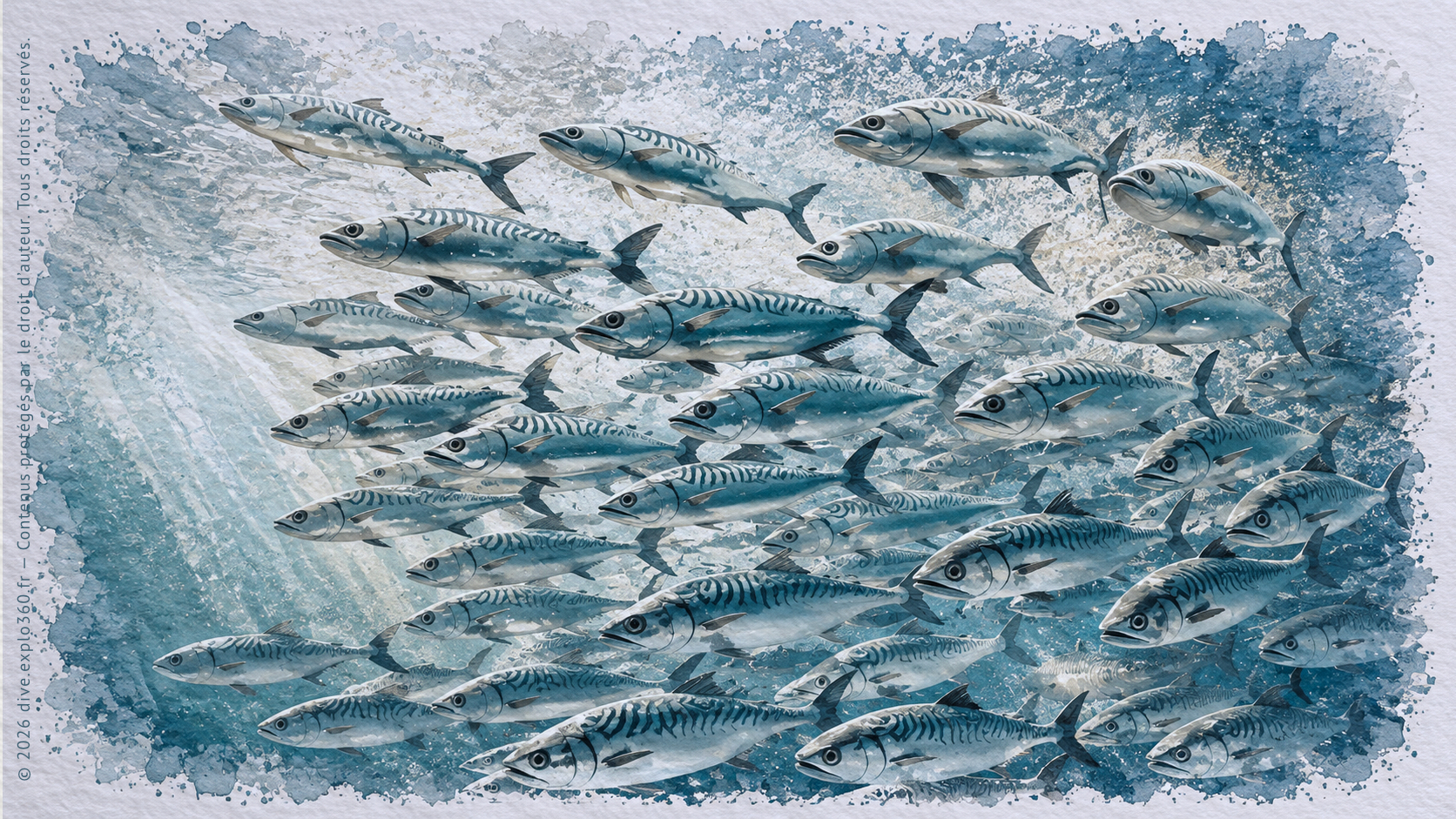
Schooling is a collective strategy that improves the chances of survival of many fish species. It relies on coordinated movements between individuals, particularly through vision and the lateral line, a sensory system that detects water movements and vibrations.
Grouping offers several advantages against predators. It creates a dilution effect, reducing the individual risk of being caught, and a confusion effect, making it harder to single out prey among many moving fish. Collective vigilance also allows some threats to be detected more quickly.
Schools can also help fish find food, particularly through information provided by other individuals’ movements. However, this concentration can also increase competition for food resources.
Finally, groups can support reproduction by making it easier for partners to meet and, in some species, by allowing spawning to be synchronised.
Schooling therefore reflects a balance between collective advantages and individual constraints. It shows how simple behaviours, coordinated between individuals, can improve survival and reproduction without requiring a leader to direct the group.
Protection
The school’s rapid changes of direction can also make it harder to track one individual: this is the confusion effect.
Searching for food
When a food source is discovered, the behaviour of the first fish can provide information to other group members.
Reproduction
The shapes schools of fish take
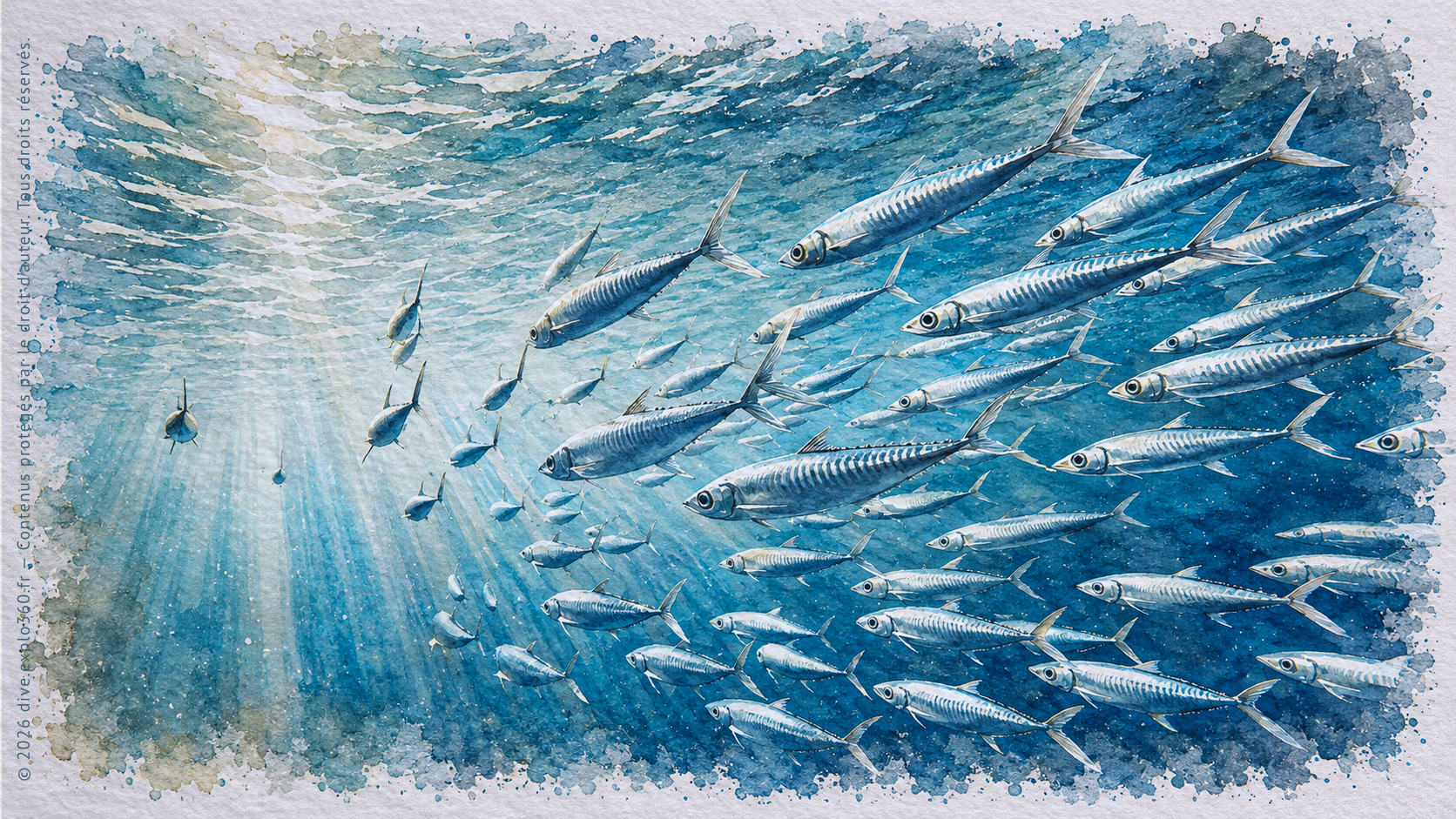
A school can stretch, tighten or turn as individual fish adjust to one another and to conditions around them. Speed, the space available and an approaching predator can all affect its shape. The same formation can arise in different situations.
The vortex
Collective rotation can give a school the shape of a vortex. That pattern can arise in several contexts, so its appearance alone tells us little about what triggered it.

The ball
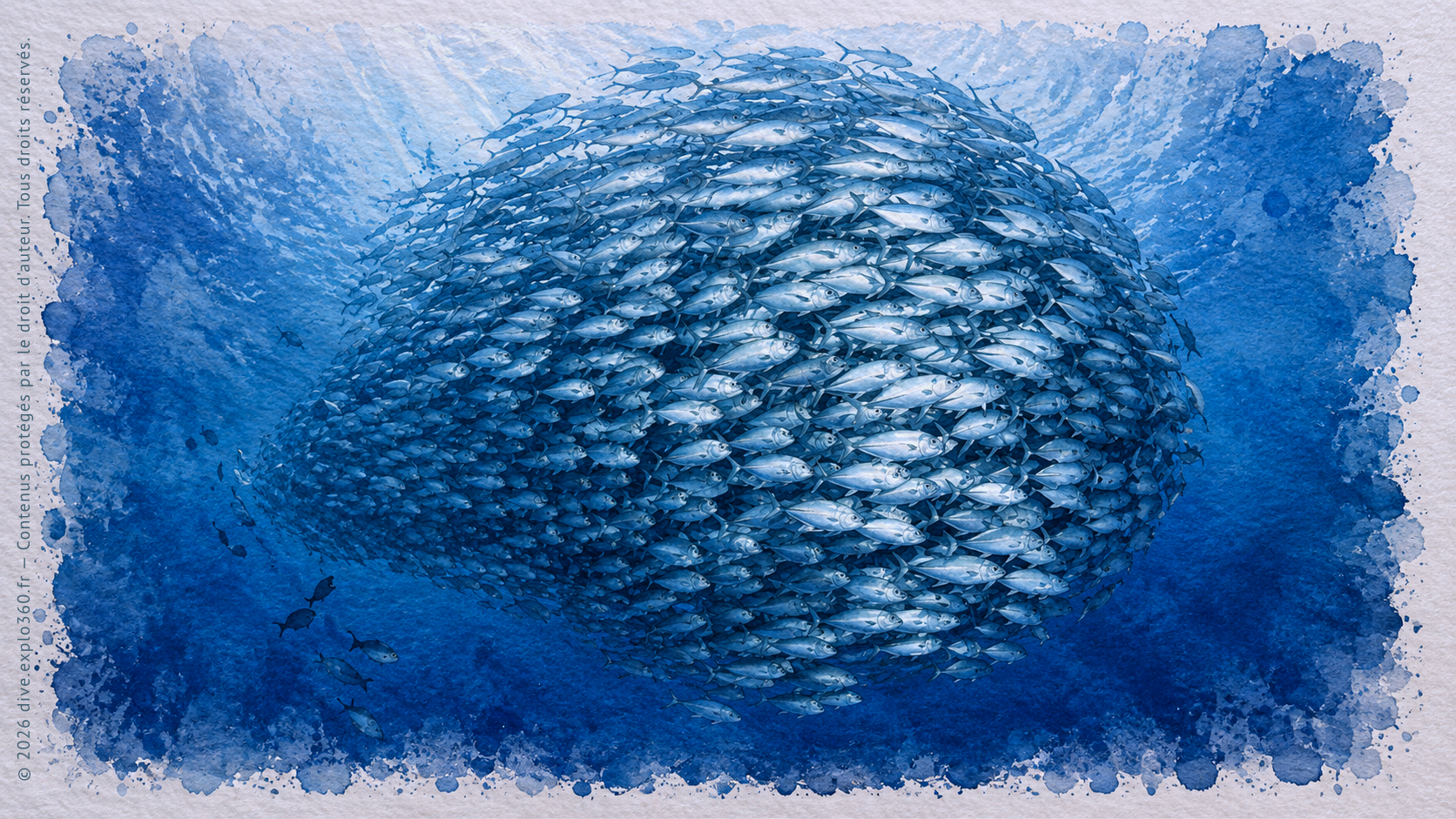
An attack may compress a school into a dense ball. Grouping can dilute individual risk or make a target harder to track, but can also attract predators. Individuals at the centre are not guaranteed protection.
The linear school
Fish can also move in an elongated formation.
This arrangement allows the group to cover a large area and may be used when travelling or searching for food.
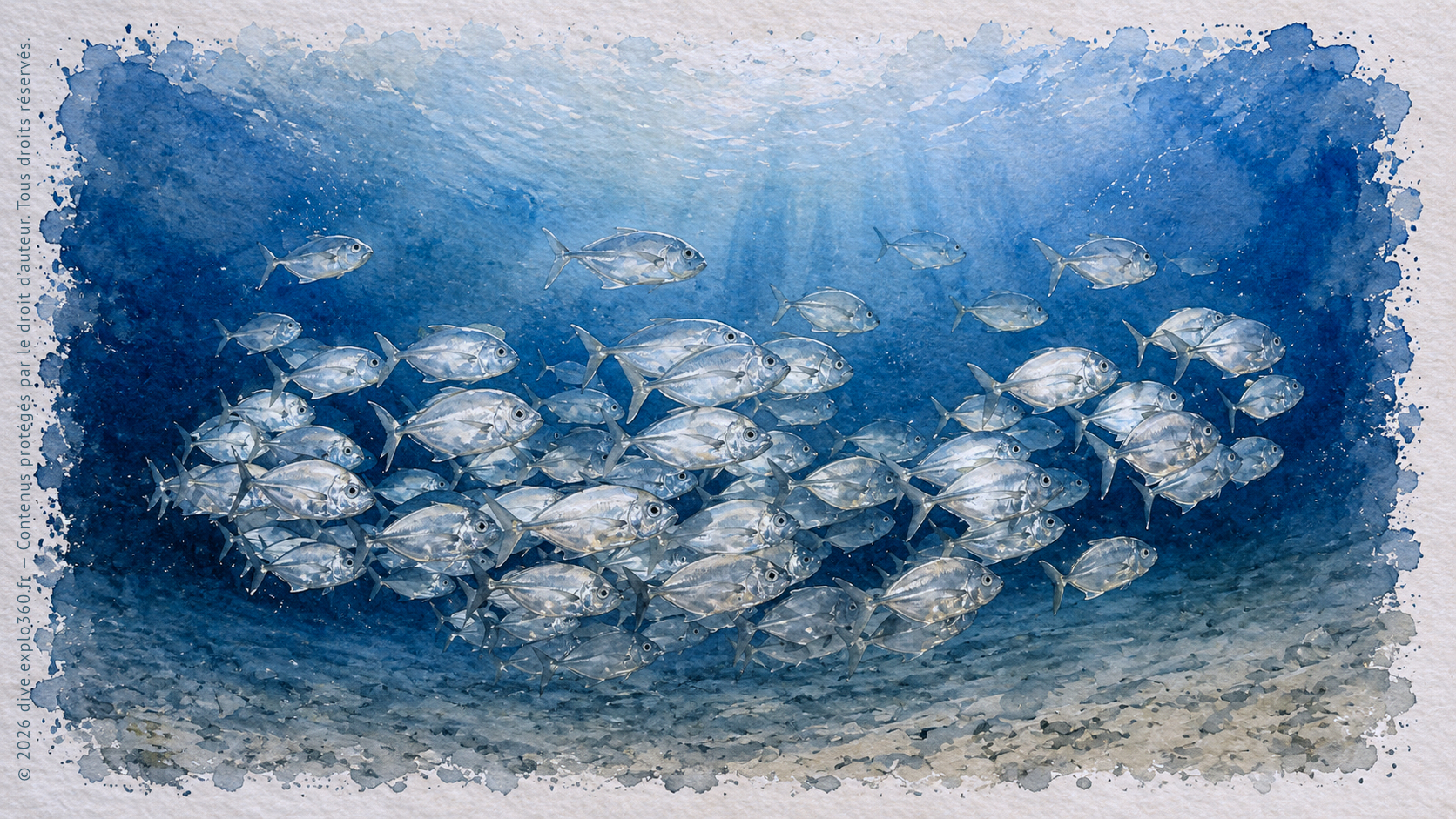
The fountain
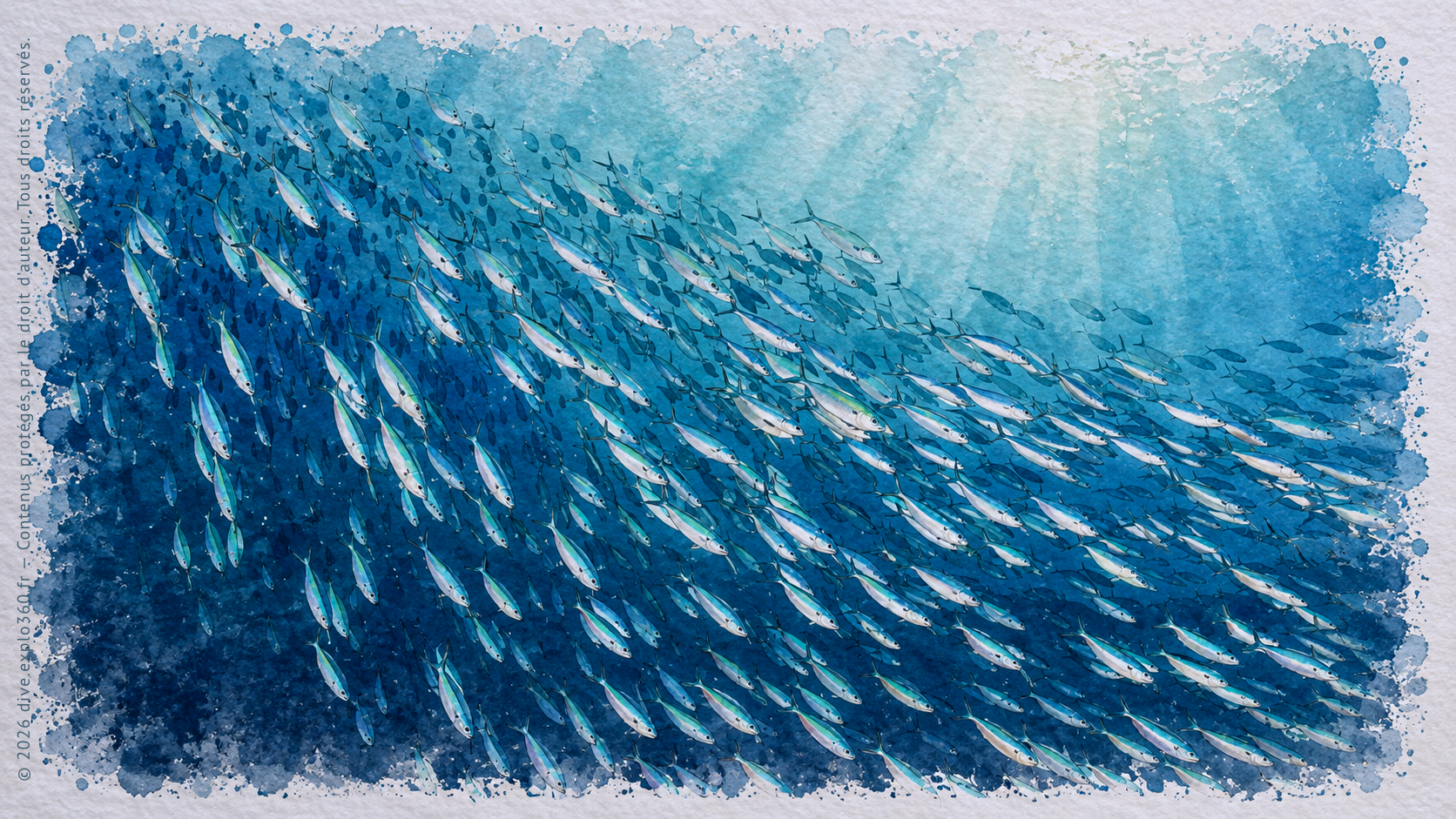
When a predator rushes in, the fish may split and swim past it on either side, then close ranks behind it. This is called the fountain response. The route the fish take depends on how the predator attacks and where they can escape.
Sensory perception
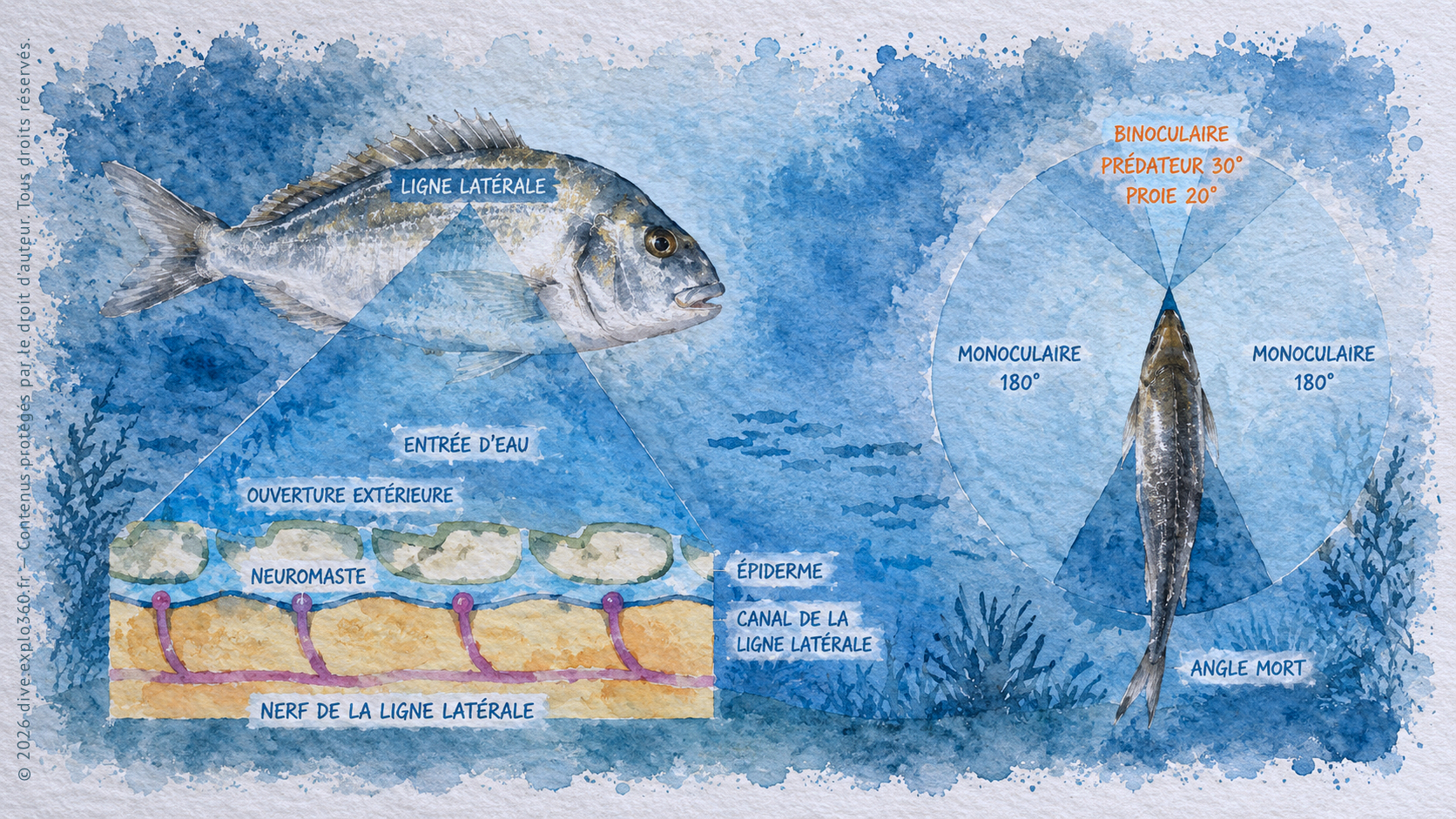
Fish use their vision, in particular, to identify their neighbours’ positions and movements.
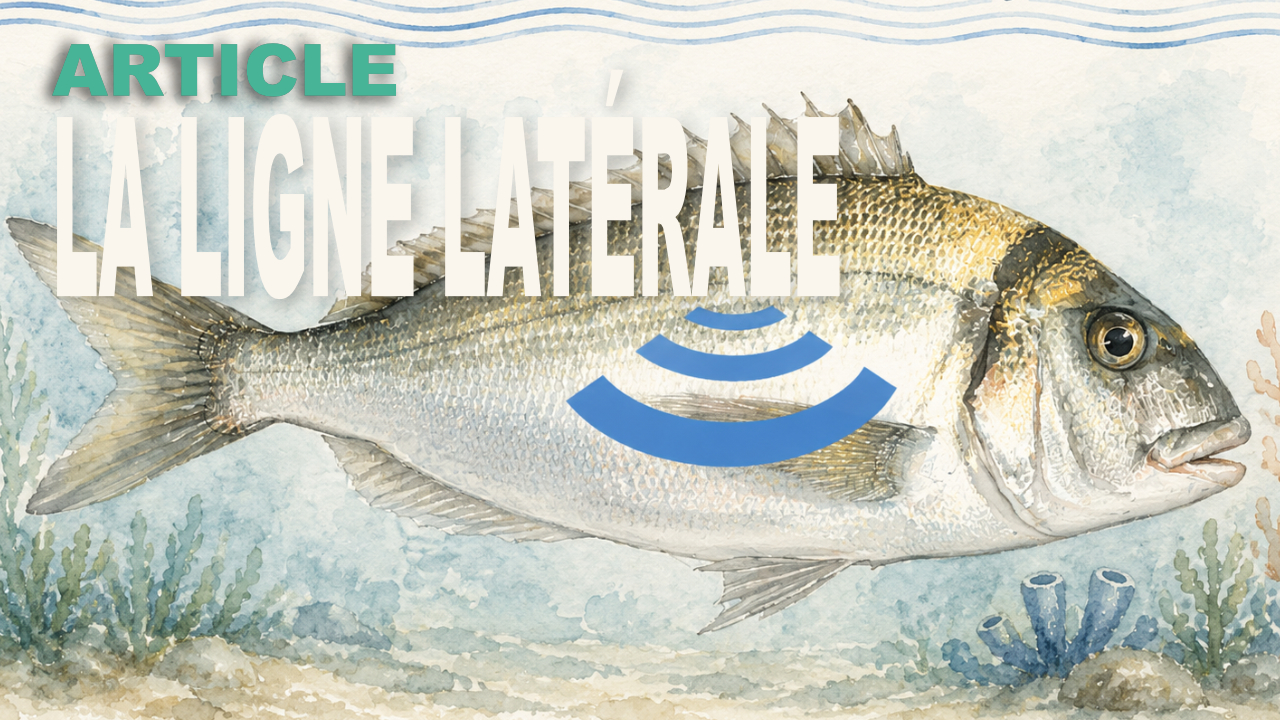
They also have a lateral line, a sensory system able to detect water movements and mechanical changes produced around them.
This information allows each fish to adjust its movement quickly.
Attraction, alignment and repulsion
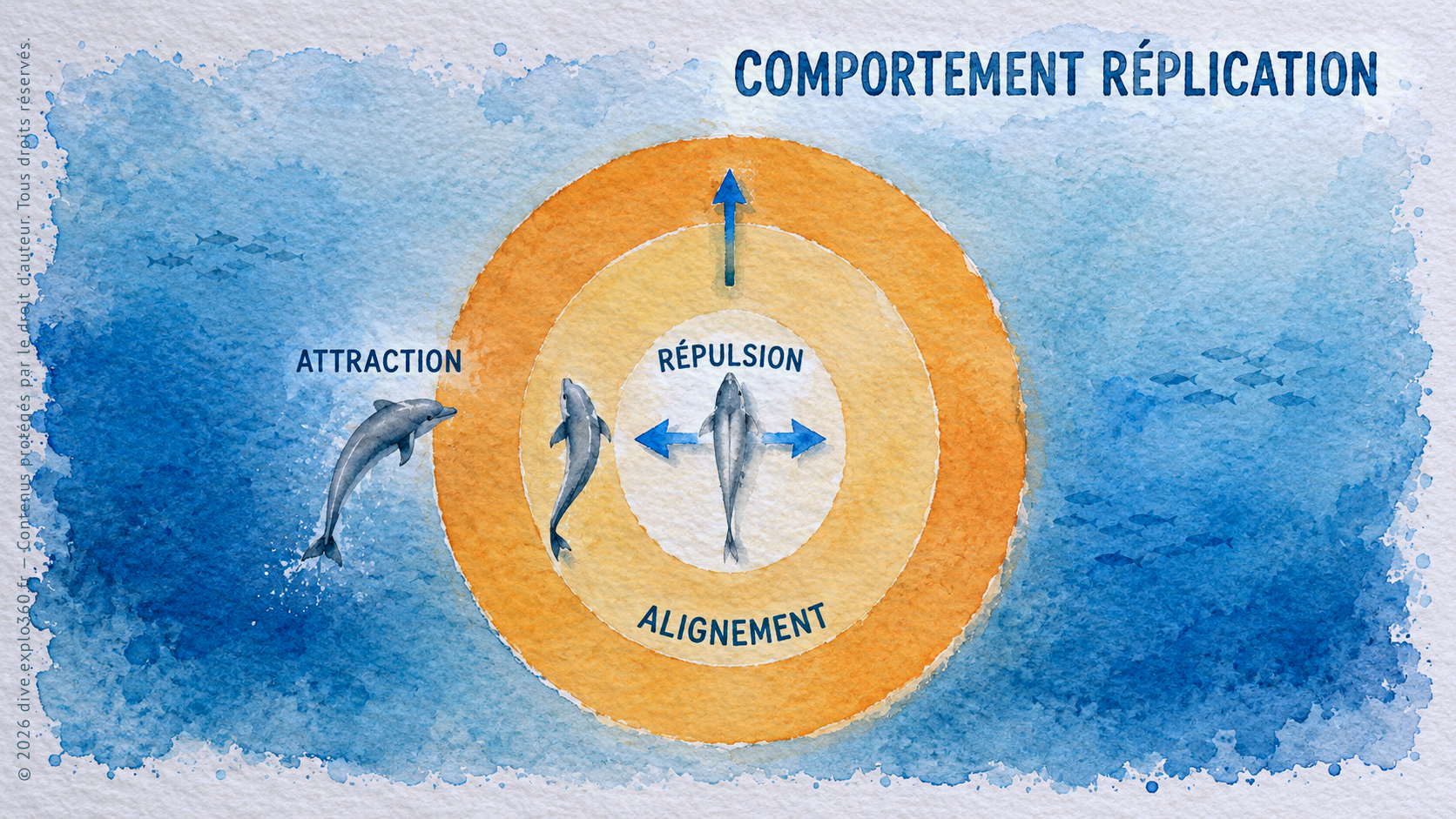
In the simulator, fish approach their neighbours, adjust their heading and move away when they get too close. These three rules are known as attraction, alignment and repulsion.
Real fish respond differently depending on the species and the situation. In some experiments, fish came into alignment through attraction and repulsion alone. The simulation shows what can happen under one set of rules.
Social communication
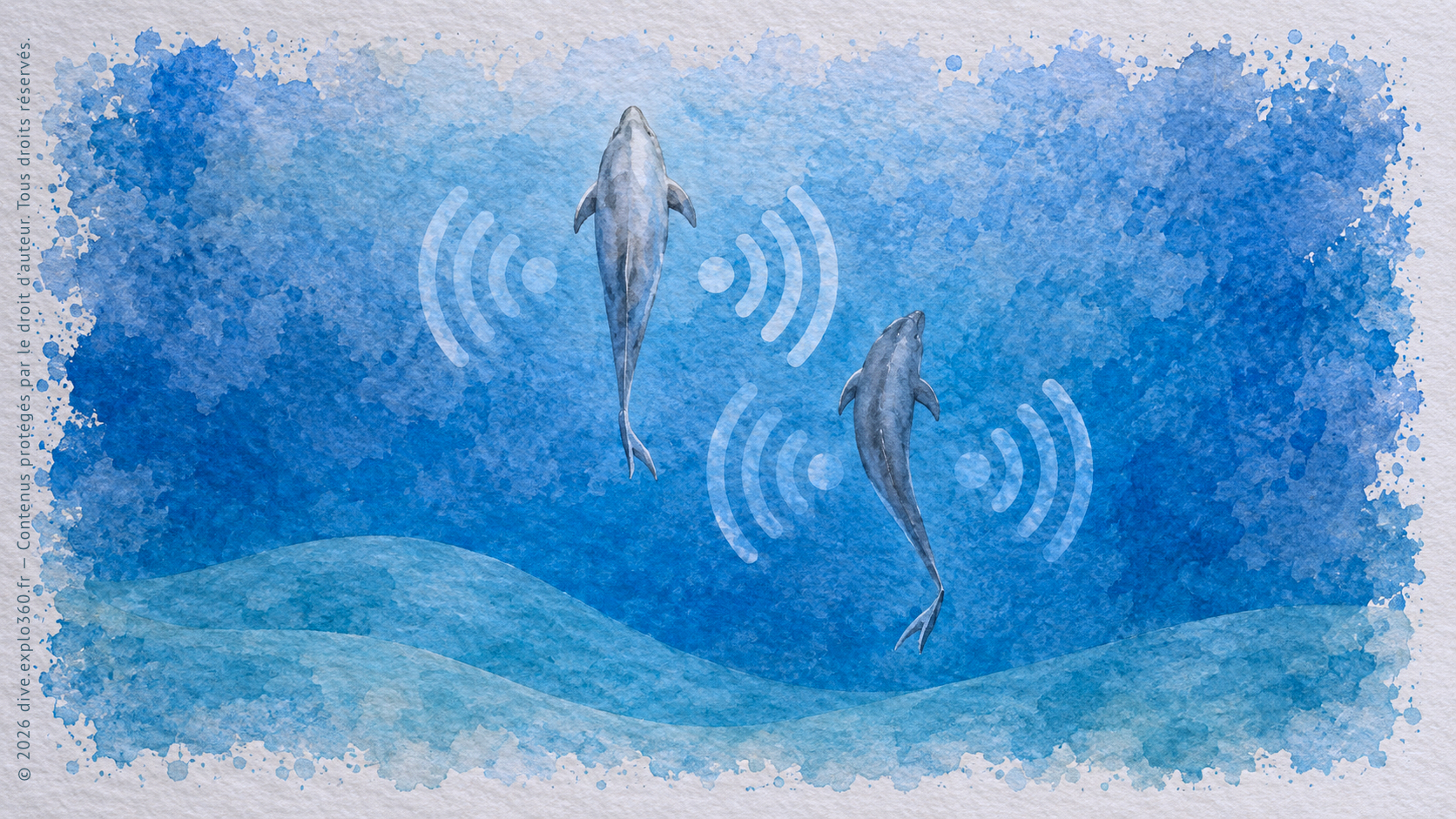
Vision and the lateral line help fish detect neighbours and disturbances. A change of direction can spread through the school as each fish responds to nearby movement.
A school without a leader?
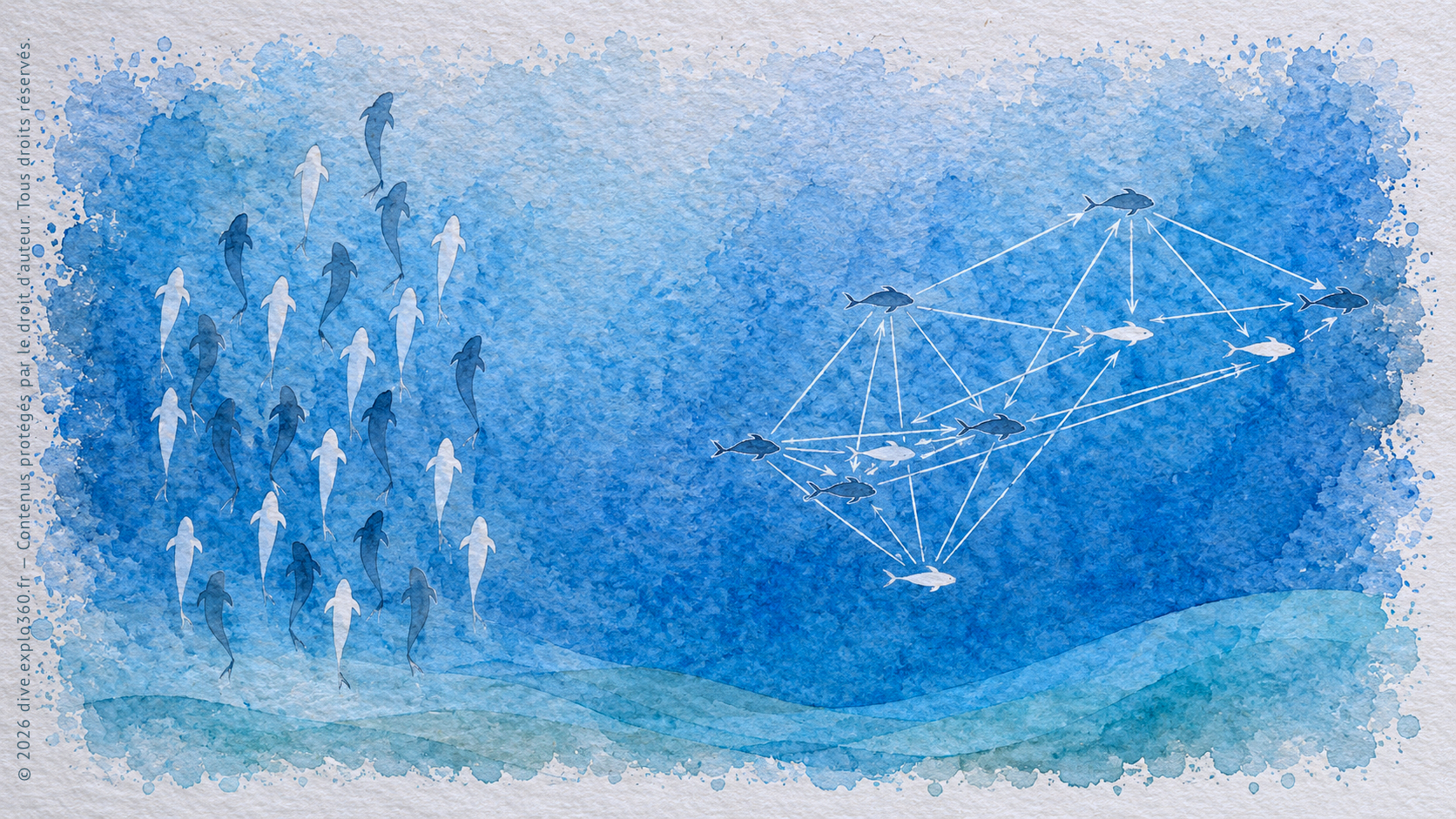
A school is not necessarily directed by a permanent leader.
Each fish can change its path according to its neighbours. If a few individuals suddenly change direction after detecting danger, their neighbours react, followed by those neighbours’ neighbours.
Information can thus spread quickly through the whole group.
This is an example of self-organised collective behaviour.
Interactive quiz
Test your knowledge
A brief introduction presents the main idea of this slide.
Interactive quiz
Test your knowledge
Question 1 out of 5Score: 0
How do fish manage to swim together without colliding?
What advantages can a school offer fish? (Choose all that apply.)
What happens when danger appears?
What advantage can schooling offer when a predator appears?
What can a fish use to track its neighbours?
Final result
Quiz completed
correct answers
Conclusion
Group life can bring advantages for protection, feeding and reproduction. What each fish senses and how it responds can change the direction or shape of the whole group.
A school thus shows how simple individual behaviours can give rise to highly elaborate collective organisation.
Sources
Explore the same world